By A CUTE PET STORY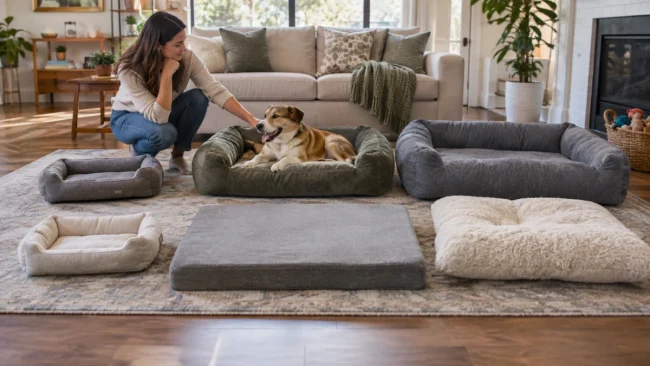
Medium dog beds can be surprisingly difficult to size because “Medium” is not a standardized measurement. One brand’s Medium may feel tight, while another brand’s Medium may provide plenty of room.
The right bed should give your dog enough usable sleeping space, match its normal sleeping position, provide comfortable support, and still fit naturally in your home.
Instead of choosing by breed or weight alone, measure your dog while resting and compare those measurements with the actual sleeping area inside the bed.
You can also explore our complete Dog Beds topic hub for more guides about sizing, materials, support, cleaning, and different bed styles.
What Makes a Good Medium Dog Bed?
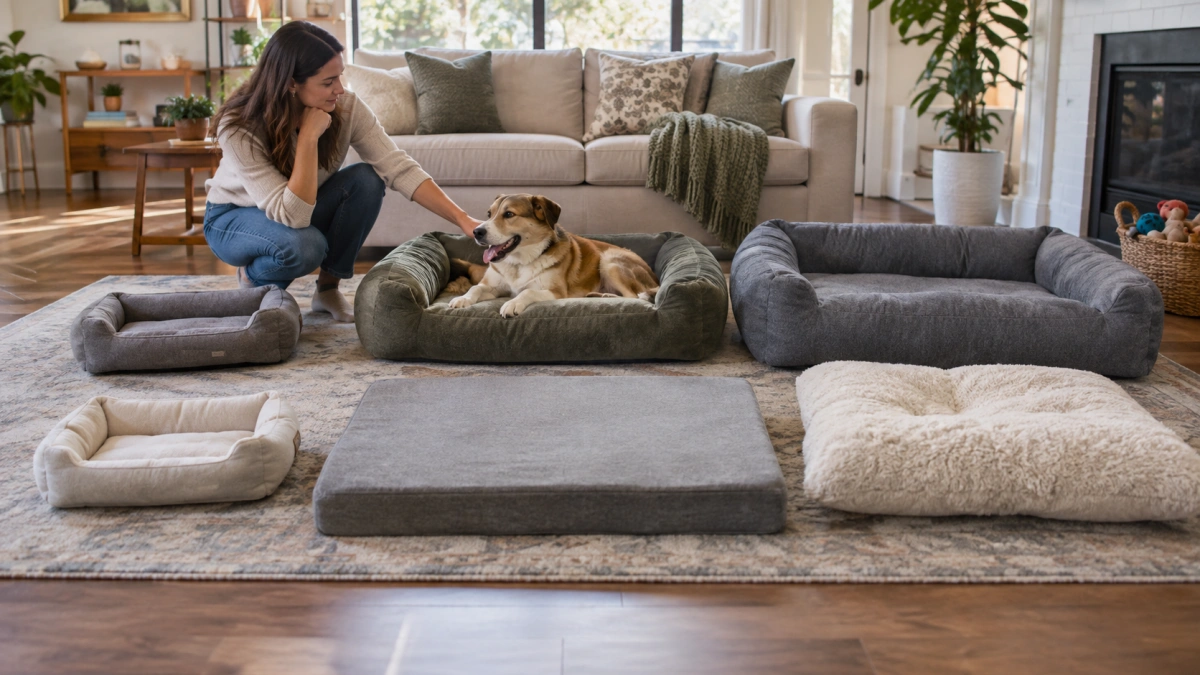
A good medium dog bed balances sleeping space, support, comfort, and practical size.
Important features include:
- Enough room for normal sleeping positions
- A bed shape that matches the dog’s habits
- Support that does not flatten too quickly
- A cover that is practical to clean
- A footprint that fits the intended room
The goal is not simply to buy a bed labeled Medium. The goal is to find a bed that fits your dog and your home.
What Does “Medium” Actually Mean?
Medium is a relative size label rather than a universal measurement.
Different brands may use different dimensions for:
- Medium
- M
- Medium/Large
- Large
That means the label itself should only be a starting point.
Always compare:
- Actual bed length
- Actual bed width
- Interior sleeping area
- Bolster thickness
- Bed height
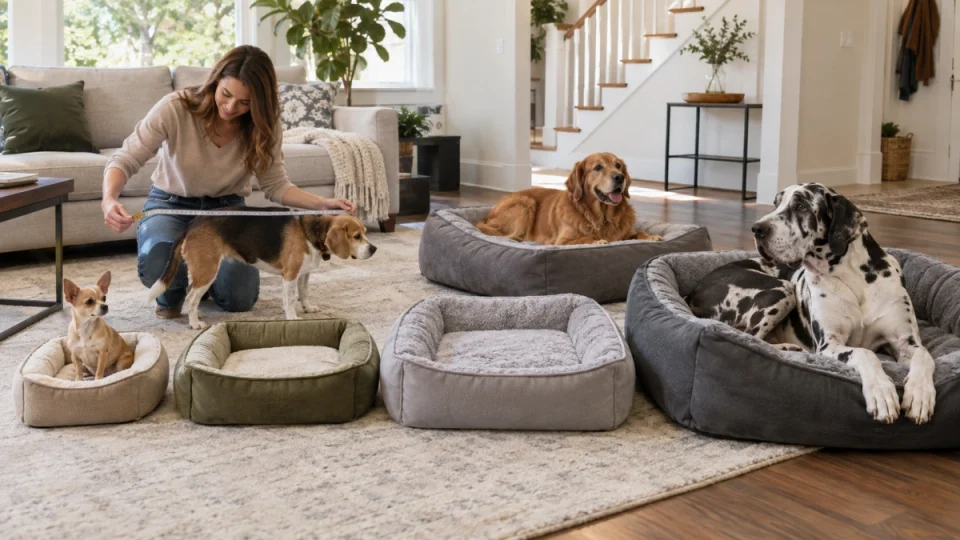
How to Measure a Medium Dog for a Bed
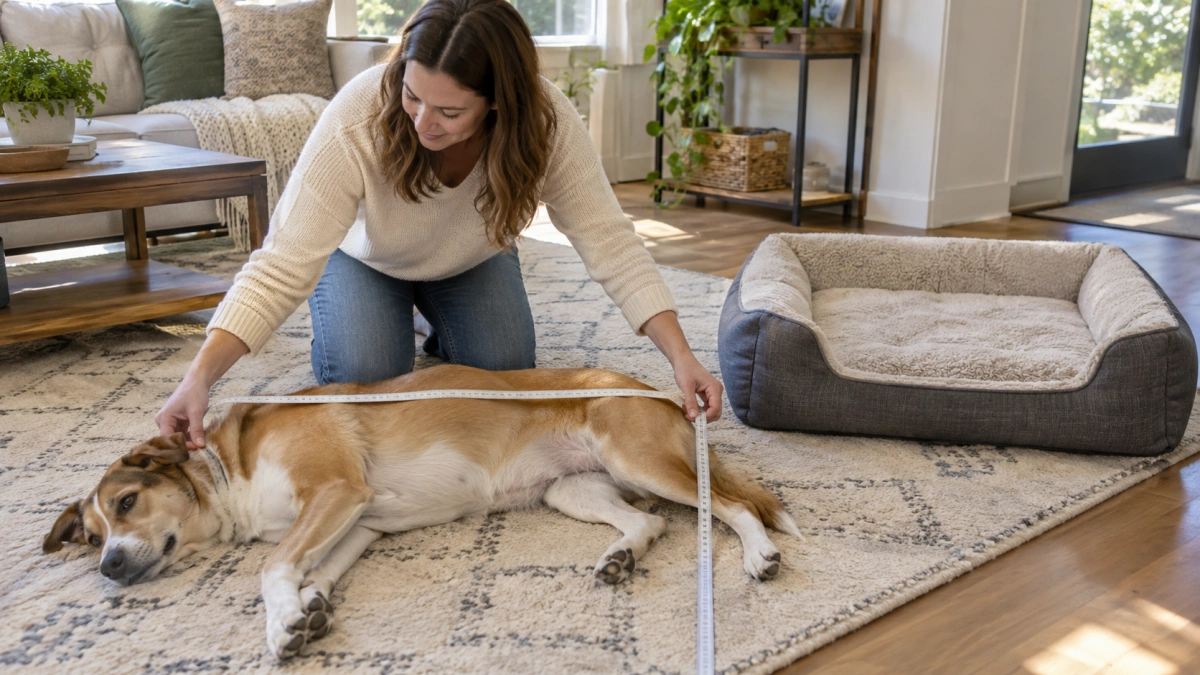
Measure your dog while relaxed in a normal sleeping position rather than standing upright.
Step 1: Measure Sleeping Length
Measure the approximate space your dog uses from the front of the body to the rear while lying naturally.
Step 2: Measure Sleeping Width
Measure the widest space your dog uses when curled, side sleeping, or stretching out.
Step 3: Add Movement Room
Allow enough extra space for your dog to turn around and change positions comfortably.
Step 4: Compare the Usable Bed Area
If the bed has bolsters or thick sides, compare the inner dimensions rather than only the external footprint.
Small vs Medium vs Large Dog Beds
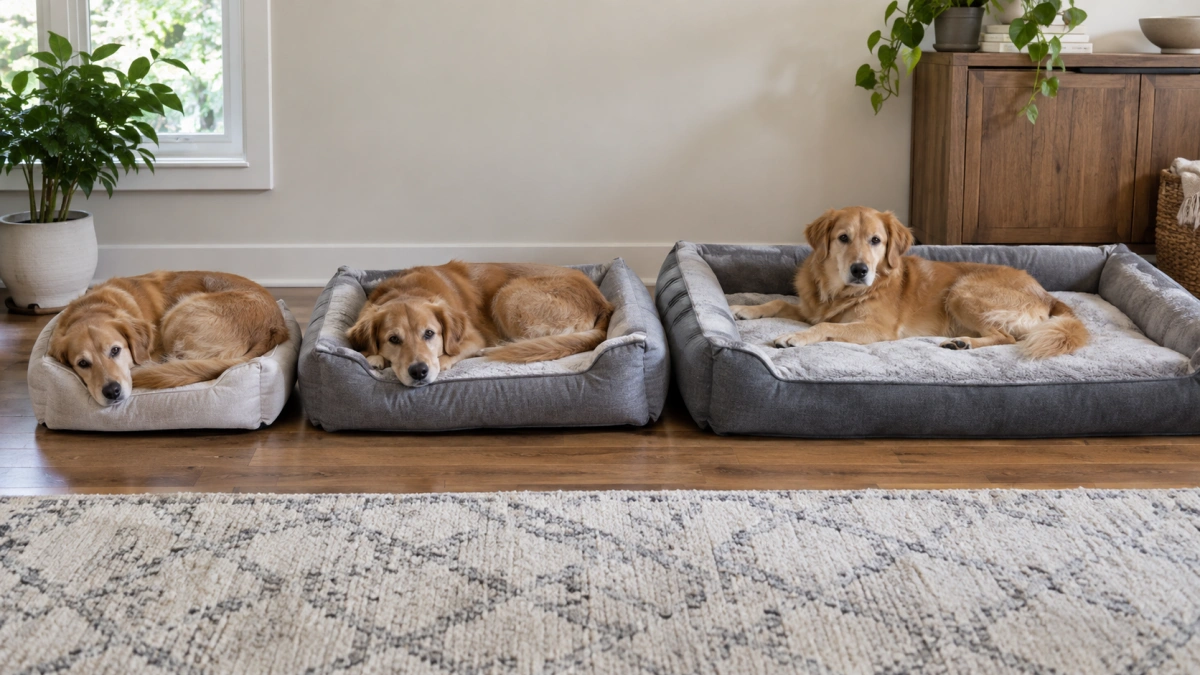
When your dog falls between sizes, compare how each option affects usable sleeping space.
| Situation | Likely Direction |
|---|---|
| Small still leaves comfortable movement room | Small may still work |
| Small only fits when the dog curls tightly | Compare Medium |
| Medium allows normal stretching | Medium is likely appropriate |
| Medium is nearly full when the dog sprawls | Compare Large |
| Thick bolsters make Medium too cramped | Size up or choose a flatter design |
The best size is the one that supports the dog’s normal sleeping behavior, not the one that matches a weight chart most closely.
Usable Sleeping Area vs Outer Dimensions
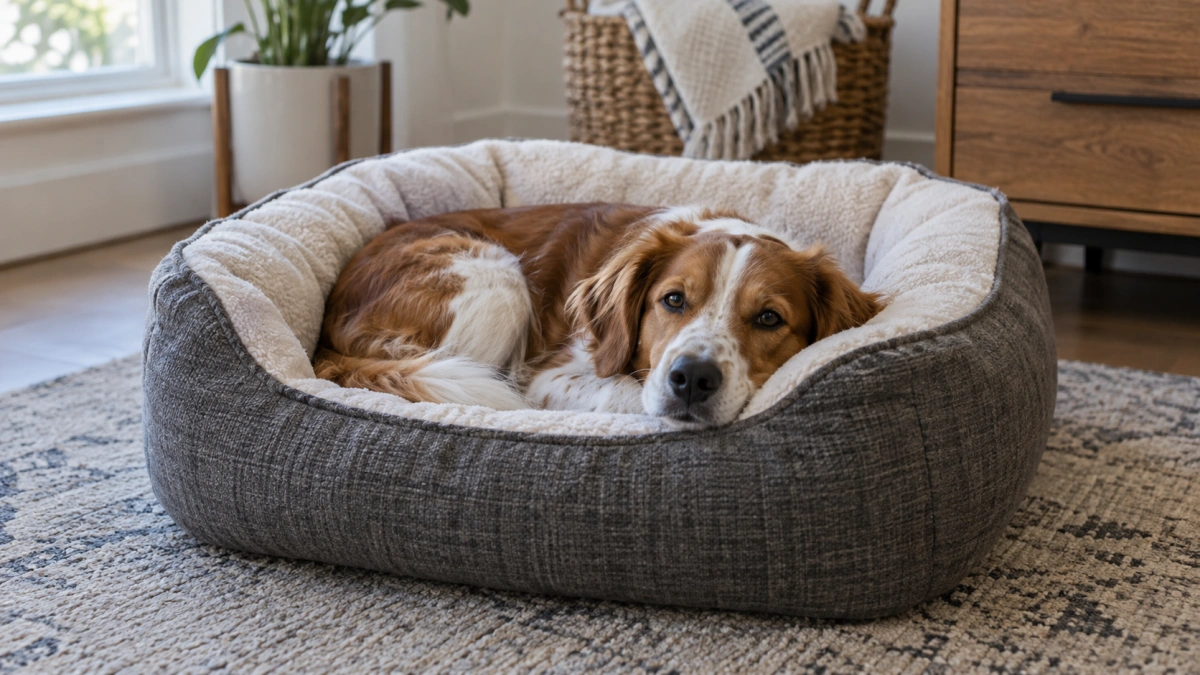
A medium bolster bed may look large from the outside but offer much less room inside.
Check:
- Outside length and width
- Inner sleeping dimensions
- Bolster thickness
- Raised edge width
- Space available for stretching
This is especially important for dogs that lie on their sides or stretch their legs during sleep.
Choose a Bed by Sleeping Style
| Sleeping Style | Good Starting Option |
|---|---|
| Curls tightly | Round or bolster bed |
| Stretches out | Flat mattress |
| Rests head on an edge | Bolster bed |
| Changes positions often | Open rectangular bed |
| Likes airflow | Elevated bed |
Sleeping position often tells you more about the right bed shape than breed name alone.
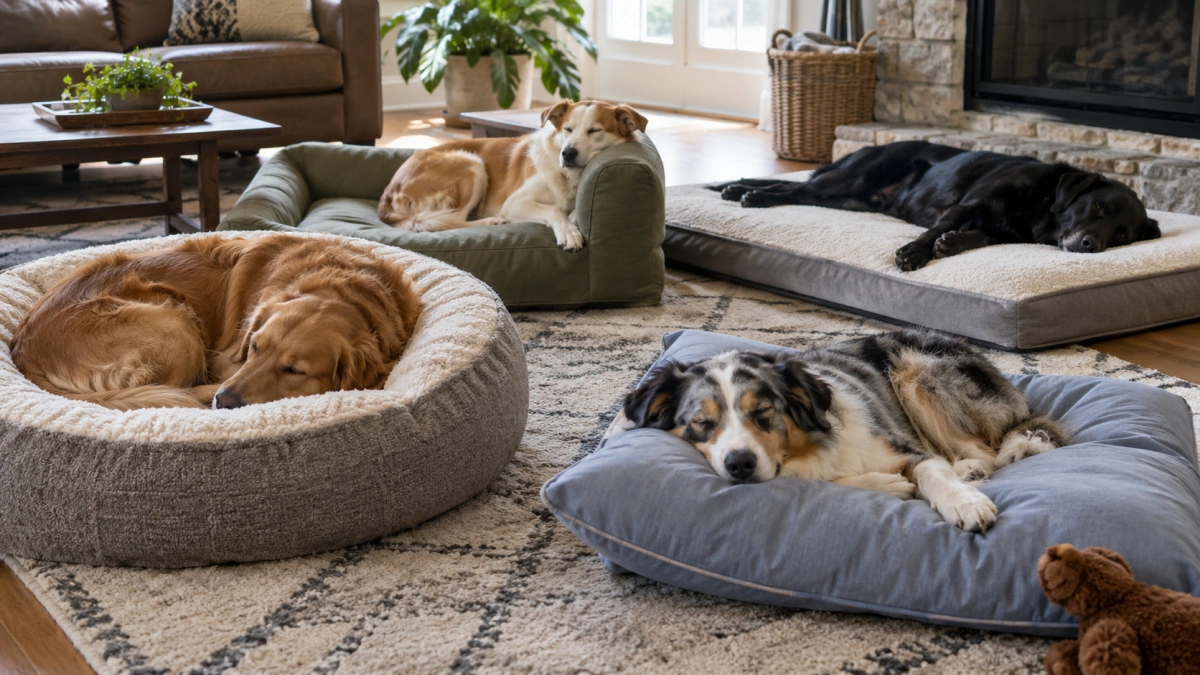
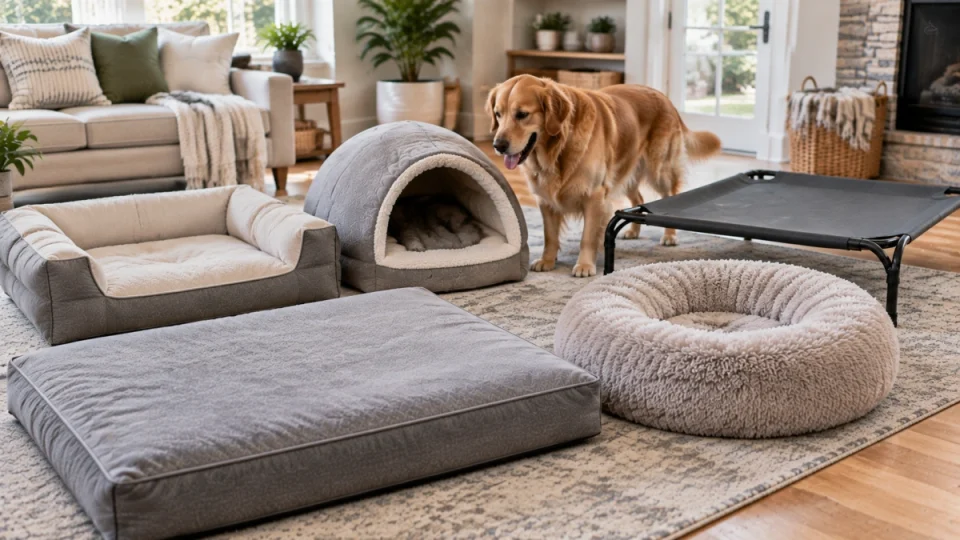
Flat, Bolster, Pillow or Elevated?
Flat Mattress
Flat mattress beds provide a large open sleeping surface and are well suited to dogs that stretch out or move frequently.
Bolster Bed
Bolster beds provide raised edges for leaning or head support but reduce the center sleeping area.
Pillow Bed
Pillow beds feel soft and open but may shift or flatten more over time depending on the filling.
Elevated Bed
Elevated beds improve airflow and keep the dog off the floor, but they provide a different feel from padded beds.
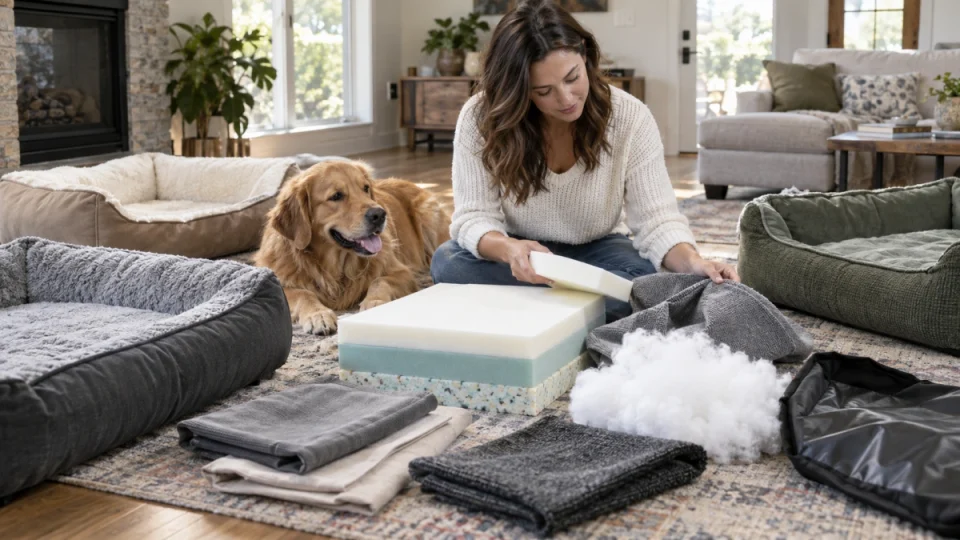
How Much Support Does a Medium Dog Need?
Medium dogs still place meaningful pressure on a sleeping surface, so support matters even if the dog is not especially large.
Look for:
- A surface that maintains its shape
- Filling that does not migrate too easily
- Enough structure to keep the dog from sinking deeply
- A bed that rebounds after use
Support does not mean the bed has to feel hard. The goal is a stable resting surface that remains comfortable over time.
Comfort vs Too Soft
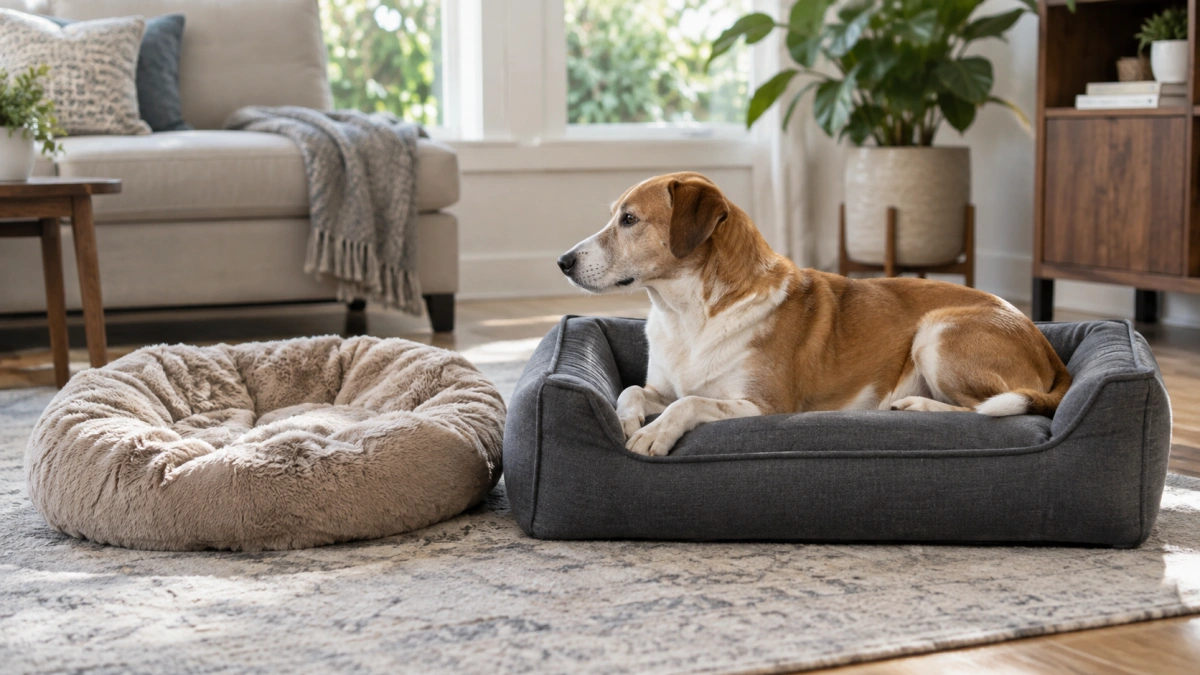
A very soft bed may initially feel comfortable but can become less practical if the dog sinks deeply or the filling shifts.
Watch for:
- Deep compression under the body
- Permanent low spots
- Loose filling moving away from the center
- The dog struggling to reposition
Comfort comes from the balance between cushioning and structure rather than maximum softness.
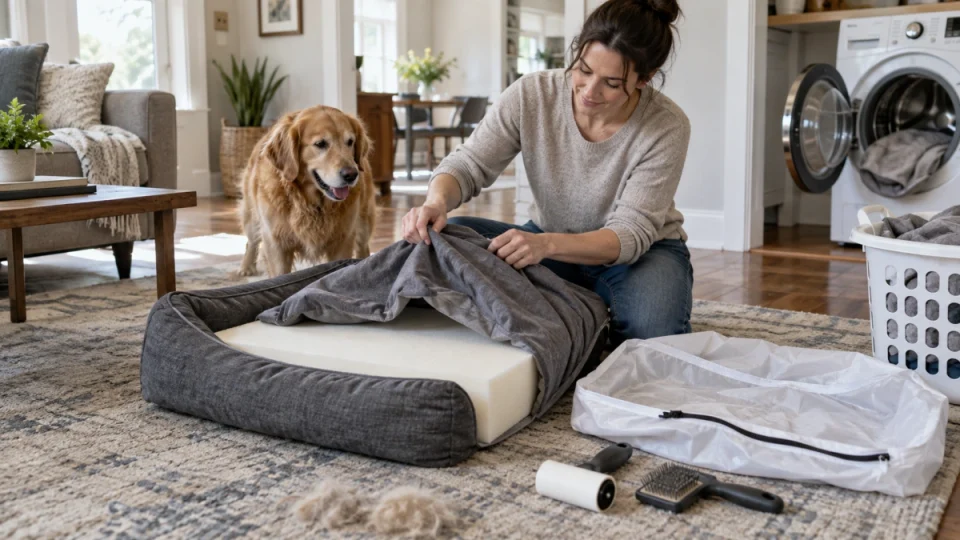
Washability and Everyday Maintenance
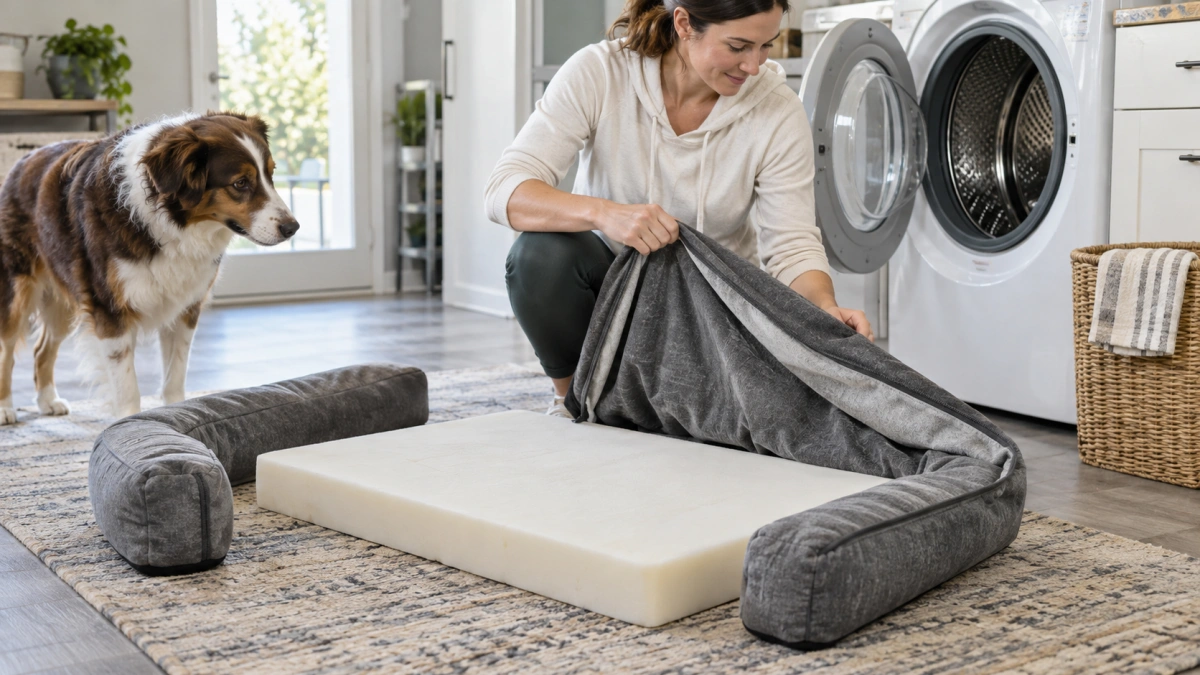
Medium dog beds can already be large enough that washing the entire bed is inconvenient.
Useful features include:
- Removable machine-washable covers
- Separate foam inserts
- Removable bolster pieces
- Protective inner liners
- Replacement covers
- Clear drying instructions
Before buying, check whether “machine washable” refers to the entire bed or only the cover.
Check the Bed Footprint in Your Home
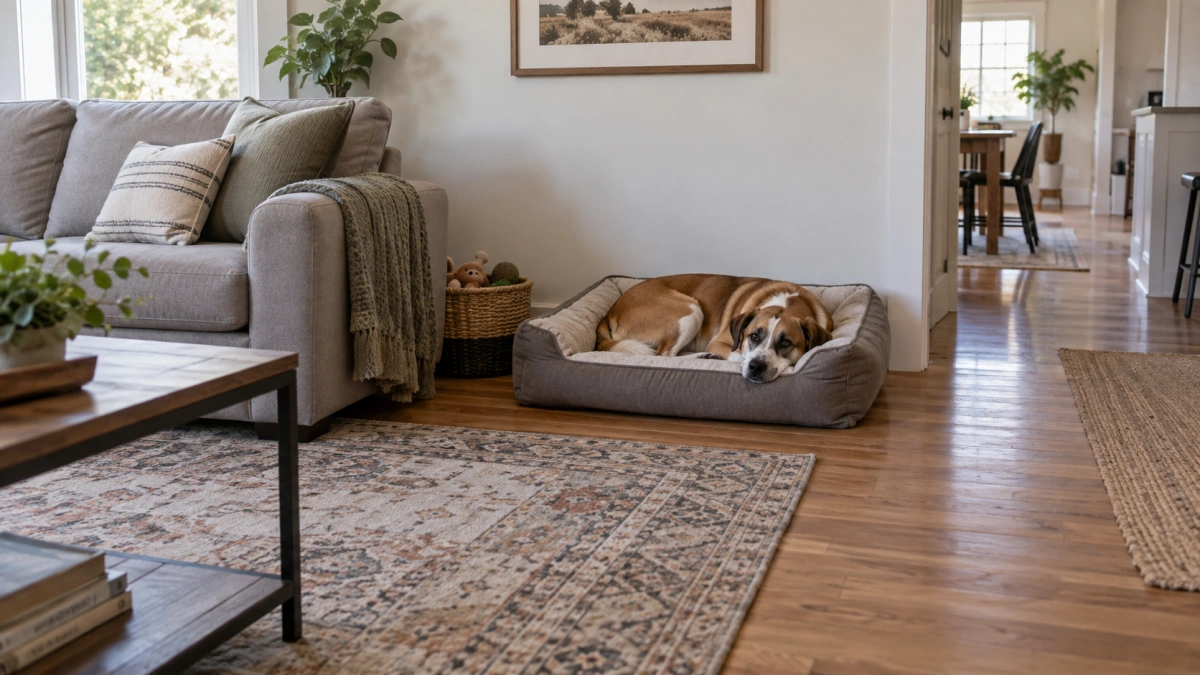
A medium dog bed can take up more room than expected, especially if it has thick bolsters or a wide outer frame.
Before ordering:
- Check the external dimensions
- Measure the intended floor space
- Make sure doors can still open
- Leave enough walking space around the bed
- Check whether the location is easy for your dog to reach
The best bed needs to fit both the dog and the room.
When Should You Size Down to Small?
A Small bed may still work if your dog has plenty of room to sleep naturally and does not look cramped inside the usable area.
If you are deciding between Small and Medium, our guide to small dog beds explains how sleeping style, entry height, usable space, and cozy bed shapes affect the smaller size range.
When Should You Size Up to Large?
Consider moving from Medium to Large when:
- Your dog fills most of the Medium sleeping area
- Legs frequently extend beyond the bed
- The dog sleeps fully stretched
- Thick bolsters make the Medium interior too small
- Your dog is still growing
Do not size up only because Large sounds safer. The larger bed should provide useful additional space without becoming impractical for your room.
Common Medium Dog Bed Buying Mistakes
- Assuming Medium is standardized across brands
- Choosing only from body weight
- Ignoring sleeping style
- Comparing outer dimensions instead of usable area
- Choosing maximum softness over support
- Forgetting how large the bed will look in the room
- Ignoring cover removal and washing instructions
- Staying with Medium when the dog has clearly outgrown the usable area
Medium Dog Bed Buying Checklist
- Have I measured my dog while resting?
- Does the bed provide enough inner sleeping space?
- Does the shape match my dog’s sleeping style?
- Do bolsters reduce too much usable room?
- Does the bed maintain its shape under my dog?
- Can the cover be removed and washed?
- Will the bed fit comfortably in my home?
- Would Small still provide enough room?
- Would Large provide meaningfully better space?
Final Thoughts
The best medium dog beds are defined by fit and comfort rather than a Medium label. Measure your dog, compare usable sleeping space, and match the bed shape to how your dog normally rests.
Medium dogs often sit between standard size categories, so checking Small and Large options can be useful when the fit is close.
Choose the bed that gives your dog enough room to relax naturally while still providing practical support, cleaning, and home fit.