By
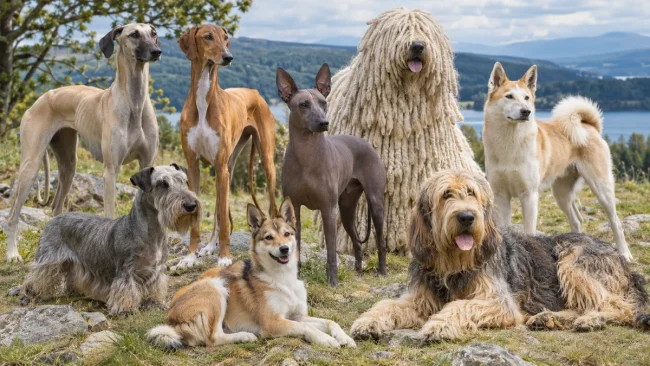
Rare dog breeds can look dramatically different from the Labrador Retrievers, French Bulldogs, Golden Retrievers and other familiar dogs seen every day. Some have extra toes, hairless skin, corded coats or extremely lean sighthound bodies. Others look relatively ordinary but remain uncommon because only a small breeding population exists in a particular country.
The word “rare,” however, needs context. There is no single worldwide ranking that counts every dog breed on Earth. A breed can be rare in the United States while being much better known in its country of origin, and national kennel clubs may recognize different breeds.
One useful measurement is American Kennel Club registration data. In the latest complete AKC rarity rankings for 2025, the Norwegian Lundehund was the least-registered breed among the 202 breeds included, followed by the Sloughi and Grand Basset Griffon Vendéen.
This guide uses those registration trends as one reference while also exploring unusual breeds from Norway, North and West Africa, France, the Czech Republic, the United States, Israel, Hungary, Mexico and the United Kingdom.
If you want to explore breeds beyond rarity, visit our Dog Breeds section.
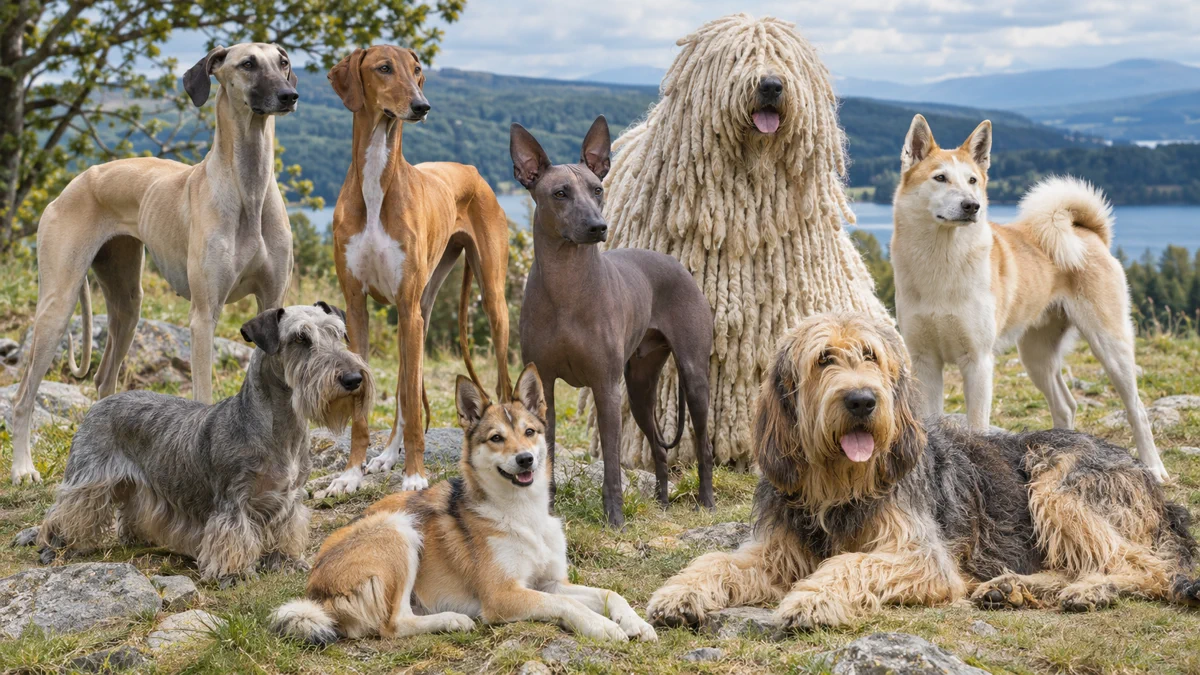
What Does “Rare Dog Breed” Actually Mean?
Rare does not automatically mean endangered, superior, expensive or genetically unusual.
The term can describe several different situations:
- A breed with very few registrations in one country
- A breed concentrated mainly in its country of origin
- A breed with a small global breeding population
- A recently recognized breed
- A historical working breed whose original job has become uncommon
- A breed that has never developed mainstream companion-dog popularity
AKC popularity and rarity rankings are based on registrations. They are useful for understanding relative scarcity among AKC-recognized purebred dogs in the United States, but they should not be presented as a worldwide census.
The 10 Rarest AKC Dog Breeds in 2025
| Rarity Position | Breed | Origin / Heritage |
|---|---|---|
| 1 | Norwegian Lundehund | Norway |
| 2 | Sloughi | North Africa |
| 3 | Grand Basset Griffon Vendéen | France |
| 4 | Harrier | England |
| 5 | Chinook | United States |
| 6 | Cesky Terrier | Czech Republic |
| 7 | Belgian Laekenois | Belgium |
| 8 | Azawakh | West Africa / Sahel |
| 9 | Finnish Spitz | Finland |
| 10 | Canaan Dog | Israel / ancient Canaan region |
These positions are the reverse of AKC’s 2025 popularity ranking. The Norwegian Lundehund ranked No. 202 of 202, making it the least-registered breed in that particular dataset.
1. Norwegian Lundehund
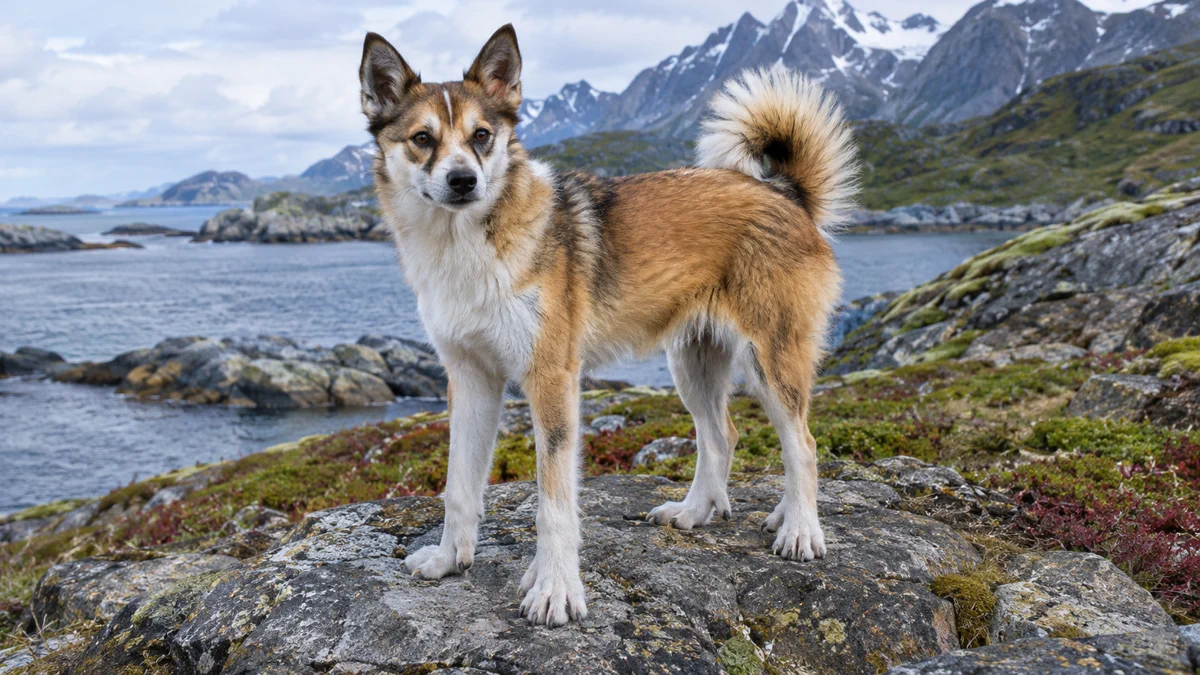
The Norwegian Lundehund is one of the clearest examples of a breed whose unusual anatomy developed for a specific historical job.
The breed originated on the rocky Norwegian island of Værøy and was developed to hunt puffins nesting in narrow cliff crevices.
Modern Lundehunds have several remarkable physical features:
- At least six functional toes on each foot
- Additional paw pads
- Exceptionally flexible shoulders
- A neck capable of unusually extensive movement
- Ears that can fold closed
These traits helped dogs climb and maneuver through difficult rocky terrain.
Adult males are approximately 13 to 15 inches tall and 15 to 18 pounds, while females are slightly smaller.
The breed is currently a companion rather than a puffin hunter because puffins are protected.
In the AKC’s 2025 registration statistics, the Norwegian Lundehund ranked last among the 202 breeds counted, making it the rarest AKC-registered breed in the United States for that year.
2. Sloughi
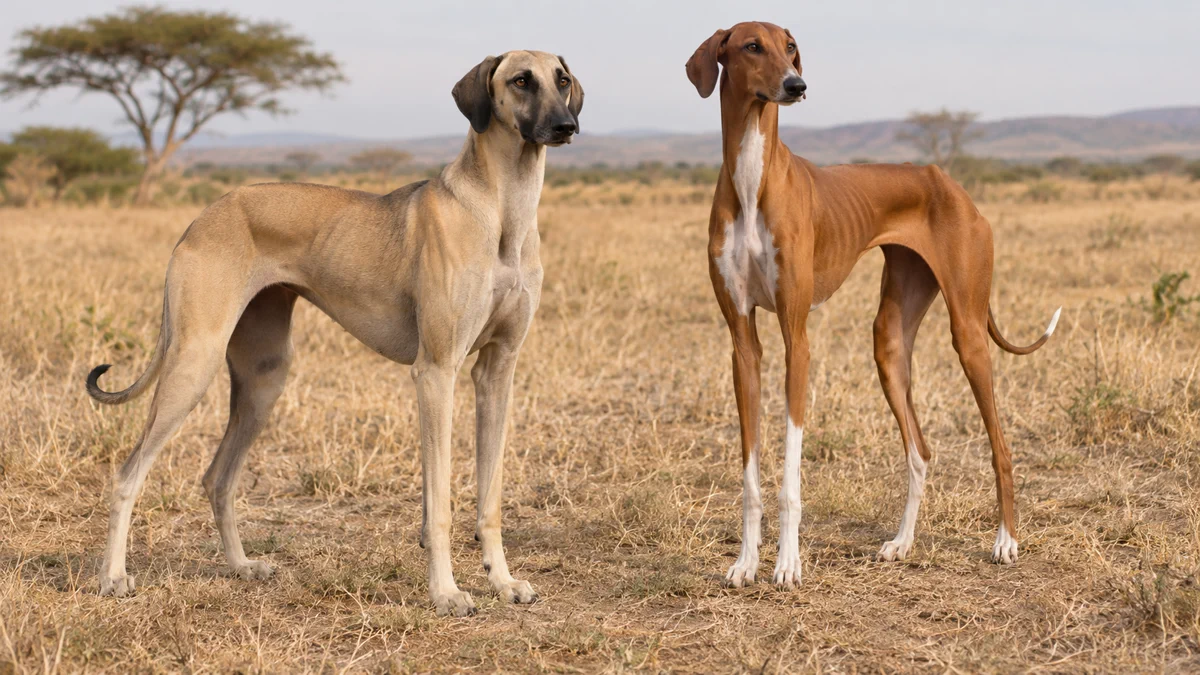
The Sloughi is an ancient North African sighthound associated with countries including Morocco, Algeria, Tunisia and Libya.
It was developed to pursue game over difficult desert terrain.
Adult Sloughis typically stand approximately 24 to 29 inches and weigh around 40 to 65 pounds.
Their appearance is elegant and extremely lean, but that light structure is functional rather than fragile.
The breed is typically reserved with strangers and gentle with people it knows.
Sloughis also retain strong prey drive, so secure exercise areas and careful off-leash management are important.
The breed ranked second-rarest in the 2025 AKC registration list.
3. Grand Basset Griffon Vendéen
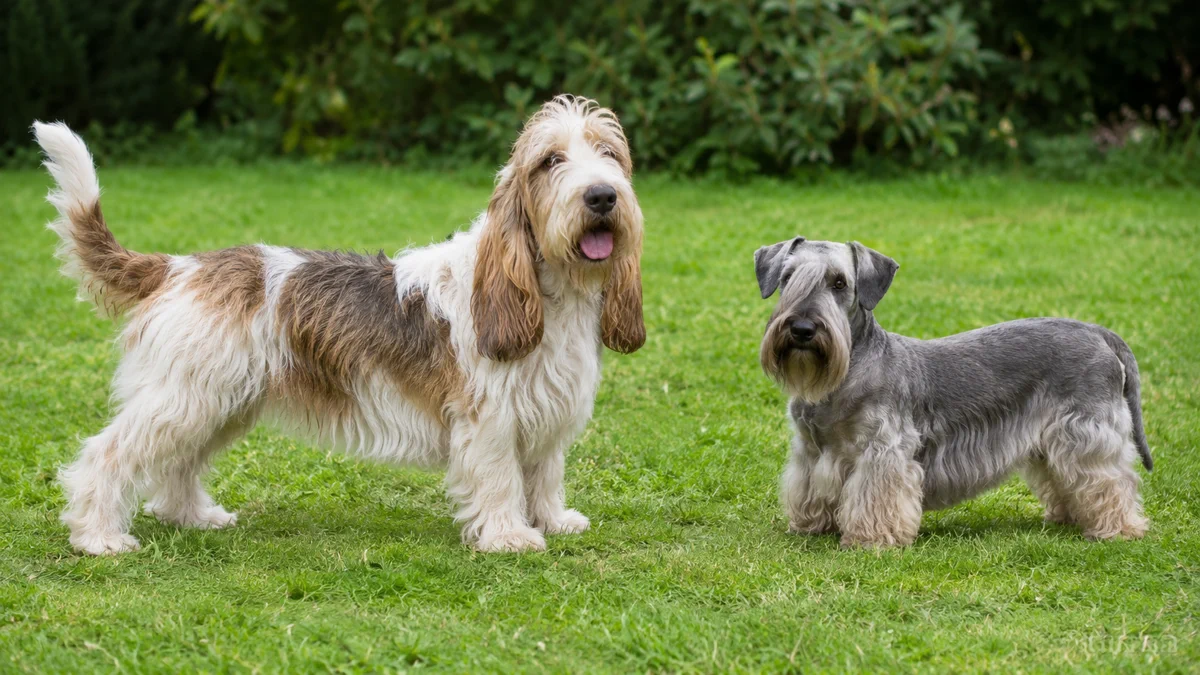
The Grand Basset Griffon Vendéen, often abbreviated GBGV, is a rough-coated French scent hound.
Adults are approximately 15.5 to 18 inches tall and typically weigh 40 to 45 pounds.
Its long body, substantial legs, shaggy coat and long ears give the breed a distinctive appearance.
GBGVs were developed to hunt in packs and remain outgoing, active scent hounds rather than ornamental shaggy companions.
The AKC fully recognized the breed in 2018, and it ranked third-rarest in 2025 registration statistics.
Rare and Beautiful Sighthounds
Some rare breeds are also among the most visually elegant dogs in the world.
The Sloughi and Azawakh are two strong examples.
Both are African sighthounds, but they are distinct breeds from different geographic regions and should not be treated as interchangeable.
Sloughi
The Sloughi developed primarily in North Africa and combines a smooth coat with a tall, refined body.
Azawakh
The Azawakh developed in the Sahel region of West Africa, particularly around Mali, Niger and Burkina Faso.
Its exceptionally long legs and lean body create one of the most distinctive outlines among recognized dog breeds.
That extreme-looking leanness is normal breed structure when the dog is healthy and properly conditioned.
4. Harrier
The Harrier may look familiar because it resembles a larger Beagle or smaller English Foxhound.
That relatively conventional appearance makes its rarity especially interesting.
Harriers were developed as pack scent hounds for hunting hare.
They are active, social working dogs that need considerably more exercise than their friendly expression may suggest.
In 2025, the Harrier ranked fourth among the least-registered AKC breeds.
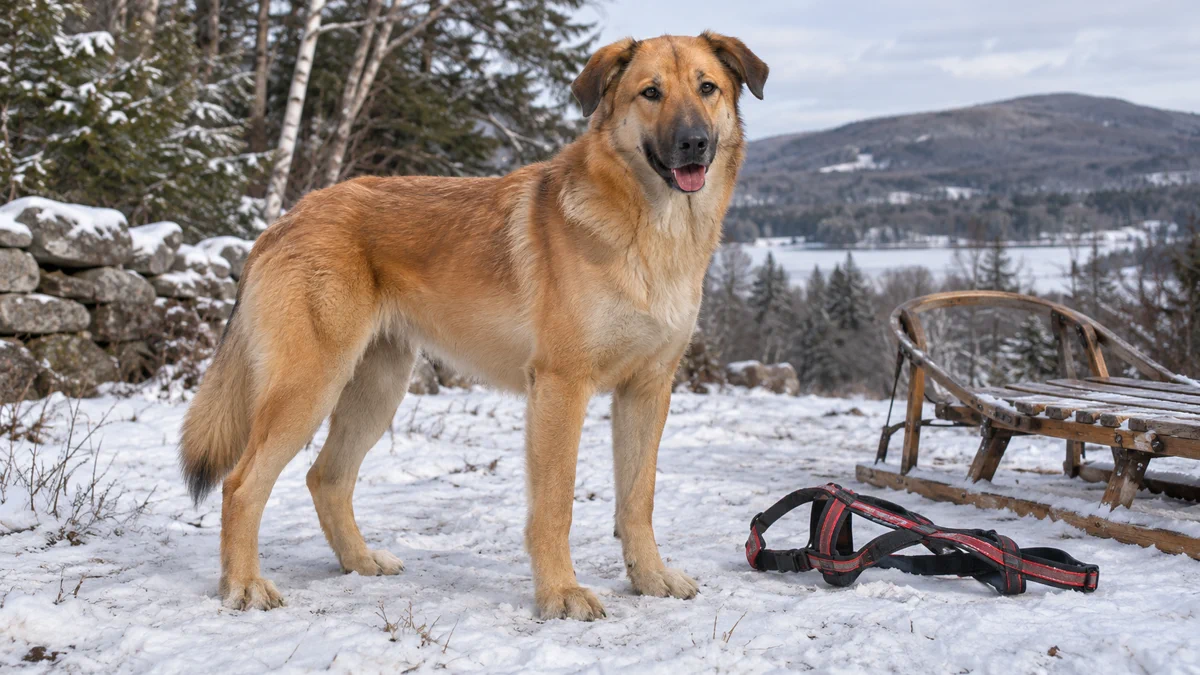
5. Chinook
The Chinook proves that rare dog breeds do not need to come from distant ancient cultures.
This American working breed was developed in Wonalancet, New Hampshire, during the early twentieth century by explorer Arthur Walden.
The goal was to create a versatile sled dog combining freight-hauling power with racing speed.
Adult males stand approximately 24 to 26 inches and weigh around 55 to 90 pounds. Females are somewhat smaller.
Unlike many dogs people imagine when they hear “rare breed,” the Chinook has a relatively understated appearance: a substantial tawny working dog with a plush double coat.
AKC describes Chinooks as devoted, smart and patient.
The breed once came close to extinction and remains one of the least common AKC breeds today.
6. Cesky Terrier
The Cesky Terrier is a small Czech breed developed by geneticist František Horák.
Adults stand approximately 10 to 13 inches and weigh around 14 to 24 pounds.
The breed has a short-legged, muscular body and a fine, silky coat that commonly appears in shades of gray.
Compared with some classic high-intensity terriers, the Cesky is generally described as somewhat more tractable while still retaining genuine hunting-terrier ability.
Its combination of uncommon origin, low registration numbers and distinctive gray coat makes it one of the more interesting rare small dog breeds.
Rare Small and Medium Dog Breeds
Rare does not necessarily mean giant.
Several uncommon breeds remain relatively compact.
Examples include:
- Cesky Terrier
- Norwegian Lundehund
- Dandie Dinmont Terrier
- Portuguese Podengo Pequeno
- Russian Toy
- Löwchen
- Sealyham Terrier
- Grand Basset Griffon Vendéen
The practical advantage is that owners can explore an uncommon breed without necessarily taking on the transportation, food and veterinary logistics of a 100-pound dog.
But availability may be limited, and responsible breeders may have long waiting lists.
7. Belgian Laekenois
The Belgian Laekenois is one of four closely related Belgian shepherd varieties recognized in different ways by kennel organizations around the world.
Its rough, tousled coat immediately separates it visually from the more familiar Belgian Malinois.
Despite its uncommon appearance in the United States, this is still a serious herding and working dog.
Prospective owners should evaluate exercise, training and working-drive requirements before being attracted by rarity alone.
8. Azawakh
The Azawakh is a West African sighthound associated with nomadic cultures of the southern Sahara and Sahel.
The breed is exceptionally lean, tall and athletic.
Azawakhs historically hunted game and also lived closely with the people who developed them.
They are often reserved with unfamiliar people and should receive careful early socialization.
The Azawakh ranked eighth among the rarest AKC breeds in 2025.
9. Finnish Spitz
The Finnish Spitz looks far less unusual than a Xoloitzcuintli or Komondor, but it remains relatively uncommon in AKC registrations.
This fox-like northern breed has a red-gold coat, erect ears and a curled tail.
Historically, Finnish Spitz worked as hunting dogs that used vocalization to help hunters locate game.
That background means barking is not merely an accidental trait; vocal behavior is connected to the breed’s traditional work.
10. Canaan Dog
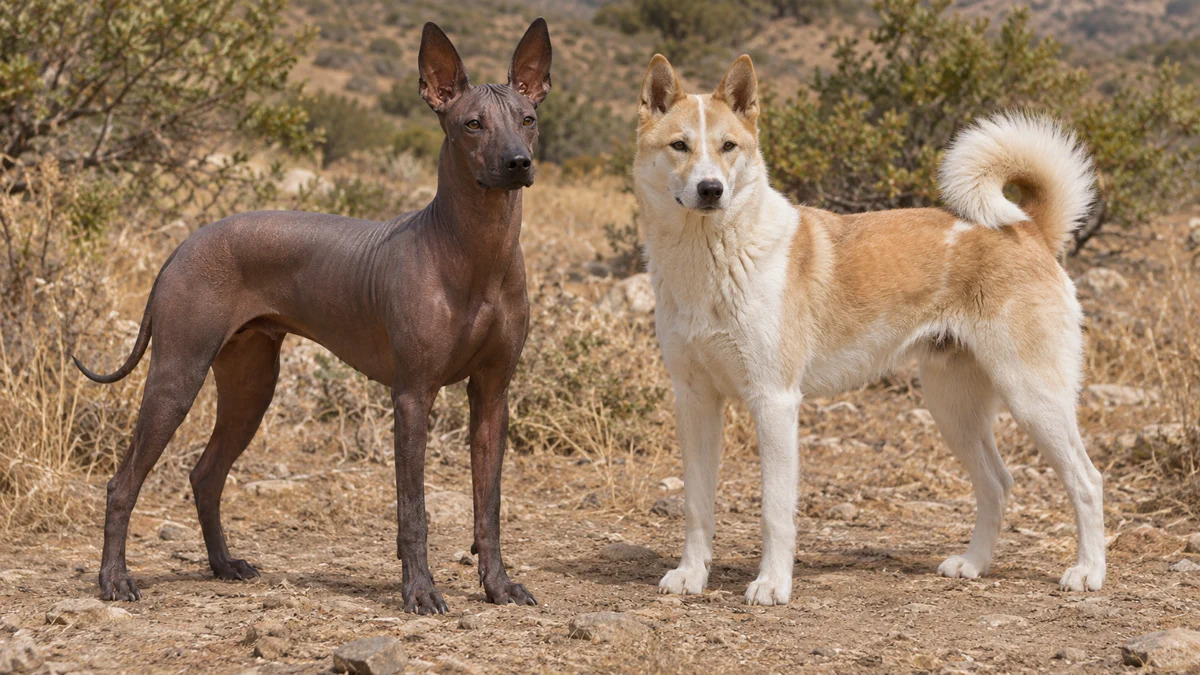
The Canaan Dog is the national dog of Israel and represents an ancient pariah-dog type.
It is a medium-sized, athletic dog with erect ears, a harsh double coat and curled brush tail.
Canaan Dogs historically functioned around livestock and property and remain highly alert.
They can be loyal and affectionate with family while remaining cautious or aloof toward unfamiliar people.
That temperament makes them fascinating but not automatically ideal for someone simply looking for an unusual-looking pet.
Unusual Does Not Mean Newly Created
Some of the strangest-looking breeds are actually very old.
The Xoloitzcuintli is an excellent example.
This Mexican breed has existed for thousands of years and comes in three sizes:
- Toy
- Miniature
- Standard
It also comes in two varieties:
- Hairless
- Coated
The hairless variety’s exposed skin makes the breed appear extremely unusual to people accustomed to coated dogs, but the Xolo is not a modern designer creation.
Similarly, Canaan Dogs, Sloughis and several other unusual breeds have deep historical working traditions.
11. Otterhound
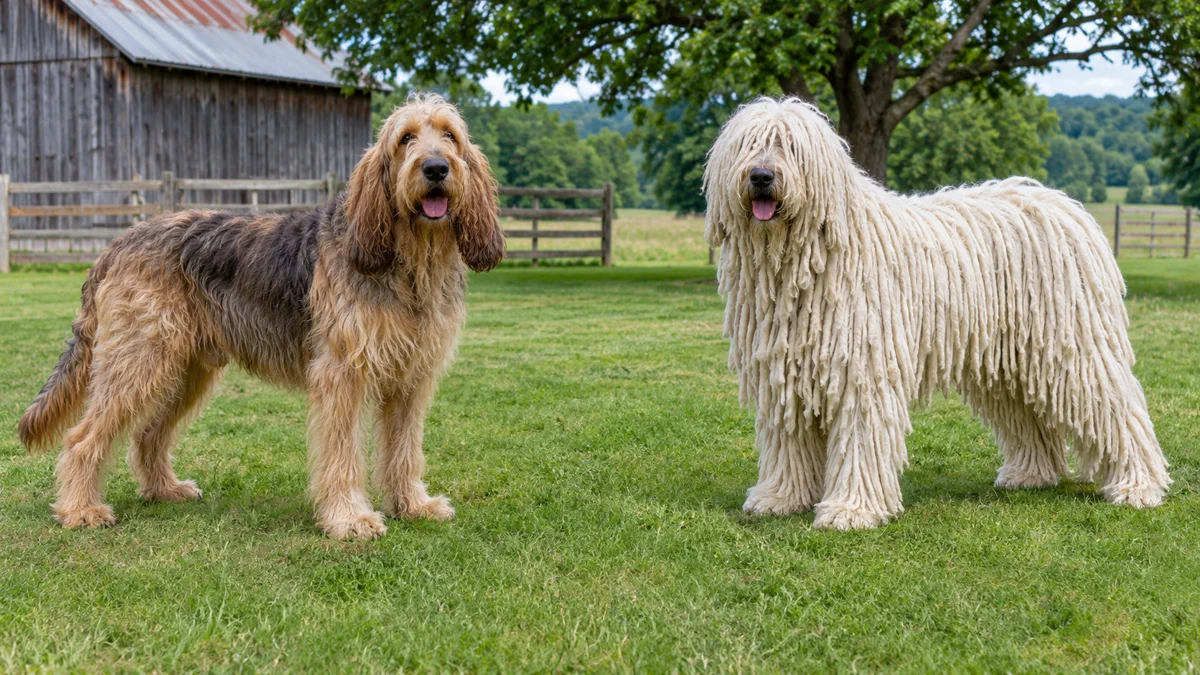
The Otterhound is a large British scent hound developed to follow quarry over both land and water.
Adult males are approximately 27 inches tall and around 115 pounds, while females are typically about 24 inches and 80 pounds.
The breed combines several distinctive working features:
- Large body
- Rough double coat
- Powerful scenting ability
- Substantial webbed feet
- Ability to work in water
Otter hunting no longer exists as the breed’s traditional job, and the Otterhound remains extremely uncommon.
It ranked No. 189 of 202 in the 2025 AKC popularity list, placing it among the least common breeds in the country.
12. Komondor
The Hungarian Komondor has one of the most immediately recognizable coats in the dog world.
Mature dogs develop long white cords that can cover much of the body.
The coat was functional rather than decorative. Komondors guarded livestock and needed protection from severe weather and potential predators.
The breed is large, powerful and independent.
A dramatic corded coat can make the dog appealing to someone looking for a weird or unique breed, but coat maintenance and guardian temperament are both serious ownership considerations.
Rare Large Dog Breeds
If you specifically want to research rare large dog breeds, examples include:
- Otterhound
- Komondor
- Chinook
- Azawakh
- Sloughi
- Kuvasz
- Scottish Deerhound
- Black Russian Terrier
- Entlebucher Mountain Dog
These breeds have little in common beyond being relatively uncommon and physically substantial.
An Otterhound is a scent hound, a Komondor is a flock guardian, an Azawakh is a sighthound and a Chinook is a sledding and working breed.
Never choose a rare large dog based on size or appearance before researching the breed’s original purpose.
Why Are Some Dog Breeds So Rare?
There is rarely one explanation.
A breed may remain uncommon because:
- Its original working role disappeared
- Its population almost became extinct historically
- Very few breeders exist outside its country of origin
- Its temperament fits a narrow type of owner
- Its grooming needs are demanding
- Its exercise requirements are high
- The breed entered a registry relatively recently
- Better-known breeds fill a similar companion or working niche
For example, people looking for a sighthound may encounter Greyhounds or Whippets long before discovering the Sloughi or Azawakh.
That does not make the rarer breed better or worse. It simply means fewer people encounter it.
Does Rare Mean Endangered?
Not automatically.
Low AKC registration numbers tell us that relatively few dogs of that breed were registered through AKC compared with other breeds.
They do not by themselves provide a global population count.
A breed may be uncommon in America but have a stronger population elsewhere.
When population preservation matters, national breed clubs and international kennel organizations are better sources than generalized internet “rarest dogs” lists.
Does Rare Mean Expensive?
Not necessarily.
Limited availability can influence price, transportation and waiting times, but rarity alone should never justify paying an extreme premium.
A responsible breeder’s priorities should include:
- Health testing
- Temperament
- Breed preservation
- Pedigree planning
- Puppy socialization
- Lifetime support
Marketing language such as “ultra rare,” “exclusive bloodline” or “one-of-a-kind color” should not replace evidence of responsible breeding.
Rare Breed vs Rare Color
These are different concepts.
A rare breed may have a small overall population.
A “rare color” usually refers to a less-common coat color or a color being marketed as unusual within a breed.
An unusual color does not create a new dog breed.
In some cases, breeders emphasizing extreme or nonstandard colors may be selecting primarily for appearance rather than the breed’s health, structure and temperament.
Are Weird-Looking Dog Breeds Unhealthy?
Not simply because they look unusual.
Many distinctive physical traits were originally functional.
Examples include:
- Lundehund feet adapted to rocky terrain
- Otterhound webbed feet for water work
- Komondor cords protecting a flock guardian
- Xolo hairlessness as a natural breed characteristic
- Azawakh’s lean body supporting sighthound movement
Health should be evaluated through breed-specific veterinary knowledge and recommended health testing, not by deciding that anything unfamiliar must be abnormal.
Beautiful Rare Dog Breeds
Beauty is subjective, but several uncommon breeds are particularly striking.
Azawakh
Extremely elegant lines and long legs create a dramatic sighthound outline.
Sloughi
The Sloughi combines a smooth coat, refined body and understated desert-hound appearance.
Komondor
The mature corded white coat is unlike almost any conventional companion-dog coat.
Cesky Terrier
The silky gray coat and long, low shape give the breed an unusual but refined appearance.
Xoloitzcuintli
The hairless variety combines exposed skin, large erect ears and a clean athletic outline.
Appearance is a valid reason to become interested in a breed, but it should never be the only reason you choose one.
Rare Dog Breeds Can Be Harder to Find
One practical difference between a common and rare breed is breeder access.
You may need to:
- Join a national breed club
- Contact breeders months in advance
- Travel to meet a breeder
- Wait for an appropriate litter
- Accept that puppies are not continuously available
A long wait is not necessarily a problem. For a preservation-focused breed with a small population, producing large numbers of puppies simply to satisfy demand would be irresponsible.
Rare Breeds and Genetic Diversity
Small breed populations can make breeding decisions more complicated.
Responsible breeders may need to balance:
- Genetic diversity
- Health test results
- Temperament
- Breed type
- Pedigree relationships
This is another reason to work with breeders who understand population health rather than selecting a puppy purely because the breed is unusual.
Are Rare Dogs Better Pets?
No.
Rarity tells you very little about whether a breed fits your home.
A rare breed may be:
- Highly independent
- Very active
- Strongly predatory
- Protective
- Vocal
- Difficult to groom
while an extremely common breed may be a much better match for your routine.
Choose for compatibility rather than exclusivity.
Are Rare Breeds Harder to Train?
Not because they are rare.
Training style is connected more closely with original breed function.
A Chinook was developed to cooperate in working teams and is generally trainable.
A sighthound such as a Sloughi may be more independent and sensitive.
A Canaan Dog may be watchful and cautious with strangers.
A Komondor was expected to make independent livestock-guarding decisions.
Understanding historical purpose gives you much more useful information than rarity ranking alone.
Should You Choose a Rare Dog Breed?
A rare breed can be a wonderful choice when you genuinely want the complete dog, not simply the novelty.
Before choosing one, ask:
- Does its normal temperament fit my household?
- Can I provide the required exercise?
- Can I manage the coat?
- Can I handle the adult size?
- Is prey drive or guardian behavior appropriate for my home?
- Are responsible breeders accessible?
- What breed-specific health tests should parents receive?
- Is veterinary experience with this breed available?
- Am I willing to wait for the right puppy?
- Would I still want this dog if it became popular tomorrow?
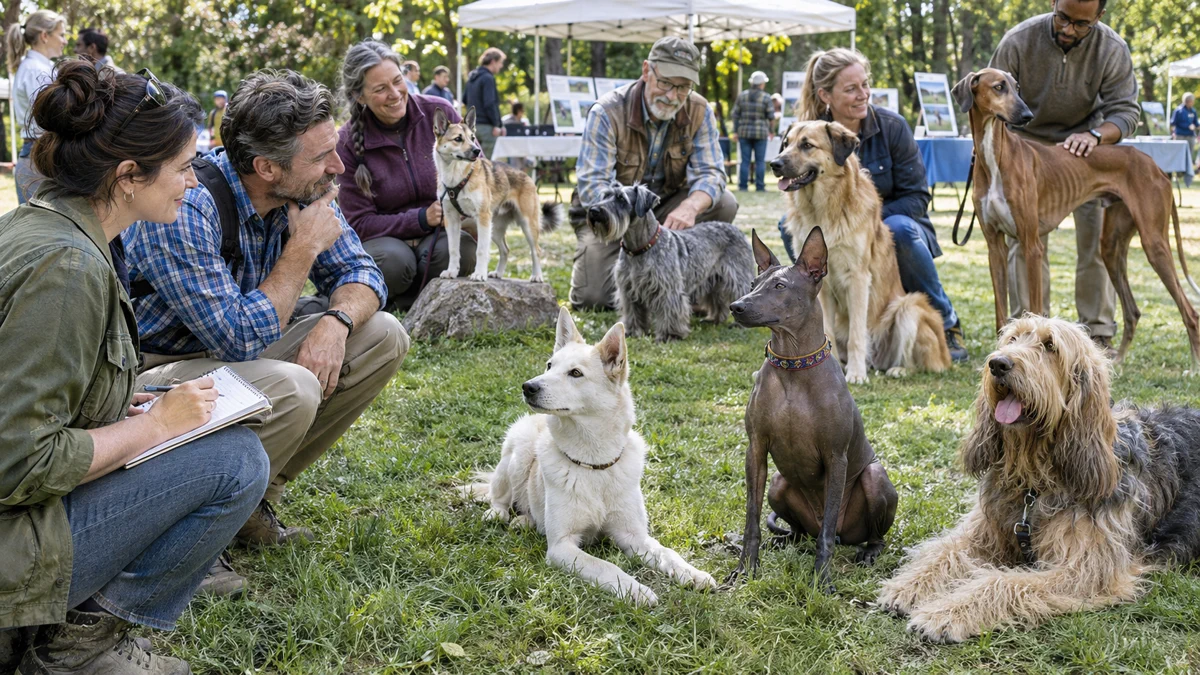
Rare Dog Breeds vs Popular Dog Breeds
Popularity and rarity exist on the same registration spectrum, but neither tells you which dog is better.
At one end of the AKC 2025 ranking were French Bulldogs, Labrador Retrievers and Golden Retrievers.
At the other end were Norwegian Lundehunds, Sloughis and Grand Basset Griffon Vendéens.
The ranking measures registration frequency, not intelligence, beauty, health or quality as a family companion.
For the other side of the spectrum, see our Popular Dog Breeds guide.
How to Research a Rare Breed Responsibly
Start with authoritative breed information rather than viral “weird dog” lists.
Useful sources include:
- National kennel club breed profiles
- National parent breed clubs
- Breed standards
- Breed-specific health organizations
- Experienced veterinarians
- Responsible breeders
- Owners who live with adult dogs from the breed
Pay particular attention to adult temperament and normal behavior rather than only puppy photos.
Final Thoughts
Rare dog breeds reveal just how diverse domestic dogs can be.
Norwegian Lundehunds developed extra functional toes and remarkable flexibility for coastal puffin hunting. Sloughis and Azawakhs evolved into elegant African sighthounds. Chinooks became American sled dogs. Cesky Terriers were deliberately developed as compact Czech hunting terriers. Otterhounds combined scenting ability with water-working anatomy, while Komondors protected livestock beneath extraordinary corded coats.
Other unusual-looking dogs, such as the Xoloitzcuintli and Canaan Dog, remind us that an unfamiliar appearance does not necessarily mean a newly created breed.
The most important distinction is between rarity and suitability.
A breed can be fascinating, beautiful and extremely uncommon while being completely wrong for your home. Research temperament, original function, exercise, grooming, health and breeder availability before rarity itself.
Choose a rare breed because its complete adult personality fits your life—not simply because very few other people own one.