By
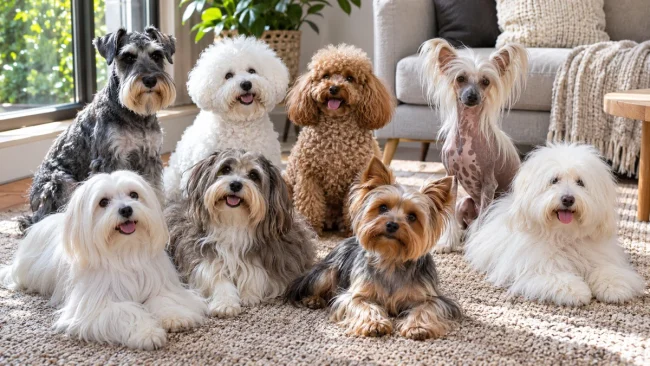
Small dog breeds that don’t shed much can be appealing if you live in an apartment, dislike loose hair on furniture, or simply want a compact companion with a more manageable shedding pattern.
But “doesn’t shed” needs some clarification. No dog is completely free of hair, skin cells, saliva, or allergens, and no breed can guarantee an allergy-free home. Some breeds simply release much less coat into the environment than heavy seasonal shedders.
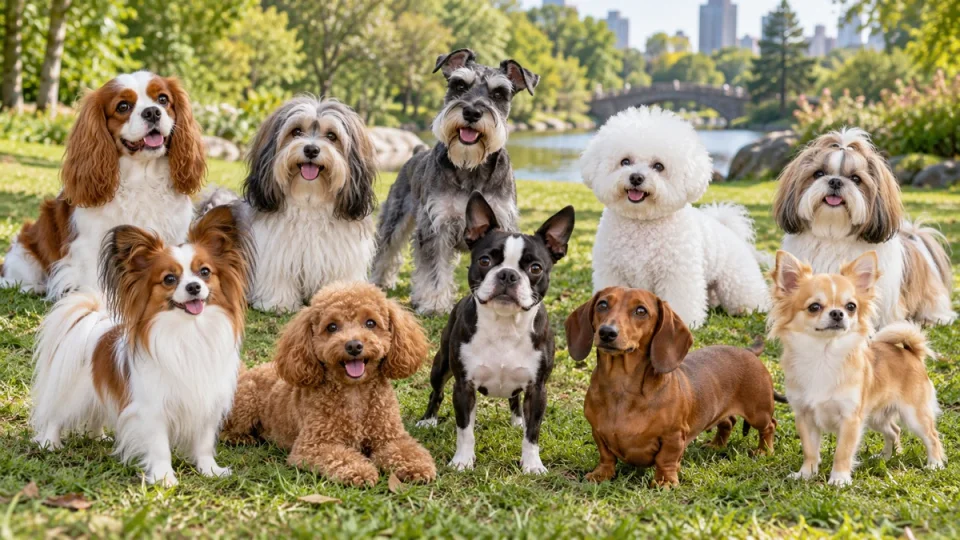
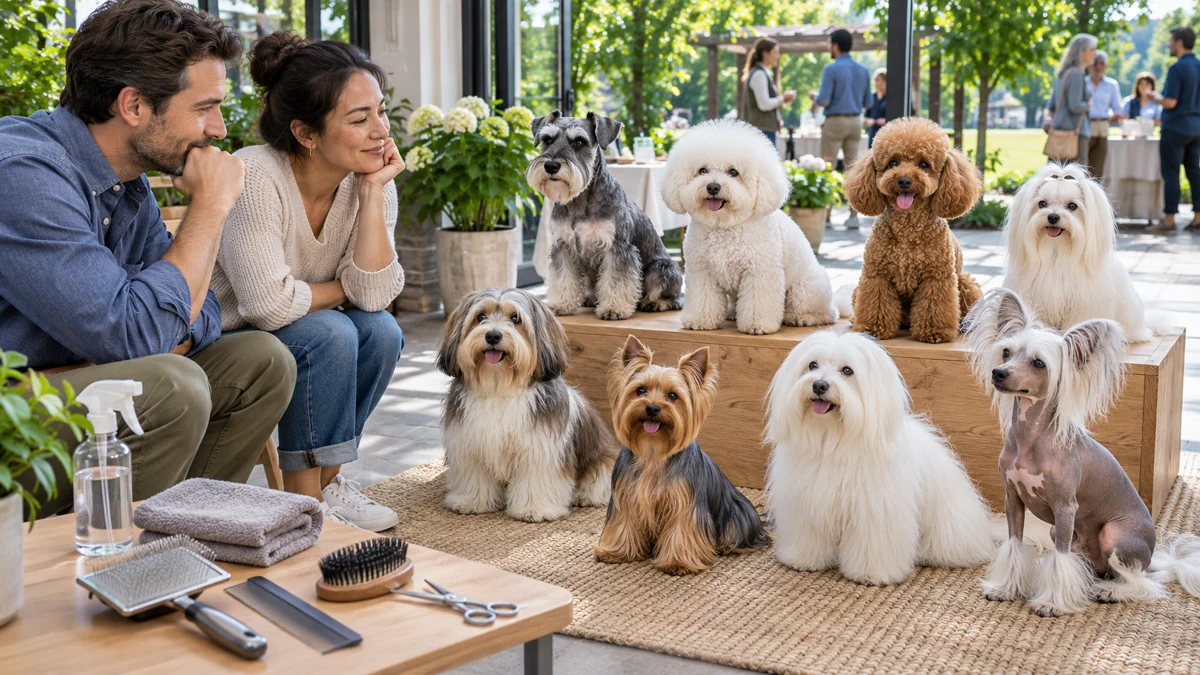
Low-shedding small breeds include Miniature Schnauzers, Bichon Frises, Toy and Miniature Poodles, Maltese, Havanese, Yorkshire Terriers, Coton de Tulear, and Chinese Crested dogs.
These dogs can be excellent choices for compact homes, but low shedding often comes with an important trade-off: the coat may require more brushing, trimming, clipping, or professional grooming because hair that does not fall out easily can continue growing or remain trapped in the coat.
If allergies are your main concern, see our broader Hypoallergenic Dog Breeds guide. If your main goal is simply less loose hair around the house, this article focuses specifically on smaller breeds and coat maintenance.
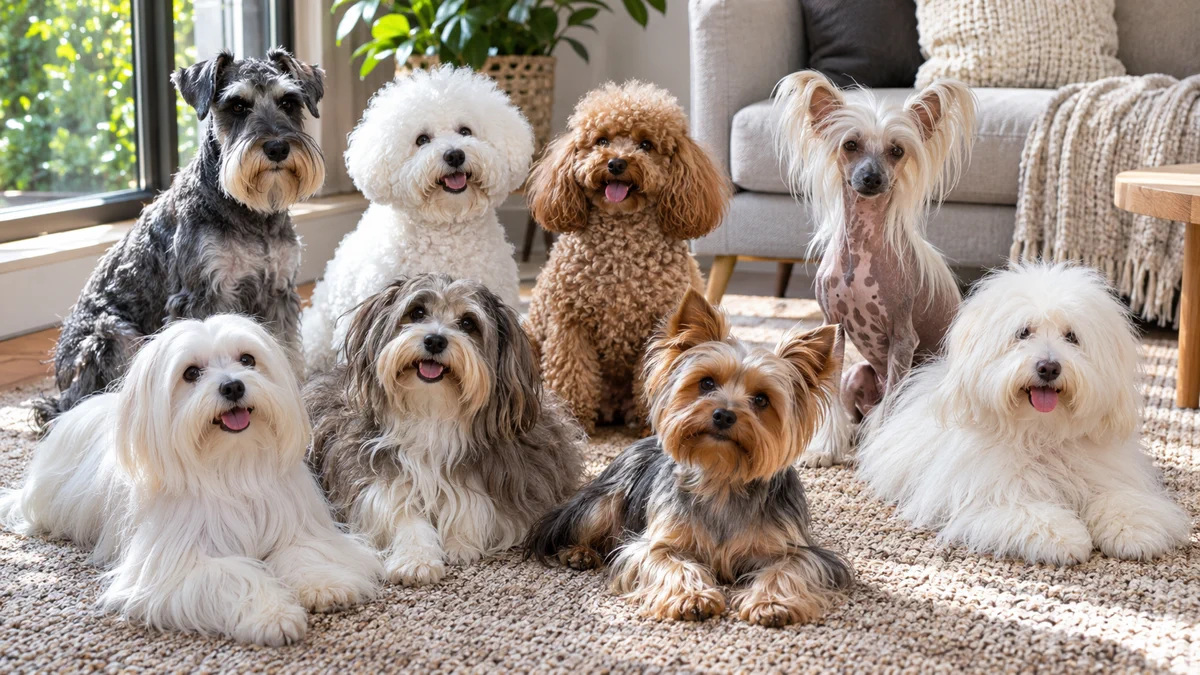
Do Any Small Dog Breeds Truly Not Shed?
Some breeds shed so little loose hair that they are commonly described as non-shedding dogs.
Bichon Frises are one example. Their hair continues growing, and AKC describes the breed as not shedding in the same way as ordinary molting coats.
Poodles, Maltese, Yorkshire Terriers, Schnauzers, and several other breeds also release relatively little loose coat compared with heavy double-coated dogs.
However, no dog is biologically maintenance-free.
Even a low-shedding dog still produces:
- Dander
- Saliva
- Skin oils
- Small amounts of loose hair
- Environmental debris carried in the coat
That distinction is especially important if someone in your household has dog allergies.
Low Shedding Is Not the Same as Hypoallergenic
The term “hypoallergenic dog” is frequently misunderstood.
No dog breed is guaranteed to prevent allergic reactions.
Dog allergies are generally triggered by proteins associated with dander, saliva, and other biological material rather than by the hair shaft itself.
Low-shedding coats can reduce the amount of loose hair carrying these particles around the home, which may help some people, but individual reactions vary.
Someone considering a dog because of allergies should spend meaningful time around adult dogs of the breed before committing whenever possible.
Quick Comparison of Small Low-Shedding Dog Breeds
| Breed | Adult Size | Shedding | Grooming Commitment |
|---|---|---|---|
| Miniature Schnauzer | About 11–20 lb | Low | Regular clipping and brushing |
| Bichon Frise | About 12–18 lb | Very low | High |
| Toy Poodle | About 4–6 lb | Very low | High |
| Miniature Poodle | About 10–15 lb | Very low | High |
| Maltese | Under about 7 lb | Low | Moderate to high |
| Havanese | About 7–13 lb | Low | Moderate to high |
| Yorkshire Terrier | About 7 lb | Low | Moderate to high |
| Coton de Tulear | Small | Low | High |
| Chinese Crested | Small | Little hair shedding in hairless variety | Skin or coat-specific care |
1. Miniature Schnauzer
The Miniature Schnauzer is one of the most practical low-shedding small dogs for people who want a physically sturdy companion rather than an extremely tiny toy breed.
Adults typically stand about 12 to 14 inches and weigh approximately 11 to 20 pounds.
AKC describes the breed as a low-shedding companion with an outgoing personality and portable size.
The coat has two layers:
- A harder outer coat
- A softer undercoat
Show dogs may be hand stripped, but most pet Miniature Schnauzers are clipped regularly for easier maintenance.
That means less hair on the sofa does not eliminate grooming costs.
Miniature Schnauzers are also genuine terriers with alert, active personalities, so prospective owners should consider barking, exercise, and mental stimulation in addition to coat type.
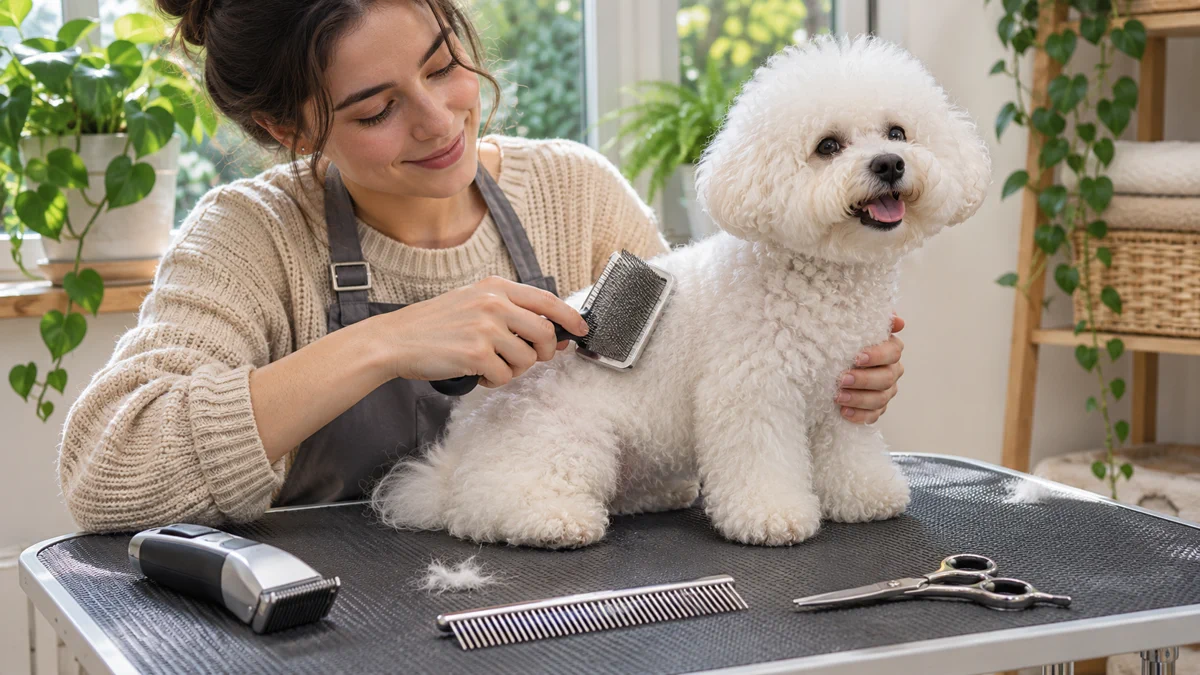
2. Bichon Frise
The Bichon Frise is one of the classic examples of a dog frequently chosen for a low-shedding coat.
AKC notes that the Bichon’s hair continues to grow and does not shed like a typical molting coat.
Loose hair tends to become trapped within the curly coat rather than immediately dropping onto furniture.
That sounds convenient, but trapped loose hair can contribute to tangles and mats if the coat is neglected.
Bichons therefore need:
- Frequent brushing
- Regular combing
- Bathing
- Routine clipping
- Professional grooming for many households
The result is less loose hair around the home but more active coat maintenance.
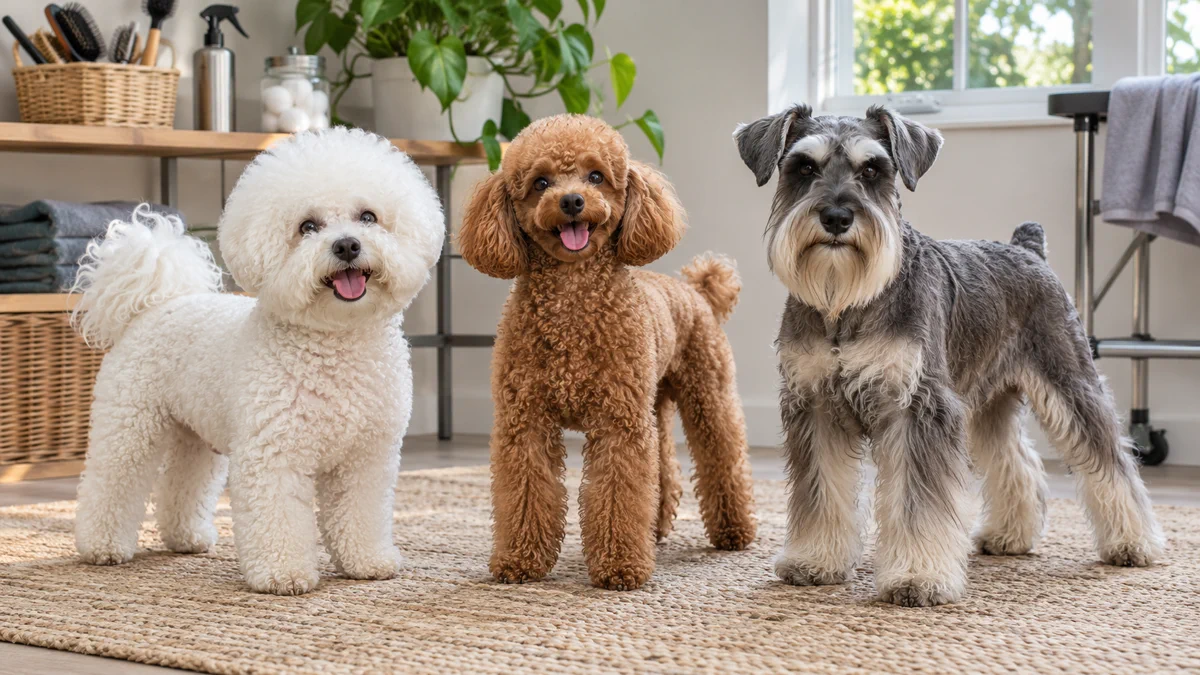
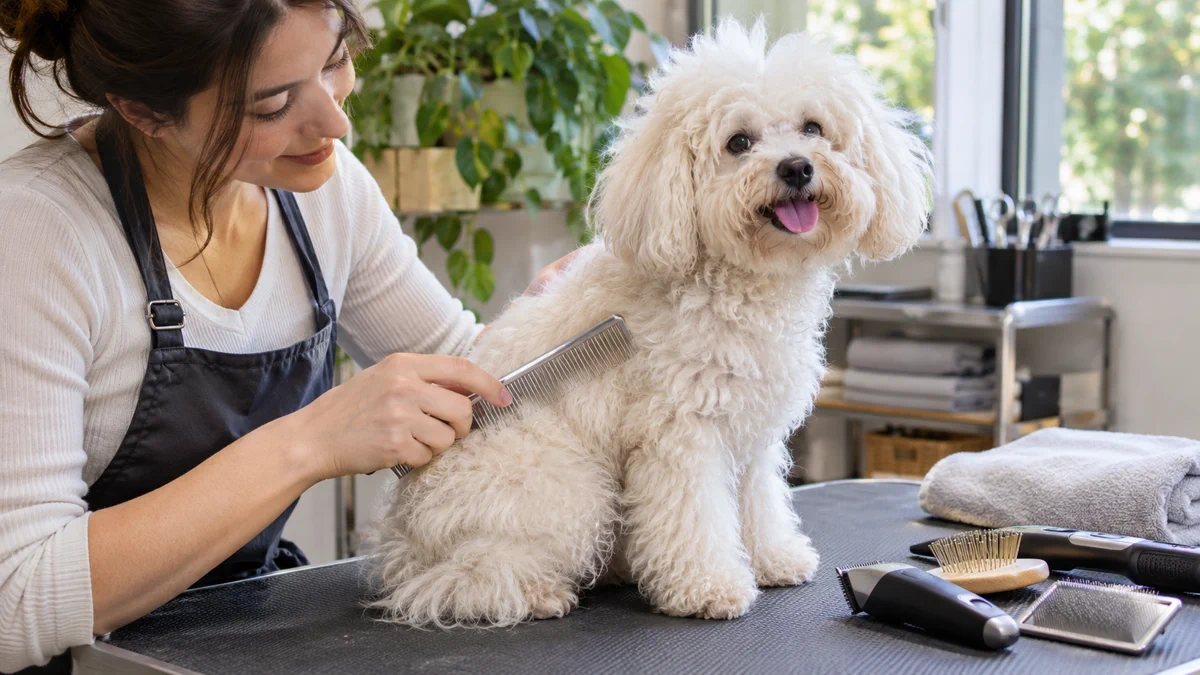
3. Toy and Miniature Poodles
Poodles are among the best-known low-shedding breeds.
For compact homes, the Toy and Miniature varieties provide the same characteristic curly coat in smaller bodies than the Standard Poodle.
Toy Poodles generally weigh about 4 to 6 pounds, while Miniature Poodles are larger but still compact.
Their curly coat sheds relatively little loose hair into the environment, but it grows continuously and requires regular maintenance.
Most companion Poodles need:
- Brushing
- Combing
- Regular clipping
- Bathing
- Ear and nail care
Poodles are also highly intelligent and active dogs, so choosing one simply for its coat would overlook a major part of the breed’s personality.
4. Maltese
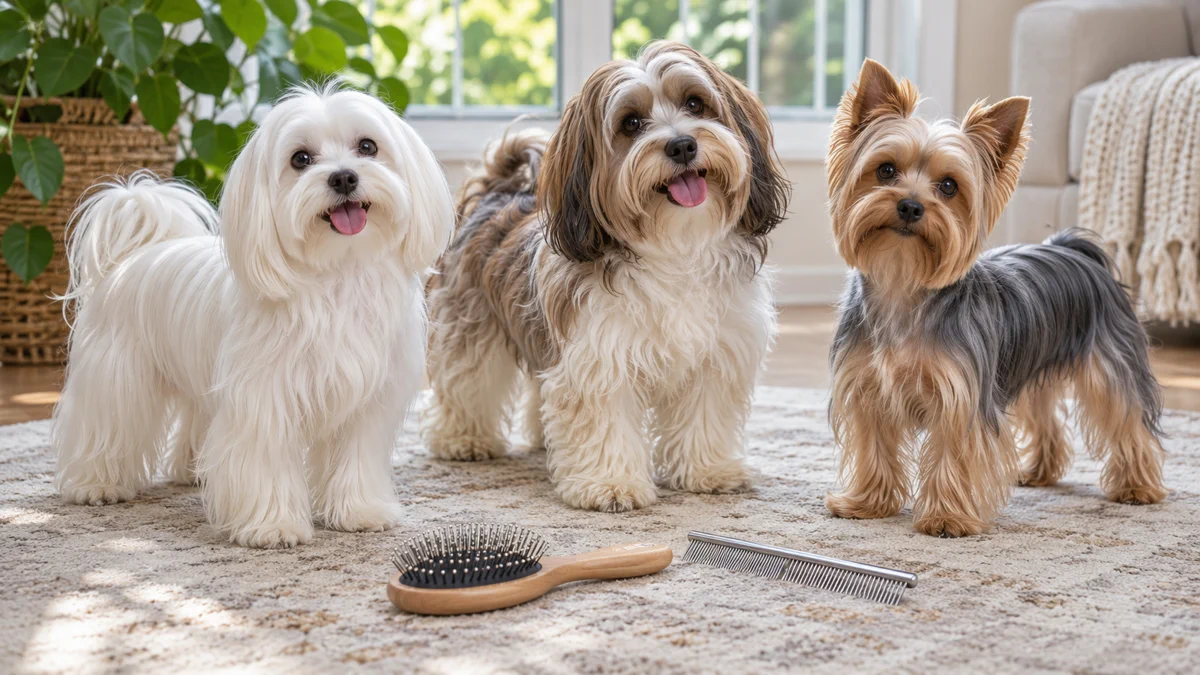
The Maltese combines extremely small adult size with long, silky white hair.
Unlike the heavy seasonal coat of a northern breed, Maltese hair follows a longer growth cycle and produces relatively little loose shedding around the home.
A traditional long coat requires frequent brushing and combing.
Many family pets are therefore kept in shorter companion trims.
A shorter trim reduces daily coat length but does not eliminate the need for grooming.
Maltese can work well in compact homes because of their size, but they are social companion dogs and still need walks, training, play, and regular interaction.
5. Havanese
The Havanese is a small, sturdy companion breed with a soft coat that can grow long.
The breed is often included among dogs considered by people who want lower shedding.
Havanese coats still need regular brushing because loose hair and friction can produce tangles, especially:
- Behind the ears
- Under the legs
- Around harness contact points
- On the chest
- Along longer furnishings
Havanese are highly companion-oriented dogs, so they may be more difficult for households where the dog routinely spends very long periods alone.
6. Yorkshire Terrier
Yorkshire Terriers are tiny dogs with fine, silky hair rather than a heavy shedding double coat.
Their adult weight is generally around 7 pounds.
Yorkies release relatively little loose hair compared with many conventional shedding breeds, but the traditional long coat needs significant maintenance.
Many pet Yorkies wear a practical shorter trim.
Do not let the elegant coat hide the breed’s temperament: Yorkshire Terriers still have genuine terrier confidence, alertness, and curiosity.
7. Coton de Tulear
The Coton de Tulear is a small companion breed known for its soft white coat and cheerful temperament.
AKC includes Cotons among breeds commonly considered by people seeking lower-shedding dogs.
However, the long coat requires regular maintenance and can mat if neglected.
AKC recommends daily grooming for the breed’s long coat.
This makes the Coton another good example of the difference between low shedding and low maintenance.
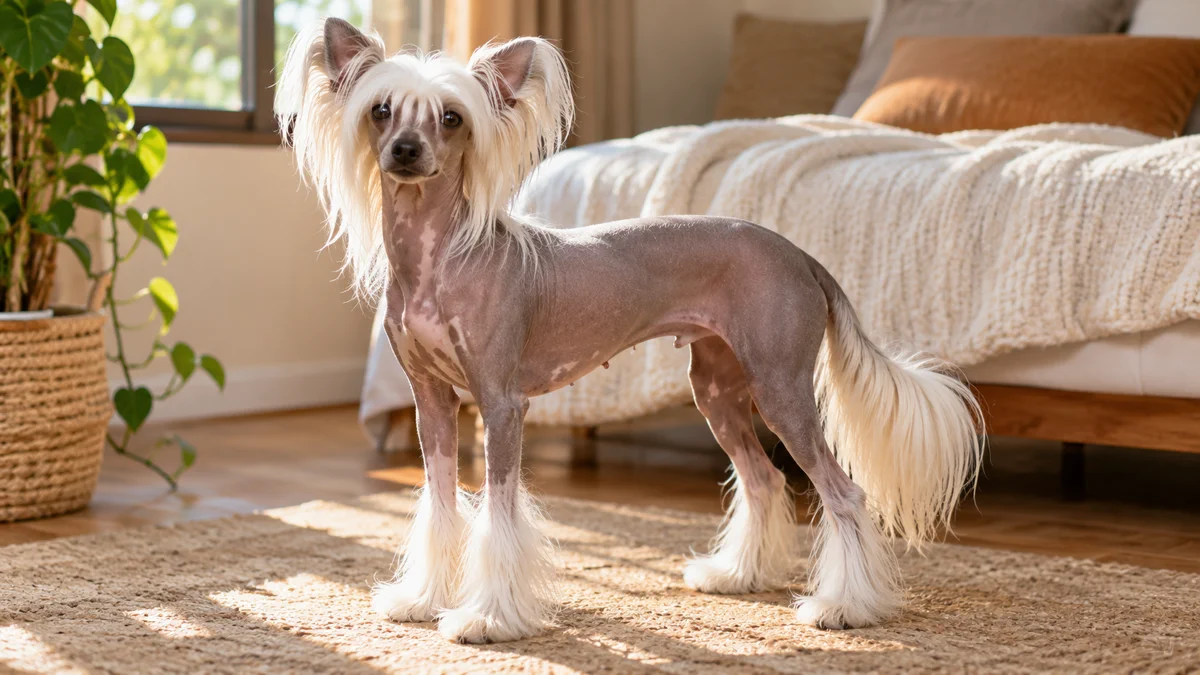
8. Chinese Crested
The Chinese Crested offers a completely different approach to reducing loose coat.
The breed comes in two varieties:
- Hairless
- Powderpuff
The hairless variety has exposed skin over most of its body, with hair typically remaining on the head, feet, and tail.
AKC describes Chinese Cresteds as shedding little to no hair.
But hairless does not mean maintenance-free or allergy-free.
Hairless dogs still produce dander and saliva, and exposed skin requires appropriate care.
Hairless Small Dogs Still Need Care
Removing most of the coat changes the maintenance rather than eliminating it.
Hairless dogs may require attention to:
- Skin cleanliness
- Dryness
- Sun exposure
- Cold temperatures
- Normal bathing
Do not apply human skincare products or sunscreens without confirming that they are appropriate for dogs.
Small Dogs That Shed Less vs Double-Coated Small Dogs
Low-shedding dogs behave very differently from compact double-coated breeds such as Pomeranians.
A Pomeranian is tiny but has a dense double coat that can release significant hair.
A Toy Poodle may be similar in body size while producing far less loose coat, but the Poodle needs regular clipping.
The trade-off looks something like this:
| Coat Type | Loose Hair Around Home | Typical Grooming Work |
|---|---|---|
| Low-shedding curly coat | Lower | Frequent brushing and clipping |
| Long silky low-shedding coat | Lower | Regular brushing and trimming |
| Dense double coat | Higher | Regular brushing and seasonal undercoat removal |
| Hairless | Very little coat shedding | Skin-specific maintenance |
Low Shedding Does Not Mean Low Grooming
This is probably the most important practical lesson in the article.
With many low-shedding dogs, loose hair does not simply fall out and disappear from the coat.
Instead, it may:
- Remain trapped in curls
- Tangle with surrounding hair
- Form mats
- Require brushing or clipping to remove
Bichons and Poodles illustrate this clearly.
They may leave less visible hair around the house while requiring much more scheduled grooming than a short-coated shedding breed.
How Often Do Low-Shedding Dogs Need Grooming?
The schedule depends on breed, coat length, and hairstyle.
A Poodle or Bichon in a short practical clip may still need regular professional grooming every several weeks.
A Maltese or Yorkshire Terrier kept in long coat may need frequent brushing to prevent tangles.
A Miniature Schnauzer usually requires routine clipping or another coat-maintenance method.
Before choosing a breed, calculate both:
- How much time you can spend brushing at home
- How much professional grooming you can budget for
Are Small Low-Shedding Dogs Good for Apartments?
Many can be excellent apartment dogs because their physical footprint is small.
But coat type is only one part of apartment compatibility.
Also consider:
- Barking
- Daily exercise
- Separation tolerance
- Hallway noise
- Elevator use
- House-training routine
- Neighbor proximity
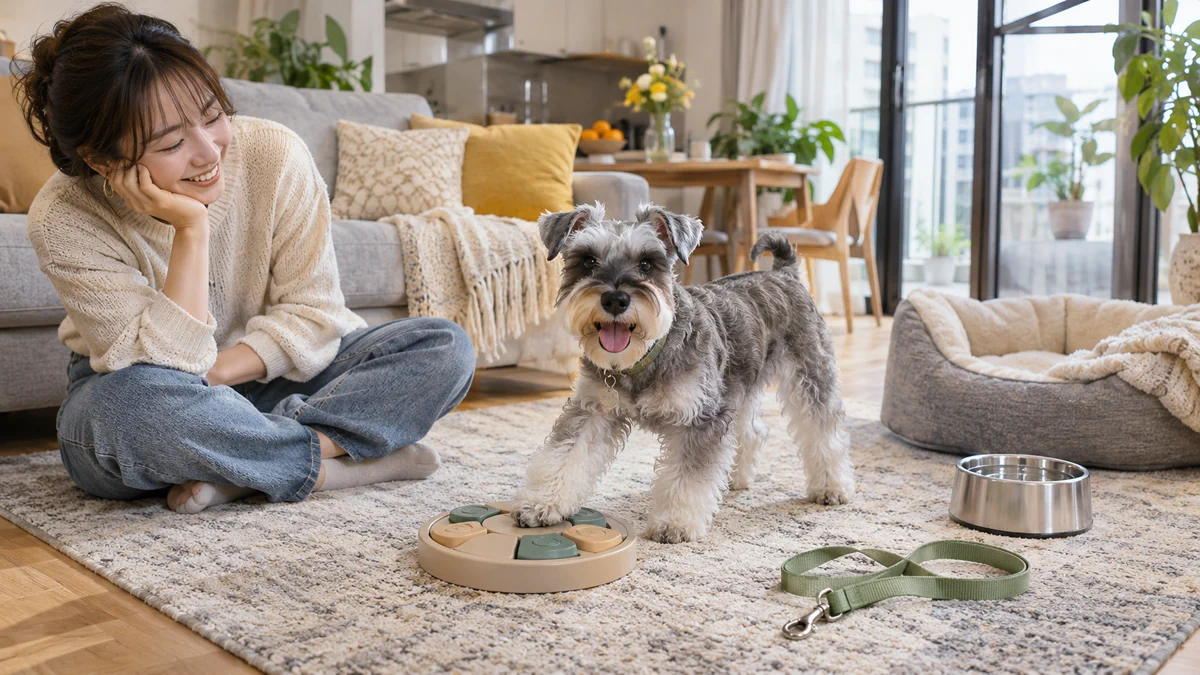
A Miniature Schnauzer, for example, may shed relatively little but can be alert and vocal.
A Havanese may fit physically into a studio apartment but still dislike spending the entire workday alone.
The best compact-home dog is therefore one whose behavior fits the home as well as its body size.
Which Small Low-Shedding Dog Is Easiest to Groom?
There is no universally easiest option.
Miniature Schnauzers have relatively low shedding but require clipping.
Bichons and Poodles require regular coat maintenance and professional grooming in many homes.
Maltese and Yorkies can be easier when maintained in shorter pet trims, but the hair continues to need brushing and trimming.
Chinese Cresteds avoid much of the coat-maintenance problem but introduce skin-care considerations.
Choose the type of maintenance you are comfortable performing rather than searching for a dog that requires none.
Which Small Low-Shedding Dogs Are Most Trainable?
Toy and Miniature Poodles are excellent examples of highly trainable small dogs.
Miniature Schnauzers are intelligent and responsive but retain an alert terrier personality.
Havanese and Bichons can also learn well with consistent positive reinforcement.
Trainability is independent of shedding level, so compare personality separately from coat.
Which Small Low-Shedding Dogs Are Better for Families?
Potential family options include Bichon Frises, Havanese, Miniature Schnauzers, and some Poodles depending on the household.
But no breed is automatically child-safe.
Small dogs can be physically vulnerable to rough handling, and young children need supervision.
Consider:
- Dog size
- Child age
- Individual temperament
- Noise level
- Exercise needs
- Ability to supervise interactions
Do Low-Shedding Dogs Smell Less?
Not automatically.
Odor depends on skin health, ears, dental health, coat cleanliness, moisture, and individual biology.
A neglected low-shedding coat can trap dirt and moisture just as easily as another coat type.
Regular grooming and veterinary care matter more than a marketing label.
Do Low-Shedding Dogs Need Baths More Often?
Not necessarily.
Bathing schedules should reflect coat type, skin health, lifestyle, and professional grooming recommendations.
Excessive bathing can irritate some dogs’ skin, while insufficient grooming can allow oil and debris to accumulate.
A professional groomer can help you establish a practical routine for continuously growing coats.
Low Shedding vs Low Maintenance
These terms should never be treated as synonyms.
A low-maintenance coat is one that requires relatively little brushing, trimming, clipping, or professional grooming.
A low-shedding coat simply releases less loose hair into the environment.
Many classic low-shedding dogs are actually high-maintenance from a grooming perspective.
For example:
- Poodle — low shedding, high grooming
- Bichon Frise — low shedding, high grooming
- Maltese — low shedding, potentially high brushing
- Yorkshire Terrier — low shedding, regular hair maintenance
- Miniature Schnauzer — low shedding, routine clipping
What If Someone in the Home Has Dog Allergies?
Do not choose a dog based solely on the word “hypoallergenic.”
Dog allergens are associated with dander, saliva, and other proteins, so even hairless and low-shedding dogs can trigger reactions.
If allergies are significant:
- Speak with an allergist or doctor
- Spend time with adult dogs of the breed before committing
- Keep dogs out of bedrooms if recommended
- Wash hands after close contact
- Use appropriate home cleaning and filtration
- Consider professional grooming if grooming triggers symptoms
Individual reactions can differ even between dogs of the same breed.
Are Designer Poodle Mixes Guaranteed to Be Low-Shedding?
No.
Crossing a Poodle with another breed does not guarantee that every puppy will inherit a predictable non-shedding coat.
Mixed-breed dogs receive combinations of genes from both parents, and coat type can vary even within the same litter.
If predictable shedding level is one of your highest priorities, an established breed with a consistent coat type may provide more predictability.
Small Low-Shedding Dogs vs Smallest Dogs
These are also different search goals.
A Chihuahua may be smaller than a Miniature Schnauzer, but most Chihuahuas are not selected primarily for a non-shedding coat.
A Bichon may weigh more than a Toy Poodle while releasing relatively little loose hair.
If adult size matters more than shedding, see our guide to the Smallest Dog Breeds.
What About Large Dogs That Shed Less?
Low shedding is not limited to small breeds.
Standard Poodles, Giant Schnauzers, Portuguese Water Dogs, Irish Water Spaniels, and some other larger breeds may also appeal to people seeking less loose hair.
However, their exercise, body size, and grooming requirements are very different from compact companion dogs.
For that search intent, see our Large Low-Shedding Dog Breeds guide.
Which Small Low-Shedding Breed Is Right for You?
| If Your Priority Is… | Start Researching… |
|---|---|
| Sturdy small dog with low shedding | Miniature Schnauzer |
| Cheerful curly-coated companion | Bichon Frise |
| Very trainable tiny dog | Toy Poodle |
| Small trainable dog with more substance | Miniature Poodle |
| Very small silky companion | Maltese |
| Social apartment companion | Havanese |
| Tiny dog with terrier confidence | Yorkshire Terrier |
| Soft-coated companion dog | Coton de Tulear |
| Minimal body hair | Hairless Chinese Crested |
Questions to Ask Before Choosing a Low-Shedding Small Dog
- Is my priority less loose hair or allergy management?
- Can I afford professional grooming every few weeks?
- How often am I willing to brush at home?
- Do I want a terrier, toy dog, or companion breed personality?
- How much barking can my household tolerate?
- How much daily exercise can I provide?
- How long will the dog normally be alone?
- Do I have young children?
- Am I prepared for dental, nail, ear, and skin care?
- Have I spent time around this breed if allergies are involved?
Final Thoughts
Small low-shedding dog breeds can reduce the amount of loose hair around a compact home, but the phrase “doesn’t shed” should not be interpreted as “requires no grooming” or “cannot trigger allergies.”
Miniature Schnauzers offer a sturdier terrier option. Bichon Frises and Poodles release very little loose coat but require regular clipping. Maltese, Havanese, and Yorkshire Terriers combine small bodies with longer hair that needs consistent maintenance. Chinese Cresteds can minimize coat shedding dramatically but replace coat care with skin-specific needs.
The key trade-off is simple: less hair on your furniture often means more active grooming on the dog.
Choose based on the complete lifestyle—not only what your vacuum cleaner will collect.
Compare exercise, barking, coat care, training, time alone, family compatibility, and your actual allergy response before deciding which small low-shedding breed fits your home.