By
By 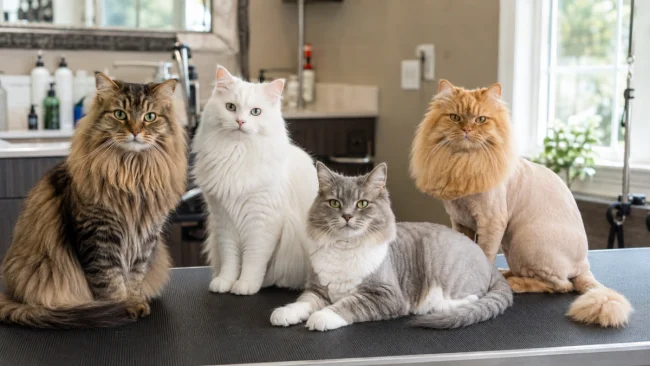
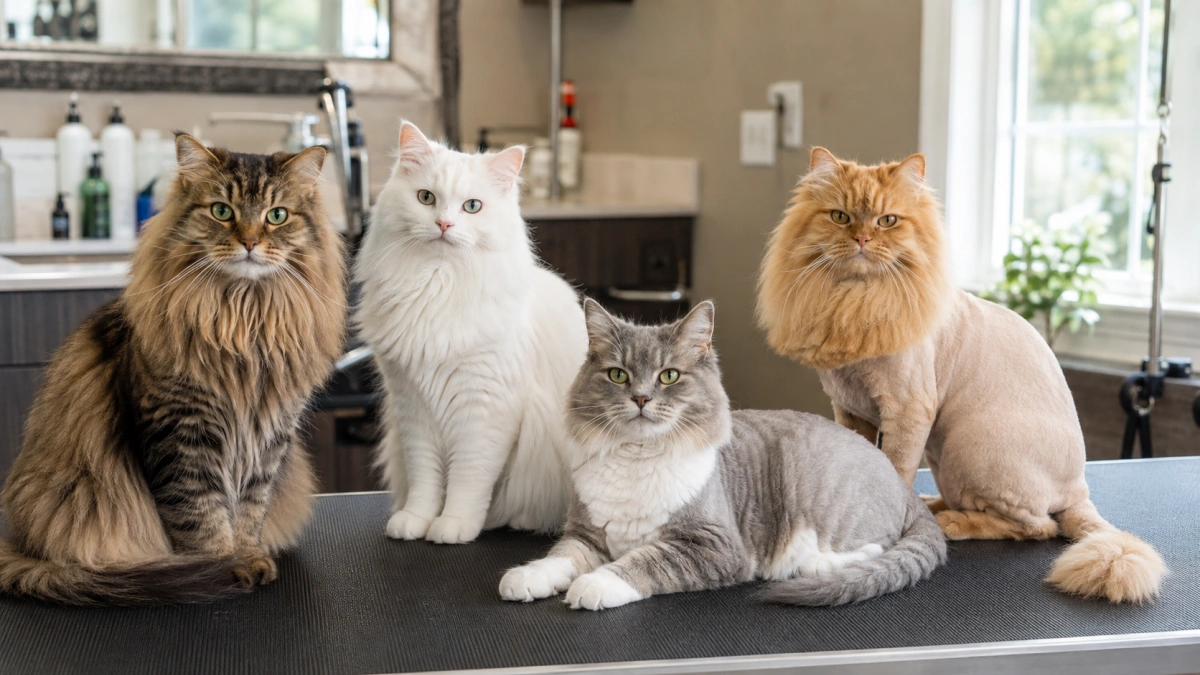
Cat grooming styles range from keeping the natural coat fully brushed to limited sanitary trims, belly trims, longer comb cuts and much shorter lion cuts. The important point is that most cats do not need a haircut simply because grooming is due.
A haircut makes the most sense when it solves a specific coat-management problem, such as repeated matting, hygiene trouble around long rear fur, a coat that can no longer be maintained comfortably, or a professional grooming plan designed around the individual cat.
Haircuts are therefore only one part of grooming a cat. A healthy coat that can be maintained with brushing and combing may be better left at its natural length.
Does Every Cat Need a Haircut?
No.
For many healthy short-haired cats and well-maintained long-haired cats, brushing, combing, nail care and occasional cleaning are enough.
The coat itself serves useful functions, and removing large amounts of healthy fur should not automatically be treated as part of every grooming appointment.
Before choosing a haircut, ask:
- Is the coat actually difficult to maintain?
- Does the cat have recurring mats?
- Is long fur causing a hygiene problem?
- Can ordinary brushing and combing solve the problem?
- Is the haircut for the cat’s practical benefit or mainly for appearance?
Cat Grooming Styles at a Glance
| Grooming Style | How Much Coat Is Removed? | Main Purpose |
|---|---|---|
| Natural coat groom | None beyond loose fur | Routine maintenance |
| Sanitary trim | Small local area | Rear-coat hygiene |
| Belly trim | Limited underside area | Reduce belly matting |
| Comb cut | Moderate, even shortening | Easier coat maintenance |
| Lion cut | Most body coat shortened | Major coat-management change |
| Mat-removal shave | Depends on matting | Remove coat that cannot be safely maintained |
1. Natural Coat Groom
The simplest grooming style is not actually a haircut at all.
The cat keeps its natural coat length while loose fur, small tangles and debris are removed through brushing and combing. Nails may also be trimmed and the coat cleaned if needed.
This is often the most appropriate finished result when:
- The coat is healthy.
- There is no severe matting.
- The owner can maintain it between appointments.
- Long fur is not creating hygiene problems.
- The cat does not need clipping for another reason.
A dramatic visual transformation is not required for grooming to have been useful.
2. Sanitary Trim
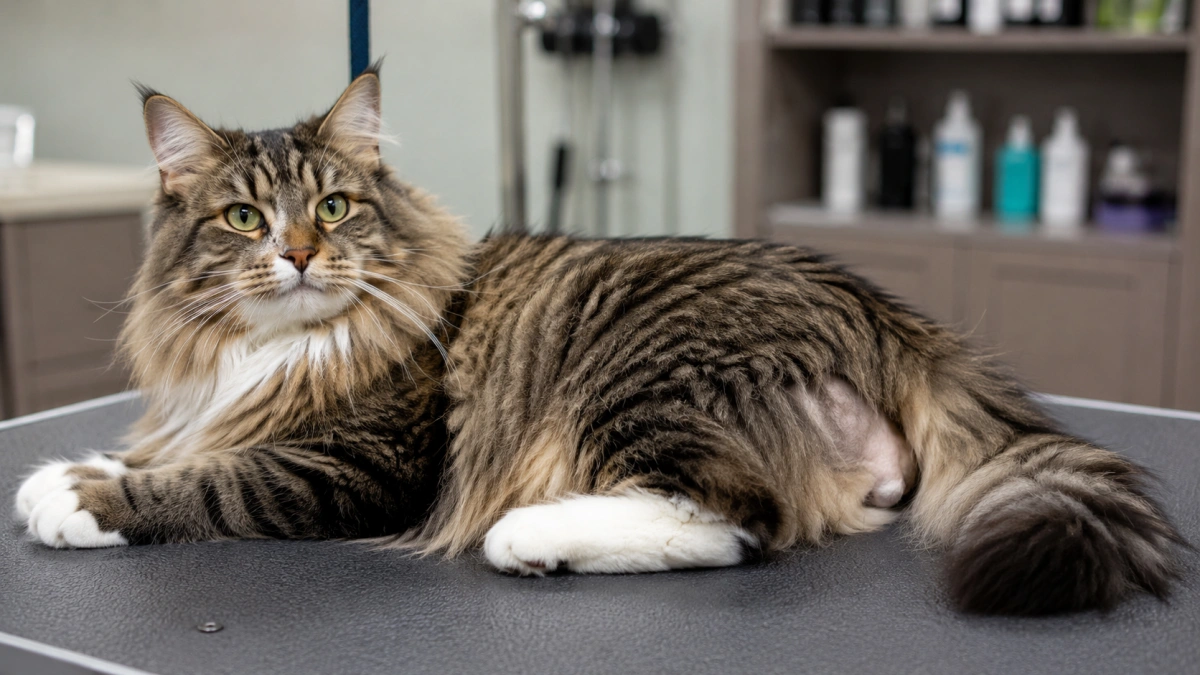
A sanitary trim shortens selected fur around the rear hygiene area while leaving the rest of the coat substantially unchanged.
This can help some long-haired cats that repeatedly collect litter or waste in long rear furnishings.
It is a good example of solving the smallest necessary problem rather than choosing a full-body haircut.
Who May Benefit From a Sanitary Trim?
- Long-haired cats with repeated rear-fur contamination
- Older cats that no longer clean the area effectively
- Cats with especially heavy rear furnishings
- Cats that only have a local hygiene problem
If the problem is limited to this area, there is usually no reason to assume the entire coat needs shortening.
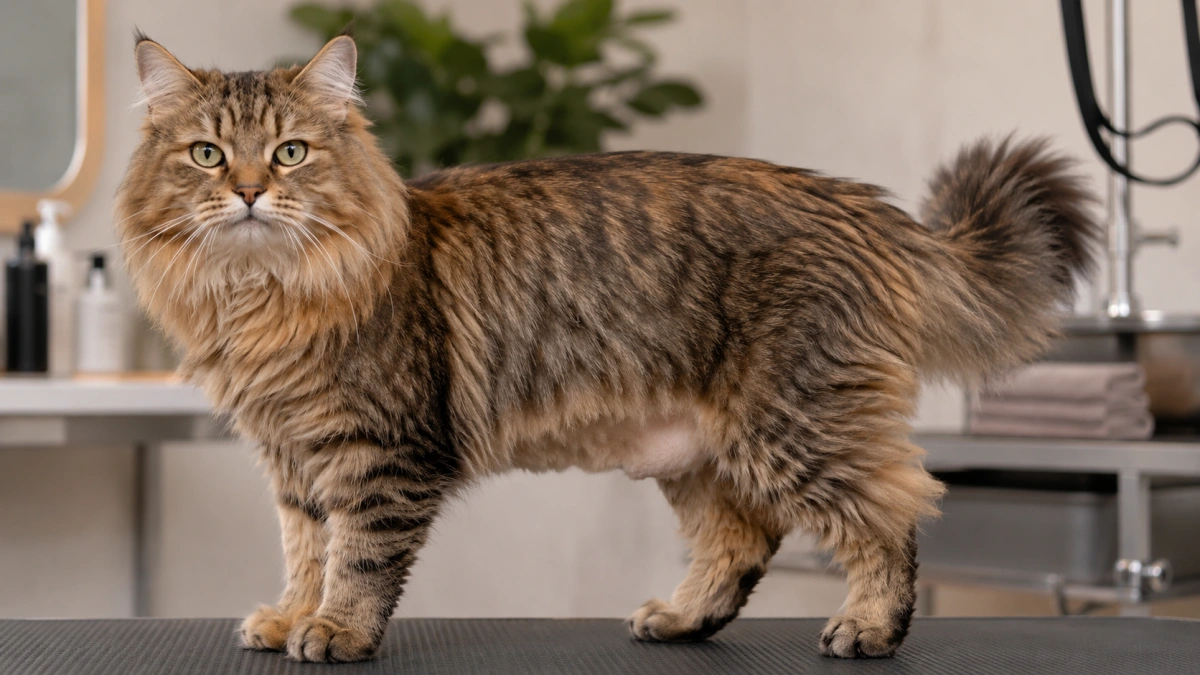
3. Belly Trim
A belly trim shortens fur underneath the abdomen while leaving much of the visible side and back coat at normal length.
It may be useful for cats that repeatedly form belly mats despite reasonable home grooming.
Because the trimmed area is underneath the body, the finished appearance can remain close to the cat’s normal look.
When Is a Belly Trim More Useful Than a Lion Cut?
When the problem is mainly underneath the cat.
For example, a long-haired cat may have a beautiful manageable back and side coat but consistently develop knots around the belly and inner hind legs.
In that situation, reducing coat only where the problem occurs may preserve more natural fur while still making maintenance easier.
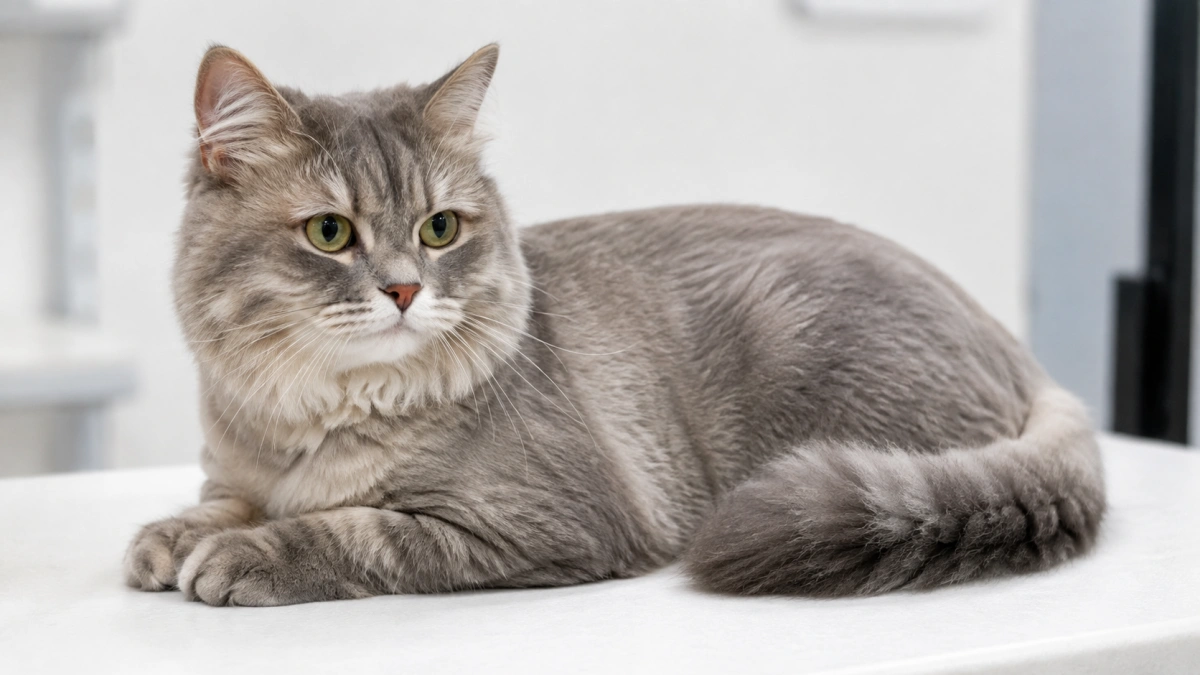
4. Comb Cut
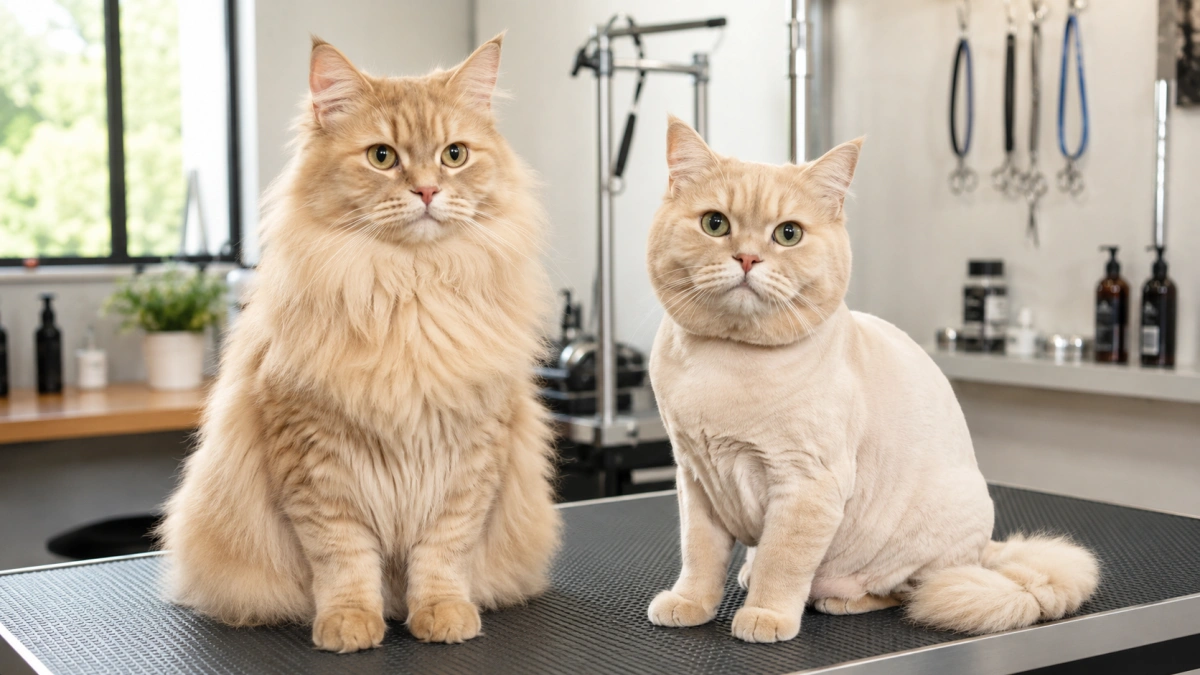
A comb cut shortens the body coat more evenly while leaving more length than a typical lion cut.
The result generally looks softer and fuller than a close clip.
This style may appeal to owners who need easier coat maintenance but do not want most of the body clipped very short.
Who Is a Comb Cut Best For?
It may be considered when:
- The coat is long but not severely matted.
- The owner wants easier brushing between appointments.
- A full lion cut would remove more coat than necessary.
- The cat can tolerate the professional clipping process.
The exact finished length depends on coat type, condition, grooming equipment and the groomer’s technique.
5. Lion Cut
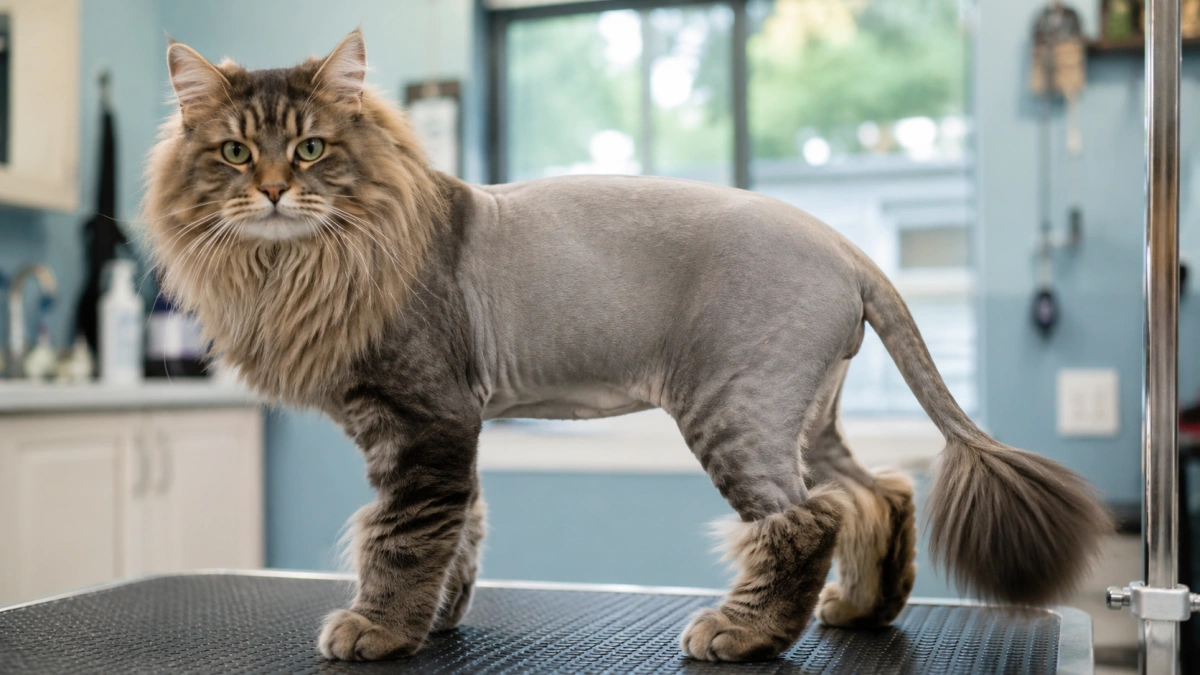
A lion cut is the most recognizable cat haircut.
Most of the torso coat is clipped short while fur is left fuller around the head and neck, usually with fuller lower legs and part of the tail.
It creates a dramatic visual difference, but appearance should not be the only reason to choose it.
When Can a Lion Cut Be Useful?
A lion cut may be considered when:
- A long coat repeatedly develops serious mats.
- Existing matting makes ordinary maintenance impractical.
- The cat cannot maintain a difficult long coat.
- A professional groomer determines that substantial clipping is the most manageable option.
A healthy long-haired cat does not automatically need a lion cut simply because summer has arrived.
For a deeper explanation of the benefits, limitations, regrowth and aftercare, see our guide to lion cut cat grooming.
6. Mat-Removal Shave
Not every short haircut is really a style choice.
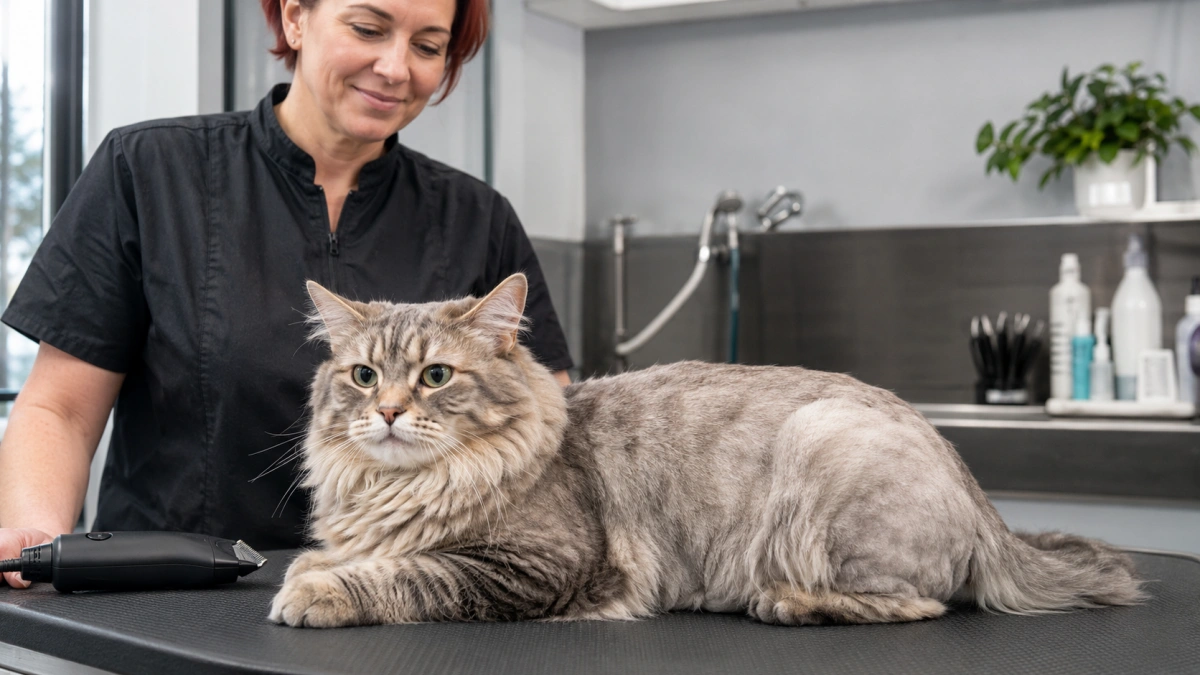
Sometimes a groomer has to remove coat because matting is too dense to brush or comb out comfortably.
The final result may be shorter or less visually uniform than an elective haircut because safety and removal of problematic coat take priority over appearance.
Why a Mat-Removal Groom May Look Different From the Style You Requested
A groomer cannot always preserve the same coat length across severely matted areas.
If one section can be safely maintained and another has a tight mat sitting near the skin, the practical clipping depth may differ.
This is one reason an experienced groomer should assess coat condition before promising an exact finished appearance.
What About a Teddy Bear Cut?
The term “teddy bear cut” is not always used consistently across feline grooming businesses.
In general, owners using the term usually mean a softer, longer, evenly shortened body coat rather than a close lion cut.
Because terminology varies, showing the groomer a reference photo and discussing the desired remaining coat length is more useful than relying on the style name alone.
What About Breed or Show Grooming?
Show grooming is different from an ordinary pet haircut.
The goal may involve presenting the natural coat according to breed standards rather than shortening it into a pet-maintenance style.
Owners of ordinary companion cats generally do not need to reproduce show grooming procedures unless they are actually preparing for exhibition.
Which Cat Grooming Style Should You Choose?
Start with the problem rather than the haircut name.
| Your Main Problem | Style to Discuss |
|---|---|
| No coat problem, just loose fur | Natural coat groom |
| Rear fur repeatedly gets dirty | Sanitary trim |
| Belly repeatedly mats | Belly trim |
| Long coat is difficult but manageable | Comb cut |
| Major recurring long-coat problems | Lion cut may be considered |
| Dense existing matting | Professional mat-removal plan |
Does Coat Type Affect the Haircut?
Yes.
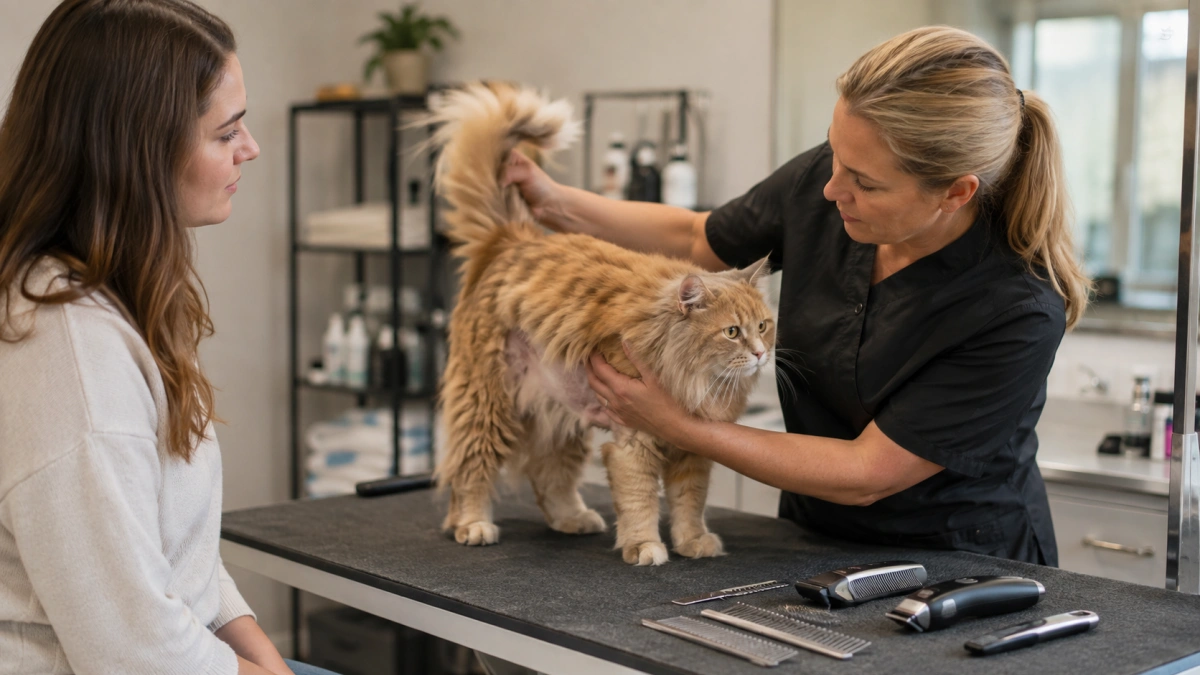
A dense Persian coat, shaggy Maine Coon coat and lighter domestic longhair coat do not necessarily clip or regrow in exactly the same way.
The same named haircut can therefore look different between cats.
Coat density, texture, previous matting and how much length is left all influence the result.
Should You Choose a Haircut Based on Shedding?
Shortening fur can make shed hairs less visually obvious and may reduce the amount of long loose coat moving around the home temporarily.
However, a haircut does not stop the biological shedding process.
If shedding is your only concern and the coat is otherwise healthy, regular brushing may solve the practical problem without requiring a full-body clip.
Should You Choose a Haircut for Summer?
Usually not based on season alone.
Healthy long-haired cats can often remain comfortable without being shaved when their coat is maintained properly and their environment provides appropriate cooling, shade and water.
A haircut should address a real coat-management need rather than automatically follow the calendar.
How to Talk to a Groomer About the Style You Want
Do not simply say, “Give my cat a haircut.”
Tell the groomer:
- Which areas are difficult to maintain
- Where mats usually develop
- Whether rear-fur hygiene is a problem
- How much coat you hope to preserve
- Whether your cat has been clipped before
- How your cat behaves during grooming
Ask the groomer what they expect the finished result to look like given the actual condition of the coat.
What Should You Expect After a Cat Haircut?
The visual change depends on how much coat was removed.
After a sanitary or belly trim, the difference may barely be visible when your cat is standing normally.
A comb cut produces a more noticeable but still plush result.
A lion cut can make the cat look dramatically different immediately after the appointment.
Our sibling article on cat grooming before and after explains which coat, shedding, cleanliness and appearance changes are realistic after different grooming services.
Final Thoughts
The best cat grooming style is not necessarily the most dramatic haircut.
For many cats, the correct style is simply a clean, brushed natural coat. When clipping is useful, choose the smallest change that solves the actual problem: a sanitary trim for hygiene, a belly trim for localized matting, a longer comb cut for easier maintenance or a lion cut when substantial coat management is genuinely needed.
Start with the cat’s coat condition and comfort, then choose the style—not the other way around.