By
By 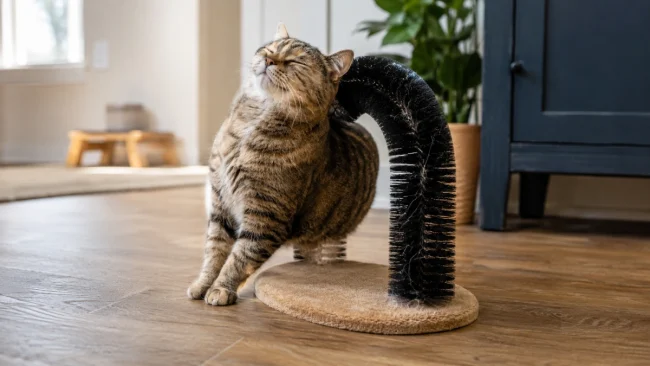
A cat self grooming arch is a simple enrichment tool that allows cats to rub their face, shoulders and back against a brush surface by themselves. Many cats enjoy this type of interaction because it combines scratching behavior, scent marking and gentle coat stimulation.
However, a self grooming arch should be understood correctly. It can help collect some loose surface fur and provide enrichment, but it does not replace brushing, combing, professional grooming or regular coat checks.
The best way to use a grooming arch is to treat it as an optional tool that supports your cat’s natural behaviors rather than a complete grooming solution.
For a complete grooming routine, combine enrichment tools like this with the techniques covered in our cat grooming tools guide.
What Is a Cat Self Grooming Arch?
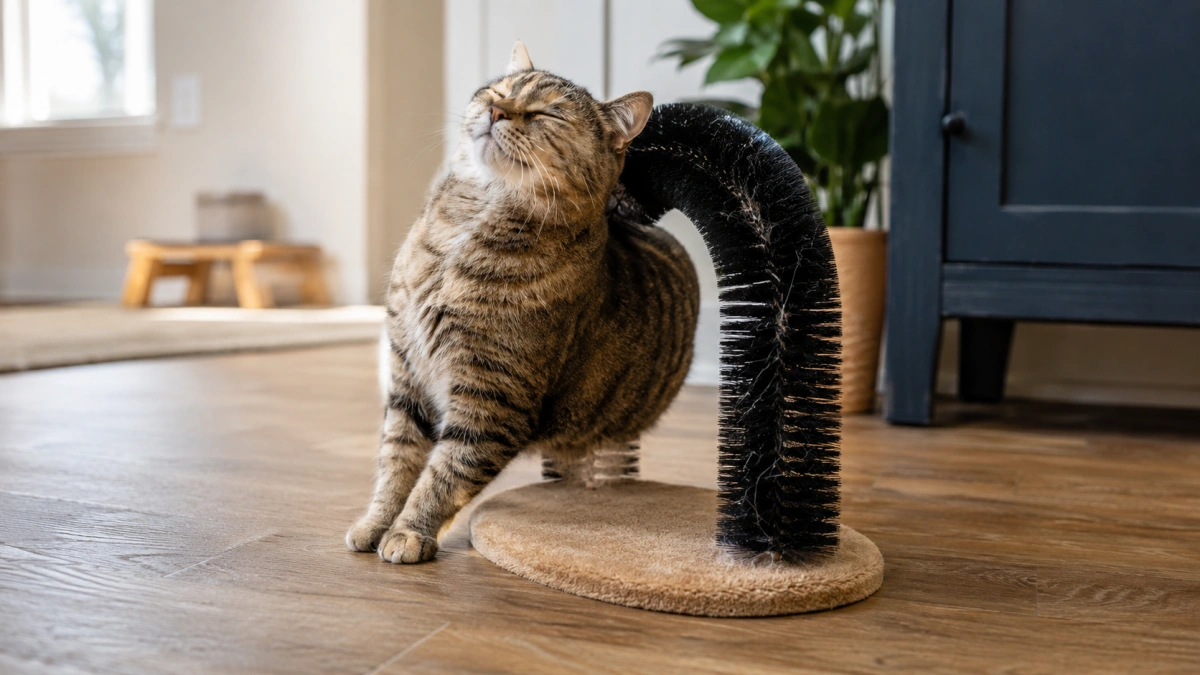
A cat self grooming arch is a curved brush or grooming structure designed for cats to rub against voluntarily.
Unlike a normal brush, the owner does not hold the tool and move it through the coat. Instead, the cat controls:
- How much pressure is applied
- How long the interaction lasts
- Which body area touches the brush
- When to stop
This self-directed behavior is one reason some cats accept grooming arches more easily than traditional brushing.
Why Do Cats Like Grooming Arches?
Cats naturally rub against objects for several reasons.
A grooming arch combines several familiar behaviors:
- Face rubbing
- Body stretching
- Scratching-like stimulation
- Scent marking
- Environmental exploration
The grooming effect is partly a result of this natural rubbing behavior rather than the cat intentionally performing a complete grooming session.
Benefits of a Cat Grooming Arch
1. Provides Independent Enrichment
A grooming arch gives cats an activity they can choose to interact with whenever they want.
This can be especially useful for indoor cats that need more environmental stimulation.
2. Helps Collect Some Loose Surface Hair
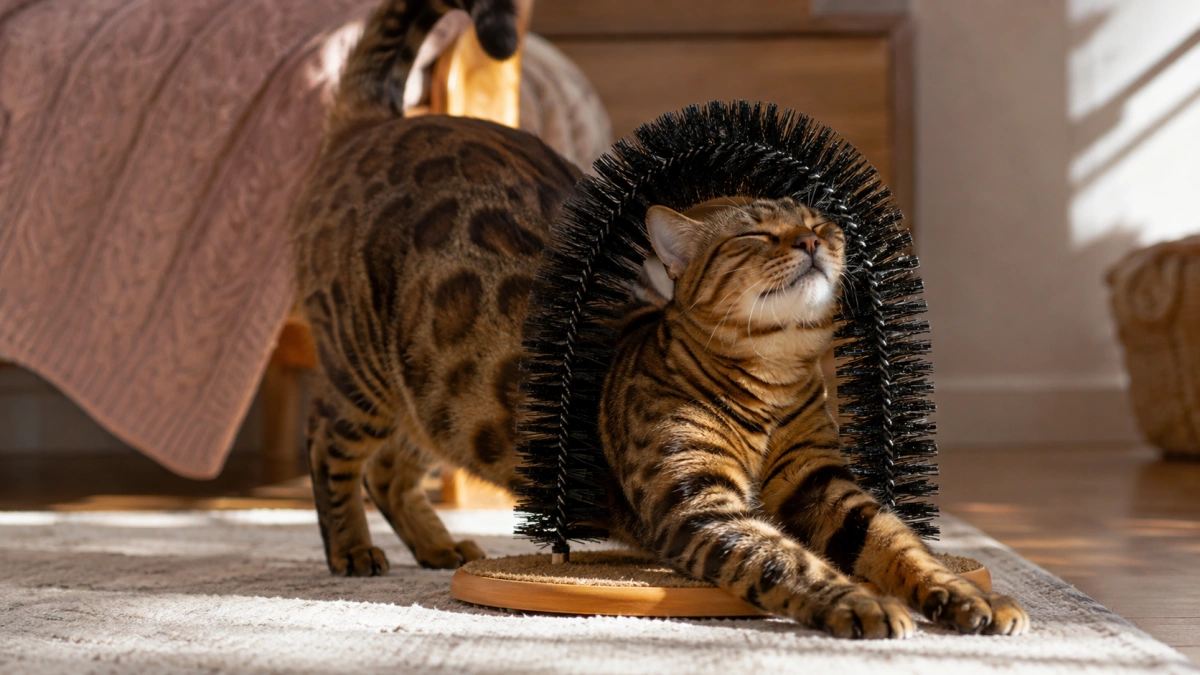
When a cat rubs against the brush surface, some loose hairs may be collected.
This may slightly reduce loose fur left around furniture, although it should not be compared with a full deshedding session.
3. Encourages Natural Rubbing Behavior
Many cats already rub against furniture corners, walls and objects.
A grooming arch provides a more appropriate surface designed around that behavior.
4. Creates Positive Grooming Associations
Because the cat chooses the interaction, some cats develop a positive relationship with the grooming sensation.
Can a Grooming Arch Remove Cat Hair?
Yes, but only to a limited extent.
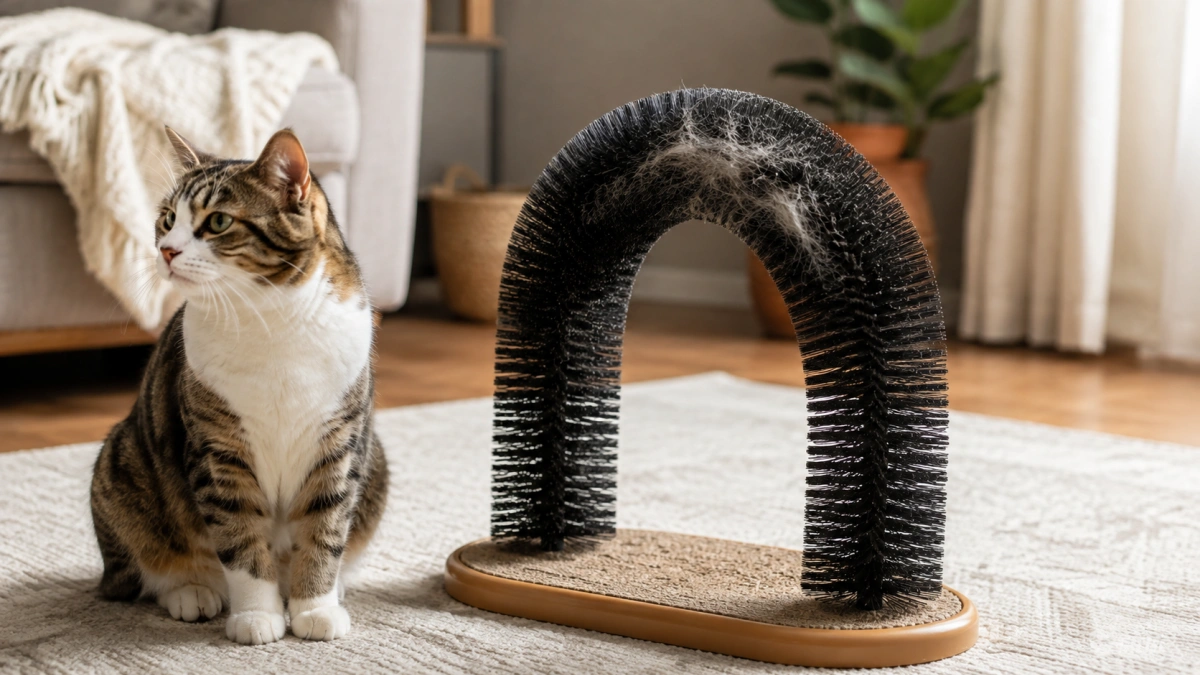
A grooming arch may collect:
- Loose surface hairs
- Some shedding fur
- Small amounts of debris from the outer coat
It cannot remove:
- Deep undercoat buildup
- Tight tangles
- Mats
- Hidden skin problems
Think of it as a helpful extra tool, not a replacement for regular brushing.
Grooming Arch vs Cat Brush
| Feature | Grooming Arch | Traditional Brush |
|---|---|---|
| User control | Cat controls interaction | Owner controls brushing |
| Loose hair removal | Limited | More effective |
| Finding mats | No | Yes |
| Coat inspection | Limited | Better |
| Enrichment | High | Lower |
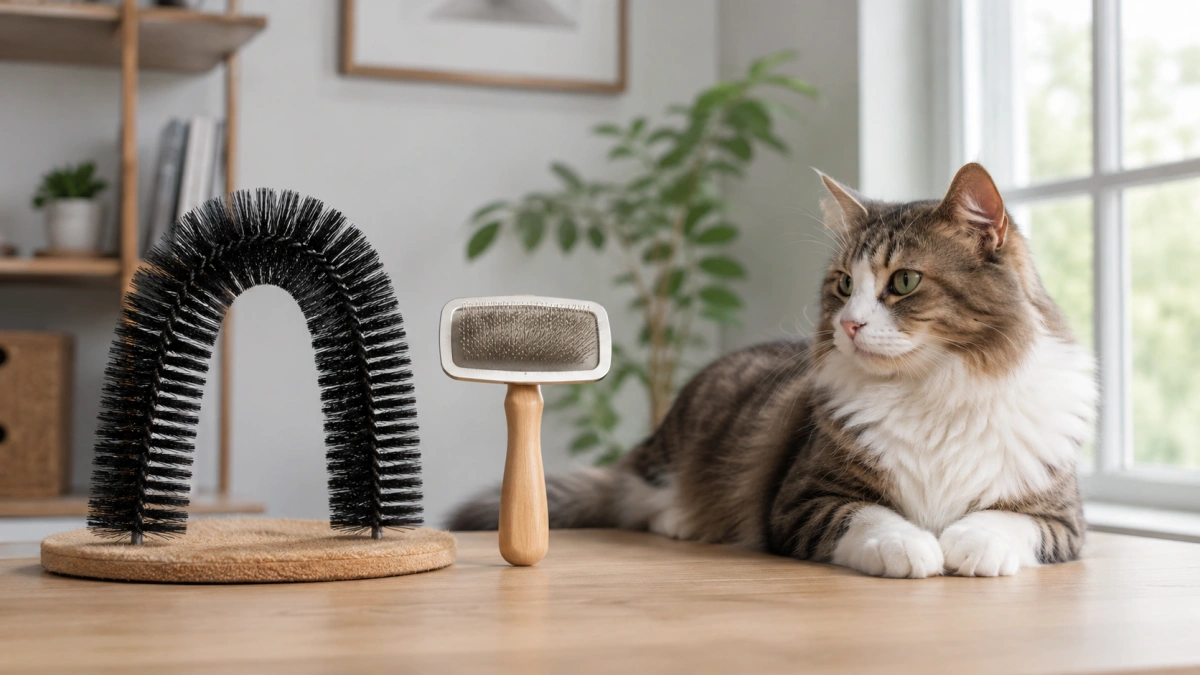
Can a Grooming Arch Replace Brushing?
No.
Regular brushing provides benefits that a self grooming arch cannot:
- Checking the skin underneath the coat
- Finding early mats
- Removing deeper loose fur
- Monitoring coat changes
- Managing long-haired coats
Long-haired cats especially still need hands-on grooming because a cat cannot use an arch to inspect every part of its own coat.
Is a Self Grooming Arch Good for Long-Haired Cats?
It can be, but expectations should remain realistic.
Long-haired cats may enjoy rubbing against an arch, but they are also more likely to develop:
- Hidden tangles
- Undercoat buildup
- Belly mats
- Rear coat hygiene issues
These problems require combing and inspection, not just self-grooming.
Can Cats Use Grooming Arches Every Day?
Yes, if the cat chooses to use it and the brush surface remains clean and safe.
Daily voluntary interaction is different from forcing a cat into repeated grooming sessions.
Check regularly that:
- The brush material remains intact
- No sharp edges develop
- The base remains stable
- Loose fur is cleaned away
Where Should You Place a Cat Grooming Arch?
Placement matters because cats are more likely to use tools that fit naturally into their routine.
Good locations include:
- Near favorite walking paths
- Near scratching areas
- Near resting zones
- Areas where the cat already rubs against objects
Do not force your cat to interact with it. Let curiosity create the habit.
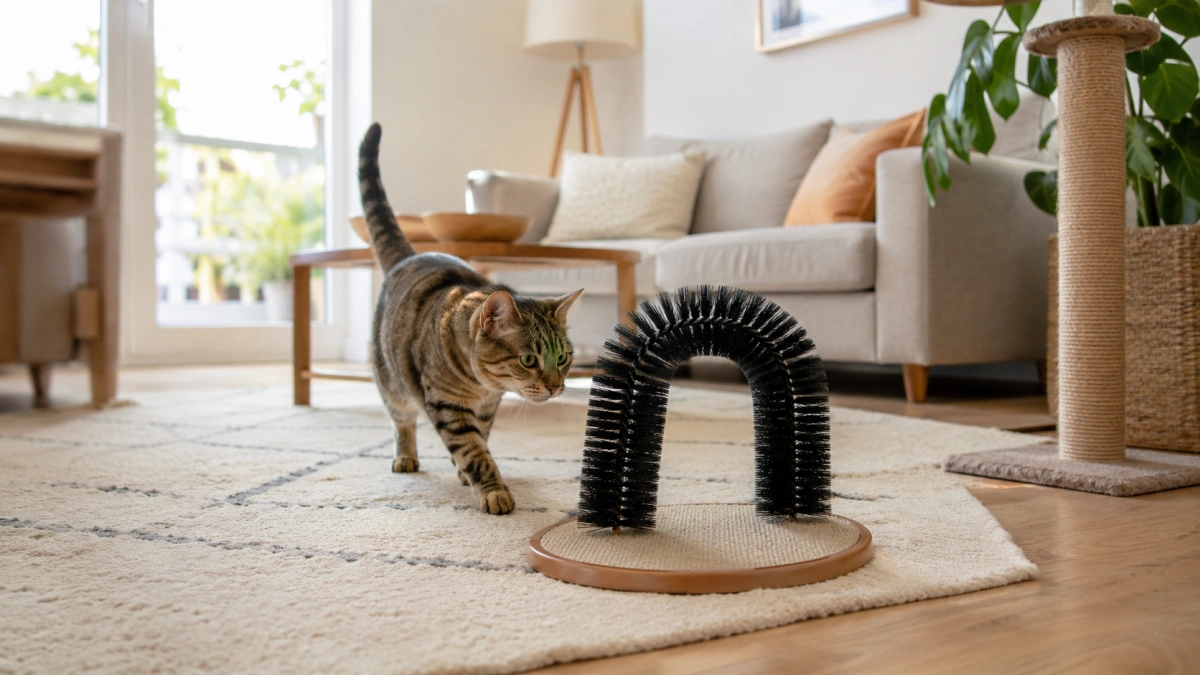
How to Choose a Cat Self Grooming Arch
Consider:
- Brush softness: Avoid overly harsh bristles.
- Stable base: The arch should not slide easily.
- Size: Large enough for comfortable rubbing.
- Easy cleaning: Fur buildup should be removable.
- Material safety: Avoid loose parts or sharp edges.
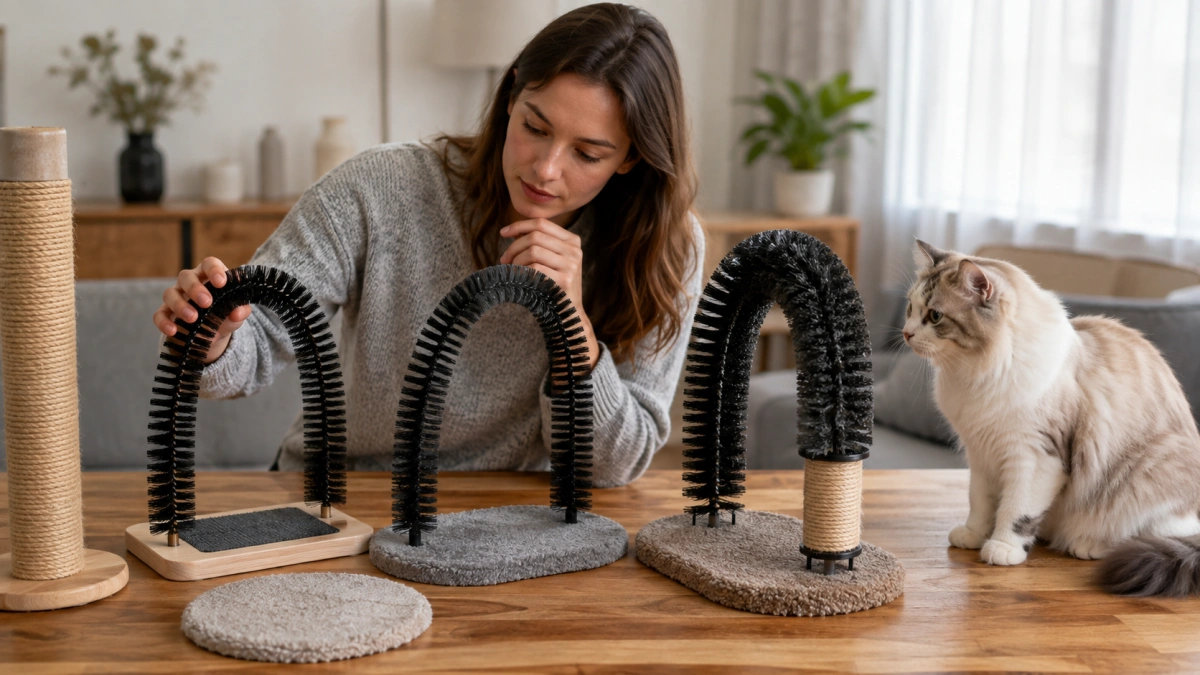
Problems a Grooming Arch Cannot Solve
A grooming arch is not designed for:
- Removing mats
- Cutting tangled fur
- Checking hidden skin problems
- Replacing flea treatment
- Replacing professional grooming
If a cat has painful tangles, sudden coat changes or skin irritation, use appropriate grooming or veterinary care instead.
Is a Grooming Arch Safe for Every Cat?
Most cats can try one safely when the design is appropriate, but individual reactions vary.
Stop using it if:
- Your cat avoids it completely
- The brush appears uncomfortable
- The cat scratches aggressively at the tool
- The coat becomes tangled instead of cleaner
Final Thoughts
A cat self grooming arch is best viewed as an enrichment accessory that supports natural rubbing behavior while providing a small amount of coat stimulation.
It can help collect loose surface hair, encourage activity and give cats control over their grooming interaction. However, it cannot replace brushing, coat checks or professional grooming when problems develop.
The best grooming routine combines tools that match the actual need of your cat.