By A CUTE PET STORY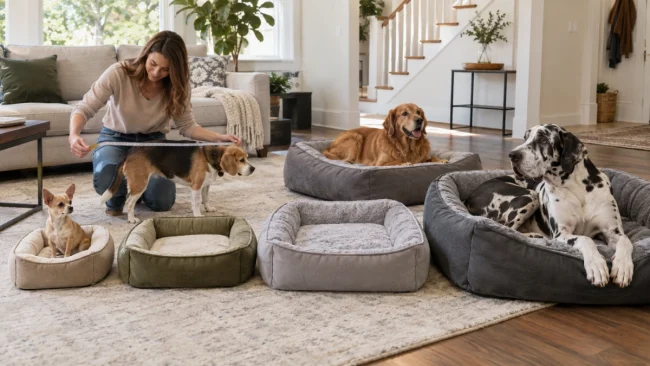
Choosing the right dog bed size is not only about matching your dog’s weight or breed. A comfortable bed should provide enough usable sleeping space for your dog’s natural sleeping position, movement, and daily habits.
Many owners choose beds based only on labels such as Small, Medium, Large, or XL. However, these labels are not standardized between brands, so the actual measurements and sleeping area matter more than the size name.
The best way to choose a dog bed size is to measure your dog, understand how your dog sleeps, and compare the available sleeping space inside the bed.
You can also explore our complete Dog Beds topic hub for more guides about bed types, materials, cleaning, and support.
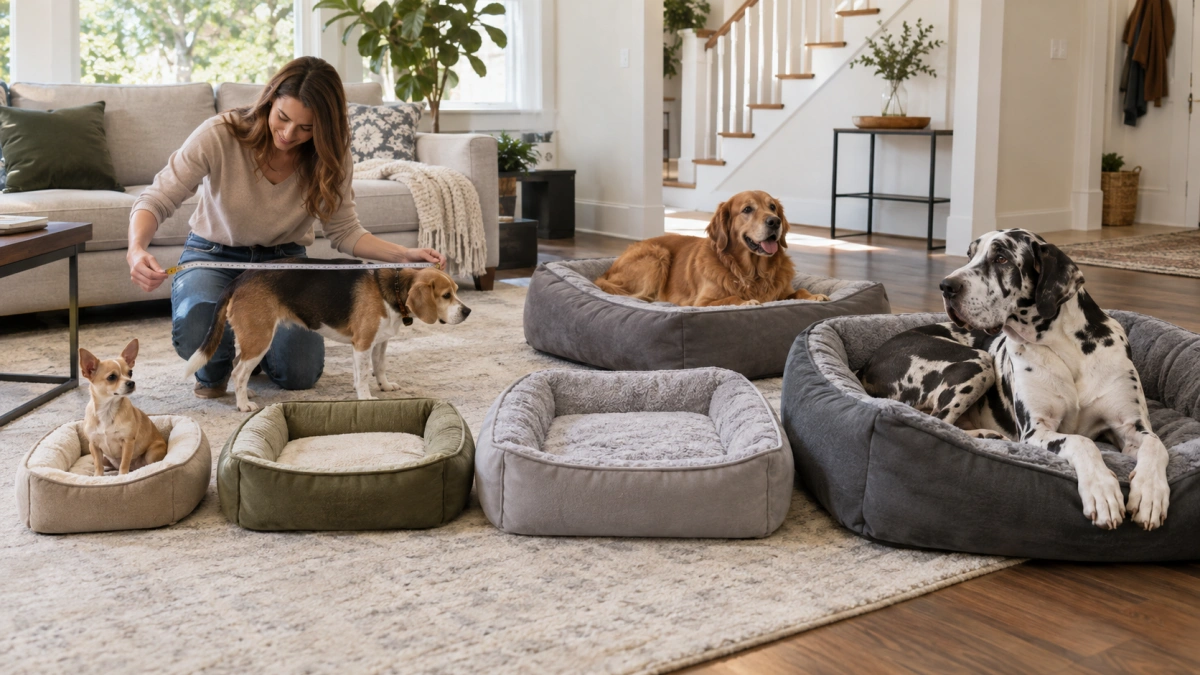
What Size Dog Bed Does My Dog Need?
The correct dog bed size depends on three main factors:
- Your dog’s body measurements
- Your dog’s sleeping position
- The bed’s usable sleeping area
A small dog that curls into a tight circle may need much less space than a long-bodied dog that sleeps fully stretched out, even if both dogs have similar body weight.
Instead of asking only “What size bed matches my dog’s weight?”, ask:
- Can my dog fully stretch out?
- Can my dog change sleeping positions?
- Does the bed leave enough room around the body?
- Are raised sides reducing the usable area?
Why Weight Alone Is Not Enough
Weight can be a helpful starting point, but it does not show the complete body shape of a dog.
| Dog Factor | Why It Matters |
|---|---|
| Body length | Long dogs need more sleeping space |
| Body width | Broad dogs need more surface area |
| Sleeping style | Stretching requires more room than curling |
| Age and mobility | Some dogs need easier access and stable surfaces |
| Sharing | Multiple dogs require combined space |
Two dogs with the same weight may need completely different bed sizes because their body proportions and sleeping habits are different.
How to Measure Your Dog for a Bed
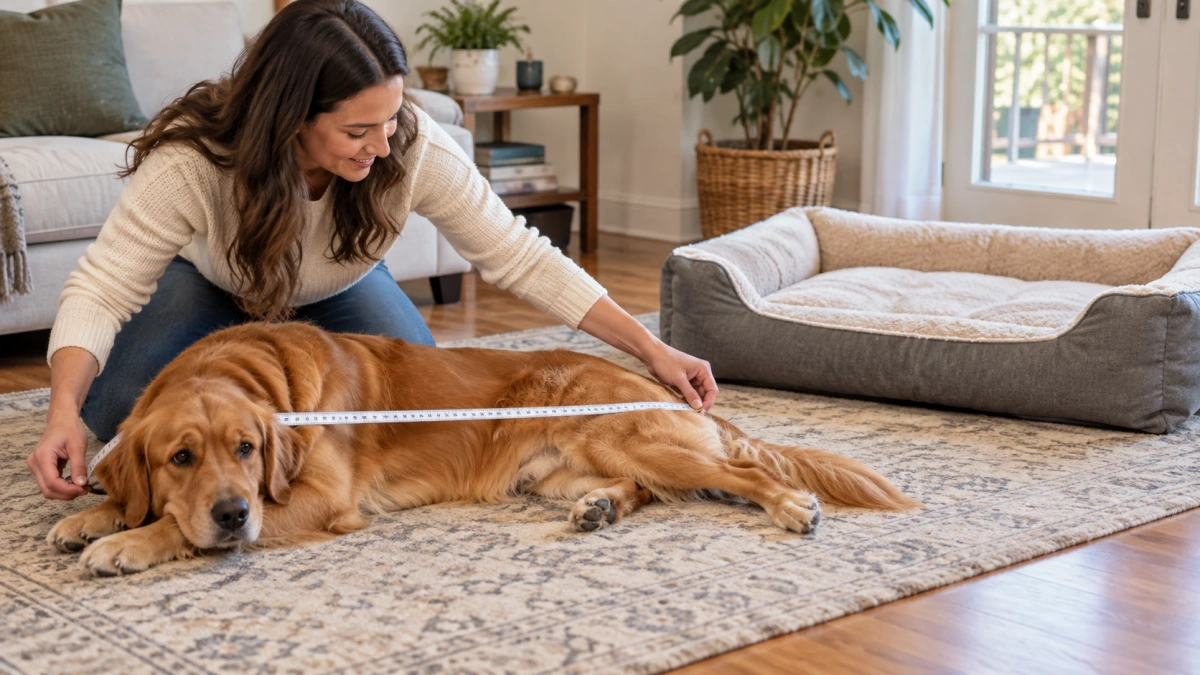
Measuring your dog while standing is usually not enough. The most useful measurement is the space your dog actually uses while resting.
Step 1: Measure Sleeping Length
Watch your dog when relaxed and measure from the front of the body to the back while lying naturally.
Step 2: Measure Sleeping Width
Measure the widest area your dog occupies when resting, including the normal position of legs and shoulders.
Step 3: Add Extra Movement Space
Your dog should have enough room to turn around, stretch, and change positions without immediately reaching the edge.
Step 4: Compare Interior Dimensions
For bolster beds, use the inner sleeping area rather than the outside measurements.
Dog Bed Size Chart: Small, Medium, Large and XL
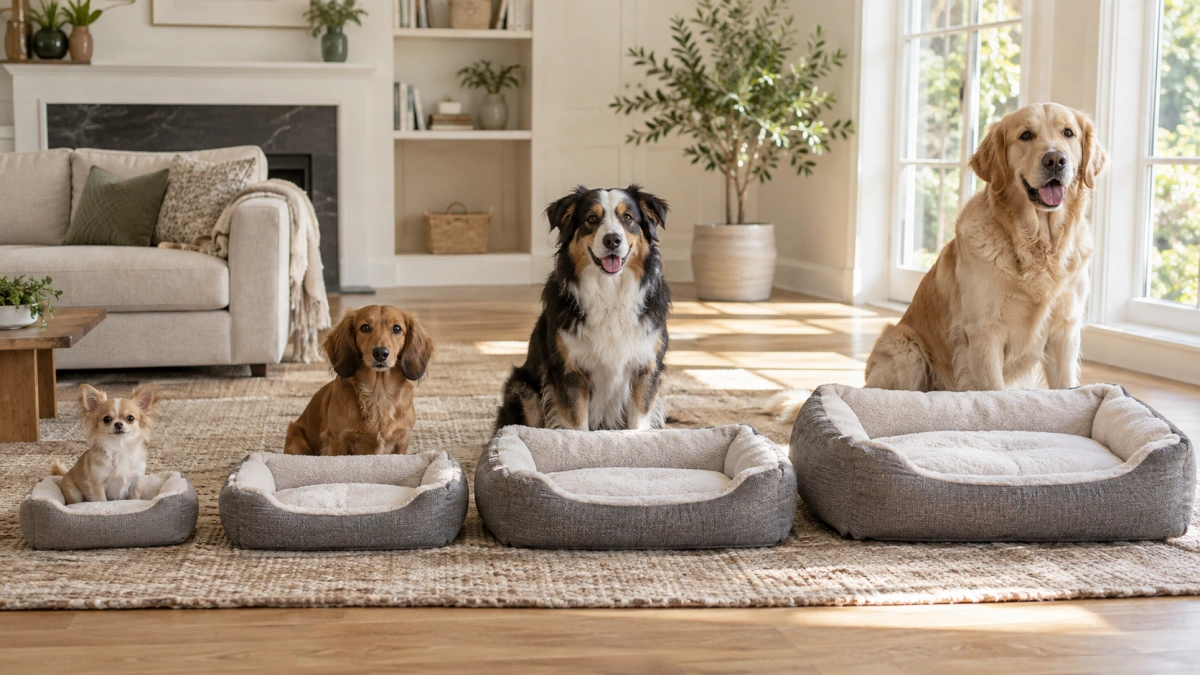
Dog bed size labels vary between manufacturers, but the following framework can help you compare options.
| Dog Size Category | Typical Consideration | Important Check |
|---|---|---|
| Small Dogs | Compact sleeping area | Enough room to curl and reposition |
| Medium Dogs | Balanced space and comfort | Length for side sleeping |
| Large Dogs | More surface area and support | Weight distribution and sleeping room |
| XL Dogs | Large open sleeping area | Inner dimensions and floor space |
Always compare the listed measurements because one brand’s Large may be similar to another brand’s Medium or XL.
Choose Size Based on Sleeping Style
Sleeping style is one of the most overlooked parts of choosing a dog bed size.
| Sleeping Style | Size Consideration |
|---|---|
| Curled sleeper | May need less length but still needs turning space |
| Side sleeper | Needs more length and width |
| Full sprawler | Usually needs the largest usable area |
| Head rester | May benefit from bolster space |
| Frequent position changer | Needs additional movement room |
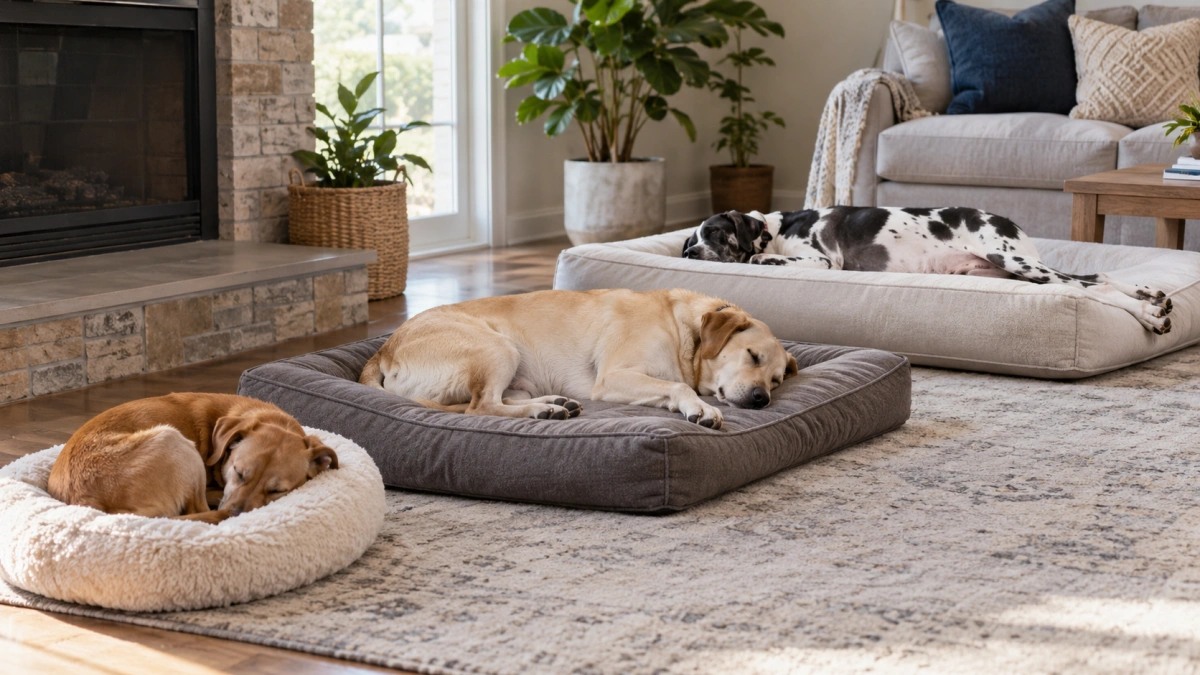
A dog that looks comfortable curled up may still need a larger bed if it regularly stretches out during deeper sleep.
Outer Dimensions vs Usable Sleeping Area
One of the most common dog bed sizing mistakes is choosing based only on the outside dimensions.
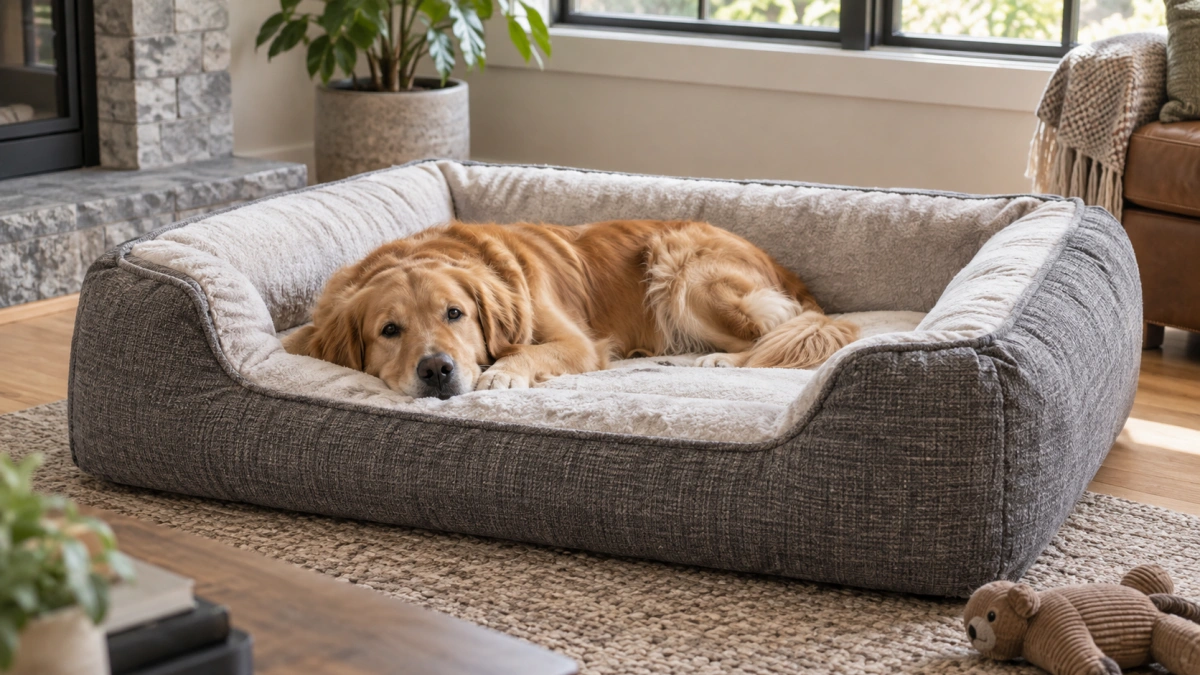
For example, a large bolster bed may have impressive external measurements, but thick raised sides reduce the actual area where the dog sleeps.
Always check:
- Outside length and width
- Inside sleeping dimensions
- Bolster thickness
- Raised edge design
- Actual space available for stretching
The usable sleeping area is often more important than the advertised size category.
How Much Extra Space Should a Dog Bed Have?
A dog bed should not fit your dog like a tight sleeping mat. Extra space allows natural movement and position changes.
Consider additional room for:
- Stretching front legs
- Changing from side sleeping to curled sleeping
- Turning around before lying down
- Resting near the edge or inside a bolster
However, bigger is not always better. An oversized bed may take unnecessary floor space and some dogs prefer a more enclosed sleeping environment.
Choosing a Bed Size for Puppies
Puppies grow quickly, which makes choosing a bed size more complicated.
A larger bed can make sense when:
- The adult size is predictable
- The bed design remains comfortable while the puppy grows
- The cover can be cleaned easily
- The puppy still feels secure in the larger space
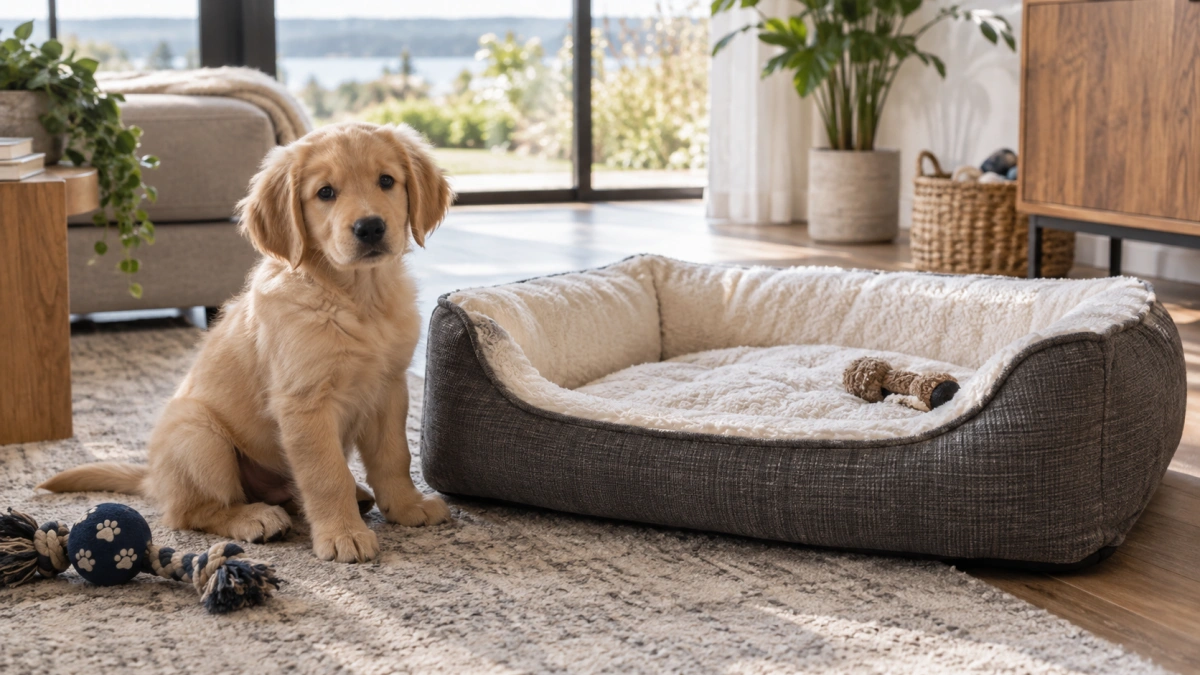
Avoid choosing an extremely oversized bed only because the puppy may become larger in the future. A bed should work for the current stage as well.
Choosing a Bed Size for Multiple Dogs
When two dogs share one bed, do not simply choose the size recommended for the larger dog.
Consider:
- Both dogs’ sleeping lengths
- Total sleeping width
- Whether they sleep touching or separately
- Whether both dogs can change position comfortably
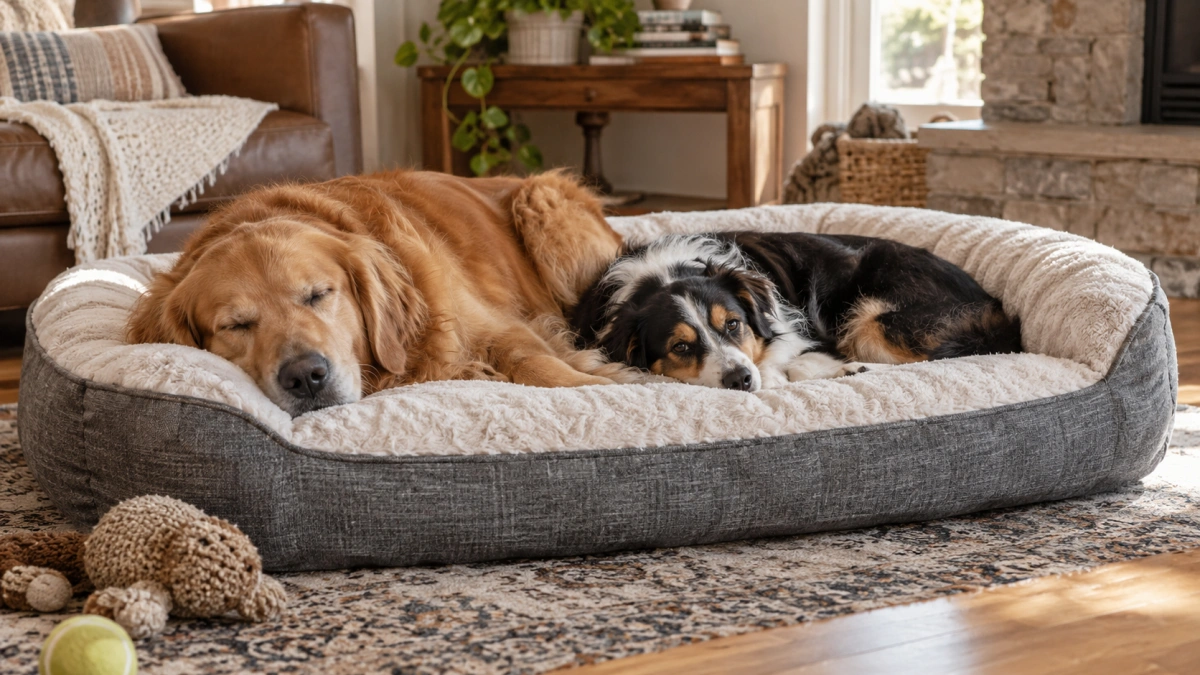
Two dogs that cuddle tightly may need less room than two dogs that prefer separate sleeping areas.
Common Dog Bed Size Mistakes
- Choosing only by weight
- Trusting Small, Medium, or Large labels without measurements
- Ignoring sleeping style
- Forgetting that bolsters reduce inner space
- Buying a bed too small because it looks cheaper
- Buying the largest possible bed without checking room space
- Ignoring how the dog actually sleeps
- Not measuring before ordering online
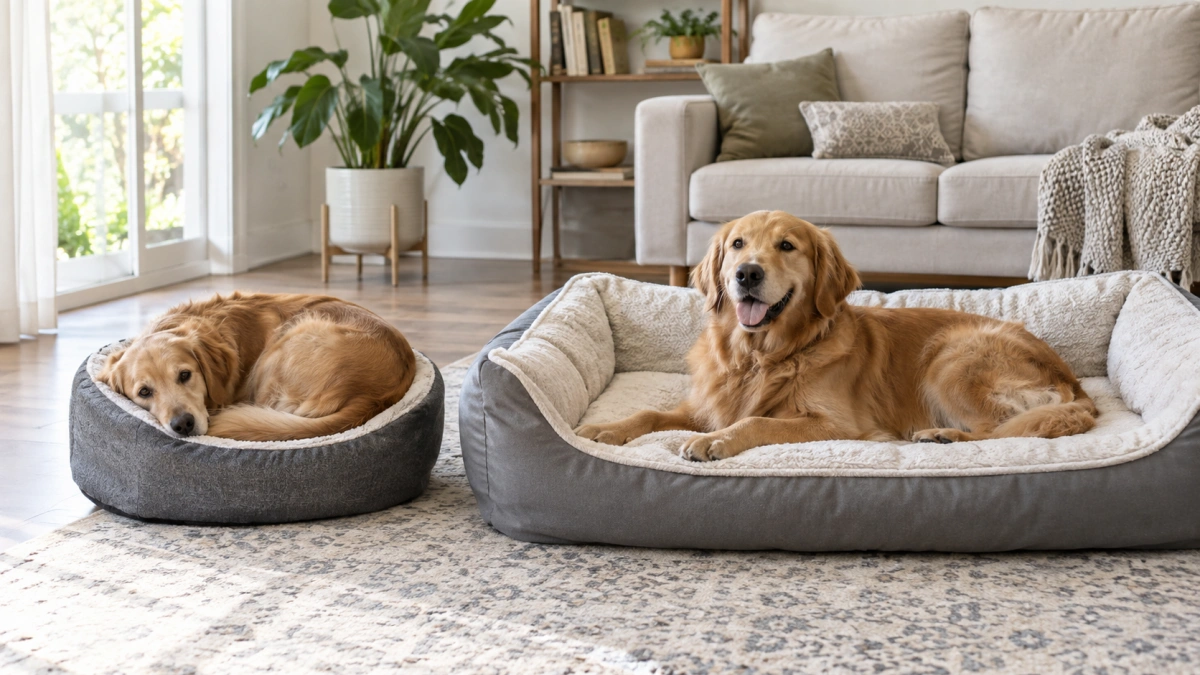
Choosing the right size is only the first step when buying a dog bed. The materials inside and outside the bed also affect comfort, durability, and maintenance. Learn more about dog bed materials before making your final choice.
Dog Bed Size Buying Checklist
- Did I measure my dog while resting?
- Do I know my dog’s normal sleeping position?
- Am I checking inner sleeping dimensions?
- Does the bed allow stretching and movement?
- Will bolsters reduce too much space?
- Does the bed fit the room where it will be placed?
- Will my puppy grow into this size?
- Can multiple dogs share this space comfortably?
- Is the size based on actual measurements instead of labels?
Final Thoughts
Choosing the right dog bed size starts with understanding your dog’s real sleeping habits, not just selecting a label such as Medium, Large, or XL.
Measure your dog, compare usable sleeping space, consider sleeping style, and remember that a comfortable fit allows natural movement.
The right size bed should give your dog enough room to relax while still fitting naturally into your home.