By A CUTE PET STORY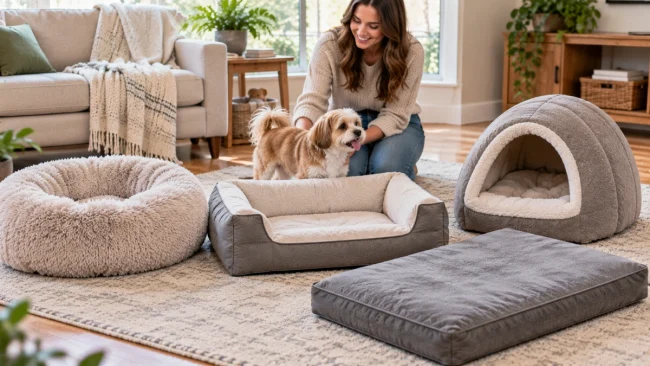
Small dog beds should be chosen by more than body weight or a Small size label. A good bed needs enough usable sleeping space for your dog’s natural position, a surface that feels comfortable under a lighter body, and a design that is easy to enter, clean, and keep stable on the floor.
Some small dogs curl tightly and enjoy enclosed beds, while others stretch out, lean against raised edges, or prefer an open mattress. The best choice depends on how your dog actually rests.
Instead of automatically buying the smallest option available, compare the interior sleeping area, entry height, bed shape, and washability.
You can also explore our complete Dog Beds topic hub for more guides about sizing, support, materials, cleaning, and different bed styles.
What Makes a Good Small Dog Bed?
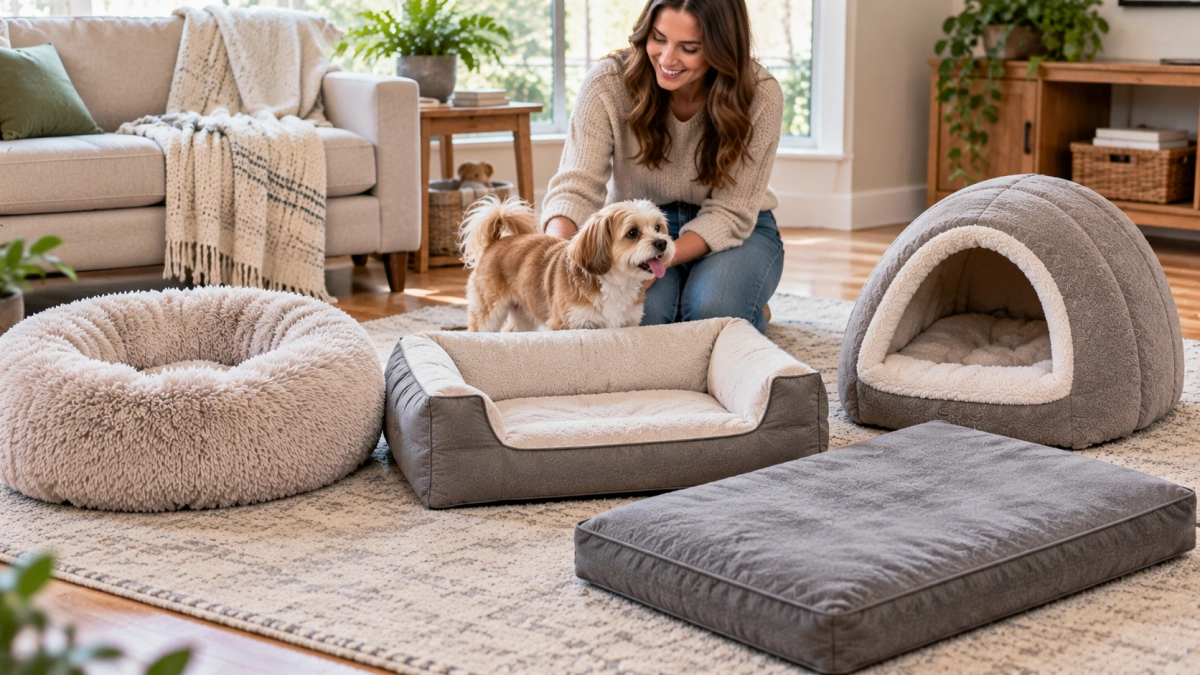
A good small dog bed should provide enough room for normal sleeping positions without being so oversized that the dog loses the cozy environment it prefers.
Important features include:
- Enough usable sleeping space
- A shape that matches sleeping style
- Easy entry and exit
- A comfortable surface for a lighter dog
- A stable non-slip base
- Washable materials
The smallest bed is not automatically the best fit for the smallest dog.
Small Dog Does Not Mean the Smallest Bed
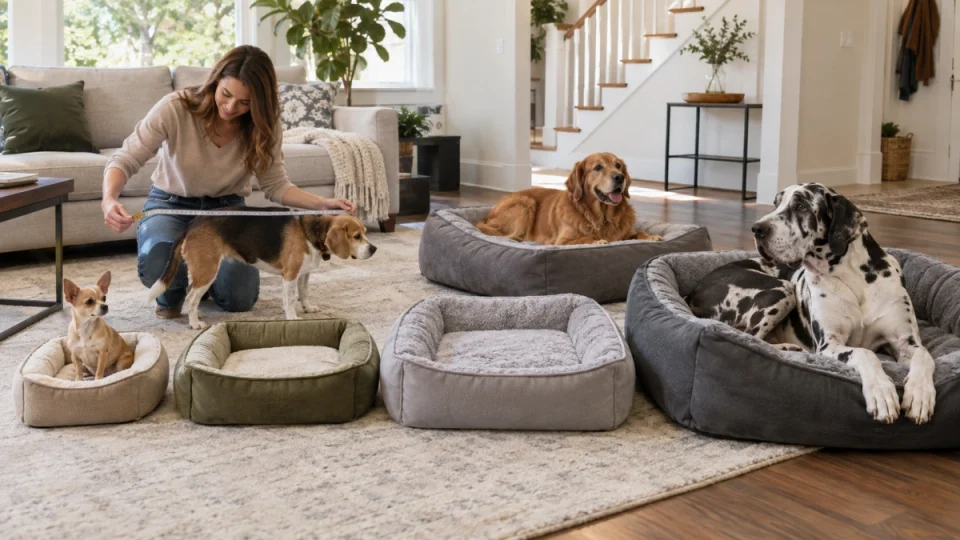
Size labels such as XS, Small, Petite, Toy, and Mini are not standardized between brands.
A Small bed from one company may provide more sleeping area than a Medium from another, especially when thick bolsters reduce the interior space.
Compare:
- Interior sleeping length
- Interior sleeping width
- Bolster thickness
- Front entry height
- Overall bed footprint
The goal is enough room for the dog to rest naturally, not simply choosing the smallest label that matches the breed category.
How to Measure a Small Dog for a Bed
Measure your dog while relaxed in a normal sleeping position rather than standing.
Step 1: Measure Sleeping Length
Measure the approximate space from the front of the body to the rear while your dog is lying comfortably.
Step 2: Measure Sleeping Width
Measure the widest area your dog normally uses when curled, lying on its side, or stretching out.
Step 3: Add Movement Room
Allow enough extra space for your dog to turn around and change positions without immediately reaching the edge.
Step 4: Compare the Interior Area
For donut, bolster, or sofa-style beds, use the inner sleeping dimensions instead of only the outside measurements.
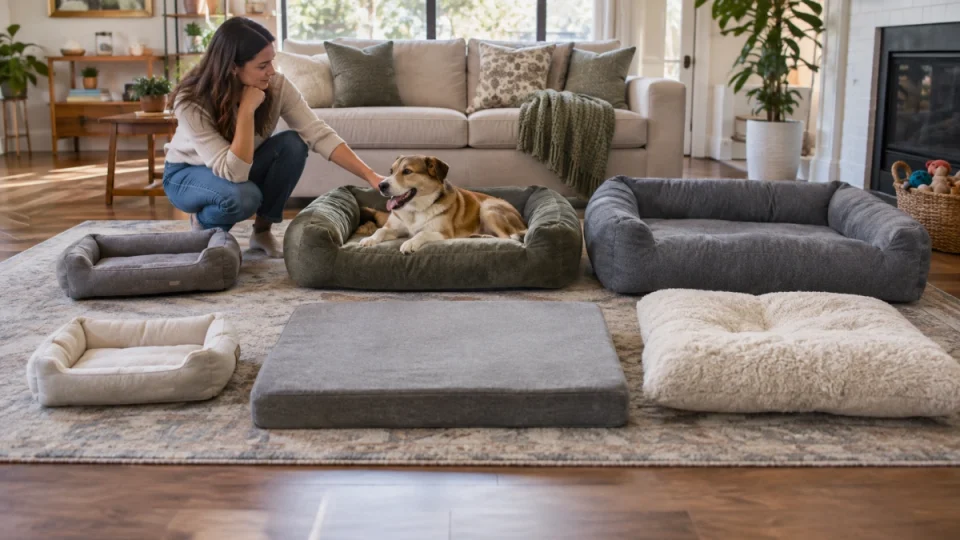
Choose a Bed by Sleeping Style
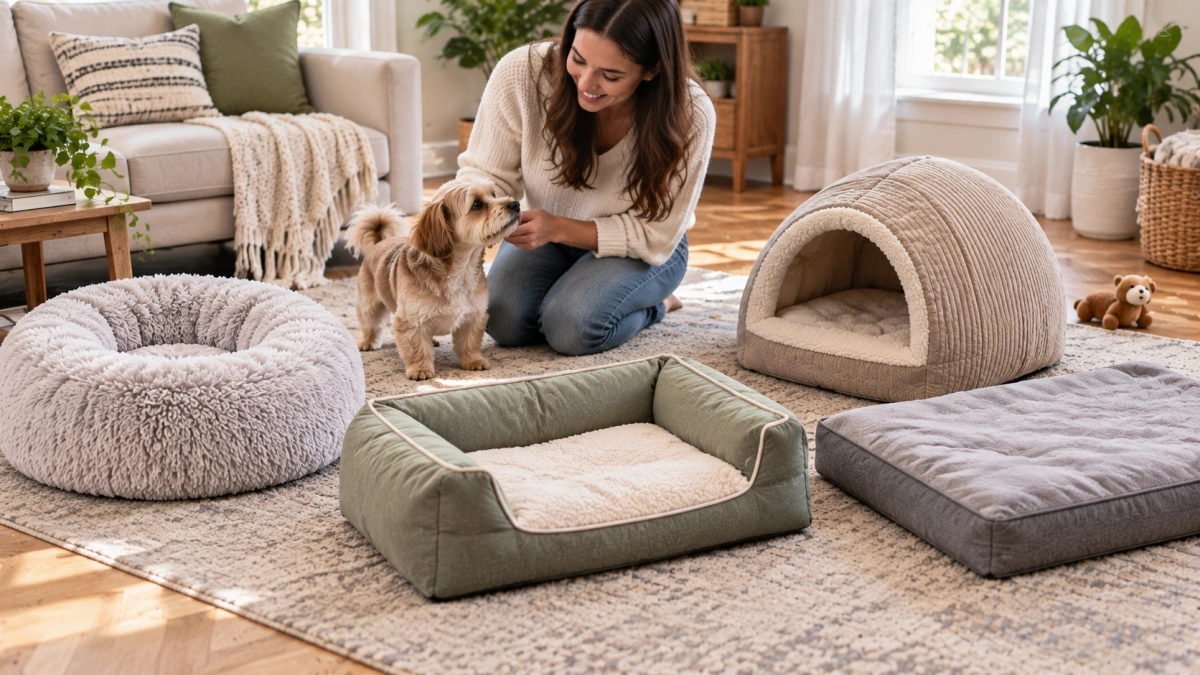
Sleeping style is one of the easiest ways to narrow down the right bed design.
| Sleeping Style | Good Starting Option |
|---|---|
| Curls tightly | Donut or round bed |
| Leans against edges | Bolster bed |
| Burrows under blankets | Cave or covered bed |
| Stretches out | Flat mattress |
| Changes positions often | Open rectangular bed |
Breed alone does not tell you which style your dog will prefer. Two dogs of similar size can have completely different sleeping habits.
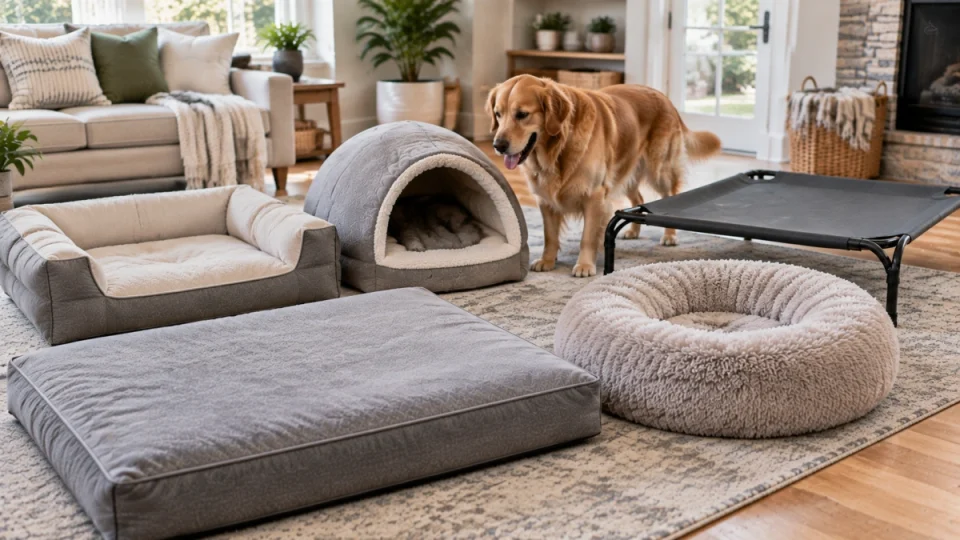
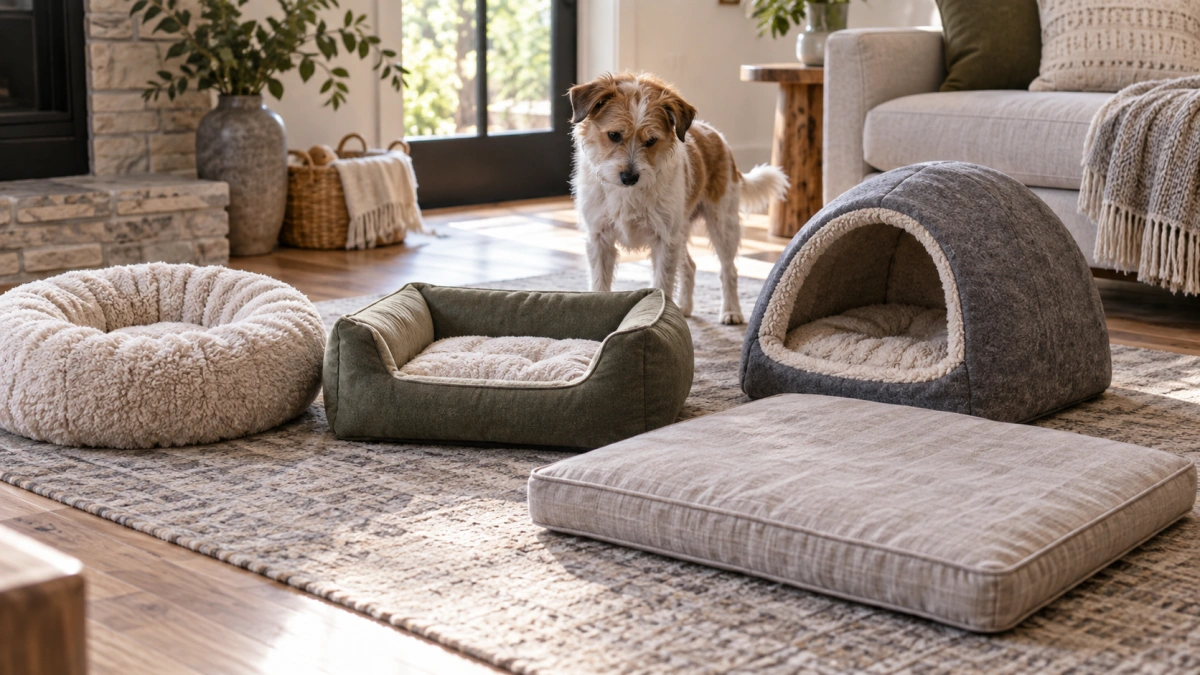
Donut, Bolster, Cave or Flat Mattress?
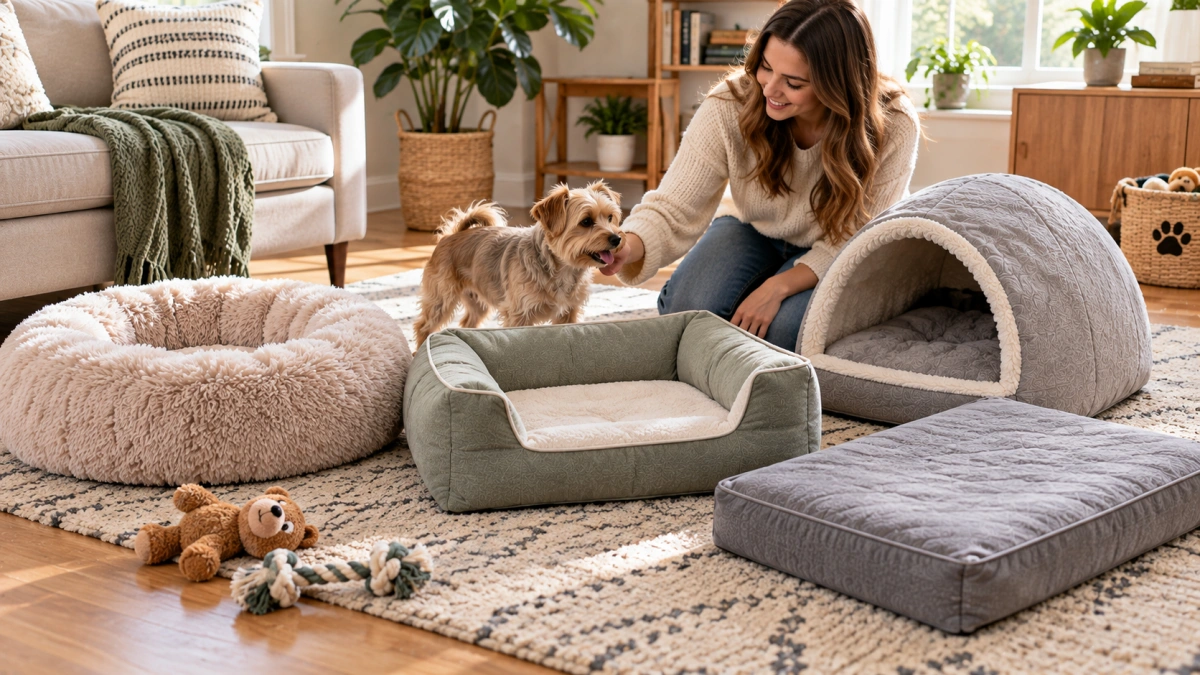
Donut Beds
Donut beds work well for many dogs that curl tightly and enjoy soft raised edges. The trade-off is that thick outer rings can reduce the center sleeping area.
Bolster Beds
Bolster beds give dogs a place to rest their heads or lean against while still providing a defined sleeping area.
Cave Beds
Cave or covered beds can suit dogs that naturally seek enclosed spaces or like burrowing under blankets.
Flat Mattress Beds
Flat beds provide the most open usable area and are often better for dogs that stretch out or change positions frequently.
How Much Sleeping Space Does a Small Dog Need?
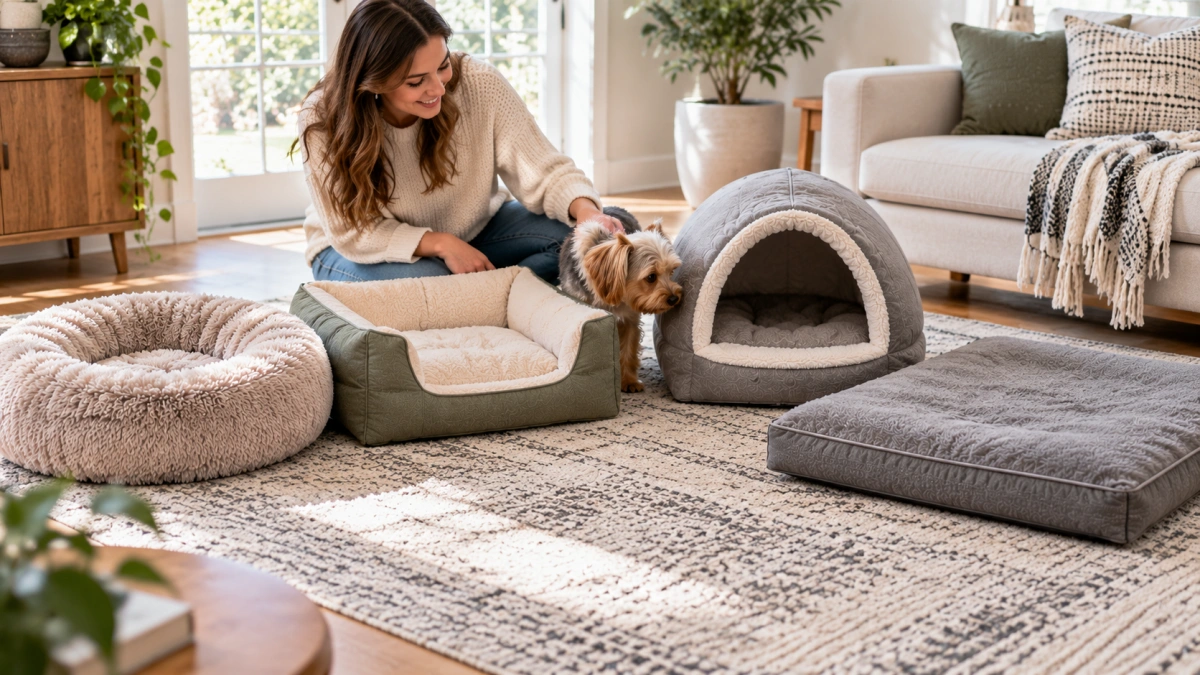
A small dog bed should provide enough usable room for natural movement without forcing the dog into a tighter position than it prefers.
Check whether your dog can:
- Turn around comfortably
- Lie on its side
- Stretch its legs
- Rest its head without hanging too far over the edge
- Change from curled to stretched positions
This is especially important with thick donut and bolster beds, where much of the outside footprint is taken up by raised sides.
Cozy vs Too Soft
A cozy bed does not need to be extremely fluffy.
Very soft filling can create a comfortable nesting feel, but too much sinking may reduce usable space or make the bed harder to move around in.
When judging comfort, look at:
- How deeply the dog sinks
- Whether the center remains stable
- Whether the filling shifts after repeated use
- Whether the dog can change position easily
- Whether the dog repeatedly chooses the bed on its own
Comfort comes from the combination of fit, surface feel, shape, and sleeping style rather than softness alone.
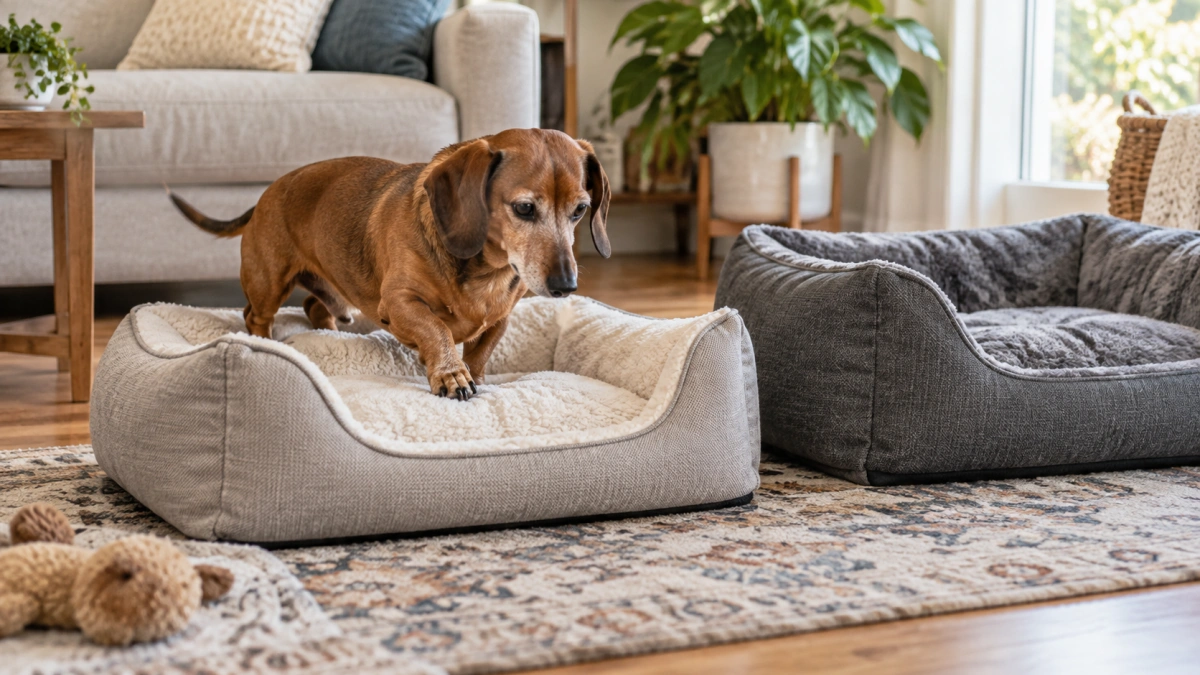
Low-Entry Beds for Small Dogs
Entry height can matter even for healthy small dogs because shorter legs make high walls proportionally larger obstacles.
Low-entry designs may include:
- Flat mattresses
- Three-sided bolster beds
- Bolster beds with a lowered front opening
- Shallow round beds
A high-sided bed may still work well for a dog that likes enclosure, but the dog should be able to enter and leave comfortably.
Warm Beds for Dogs That Like to Burrow
Some small dogs prefer warm, enclosed resting areas and may naturally seek blankets or soft edges.
Options can include:
- Plush covers
- Donut beds
- Cave-style beds
- Beds designed to work with a lightweight blanket
However, not every small dog prefers extra warmth. Dogs that regularly move to cool floors or leave covered beds may be more comfortable with an open, breathable design.
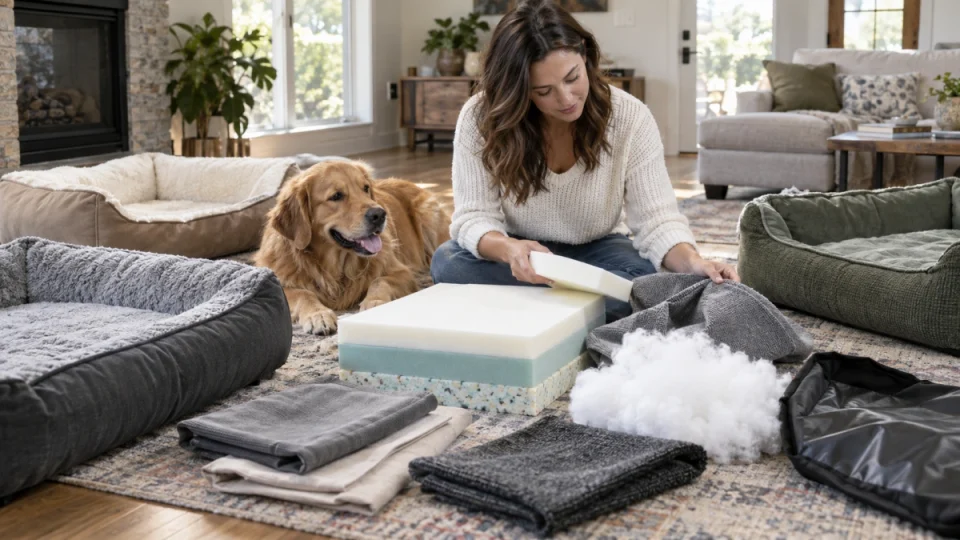
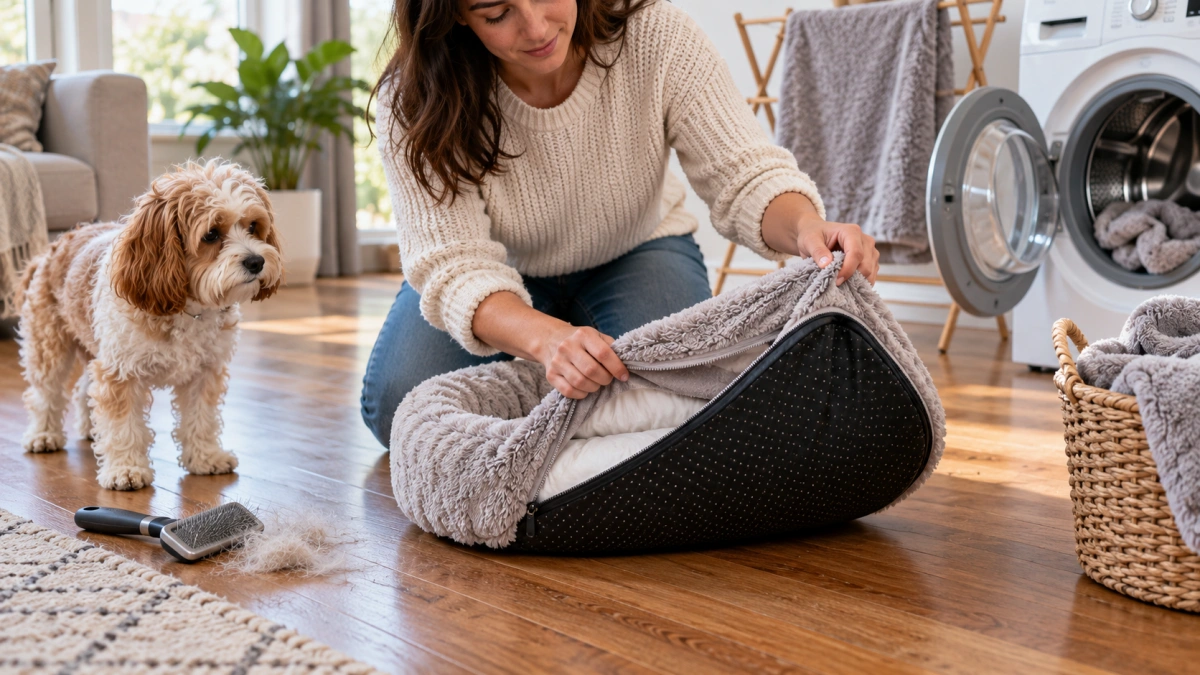
Washability and Non-Slip Features
Small plush beds can collect hair and debris quickly, while lighter beds may slide more easily on hardwood or tile.
Check for:
- Removable washable covers
- Machine-washable whole-bed construction when appropriate
- Clear drying instructions
- Filling that returns to shape after washing
- Non-slip backing
- A stable base that does not move when the dog steps in
If the bed has a cave hood, thick bolsters, or loose filling, check how those parts should be cleaned before buying.
Small Dog Beds for Puppies
A puppy may quickly outgrow an extra-small bed, but buying the largest possible bed is not always necessary.
Consider:
- Expected adult size
- Current sleeping style
- Washability during house training
- Whether the bed still feels usable at the current size
A slightly larger bed can provide room for growth without overwhelming the current sleeping space.
When Should You Size Up to a Medium Bed?
The decision to move from Small to Medium should be based on usable space rather than a fixed body-weight cutoff.
Consider sizing up when:
- Your dog fills most of the inner sleeping area
- Legs frequently extend beyond the bed
- Thick bolsters make the Small size too cramped
- Your puppy is still growing
- Your dog prefers stretching rather than curling
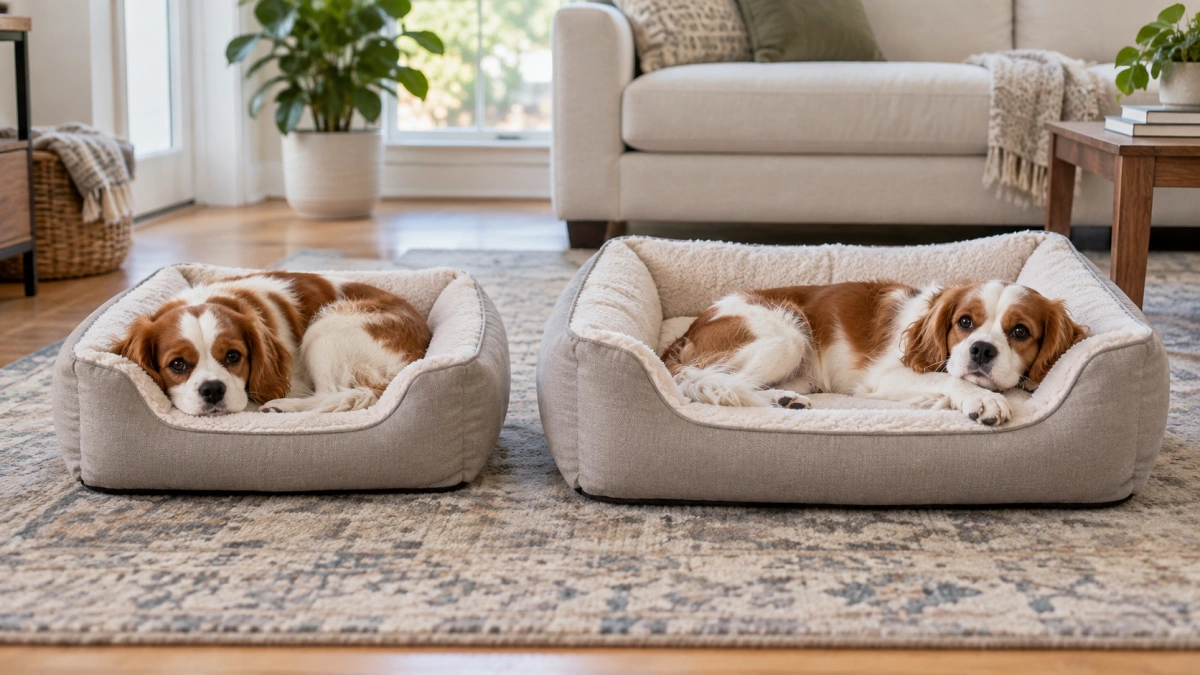
If the Small size is starting to feel tight, our guide to medium dog beds explains how to compare usable space, comfort, and sizing for the next step up.
Common Small Dog Bed Buying Mistakes
- Automatically buying the smallest available size
- Choosing only by breed or body weight
- Ignoring the inner sleeping area
- Assuming every small dog prefers donut beds
- Choosing maximum softness instead of checking stability
- Ignoring entry height
- Buying a light bed that slides across smooth floors
- Not checking washing and drying instructions
Small Dog Bed Buying Checklist
- Have I measured my dog while resting?
- Does the bed fit the dog’s normal sleeping style?
- Is the interior sleeping area large enough?
- Do bolsters reduce too much usable space?
- Can the dog enter and exit easily?
- Does the surface feel comfortable without excessive sinking?
- Does the dog prefer warm or breathable bedding?
- Can the cover or bed be washed easily?
- Will the bed stay stable on my floor?
- Would moving up to Medium provide a better fit?
Final Thoughts
The best small dog beds are not simply the smallest beds on the shelf. A good fit depends on usable sleeping space, sleeping style, entry height, surface feel, warmth, and cleaning needs.
Choose a donut, bolster, cave, or flat mattress based on how your dog actually rests rather than breed stereotypes.
A small dog should have enough room to relax naturally while still getting the cozy environment it prefers.