By
Durable dog blankets are designed to handle more everyday wear than delicate household throws, but durability and chew resistance are not the same thing. A blanket can resist scratching, pawing, washing, and ordinary wear while still being easy for a determined dog to grab with its teeth and tear apart.
That distinction is especially important when shopping for products described as chew proof dog blankets. Soft bedding needs to remain flexible enough to function as a blanket, and that flexibility can give a persistent chewer an edge or corner to grip.
Instead of looking for a literally indestructible blanket, evaluate the type of damage your dog actually causes. Scratching, nesting, digging, light nibbling, seam pulling, and persistent chewing require different levels of construction.
For more help choosing dog blankets by material, size, protection, and use, visit our Dog Blankets topic hub.
Quick Comparison: What Kind of Durability Do You Need?
| Dog Behavior | Useful Construction | Main Priority | Important Limitation |
|---|---|---|---|
| Normal sleeping and turning | Standard washable blanket | Comfort and laundry durability | No special chew protection |
| Pawing and light nesting | Dense low-pile fabric with strong seams | Scratch and abrasion resistance | Can still be bitten |
| Frequent digging | Ripstop or tightly woven durable fabric | Tear propagation resistance | Loose blanket may move while digging |
| Occasional edge nibbling | Protected edges and reinforced binding | Reduce easy starting points | Supervision still matters |
| Persistent destructive chewing | Specialized reinforced bedding rather than a normal soft throw | Reduce access to fabric that can be swallowed | No soft blanket should be assumed indestructible |
Durable Does Not Mean Chew-Proof
“Durable” can describe many different properties.
A blanket may be durable because it resists:
- Repeated washing
- Paw scratching
- Surface abrasion
- Pilling
- Light tearing
- Daily furniture use
None of those automatically proves the blanket can withstand sustained chewing.
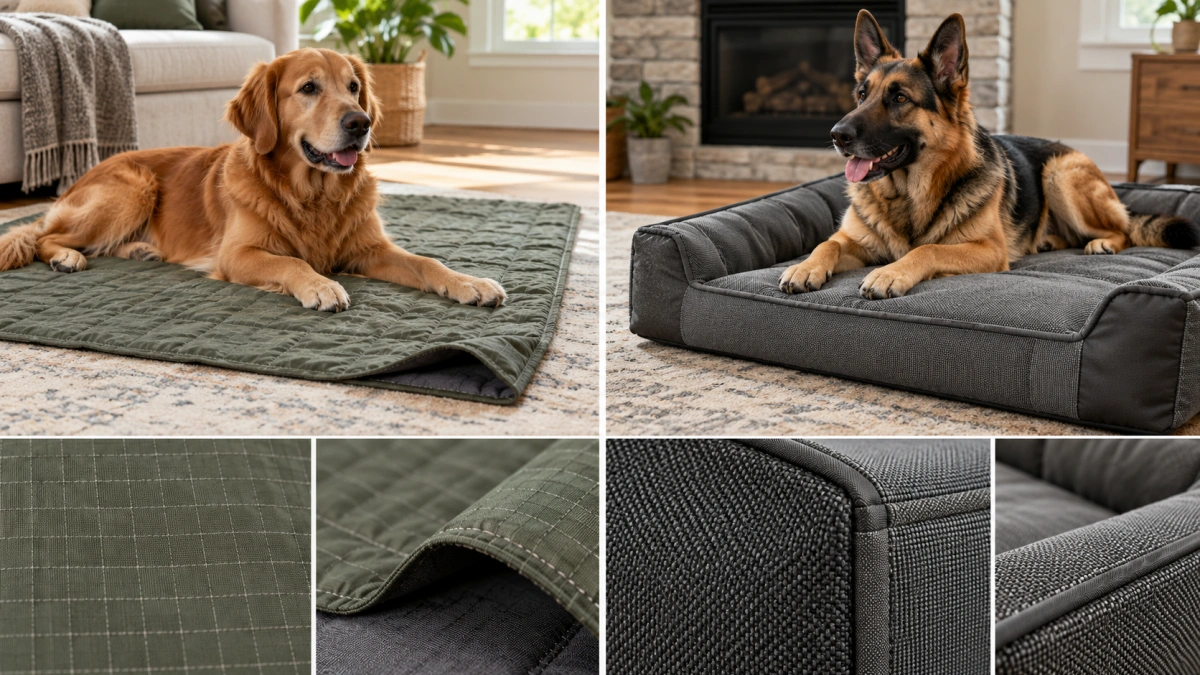
A useful real-world example is a ripstop ballistic dog blanket currently sold specifically for durability. The manufacturer describes it as highly resistant to scratching and normal wear but explicitly states that the flexible blanket is not considered chew resistant because a destructive dog can grip the fabric between its jaws.
That is the correct way to think about dog blankets: evaluate each type of durability independently.
Chew-Resistant vs Chew-Proof vs Indestructible
These words are often used loosely in product listings.
Chew-Resistant
A chew-resistant product is designed to tolerate more chewing pressure than ordinary bedding, but it may still be damaged.
Chew-Proof
“Chew-proof” suggests a much stronger guarantee. If a manufacturer uses this term, look for the exact conditions, exclusions, warranty language, and whether the guarantee applies to the blanket itself.
Indestructible
Be especially cautious with absolute wording such as indestructible.
Dogs differ enormously in:
- Jaw strength
- Persistence
- Chewing style
- Body size
- Access to corners and seams
A product that survives one dog’s nesting may be destroyed quickly by another dog that intentionally works at an edge.
Scratching and Chewing Are Different Forces
A dog scratching with its paws primarily creates surface abrasion and repeated pulling forces.
A dog chewing uses the teeth to:
- Grip a small area
- Apply concentrated pressure
- Pull seams apart
- Enlarge an existing hole
- Tear fibers repeatedly
That is why a fabric that performs very well against scratching may still fail quickly once a dog gets an edge between its teeth.
What Is Ripstop Fabric?
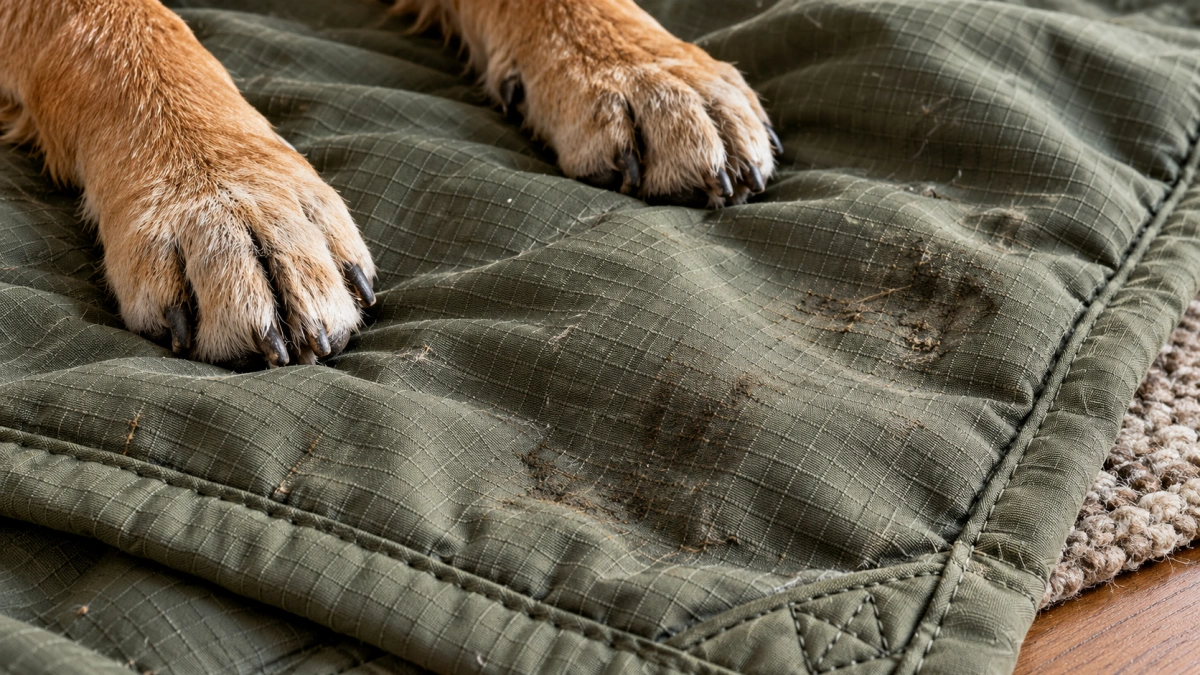
Ripstop is a woven construction that incorporates reinforcing yarns or a reinforcing pattern intended to help limit how easily a tear spreads.
This can be useful when a blanket faces:
- Pawing
- Scratching
- General abrasion
- Outdoor handling
- Frequent use
However, ripstop does not mean a dog’s teeth cannot puncture or start a tear.
Think of it as tear-management construction rather than a magic bite-proof fabric.
What Is Ballistic Fabric?
“Ballistic” is commonly used in pet-product marketing for very dense woven synthetic fabrics designed to resist abrasion and tearing.
These fabrics can provide useful durability for:
- Furniture protectors
- Dog-bed covers
- Crate pads
- Outdoor surfaces
But the word ballistic should not be interpreted as proof that a flexible blanket cannot be chewed.
Construction matters just as much as fiber strength.
Fabric Density Matters
A dense surface generally gives claws and teeth fewer loose fibers to grab than a deep fluffy surface.
For durability-focused use, consider:
- Dense woven polyester
- Ripstop-style fabric
- Low-pile synthetic surfaces
- Tightly constructed fleece
Be more cautious with:
- Deep shag
- Loose knit
- Long faux fur
- Large loops
- Loose fringe
especially for dogs that already pull at fabric.
Edges and Seams Matter as Much as Fabric
Dogs often begin destruction where they can get a good grip.
Common starting points include:
- Corners
- Binding
- Raised seams
- Tags
- Zippers
- Loose threads
A durable blanket should use:
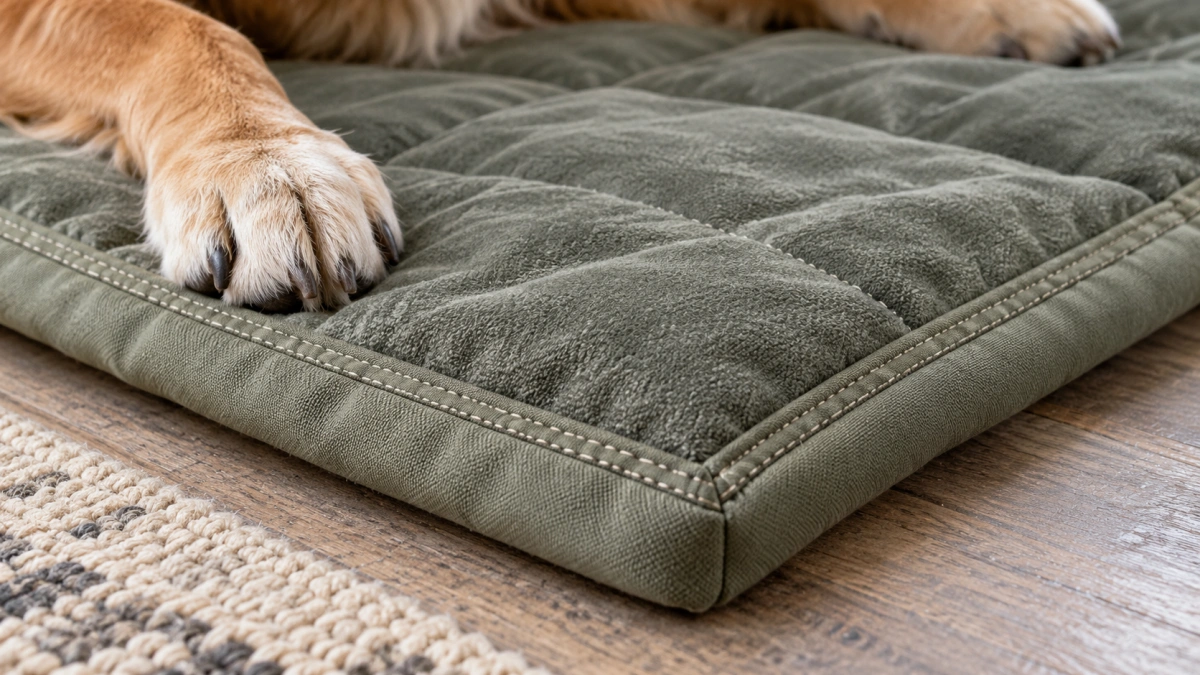
- Secure edge binding
- Closely spaced stitching
- Minimal exposed loose material
- Simple corners
The strongest center fabric is not useful if the dog can open the product by pulling apart one weak seam.
Are Fleece Dog Blankets Durable?
Fleece can be durable enough for ordinary sleeping, repeated washing, and light nesting.
Its advantages include:
- Softness
- Flexibility
- Low weight
- Easy washing
- Moderate warmth
But fleece is not the best choice for a dog that deliberately bites and tears fabric.
A determined chewer can often grip soft fleece more easily than a dense woven surface.
For a deeper comparison of fleece, plush, sherpa, and similar fabrics, see our guide to fleece and plush dog blankets.
What About Plush and Sherpa?
Plush and sherpa prioritize softness and warmth rather than maximum resistance to destructive behavior.
Their raised fibers can give chewing dogs more material to pull.
They may still work well for a dog that only:
- Turns before lying down
- Lightly paws at bedding
- Nests without biting
But a persistent fabric chewer usually needs a different priority than deep softness.
Is Canvas a Good Dog Blanket Material?
Canvas-style woven fabric can provide greater abrasion resistance than many soft plush materials.
However, a heavy canvas throw may:
- Feel less soft
- Be less flexible
- Take longer to dry
- Still be vulnerable at seams and corners
Choose it when durability is more important than deep nesting texture.
Why Flexible Blankets Are Vulnerable to Chewing
A blanket has to remain flexible enough to fold and drape.
That flexibility also allows a dog to:
- Fold the fabric into its mouth
- Grip an edge
- Hold one section with a paw
- Pull in the opposite direction
A rigid or tightly fitted dog-bed surface can be harder for a dog to get between its jaws than a loose blanket made from the same material.
This is why a highly durable fabric can perform differently when used as a loose throw versus a fitted bed cover.
Digging Is Not the Same as Destructive Chewing
Some dogs paw or “dig” at bedding before lying down.
For these dogs, prioritize:
- Abrasion resistance
- Dense weave
- Strong seams
- Stable placement
A blanket may shift while the dog digs even if the fabric does not tear.
If digging is the main behavior, you may not need the most chew-resistant product available.
Light Nibbling vs Persistent Chewing
Occasional mouthing is different from deliberate destruction.
A dog may briefly nibble a blanket while:
- Settling down
- Playing
- Exploring a new texture
Persistent chewing is more concerning when the dog repeatedly returns to an edge, creates holes, removes pieces, or tries to swallow the fabric.
Once material is being removed, durability is no longer only a product-longevity question.
Why Does My Dog Chew Blankets?
Dogs chew for many reasons.
Possible contributors include:
- Puppy teething
- Normal exploration
- Boredom
- Insufficient enrichment
- Habit
- Frustration
- Stress
ASPCA guidance notes that destructive chewing is normal in puppies and can also occur in adult dogs because of boredom, frustration, or anxiety-related patterns.
A stronger blanket may reduce damage, but it does not address every reason the dog is chewing.
Puppies and Blanket Chewing
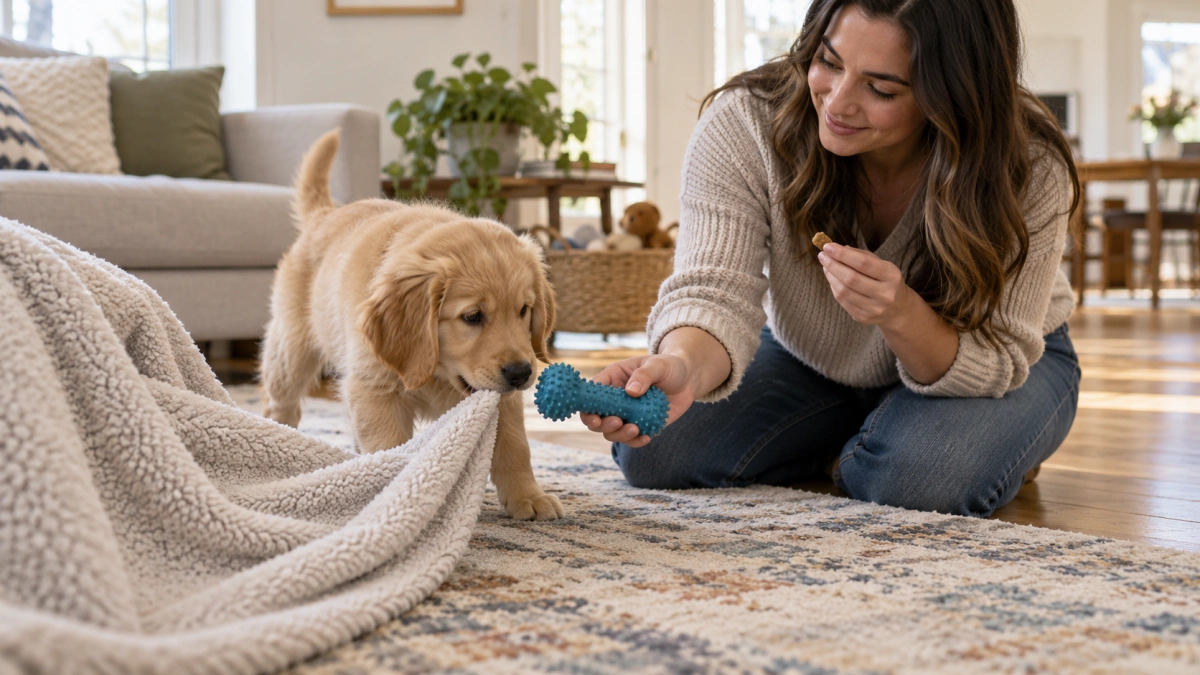
Puppies commonly explore objects with their mouths and chew more during teething.
A practical approach includes:
- Supervising blanket use
- Removing bedding that is being destroyed
- Redirecting chewing toward appropriate dog toys
- Providing regular exercise and enrichment
- Inspecting bedding frequently
Do not punish a puppy after discovering damaged bedding later. Redirect the behavior while it is happening and reduce access to unsafe material.
What if My Dog Swallows Blanket Fabric?
Fabric ingestion can become a veterinary emergency.
Swallowed material may cause:
- Choking
- Vomiting
- Gastrointestinal irritation
- Intestinal blockage
If you know or strongly suspect that your dog swallowed a piece of blanket, contact your veterinarian promptly.
Do not deliberately make your dog vomit unless a veterinarian instructs you to do so.
Warning Signs After Possible Fabric Ingestion
Seek veterinary advice promptly if possible foreign-material ingestion is followed by signs such as:
- Repeated vomiting
- Loss of appetite
- Abdominal discomfort
- Lethargy
- Difficulty passing stool
- Repeated retching
Do not wait for severe symptoms if you know a meaningful amount of fabric is missing.
When Should You Replace a Damaged Dog Blanket?
Replace or remove the blanket when you find:
- Holes large enough for paws or teeth to enter
- Missing fabric
- Loose threads
- Open seams
- Exposed internal layers
- Accessible waterproof membrane
- Loose stuffing
- Damaged binding
Do not wait until a small damaged corner becomes a large chew target.
Durable Dog Blankets for Crates
Crates require additional caution because the dog cannot simply walk to another part of the room.
If a dog destroys fabric when left alone, do not assume that replacing a normal blanket with a slightly tougher one makes unattended crate use safe.
For destructive chewers, the safest setup may temporarily involve no loose blanket.
For complete crate sizing and bedding guidance, see our guide to dog blankets for crates.
Durable Dog Blankets for Couches
Furniture-protection blankets often need to resist:
- Pawing
- Scratching
- Frequent washing
- Hair
- Light moisture
This is a different durability profile from a blanket for an aggressive fabric chewer.
A tough ripstop furniture protector may be excellent against claws and ordinary wear while remaining unsuitable for unsupervised chewing.
Do You Need Waterproofing Too?
Waterproofing and durability solve different problems.
A waterproof layer helps manage:
- Drool
- Wet paws
- Accidents
- Spills
It does not automatically make the outer fabric harder to chew.
In fact, once a chewing dog tears through the external textile, the waterproof membrane may become accessible.
If liquid protection is your main concern, see our guide to waterproof dog blankets.
Outdoor Durability Is a Different Requirement
A dog blanket used outdoors may need to tolerate:
- Rough ground
- Sand
- Dirt
- Moisture
- Repeated folding
- Transport
That does not automatically mean it is chew resistant.
Ground abrasion resistance and dog-tooth resistance are different performance requirements.
Our guide to outdoor dog blankets covers those environmental factors separately.
Washability Is Part of Durability
A blanket that survives paws but loses shape after several washes is not particularly durable for everyday dog use.
Before buying, check:
- Machine-wash instructions
- Dryer restrictions
- Edge stitching
- Whether coatings or waterproof layers require special care
- Whether repeated washing is expected
Some current durable ripstop pet blankets are specifically designed for machine washing on a gentle cold cycle and low-temperature or air drying, illustrating that laundry durability is an important part of the product design.
Inspect the Blanket Before Every Wash
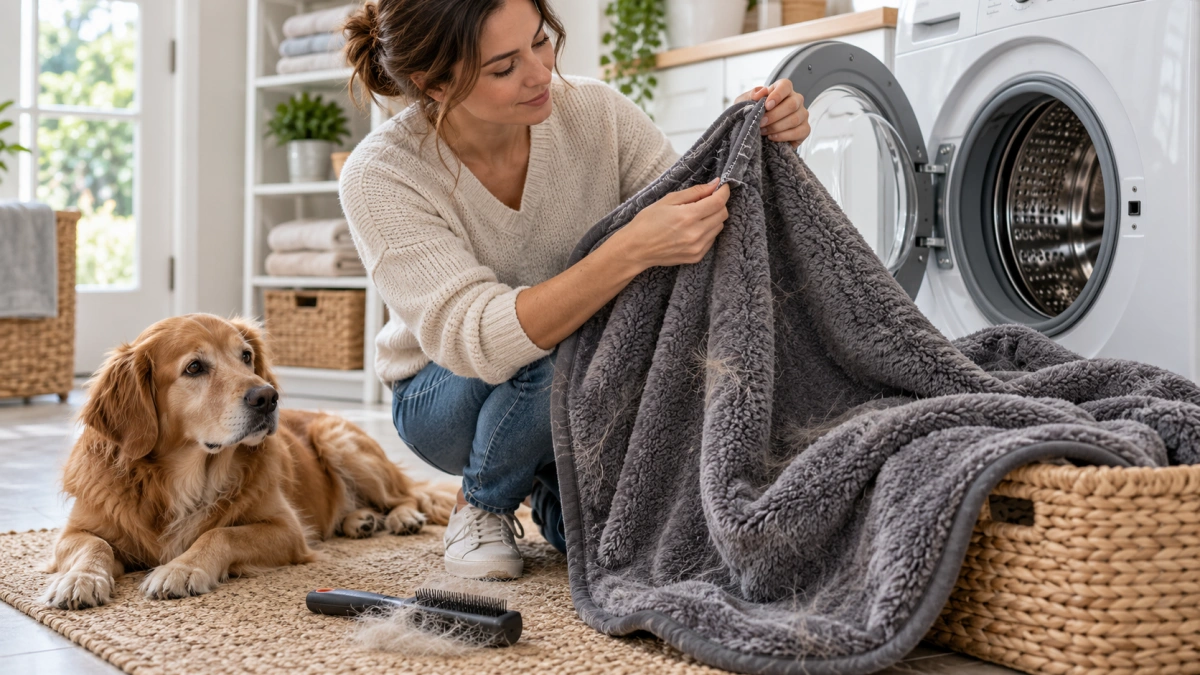
Laundry can enlarge existing weak points.
Before putting the blanket into the machine, check:
- Corners
- Bindings
- Stitching
- Existing punctures
- Pulled threads
- Internal layers
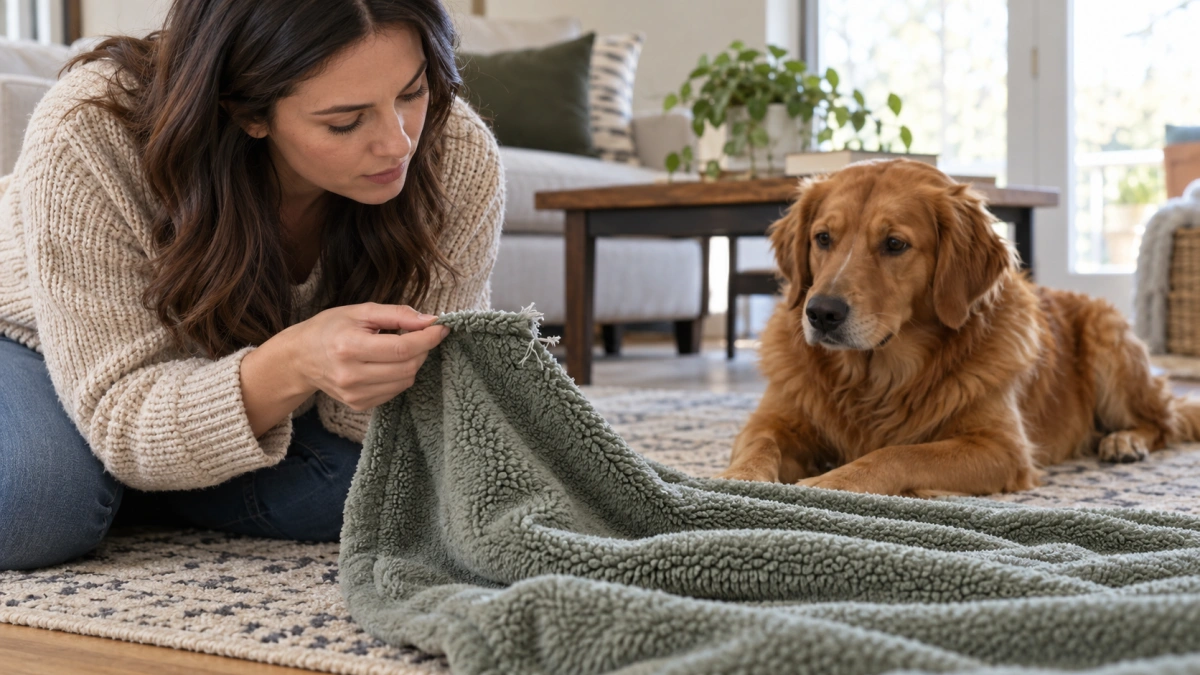
A damaged blanket may be safer to replace than to repeatedly wash and return to a dog that is likely to continue chewing the same area.
Should You Buy the Thickest Blanket?
Not necessarily.
Thickness can add:
- Warmth
- Weight
- Padding
but does not automatically improve chew resistance.
A determined dog may bite through a thick soft blanket more easily than a thinner dense woven fabric.
Construction matters more than thickness alone.
Should You Buy the Hardest Material?
Also not necessarily.
A dog blanket still needs to work as bedding.
Extremely stiff materials may:
- Be uncomfortable
- Not drape properly
- Make nesting difficult
- Be harder to wash
The goal is an appropriate balance between durability and comfort, not simply the toughest fabric you can find.
Our 9-Point Durable Dog Blanket Check
Use these nine factors when comparing durable or chew-resistant dog blankets.
1. Damage Type
Does your dog scratch, dig, nibble, tear, or deliberately chew?
2. Fabric Density
Is the material tightly woven or full of loose fibers that are easy to grab?
3. Tear Control
Does the construction use ripstop or another design intended to limit tear propagation?
4. Edges
Are corners and bindings simple, secure, and difficult to grip?
5. Seams
Are stitched areas reinforced and free from loose thread?
6. Exposed Components
Are there zippers, stuffing, membranes, tags, tassels, or other tempting parts?
7. Wash Durability
Can the blanket survive the repeated laundry schedule your household requires?
8. Dog Safety
Will you remove the blanket if the dog begins tearing off or swallowing material?
9. Realistic Claim
Does the manufacturer clearly distinguish durable, scratch-resistant, chew-resistant, and chew-proof rather than relying on vague “indestructible” marketing?
The strongest buying choice is the blanket designed for your dog’s actual behavior rather than the product with the most aggressive durability wording.
Common Durable Dog Blanket Buying Mistakes
- Assuming durable means chew-proof
- Assuming ripstop means teeth cannot puncture it
- Assuming ballistic fabric is indestructible
- Choosing by fabric strength but ignoring seams
- Ignoring corners and exposed binding
- Buying deep plush for a dog that pulls fibers
- Giving a destructive chewer unsupervised access to a soft blanket
- Continuing to use a blanket with missing pieces
- Ignoring possible fabric ingestion
- Trying to solve boredom only with a tougher blanket
- Ignoring puppy teething
- Using punishment after discovering damage later
- Assuming waterproof means chew-resistant
- Assuming outdoor durability means chew resistance
- Buying the thickest blanket instead of examining construction
Durable Dog Blanket Buying Checklist
- Does my dog actually chew blankets?
- Is the behavior light nibbling or persistent destruction?
- Does my dog mainly scratch or dig?
- Is the fabric densely woven?
- Does it use ripstop construction?
- How are the corners finished?
- Are the edges reinforced?
- Are the seams easy for teeth to access?
- Are there tags, fringe, zippers, or loose pieces?
- Is the surface low pile?
- Does the manufacturer clearly state its chew-resistance limits?
- Is there a warranty, and what exactly does it cover?
- Is the blanket machine washable?
- Can it tolerate repeated washing?
- Do I also need waterproofing?
- Will the blanket be used in a crate?
- Can I supervise initial use?
- Will I remove it immediately if pieces are being torn off?
- Does my dog have appropriate chew toys and enrichment?
Final Thoughts
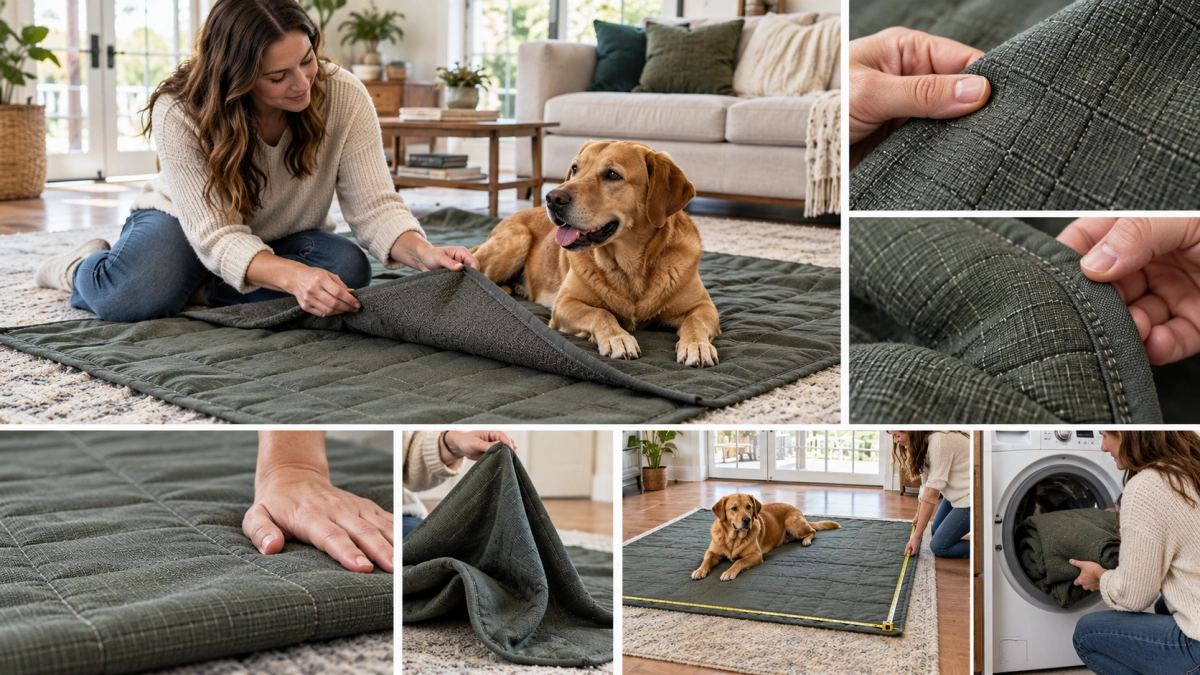
The best durable dog blanket is not necessarily the product with “indestructible” written most prominently in its description.
Start by identifying what your dog actually does. A dog that scratches and nests needs a different construction from a dog that deliberately grips corners and tears fabric with its teeth.
Dense woven fabrics, ripstop construction, reinforced edges, secure seams, and low-pile surfaces can improve resistance to everyday wear. But even very strong fabric can remain vulnerable when used as a thin flexible blanket that a determined dog can grip.
Do not treat fabric destruction only as a shopping problem. Puppies may chew while teething and exploring, while adult dogs can chew because of habit, boredom, insufficient enrichment, frustration, or stress.
Most importantly, stop using a blanket once your dog begins removing or swallowing pieces. A replacement blanket is inexpensive compared with the potential consequences of an intestinal foreign body.
Choose durability realistically: resist the type of wear your dog creates, inspect the product frequently, maintain it correctly, and never let a marketing term replace direct observation of your dog’s behavior.