By A CUTE PET STORY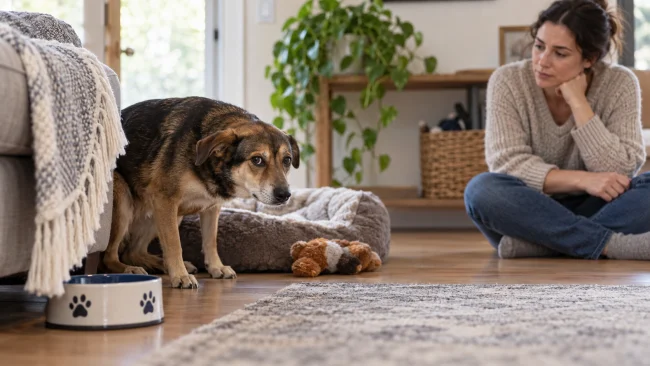
Aggressive behavior in a rescue dog can be frightening, especially when the dog seemed quiet or friendly during the first days after adoption. Growling, snapping, lunging, guarding, or suddenly becoming defensive does not automatically mean the dog is “bad” or that abuse definitely occurred in the past.
Aggression is a behavior, not a personality label. Fear, unfamiliar situations, resource guarding, frustration, social conflict, discomfort, pain, and previous learning can all influence how a dog responds. The safest approach is to identify when the behavior occurs, reduce opportunities for another incident, and avoid forcing the dog through situations it cannot yet handle.
For more guides covering growling, lunging, biting, and other related problems, visit our Dog Aggressive Behavior topic hub.
What Does Aggressive Behavior Look Like in a Rescue Dog?
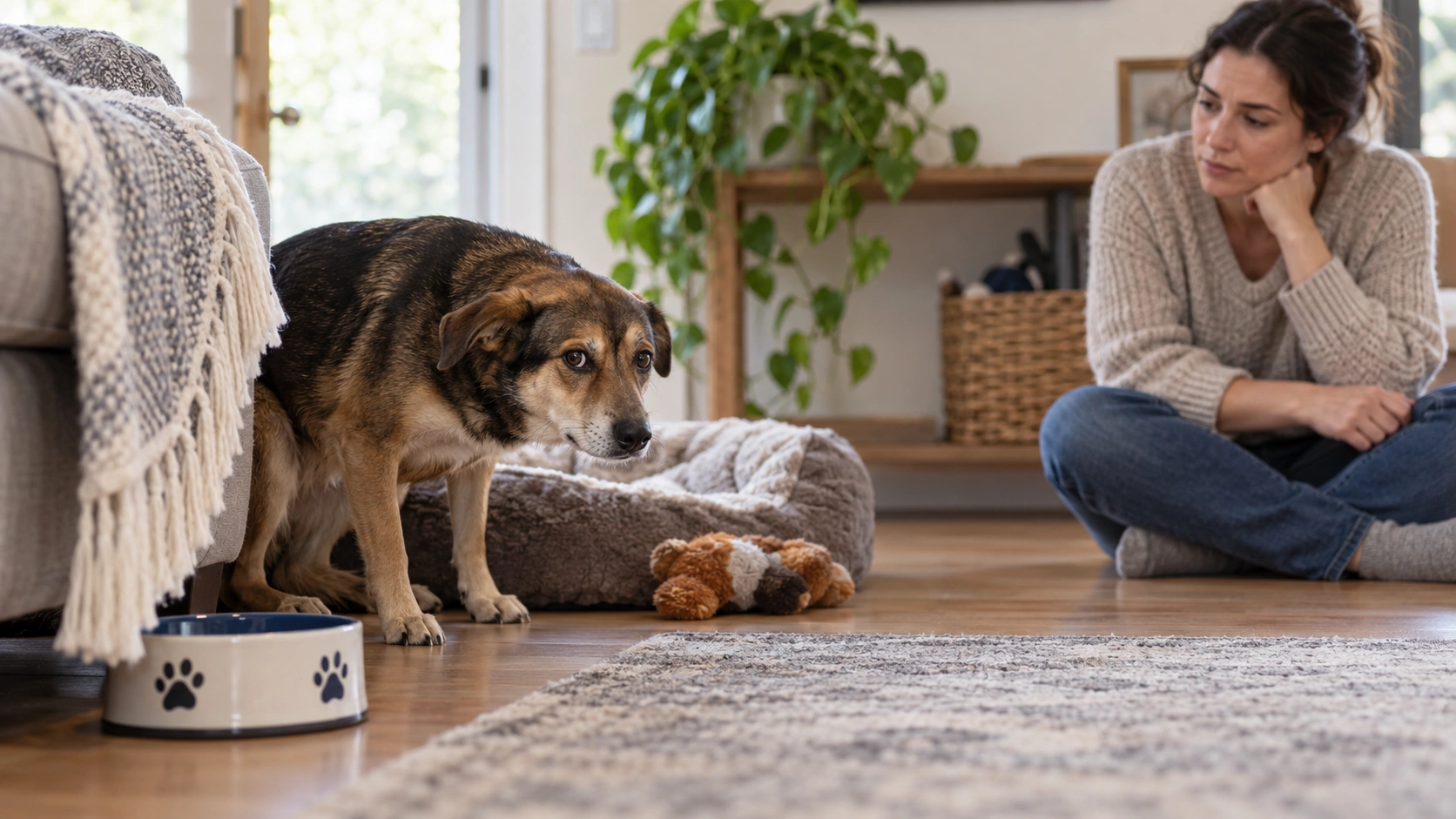
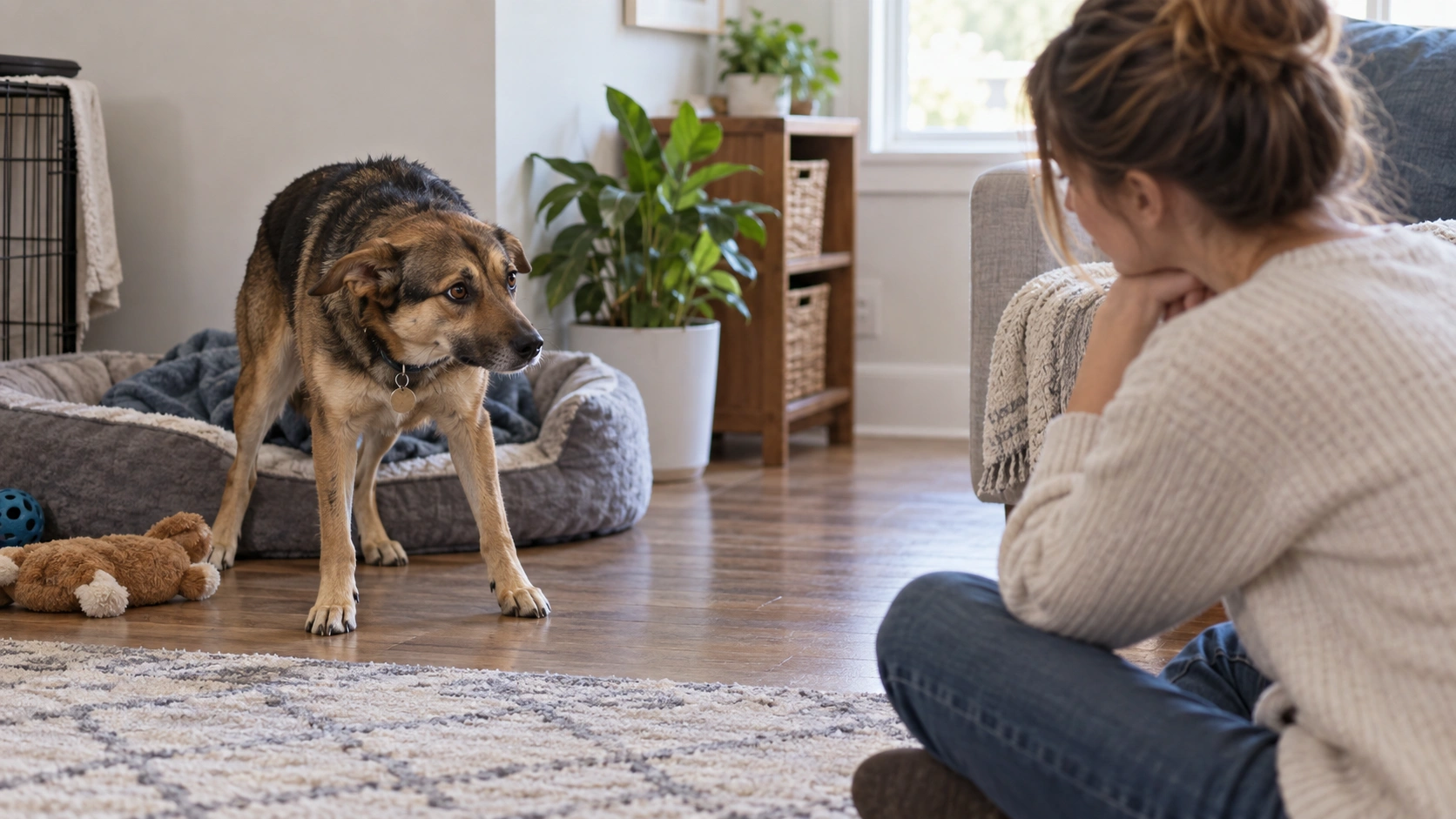
Aggression does not begin only when a dog bites. Dogs often show earlier signals that they are uncomfortable and want more distance.
Possible warning signs include:
- Suddenly becoming very still or stiff
- Hard staring at a person, dog, or object
- Growling
- Showing teeth
- Snapping toward someone without making contact
- Lunging
- Guarding food, toys, beds, or spaces
- Biting or attempting to bite
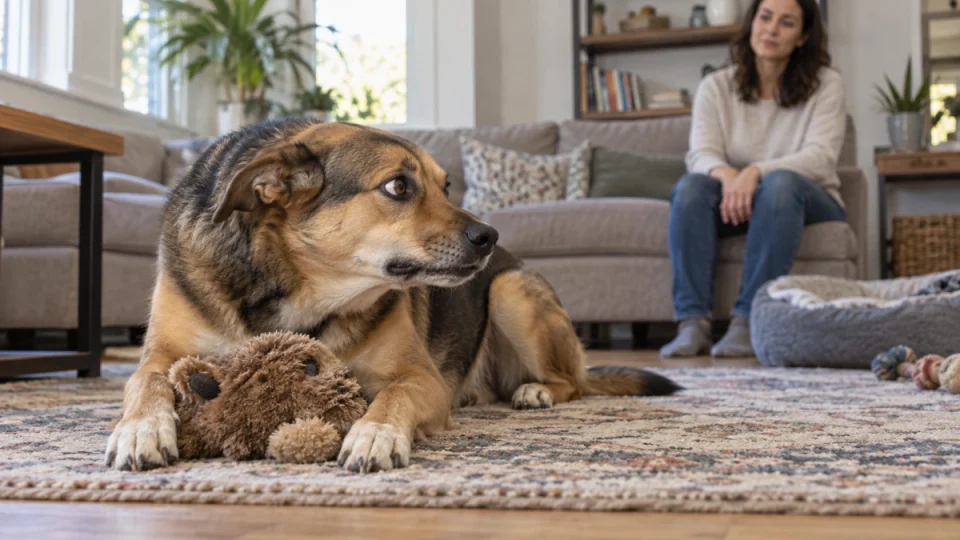
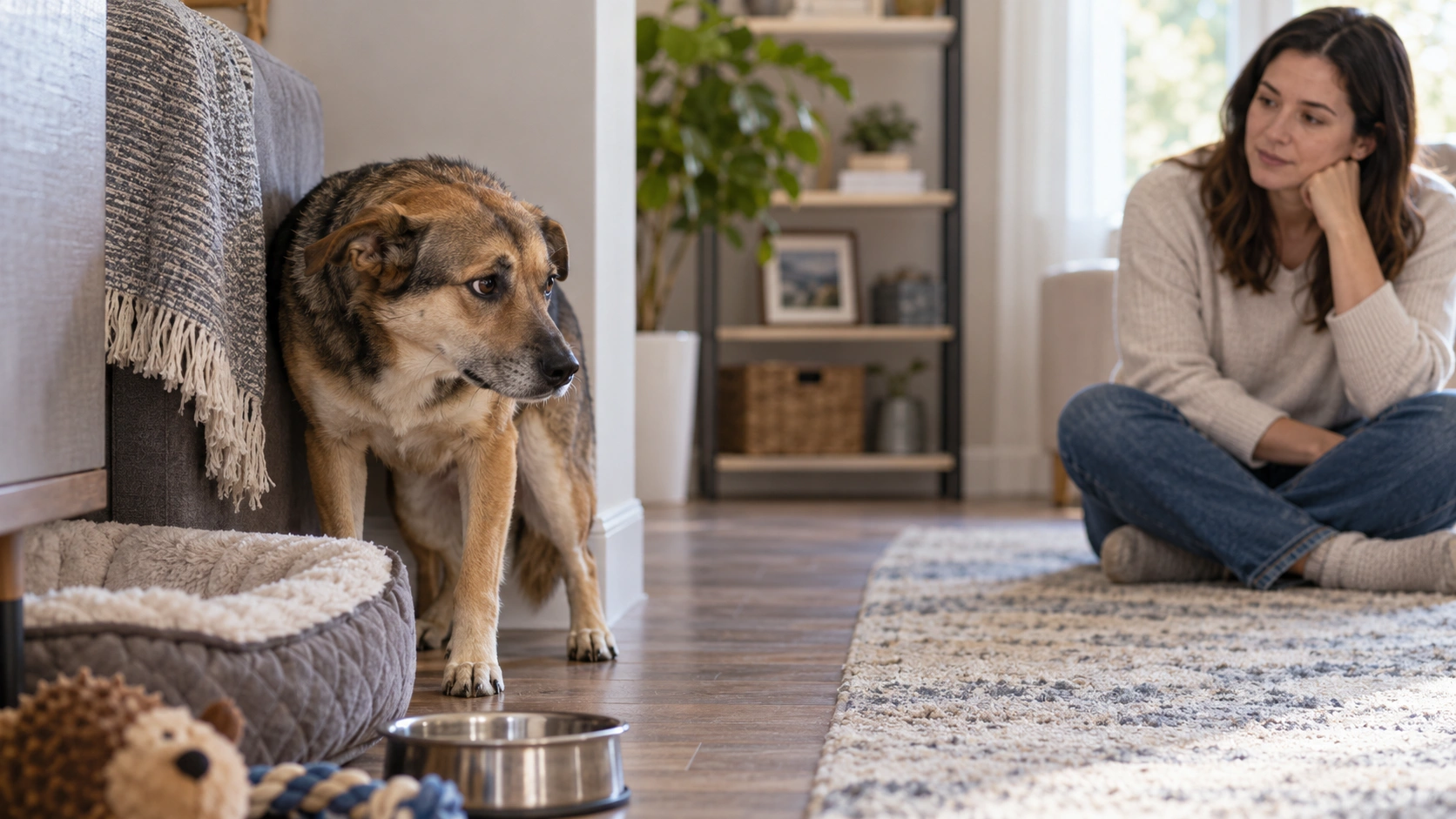
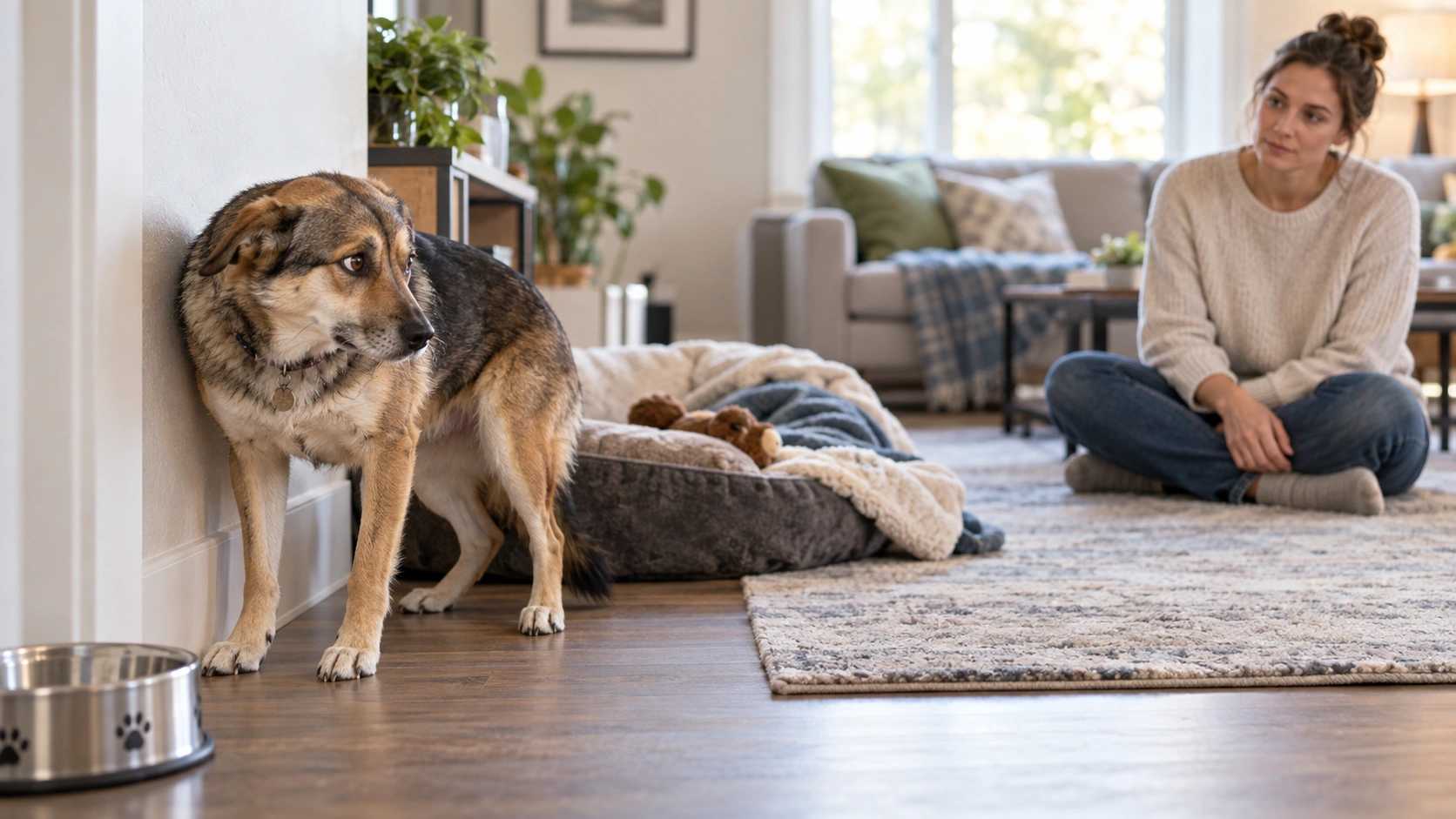
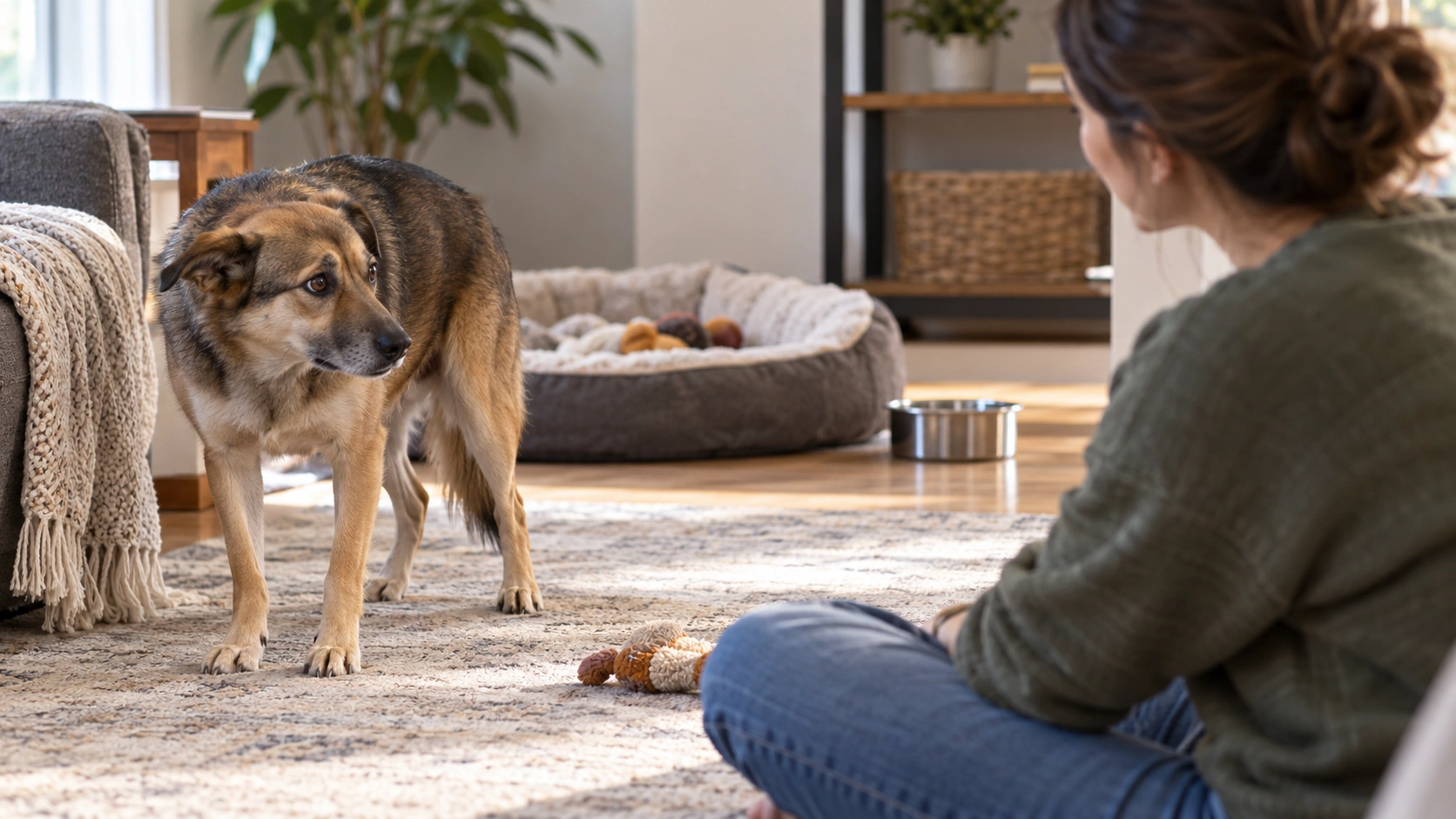
A dog may also show quieter signs first, such as moving away, avoiding eye contact, lowering its body, hiding, or refusing interaction. These behaviors matter because they can appear before stronger defensive responses.
| Behavior | What It May Tell You | Safer Response |
|---|---|---|
| Moving away | The dog may want more space | Stop approaching and allow distance |
| Freezing or stiffening | Tension may be increasing | Pause interaction and reduce pressure |
| Growling | The dog is giving a warning | Do not punish the warning; create space |
| Snapping or lunging | The situation may be escalating | Increase distance and use a barrier if needed |
| Biting | There is an immediate safety risk | Prevent further contact and seek professional help |
Why Aggressive Behavior May Appear After Adoption
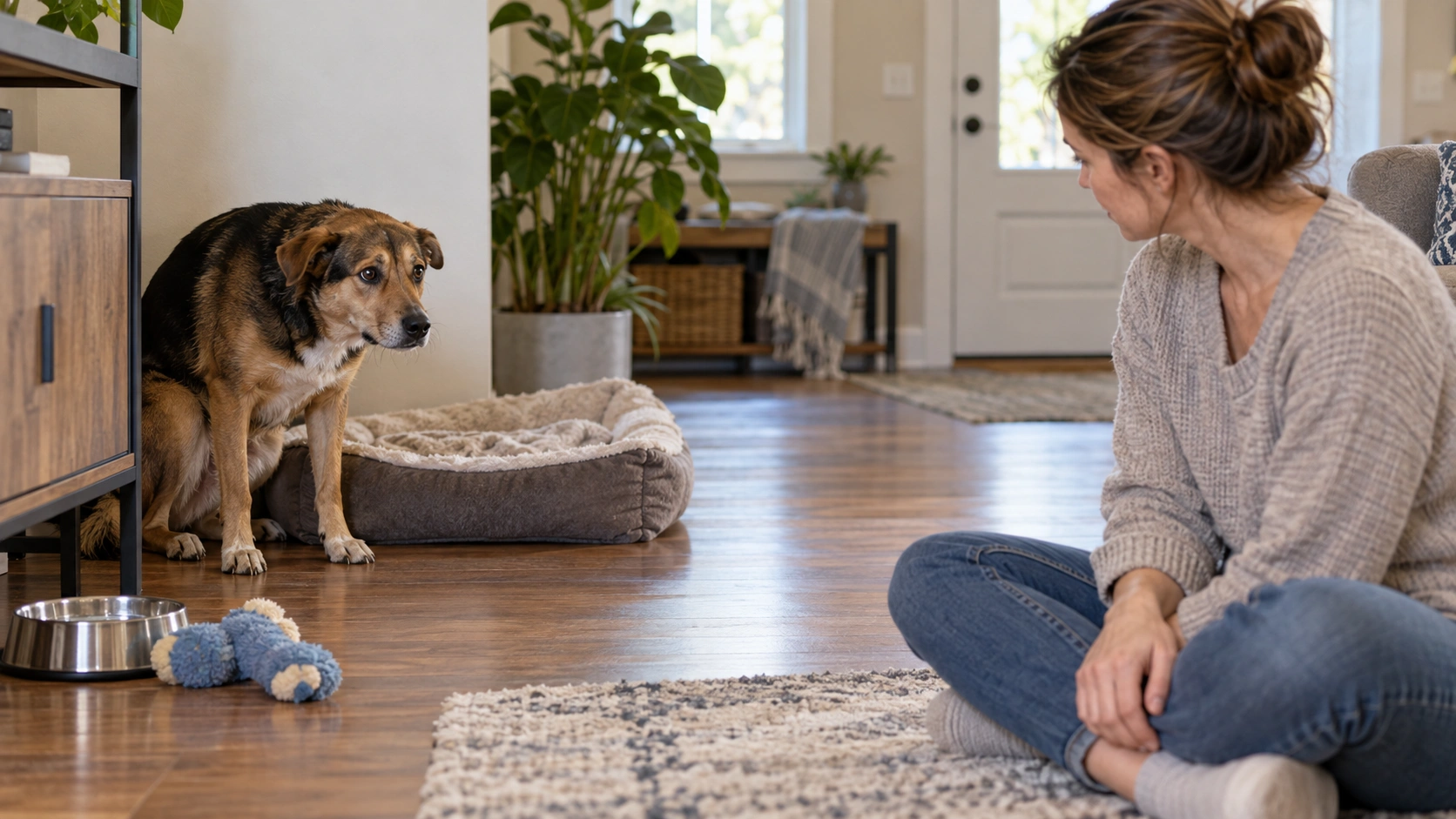
Some rescue dogs seem unusually quiet during their first days in a new home. That does not necessarily mean their long-term behavior has already been revealed.
Moving from a shelter, foster home, previous household, or transport environment into an unfamiliar home can be a major change. During the adjustment period, a dog may be cautious, tired, withdrawn, highly alert, or unsure about interacting.
As the dog becomes more familiar with the home, additional behaviors may become easier to see. This does not mean the dog suddenly developed a completely new personality. The dog may simply be responding differently as routines, relationships, spaces, and expectations become more familiar.
There is no exact adjustment timeline that applies to every rescue dog. Breed, age, temperament, previous learning, health, and the home environment can all influence how quickly a dog settles.
Why Is My Rescue Dog Aggressive?
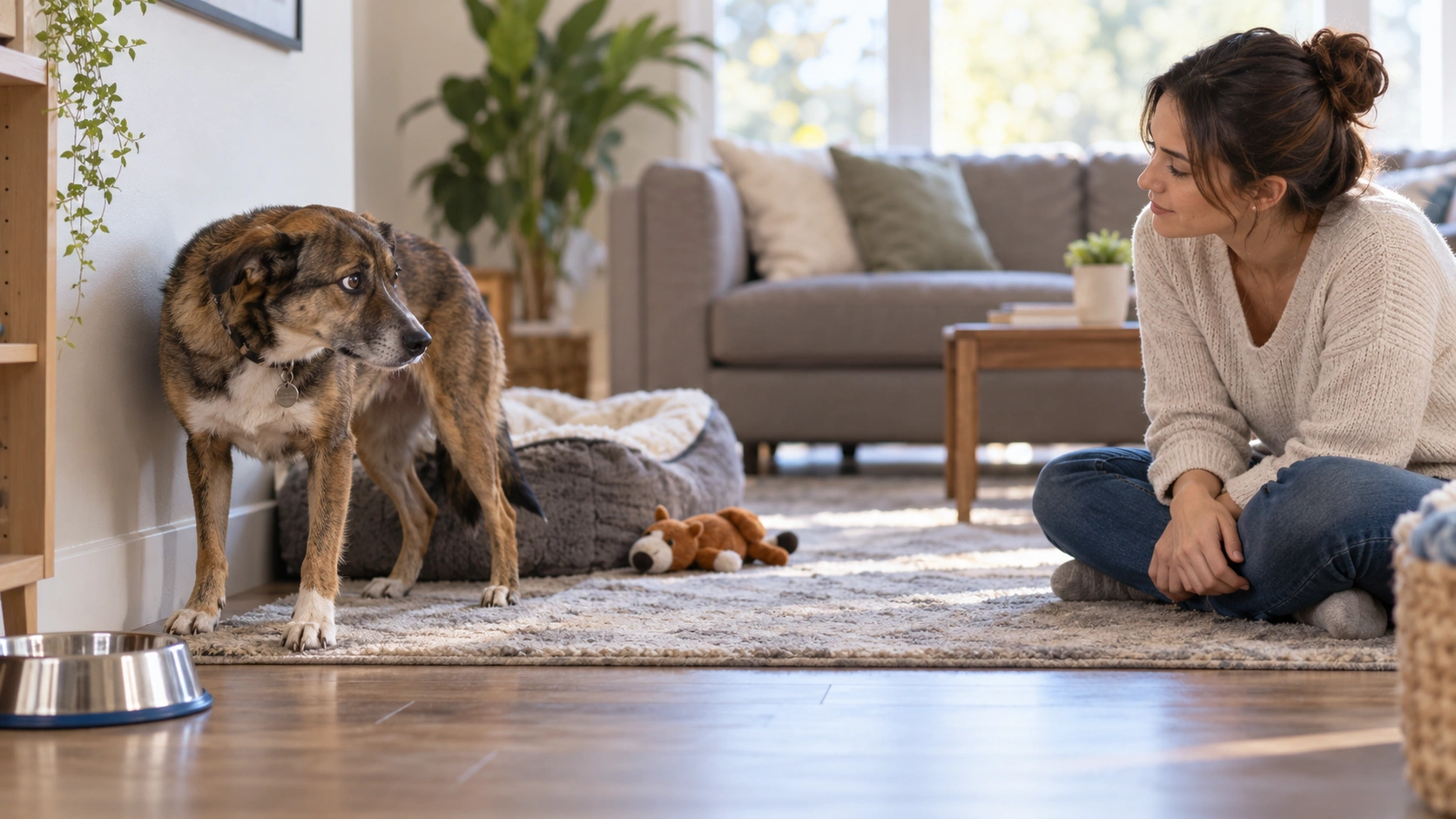
There is rarely one universal explanation. The useful question is not simply “Why is this dog aggressive?” but “What happens before, during, and after the behavior?”
Possible contributing factors include:
- Fear of unfamiliar people, dogs, or situations
- Feeling trapped or unable to move away
- Guarding food, toys, beds, or another valued resource
- Handling that the dog finds uncomfortable
- Frustration while restrained or on leash
- Conflict with another household animal
- Overwhelming environments or repeated stressful events
- Pain, illness, or physical discomfort
- Behavior that has previously succeeded in making a threat move away
It is also important not to assume that aggression proves a rescue dog was abused. Many adopted dogs have incomplete histories, and behavior alone cannot reliably tell an owner exactly what happened in the dog’s past.
Common Triggers for Aggressive Behavior
Tracking triggers can reveal patterns that are difficult to notice when incidents are considered separately.
| Trigger | Behavior an Owner May Notice | Possible Context |
|---|---|---|
| Person reaching toward the dog | Freezing, growling, snapping | Fear, handling sensitivity, discomfort |
| Someone approaching food | Stiffening, guarding, growling | Resource-related behavior |
| Another dog getting close | Barking, lunging, avoidance | Fear, frustration, social conflict |
| Visitor entering the home | Barking, charging, blocking | Fear or territorial response |
| Touching a painful area | Sudden defensive reaction | Possible pain or physical discomfort |
A simple behavior log can help. Record what happened immediately before the incident, who or what the dog reacted to, how close the trigger was, what the dog did, and how the situation ended.
Fear, Reactivity and Aggression Are Not the Same Thing
Owners often use the words aggressive and reactive interchangeably, but they describe different aspects of behavior.
| Term | What It Describes |
|---|---|
| Fear | An emotional response to something the dog perceives as threatening |
| Reactivity | A strong or rapid behavioral response to a trigger |
| Aggression | Behavior that threatens or causes harm, such as growling, snapping, lunging, or biting |
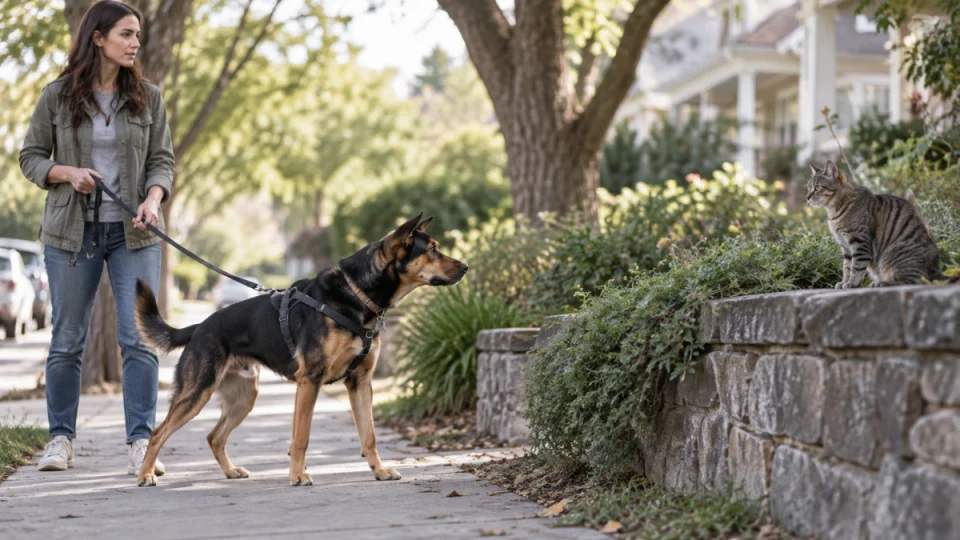
A fearful dog may behave aggressively if it believes creating distance is necessary. A reactive dog may bark and lunge without intending to make physical contact. Because the outward behaviors can overlap, owners should avoid diagnosing the motivation from a single incident.
Does Age or Maturity Affect Rescue Dog Behavior?
Age can influence social behavior, energy, confidence, and how a dog responds to other dogs, but age alone does not explain aggression. Young dogs approaching adulthood may become more independent or more selective about social interactions.
Owners of young adult dogs can also read about behavior changes around 2 years old to understand how normal maturation can differ from a concerning behavior change.
If growling, snapping, or biting appears suddenly, especially in a dog whose behavior had previously been stable, do not assume maturity is the only reason.
What to Do When Aggressive Behavior Happens
The first goal is safety, not proving that the dog can tolerate the situation.
1. Increase Distance
Move the dog away from the trigger when this can be done safely. If the dog is already highly aroused, avoid reaching toward its collar or physically confronting it.
2. Use Physical Barriers
Doors, secure gates, separate rooms, pens, and other appropriate barriers can prevent unwanted contact while the situation is being evaluated.
3. Protect Children and Vulnerable Pets
Do not allow children to test whether the dog is “better now.” If aggression has occurred around children, older adults, small animals, or another vulnerable household member, use reliable separation until a safe plan has been established.
4. Stop Repeating the Trigger
Repeatedly exposing a dog to something that causes intense fear or aggression can create more opportunities for another incident. Management gives owners time to understand the pattern without continuing to rehearse the problem.
5. Write Down What Happened
A detailed record can help a veterinarian or behavior professional understand patterns that are difficult to reconstruct later.
A First 24-Hour Safety Plan After an Aggressive Incident
If a rescue dog has just growled, snapped, lunged, or bitten, owners do not need to solve the entire behavior problem immediately. The first day should focus on preventing another incident.
- Separate the dog from the known trigger
- Keep the environment calm and predictable
- Avoid unfamiliar visitors when possible
- Do not force touching, handling, or greetings
- Do not take food or valued objects away by hand
- Supervise access to other pets
- Record the circumstances surrounding the incident
- Contact a veterinarian if the behavior was sudden or unusual
- Seek qualified behavior help when there is a bite risk or repeated aggression
What Owners Should Avoid
Trying to overpower or punish an aggressive dog can increase fear and make an already unsafe interaction more dangerous.
Avoid:
- Hitting, yelling at, or physically intimidating the dog
- Using an “alpha roll” or forcing the dog onto its back
- Punishing growling
- Taking guarded food or toys by force
- Cornering the dog to make it “face its fear”
- Allowing strangers to repeatedly approach a frightened dog
- Testing the dog around known triggers to see whether aggression happens again
Growling is valuable information. It tells you the dog is uncomfortable before the situation progresses further. The goal should be to address the reason for the warning, not simply silence it.
Creating a Safer Home Setup
Good management can dramatically reduce risk while a rescue dog learns about its new environment.
| Situation | Management Option |
|---|---|
| Visitors entering | Use a separate room or secure gate before opening the door |
| Multiple dogs eating | Feed dogs separately |
| Valued toys cause conflict | Manage access and avoid forced removal |
| Dog reacts through windows | Reduce visual access where practical |
| Dog becomes overwhelmed during greetings | Skip forced greetings and provide more distance |
Management is not failure. It prevents unsafe situations while owners work on the underlying behavior.
When Sudden Aggression Needs a Veterinary Check
A sudden change in behavior deserves extra attention. Pain and physical discomfort can make a dog less tolerant of touching, handling, movement, or interaction.
Contact a veterinarian if aggression appears suddenly or is accompanied by changes such as:
- Reduced appetite
- Limping or difficulty moving
- Reluctance to be touched
- Changes in sleep or activity
- Confusion or unusual disorientation
- Other significant changes in normal behavior
A veterinary evaluation can help rule out medical contributors before an owner assumes the problem is purely behavioral.
When to Get Professional Help
Professional guidance is particularly important when a dog has bitten someone, repeatedly attempts to bite, directs aggression toward household members, or cannot be safely managed around other people or animals.
Seek qualified help when:
- A bite has caused an injury
- Aggression is becoming more frequent or intense
- The dog targets children or vulnerable people
- The dog repeatedly fights with another household animal
- Owners cannot identify or safely avoid the trigger
- Fear or aggression seriously limits normal daily life
A veterinarian can first evaluate possible medical factors. Depending on the situation, the next step may involve a veterinary behaviorist or another appropriately qualified behavior professional who uses evidence-based, reward-focused methods.
Final Thoughts
Aggressive behavior in a rescue dog should be taken seriously, but it should not automatically be interpreted as proof that the dog is dangerous, dominant, or previously abused.
Look for patterns: who the dog reacts to, what happens immediately beforehand, how close the trigger is, whether the dog can move away, and whether the behavior appeared suddenly.
Distance, environmental management, predictable routines, veterinary evaluation when appropriate, and qualified behavior support are safer starting points than punishment or confrontation. Understanding why an incident happens is the foundation for reducing the chance that it happens again.