By A CUTE PET STORY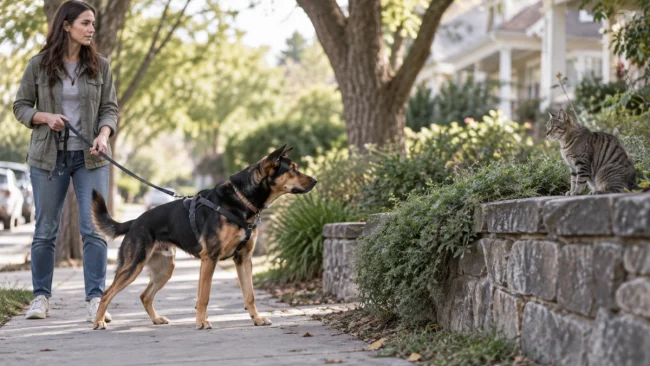
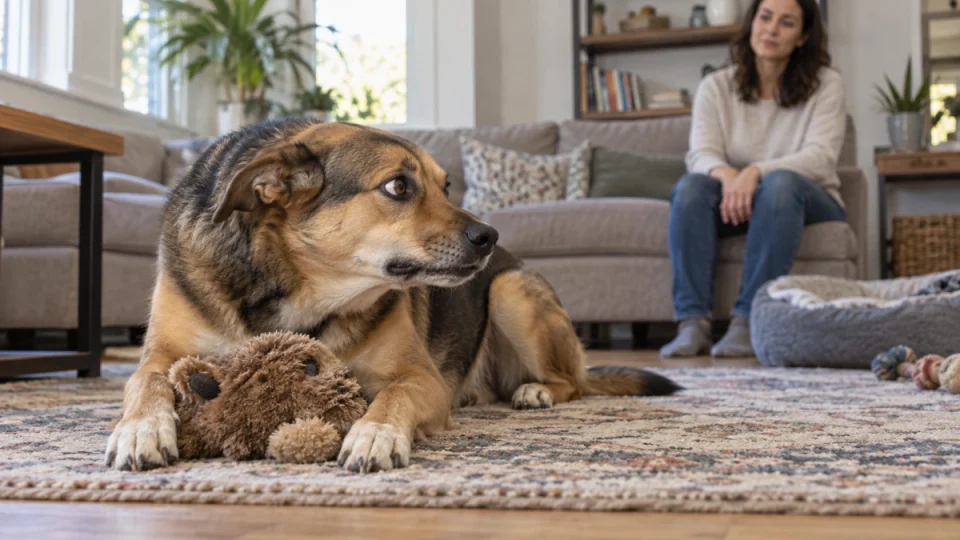
Dog aggression can be frightening and confusing, especially when a dog begins growling, snapping, lunging, or reacting strongly in situations that previously seemed manageable. Aggressive behavior is not a single personality type, and it does not automatically mean a dog is “bad.”
Dogs may use aggressive behavior when they feel afraid, threatened, frustrated, protective of something valuable, physically uncomfortable, or unable to escape a stressful situation. The safest approach is to understand what happens before the reaction, recognize early warning signals, and prevent the situation from escalating.
This guide explains common signs of dog aggression, possible causes and triggers, safer management strategies, and when professional help is appropriate.
For more guides covering challenging canine behavior, explore our Dog Behavior Problems topic hub.
What Is Dog Aggression?
Aggression describes behaviors a dog may use to increase distance, protect something important, respond to fear, or manage conflict. It can range from subtle warning signals to snapping or biting.
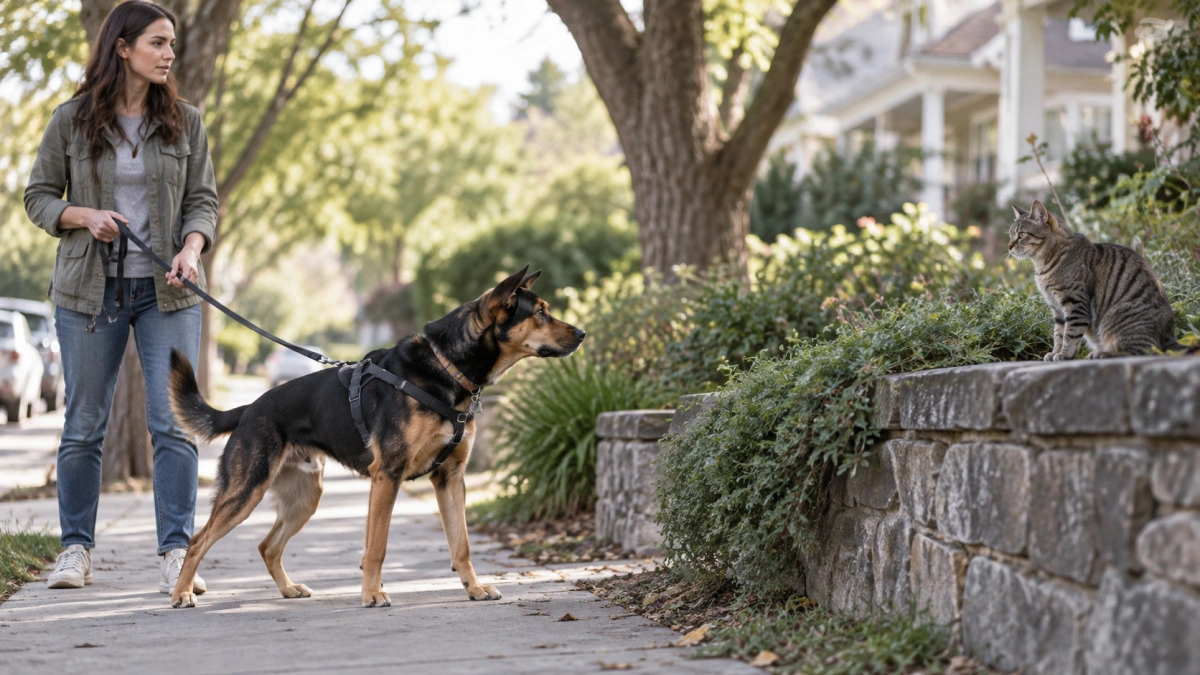
Aggression should be understood in context. A dog that growls when a stranger reaches toward it may have a different motivation from a dog that guards food or reacts to another dog during a walk.
The behavior itself tells you that the dog is struggling with something in that moment. Understanding the situation around it is more useful than applying a general label.
What Are the Signs of Aggression in Dogs?
Many dogs communicate discomfort before a situation reaches the point of snapping or biting. Learning those earlier signals gives owners more time to create distance and reduce risk.
| Warning Level | Possible Signal | What Owners Should Notice |
|---|---|---|
| Early discomfort | Turning away or moving away | The dog may be asking for more space |
| Increasing tension | Stiff posture or freezing | The body becomes noticeably less relaxed |
| Focused warning | Hard staring or fixed attention | The dog may be closely monitoring a perceived threat |
| Clear warning | Growling or showing teeth | The dog is communicating that the interaction should stop or move away |
| Escalation | Snapping or lunging | The situation has progressed and immediate safety management is needed |
| Physical contact | Biting | The incident requires serious safety assessment and professional guidance |
Not every dog follows exactly the same sequence. Some signals may be subtle, brief, or difficult to notice, especially when the situation develops quickly.

Why Do Dogs Become Aggressive?
Aggressive behavior can have several motivations, and more than one factor may be involved at the same time.
Fear and Defensive Behavior
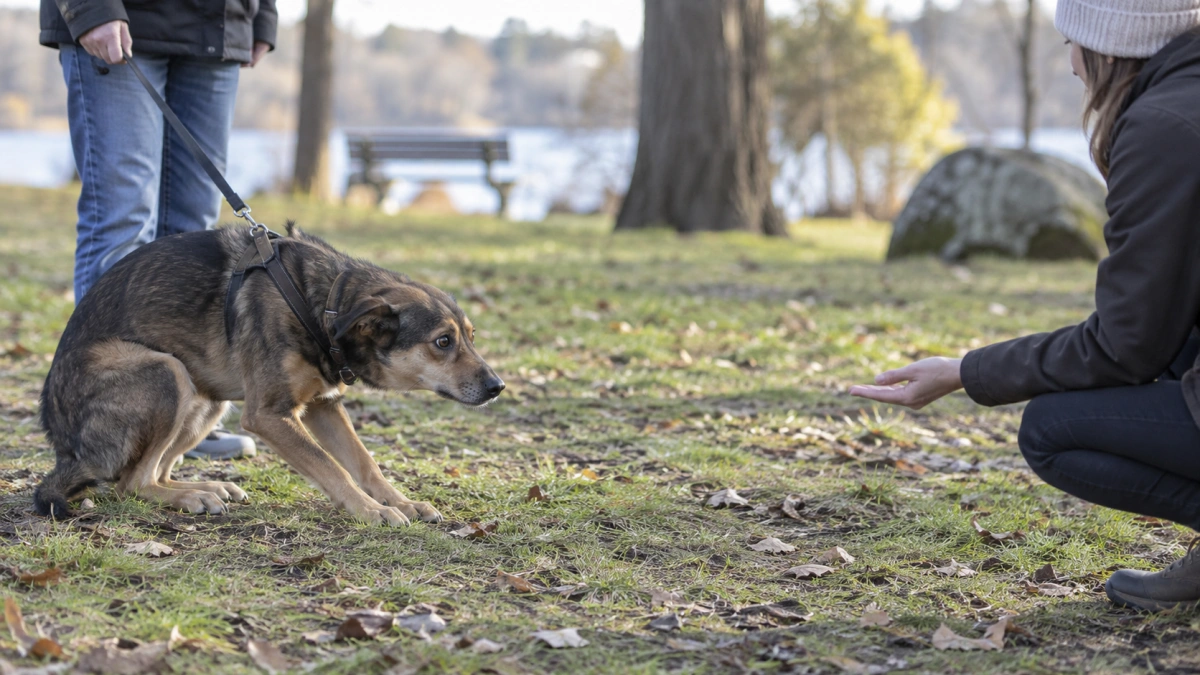
Fear is a common reason dogs use aggressive behavior. A dog that believes something is threatening may first try to avoid the situation. If moving away does not work, stronger defensive behavior may appear.
For example, a dog may:
- Move away from a stranger
- Lower its body or avoid eye contact
- Freeze when approached
- Growl when the person continues getting closer
- Snap if escape feels impossible
This is one reason forcing an uncomfortable dog to remain in an interaction can increase risk.
Frustration and Overarousal
Some dogs react when excitement or frustration becomes difficult to manage. This may happen around other dogs, visitors, doors, fences, or situations where the dog cannot reach something it wants.
The behavior may look aggressive even when the original motivation is frustration rather than an intention to fight.
Protecting Valuable Resources
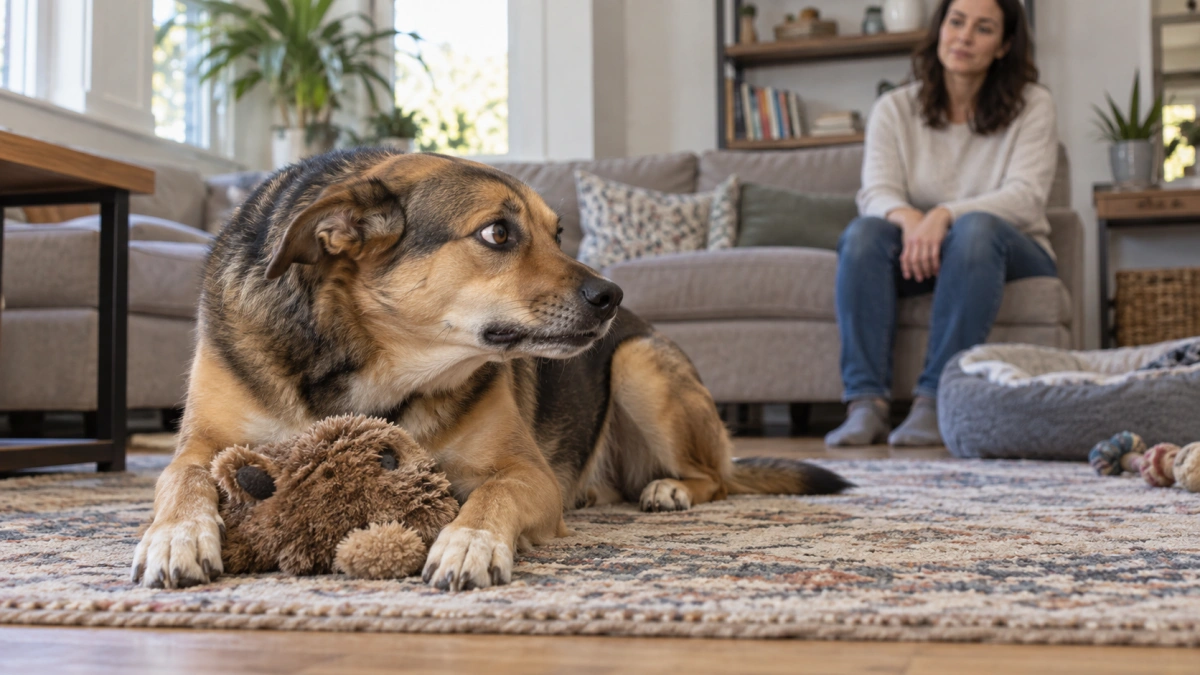
Dogs may guard food, toys, resting areas, stolen objects, or even access to preferred people. The dog may stiffen, hover over the item, growl, snap, or move the resource away when someone approaches.
For a deeper explanation of this specific pattern, read our guide to resource guarding in dogs.
Pain or Physical Discomfort
Physical discomfort can change how tolerant a dog is of touch, movement, handling, or social interaction. A dog that suddenly begins growling when touched or becomes unexpectedly defensive should not automatically be treated as having only a training problem.
A sudden, unexplained change in aggression is a reason to discuss the behavior with a veterinarian.
Previous Learning and Experiences
Dogs learn from the results of previous interactions. If growling or lunging repeatedly causes something frightening to move away, the dog may learn that stronger behavior successfully creates distance.
Past frightening experiences can also influence how a dog responds to similar situations later.
What Can Trigger Dog Aggression?
Finding the trigger is often more useful than simply describing the dog as aggressive.
Common situations to observe include:
- Unfamiliar people approaching
- Other dogs coming too close
- Touching sensitive areas
- Taking food, toys, or stolen objects
- Disturbing the dog while resting
- Restraining or cornering the dog
- Busy or noisy environments
- Visitors entering the home
- Sudden changes in routine or environment
| Question to Ask | Why It Helps |
|---|---|
| What happened immediately before? | Helps identify the trigger |
| Who or what was nearby? | Shows whether the reaction is situation-specific |
| How close was the trigger? | Distance may influence the dog’s response |
| Could the dog move away? | Lack of escape can increase defensive behavior |
| Was food, a toy, or resting space involved? | May point toward resource-related conflict |
| Is this behavior new? | Sudden changes may deserve veterinary evaluation |
Aggression Does Not Always Mean the Same Thing
Two dogs can bark, growl, or lunge for completely different reasons. One may be frightened, another frustrated, and another protecting something valuable.
| Behavior Pattern | Possible Motivation |
|---|---|
| Growling as a stranger approaches | Fear or desire for distance |
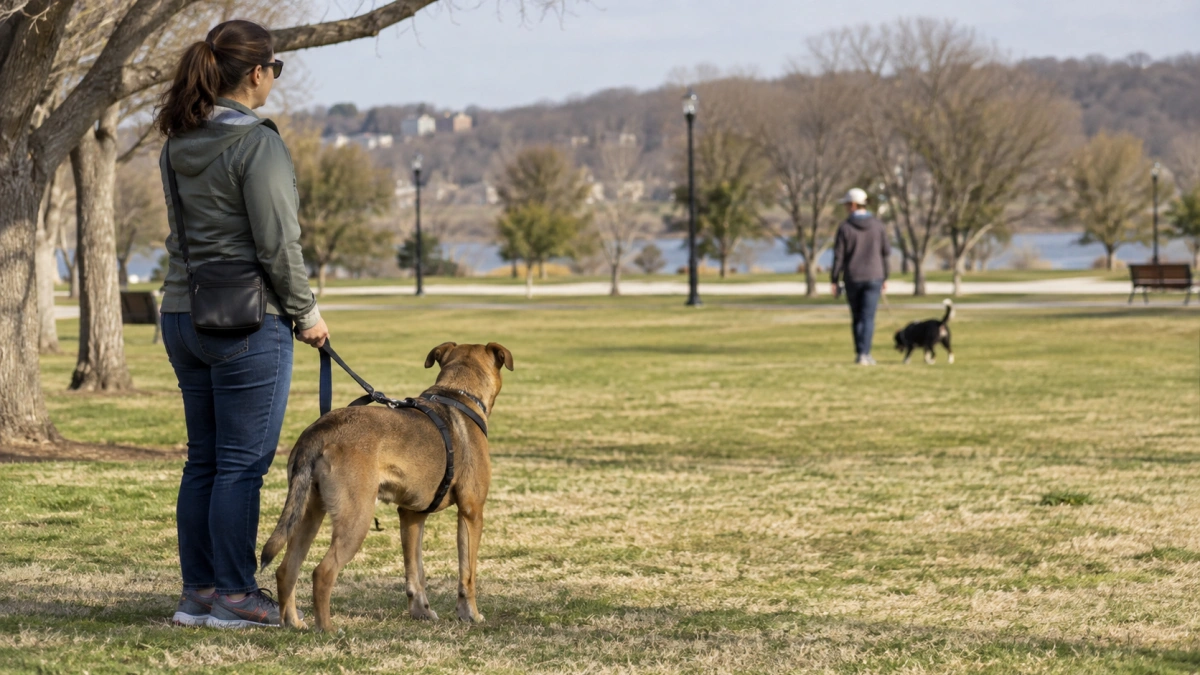
| Lunging at dogs while on leash | Fear, frustration, or overarousal |
| Growling over food | Resource guarding |
| Reacting when touched | Fear, discomfort, pain, or handling sensitivity |
| Guarding a doorway or resting area | Resource-related or situational conflict |
Because motivations differ, a technique that helps one dog may not be appropriate for another.
How to Manage Dog Aggression Safely
Safety comes before training. The first goal is to reduce opportunities for an aggressive incident while you learn more about what triggers the behavior.
Useful management steps can include:
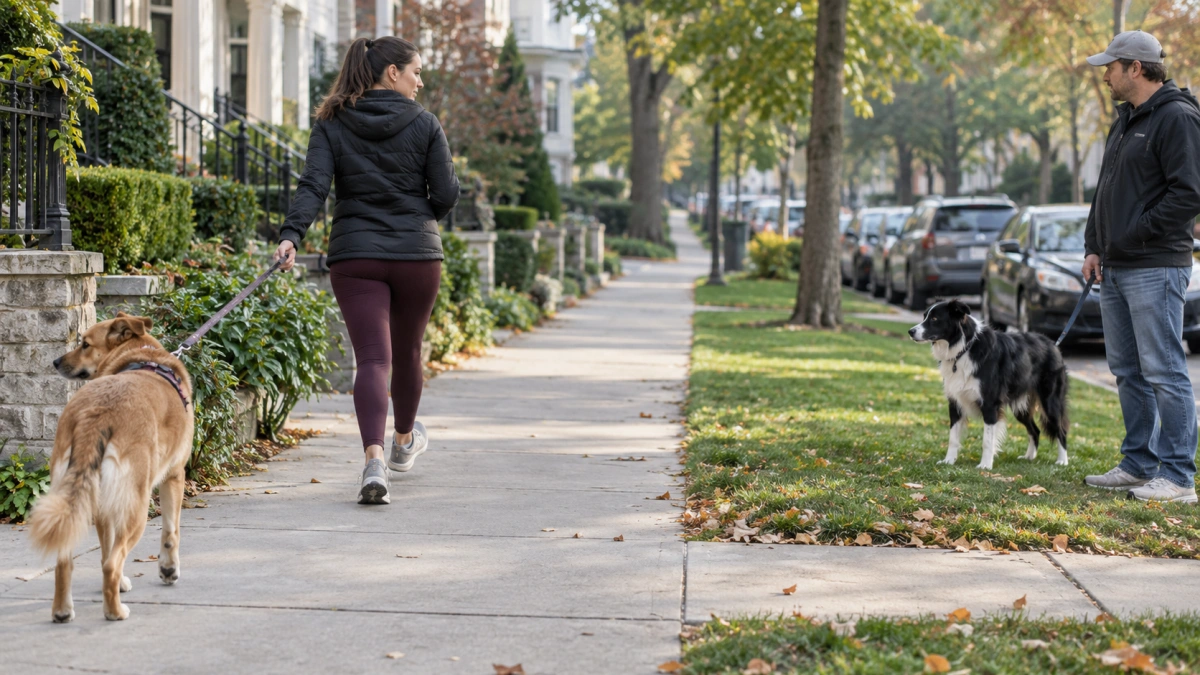
- Create more distance from known triggers
- Avoid forced greetings
- Use doors, gates, or other safe barriers when needed
- Choose quieter walking routes
- Prevent unsupervised interactions that have caused conflict
- Give the dog a safe resting area
- Tell visitors how to interact safely
- Record when and where reactions occur
Management does not mean the dog has failed training. It reduces risk and creates safer conditions for behavior work.
What Should You Avoid With an Aggressive Dog?
When owners feel frightened or frustrated, it can be tempting to confront the behavior directly. However, increasing pressure can worsen fear or conflict in some dogs.
Avoid:
- Forcing the dog closer to a trigger to “get used to it”
- Testing whether the dog will react
- Taking guarded objects by force
- Cornering a dog that is trying to leave
- Punishing growling without addressing the underlying problem
- Using physical confrontation to establish “dominance”
- Allowing children to manage aggressive situations
A growl is useful information. It tells you that the dog is uncomfortable enough to communicate a warning. The safer response is to reduce immediate risk and understand why the warning occurred.
Can Training Help Aggressive Dog Behavior?
Behavior training can help many dogs, but the training plan should match the cause and severity of the problem.
Reward-based behavior work may focus on:
- Teaching alternative responses
- Rewarding calm behavior
- Working at a distance where the dog can still respond
- Changing emotional associations gradually
- Improving communication between dog and owner
Progress should be gradual. Repeatedly exposing a dog to situations that cause intense reactions can make learning more difficult and increase safety risks.
How to Keep an Aggression Observation Log
Recording incidents can reveal patterns that are difficult to remember later.
For each event, record:
- Date and time
- Location
- What happened immediately beforehand
- People or animals present
- Distance from the trigger
- Early warning signals
- Whether the dog could move away
- How the situation ended
- Any recent routine or health changes
Use objective descriptions. “Dog froze when a visitor reached toward the collar” is more useful than “dog became aggressive for no reason.”
When Should You Get Professional Help?
Seek professional guidance when aggression creates a risk of injury, involves biting or repeated snapping, is becoming more frequent or intense, or is difficult to manage safely.
Veterinary evaluation is especially important when aggressive behavior appears suddenly or alongside changes in mobility, appetite, sleep, activity, touch sensitivity, or other normal habits. Physical discomfort can contribute to changes in aggression.
For behavior support, look for a qualified professional who uses humane, reward-based methods and has experience with aggression cases. Severe or complex cases may benefit from veterinary behavior expertise.

Dog Aggression Safety Checklist
- Identify the situations that trigger reactions
- Watch for early body-language warnings
- Create distance before escalation
- Avoid forced interactions
- Prevent access to predictable conflict situations
- Do not punish communication signals such as growling
- Record behavior patterns
- Seek veterinary help for sudden changes
- Get qualified behavior support when safety is difficult to manage
Final Thoughts
Dog aggression behavior is best understood by looking at context, triggers, body language, and the dog’s individual history rather than simply labeling the dog as aggressive.
Fear, frustration, resource guarding, learning, environmental conflict, and physical discomfort can all contribute to aggressive responses. Early warning signs provide valuable opportunities to increase distance and prevent escalation.
Focus first on safety, avoid forcing stressful interactions, and use reward-based behavior support. If the aggression is sudden, severe, worsening, or presents a bite risk, involve a veterinarian or qualified behavior professional rather than attempting to solve a high-risk problem alone.