By
By 
Professional cat grooming can be valuable, but it is not a routine requirement for every cat. Many healthy cats can have their everyday brushing, combing, and basic coat maintenance handled at home.
A professional groomer becomes more useful when the job requires advanced coat work, extensive clipping, difficult mat management, sanitary trimming, nail care you cannot safely complete, or handling skills beyond what you are comfortable doing yourself.
The goal of grooming a cat is not to send every pet to a salon on a fixed schedule. It is to match the grooming method to the individual cat and the problem that actually needs solving.
Do Cats Need Professional Grooming?
Not necessarily.
Cats perform substantial self-grooming, and owners can usually handle regular brushing, combing, coat checks, and some nail care at home.
Professional grooming becomes worthwhile when the cat’s coat or behavior creates a job that is difficult to complete safely and effectively at home.
| Situation | Home Grooming | Professional Grooming |
|---|---|---|
| Routine loose fur | Usually enough | Optional |
| Healthy short coat | Usually enough | Usually optional |
| Long coat with light tangles | Often manageable | Useful if difficult |
| Recurring mats | May become difficult | Often helpful |
| Large or tight mats | Higher risk | Professional assessment |
| Full haircut | Advanced | Usually better |
| Nails you cannot safely trim | Difficult | Useful |
What Does a Professional Cat Groomer Do?
Professional cat grooming can include much more than brushing.
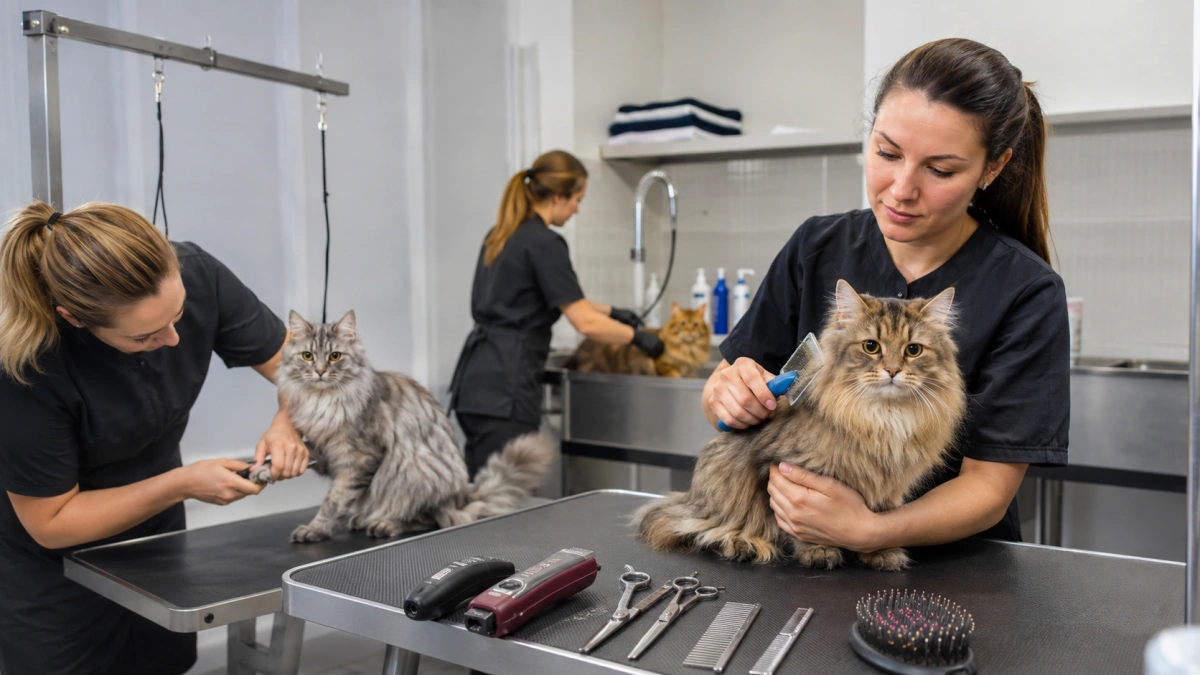
Services vary by groomer, but commonly available options include:
- Bathing and drying
- Brush-out and comb-out
- Loose-coat removal
- Nail trimming
- Sanitary trimming
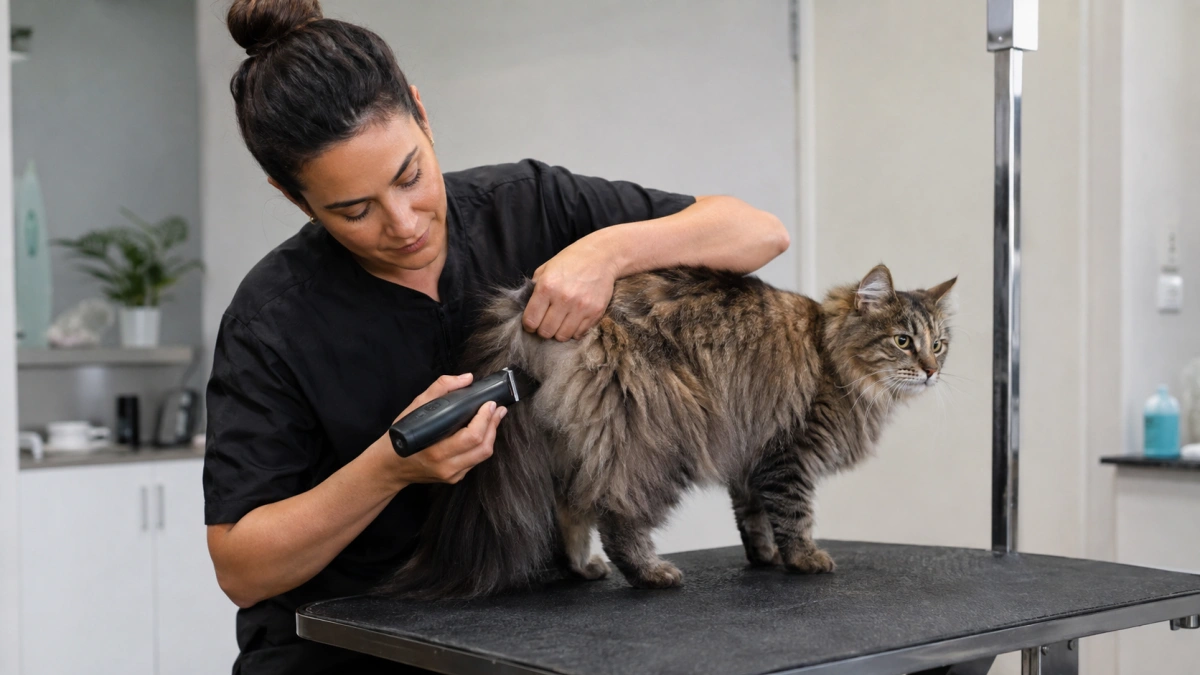
- Haircuts and lion cuts
- Mat removal or shave-downs
- Basic ear cleaning
- Coat-specific grooming
Bathing and Drying
Not every healthy cat needs routine professional baths.
A professional bath may be useful when the coat is unusually dirty, oily, difficult to maintain, or when another grooming service already requires a complete wash and dry.
Professional drying is also different from simply pointing a household hair dryer at a cat. Groomers need to manage temperature, airflow, noise, and the cat’s stress response.
Professional Brush-Out and Deshedding
A thorough brush-out can be useful for dense or long coats when routine home brushing is not removing enough loose fur.
However, professional deshedding should not be viewed as removing the maximum possible amount of hair. The goal is appropriate coat maintenance without repeatedly overworking the same area.
Professional Nail Trimming
Many owners can learn to trim cat nails at home, but some cats strongly resist having their paws handled.
If nail trimming repeatedly becomes a stressful struggle, paying a professional for a short nail appointment may be safer and easier than forcing the process at home.
Sanitary Trimming
A sanitary trim shortens selected fur around the rear and nearby areas rather than cutting the entire body coat.
It can be useful for some long-haired cats that occasionally trap litter or waste in the fur.
This is an important distinction because a cat with one hygiene problem does not automatically need a full lion cut.
Mat Removal and Dematting
This is one of the strongest reasons to seek professional grooming.
Small early tangles may be manageable at home with the correct comb and gentle technique. Tight mats are different.
Cat skin can be pulled into a mat, making scissors or inexperienced clipping risky. Professional groomers can assess whether a tangle should be gently worked out or clipped away.
Community discussions repeatedly show owners becoming uncertain when mats move close to the skin, which is exactly the point where guessing at home becomes less appropriate.
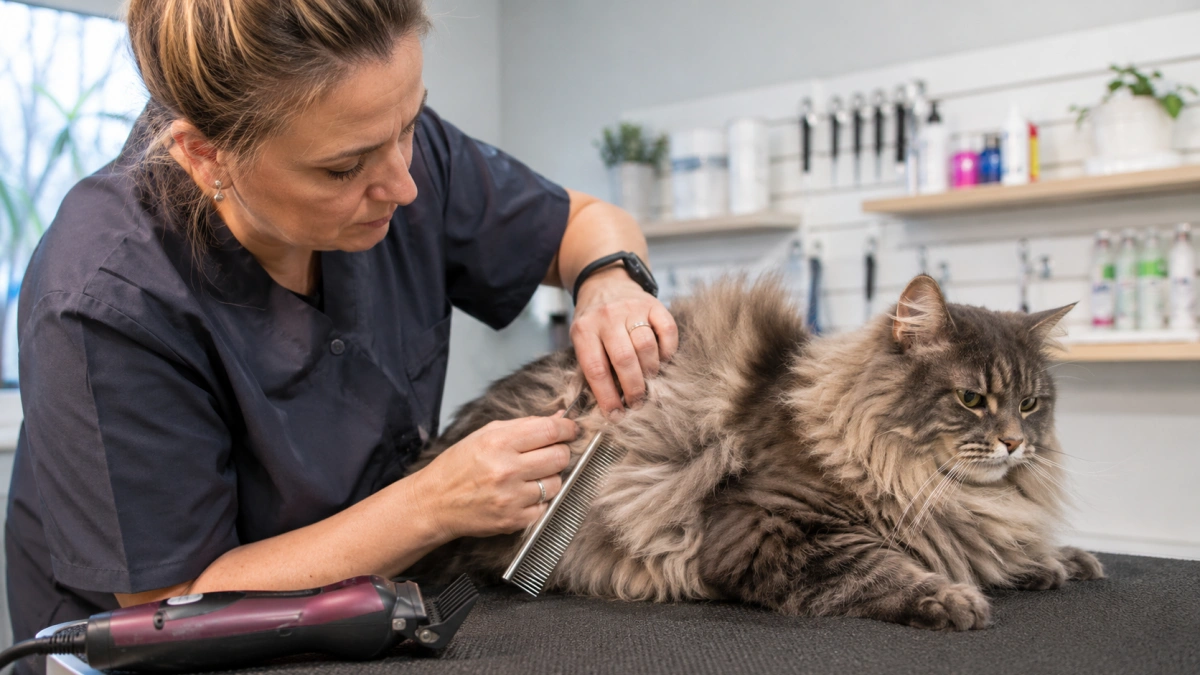
Professional Haircuts and Lion Cuts
A full haircut involves much more handling skill than routine brushing.
Cats have loose, mobile skin and body contours that make extensive clipping difficult for inexperienced owners.
Professional grooming is particularly appropriate when a lion cut or shave-down is being considered because the groomer can first determine whether a full haircut is actually necessary.
When Is Home Grooming Enough?
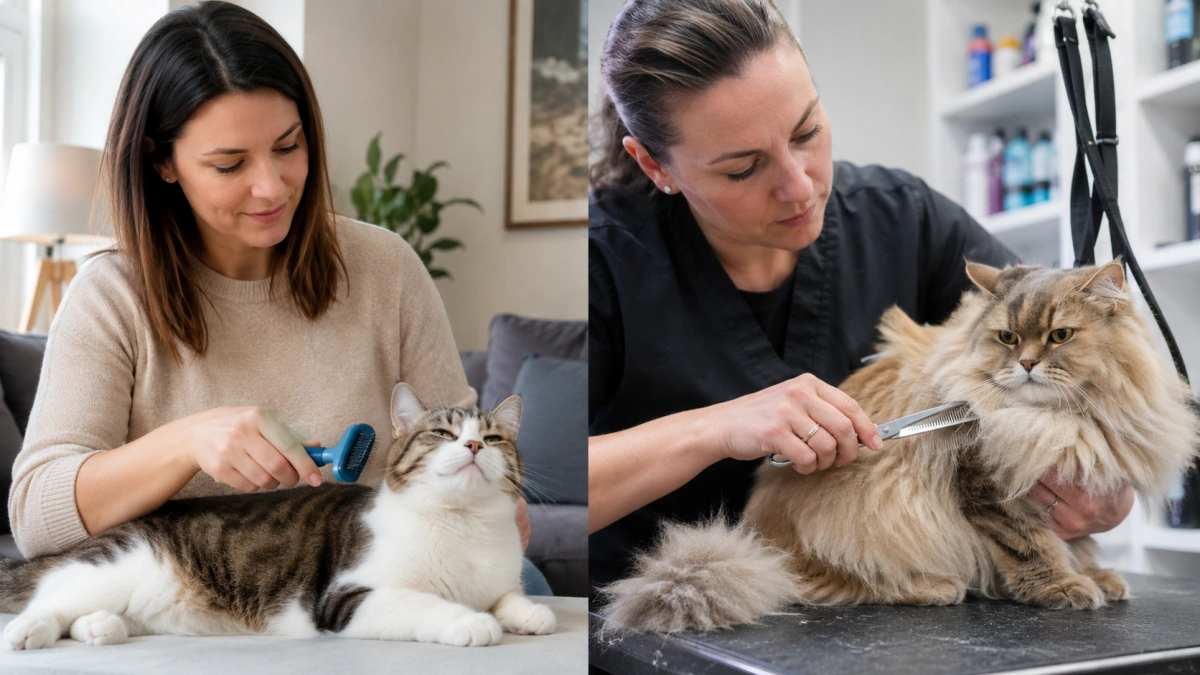
Professional grooming should complement home care, not automatically replace it.
Home grooming is often enough when:
- Your cat has a healthy manageable coat.
- You can brush and comb the coat comfortably.
- Small tangles are found before they tighten.
- Your cat tolerates regular handling.
- You can inspect the paws, coat, and skin routinely.
- No advanced clipping is needed.
When Should You Use a Professional Cat Groomer?
Your Cat Has Mats You Cannot Safely Manage
If combing no longer moves through the coat easily and mats are tight or close to the skin, professional assessment is a better next step than pulling harder.
Your Long-Haired Cat Needs More Coat Maintenance
Some long-haired cats can be maintained entirely at home. Others develop recurring friction-area tangles despite regular care.
An occasional professional groom can help reset the coat while you continue maintenance between appointments.
You Cannot Trim the Nails Safely
If paw handling repeatedly becomes a fight, a short professional nail appointment can be more practical.
Your Cat Needs a Haircut
Large-area clipping and lion cuts require more skill than ordinary brushing and combing.
You Are Not Confident Performing the Grooming Job
Owner confidence matters. If you cannot clearly see what you are doing or are worried about injuring the cat, that is a reasonable reason to stop and seek help.
Professional Groomer or Veterinarian?
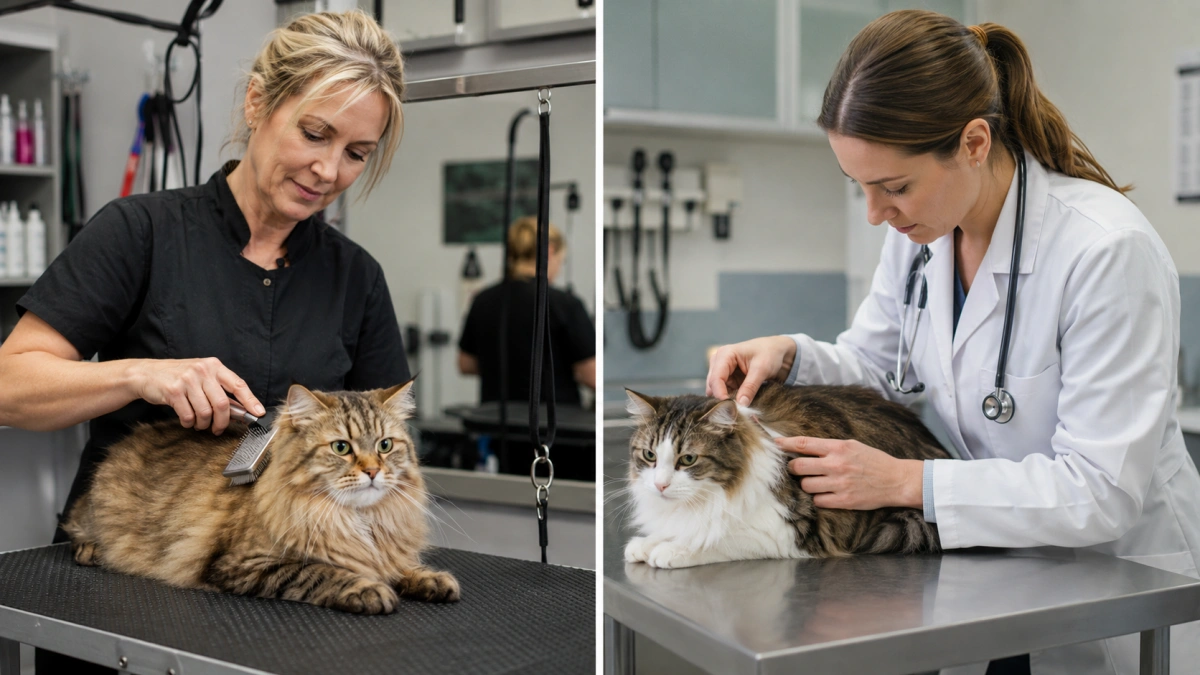
A groomer handles grooming problems. A veterinarian handles medical problems.
The two can overlap when coat problems are associated with pain, illness, sudden behavior changes, skin problems, or a cat that may need medical support for grooming.
| Situation | Groomer | Veterinarian |
|---|---|---|
| Routine haircut | Yes | Usually unnecessary |
| Basic nail trim | Yes | Optional |
| Ordinary coat maintenance | Yes | Usually unnecessary |
| Sudden grooming sensitivity | Not first choice | Better starting point |
| Skin lesion or painful area | Do not diagnose | Yes |
| Cat suddenly stops self-grooming | May help coat later | Investigate cause first |
| Medical sedation may be required | No | Veterinary care required |
What If Your Cat Is Very Anxious About Grooming?
More grooming is not automatically better if the process causes severe stress.
Tell the groomer about your cat’s previous behavior before booking rather than waiting until the appointment begins.
A responsible groomer should be willing to stop if the cat becomes too distressed to continue safely.
Do not give your cat sedatives or calming medication specifically for grooming unless a veterinarian has prescribed and instructed you to use them for that cat.
How Often Should a Cat Be Professionally Groomed?
There is no universal schedule.
A healthy short-haired cat whose coat is easily maintained at home may rarely need a professional groomer.
A long-haired cat prone to matting may benefit from periodic appointments, but the interval should be based on how quickly the coat develops problems rather than an arbitrary rule.
The better question is:
Can the coat remain comfortable and manageable between appointments?
How to Choose a Professional Cat Groomer
Cat experience matters.
Many grooming businesses primarily work with dogs, and not every groomer accepts feline clients. Ask directly how often the individual groomer works with cats.
- Do you regularly groom cats?
- Do you offer cat-only appointment times or a quieter environment?
- How do you handle cats that become stressed?
- What happens if the grooming cannot be safely completed?
- Do you perform lion cuts and dematting?
- Can you explain which services my cat actually needs?
- How is pricing affected by coat condition?
Signs of a Good Cat Grooming Service
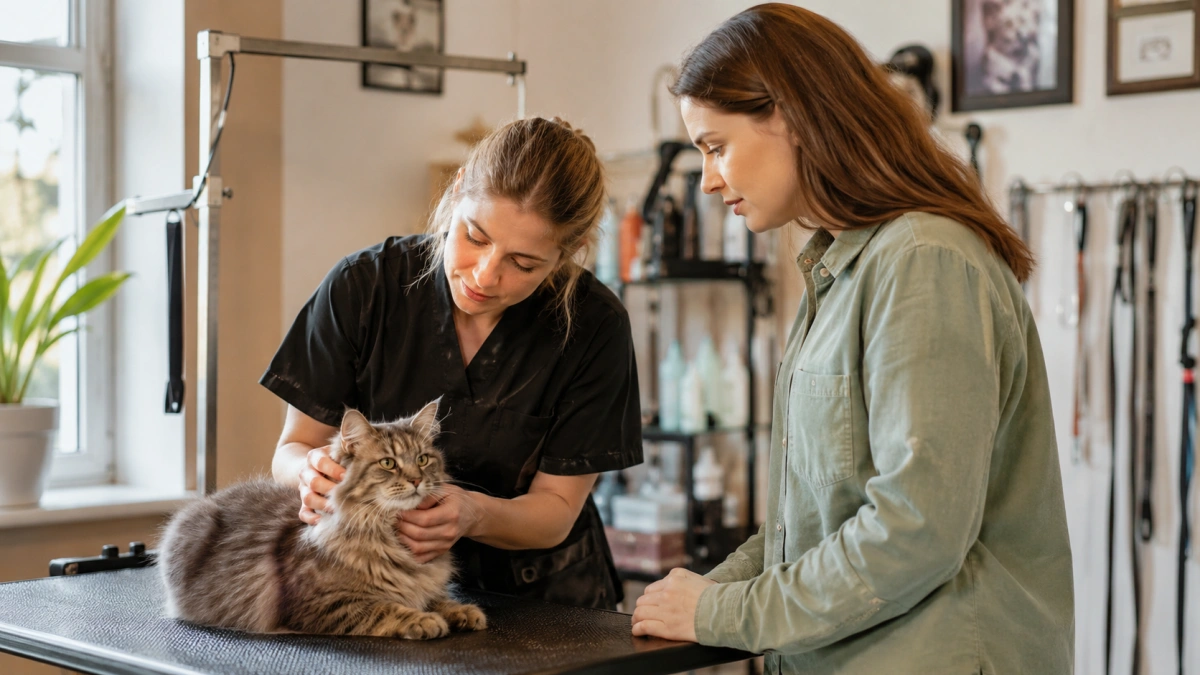
- The groomer asks about temperament and coat condition before starting.
- The environment is clean and organized.
- Tools appear clean and well maintained.
- The groomer explains what is actually necessary.
- The groomer does not promise to force every procedure to completion.
- Pricing and possible extra fees are explained clearly.
- The groomer recognizes when a problem is veterinary rather than cosmetic.
Red Flags to Watch For
- No interest in your cat’s handling history.
- Promises that every difficult cat can simply be restrained and completed.
- Poor separation from loud or chaotic grooming activity.
- Unclear pricing or unexplained add-on charges.
- Medical claims outside the groomer’s role.
- Willingness to cut blindly into tight mats without assessing the skin.
What Happens at a First Professional Grooming Appointment?
A good first appointment begins with information.
The groomer may ask about:
- Coat length and matting history
- Previous grooming experiences
- Handling tolerance
- Areas your cat dislikes being touched
- Whether the cat has had previous haircuts
- Your actual goal for the appointment
The final service may be simpler than what you originally expected. For example, a long-haired cat with rear hygiene problems may only need a sanitary trim rather than a full haircut.
How Much Does Professional Cat Grooming Cost?
Professional prices vary by service, location, coat condition, handling requirements, and whether you choose a salon or mobile groomer.
A basic appointment costs far less than extensive dematting or a lion cut.
For current U.S. price ranges and a breakdown of common add-ons, see our guide to cat grooming cost.
How to Prepare Your Cat for a Grooming Appointment
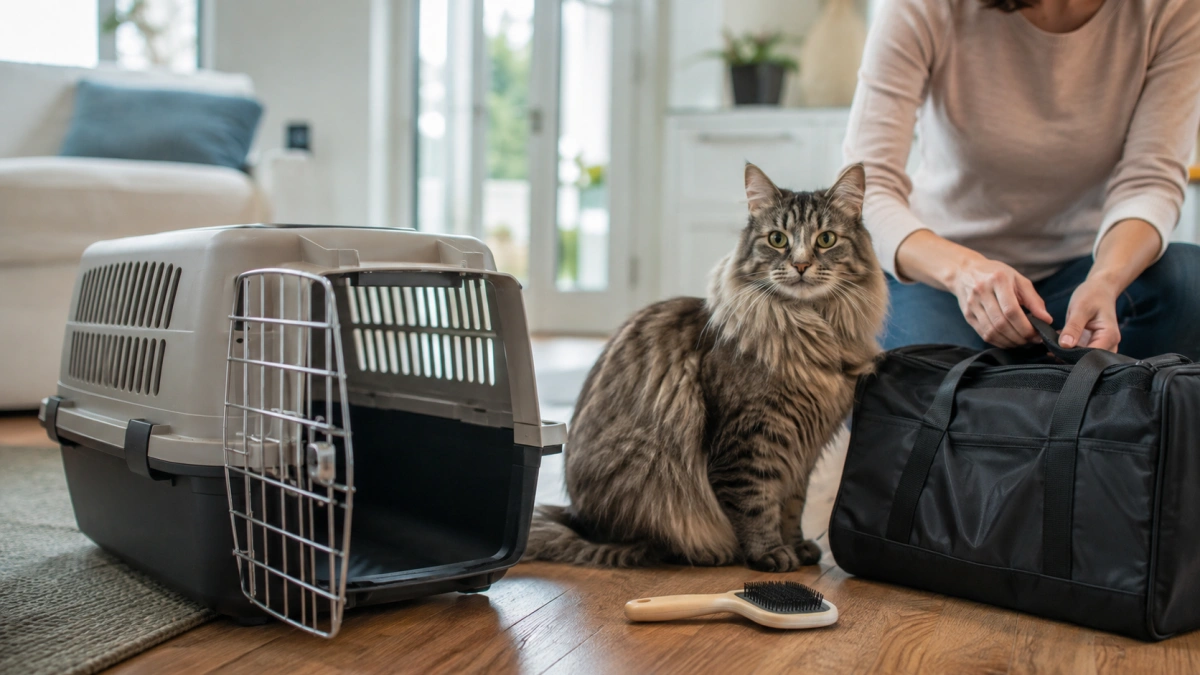
- Use a secure carrier.
- Avoid introducing a brand-new stressful routine immediately before the appointment.
- Tell the groomer about known handling sensitivities.
- Describe mats honestly rather than hiding coat problems.
- Ask what the groomer wants you to do before arrival.
- Do not cut or pull at tight mats immediately before the appointment.
Final Thoughts
Professional cat grooming is most valuable when it solves a problem that is difficult, uncomfortable, or unsafe to manage at home.
Routine brushing and combing can often remain an owner-managed job. Mats, difficult long coats, haircuts, sanitary work, or grooming procedures you cannot safely complete are stronger reasons to use an experienced feline groomer.
Choose someone who regularly works with cats, communicates clearly about stress and safety, and is willing to recommend only the services your cat actually needs.