By
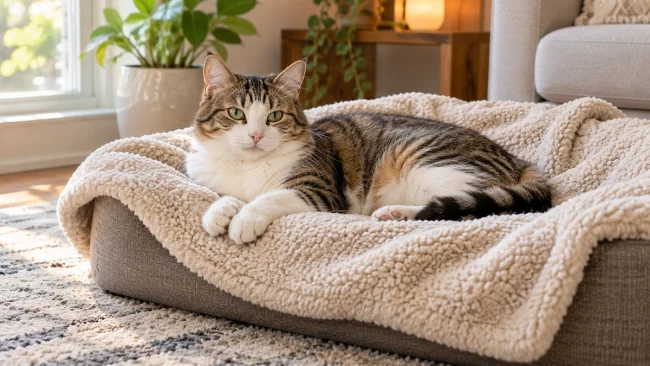
Fleece cat blankets are popular because they combine softness, warmth, low weight, and relatively easy washing. A small fleece throw can create a familiar sleeping surface on a cat bed, couch, chair, carrier, or other favorite resting spot without requiring a bulky piece of bedding.
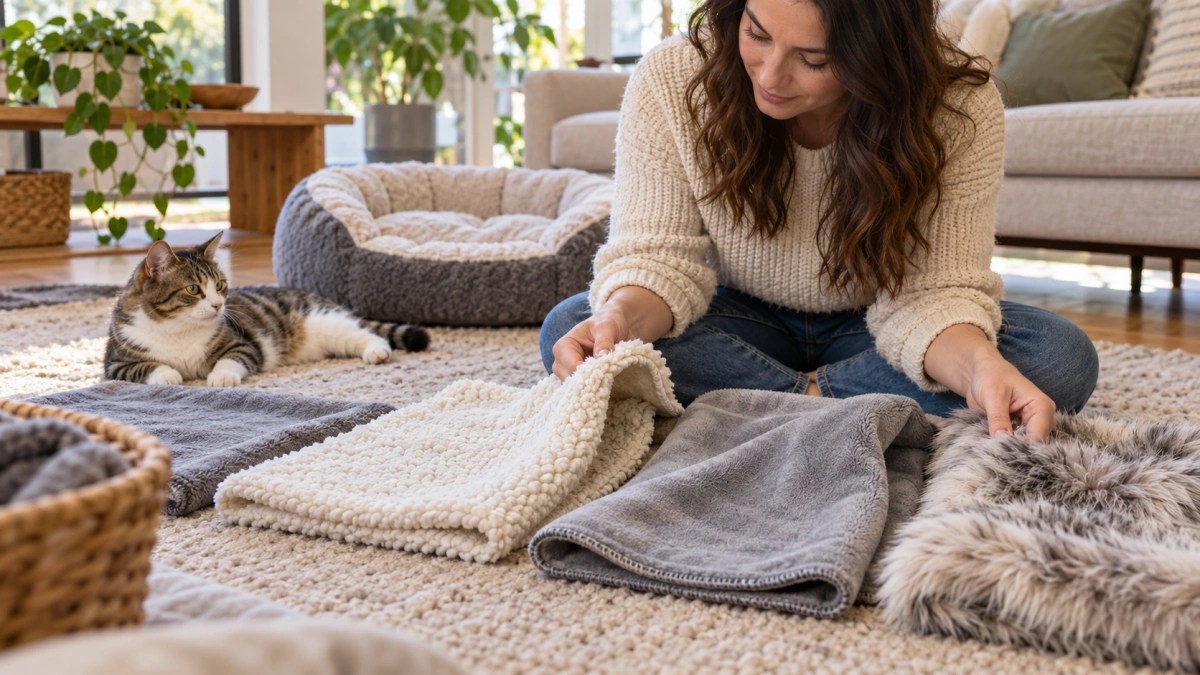
But fleece is not the only soft material used for cats. Sherpa, microfiber, faux fur, plush, and other fuzzy fabrics can all feel different, retain different amounts of heat, collect different amounts of cat hair, and react differently to kneading and washing.
The best blanket depends on your cat’s texture preference, coat, room temperature, kneading or suckling habits, and how frequently you want to clean the bedding.
For more cat-specific blanket guides, visit our Cat Blankets topic hub.
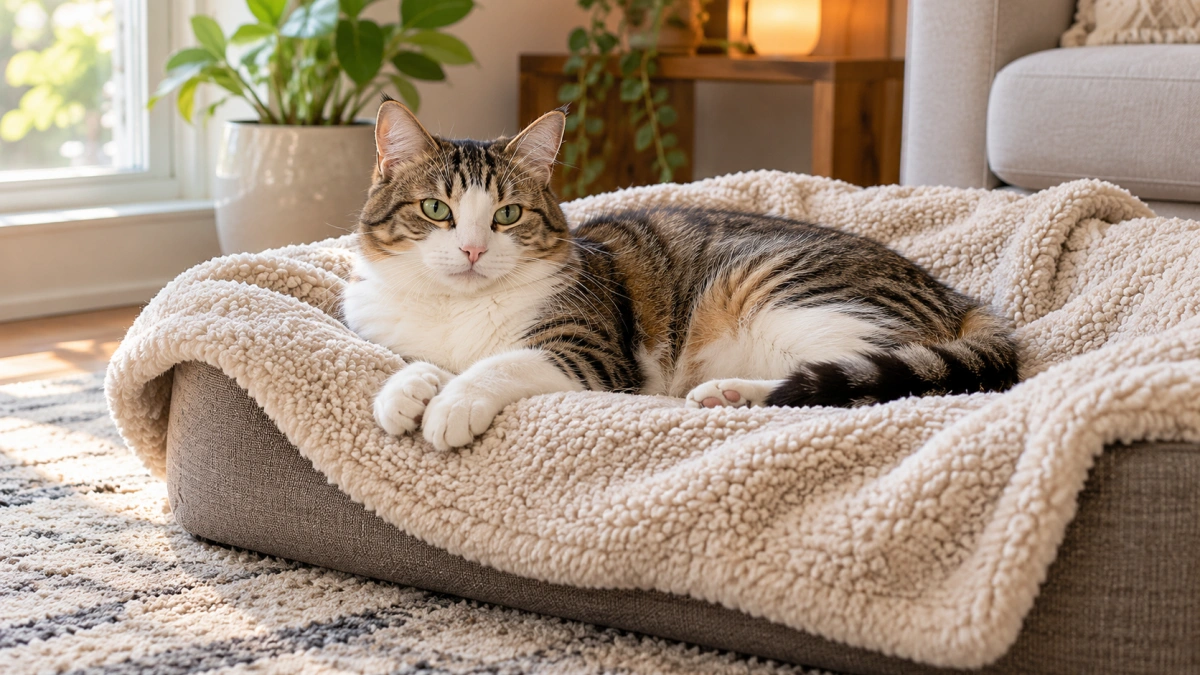
Quick Comparison: Which Cat Blanket Material Should You Choose?
| Material | Warmth | Texture | Cat Hair Cleanup | Best Use |
|---|---|---|---|---|
| Short fleece | Moderate | Soft and relatively flat | Moderate | Everyday indoor use |
| Sherpa | High | Deep and curly | Harder | Cool rooms and cats that seek warmth |
| Low-pile microfiber | Low to moderate | Smoother and flatter | Often easier | Easy-clean everyday bedding |
| Deep plush | Moderate to high | Very soft and fluffy | Harder | Cats that prefer deep soft surfaces |
| Faux fur | Moderate to high | Long soft fibers | Usually harder | Decorative or highly plush bedding |
| Flat woven cotton blend | Low to moderate | Less fluffy | Depends on weave | Mild weather and lighter bedding |
These are general tendencies rather than guarantees. Two products labeled fleece can differ significantly in pile, weight, density, and warmth.
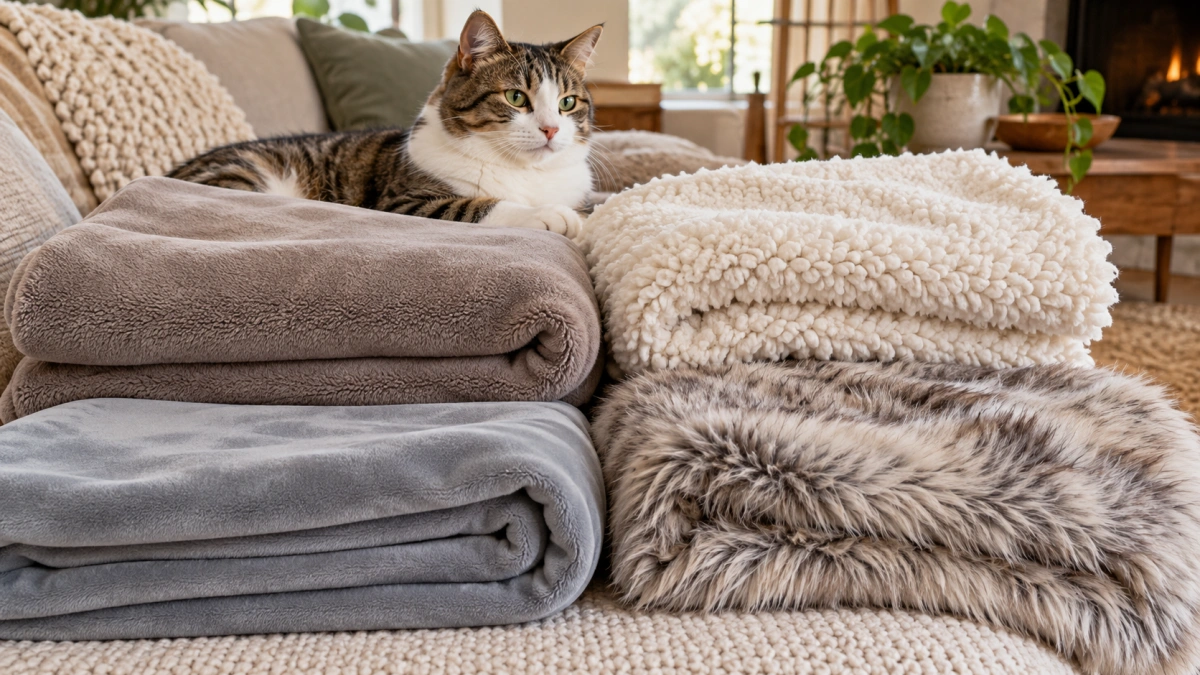
Why Do Cats Like Fleece Blankets?
Many cats seek soft, warm resting surfaces, and fleece can provide both without the weight of a thick quilt or human comforter.
Cats may use fleece blankets for:
- Sleeping
- Loafing
- Kneading
- Light burrowing
- Creating a familiar resting spot
A fleece blanket also takes on familiar household and pet scent over time, which can make the surface feel predictable when placed on a favorite bed, couch, or travel carrier.
However, not every cat wants deep softness. Some cats prefer firm beds, window perches, smooth upholstery, or cooler hard floors.
Do not assume refusal to use fleece means something is wrong. Texture preference varies between individual cats.
What Is Fleece?
Most fleece blankets are made from synthetic fibers, commonly polyester, that are processed to create a soft raised surface.
Useful properties can include:
- Low weight
- Moderate insulation
- Soft texture
- Flexibility
- Common machine-washable construction
- Relatively practical drying
Fleece is a broad category, however.
Thin microfleece, anti-pill fleece, polar fleece, and deep fluffy fleece can behave quite differently.
Fleece vs Sherpa Cat Blankets
Sherpa-style material usually has a deeper, curly pile intended to resemble shearling.
| Feature | Fleece | Sherpa |
|---|---|---|
| Pile | Usually shorter | Deeper and curlier |
| Warmth | Moderate | Usually higher |
| Cat hair | Moderate cleanup | More likely to trap fur |
| Drying | Often faster | Often slower |
| Kneading texture | Soft | Very textured |
Sherpa may suit a cat that consistently seeks the warmest bedding in the house.
For a long-haired cat or a warm indoor room, regular fleece may provide enough insulation without the extra depth.
Fleece vs Microfiber Cat Blankets
Microfiber refers to very fine synthetic fibers and can be manufactured into many different surfaces.
A smooth low-pile microfiber blanket may:
- Hold less visible debris deep in the surface
- Feel flatter
- Dry quickly
- Be easier to lint-roll
Fleece generally provides more loft and a warmer hand feel.
If your priority is warmth and softness, fleece may be preferable. If easy cleaning and a flatter surface are more important, a smooth microfiber-style fabric deserves consideration.
Fleece vs Faux Fur
Faux fur uses longer fibers to create a deeper fur-like appearance.
Some cats enjoy the texture, but faux fur tends to involve more maintenance because longer fibers provide more space for:
- Shed cat hair
- Lint
- Small debris
- Loose fibers
For everyday bedding that you wash frequently, short fleece is usually simpler.
Faux fur can make sense when deep softness is the priority and your cat does not chew, suck, or pull at the fibers.
Why Pile Depth Matters for Cats
Pile depth affects more than softness.
Deeper pile generally creates:
- More trapped air
- More warmth
- A softer nesting feel
- More places for cat hair to settle
- Longer drying time
Shorter pile generally creates:
- Less bulk
- Moderate warmth
- Easier visual inspection
- Faster cleaning
- Lower risk of long fibers being pulled during kneading
For a cat that kneads heavily, vomits hairballs on bedding, or sheds substantially, a shorter stable fleece can be more practical than very deep shag.
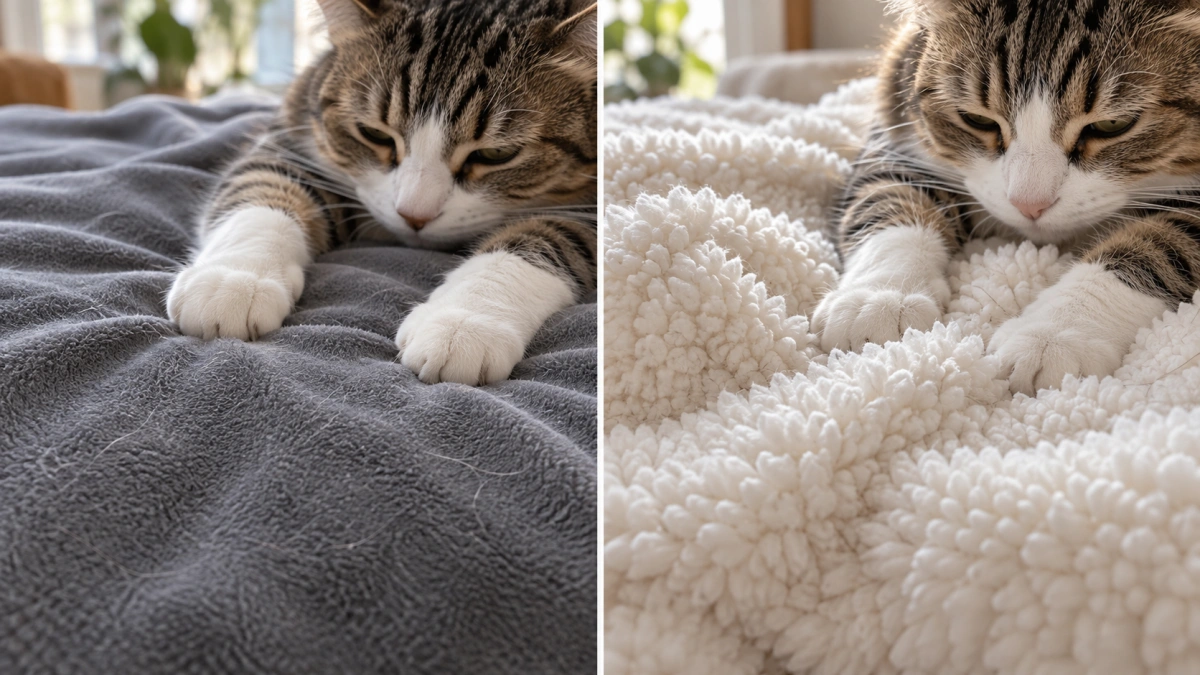
Kneading, Claws and Snag Risk
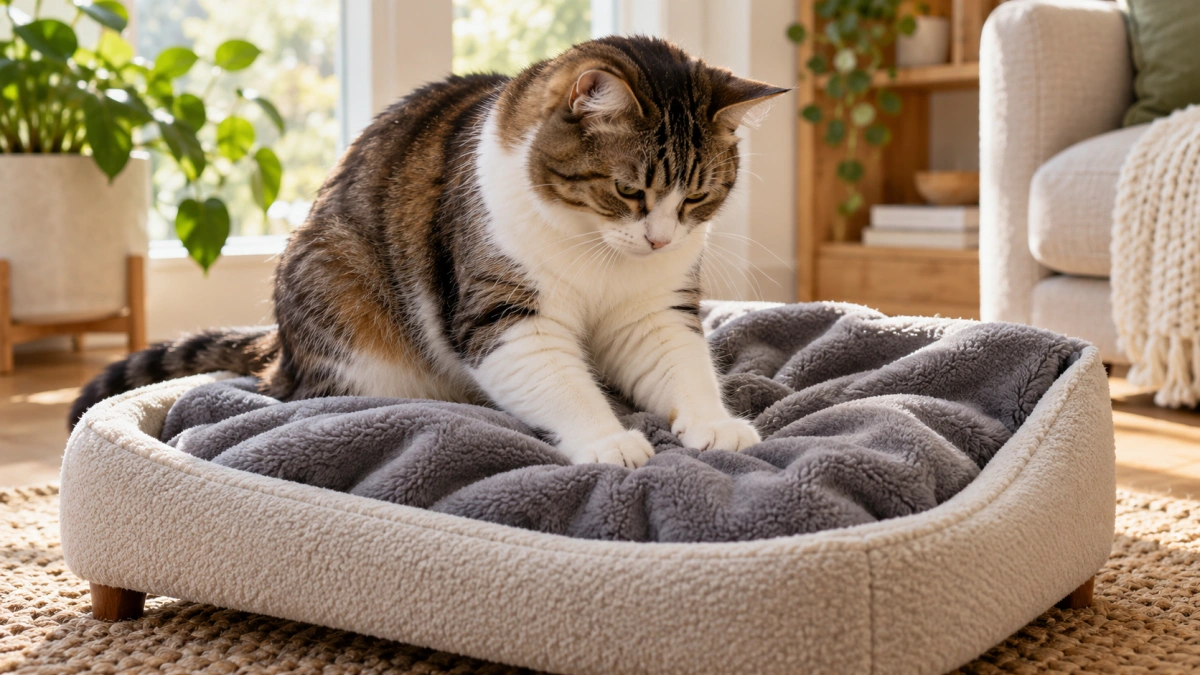
Kneading is normal feline behavior, but it means the blanket surface repeatedly meets the claws.
Choose a fabric that can tolerate this routine contact without forming large loose loops.
Inspect regularly for:
- Pulled threads
- Large loops
- Torn seams
- Loose fringe
- Exposed filling
A tightly constructed fleece is generally simpler than a large open decorative knit for a cat that kneads every day.
If a claw repeatedly catches in the blanket, replace or repair the bedding rather than allowing the snag to grow.
What About Cats That Suckle or Chew Blankets?
Some cats suckle or chew soft fabric.
Occasional harmless kneading is different from repeatedly pulling off and swallowing fibers.
Avoid bedding with:
- Long loose strands
- Shaggy fibers that pull out easily
- Fringe
- Tassels
- Loose yarn
PetMD specifically advises avoiding long strands of wool and shaggy materials in cats that suckle because linear material can be problematic if swallowed.
If your cat begins ingesting blanket fibers, remove access and discuss persistent fabric-eating behavior with your veterinarian.
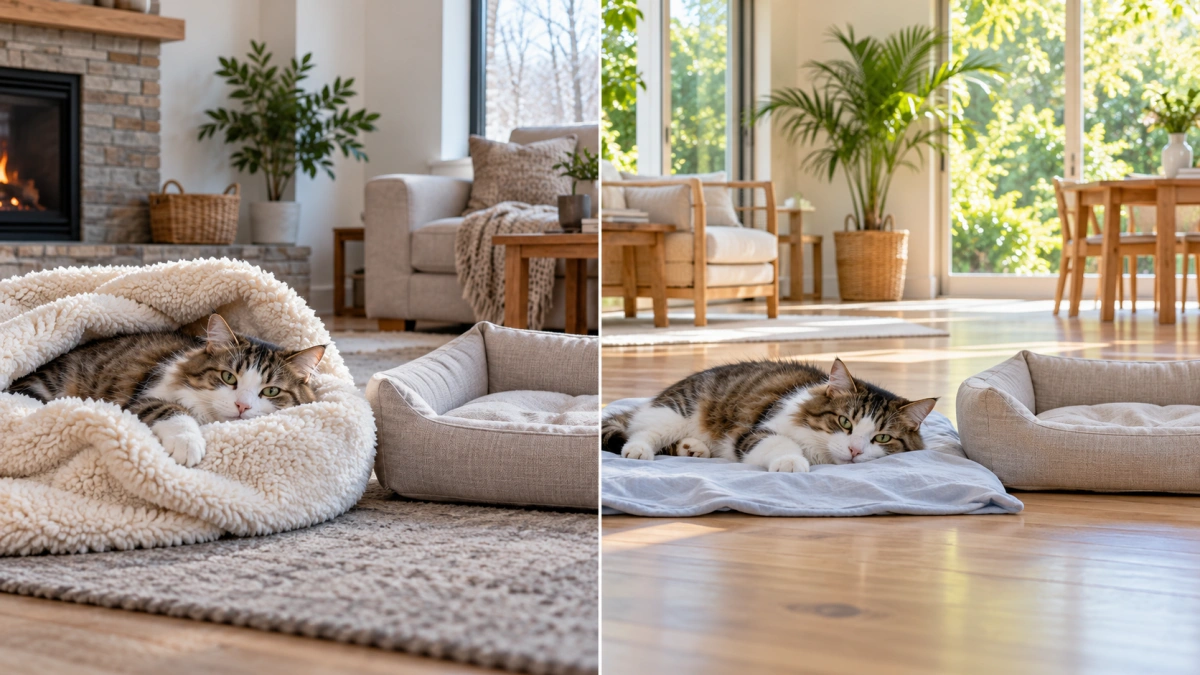
Can Fleece Be Too Warm for Cats?
Yes.
Cats often seek warmth, but that does not mean more insulation is always better.
Fleece becomes less appropriate when:
- The room is already warm
- The blanket is folded into several layers
- The cat has a dense coat
- The cat repeatedly leaves for a cooler surface
- The blanket blocks the cat’s ability to move away
Always provide an uncovered alternative resting area.
Signs that a cat may be too warm include unusual panting, drooling, lethargy, restlessness, or repeatedly seeking cooler surfaces.
If a cat shows signs of overheating or illness, remove the heat source and seek veterinary care promptly.
Should You Cover a Cat With the Blanket?
It is usually easier to place the blanket on a resting surface and let the cat decide whether to lie on it, beside it, or partly underneath it.
Do not tightly wrap a cat or create a setup the cat cannot exit.
Pet blanket safety guidance emphasizes that animals should be able to move away from a blanket if they become uncomfortable.
A cat that chooses to burrow briefly under a lightweight breathable blanket is different from a cat being placed under a heavy layer with no easy exit.
Can Cats Suffocate Under Blankets?
Most normal lightweight blankets allow enough airflow for brief voluntary burrowing, but thick blankets, multiple stacked layers, or materials with loose strings can create additional hazards.
Keep the setup simple:
- Use a lightweight blanket
- Avoid piling several heavy layers over the cat
- Keep strings and fringe away
- Make sure the cat can exit freely
Never intentionally restrict the cat under bedding.
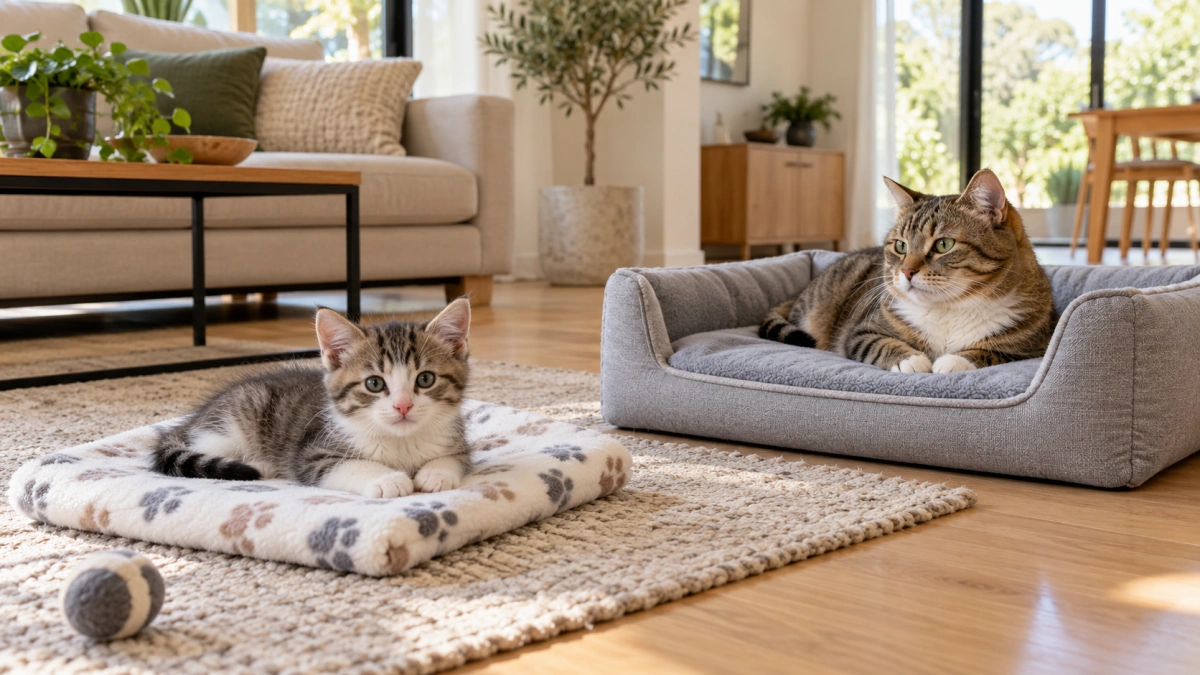
Which Fleece Works Best in Winter?
For colder indoor conditions, consider:
- Medium fleece
- Dense fleece
- Fleece backed with sherpa
- A single plush layer
The goal is comfortable insulation, not maximum thickness.
A cat sleeping in a heated home generally needs less bedding insulation than a cat resting in a cool room.
Which Blanket Works Best in Warm Weather?
During warmer conditions, consider:
- Thin fleece
- Smooth microfiber
- Flat cotton blends
- Low-pile textiles
Reduce unnecessary folds and provide an uncovered cool surface nearby.
A cat that consistently ignores fleece during summer may simply prefer less insulation.
Which Material Handles Cat Hair Best?
Cat hair can cling to almost any textile.
However, deeper pile gives loose fur more places to settle.
Typical tendencies are:
- Smooth microfiber: often easier
- Short fleece: moderate
- Flat woven fabric: depends on weave
- Deep plush: harder
- Sherpa: harder
- Faux fur: harder
Blanket color affects how visible the hair looks, but not how much fur actually lands on the fabric.
A blanket close to your cat’s coat color can look cleaner between washes, but the fur still needs to be removed.
Fleece Blankets for Cat Beds
A fleece blanket can work as a removable surface layer over a cat bed.
Benefits include:
- Collecting hair
- Adding seasonal warmth
- Changing the texture
- Making frequent cleaning easier
Keep the blanket reasonably flat so it does not turn a low bed into a deep pile of unstable folds.
Fleece Blankets for Couches and Chairs
A small fleece blanket can also protect your cat’s favorite furniture area from:
- Hair
- Skin oils
- Light dirt
Choose enough coverage for the actual resting zone.
If the cat always sleeps on one chair corner, a smaller washable blanket may be easier to manage than covering the entire sofa.
Fleece Blankets for Carriers
A thin fleece layer can make a hard carrier floor more comfortable, but carrier bedding should remain simple.
Avoid:
- Excess fabric
- Large folds
- Loose threads
- Fringe
- Very thick heat-trapping bedding in warm travel conditions
The carrier should remain ventilated, and the blanket should not obstruct doors or vents.
Kittens and Senior Cats Need Extra Consideration
Kittens
Kittens may chew, suckle, or pull at blankets more than some adult cats.
Supervise young kittens and choose:
- Lightweight fabric
- Stable seams
- No fringe
- No loose yarn
- A size appropriate for the resting area
Senior Cats
Older cats may appreciate warmth, but easy access remains important.
Keep the blanket:
- Flat near the bed entrance
- Easy to step onto
- Easy to move away from
- Simple to wash
Do not treat increased cold-seeking, reduced mobility, or major sleeping changes as only a blanket problem. Significant new changes deserve veterinary assessment.
How to Wash a Fleece Cat Blanket
Follow the specific care label because fleece, sherpa, waterproof backing, embroidery, and decorative finishes can have different requirements.
A practical routine is:
- Remove loose cat hair.
- Shake away litter or dry debris.
- Check for pulled threads or claw damage.
- Pre-treat appropriate stains when permitted.
- Wash using the specified cycle and temperature.
- Dry using the recommended method.
- Make sure the blanket is fully dry before reuse.
Pet bedding should be washed regularly because hair, skin oils, litter dust, saliva, and other debris accumulate with repeated use.
Remove Cat Hair Before Washing
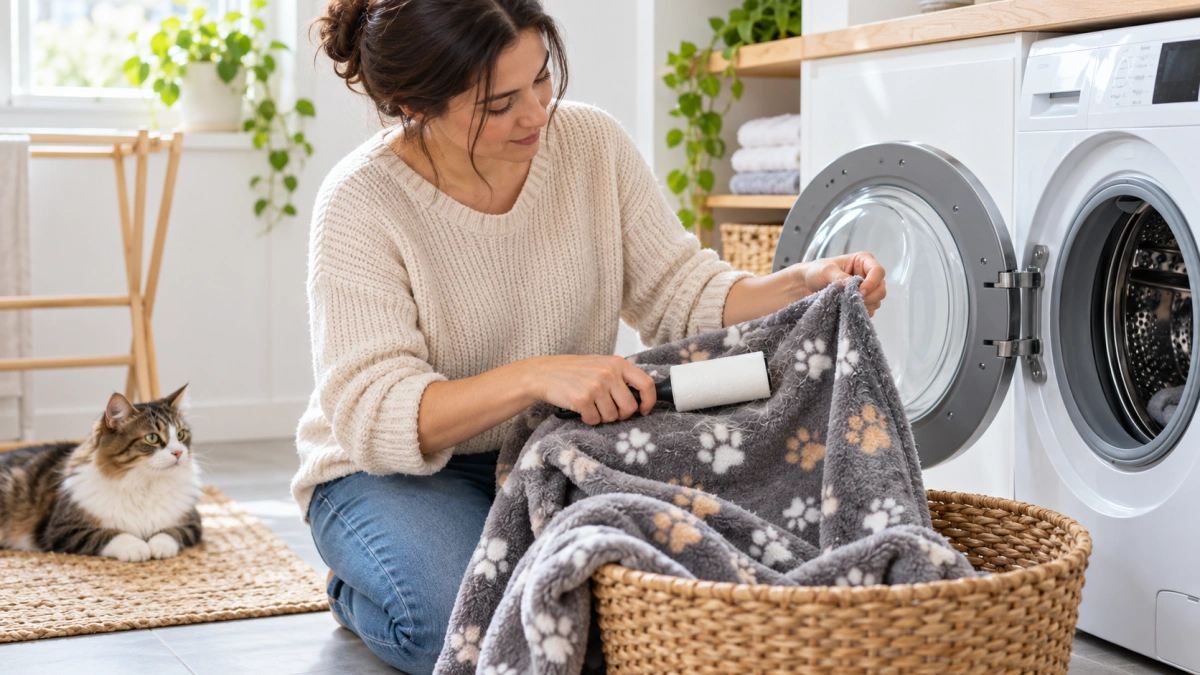
If the blanket is heavily covered in fur, remove as much loose hair as practical before putting it into the washing machine.
You can:
- Shake the blanket
- Lint-roll it
- Vacuum the dry surface
- Use another suitable dry pet-hair tool
This makes the laundry process easier and reduces the amount of loose pet hair entering the washer at once.
Can You Use High Dryer Heat on Fleece?
Do not assume high heat is appropriate just because fleece is synthetic.
Heat tolerance varies by:
- Fiber construction
- Sherpa backing
- Waterproof layers
- Decorative finishes
- Elastic or non-slip materials
Use the temperature specified on the care label.
Drying completely is important, but higher heat is not necessarily better.
Why Two Cat Blankets Can Be Useful
Cats often return to the same favorite resting location.
Keeping two similar blankets gives you a simple rotation:
- One in use
- One clean
This is particularly helpful for:
- Heavy shedders
- Long-haired cats
- Kittens
- Senior cats
- Multi-cat homes
You can replace a dirty blanket immediately rather than leaving the resting area uncovered while laundry dries.
Our 8-Point Fleece Cat Blanket Check
Use these eight factors before choosing a fleece or plush blanket for a cat.
1. Pile Depth
Is the surface short and manageable, or very deep and fluffy?
2. Warmth
Does the insulation level fit your home’s temperature and the cat’s coat?
3. Weight
Is the blanket light enough for the cat to move away from easily?
4. Claw Safety
Are there large loops, loose threads, fringe, or other areas that may snag during kneading?
5. Chewing and Suckling
Does the cat pull fibers loose or attempt to swallow material?
6. Hair Cleanup
Can you shake, lint-roll, vacuum, and wash loose cat hair without excessive effort?
7. Laundry
Can the blanket handle the washing frequency your household requires?
8. Use Location
Is the blanket correctly sized for the cat bed, couch, carrier, chair, or other resting spot?
A good cat blanket should be comfortable enough that your cat chooses it and practical enough that you can keep it clean.
Common Fleece Cat Blanket Buying Mistakes
- Assuming every cat prefers fleece
- Buying the thickest blanket available
- Ignoring room temperature
- Choosing sherpa for a cat that constantly seeks cool floors
- Ignoring pile depth
- Buying long shag for a cat that suckles fibers
- Choosing a loose knit for a cat that kneads heavily
- Buying fringe or tassels for a cat that chews strings
- Assuming faux fur is easier to clean than short fleece
- Ignoring cat-hair buildup
- Using several heavy layers over the cat
- Blocking carrier ventilation with bedding
- Using high dryer heat without checking the care label
- Leaving damp fleece in a cat bed
- Buying a blanket so large that it bunches excessively around a kitten or senior cat
Fleece Cat Blanket Buying Checklist
- Does my cat actually prefer soft fleece surfaces?
- How warm is the room?
- Does my cat have a dense or long coat?
- Do I want fleece, sherpa, microfiber, plush, or faux fur?
- How deep is the pile?
- Is the blanket lightweight?
- Can the cat move away freely?
- Does my cat knead heavily?
- Are there large loops or loose threads?
- Does my cat suckle or chew fabric?
- How heavily does the cat shed?
- Can I remove hair easily?
- Is the blanket machine washable?
- What dryer temperature is allowed?
- Will it fit the cat bed, couch, chair, or carrier?
- Would two blankets make cleaning easier?
Final Thoughts
Fleece cat blankets offer a useful balance of softness, warmth, low weight, and easy care, which is why they work well for many indoor cats.
But fleece is not automatically the best material for every cat. Sherpa provides more insulation, microfiber can offer a flatter easy-clean surface, and faux fur creates deeper softness at the cost of more maintenance.
Pay particular attention to pile depth and construction. Cats knead, scratch, suckle, and shed differently from dogs, so loose threads, open knits, long fibers, and fringe deserve more caution in a cat-specific blanket.
Also avoid assuming that warmer is always better. A cat should always be able to leave the blanket and move to an uncovered resting surface, especially in warm rooms or hot weather.
Finally, choose a blanket you can wash frequently. A simple short-pile fleece that fits the resting area, survives regular laundry, stays free of dangerous loose fibers, and matches your cat’s actual texture preference will usually be more useful than the fluffiest blanket on the shelf.