By
By 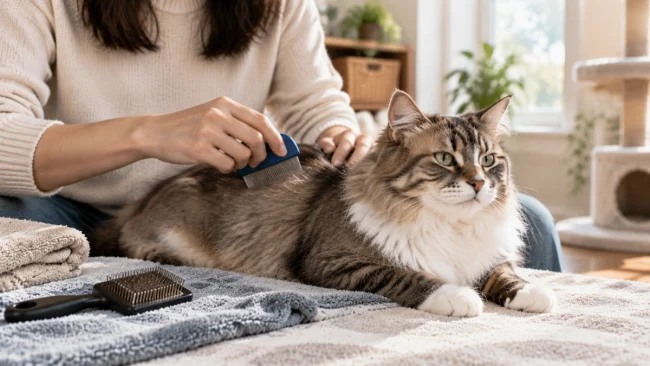
Cat grooming with fleas requires a different approach from normal coat maintenance. The goal is not only removing visible fleas from the fur, but also keeping the cat comfortable, checking the coat carefully, reducing contamination in the home, and using appropriate flea control methods when needed.
Grooming can help manage the immediate problem, but it does not replace a complete flea management plan. Fleas can exist on the pet and in the environment, which means cleaning only the cat may not solve repeated problems.
If you notice fleas, start with calm handling and gentle grooming rather than aggressive cleaning. Stress can make grooming more difficult for both you and your cat.
For general coat maintenance, flea care should be combined with regular grooming a cat practices such as brushing, coat checks and hygiene care.
Can You Groom a Cat That Has Fleas?
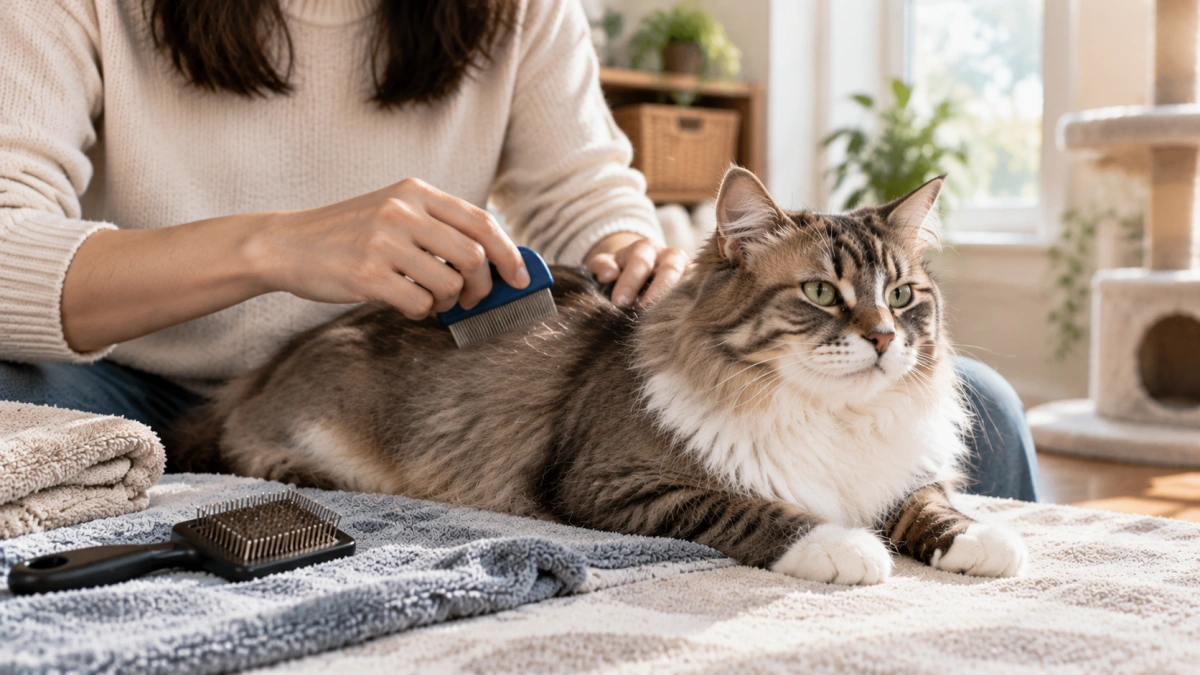
Yes, grooming can be part of caring for a cat with fleas.
However, grooming alone usually does not eliminate the entire flea problem.
A complete approach may involve:
- Careful flea combing
- Coat inspection
- Cleaning bedding and resting areas
- Following appropriate flea control guidance
- Monitoring the cat’s skin and behavior
Why Grooming Helps With Fleas
Grooming provides several useful benefits:
- Helps identify flea activity
- Removes some adult fleas from the coat
- Allows closer inspection of skin and fur
- Removes loose debris from the coat
- Helps owners notice changes early
The process is especially useful because cats naturally groom themselves by licking their fur. Finding and addressing flea problems early can reduce the amount of irritation caused by ongoing scratching and grooming behavior.
How to Use a Flea Comb on a Cat
A flea comb is a simple grooming tool with very fine teeth designed to catch small debris and fleas from the coat.
Basic technique:
- Choose a calm time when your cat is relaxed.
- Place your cat somewhere comfortable.
- Comb slowly through small sections of fur.
- Pay attention to areas where fleas commonly hide.
- Check what the comb collects.
- Clean the comb regularly during the process.
Avoid pulling through knots or mats because this can make grooming uncomfortable.
Where Should You Check a Cat for Fleas?
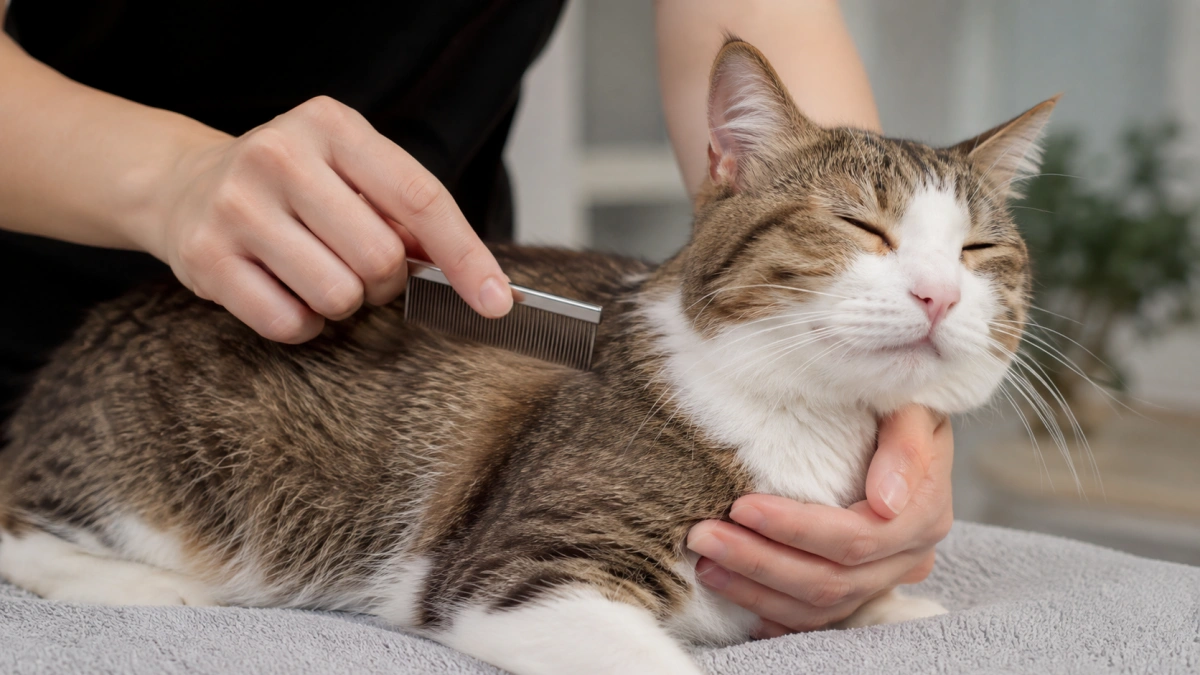
Fleas can move quickly through a cat’s coat, so checking multiple areas is more useful than looking at only one spot.
Common areas to inspect include:
- Neck area
- Base of the tail
- Back and shoulders
- Lower belly area
- Between thicker sections of fur
Long-haired cats may require slower, section-by-section inspection because fleas and debris can be harder to notice beneath dense fur.
What Is Flea Dirt?
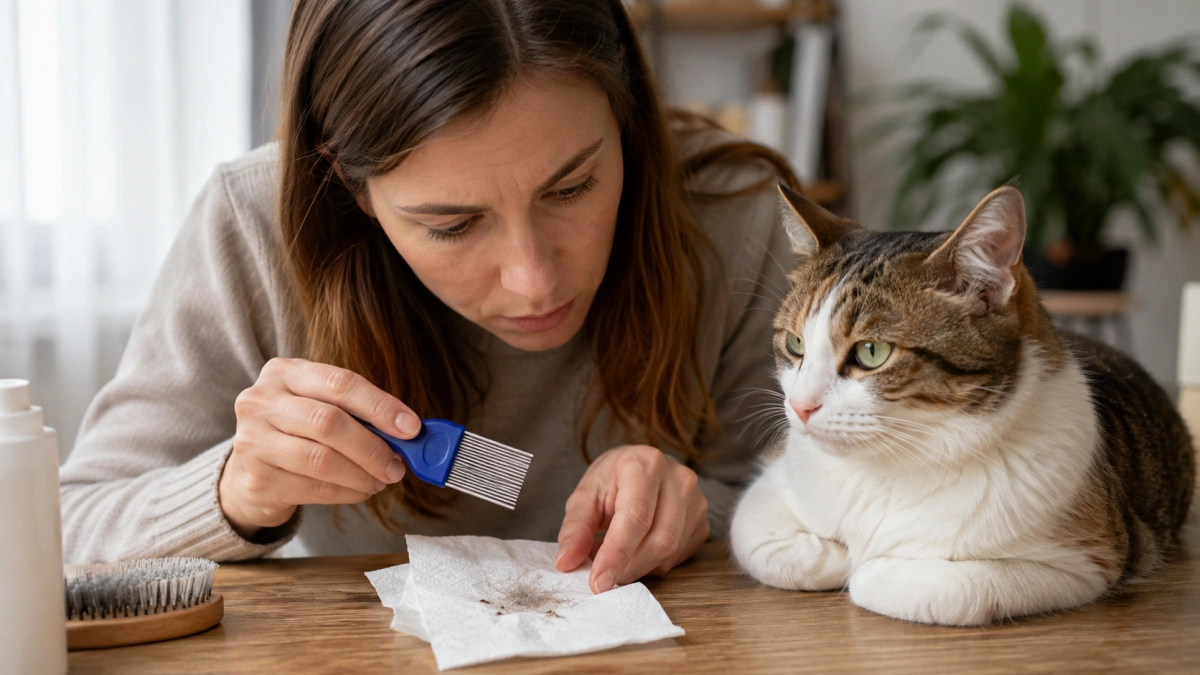
Flea dirt refers to small dark debris associated with flea activity.
During grooming, owners may notice tiny dark particles collected by a flea comb.
The important point is that finding debris or fleas means the cat may need a broader flea management approach rather than repeated grooming alone.
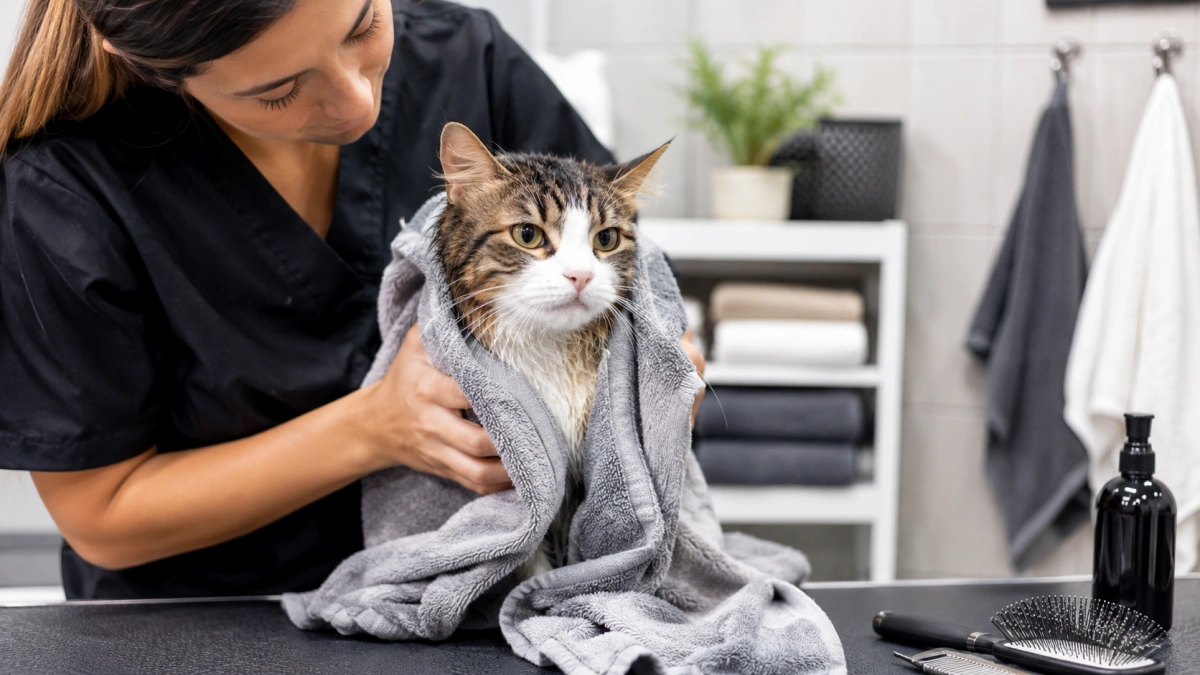
Should You Bathe a Cat With Fleas?
Bathing may help remove some debris and improve coat cleanliness, but it is not a complete flea solution by itself.
Cats also vary greatly in how they tolerate bathing.
Before bathing, consider:
- Whether your cat becomes highly stressed by water
- Whether the coat has mats
- Whether the product being used is appropriate for cats
- Whether professional advice is needed
Never use random household cleaning products or products intended for other animals on a cat.
Can Grooming Remove All Fleas?
No.
A flea comb can remove some fleas that are physically caught during grooming, but fleas can also exist in different life stages outside the cat.
This means repeated flea problems often require attention beyond coat cleaning.
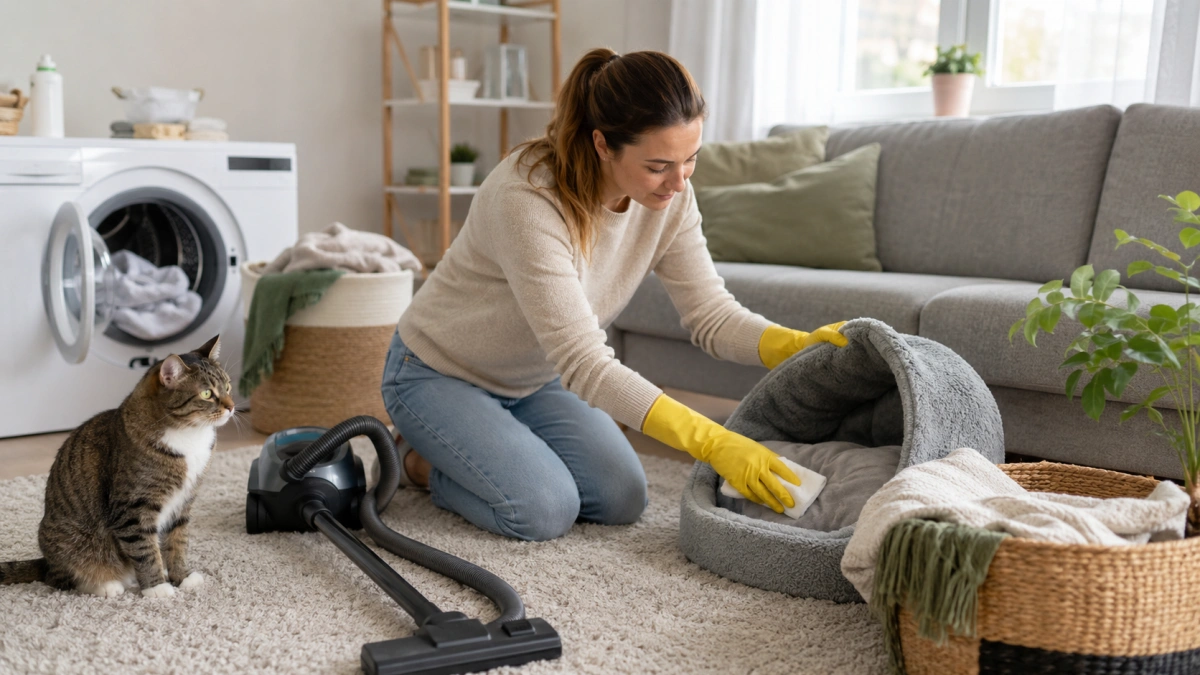
Why Cleaning the Home Matters
Flea concerns are not only about the cat’s fur.
Cats spend time on:
- Bedding
- Carpets
- Furniture
- Resting areas
Cleaning commonly used areas can support a broader flea management plan.
How to Groom a Long-Haired Cat With Fleas
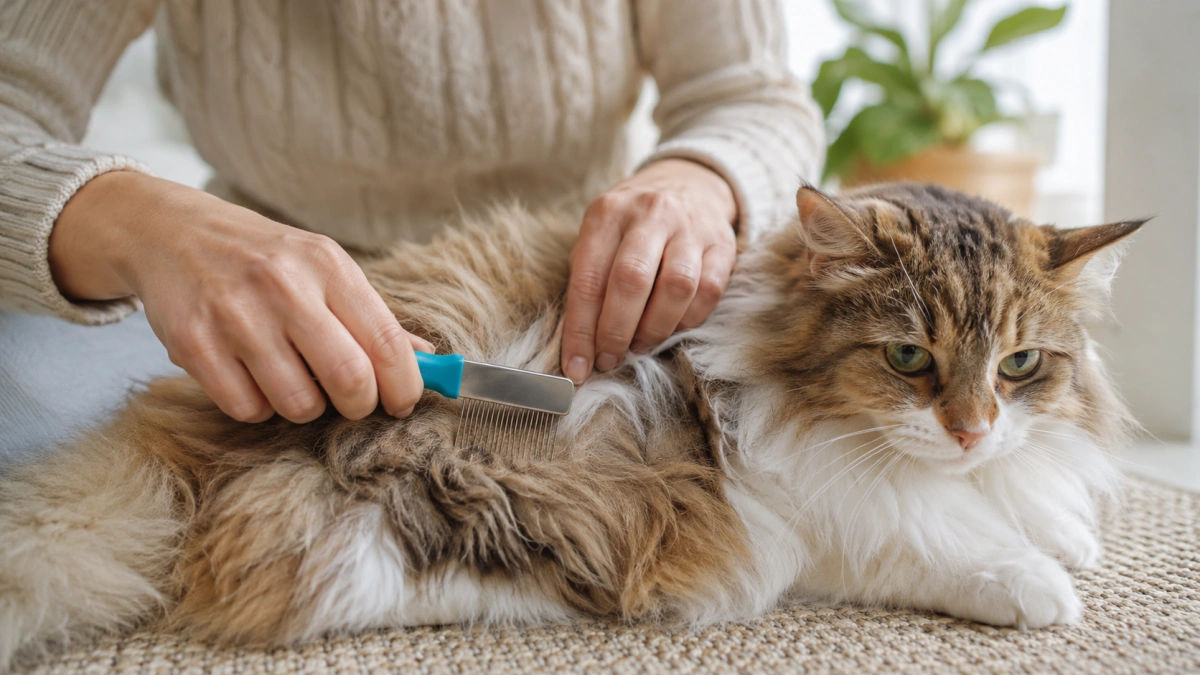
Long-haired cats require extra patience because dense fur can hide debris and make combing more difficult.
Helpful practices:
- Work in small sections.
- Use appropriate grooming tools.
- Avoid forcing a comb through mats.
- Check skin condition while grooming.
- Keep sessions short if the cat becomes stressed.
What Should You Avoid When Grooming a Cat With Fleas?
- Using dog flea products on cats unless specifically directed
- Using household insect sprays directly on the cat
- Over-bathing because of panic
- Pulling through painful mats
- Ignoring skin irritation or wounds
When Should You Contact a Veterinarian?
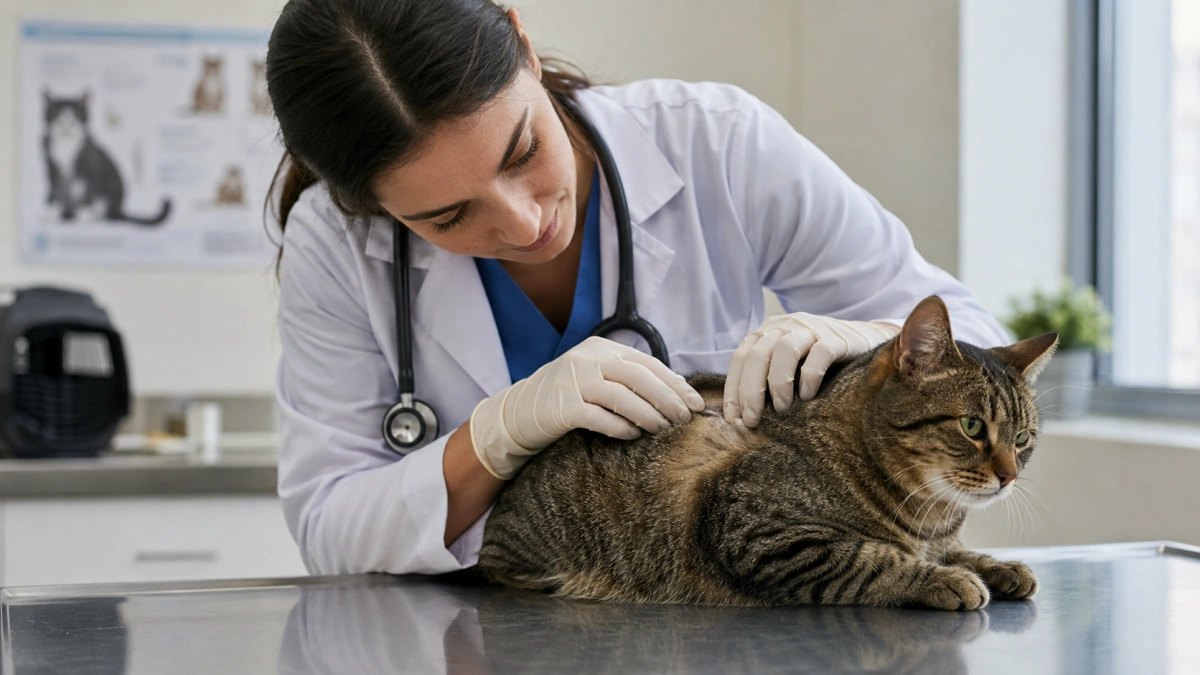
Professional advice may be appropriate when:
- Your cat has significant skin irritation
- The cat is constantly scratching
- There are open sores or unusual skin changes
- Your cat appears weak or unwell
- The flea problem continues despite appropriate management
- You are unsure which products are safe
Can Flea Grooming Become a Daily Routine?
Daily coat checks may be useful during an active flea concern, but aggressive repeated grooming can irritate some cats.
The goal is consistent monitoring, not excessive combing.
A Simple Cat Flea Grooming Routine
| Step | Purpose |
|---|---|
| Visual coat check | Notice flea activity or skin changes |
| Gentle flea combing | Remove collected debris and some fleas |
| Clean bedding | Support environmental control |
| Regular brushing | Maintain healthy coat |
| Monitor behavior | Notice discomfort or worsening signs |
Final Thoughts
Cat grooming with fleas requires more than simply removing visible insects from the coat.
A calm grooming routine, flea combing, coat inspection and home cleaning can support better flea management, but grooming is only one part of the solution.
The most effective approach combines safe grooming habits with appropriate flea control and professional guidance when your cat shows signs of discomfort or skin problems.