By A CUTE PET STORY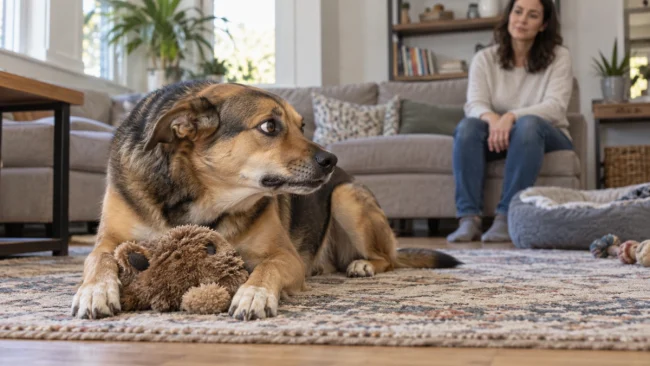
Resource guarding happens when a dog becomes protective of something it considers valuable, such as food, toys, chews, resting places, or even objects picked up around the home. The behavior can range from quietly moving an item away to freezing, growling, snapping, or biting when someone approaches.
Resource guarding does not automatically mean a dog is dominant, stubborn, or intentionally difficult. In many cases, the behavior is connected to concern about losing access to something valuable.
The safest response is not to challenge the dog or repeatedly take things away. Instead, owners should learn the warning signs, reduce conflict around valuable resources, and use gradual, reward-based strategies when appropriate.
For more help understanding challenging behavior patterns, visit our Dog Behavior Problems topic hub.
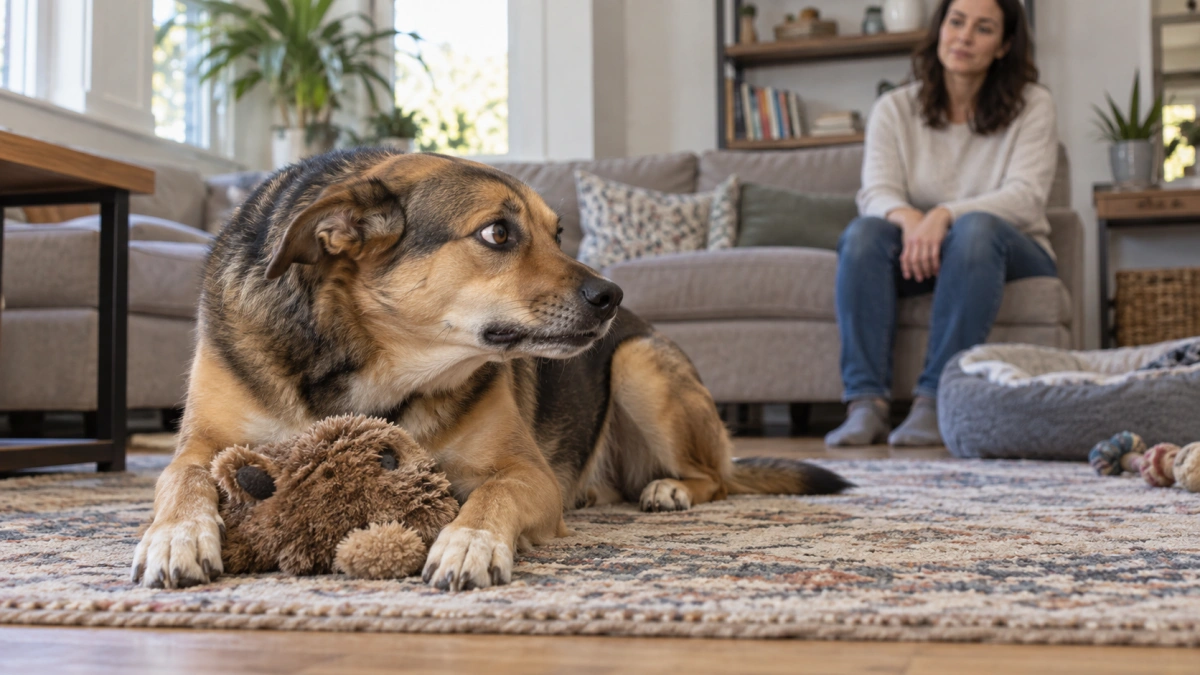
What Is Resource Guarding in Dogs?
Resource guarding is a behavior in which a dog tries to maintain control over something it values. The dog may become tense when a person or another animal approaches the item or space.
The guarded resource may be obvious, such as a food bowl, but dogs can also guard:
- Toys
- Chews or bones
- Stolen household objects
- Beds or resting areas
- Furniture
- Doorways or preferred spaces
- Access to a familiar person
The important point is not simply what the dog has, but how its behavior changes when someone approaches or attempts to interact with that resource.
Signs of Resource Guarding in Dogs
Resource guarding often develops through a sequence of body-language signals. Some dogs show subtle warnings, while others escalate more quickly.
| Level | Possible Behavior | What It May Indicate |
|---|---|---|
| Early concern | Eating faster or moving the item away | The dog may be worried about losing the resource |
| Increasing tension | Stiffening or freezing | The dog is becoming uncomfortable with the approach |
| Protective positioning | Standing over or covering the item | The dog may be trying to maintain control |
| Clear warning | Hard stare or growling | The dog is signaling that more distance is needed |
| Escalation | Snapping or lunging | The risk of injury has increased |
| Physical contact | Biting | The situation requires serious safety management |
Not every dog shows every stage. Some signals can happen quickly, which is why noticing early tension is valuable.
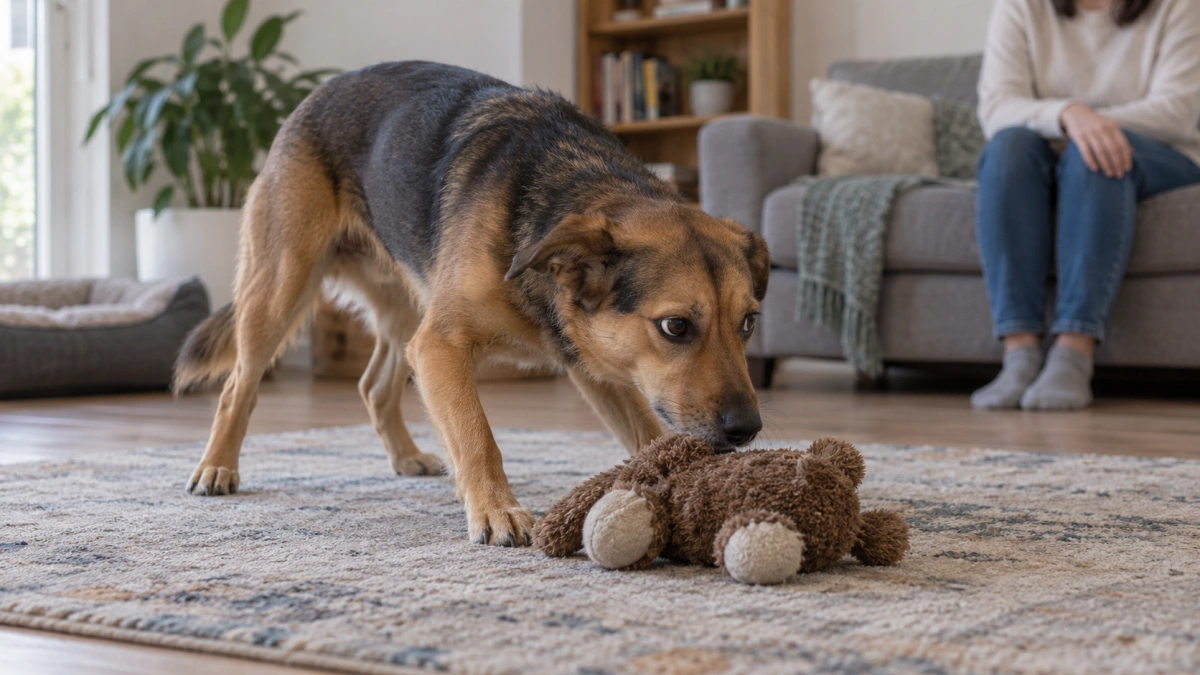
What Resources Do Dogs Guard?
Food is one of the best-known examples, but resource guarding can involve many different things.
| Resource | Possible Guarding Behavior |
|---|---|
| Food bowl | Eating faster, freezing, or growling when someone approaches |
| Treats or chews | Carrying the item away or guarding the surrounding area |
| Toys | Refusing approach or becoming tense when the toy is touched |
| Stolen objects | Running away with the object or warning when someone tries to retrieve it |
| Beds or furniture | Stiffening or growling when asked to move |
| Personal space | Blocking access or becoming defensive when disturbed |
A dog may guard only one type of resource or several different resources.
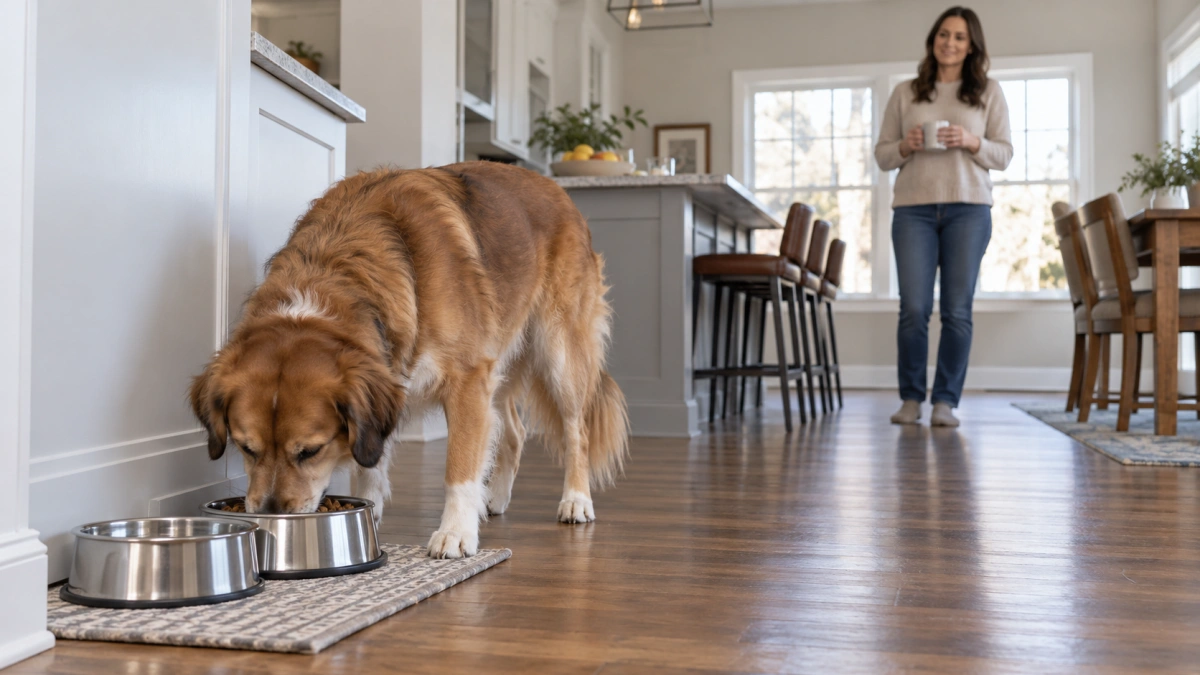
Why Do Dogs Guard Resources?
There is no single cause of resource guarding. The behavior can be influenced by temperament, learning history, competition, previous experiences, and how people respond when the dog has something valuable.
Concern About Losing Something Valuable
A dog that expects food or toys to be removed may become increasingly defensive when someone approaches.
Previous Competition
Dogs that have competed with other animals for food, resting spaces, or objects may become more protective of valuable resources.
Learned Behavior
If growling repeatedly causes people or animals to move away, the dog may learn that guarding behavior successfully protects the resource.
High-Value Items
Some objects simply matter more to a dog than others. A dog that freely gives up one toy may guard a favorite chew or stolen food item.
Stress or Environmental Changes
Changes in routine, household composition, feeding arrangements, or competition with another pet can sometimes affect guarding behavior.
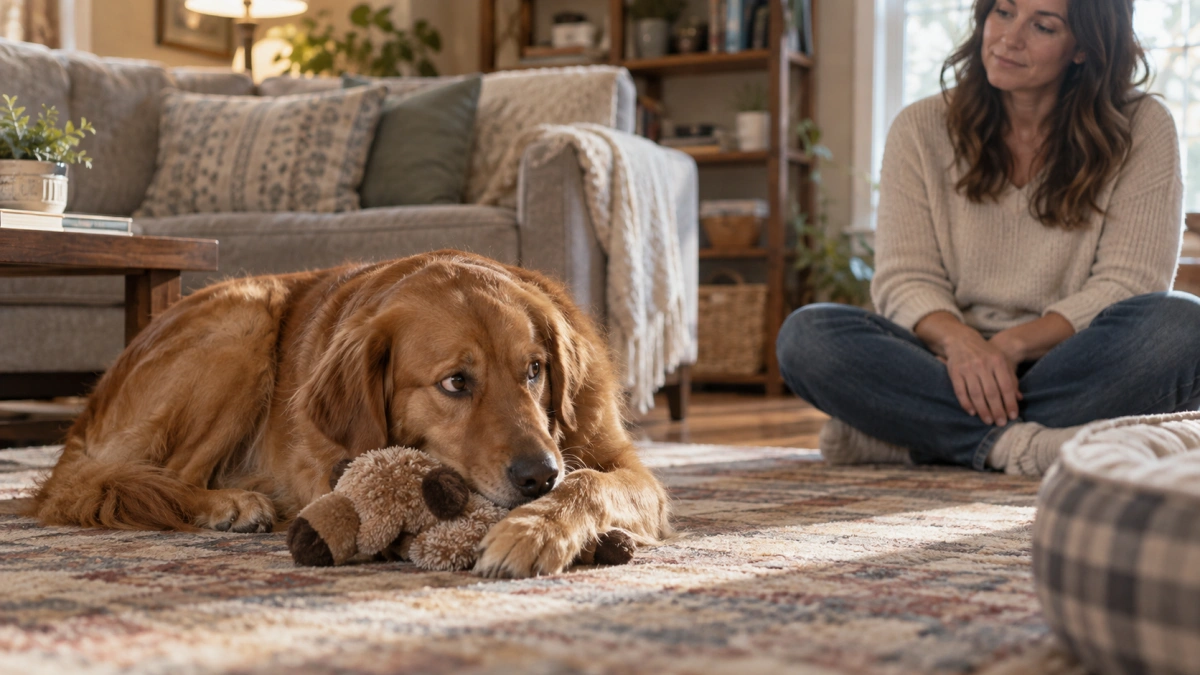
Can Dogs Guard Beds, Furniture or Space?
Yes. Resource guarding is not limited to objects that can be carried.
A dog may become protective of:
- A favorite dog bed
- A couch or chair
- A sleeping area
- A crate
- A doorway
- A spot beside a familiar person
For example, a dog may relax on a bed until someone approaches and then suddenly stiffen or growl. The important behavior to notice is the change in body language when access to the space feels threatened.
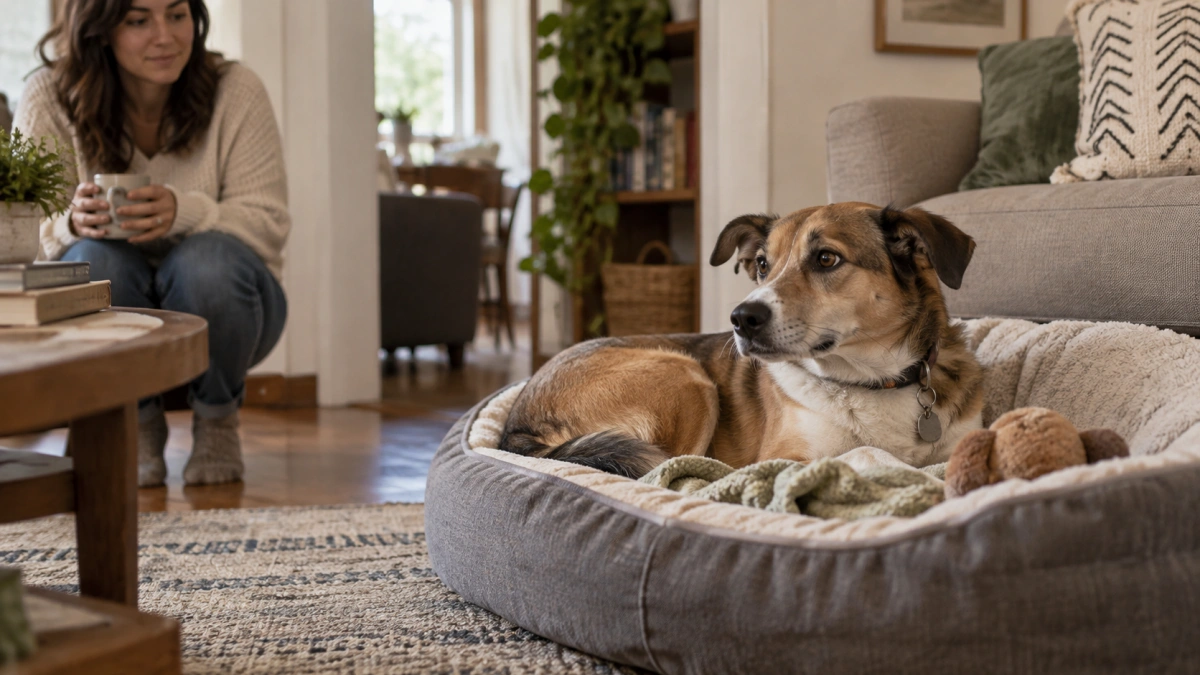
Normal Interest in an Object vs Resource Guarding
Enjoying a favorite toy or eating quickly does not automatically mean a dog has a guarding problem. Context and the dog’s response to approach are important.
| Normal Interest | Possible Resource Guarding |
|---|---|
| Dog enjoys the item but remains relaxed | Dog becomes tense as someone approaches |
| Dog can move away calmly | Dog blocks access to the resource |
| Body remains loose | Body becomes stiff or frozen |
| Dog willingly disengages | Dog growls, snaps, or lunges to protect the item |
How to Manage Resource Guarding Safely
The first goal is to prevent conflict. Owners do not need to repeatedly prove that they can take food or toys away from the dog.
Safer management may include:
- Feed the dog in a quiet area
- Separate pets during meals when competition is a concern
- Avoid reaching into the food bowl while the dog is eating
- Do not grab guarded objects directly from the dog’s mouth
- Keep children away from a dog that is eating or chewing
- Prevent access to items the dog frequently steals
- Use gates or separate spaces when needed
- Give the dog uninterrupted resting areas
Management reduces the number of situations where the dog feels it must defend something.
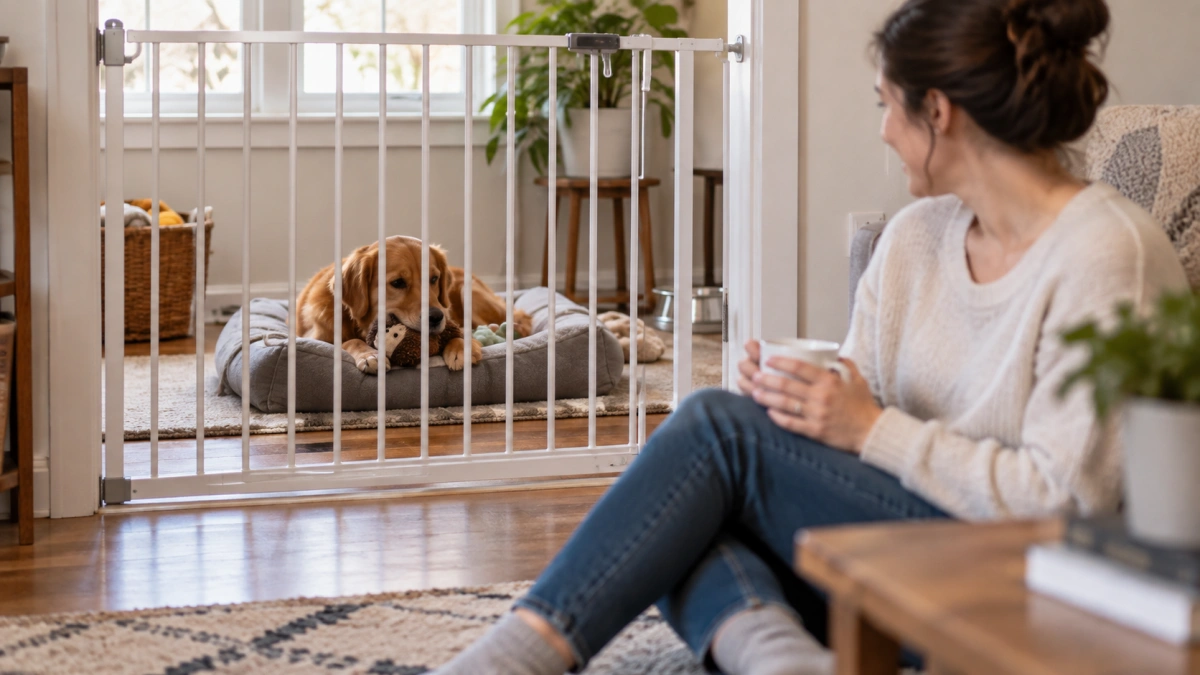
What Should You Avoid With Resource Guarding?
Some common reactions can increase conflict or make the dog more worried about losing resources.
Avoid:
- Pulling food away to test the dog
- Forcing the dog’s mouth open
- Repeatedly touching the dog while it eats
- Punishing growling
- Cornering the dog over an object
- Using physical confrontation
- Allowing children to practice taking items from the dog
A growl is communication. Removing the warning without changing the dog’s underlying concern can make future behavior harder to predict.
Can Training Help Resource Guarding?
Training may help some resource-guarding cases, especially when the behavior is mild and the dog can remain relaxed during practice.
A common goal is to teach the dog that a person’s approach predicts something positive rather than the immediate loss of the resource.
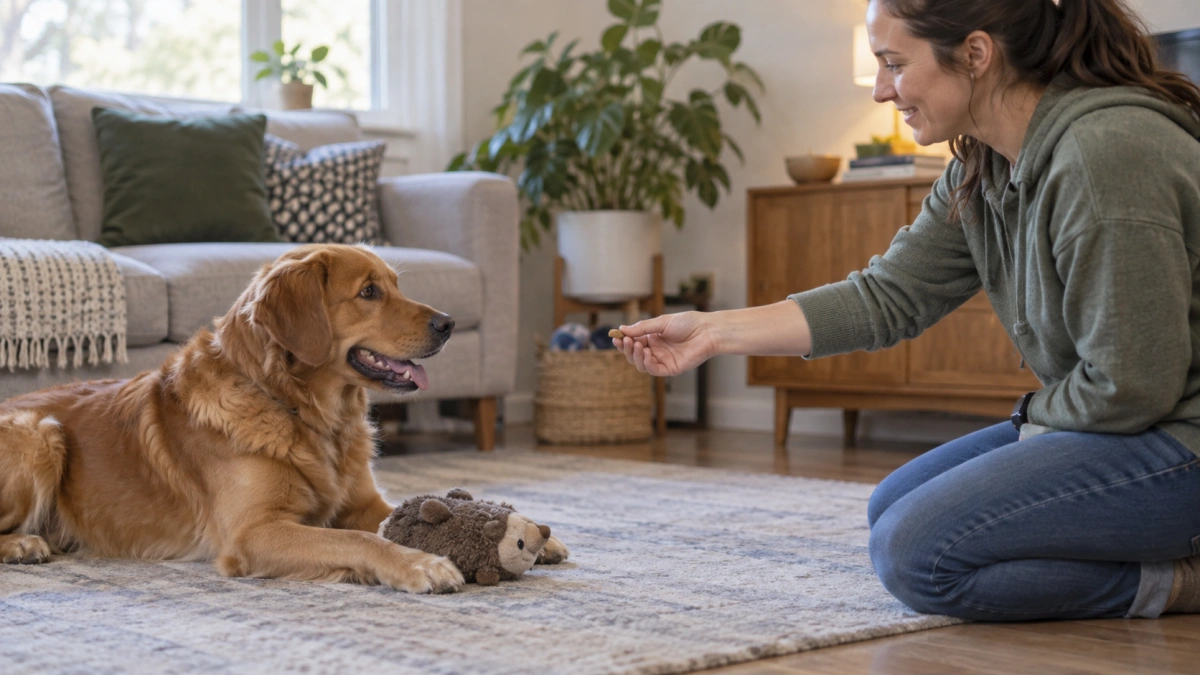
For low-risk situations, reward-based exercises may include:
- Offering a higher-value reward in exchange for a low-value object
- Rewarding voluntary release
- Returning safe objects after a successful trade when appropriate
- Teaching cues such as “drop” during relaxed training sessions
- Starting with objects the dog does not strongly guard
Do not practice trading by repeatedly taking highly valued objects from a dog that is already growling, snapping, or guarding intensely. High-risk cases need individualized professional guidance.
Resource Guarding Between Dogs
Dogs can also guard resources from other dogs in the household. Feeding bowls, chews, toys, beds, and attention can become sources of competition.
Helpful management may include:
- Feeding dogs separately
- Separating dogs while high-value chews are available
- Providing multiple resting areas
- Removing high-conflict items when dogs cannot be supervised
- Avoiding situations that repeatedly produce tension
If fights or injuries occur, do not rely on repeated exposure to make the dogs “work it out.” Professional assessment is safer.
Resource Guarding and Children
Resource guarding requires extra caution in homes with children. Children may not recognize subtle warning signals and may approach a dog while it is eating, sleeping, or holding a toy.
Basic safety rules include:
- Do not allow children to take food or toys from a dog
- Keep children away during meals
- Separate the dog when high-value chews are provided
- Supervise interactions closely
- Give the dog a private resting area
- Teach children not to disturb a sleeping or eating dog
If a dog has snapped at or bitten a child around resources, treat the situation as a serious safety issue and seek qualified professional help.
When Resource Guarding Becomes a Safety Concern
Resource guarding can overlap with broader dog aggression behavior when warnings escalate to repeated snapping, lunging, or biting.
Professional help is especially important when:
- The dog has bitten or attempted to bite
- Guarding is becoming more frequent or intense
- The dog guards several different resources
- Children or vulnerable adults are in the home
- Multiple dogs are fighting over resources
- The behavior cannot be managed safely
A veterinarian should also be consulted if guarding or aggression appears suddenly, especially if the dog has changes in mobility, appetite, sleep, touch sensitivity, or other normal behavior. Physical discomfort can contribute to unexpected behavior changes.
Resource Guarding Safety Checklist
- Identify exactly what the dog guards
- Watch for early tension before escalation
- Give the dog appropriate space around valuable resources
- Avoid taking objects by force
- Separate pets during predictable conflicts
- Keep children away from guarded resources
- Use reward-based training only at a safe difficulty level
- Prevent access to commonly stolen objects
- Seek professional support when there is bite risk
Final Thoughts
Resource guarding in dogs is best understood as a behavior related to protecting access to something valuable, not simply as stubbornness or bad behavior.
Food, toys, chews, resting areas, furniture, and other resources can all become triggers. Early signs such as freezing, stiff posture, moving an object away, or growling provide important information before the behavior escalates.
Focus first on safety and prevention. Avoid forcing the dog to surrender valued items, reduce predictable conflicts, and use gradual reward-based training when the situation is appropriate. If guarding involves snapping, biting, children, repeated fights, or sudden behavior changes, involve a veterinarian or qualified behavior professional.