By
By 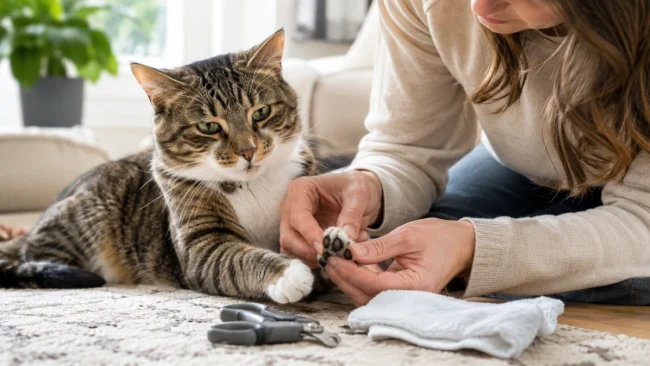
Cat paw grooming is mostly simple maintenance: keep the paws reasonably clean, check the pads and spaces between the toes, monitor claw length, and trim paw fur only when excess fur creates an actual problem. Most cats do not need their feet shaved or their natural toe tufts removed just for appearance.
The easiest routine is a quick paw check performed regularly enough that you notice litter, damaged claws, small foreign objects, swelling, or matting before they become larger problems.
Paw maintenance belongs within grooming a cat, while the handling techniques used here fit naturally into a broader cat grooming at home routine.
What Does Cat Paw Grooming Include?
You do not need to perform a miniature salon pedicure on your cat.
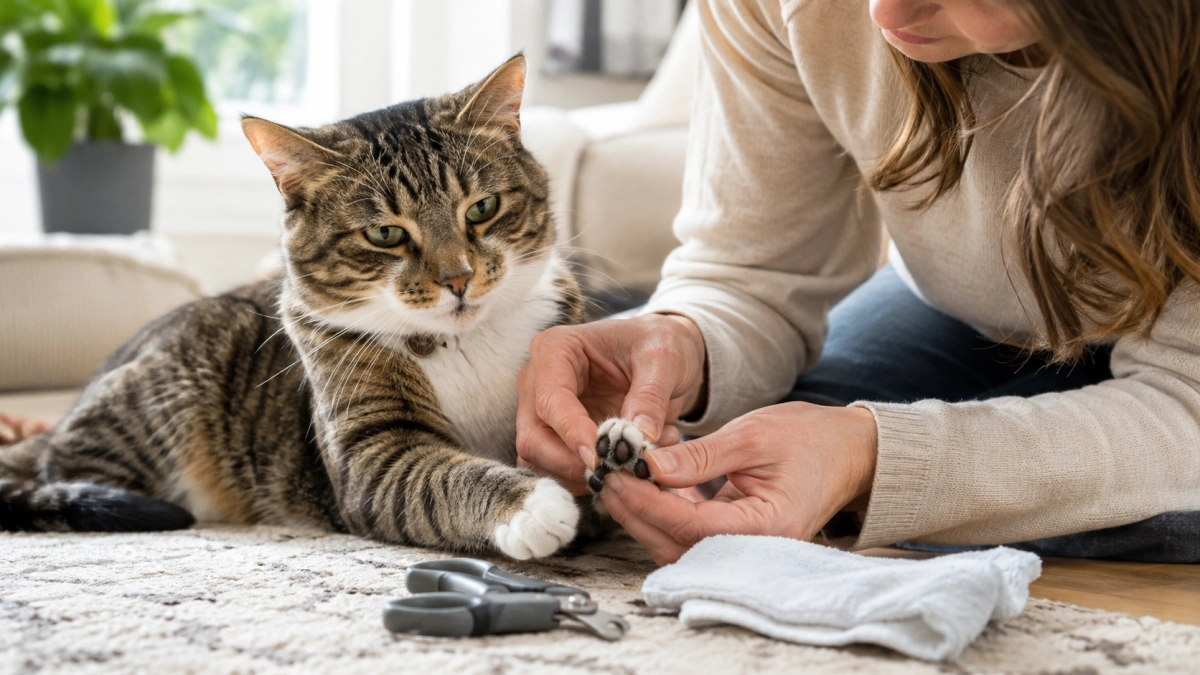
Basic paw care consists of four jobs:
- Checking for dirt and foreign material
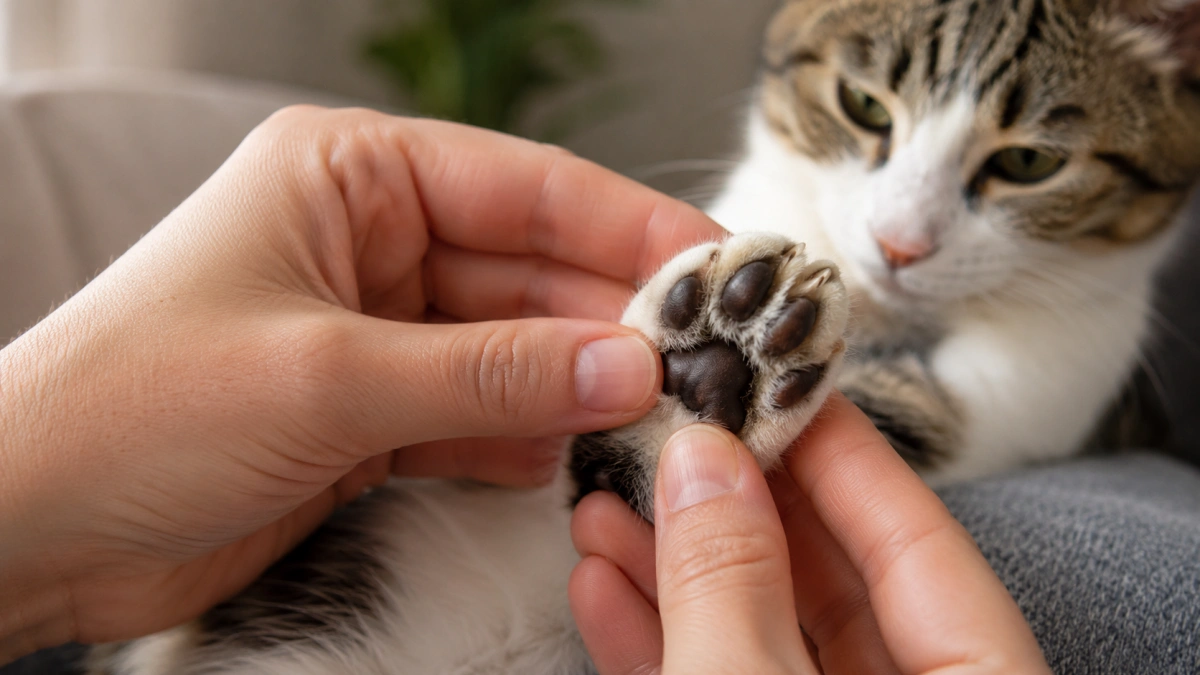
- Inspecting paw pads and skin
- Checking and trimming claws when needed
- Managing excess paw fur only when it causes a practical problem
Keeping these jobs separate helps prevent unnecessary trimming.
How Often Should You Check Your Cat’s Paws?
A quick visual check can be incorporated into ordinary handling or grooming.
Cats that go outdoors, long-haired cats, senior cats, and cats that frequently track litter may benefit from more frequent paw checks than a short-haired indoor cat with consistently clean feet.
You are looking for change rather than perfection.
| Check | What You Want to See |
|---|---|
| Paw pads | Clean, intact, no obvious swelling or wounds |
| Between toes | No litter, debris, tangles, or foreign objects |
| Claws | No broken, ingrown, or excessively long claws |
| Paw fur | Clean and not interfering with the pads |
| Walking | Normal weight-bearing without new limping |
How to Clean Cat Paws
For ordinary litter dust or minor household dirt, cleaning does not need to be complicated.
- Choose a time when your cat is relaxed.
- Support one paw rather than pulling the entire leg outward.
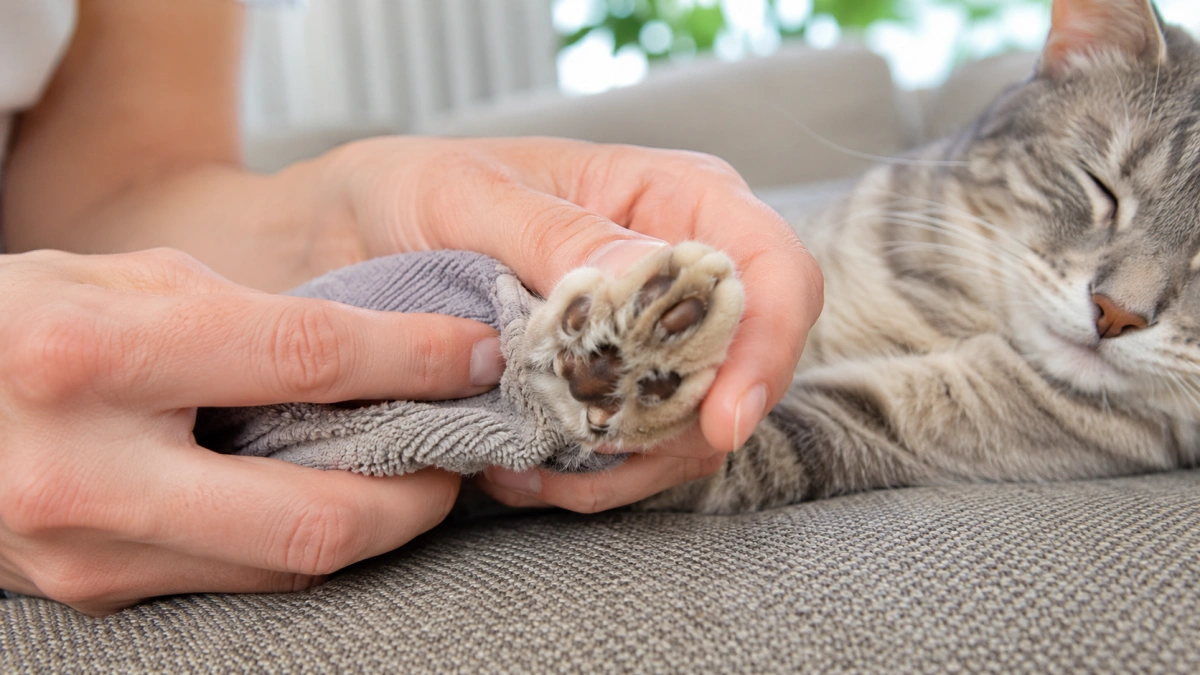
- Use a soft cloth lightly dampened with plain water for ordinary dirt.
- Wipe the external pad surfaces and surrounding fur gently.
- Check between the toes for trapped litter or debris.
- Dry the paw if it remains noticeably wet.
ASPCA similarly recommends regularly examining and gently cleaning cat paws because debris and unwanted substances on the feet can later be licked during self-grooming. :contentReference[oaicite:2]{index=2}
What If Your Cat Steps in Something Harmful?
A chemical spill is different from routine paw grooming.
If your cat walks through paint, automotive fluid, concentrated household cleaner, pesticide, oil, or another potentially harmful substance, prevent the cat from licking the paws while you identify the material and seek appropriate veterinary or poison-control guidance.
Do not rely on repeated licking, a scented grooming wipe, or an internet home remedy to remove an unknown chemical.
Do Cats Need Their Paw Fur Trimmed?
Usually not.
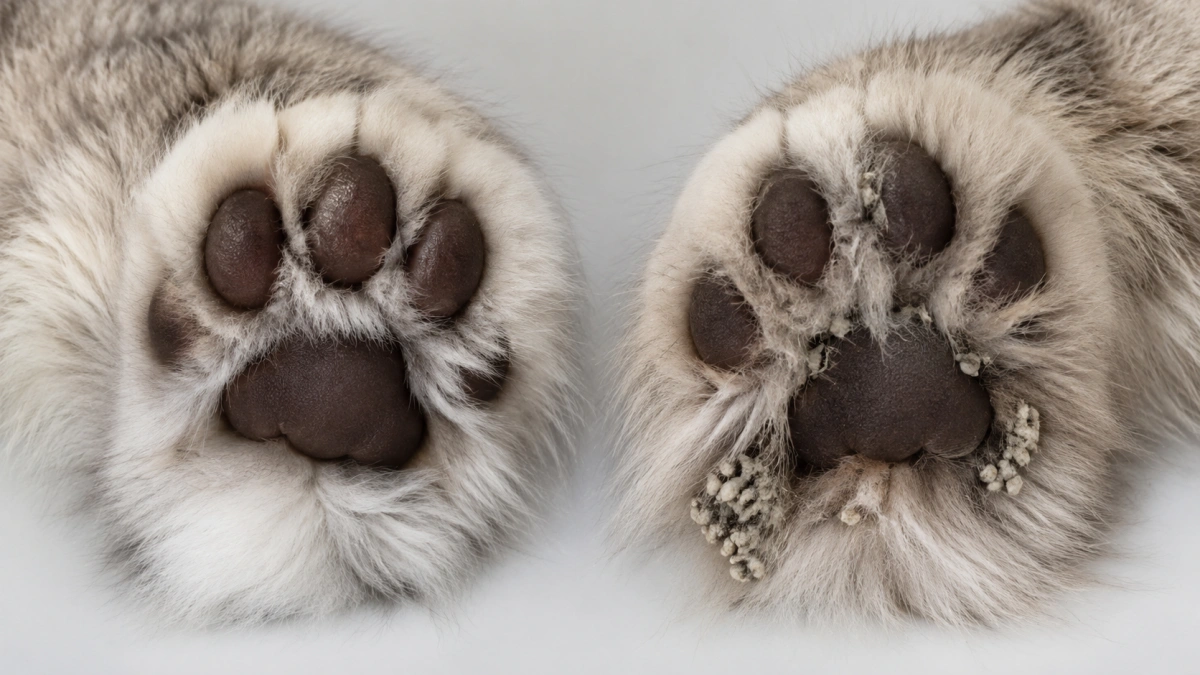
Natural fur around and between the toes is normal, particularly in long-haired cats such as Maine Coons, Ragdolls, Persians, and Siberians.
Current veterinary-reviewed guidance generally agrees that paw fur does not need trimming simply because it is visible or fluffy. Trimming becomes more reasonable when the excess fur is creating a practical problem. :contentReference[oaicite:3]{index=3}
When Should You Consider Trimming Paw Fur?
Consider a limited trim when long paw fur:
- Repeatedly collects litter
- Becomes dirty despite ordinary cleaning
- Forms tangles or mats
- Extends substantially beneath the pads
- Appears to reduce pad contact on smooth flooring
- Creates a practical hygiene problem
The goal is functional maintenance, not creating a perfectly hairless paw.
When Should You Leave Paw Fur Alone?
If the fur is clean, untangled, and not extending beneath the paw in a way that affects traction or hygiene, leaving it alone is perfectly reasonable.
Do not turn paw grooming into a cosmetic requirement.
This is especially important for cats that strongly dislike paw handling. Performing an unnecessary trim creates stress without solving a problem.
How Much Paw Fur Should You Trim?
Less than many owners expect.
The goal is usually to shorten only obvious excess fur that extends past the functional pad surface or creates a hygiene issue.
You do not need to dig deeply between the pads or remove every natural toe tuft.
If you cannot clearly see what you are trimming, stop rather than trying to make the paw look perfectly neat.
How to Trim Long Paw Fur More Safely
For a cat that tolerates paw handling and only needs a minor trim:
- Let the cat remain in a comfortable position.
- Check that the fur is clean and free of mats first.
- Support one paw lightly.
- Identify only the fur extending beyond the pad surface.
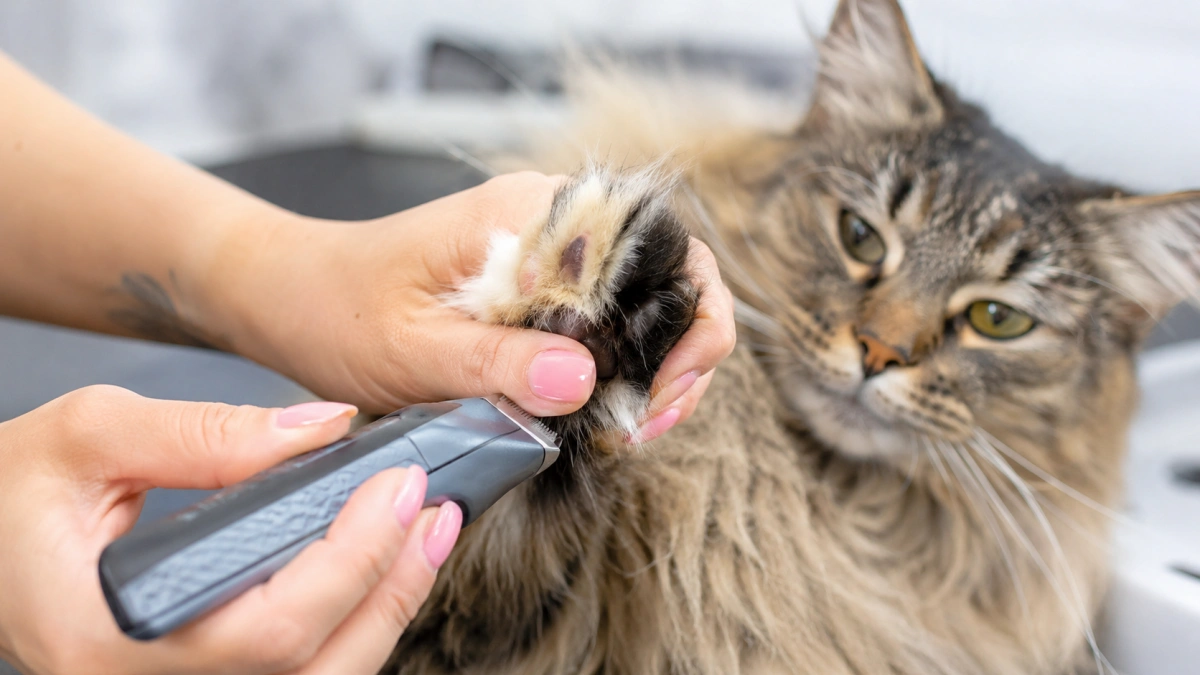
- Use a small pet trimmer designed for detail work if you are comfortable doing so.
- Remove very little at a time.
- Keep the tool on visible external fur rather than pushing deeply between paw pads.
- Stop if the cat begins pulling the paw away repeatedly.
If the fur is matted tightly between the toes or you cannot keep the paw stable, a feline-experienced groomer is a better option.
Should You Use Scissors Between Cat Paw Pads?
Avoid blindly inserting ordinary scissors between the pads.
The working space is small, the paw can move suddenly, and skin lies close to the fur you are trying to trim.
For limited external excess fur, a controlled small pet trimmer may be easier to manage. For mats, difficult positioning, or a cat that will not hold still, professional grooming is safer.
How to Check Your Cat’s Paw Pads
Healthy paw pads vary in color and texture between individual cats, so learn what is normal for your own cat.
During a check, look for:
- New cuts
- Cracks
- Foreign material
- Swelling
- Heat
- Bleeding
- Discoloration that was not present before
- Unusual odor or discharge
You are not trying to diagnose the problem at home. You are deciding whether routine grooming should continue.
Do Cat Paw Pads Need Moisturizer?
Do not automatically apply human hand cream, lotion, essential oils, petroleum mixtures, or cosmetic foot products to cat paws.
Cats lick their feet regularly, and a product suitable for human skin is not automatically appropriate for feline grooming.
If the pads appear persistently cracked, inflamed, swollen, painful, or abnormal, ask your veterinarian whether there is an underlying problem and whether any topical product is appropriate.
Cat Claw Care Is Part of Paw Grooming
Claw maintenance deserves its own check because claws continuously grow.
Scratching surfaces help cats maintain their claws naturally, but many indoor cats still need periodic trimming of the sharp tips.
Older cats may need closer monitoring because reduced scratching activity can allow claws to become excessively long.
How to Trim Cat Claws
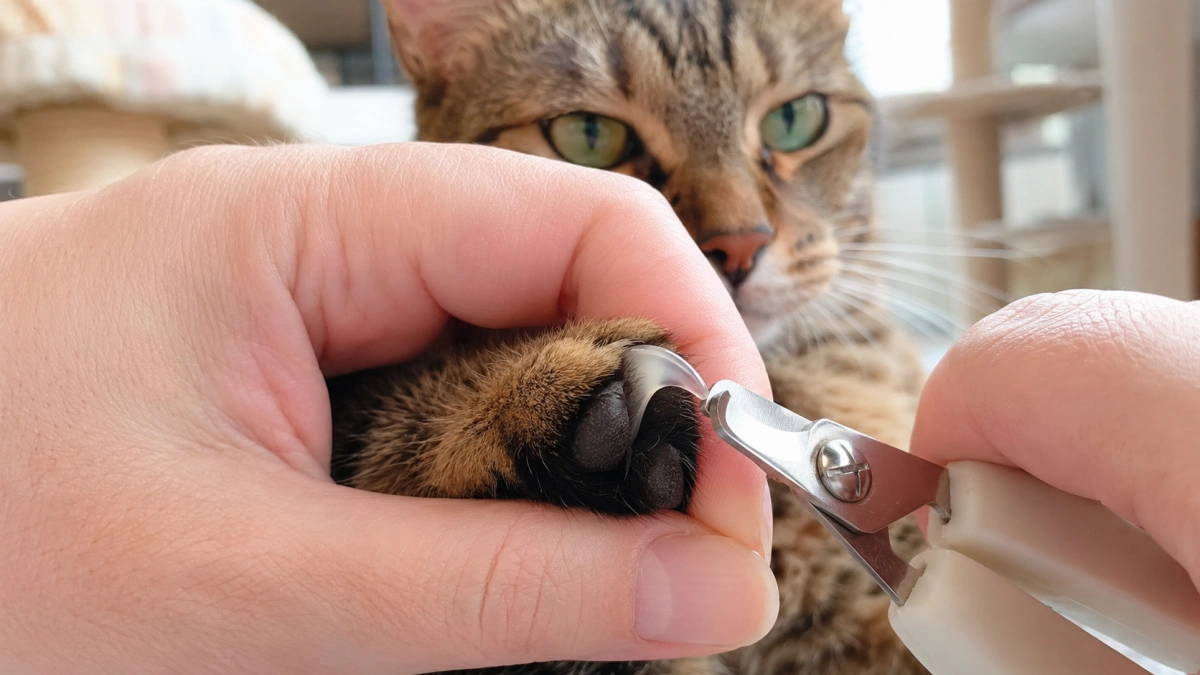
Only trim the sharp translucent tip and stay well away from the pink quick visible inside lighter claws.
- Choose a relaxed time.
- Hold one paw gently.
- Press the pad lightly to extend one claw.
- Identify the sharp transparent tip.
- Trim a small amount.
- Release the paw.
- Reward your cat.
ASPCA specifically recommends caution around the quick and notes that owners do not need to trim every claw in one session. :contentReference[oaicite:4]{index=4}
How Often Should Cat Claws Be Trimmed?
There is no reason to trim a claw that does not yet need shortening, so inspect before cutting.
ASPCA gives roughly every ten days to two weeks as a general nail-trimming guideline, but individual cats differ according to age, scratching behavior, activity, and claw growth. :contentReference[oaicite:5]{index=5}
The practical goal is to prevent claws from becoming overly long, snagging repeatedly, or curving toward the paw pad.
Watch Older Cats’ Claws More Closely
Senior cats may scratch less vigorously and therefore remove less old claw material naturally.
A long curved claw can eventually contact or grow into the paw pad, which is no longer a routine cosmetic trimming issue.
If a claw has already entered the pad, the paw is swollen, or the cat appears painful, seek veterinary care rather than simply clipping the exposed end at home. Veterinary-reviewed paw guidance likewise identifies ingrown claws as painful problems that require veterinary attention. :contentReference[oaicite:6]{index=6}
When a Paw Problem Is Not a Grooming Problem
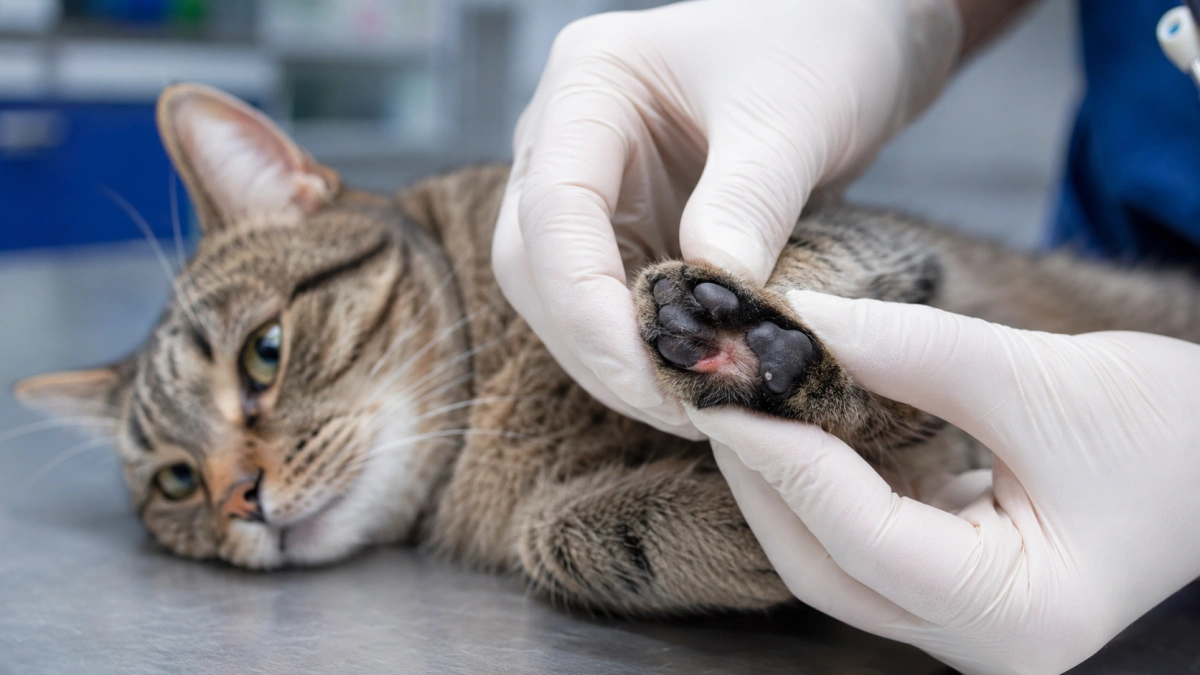
Stop routine grooming and seek veterinary advice when you see:
- A swollen paw
- A deep cut or puncture
- Persistent bleeding
- Pus or unusual discharge
- A strong abnormal odor
- A broken claw with significant pain
- An ingrown claw
- A foreign object you cannot remove easily
- Persistent limping
- A pad that looks severely irritated or abnormal
Why Does My Cat Hate Having Its Paws Touched?
Paws are sensitive and many cats simply have little experience with prolonged paw handling.
The worst time to teach paw handling is when you urgently need to trim every claw.
Instead, practice when no grooming task needs to be completed.
Teach Paw Handling Before You Need It
Build tolerance in small steps:
- Touch a shoulder or leg briefly.
- Reward calm behavior.
- Touch the top of one paw.
- Reward again.
- Hold the paw for one second.
- Later, gently press one pad.
- Eventually introduce the nail clipper without using it.
Progress only while your cat remains comfortable.
This reduces the need for stronger restraint when actual paw grooming becomes necessary.
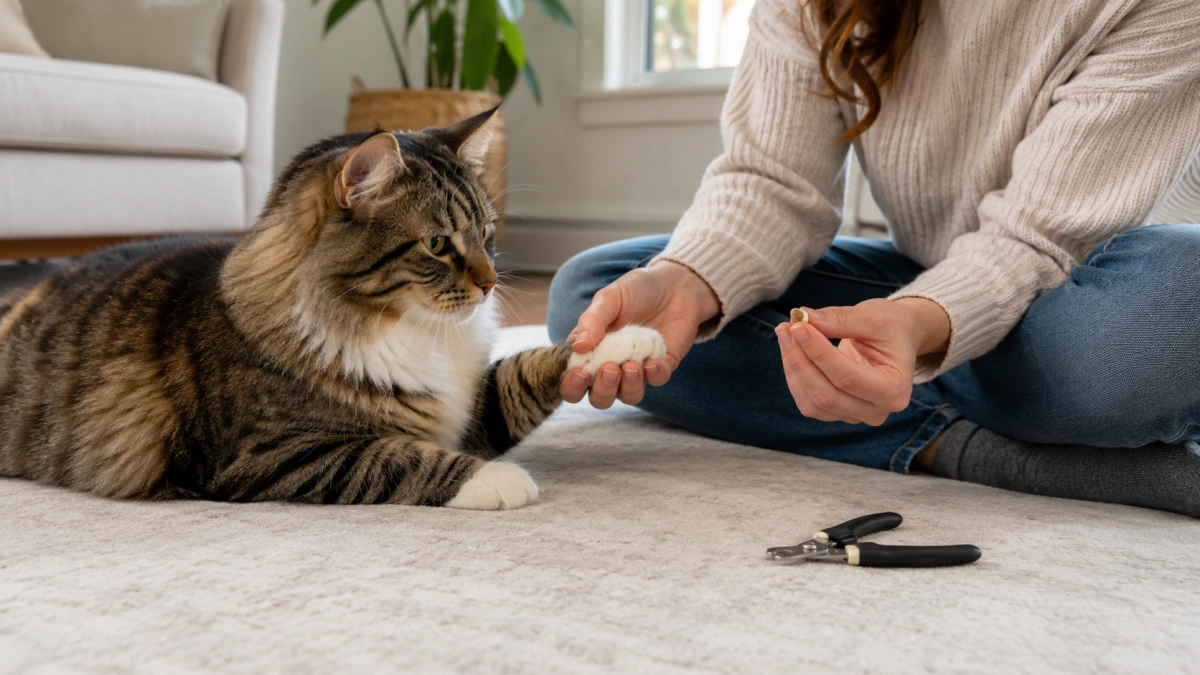
What If You Cannot Groom the Paw Safely?
You do not need to win the handling battle.
A groomer or veterinary clinic can help with:
- Nail trimming you cannot safely complete
- Difficult paw-fur trimming
- Matted fur between the toes
- Cats that require experienced handling
If the issue involves pain, swelling, an ingrown claw, abnormal skin, or injury, choose veterinary care rather than treating the problem as ordinary grooming.
Simple Cat Paw Grooming Checklist
| Question | If Yes |
|---|---|
| Is there ordinary dirt? | Clean gently |
| Is debris caught between toes? | Remove it if easily accessible |
| Does long fur extend under the pads? | Consider limited trimming if it causes a problem |
| Are healthy toe tufts simply fluffy? | Leave them alone |
| Are claws becoming long and sharp? | Trim the transparent tips |
| Is a claw curving into the pad? | Contact a veterinarian |
| Is the paw swollen, painful, or bleeding? | Stop grooming and seek veterinary care |
Final Thoughts
Good cat paw grooming is mostly observation and light maintenance.
Keep the paws clean, check between the toes, monitor the claws, and leave normal paw fur alone unless it begins causing hygiene, matting, or traction problems.
When you do need to trim, remove only what solves the problem rather than trying to make the paws look perfectly neat. And when a paw is swollen, painful, injured, or abnormal, stop treating it as a grooming task and let a veterinarian evaluate it.
For small everyday paw dirt, our sibling guide to cat grooming wipes explains when a pet wipe is useful and when plain water or another cleaning method makes more sense.