By
By 
Cat grooming clippers are most useful when brushing and combing are not enough for a specific trimming job. They can help with sanitary trims, small touch-ups, selected long-coat maintenance, and certain grooming styles, but choosing the right machine matters just as much as knowing how to use it.
The safest approach is to think about the job first. A small detail trimmer and a full-size body clipper are not interchangeable, and a powerful machine is not automatically the best choice for a cat. Noise, vibration, blade size, maneuverability, coat density, and your cat’s tolerance all affect the decision.
Clipping is only one part of grooming a cat. Before buying equipment, it helps to understand where clippers fit among brushes, combs, mitts, and other cat grooming tools.
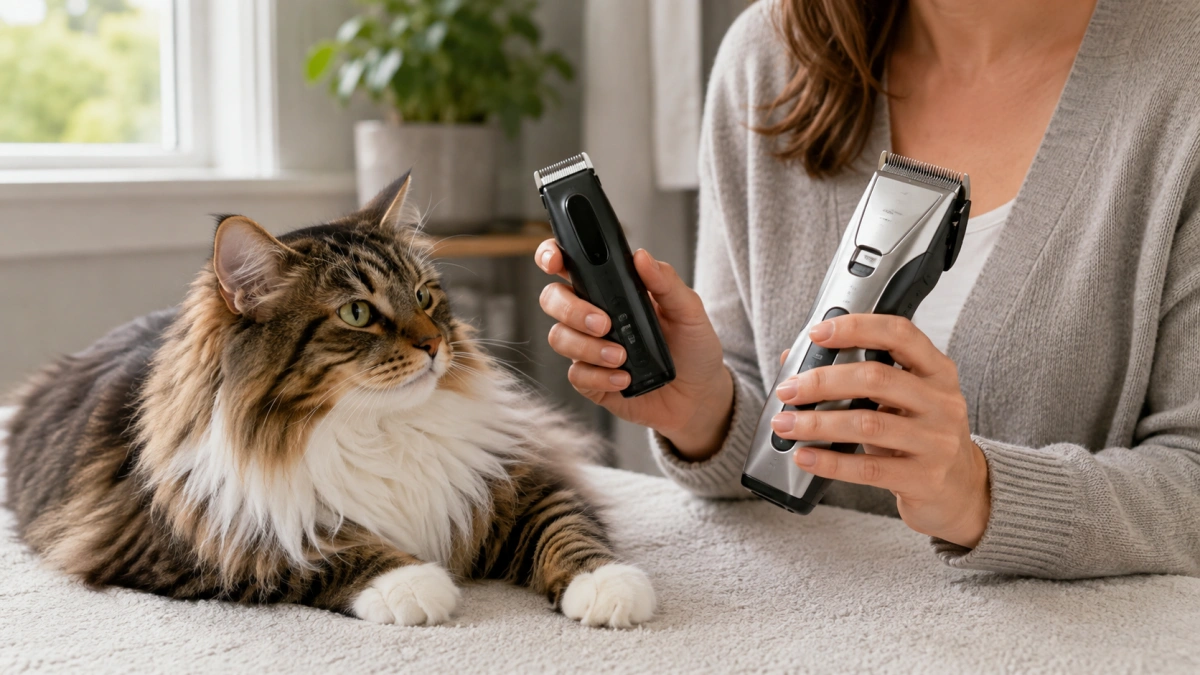
Do You Actually Need Cat Grooming Clippers?
Many cats never need regular clipping. Brushing and combing can handle most ordinary loose fur and tangle prevention.
Clippers become more relevant when there is a specific reason to shorten fur rather than simply maintain it.
| Grooming Job | Are Clippers Useful? |
|---|---|
| Routine loose-fur removal | Usually no |
| Small sanitary trim | Often useful |
| Minor body touch-up | Can be useful |
| Long coat that needs shortening | Potentially useful |
| Tight mat close to skin | Professional help is safer |
| Full lion cut | Best handled professionally |
Clipper vs Trimmer: Know the Difference
One of the most useful distinctions is between a clipper and a trimmer.
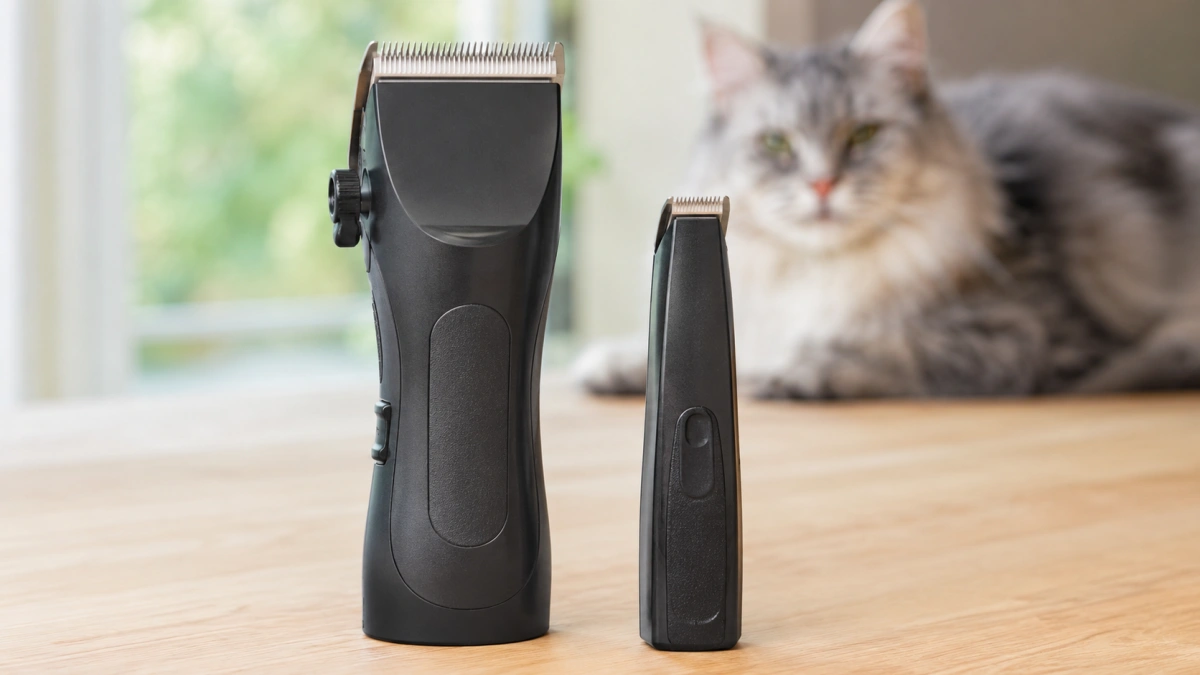
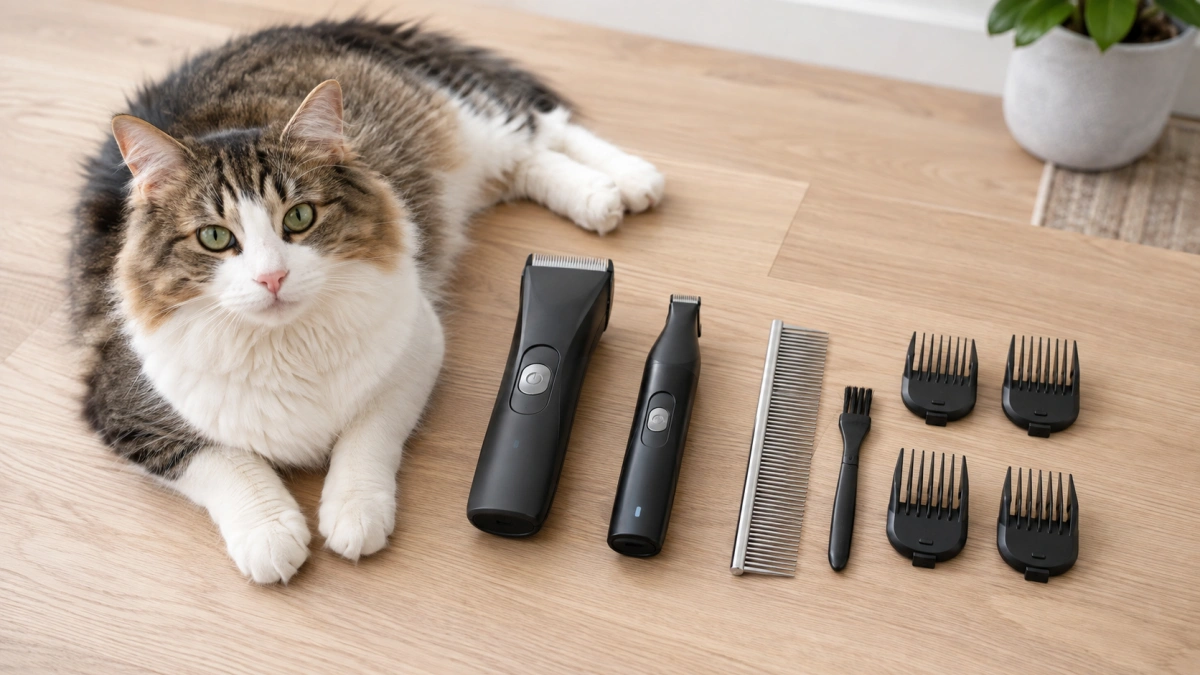
A full-size clipper is designed to remove more coat across a larger area. A trimmer is smaller and easier to maneuver in limited areas.
| Feature | Clipper | Trimmer |
|---|---|---|
| Body size | Larger | Smaller |
| Main purpose | Larger coat areas | Details and touch-ups |
| Maneuverability | Moderate | Higher |
| Dense coat capability | Usually stronger | More limited |
| Sanitary trim | Possible | Often more convenient |
How to Choose Cat Grooming Clippers
1. Start With the Grooming Job
Do not choose a machine based only on motor power or the number of accessories.
If you only want to tidy a small sanitary area occasionally, a compact trimmer may provide better control than a heavy professional clipper.
If you need to work through more coat across the body, a larger clipper with sufficient cutting power becomes more relevant.
2. Consider Coat Length and Density
Fine short fur creates a different workload from a thick long coat.
A machine that performs well on a small short-haired area may struggle when asked to move through dense long fur. When a clipper lacks enough cutting ability, it may slow down or begin pulling rather than cutting smoothly.
3. Prioritize Low Noise and Low Vibration
Cats can react strongly to unfamiliar noise and vibration. A quieter machine does not guarantee that a cat will accept grooming, but reducing unnecessary sound and vibration can make introduction easier.
Before touching the coat, allow the cat to experience the machine while it is turned off. Later, switch it on at a distance and observe the cat’s response.
4. Look for Good Hand Control
Weight and shape matter because you need to keep the blade stable while the cat moves.
A machine that feels excessively heavy or awkward in your hand can be harder to control around curves and small areas.
5. Consider Cordless vs Corded
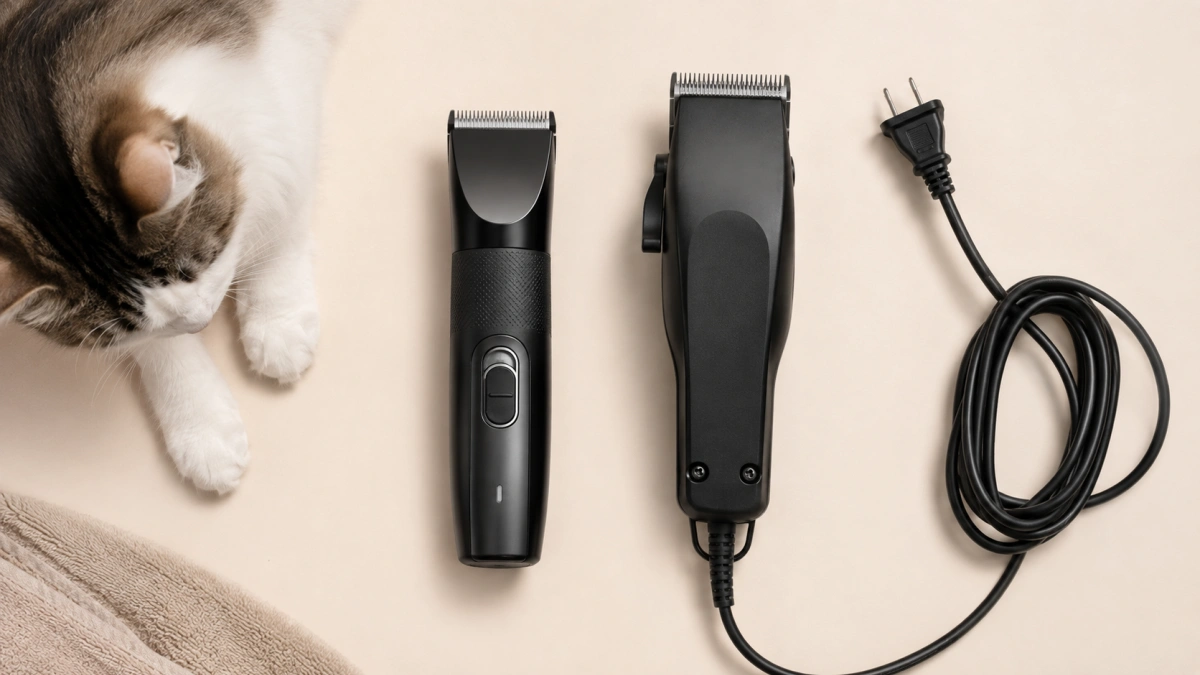
| Feature | Cordless | Corded |
|---|---|---|
| Movement | Very flexible | Limited by cord |
| Convenience | High | Requires outlet |
| Runtime | Battery dependent | Continuous |
| Small touch-ups | Very convenient | Usually unnecessary |
| Long sessions | Depends on battery | More predictable |
What Features Matter Most?
- Low and predictable vibration
- Comfortable grip
- Appropriate blade width
- Easy blade cleaning
- Available guide combs when needed
- Reliable battery life for cordless models
- Blades that remain sharp and cut without pulling
Features such as LCD screens, storage cases, and large accessory counts can be convenient, but they should come after cutting performance and control.
Should You Buy a Full Grooming Kit?
A kit can be useful if it contains accessories you will actually use. Many sets include several guards, scissors, brushes, combs, and attachments that may duplicate tools you already own.
Judge the clipper first, then the accessories.
Can You Use Human Hair Clippers on a Cat?
Some human clippers may physically cut cat fur, but that does not make them the best choice. Cat coats vary in texture and density, and machines designed for pet grooming generally offer blade and motor configurations intended for animal coats.
For routine home use, a purpose-built pet clipper or trimmer is the more practical starting point.
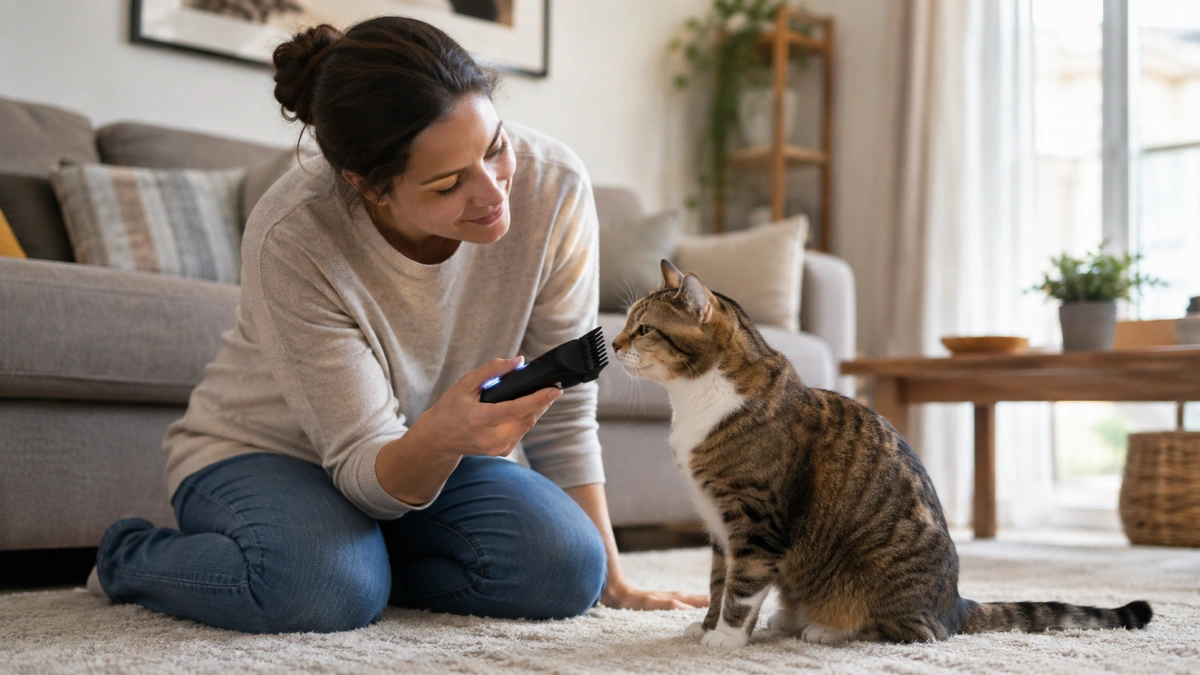
How to Introduce Clippers to a Cat
- Place the turned-off clipper nearby and allow the cat to investigate it.
- Handle the cat normally without attempting to trim.
- Turn the clipper on at a comfortable distance.
- Gradually bring the sound closer over multiple short sessions if necessary.
- Touch the body with the back of the clipper before introducing the blade.
- Reward calm behavior and stop before stress builds.
The goal is not to complete the entire trim in the first session. A cat that calmly accepts thirty seconds today may tolerate more next time.
How to Use Cat Grooming Clippers More Safely
Prepare the Coat First
Brush or comb the coat before clipping. Removing loose fur and identifying tangles gives you a clearer picture of what the clipper will encounter.
Keep the Blade Flat
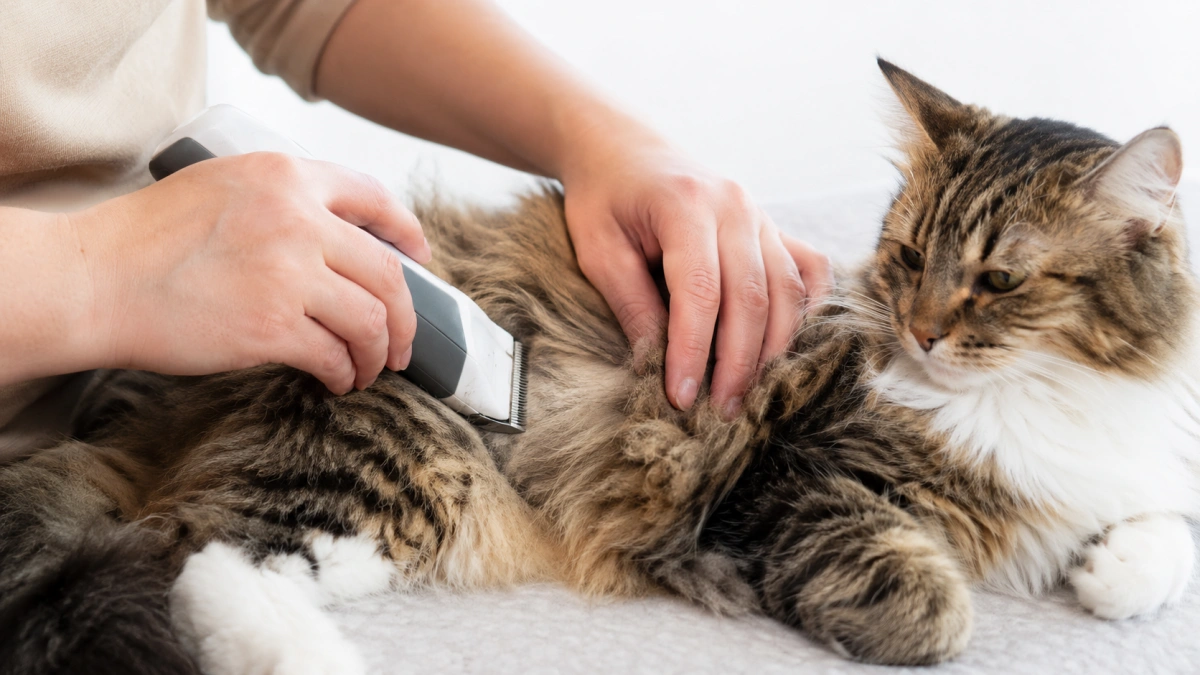
Avoid pointing the corner of the blade directly into the skin. Keep the cutting surface controlled and work in smooth passes.
Use Light Pressure
Do not compensate for a clipper that is struggling by pushing harder. Pulling, snagging, or repeated stalling are signs to stop and reassess the coat, blade, or machine.
Check Blade Temperature
Clipper blades can warm during use. Pause periodically and check that the blade remains comfortable before continuing.
Use Short Sessions
Trying to finish a large grooming job while the cat becomes increasingly restless creates unnecessary risk.
Areas That Require Extra Caution
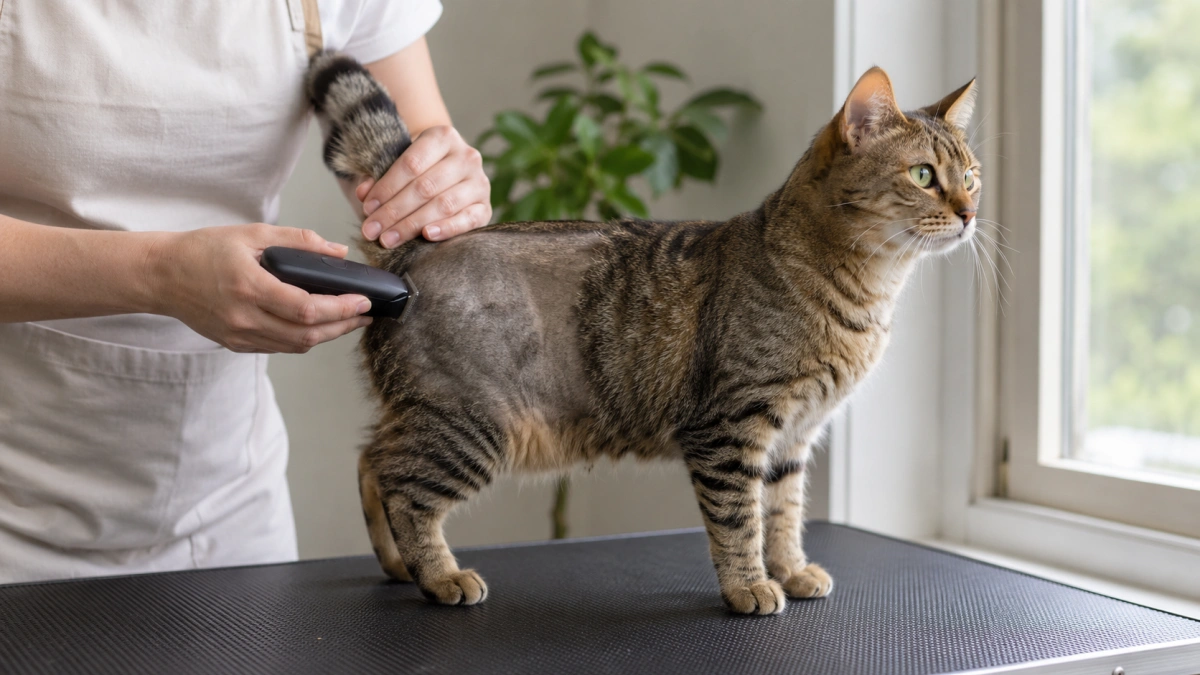
Cat skin can fold and move underneath the coat. Some areas are therefore less forgiving for inexperienced clipping.
- Armpits
- Groin
- Belly
- Around nipples
- Inside legs
- Around ears
- Face and whisker area
- Tail
If you cannot clearly see and control the skin around the area you want to clip, professional help is the safer choice.
Can Clippers Remove Matted Cat Fur?
Professional groomers frequently use clippers when mats cannot be safely combed out, but that does not mean every mat should be clipped at home.
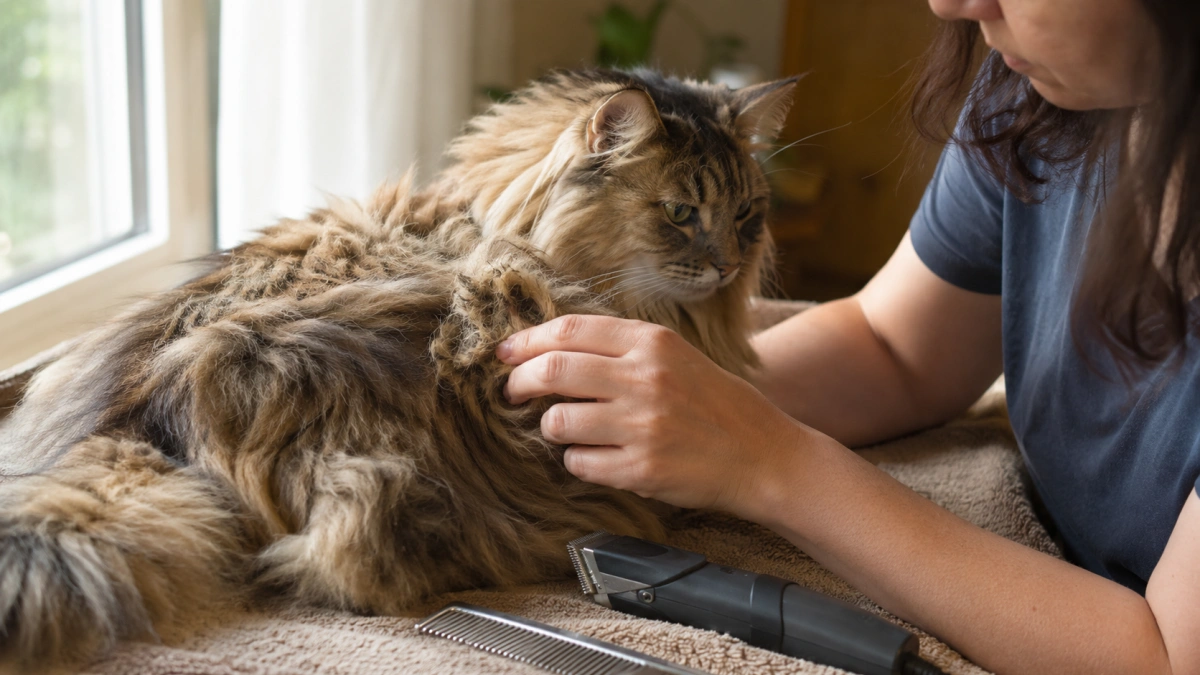
Tight mats can pull cat skin upward into the tangled hair, making it difficult for an inexperienced owner to know where the skin ends and the mat begins.
If a mat is tight against the skin, covers a large area, causes discomfort, or prevents you from clearly seeing what you are doing, stop rather than attempting to work underneath it blindly.
What About Sanitary Trims?
Sanitary trimming is one of the reasons owners look for compact cat clippers. Long fur around the rear can sometimes trap litter or waste, particularly in long-haired cats.
A small, maneuverable trimmer may be more practical for this limited job than a large body clipper, but the skin around the groin and rear is delicate. If the cat twists, struggles, or makes positioning difficult, do not force the trim.
When Should You Stop DIY Clipping?
Stop and consider a professional groomer or veterinarian when:
- The cat becomes highly distressed or aggressive.
- The coat contains tight mats close to the skin.
- You cannot safely identify the skin beneath the coat.
- The clipping area is around highly mobile or delicate skin.
- The cat is elderly, painful, or suddenly intolerant of handling.
- A full-body shave or lion cut is being considered.
Cat Grooming Clippers vs Professional Grooming
| Situation | Home Clippers | Professional Groomer |
|---|---|---|
| Small routine touch-up | Reasonable for experienced owners | Optional |
| Basic sanitary trim | Possible with caution | Good choice for difficult cats |
| Large tight mats | Not recommended | Preferred |
| Full lion cut | High difficulty | Preferred |
| Very stressed cat | Stop | Professional assessment |
If you are considering clipping most of the coat rather than performing a small trim, read our guide to lion cut cat grooming before deciding whether a full haircut is appropriate.
Simple Cat Clipper Buying Checklist
- What exactly am I trimming?
- Do I need a clipper or a smaller trimmer?
- How dense is my cat’s coat?
- Is the machine quiet enough for my cat?
- Can I comfortably control its size and weight?
- Are replacement blades available?
- Is cordless runtime sufficient?
- Do I actually need all included accessories?
Final Thoughts
The best cat grooming clippers are not necessarily the most powerful or the ones with the largest accessory kit. They are the tools that match the job, cut the coat smoothly, remain controllable in your hand, and can be used without pushing your cat beyond what it can comfortably tolerate.
For small touch-ups, a compact cordless trimmer may be enough. Larger clipping jobs require more capability and considerably more handling skill.
Start with the simplest job, introduce the machine gradually, and know when the grooming problem has moved beyond a reasonable home trim.