By
By 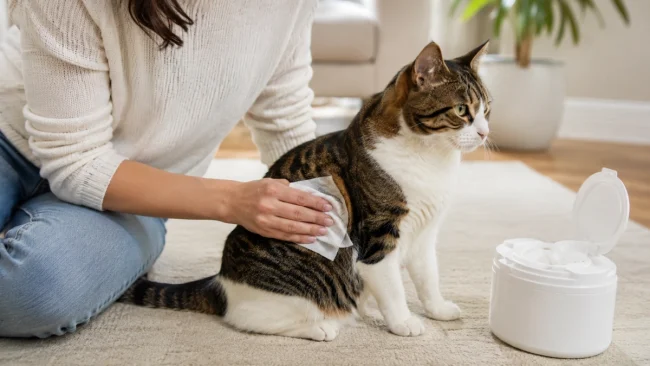
Cat grooming wipes can be useful for small, targeted cleanups such as dusty paws, a little litter residue, food on the coat, or a minor mess that does not justify a full bath. They are not a replacement for brushing, combing, proper bathing when genuinely needed, or veterinary care for irritated skin.
The most important part is choosing a wipe that is actually intended for cats or pets and using it only where the label says it can be used. Your cat will eventually lick its coat again, so a household cleaning wipe, disinfecting wipe, makeup wipe, or random scented human wipe is not a sensible substitute.
Grooming wipes are one optional tool within grooming a cat. If you are building a practical toolkit rather than buying products one by one, our cat grooming tools guide explains which tools solve different grooming jobs.
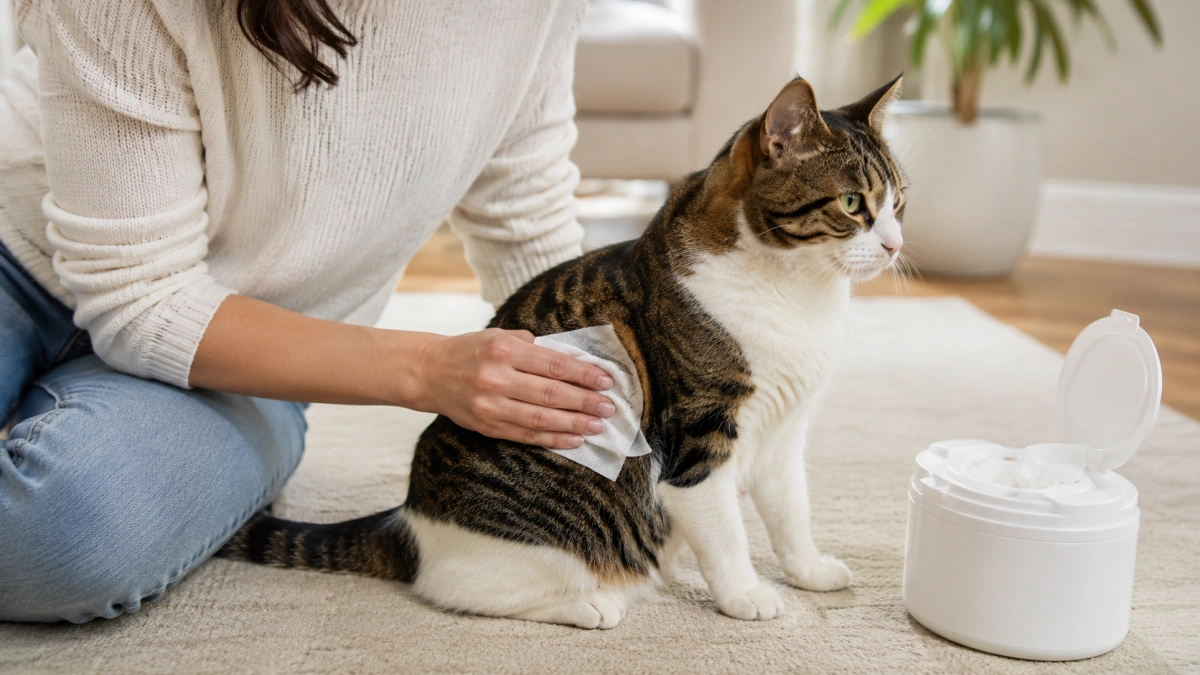
What Are Cat Grooming Wipes Actually For?
Think of grooming wipes as a spot-cleaning tool.
They make the most sense when the problem is small enough that you do not need to wet the entire cat. A wipe can remove light surface dirt while keeping the rest of the coat dry and leaving the grooming session short.
Useful situations may include:
- Light litter dust on the paws
- Minor dirt on an indoor-outdoor cat’s coat
- A small amount of food on chest or facial fur, away from the eyes and mouth
- Minor residue on long rear furnishings
- A small dirty patch after travel
- Occasional coat cleanup for a senior cat that no longer reaches one area well
If the coat is heavily soiled, greasy, matted, contaminated with something potentially harmful, or associated with skin irritation, wipes are no longer the complete answer.
Do Cats Need Grooming Wipes?
Most healthy cats do not require wipes as a mandatory daily grooming product.
Cats already perform substantial self-grooming. If your cat’s coat is clean, comfortable, and easy to maintain with brushing or combing, there is no reason to create a new daily wiping routine simply because the product exists.
Wipes are most useful when they solve a specific problem more conveniently than a bath.
Cat Grooming Wipes vs a Damp Cloth
For very minor dirt, plain water and a soft clean cloth may be enough.
| Situation | Damp Cloth | Cat Grooming Wipe |
|---|---|---|
| Small amount of ordinary dust | Often enough | Also convenient |
| Light paw dirt | Usually practical | Convenient away from home |
| Travel cleanup | Less convenient | Often easier |
| Repeated rear-coat mess | Can work | Useful for targeted cleanup |
| Heavy oily coat | Usually insufficient | Usually insufficient |
| Matted coat | Does not solve the mat | Does not solve the mat |
This is an important buying decision: convenience does not automatically mean necessity.
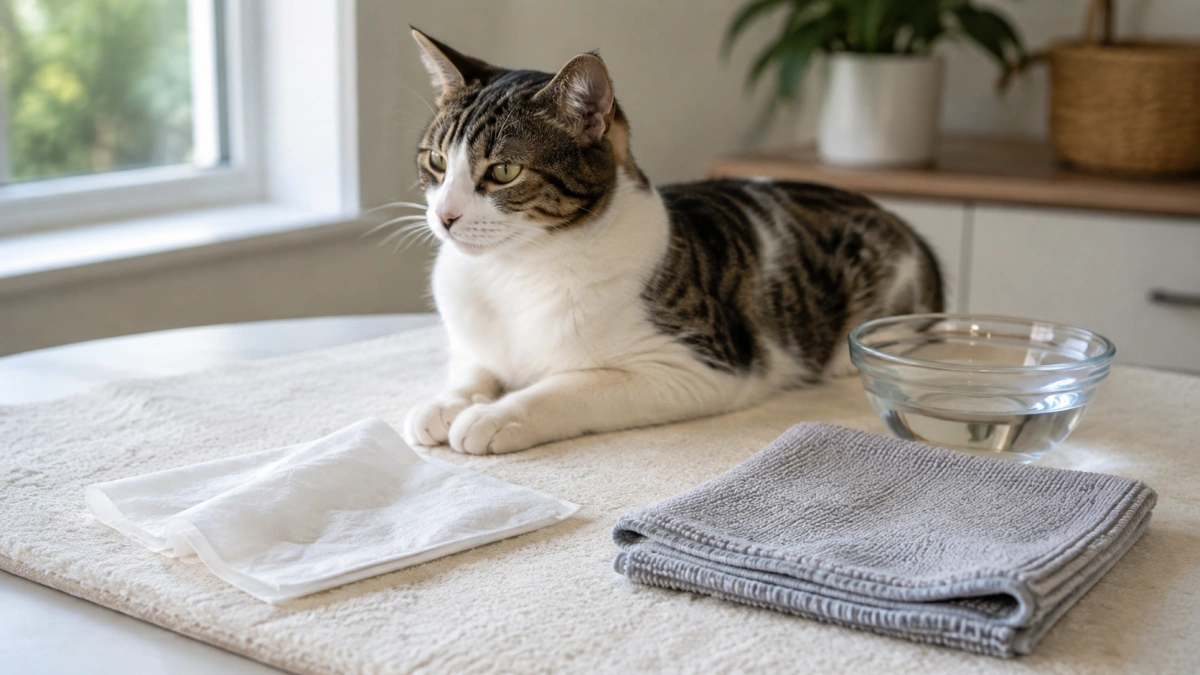
Can You Use Baby Wipes on a Cat?
It is better to use a product specifically labeled for cats or pets rather than assuming a human baby wipe is suitable.
Human wipes are formulated for human skin and human use. Their fragrances, preservatives, cleansing agents, intended body areas, and directions may differ from a product designed around pet grooming and subsequent licking.
The same principle applies even more strongly to:
- Household disinfecting wipes
- Kitchen cleaning wipes
- Makeup-removal wipes
- Antibacterial hand wipes
- Surface-cleaning wipes
A wipe being gentle enough for one intended human use does not automatically make it appropriate for a cat’s coat.
How to Choose Cat Grooming Wipes
Do not choose purely from front-label phrases such as “natural,” “fresh,” or “gentle.”
Read the intended use and directions first.
1. Check That the Product Is Intended for Cats or Pets
A clearly stated pet-grooming use is more useful than trying to reverse-engineer whether a human wipe might be acceptable.
2. Prefer Simple, Mild Formulas for Routine Coat Cleaning
For ordinary grooming, many owners prefer fragrance-free and alcohol-free options because there is less reason to leave unnecessary scent or harsh-feeling residue on a coat that will later be licked.
3. Read Where the Product Can Be Used
A general coat wipe may not be designed for the eyes, ear canal, mouth, or irritated skin.
4. Distinguish Grooming Wipes From Medicated Wipes
Antiseptic or medicated wipes have a different purpose from ordinary grooming wipes. Do not use a medicated product simply because it appears “stronger.”
5. Check Whether Rinsing Is Required
Follow the product directions rather than assuming every wipe is leave-on.
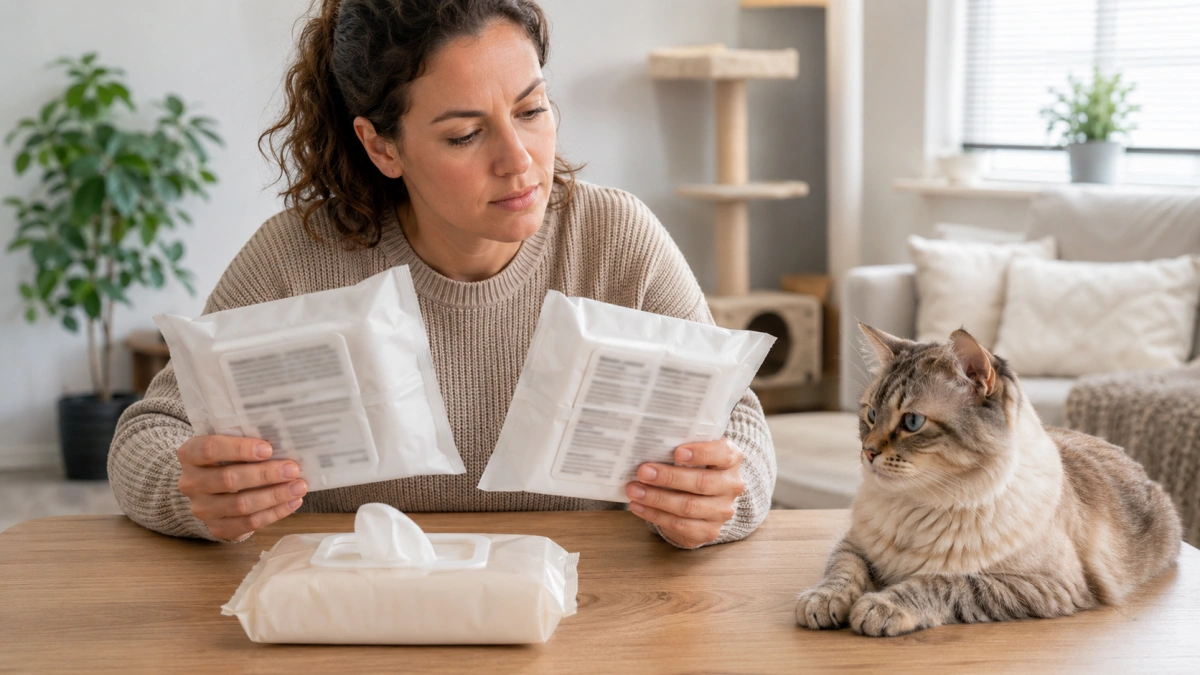
What Ingredients Should You Be Careful With?
There is no useful reason to memorize one enormous internet “toxic ingredient” list and assume every chemical name has the same risk at every concentration.
A more reliable approach is to avoid using products outside their intended purpose and be cautious with unnecessary additions.
For routine cat grooming, avoid substituting:
- Household disinfectants
- Strongly fragranced human wipes
- Products containing essential oils that are not specifically formulated and labeled for feline use
- High-alcohol cleaning products
- Medicated or antiseptic wipes unless they are appropriate for the cat and situation
If your cat has a known skin condition, allergy history, open skin, or a veterinarian-directed dermatology plan, use the product your veterinarian recommends rather than selecting a cosmetic grooming wipe by trial and error.
How to Use Cat Grooming Wipes
The easiest technique is usually the least dramatic.
- Let your cat sniff the closed container or wipe first.
- Choose one small dirty area.
- Gently wipe in the natural direction of the coat.
- Avoid scrubbing back and forth aggressively.
- Use another wipe if the first one becomes visibly dirty rather than spreading debris.
- Let the coat dry according to the product directions.
- Stop if the skin becomes red or your cat becomes increasingly uncomfortable.
You do not need to wipe the entire animal simply because you opened one wipe.
Using Wipes on Cat Paws
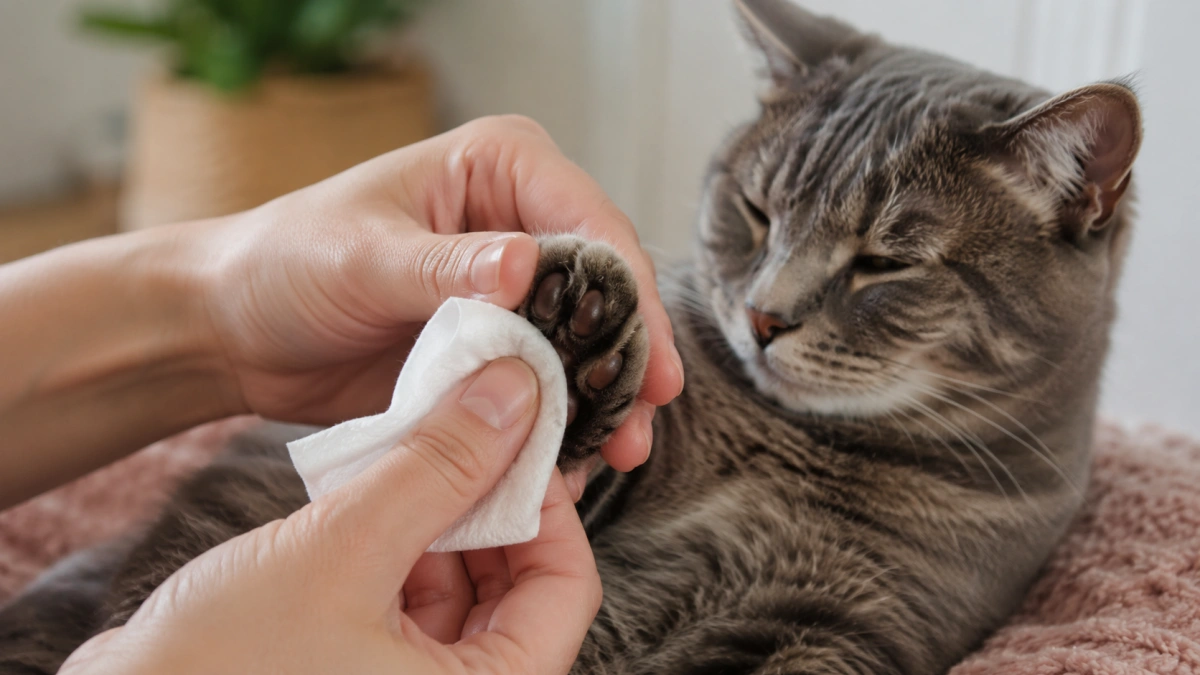
Paws are one of the most practical places for targeted wiping.
A cat may pick up litter dust, ordinary floor debris, or mild outdoor dirt. Gently support one paw and clean the external fur and pads without forcing the toes apart unnecessarily.
If your cat has stepped in a household chemical, unknown substance, paint, oil, or another potentially harmful material, do not treat the situation as routine grooming. Prevent licking and seek appropriate veterinary or poison-control guidance based on the substance involved.
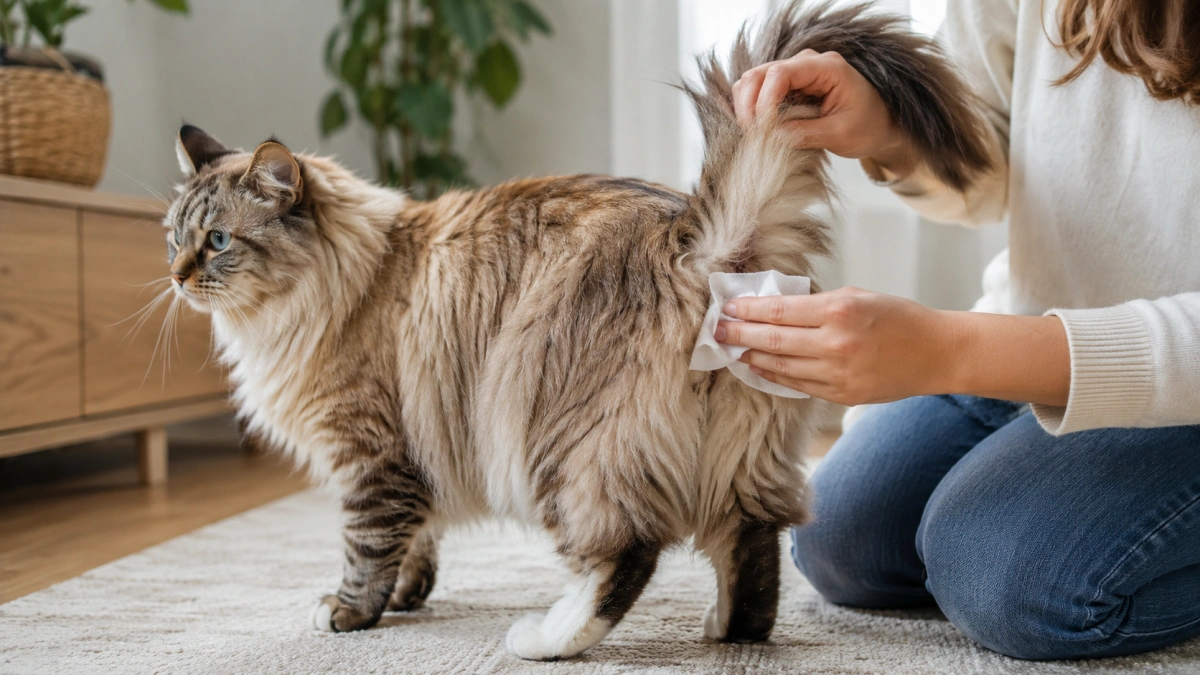
Using Wipes Around the Rear Coat
Long-haired cats occasionally collect a small amount of litter or waste in the rear furnishings.
When the mess is minor and limited to the exterior coat, a cat-safe grooming wipe may make cleanup easier than immediately bathing the whole cat.
If this happens repeatedly, however, the better long-term question is why.
A sanitary trim may be more useful for some long-haired cats than repeatedly cleaning the same long fur after every litter-box visit.
Can You Use Grooming Wipes on a Cat’s Face?
Be more conservative around the face.
Do not wipe directly across the eyes or inside the nose, mouth, or ear canal with a general grooming wipe unless the product specifically says it is intended for that exact use.
For a small amount of ordinary dirt around external facial fur, a soft cloth lightly dampened with plain water may be a simpler option.
Where Should You Not Use Ordinary Grooming Wipes?
Unless the product specifically directs otherwise, keep general grooming wipes away from:
- Eyes
- Inside the ears
- Inside the mouth
- Nostrils
- Genital openings
- Broken skin
- Bleeding areas
- Raw or severely irritated skin
FDA general wipe-safety guidance also advises using wipes only for their intended use and on intact skin unless the label provides different instructions. :contentReference[oaicite:1]{index=1}
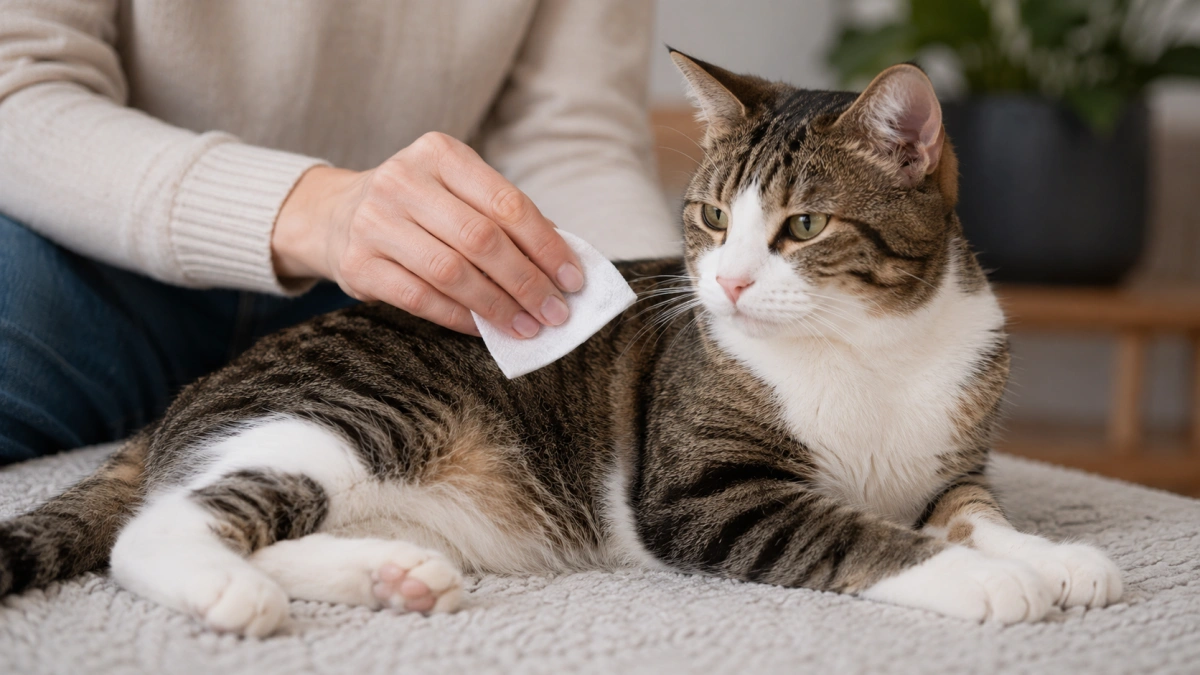
Are Grooming Wipes Helpful for Senior Cats?
They can be.
An older cat may become less flexible and have difficulty reaching the lower back, hindquarters, or other parts of the coat.
A wipe can help with a small cleanup in an area the cat has missed, while brushing and combing handle the larger coat-maintenance job.
However, a sudden drop in self-grooming should not simply be hidden with more cleaning products. If a cat that previously maintained its coat suddenly becomes greasy, dirty, matted, or unable to reach parts of its body, a veterinary evaluation may be appropriate.
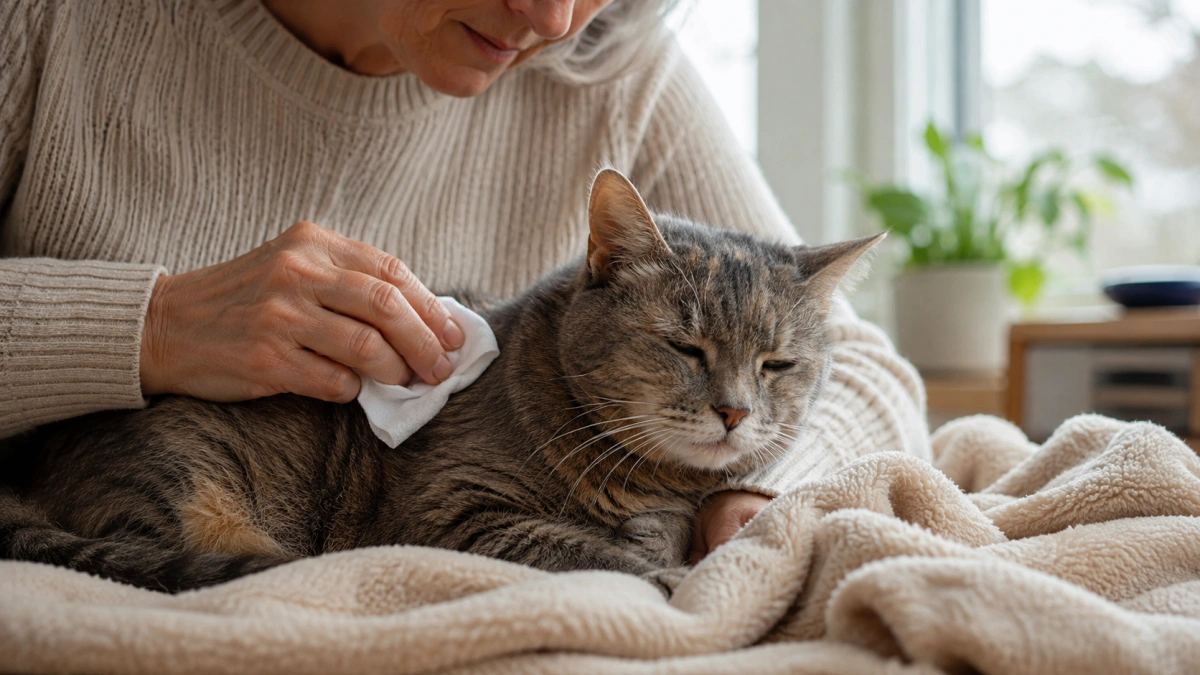
Can Cat Wipes Replace a Bath?
Sometimes they can replace an unnecessary bath, but they cannot replace every bath.
| Problem | Wipe May Be Enough? |
|---|---|
| Small dusty patch | Yes |
| Light paw dirt | Yes |
| Minor food residue | Often |
| Small rear-coat mess | Often |
| Entire coat heavily dirty | Usually no |
| Dense grease or sticky contamination | Usually no |
| Matted coat | No |
| Skin disease | Not without veterinary guidance |
Do Grooming Wipes Remove Loose Cat Hair?
A damp wipe can pick up a small amount of surface loose fur, but it is not a substitute for a brush or comb when shedding is the actual problem.
If your goal is to manage loose coat, use the grooming tool appropriate for that coat type. Use wipes when there is dirt or residue to clean.
Matching the tool to the job prevents one product from becoming an attempted solution for everything.
How Often Can You Use Cat Grooming Wipes?
There is no reason to set a universal daily schedule for a product that may only be needed occasionally.
Use the wipe when there is something to clean and follow the manufacturer’s directions.
If you find yourself wiping the same area every day, investigate why that area repeatedly becomes dirty rather than simply increasing wipe use.
Signs You Should Stop Using a Grooming Wipe
Stop and reassess if you notice:
- Redness after use
- Repeated scratching or licking of the cleaned area
- New skin irritation
- Your cat reacting as though wiping is painful
- A strong residue left on the coat
- The underlying problem becoming worse despite repeated cleaning
Persistent skin or coat changes are better evaluated rather than repeatedly covered with cosmetic cleanup.
When Wipes Are Not the Right Grooming Tool
Grooming wipes work best at the small end of the grooming-problem scale.
They are not designed to fix:
- Tight mats
- Large tangles
- Heavy full-body contamination
- Painful skin
- Open wounds
- Persistent unexplained odor
- A major decline in self-grooming
If the issue has moved beyond a small surface cleanup, change the grooming strategy rather than using more wipes.
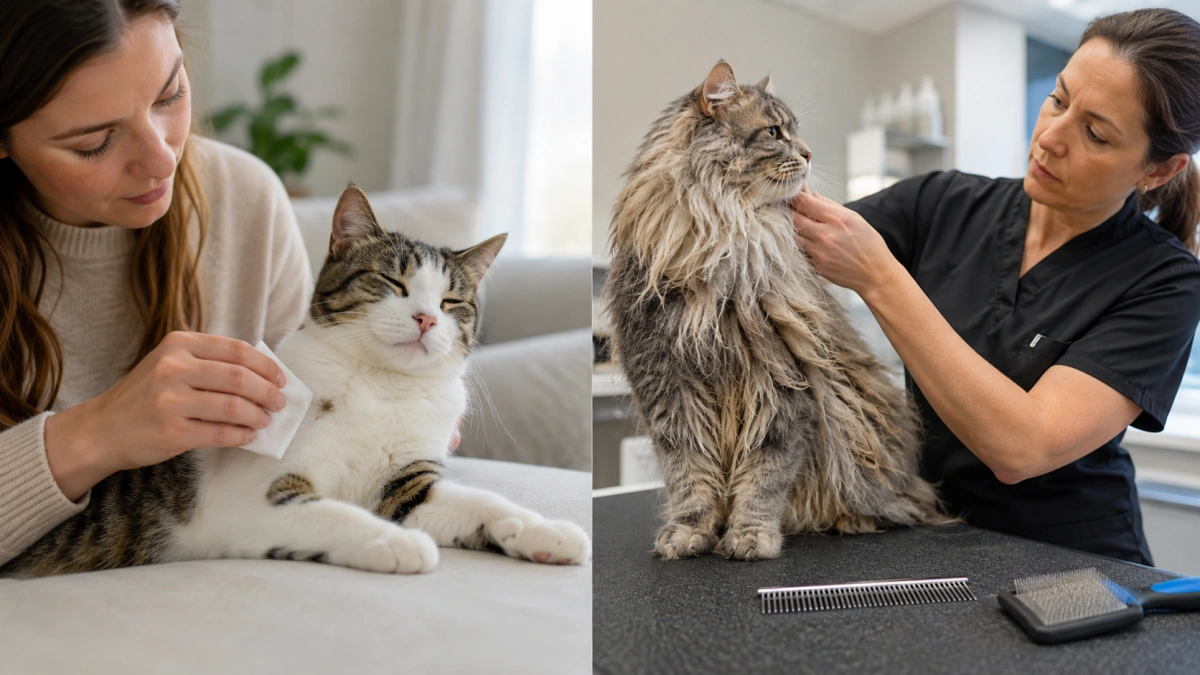
Cat Grooming Wipes Buying Checklist
- Is the product specifically intended for cats or pets?
- What body areas does the label allow?
- Is it meant for routine grooming or a medical purpose?
- Can the product be left on, or does it require rinsing?
- Is a fragrance-free option available?
- Does your cat tolerate the feel and residue?
- Would a damp cloth solve the same minor problem?
Final Thoughts
Cat grooming wipes are useful because they make small cleaning jobs small.
Use them for minor surface dirt, paws, travel messes, or limited coat cleanup when a bath would be unnecessary. Choose a product intended for pets, follow the label, and avoid treating human or household cleaning wipes as interchangeable.
Most importantly, recognize the limit of the product. If you are repeatedly trying to solve matting, skin irritation, major contamination, or declining self-grooming with wipes, the cat needs a different grooming plan—not a larger package of wipes.