By
By 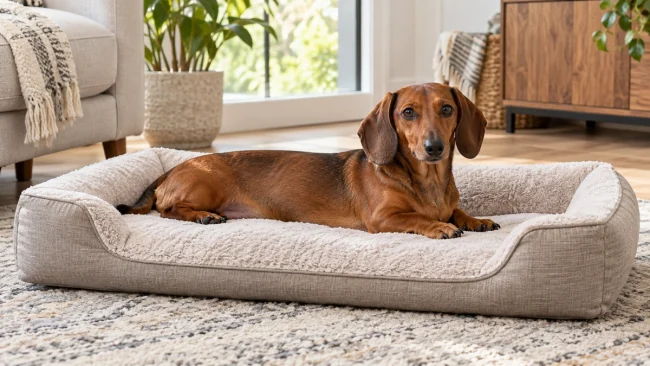
A Dachshund may be a small dog, but its long body and short legs create very different bed requirements from many other breeds of a similar weight.
A round bed that looks large enough based on weight can still be too short when a Dachshund stretches out. A deep bolster may reduce usable sleeping space, while a tall front edge can make a simple bed unnecessarily difficult to enter.
The best dog beds for Dachshunds provide enough length for the dog’s normal sleeping position, a low and easy entrance, stable cushioning, and a shape that matches whether the dog prefers stretching, curling, leaning, or burrowing.
You can also explore our complete Dog Beds topic hub for more guides about sizing, materials, support, cleaning, and different bed styles.
What Makes a Good Dog Bed for a Dachshund?
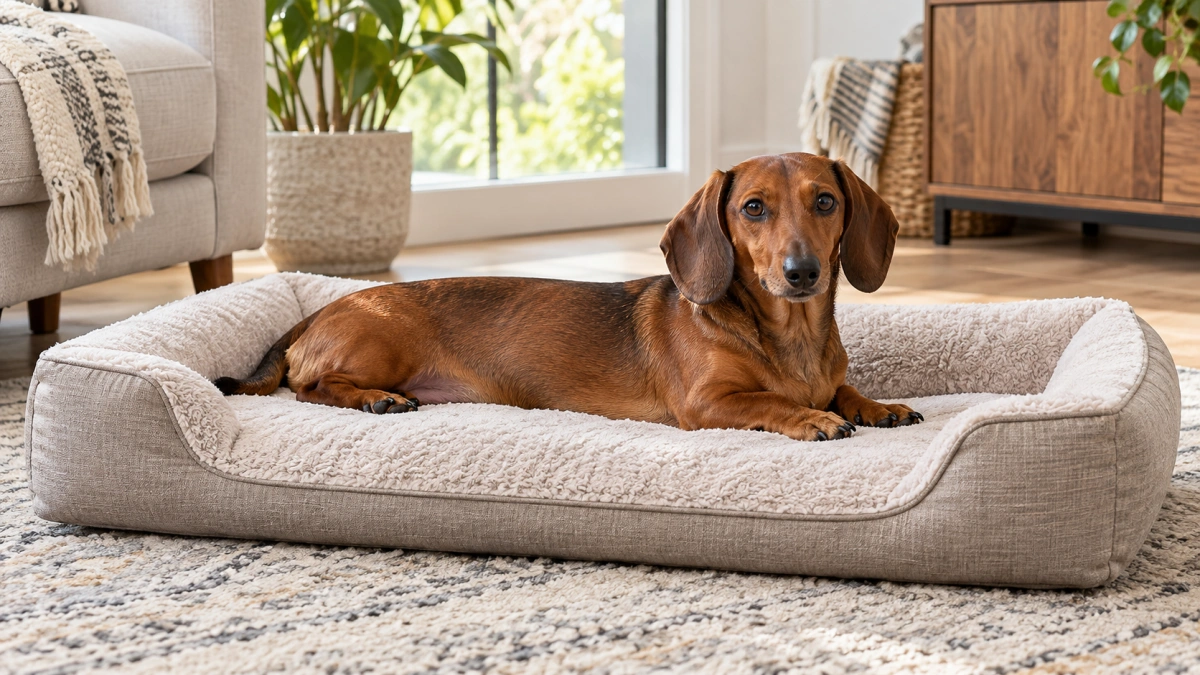
The most useful bed features follow the Dachshund’s actual proportions rather than simply treating the breed as another small dog.
Important factors include:
- Enough length for the entire body
- A low or open entrance
- Stable cushioning under the torso
- Room to change sleeping positions
- A shape that matches the dog’s habits
- A nonslip base
- A removable washable cover
Some Dachshunds also enjoy burrowing beneath blankets or sleeping against padded edges. Those preferences can influence whether a mattress, bolster, cave, or nesting bed works best.
Why Dachshund Body Shape Changes Bed Choice
Dachshunds are built low to the ground with relatively short legs and a noticeably long body.
That combination creates two practical considerations.
First, the bed needs enough horizontal sleeping space. A bed selected only according to body weight may not provide enough length when the dog stretches out.
Second, unnecessary height can make access less convenient. A Dachshund should not need to repeatedly climb over a large padded wall simply to reach its normal resting place.
This does not mean every Dachshund needs exactly the same bed. Individual sleeping position, age, size, temperature preference, and behavior still matter.
What Size Dog Bed Does a Dachshund Need?
There is no universal Dachshund dog bed size.
Standard and miniature Dachshunds differ substantially in body size, and individual dogs within each group can also vary.
The most reliable approach is to measure your own dog and compare that measurement with the actual usable sleeping surface.
| Measurement | Why It Matters |
|---|---|
| Sleeping length | Determines whether the full body fits |
| Sleeping width | Allows side sleeping and repositioning |
| Interior bed length | Shows the true usable sleeping area |
| Entry height | Affects how easily the dog can step in |
| Bolster thickness | Reduces usable interior space |
Do not assume that a Medium bed from one manufacturer is the same size as a Medium from another.
Actual measurements are much more useful than the size label.
How to Measure Your Dachshund for a Bed
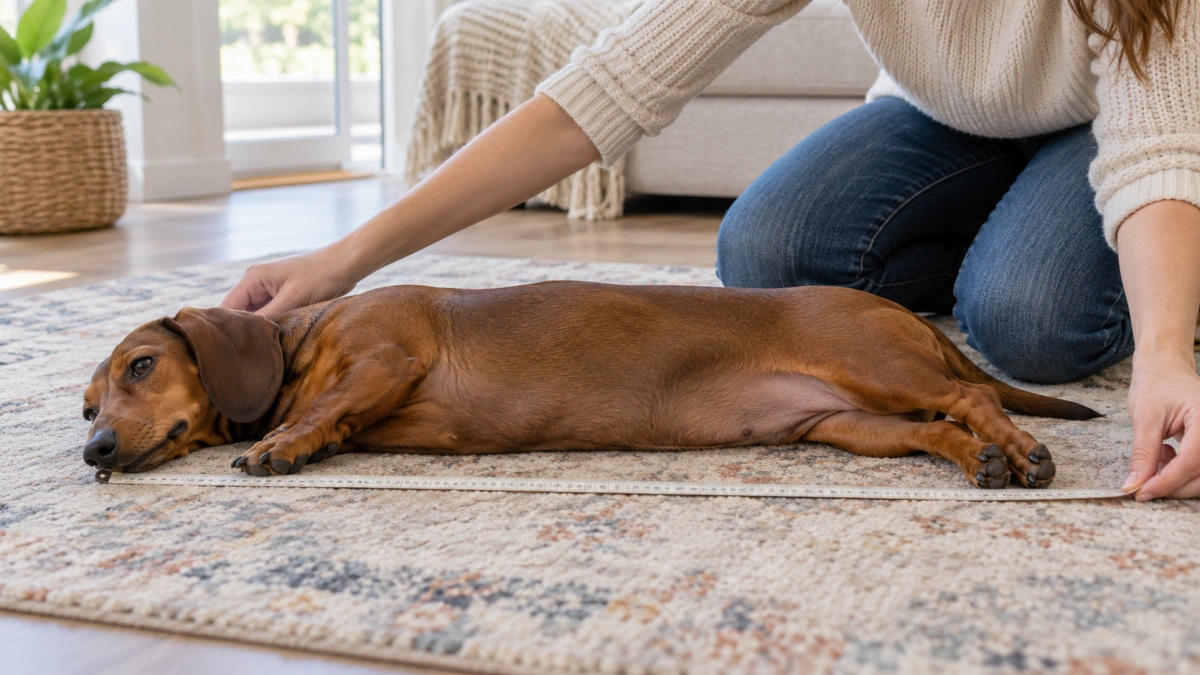
Measure your Dachshund while it is naturally resting rather than while it is standing.
Measure the Longest Sleeping Position
Watch your dog over several naps.
If your Dachshund sometimes stretches completely onto its side, use that longer sleeping position when estimating the amount of bed space required.
Measure the floor space occupied from the front of the sleeping position to the rear, including naturally extended legs when appropriate.
Then allow additional room for turning and repositioning.
Measure the Width
A Dachshund can use considerably more floor space while lying on its side than you might expect from its narrow standing profile.
Make sure the bed provides enough width for the torso and legs without forcing the dog into one position.
Use the Interior Measurement
For a bolster or nest bed, check the interior sleeping area rather than the outside edge.
A thick padded wall on each end can substantially shorten the usable center of the bed.
Why Low Entry Matters
A Dachshund lives much closer to the floor than a taller dog.
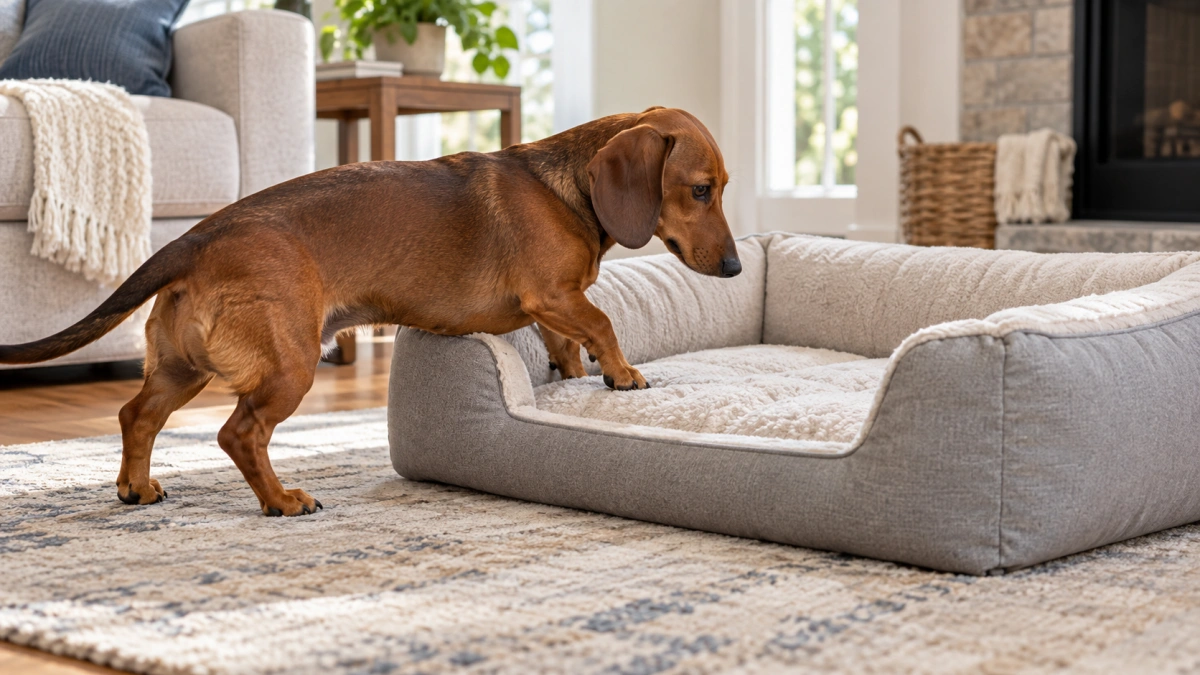
A low front edge makes a bed easier to approach and lets the dog step into the sleeping area rather than climbing over a large bolster.
Useful designs include:
- Flat mattress beds
- Bolster beds with an open front
- Nesting beds with one lowered section
- Cave beds with a broad low opening
The goal is not necessarily to eliminate every raised edge. Many dogs enjoy resting their head against a bolster.
Instead, look for a bed that combines those supportive edges with at least one practical entry point.
Support Matters More Than Plushness
A soft surface can feel comfortable, but softness alone does not tell you how well the bed supports the dog.
A very loose fiber-filled bed may compress unevenly, while an extremely soft foam surface may sink deeply under the body.
Look for a sleeping surface that:
- Supports the torso evenly
- Does not collapse completely to the floor
- Feels stable when the dog steps onto it
- Returns toward its normal shape after use
- Allows the dog to reposition easily
The word “orthopedic” is not enough by itself. Evaluate the construction, thickness, firmness, foam type, and actual behavior of the mattress under your dog’s weight.
Are Orthopedic Beds Good for Dachshunds?
An orthopedic-style bed can be a practical option when it provides a stable, supportive sleeping surface and remains easy to enter.
This may be especially useful for older dogs or dogs that simply prefer a firmer mattress-style surface.
However, no dog bed should be marketed or treated as a way to prevent or cure spinal disease.
If your Dachshund shows back pain, weakness, reluctance to move, an unusual gait, difficulty standing, or another sudden mobility change, contact a veterinarian rather than relying on a change of bedding.
Mattress vs Bolster Beds for Dachshunds
Mattress Beds
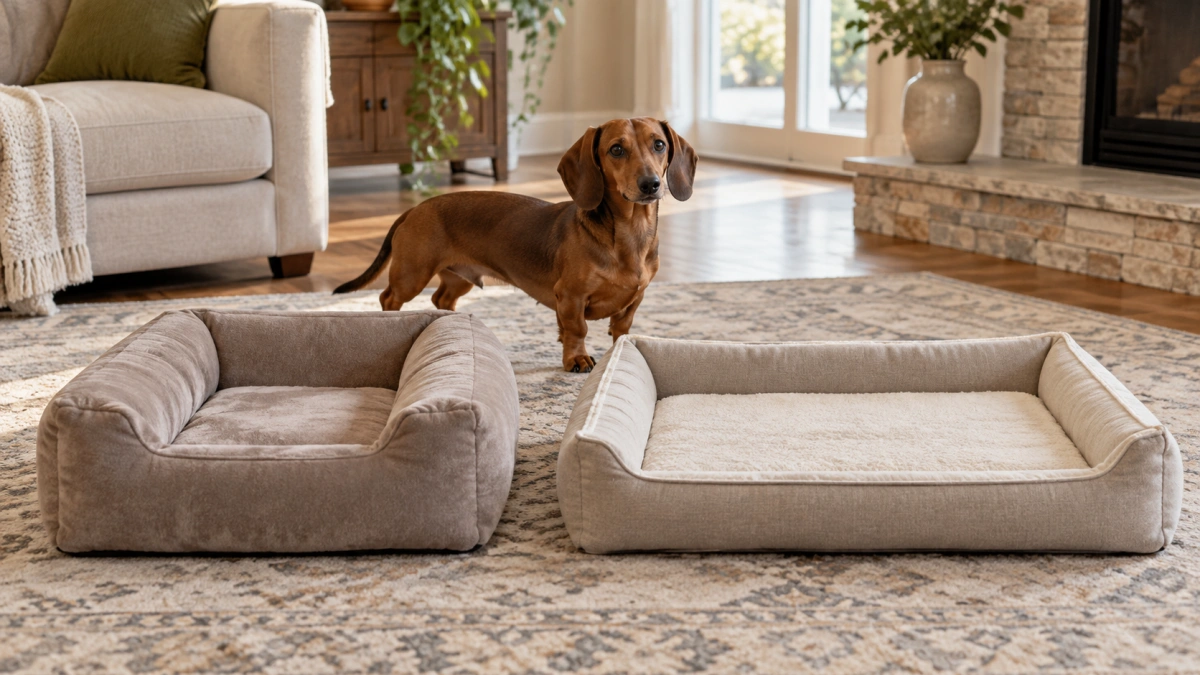
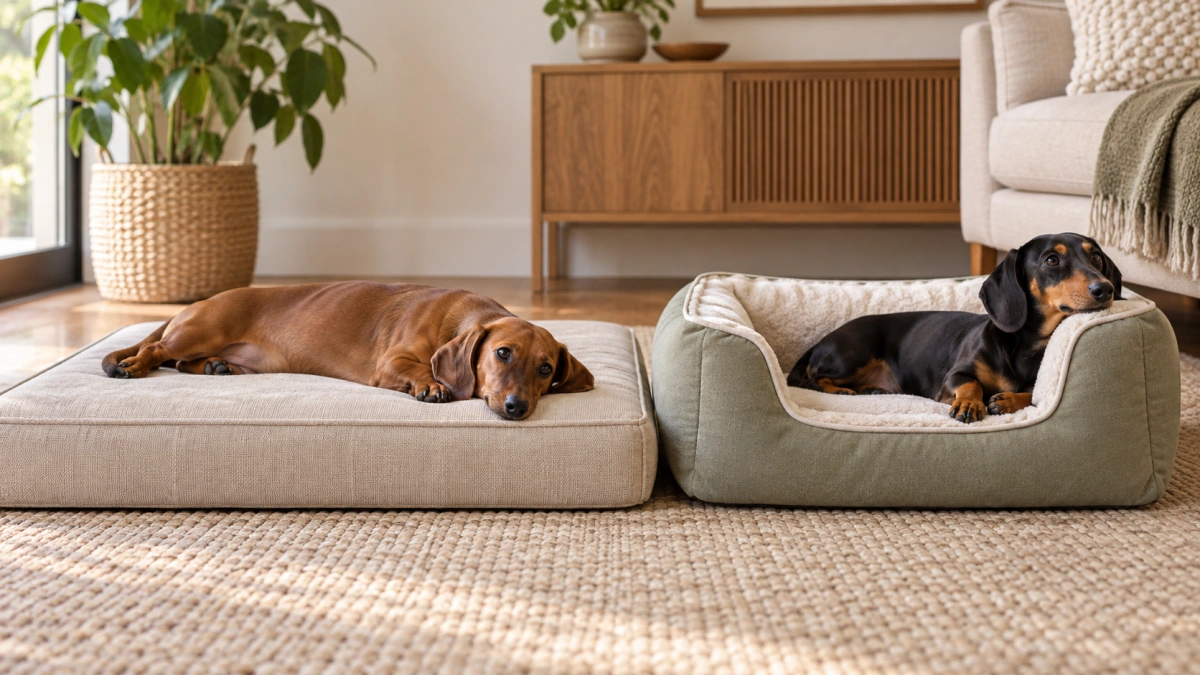
A simple rectangular mattress provides maximum usable sleeping area because there are no thick padded walls taking up space.
It can work well for Dachshunds that:
- Stretch out frequently
- Change positions often
- Prefer easy access from every side
- Do not need a raised edge to lean against
Bolster Beds
Bolster beds place padded edges around part of the sleeping area.
They can work well for Dachshunds that like to:
- Rest their head on an edge
- Sleep pressed against something
- Curl into a corner
- Combine stretching with a supported head position
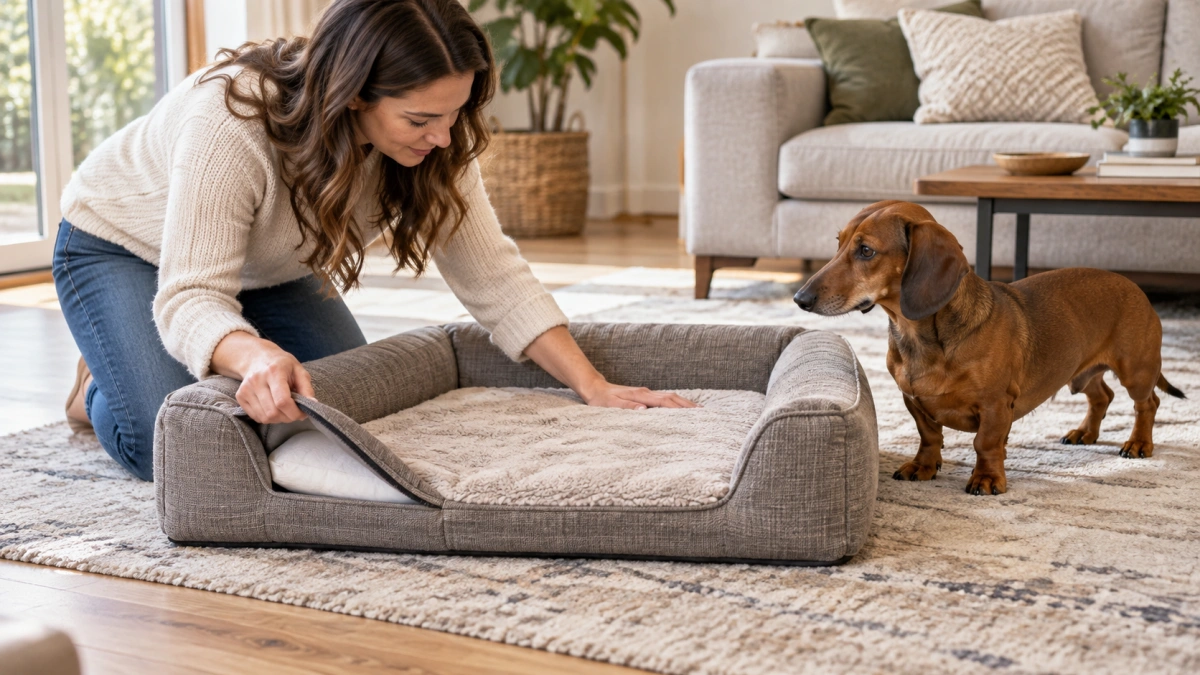
A three-sided bolster with an open or lowered front often provides a useful compromise between easy access and surrounding support.
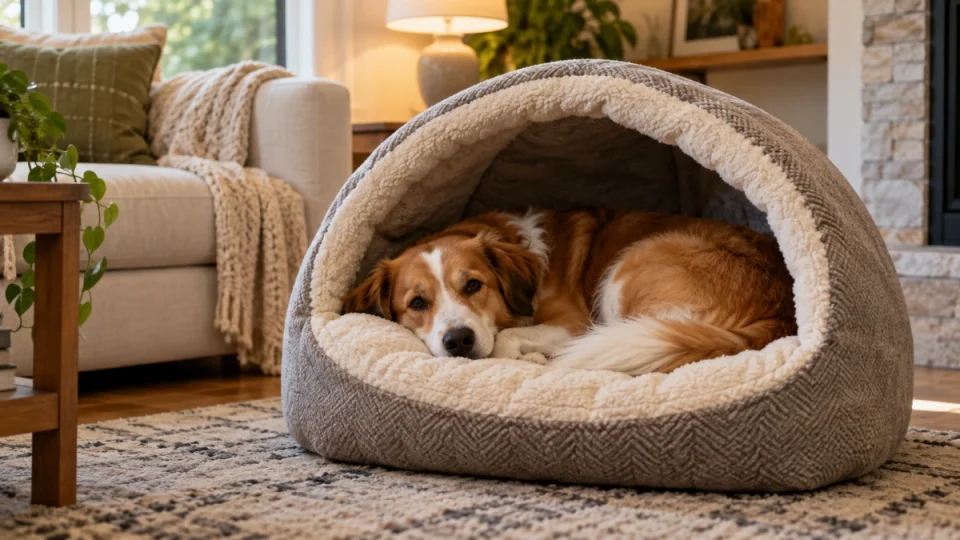
Are Cave and Burrow Beds Good for Dachshunds?
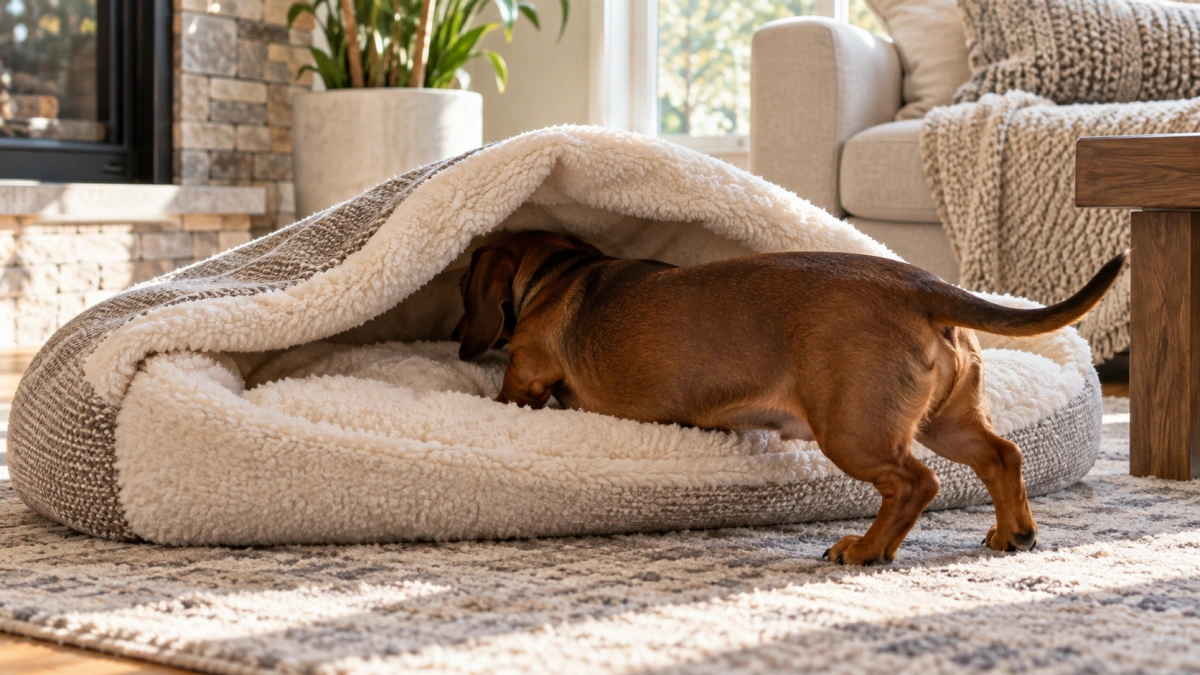
Some Dachshunds naturally push beneath blankets, cushions, or other soft materials when they sleep.
For those dogs, a cave or burrow bed can match an existing preference for covered resting areas.
A good design should still provide:
- Enough length for the body
- A wide accessible opening
- Room to reposition
- Reasonable airflow
- A washable cover
Do not choose a very small cave simply because it looks cozy.
Your dog should still be able to enter, turn, lie normally, and leave without squeezing through a tight opening.
For a complete explanation of enclosed bed styles, see our guide to covered and cave dog beds.
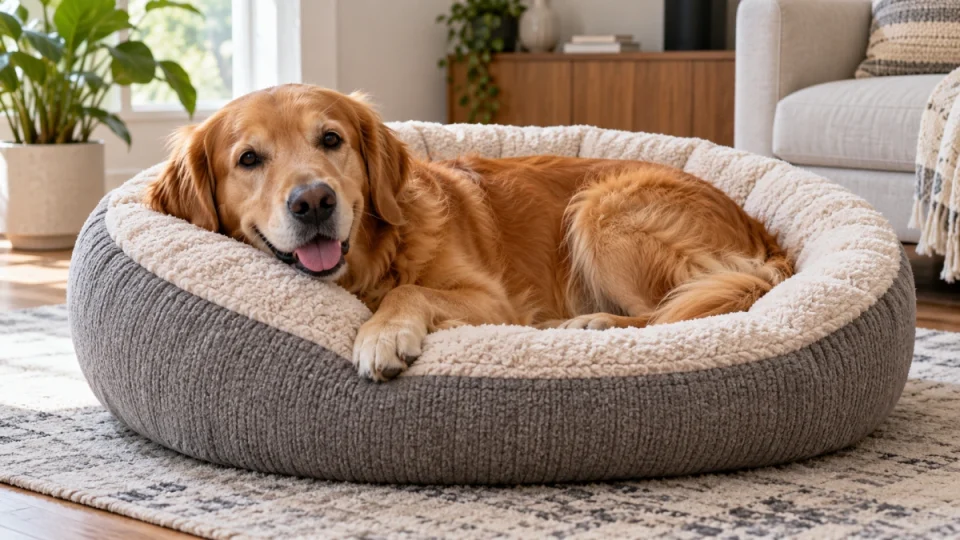
What About Donut Beds?
Donut beds can work for Dachshunds that naturally curl into a compact sleeping position.
However, a round shape is not automatically ideal simply because the dog is small.
A Dachshund that frequently stretches its long body may have less useful space in a circular bed than in a similarly sized rectangular one.
Watch how your dog sleeps before choosing the shape.
Dog Beds for Senior Dachshunds
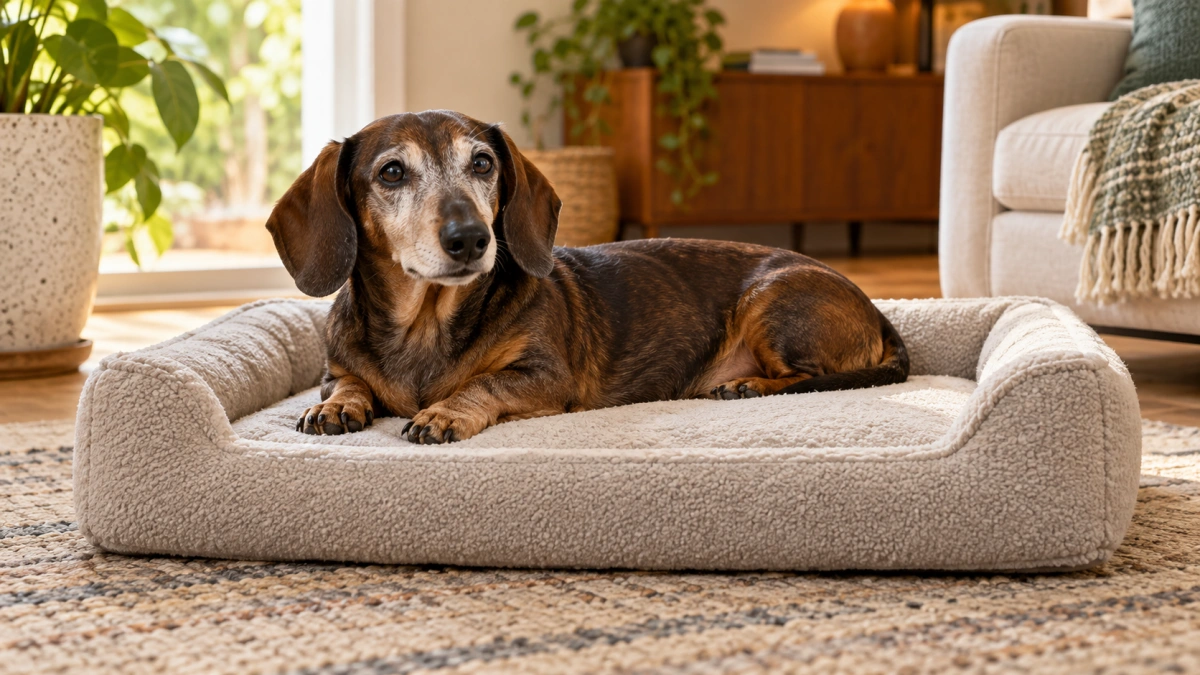
For an older Dachshund, easy access becomes particularly important.
A practical senior bed usually has:
- A low front entry
- A stable supportive surface
- Enough length for natural positioning
- A nonslip bottom
- A removable washable cover
- Waterproof or moisture-resistant protection when useful
Avoid assuming that an extremely soft bed is automatically more comfortable for an older dog.
A deeply sinking surface can be harder to move across than a stable mattress.
Dog Beds for Dachshund Puppies
A Dachshund puppy needs a bed that is easy to clean and appropriate for a growing body.
Consider:
- Expected adult size
- Current house-training stage
- Chewing habits
- Washable cover construction
- Low entry height
A puppy may quickly outgrow a very small bed, especially if the bed was selected only from current body weight.
If your puppy chews fabric or foam, inspect the bed regularly and remove damaged material that could be swallowed.
Miniature vs Standard Dachshund Beds
Miniature and standard Dachshunds should not automatically receive the same bed size.
A miniature may fit comfortably on a smaller mattress, but the characteristic long-body shape still means length matters.
A standard Dachshund may require considerably more sleeping area even though the dog is not tall.
In both cases, use the same process:
- Measure the dog while sleeping
- Check usable interior dimensions
- Allow repositioning room
- Check entry height
Breed labels are useful starting points, not final measurements.
Choose the Bed Based on Sleeping Style
| Sleeping Habit | Bed Style to Consider |
|---|---|
| Stretches full body | Long rectangular mattress |
| Rests head on an edge | Low-entry bolster bed |
| Curls tightly | Nest or donut bed |
| Burrows under blankets | Covered or cave bed |
| Changes positions often | Open mattress bed |
| Needs very easy access | Low-profile mattress |
Washability and Waterproof Protection
A removable cover makes routine cleaning much easier.
Look for:
- A zippered removable cover
- Machine-washable fabric
- A separate mattress insert
- A protective inner liner
- A surface that is easy to vacuum
Waterproof or moisture-resistant protection can be particularly useful for puppies, older dogs, or any bed likely to encounter accidents or damp fur.
Check exactly what the manufacturer means by “washable.” In some beds, only the exterior cover can go into the washing machine.
Nonslip Bases Matter on Hard Floors
A dog bed that slides every time a short-legged dog steps onto it can be inconvenient and unstable.
If the bed will sit on hardwood, laminate, or tile, look for a nonslip bottom or place it on a secure nonslip surface.
The bed should stay reasonably stable while your Dachshund enters, turns, lies down, and stands up.
Where Should You Put a Dachshund Bed?
Place the bed somewhere your dog already likes to rest whenever possible.
Useful locations are typically:
- Quiet but not isolated
- Away from constant foot traffic
- Free from strong drafts
- On a level surface
- Easy to approach without obstacles
Avoid creating a situation where the dog has to climb onto furniture or navigate another high surface just to reach its normal bed.
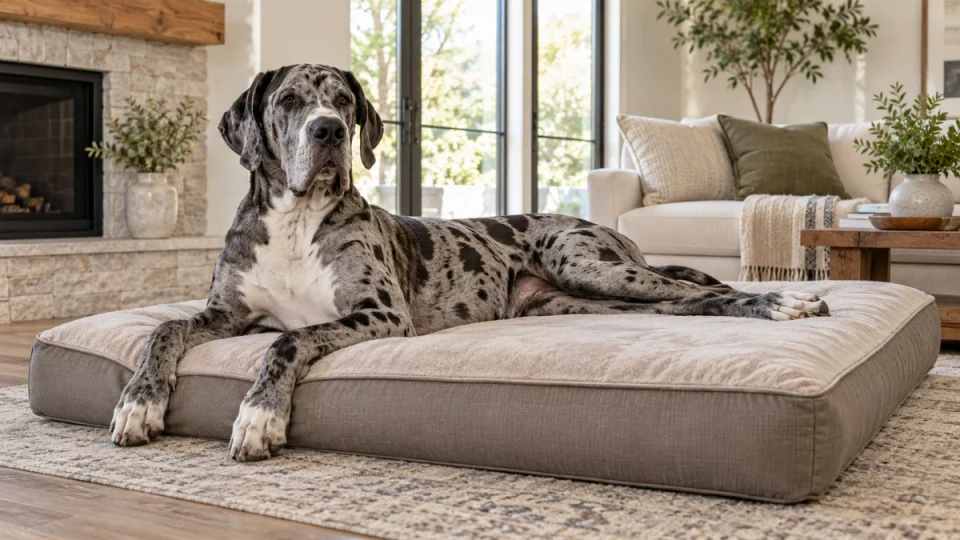
Dachshund Beds vs Great Dane Beds
Breed-specific bed selection becomes clearer when you compare two very different body types.
A Great Dane needs enormous usable space and support beneath a very heavy body. A Dachshund needs far less overall floor space but benefits from careful attention to body length and easy low access.
Our guide to dog beds for Great Danes explains how these priorities change for giant breeds.
In both cases, the principle is the same: choose according to actual body proportions and sleeping habits instead of relying only on generic Small, Large, XL, or XXL labels.
Common Dachshund Dog Bed Buying Mistakes
- Choosing only according to body weight
- Ignoring the dog’s long sleeping length
- Using exterior dimensions as usable dimensions
- Buying a bolster with no easy entrance
- Choosing a bed that is too short for stretching
- Assuming every Dachshund wants a cave bed
- Assuming every soft bed provides good support
- Ignoring whether the bottom slides
- Buying a cover that is difficult to remove
- Expecting a dog bed to treat back problems
When Should You Replace a Dachshund’s Bed?
Check the bed regularly for changes in support and condition.
Replacement may be appropriate when:
- The mattress stays permanently flattened
- The dog regularly hangs off the sleeping area
- The puppy has outgrown the bed
- The cover or seams are badly damaged
- The inner filling has become contaminated
- The entrance has collapsed or become difficult to use
Some beds allow the cover or mattress insert to be replaced separately, which can extend the useful life of the overall bed.
Dachshund Dog Bed Buying Checklist
- Did I measure my dog while sleeping?
- Is the usable area long enough?
- Can my Dachshund stretch out fully?
- Are the interior measurements listed?
- Is the front entry low enough?
- Does the surface feel stable?
- Does the shape match my dog’s sleep style?
- Does my dog prefer open or covered beds?
- Will the bed stay stable on the floor?
- Is the cover removable?
- Is the cover machine washable?
- Is the inner mattress protected?
Final Thoughts
The best dog bed for a Dachshund should fit the dog’s proportions rather than simply its weight category.
Prioritize enough usable length for the long body, a low and practical entrance, a stable sleeping surface, and a shape that matches how your Dachshund naturally sleeps.
A rectangular mattress offers maximum stretching space. A low-entry bolster can provide a place to lean without creating a high obstacle. A cave or burrow bed may suit dogs that already enjoy sleeping beneath blankets.
Measure your own dog, compare real interior dimensions, and choose according to actual sleeping behavior. Those details are more useful than any Small, Medium, or breed-specific label printed on the product.