By
By 
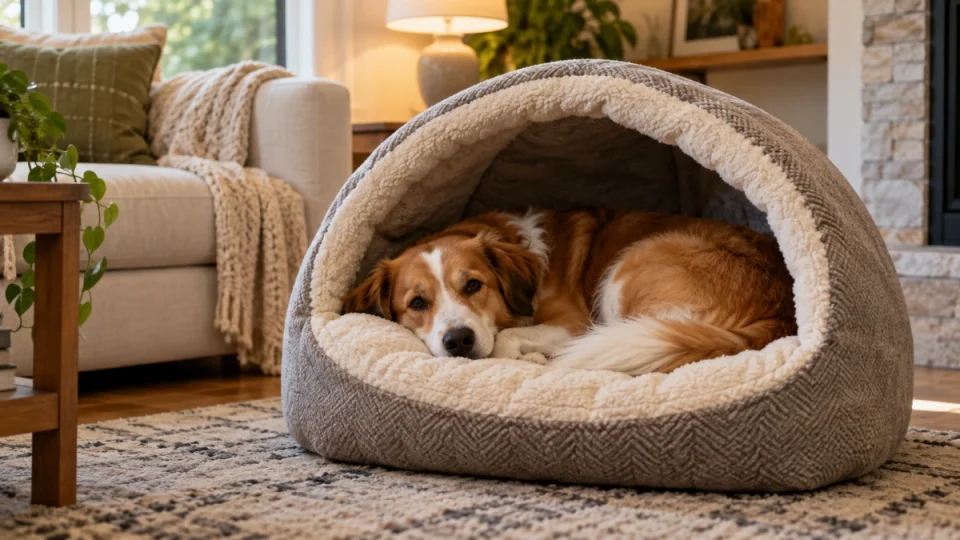
Calming dog beds are usually soft, nest-like beds designed to create a comfortable and clearly defined resting space. Many use a donut shape, raised padded sides, deep cushioning, or plush fabrics that appeal to dogs that like to curl up, lean against an edge, or burrow into bedding.
However, “calming” is not a standardized dog bed technology, and a product labeled calming or anti-anxiety should not automatically be treated as a solution for canine anxiety. The bed may provide comfort and become part of a familiar relaxation routine, but whether your dog actually prefers it depends on sleeping style, size, temperature preference, support, and how the bed is introduced.
Before choosing one, look beyond marketing claims. Check the usable sleeping area, raised rim, center support, fabric warmth, washability, and whether your dog voluntarily chooses this type of sleeping environment.
You can also explore our complete Dog Beds hub for more guides about dog bed shapes, sizing, support, materials, and comfort features.

What Is a Calming Dog Bed?
A calming dog bed is generally a marketing category rather than one specific construction standard.
Products sold under this name often include features such as:
- A round or donut-shaped sleeping area
- Raised padded rims
- Deep center cushioning
- Soft faux-fur or plush fabric
- Bolstered sides
- Nest-like or partially enclosed shapes
These features can make the bed feel soft, defined, and comfortable for dogs that naturally prefer curling, leaning, or nesting.
What the label does not tell you is whether the bed will actually make your individual dog calmer.
That depends on your dog’s behavior, sleeping habits, environment, and the reason it may be showing signs of stress in the first place.
What Makes a Dog Bed “Calming”?
There is no single material, foam type, or bed shape that officially defines a calming dog bed.
Manufacturers usually apply the term to beds that combine soft materials with a more enclosed or supportive shape.
Common characteristics include:
- A padded border your dog can lean against
- A center that encourages curling
- A plush surface that feels warm and soft
- A clearly defined sleeping area
- A deeper nest-like design
These features may be comfortable, but comfort and anxiety treatment are different things.
A dog can enjoy a soft donut bed without having anxiety, and a dog with anxiety may prefer a completely different sleeping surface.
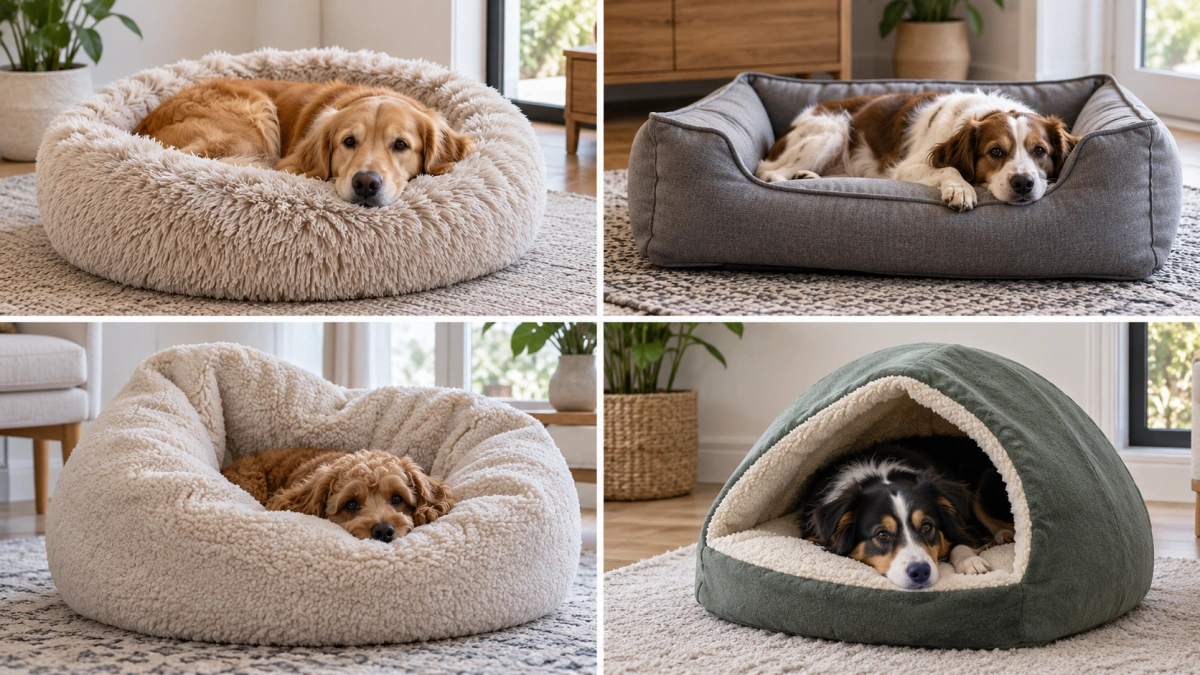
Common Calming Dog Bed Styles
Calming dog beds come in several shapes, and the word “calming” may appear on products that look very different from one another.
| Bed Style | Main Feature | Common Sleeping Preference |
|---|---|---|
| Donut bed | Continuous raised circular rim | Dogs that curl and lean against an edge |
| Bolster bed | Raised sides around an open center | Dogs that like head support with more open space |
| Nest bed | Deep soft center with surrounding padding | Dogs that settle into a recessed area |
| Covered or cave bed | Fabric roof or hood | Dogs that prefer burrowing or enclosed spaces |
The right style depends more on what your dog naturally chooses than on which product uses the strongest calming language.
Why Some Dogs Prefer Raised Rims and Nest Shapes
Raised rims create a clear boundary around the sleeping area and provide a padded surface your dog can lean against or use as a headrest.
This can suit dogs that frequently:
- Sleep curled into a compact shape
- Press their back against furniture or cushions
- Rest their head on an elevated edge
- Choose corners or enclosed sleeping areas
A nest-like center can also make it easier for a dog to settle into one defined spot.
That does not mean the rim itself treats anxiety. It simply creates a particular sleeping environment that some dogs may prefer.

Calming Dog Bed vs Regular Donut Bed
The physical difference between a calming donut bed and a regular donut dog bed may be very small.
Both commonly use:
- A round outer shape
- A continuous raised rim
- A recessed center
- Soft filling
The main difference is often how the product is marketed.
A bed sold as calming may emphasize plush fabric, nesting, warmth, or anxiety-related language, while another nearly identical bed may simply be sold as a donut or round dog bed.
For that reason, evaluate the actual construction instead of assuming a calming label means the bed contains a special anxiety-reducing feature.
Do Anti-Anxiety Dog Beds Really Work?
A soft bed can provide a comfortable and predictable resting place, but an anti-anxiety label does not mean the bed has been proven to treat canine anxiety by itself.
A dog’s anxiety may be related to many different situations, including separation, noise, unfamiliar environments, changes in routine, or other behavioral and medical factors.
A bed may still play a useful supporting role by giving your dog a consistent place to rest, especially when that location is associated with quiet, positive experiences.
The more accurate way to think about a calming bed is:
It can be part of a comfortable environment, but it is not a standalone treatment for anxiety.
If your dog shows persistent or severe anxiety-related behavior, focus on identifying the cause rather than relying on a product label.
Can a Dog Bed Help With Separation Anxiety?
A comfortable bed can be part of your dog’s normal resting routine, but it does not treat separation anxiety by itself.
Separation-related distress can involve behaviors such as:
- Persistent barking or howling after you leave
- Repeated pacing
- Heavy panting or drooling
- Destructive behavior linked to your absence
- House-soiling during separation
- Escape attempts
If these behaviors are frequent or intense, the problem is broader than choosing the right dog bed.
The bed may still be used as a familiar resting place within a wider management and training plan, but it should not be presented as a cure for separation anxiety.
If your dog regularly becomes highly distressed when left alone, discuss the behavior with your veterinarian. More complex cases may also benefit from qualified behavioral support.
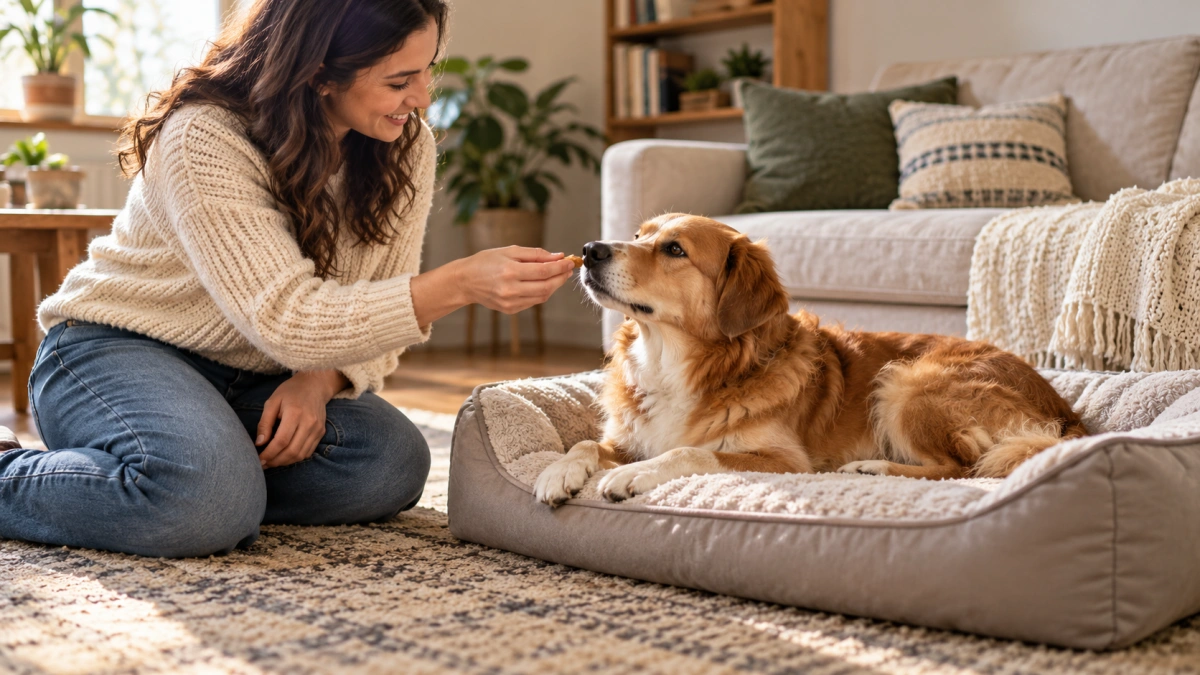
Use the Bed as a Positive Relaxation Place
The way you introduce the bed can matter as much as its shape.
Instead of placing your dog in the bed and expecting it to relax automatically, allow voluntary exploration.
A simple approach is:
- Place the bed in a quiet area your dog already uses.
- Let your dog investigate it without pressure.
- Reward voluntary interaction with calm praise or a small treat.
- Offer familiar toys or another safe activity nearby.
- Continue rewarding calm resting on the bed.
Over time, the bed can become associated with predictable, positive resting experiences.
Avoid forcing your dog to remain in the bed. A useful relaxation area should remain somewhere your dog willingly chooses to use.
Match the Bed to Your Dog’s Sleeping Style
A calming label should not override the most basic dog bed question: how does your dog actually sleep?
If Your Dog Curls Up
A donut or nest-style bed may fit well because the center supports a compact sleeping position and the rim provides something to lean against.
If Your Dog Stretches Out
A deep donut bed can feel restrictive if the center is too small. An open pillow bed or rectangular bolster bed may provide more usable length.
If Your Dog Burrows
A covered or cave-style bed may better match that behavior than an open donut bed.
If Your Dog Sleeps Hot
A thick faux-fur bed may be less appealing than a smoother or more breathable sleeping surface.
Your dog’s existing preferences are often more useful than marketing terms when deciding which shape to buy.
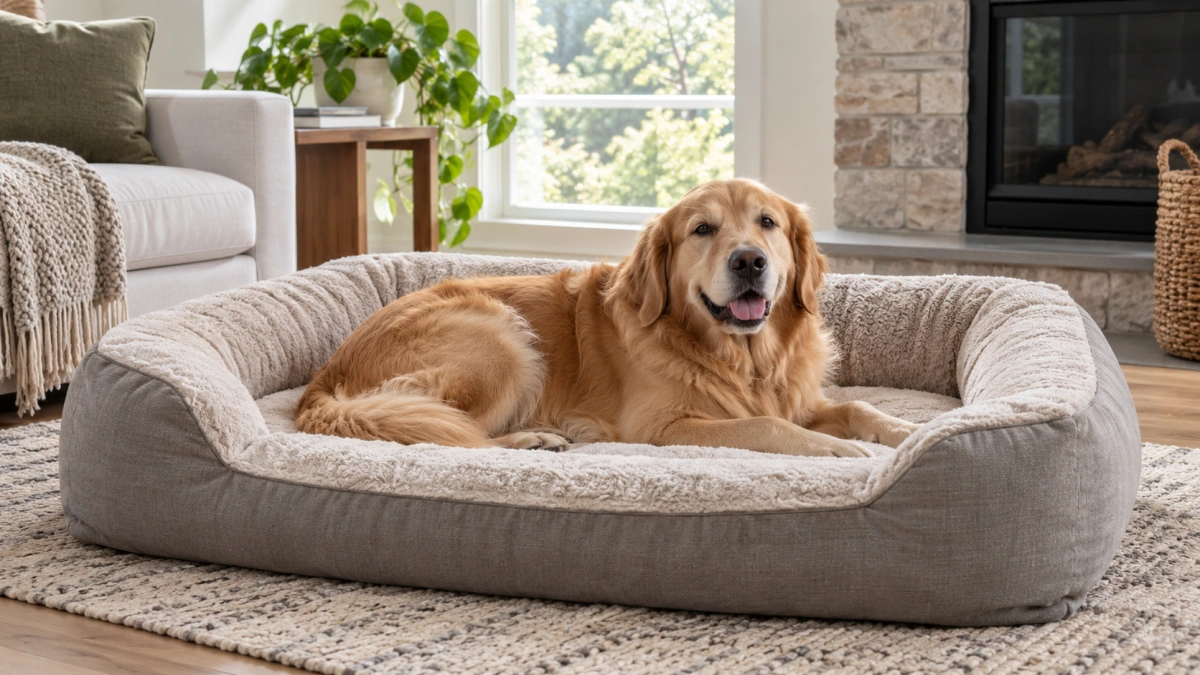
Calming Dog Beds for Large Dogs
Large calming dog beds can look enormous from the outside while providing a much smaller usable center area.
For large dogs, check:
- Usable center length and width
- Outer rim thickness
- Center cushion depth
- How much filling compresses under weight
- Whether the dog can change positions easily
- Whether the cover can be removed for cleaning
A thick raised rim uses part of the bed’s total footprint, so do not choose only by outer dimensions or an XL label.
If your dog sometimes stretches as well as curls, leave enough interior room for both positions.
Check the Center Support, Not Just the Fluff
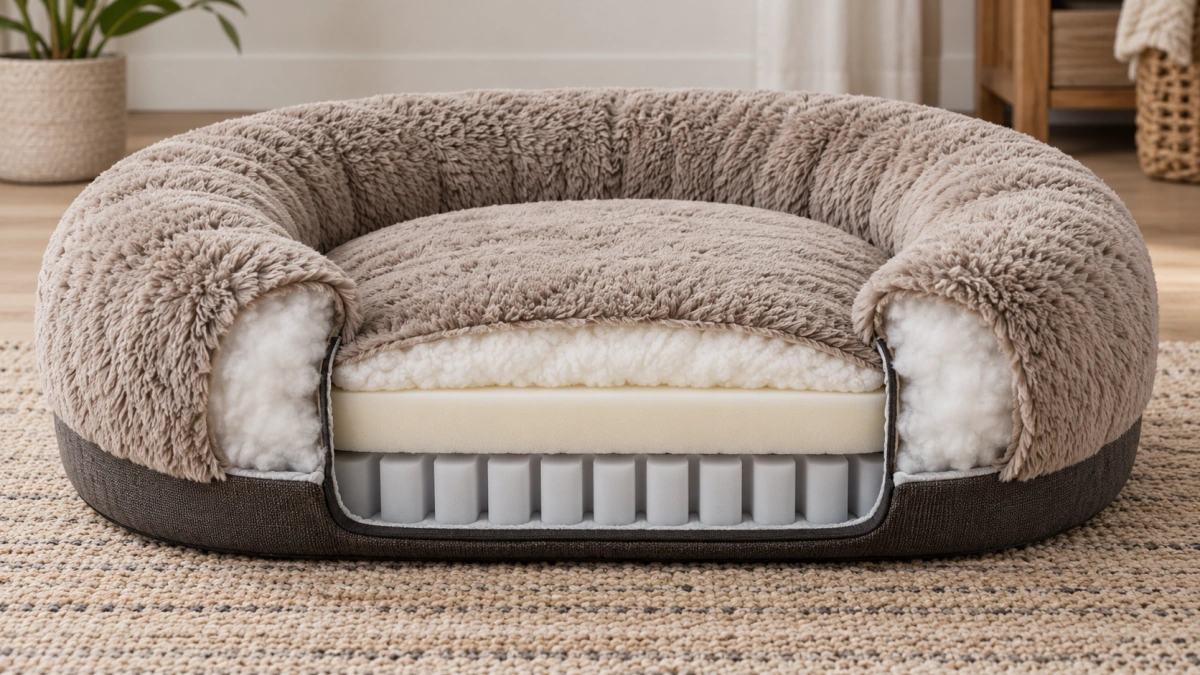
Many calming dog beds are photographed with very fluffy rims and deep plush fabric, but those features do not tell you how supportive the center is.
Check:
- Center cushion thickness
- Whether the center uses fiber or foam
- How much it compresses under your dog’s weight
- Whether the fill shifts toward the edges
- Whether the dog can feel the floor through the center
A bed can look deep while still flattening substantially once a large dog lies down.
If your dog needs structured support, look at the internal mattress construction rather than assuming that a fluffy appearance provides orthopedic-style support.
Calming Beds vs Orthopedic Dog Beds
Calming and orthopedic describe different priorities.
| Bed Type | Main Emphasis |
|---|---|
| Calming-style bed | Shape, nesting, raised rims, soft surface |
| Orthopedic bed | Mattress construction, foam support, compression control |
One bed can include both types of features, such as a supportive foam base with padded raised sides.
But a shaggy donut bed should not automatically be described as orthopedic simply because it looks thick and soft.
Plushness, Warmth and Temperature
Many calming beds use shag, faux fur, fleece, or other thick fabrics that create a warm sleeping surface.
That may suit a dog that:
- Seeks blankets
- Curls tightly
- Chooses warm sleeping spots
- Likes plush surfaces
However, some dogs regularly leave soft beds to sleep on tile, hardwood, or another cooler surface.
For those dogs, extra plushness may be uncomfortable in warm weather.
Do not assume that more fluff automatically means more comfort. Consider your dog’s temperature preference and the climate in your home.
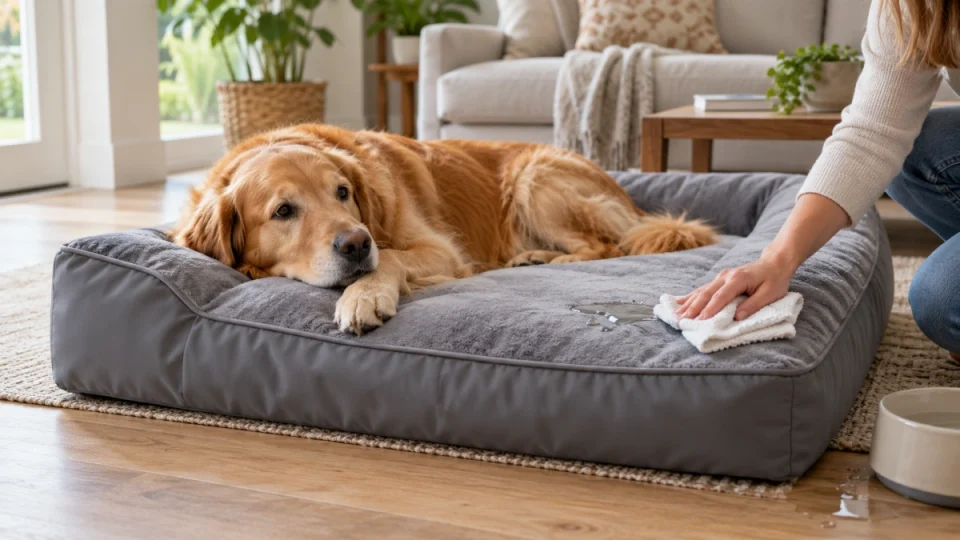
Cleaning and Shape Retention
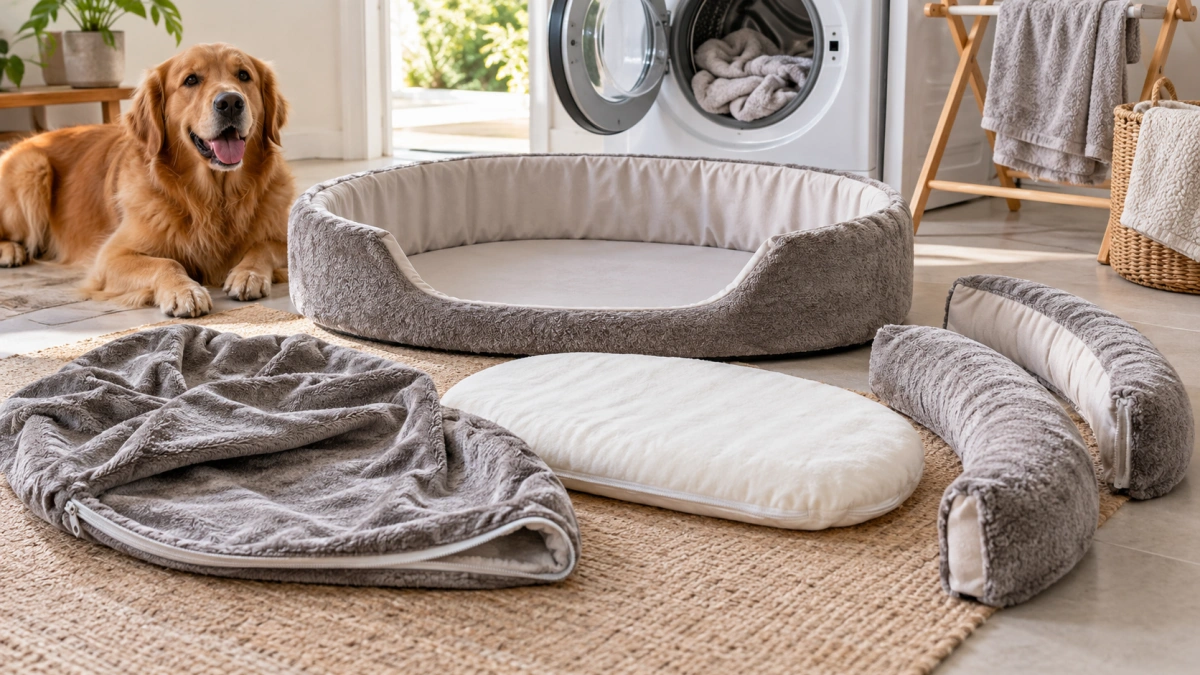
Calming beds can be difficult to clean because many combine long plush fabric, large padded rims, and loose filling.
For easier maintenance, look for:
- A removable outer cover
- Separate center and rim inserts
- Machine-washable approved components
- Clear drying instructions
- Replaceable covers or inserts
A large one-piece donut bed may be difficult to fit into a household washing machine.
Repeated washing can also affect loose filling, so check whether the bed can be reshaped or refluffed after cleaning.
For large dogs or frequent washing, removable components are especially useful.
What if Your Dog Chews or Destroys Beds?
A plush calming bed may not be appropriate for a dog that regularly tears fabric, removes stuffing, or chews zippers.
Pay attention if your dog:
- Pulls out filling
- Eats pieces of fabric
- Chews seams
- Digs aggressively into bedding
In that situation, prioritize material safety and durability rather than choosing the fluffiest calming design.
No soft bed should be assumed to be chew-proof simply because it is marketed for anxious dogs.
If your dog destroys bedding specifically during periods of distress, the destructive behavior itself may also be worth discussing with a veterinarian or qualified behavior professional.
Where Should You Put a Calming Dog Bed?
Placement can influence whether your dog actually uses the bed.
A practical location is usually:
- Quiet enough for resting
- Away from constant household traffic
- Comfortable in temperature
- Easy for your dog to enter and leave
- Near an area your dog already chooses for sleep
Do not automatically hide the bed in a distant room if your dog prefers resting near family members.
Likewise, a bed placed in the middle of a busy walkway may be less appealing even if the bed itself is very soft.
Use your dog’s normal resting choices as a guide.
Calming Beds vs Covered and Cave Dog Beds
Calming beds and cave beds can overlap, but they create different sleeping environments.
| Style | Sleeping Environment |
|---|---|
| Donut calming bed | Open top with surrounding raised rim |
| Bolster calming bed | Open center with padded sides |
| Cave dog bed | Partially or fully covered sleeping area |
If your dog prefers to burrow under fabric or sleep beneath a hood rather than simply lean against a raised rim, our guide to cozy cave dog beds explains enclosed designs separately.
When a Calming Bed Is Not Enough
A dog bed is a comfort product. Persistent anxiety is a behavioral or medical concern that may require a broader approach.
A bed alone is unlikely to be enough if your dog repeatedly experiences:
- Panic when left alone
- Repeated escape attempts
- Severe destructive behavior
- Persistent pacing or inability to settle
- Heavy panting or drooling linked to distress
- Extreme fear during common noises or events
In these situations, start with your veterinarian to help rule out medical contributors and discuss the next steps.
Behavior management, environmental changes, gradual training, and professional behavioral support may be more important than changing the bed itself.
Calming Dog Bed Buying Checklist
Before choosing a calming dog bed, evaluate the physical bed separately from the anxiety-related marketing.
- Watch how your dog normally sleeps
- Decide whether your dog prefers curling, stretching, or burrowing
- Check the usable sleeping area
- Compare raised rim height and thickness
- Check center cushion support
- Consider how much the fill may compress
- Choose fabric based on your dog’s temperature preference
- Look for removable washable components
- Check whether the bed retains its shape after cleaning
- Consider durability if your dog digs or chews
- Place the bed where your dog already feels comfortable resting
- Build positive associations rather than forcing use
- Do not assume “anti-anxiety” means clinically proven treatment
- Seek veterinary or behavioral guidance for persistent severe anxiety
Final Thoughts
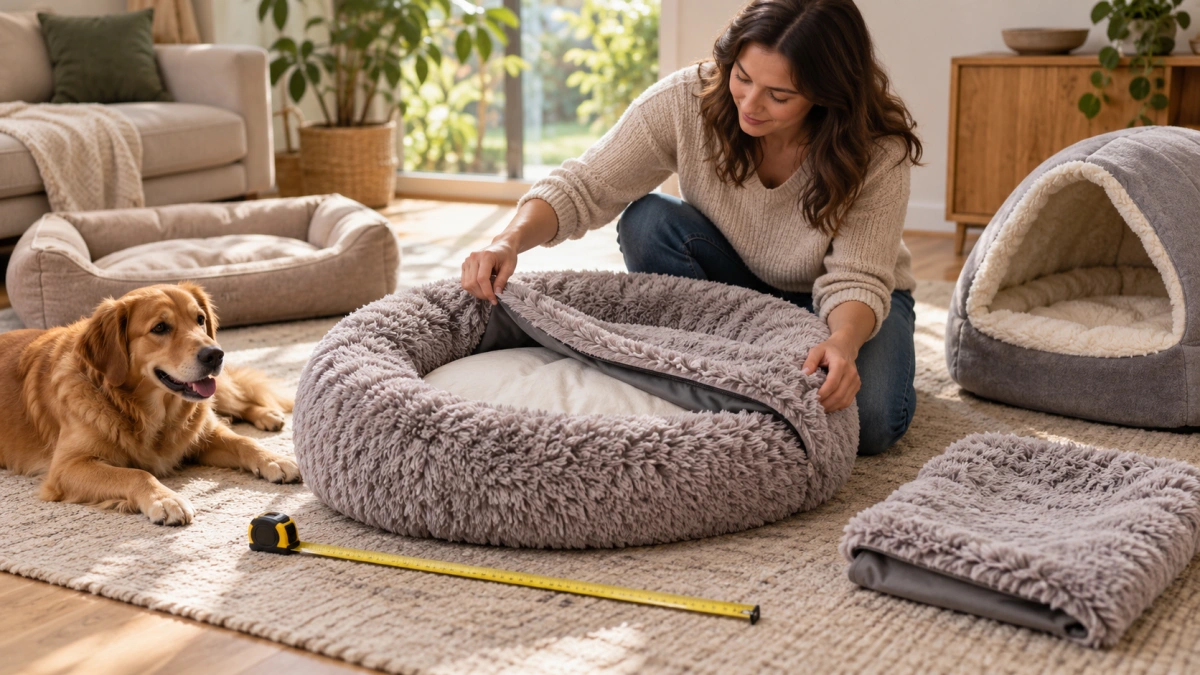
Calming dog beds can provide a soft, defined resting space, especially for dogs that naturally enjoy curling up, leaning against padded edges, or settling into nest-like bedding.
The most useful way to choose one is to ignore exaggerated anxiety claims and focus on the actual bed: sleeping shape, usable size, center support, fabric warmth, washability, and your dog’s preference.
A comfortable bed can also become a positive relaxation place when your dog is allowed to use it voluntarily and develops a predictable association with resting there.
But comfort, preference, and anxiety treatment are not the same thing. If your dog experiences persistent or severe distress, use the bed as one part of a supportive environment rather than expecting it to replace appropriate behavioral or veterinary care.