By
By 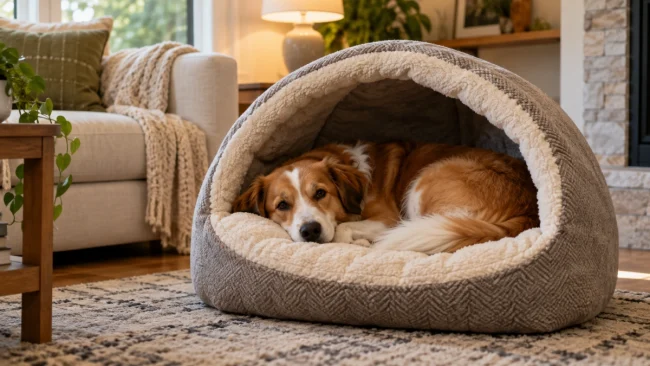
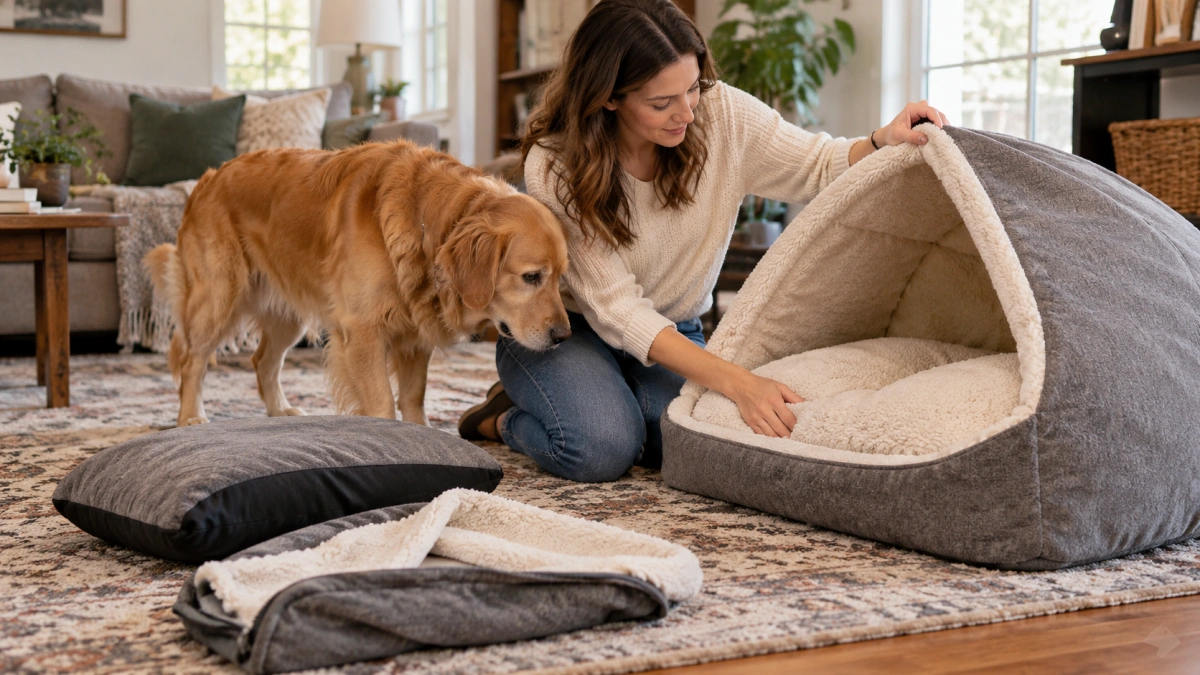
Covered and cave dog beds create a more sheltered sleeping space than a standard flat mattress or open bolster bed. Some use a soft hood that covers part of the sleeping area, while others create a deeper enclosed space with a defined entrance.
These designs can work especially well for dogs that already like to burrow under blankets, curl into corners, or sleep with something above or around them. Other dogs prefer open beds with more airflow and visibility, so an enclosed design is not automatically the better choice.
The most useful way to choose one is to watch how your dog already sleeps, then compare usable interior space, entrance size, hood structure, warmth, cleaning requirements, and overall access.
For more guides about sizing, materials, construction, and different sleep styles, visit our Dog Beds topic hub.
What Is a Covered Dog Bed?
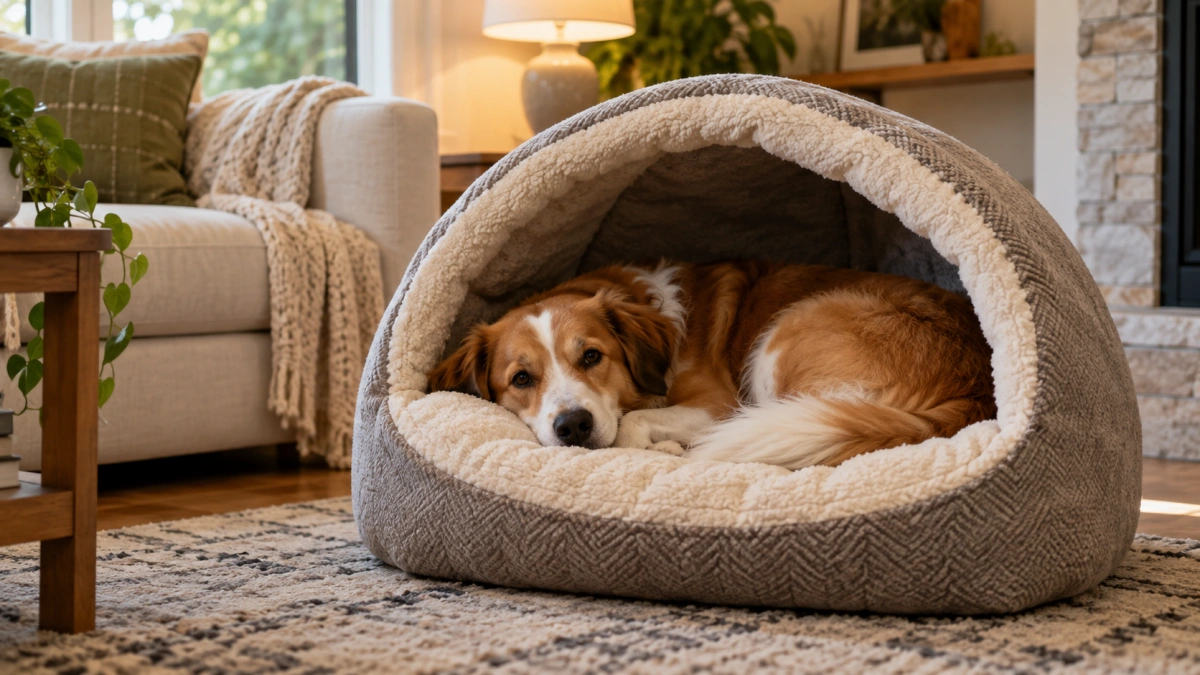
A covered dog bed has some form of fabric, hood, canopy, or roof extending over part of the sleeping surface.
Depending on the design, the cover may:
- Stay raised above the sleeping area
- Rest softly against the dog like a blanket
- Cover only one side of the bed
- Create a deeper enclosed pocket
The amount of enclosure varies considerably between products, which is why the construction matters more than the name printed on the listing.
What Is a Cave Dog Bed?
A cave dog bed generally creates a more enclosed sleeping area than a standard covered bed.
The dog enters through an opening and rests partly or mostly inside the surrounding fabric or padded structure.
You may also see similar designs described as:
- Burrow beds
- Hooded dog beds
- Snuggle beds
- Nesting beds
- Enclosed dog beds
These terms often overlap, so focus on the actual shape, opening, usable interior room, and hood construction rather than relying only on the product category name.
What Is the Difference Between a Covered and Cave Dog Bed?
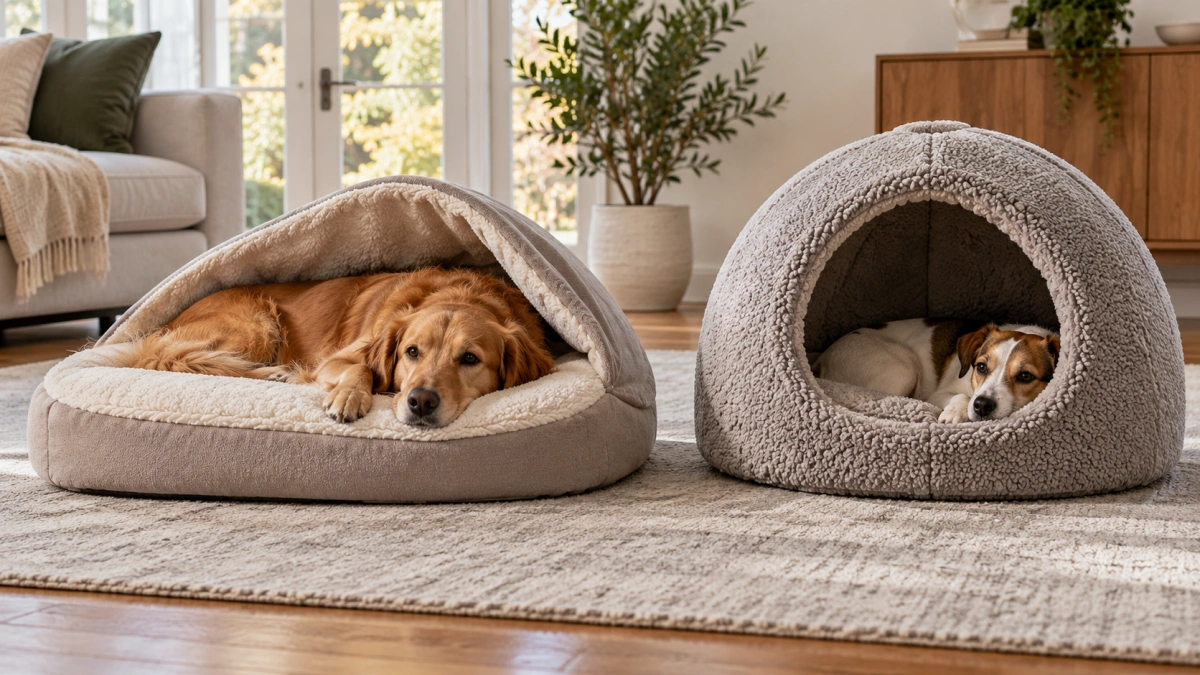
The main difference is usually the amount of enclosure.
| Feature | Covered Dog Bed | Cave Dog Bed |
|---|---|---|
| Coverage | Usually partial | Usually deeper or more complete |
| Sleeping area | Often partly open | More enclosed |
| Typical entry | Wide open side | Defined entrance or hood opening |
| Best suited to | Dogs wanting some overhead cover | Dogs that actively burrow or hide |
| Airflow | Usually more open | Needs closer attention |
There is no universal construction standard. One manufacturer’s “covered bed” may look almost identical to another manufacturer’s “cave bed.”
Which Dogs Usually Like Covered Beds?
Your dog’s existing sleeping habits are one of the best clues.
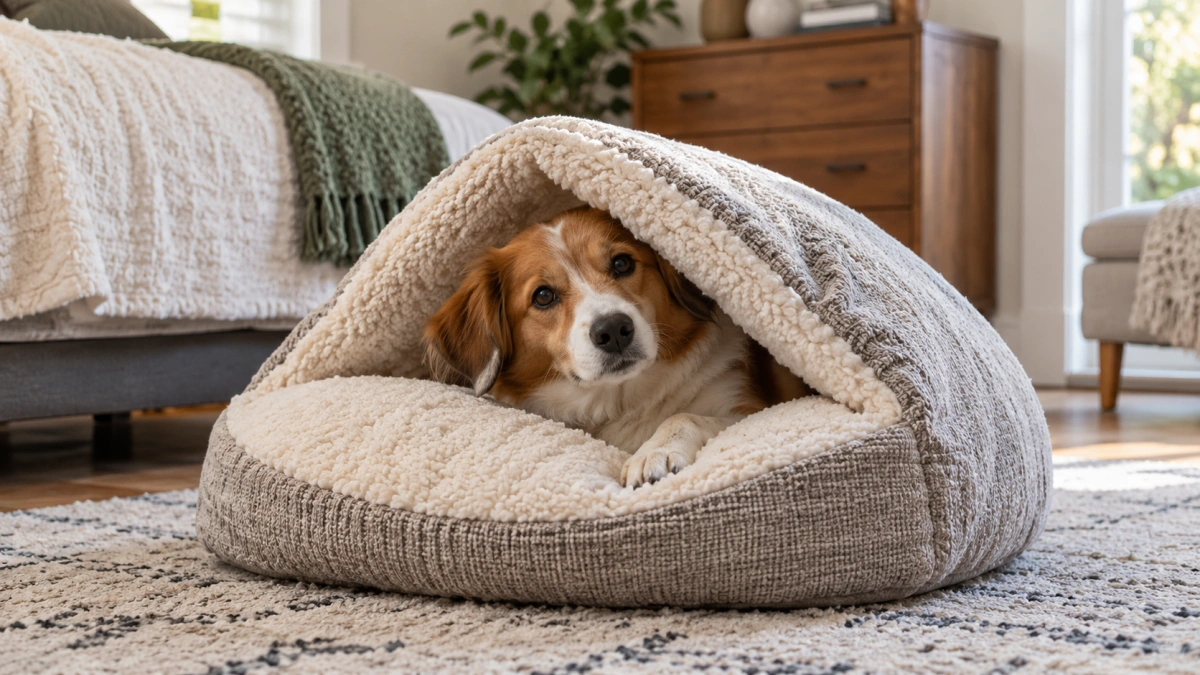
A covered or cave bed may be worth considering if your dog frequently:
- Pushes underneath blankets
- Sleeps beneath furniture
- Curls tightly instead of stretching out
- Presses against cushions or corners
- Seeks warm sheltered resting places
- Pulls bedding over part of the body
These behaviors do not guarantee that your dog will use a cave bed, but they are more useful than choosing only by breed or appearance.
Which Dogs May Prefer an Open Bed?
An enclosed bed can be a poor match for a dog that prefers to stretch out or remain aware of the room.
An open mattress, bolster, or elevated bed may make more sense if your dog usually:
- Sleeps fully stretched out
- Moves positions frequently
- Avoids blankets over the head
- Chooses cool floors
- Prefers strong airflow
- Quickly leaves warm sleeping areas
Your dog’s behavior should guide the choice. You do not need to convince a dog to prefer enclosure simply because a cave bed looks comfortable.
Covered and Cave Beds vs Calming Dog Beds
Covered beds and calming beds can overlap, but they are not the same category.
A cave bed is defined mainly by its enclosed construction. A product described as calming may instead use deep bolsters, plush materials, donut shapes, or other comfort-focused designs without any overhead cover.
If you are comparing comfort-oriented designs and claims about anxiety, our guide to calming dog beds explains those differences in more detail.
A covered sleeping space may make some dogs more comfortable, but a bed should not be treated as a medical treatment for anxiety, separation problems, or persistent behavioral changes.
How to Size a Covered or Cave Dog Bed
Sizing an enclosed bed requires more than checking the outside length or diameter.
You need to evaluate two separate areas:
- The entrance
- The usable interior sleeping space
Thick walls, bolsters, or a padded hood can make a cave bed look much larger from the outside than it feels inside.
Measure How Your Dog Sleeps
Watch your dog while relaxed and notice whether the body forms a tight curl, loose curl, or longer side-sleeping position.
Measure approximately how much space that normal sleeping posture uses, then allow enough additional room for your dog to turn around and reposition comfortably.
Check Interior Measurements
If the manufacturer provides both exterior and interior measurements, use the interior measurements when deciding whether your dog fits.
For a cave bed, check:
- Interior length
- Interior width or diameter
- Entrance width
- Entrance height
- Amount of space taken up by the hood
Cave Beds for Large Dogs
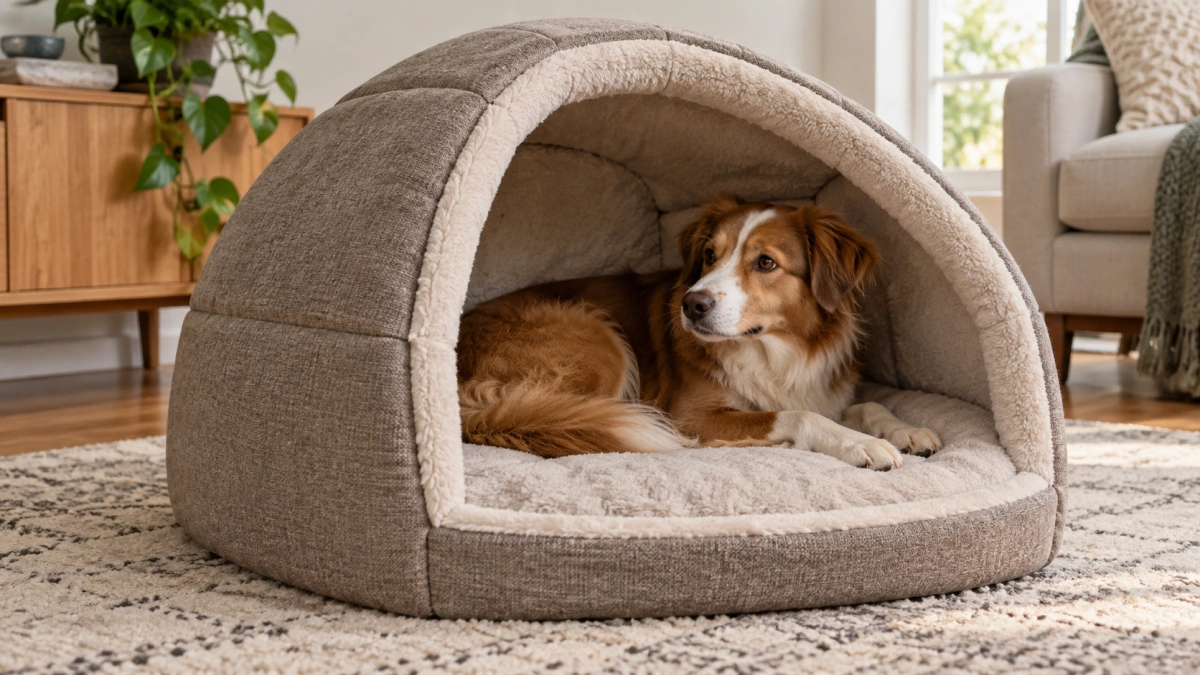
Large dogs can use cave beds, but sizing becomes more difficult because a thick hood and side walls can take up substantial space.
For a larger dog, pay particular attention to:
- True interior dimensions
- Entrance width
- Entrance height
- Ability to turn around
- Base support
- Whether the hood stays usable at the larger size
Do not assume that an XL label means the bed offers enough usable room. Compare the actual dimensions with your dog’s sleeping position.
Structured Hood vs Soft Burrow Cover
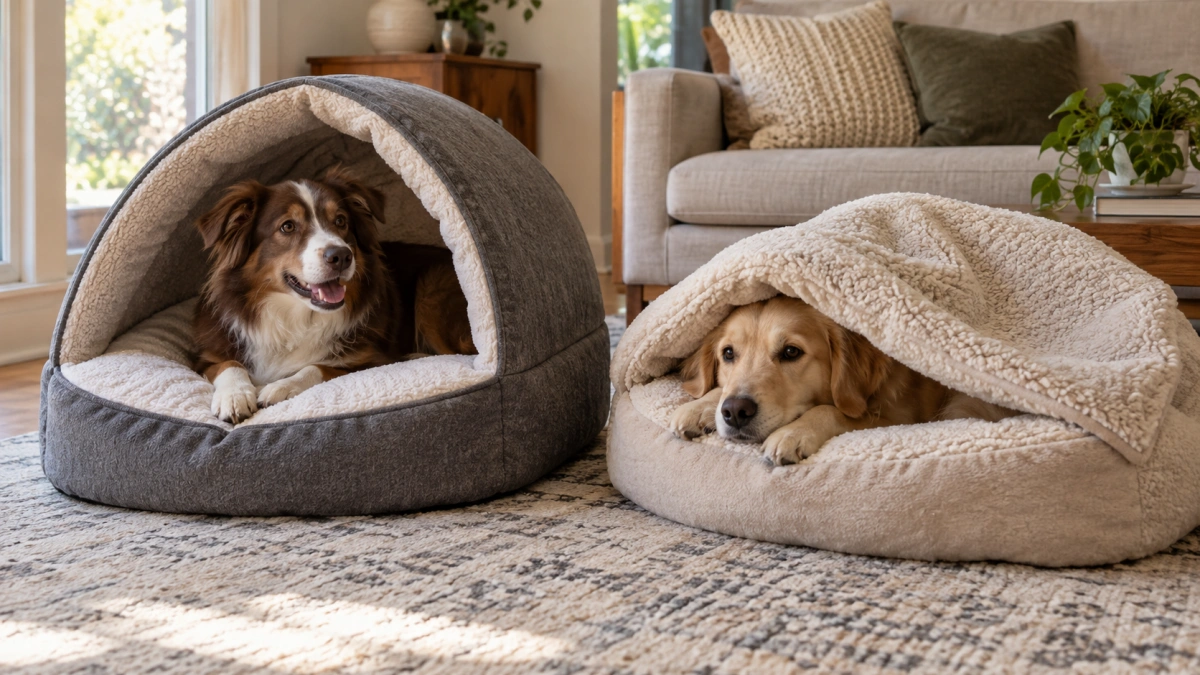
One of the biggest design differences between cave beds is how the cover behaves.
Structured Hood
A structured hood uses a support element or shaped construction to keep at least part of the entrance open.
This can make it easier for a dog to see the opening and enter without having to push underneath loose fabric.
Soft Burrow Cover
A flexible cover behaves more like an attached blanket. The dog pushes beneath it and may rest with the material touching the body.
Dogs that actively burrow may enjoy this style, but other dogs may dislike fabric resting on their head or back.
Neither style is automatically better. Choose according to how your dog interacts with blankets and enclosed spaces.
Check the Entrance Carefully
A cave bed is only useful if your dog can enter and leave comfortably.
The entrance should not require the dog to squeeze through an opening that is too narrow for its shoulders or body.
Also consider entry height. Puppies, senior dogs, small dogs, or dogs that simply prefer easy access may be more comfortable with a lower front edge.
Once inside, your dog should have enough room to turn or reposition without becoming wedged between the walls.
Warmth, Airflow, and Room Temperature
Covered beds can retain more warmth than open beds because the hood reduces exposure around the sleeping area.
That can be appealing in cooler rooms or for dogs that already seek warm sleeping places.
However, more warmth is not always better.
Consider:
- Room temperature
- Your dog’s coat
- How easily your dog becomes warm
- Size of the opening
- Breathability of the fabric
- Whether air can move through the sleeping area
A dog that regularly leaves blankets, moves onto tile, or prefers cooler surfaces may be more comfortable with a more open design.
What Materials Work Well?
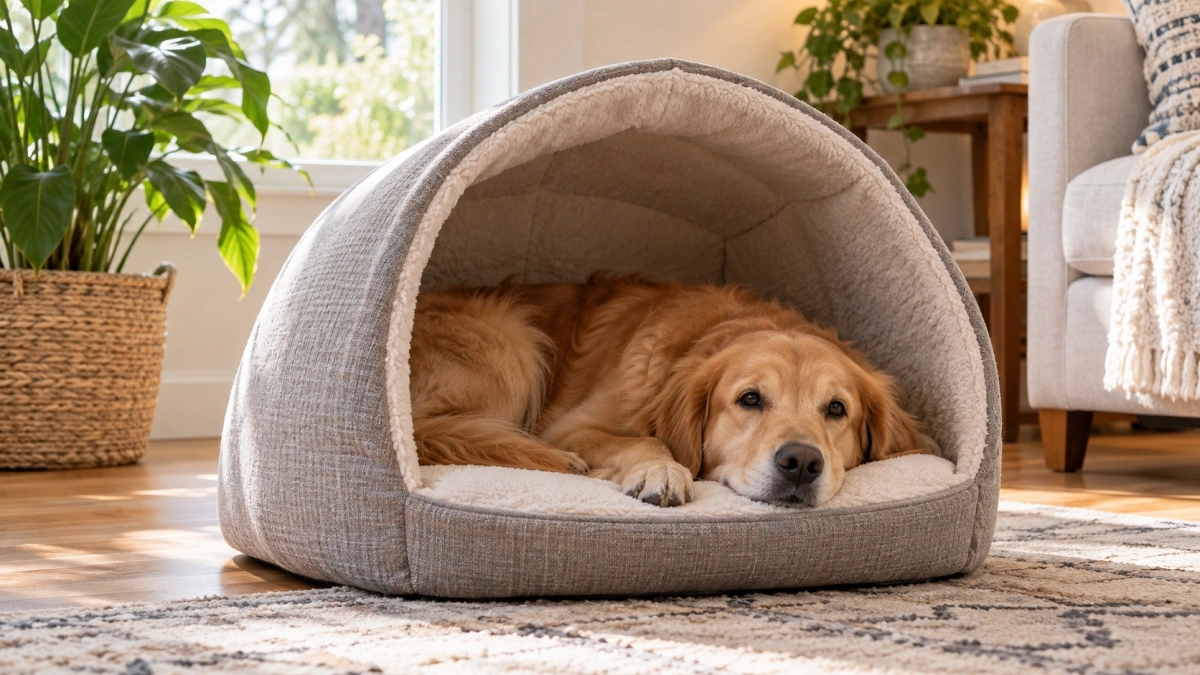
Material choice affects warmth, cleaning, durability, and the way the hood holds its shape.
Common materials include:
- Plush fleece
- Sherpa-style fabric
- Microfiber
- Polyester upholstery fabric
- Cotton blends
- Foam or fiber-filled bases
Soft interior fabrics can create a warmer nesting surface, while a more durable outer fabric may be easier to maintain around the home.
Instead of choosing purely by softness, consider whether the material matches your dog’s temperature preference, shedding level, scratching habits, and the amount of cleaning the bed will need.
Cleaning and Washability
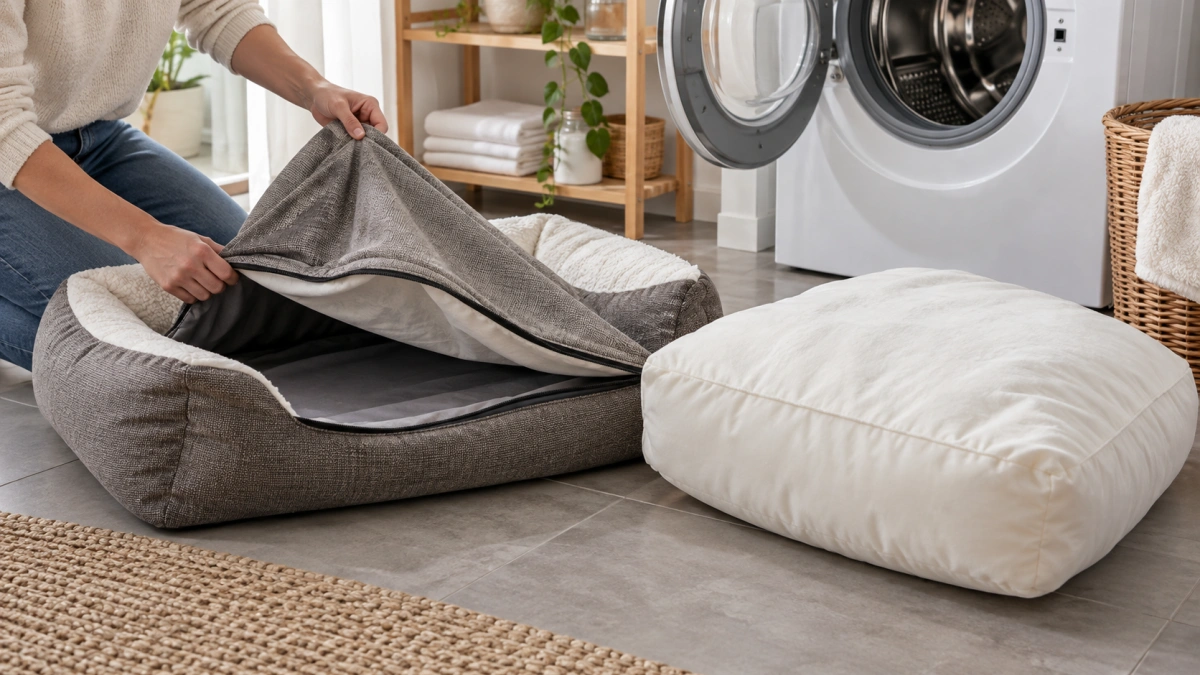
Enclosed beds can collect hair, dirt, skin oils, and odor inside areas that are harder to reach than an open mattress.
Useful cleaning features include:
- Removable outer cover
- Removable cushion insert
- Large zipper opening
- Machine-washable fabric
- Clear drying instructions
- Interior surfaces that are easy to vacuum
Check whether “machine washable” refers to the entire bed or only the removable cover.
A very large cave bed may also be too bulky for a household washing machine even when the care label technically permits machine washing.
Can a Cave Bed Be Too Small?
Yes.
A cave bed can feel cozy without being cramped. Your dog should still be able to enter, settle, turn, and leave normally.
Warning signs that the interior may be too small include:
- The dog cannot turn around easily
- Large parts of the body remain outside unintentionally
- The entrance presses tightly around the shoulders
- The dog repeatedly backs out after trying to enter
- The hood collapses because the dog fills nearly the entire cavity
Do not intentionally undersize the bed simply to create a tighter enclosed feeling.
Can a Cave Bed Be Too Large?
A very large bed is not necessarily unsafe, but it may change the sleeping experience.
Some burrowing dogs enjoy close contact with soft walls and covers. A much larger enclosure may feel more like an open bed with a roof.
However, comfort preference is individual. The goal is enough usable room without forcing your dog into an unnecessarily tight space.
Where Should You Place a Covered Dog Bed?
Placement can affect whether your dog uses the bed.
A practical location is usually somewhere your dog already chooses to rest.
Look for:
- A quiet part of the room
- A stable level floor
- Space away from constant foot traffic
- No direct heat source
- No strong cold draft
- Easy access in and out
Avoid hiding the bed in a location your dog never voluntarily visits just because the space looks convenient.
How to Introduce a Dog to a Cave Bed
Allow your dog to investigate the bed voluntarily.
You can place it in a familiar resting area and leave the entrance clearly accessible.
Avoid pushing or placing the dog inside. If the hood can be temporarily held farther open, that may make a new enclosed design easier to investigate.
Some dogs understand the burrowing design immediately. Others may use the open portion first or decide they prefer a different bed altogether.
Common Covered Dog Bed Buying Mistakes
- Buying by exterior dimensions only
- Ignoring the usable interior space
- Choosing only because the bed looks cozy
- Assuming every dog likes enclosure
- Ignoring entrance width and height
- Buying an overly warm bed for a heat-sensitive dog
- Ignoring whether the hood stays open
- Choosing a bed that is difficult to wash
- Expecting the bed to solve anxiety by itself
- Forcing the dog to use the enclosed section
Covered and Cave Dog Bed Buying Checklist
- Does my dog already burrow or seek covered spaces?
- Does my dog curl up or stretch out?
- What are the actual interior dimensions?
- Is the entrance wide and tall enough?
- Can my dog turn around comfortably?
- Does the hood stay open or collapse softly?
- Will my dog tolerate fabric touching the body?
- Is the bed likely to be too warm?
- Does the design allow adequate airflow?
- Can the cover be removed?
- Is the fabric machine washable?
- Will the bed fit in the intended room?
Final Thoughts
Covered and cave dog beds are best viewed as another sleeping style rather than an upgrade every dog needs.
They can be a very natural match for dogs that already burrow under blankets, curl into sheltered corners, or prefer having soft material around them.
The most important buying details are the usable interior size, entrance dimensions, hood structure, warmth, airflow, access, and washability.
Watch how your dog already chooses to sleep and select a design that supports those habits. A comfortable cave should provide shelter without forcing your dog into a space that feels cramped, overly warm, or difficult to enter.