By
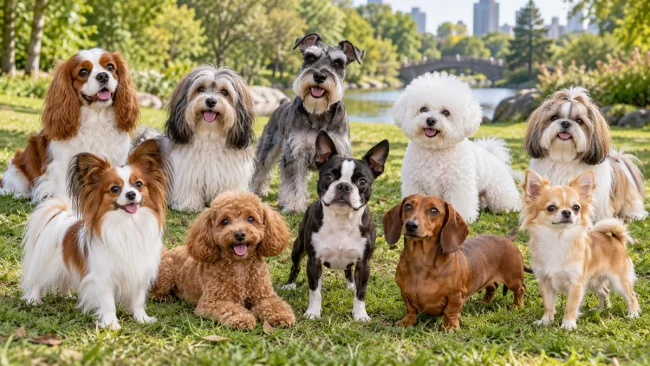
The best small dog breed is not simply the smallest, cutest or most popular one. A dog that works beautifully for an apartment-dwelling retiree may be frustrating for an active family, while a highly trainable little athlete may require far more daily engagement than a first-time owner expects.
Small dogs offer enormous variety. Some are calm companion breeds developed to live close to people. Others are terriers, scent hounds, miniature working dogs or surprisingly athletic toy breeds with strong opinions and significant exercise or training needs.
That is why the most useful way to compare the best small dog breeds is by lifestyle: apartment living, family life, grooming tolerance, exercise level, trainability, shedding and how much time the dog will spend alone.
For a wider size-based overview, start with our Small Dog Breeds guide. If adult size is your main concern, compare our guide to the smallest dog breeds.
What Makes a Small Dog Breed “Best”?
There is no universal best small dog.
A strong match depends on how the breed’s normal adult behavior fits your real life.
Before choosing, compare:
- Adult size and physical sturdiness
- Daily exercise
- Trainability
- Barking
- Shedding
- Professional grooming needs
- Comfort around children
- Compatibility with other pets
- Prey drive
- Ability to tolerate normal periods alone
- Climate considerations
- Breed-specific health needs
Two dogs weighing 15 pounds can create completely different households.
Quick Comparison: Good Small Dog Breeds by Lifestyle
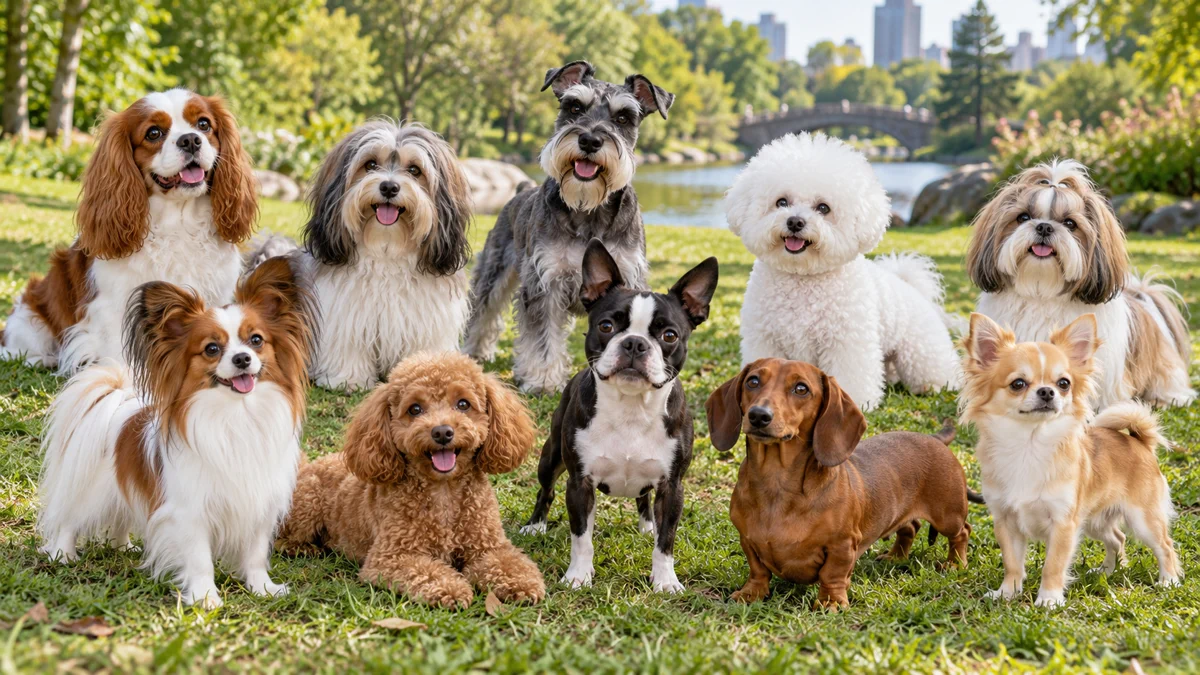
| Breed | Especially Worth Researching If You Want… | Main Trade-Off |
|---|---|---|
| Cavalier King Charles Spaniel | Affectionate, adaptable companion | Coat care and important breed-health research |
| Havanese | Social city or apartment companion | Coat maintenance and strong need for companionship |
| Miniature Schnauzer | Sturdy, trainable, lower-shedding small dog | Regular clipping and active terrier personality |
| Bichon Frise | Friendly, adaptable, lower-shedding companion | Professional grooming |
| Shih Tzu | Companion-focused indoor lifestyle | Coat and heat management |
| Papillon | Tiny but athletic training partner | More activity than appearance suggests |
| Toy Poodle | Highly intelligent, trainable small dog | Frequent grooming |
| Boston Terrier | Compact, people-oriented urban companion | Short muzzle requires thoughtful heat and exercise management |
| Dachshund | Small dog with bold hound personality | Independent nature and long-backed structure |
| Chihuahua | Extremely compact adult companion | Physical fragility and confident personality |
1. Cavalier King Charles Spaniel
The Cavalier King Charles Spaniel is one of the strongest all-around small companion breeds to research if you want affection and adaptability.
Cavaliers combine a toy-breed body with some of the liveliness of a sporting spaniel. They can enjoy walks and play but are also often comfortable relaxing close to their owners.
AKC describes Cavaliers as friendly, affectionate, sweet and gentle.
They can be especially appealing to households that want:
- A highly people-oriented dog
- Moderate exercise rather than extreme athletic demands
- A dog adaptable to different household activity levels
- A relatively trainable companion
The silky coat needs regular care, and prospective owners should research current national breed-club health testing recommendations carefully before selecting a breeder.
2. Havanese
The Havanese is an excellent breed to research for city dwellers who want a small, social companion.
Adults are generally about 7 to 13 pounds and have small but sturdy bodies.
The breed is intelligent, outgoing and strongly people-oriented.
Havanese can live successfully in houses or apartments and generally enjoy training and interactive household life.
The trade-off is that they tend to value companionship highly. AKC notes that Havanese are not especially happy being left alone for hours at a time.
Their silky coat also requires ongoing grooming whether kept long or in a shorter practical trim.
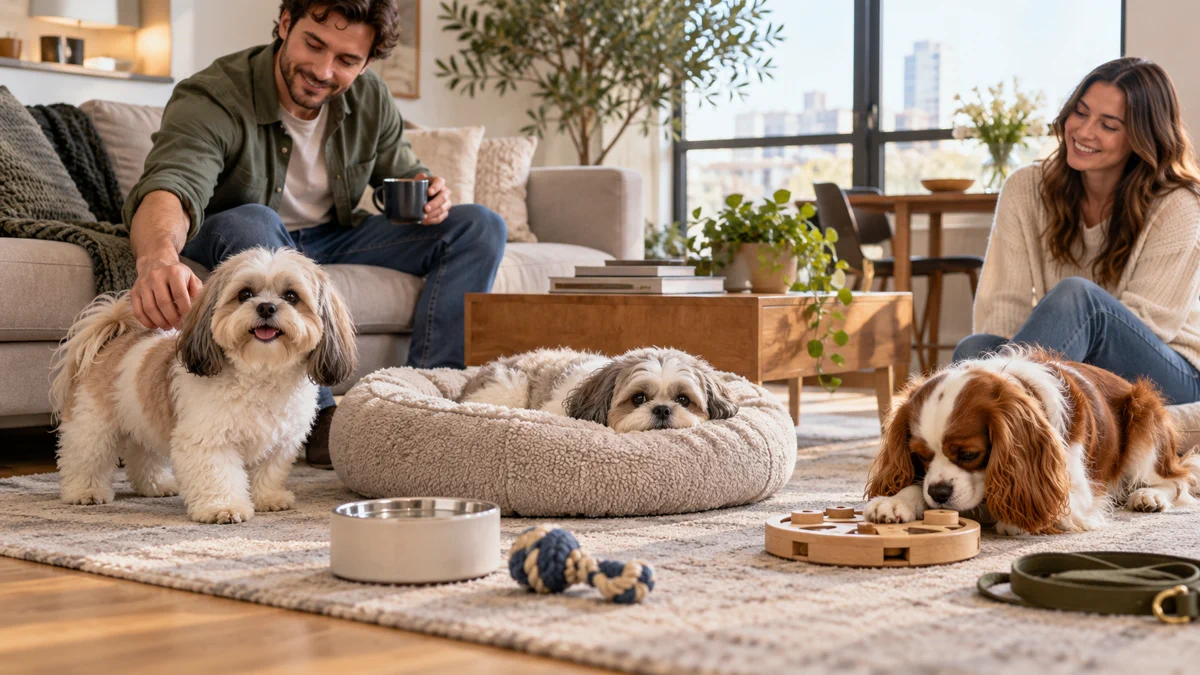
Best Small Dog Breeds for Apartments
Small body size is helpful in apartments, but it does not guarantee apartment compatibility.
Some good breeds to research include:
- Havanese
- Cavalier King Charles Spaniel
- Shih Tzu
- Bichon Frise
- Boston Terrier
- Maltese
Look beyond weight and ask about barking, separation tolerance and indoor activity.
A small dog that reacts loudly to every hallway sound can be more difficult in an apartment than a larger dog that settles quietly.
3. Miniature Schnauzer
The Miniature Schnauzer is a strong option for people who want a small dog with a little more physical sturdiness and working-dog character.
Adults typically stand about 12 to 14 inches and weigh 11 to 20 pounds.
They were developed as farm dogs and ratters, so beneath the famous beard and eyebrows is an alert, lively terrier.
Miniature Schnauzers are generally:
- Smart
- Trainable
- Family-oriented
- Playful
- Alert
- Adaptable to city or country living
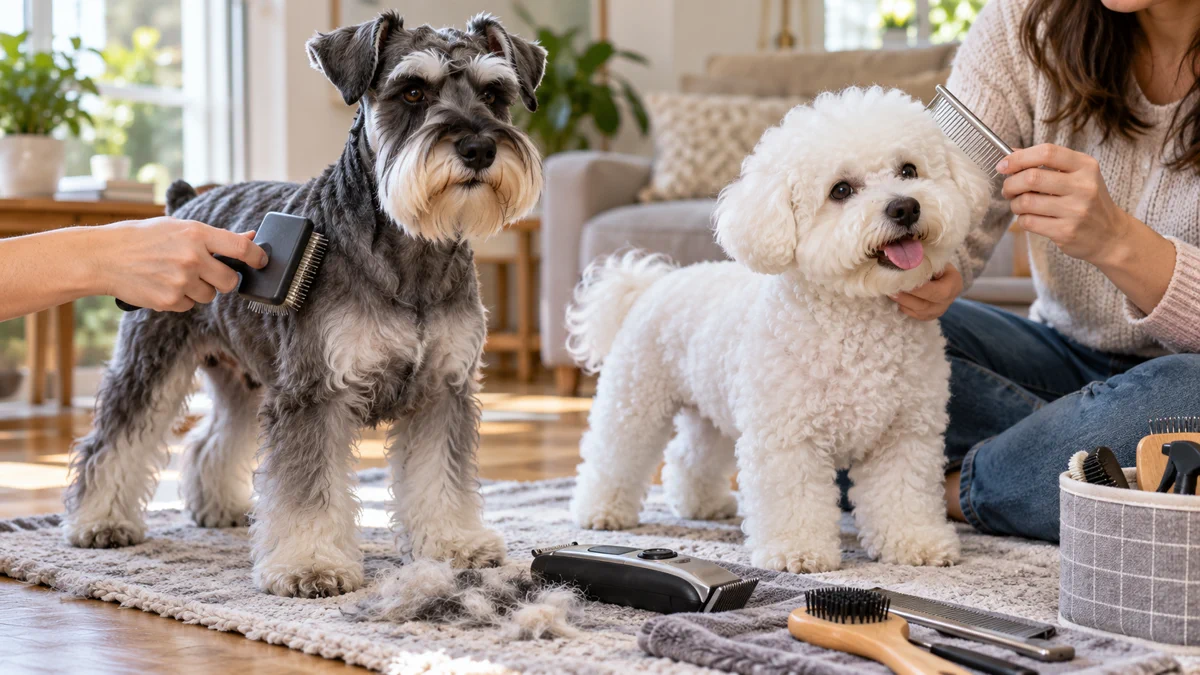
Their coat sheds relatively little, but that does not mean the grooming burden is low.
Most pet Miniature Schnauzers need regular clipping, often professionally, to keep the coat manageable.
4. Bichon Frise
The Bichon Frise combines compact size with a sociable personality.
Adults typically weigh about 12 to 18 pounds.
Bichons are commonly described as curious, playful and cheerful, and many adapt well to urban homes.
They are another lower-shedding option, but their curly coat needs routine brushing and trimming.
In other words, less loose hair around the home often comes with more hands-on coat maintenance.
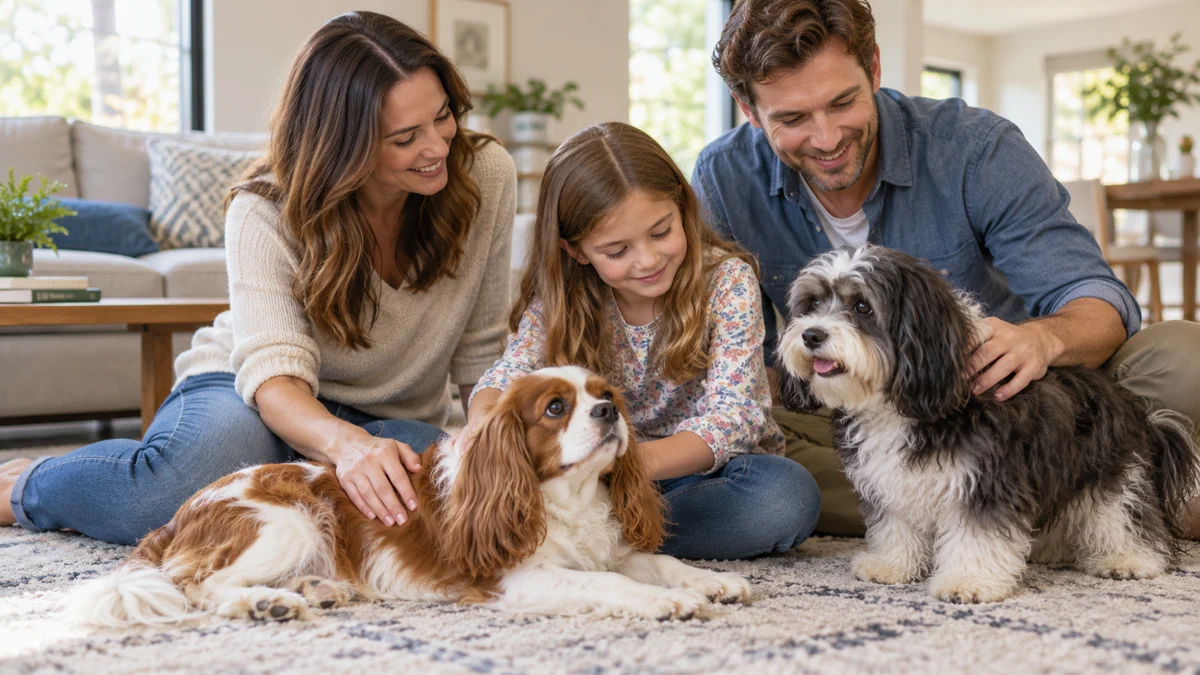
Best Small Dogs for Families
There is no small breed that is automatically perfect with children.
However, families often research breeds such as:
- Cavalier King Charles Spaniel
- Havanese
- Bichon Frise
- Miniature Schnauzer
The individual dog’s temperament and the child’s behavior matter enormously.
Small dogs can be physically vulnerable to rough handling, so adults should supervise young children and teach them not to lift, squeeze, chase or disturb sleeping dogs.
For broader family-focused comparisons, visit our Family Dog Breeds guide.
5. Shih Tzu
The Shih Tzu is a companion breed developed for close indoor life with people.
Adults generally weigh about 9 to 16 pounds.
Shih Tzus are playful, affectionate and outgoing but typically do not require the same intense physical workload as high-drive terriers or sporting dogs.
That can make them appealing to people who want a more companion-focused lifestyle.
The major trade-offs are coat maintenance and the practical considerations associated with a short muzzle.
Many family pets are kept in shorter trims to make brushing easier.
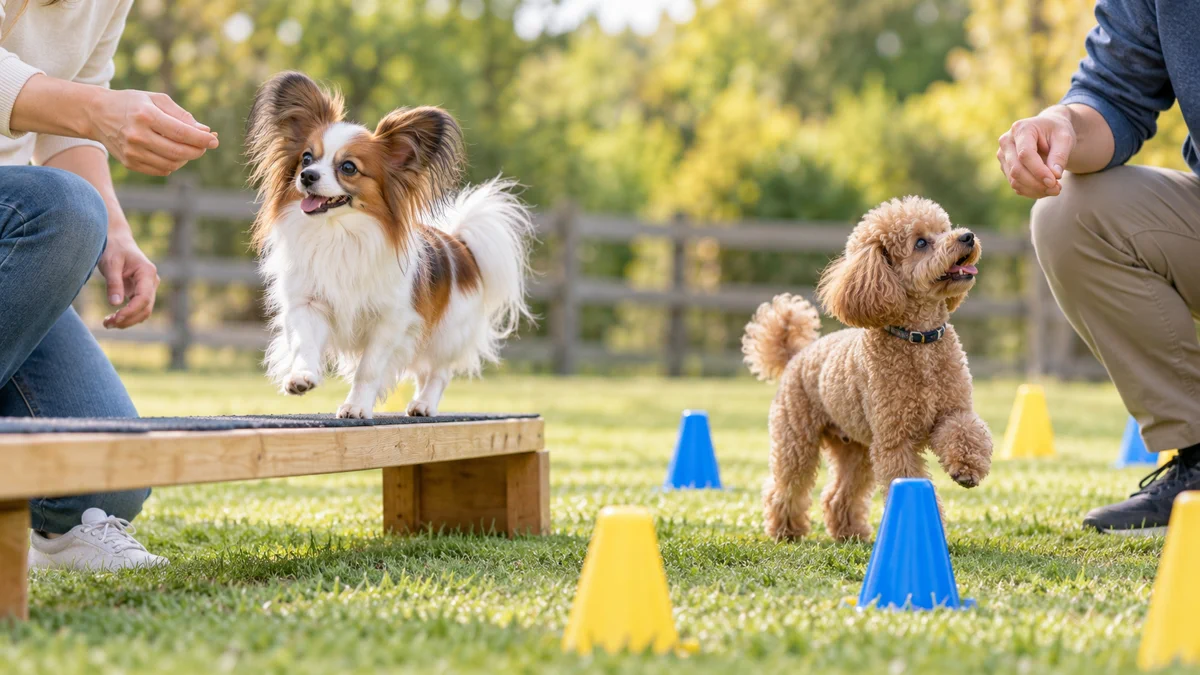
6. Papillon
The Papillon demonstrates why tiny size should never be confused with low ability.
Papillons are small, fine-boned dogs with distinctive butterfly-like ears, but they are intelligent and athletic.
They can excel in:
- Obedience
- Agility
- Trick training
- Interactive games
- Regular walks
A Papillon can be a particularly interesting choice for someone who wants a very small dog but still enjoys training and structured activities.
7. Toy Poodle
Toy Poodles stand no more than about 10 inches and commonly weigh only 4 to 6 pounds, but they retain the intelligence and athletic tendencies associated with the wider Poodle family.
They are excellent candidates for owners who enjoy teaching behaviors and keeping a dog mentally busy.
Toy Poodles are often:
- Highly trainable
- People-oriented
- Active
- Agile
- Lower shedding
The curly coat is the main maintenance trade-off.
Most owners choose regular professional clipping or learn to maintain a practical pet trim at home.
Best Small Dogs for Active and Training-Focused Owners
If you want a small dog that can do much more than sit on the sofa, consider researching:
- Papillon
- Toy or Miniature Poodle
- Miniature Schnauzer
- Toy Fox Terrier
- Some small terriers
These dogs take up little physical space but may require substantial mental activity.
Training sessions, scent games, puzzle toys and appropriate dog sports can be just as important as walks.
Best Small Dogs When Shedding Matters
If loose hair around the home is a major concern, lower-shedding breeds worth researching include:
- Toy or Miniature Poodle
- Miniature Schnauzer
- Bichon Frise
- Maltese
However, lower shedding usually does not mean lower grooming.
Poodles and Bichons require regular coat trimming. Miniature Schnauzers need clipping or specialized coat maintenance. Maltese coats need brushing and trimming depending on length.
Also, no dog can guarantee an allergy-free home. If allergies are the main reason for choosing a breed, use our Hypoallergenic Dog Breeds guide as a separate starting point rather than assuming low shedding automatically solves allergies.
8. Boston Terrier
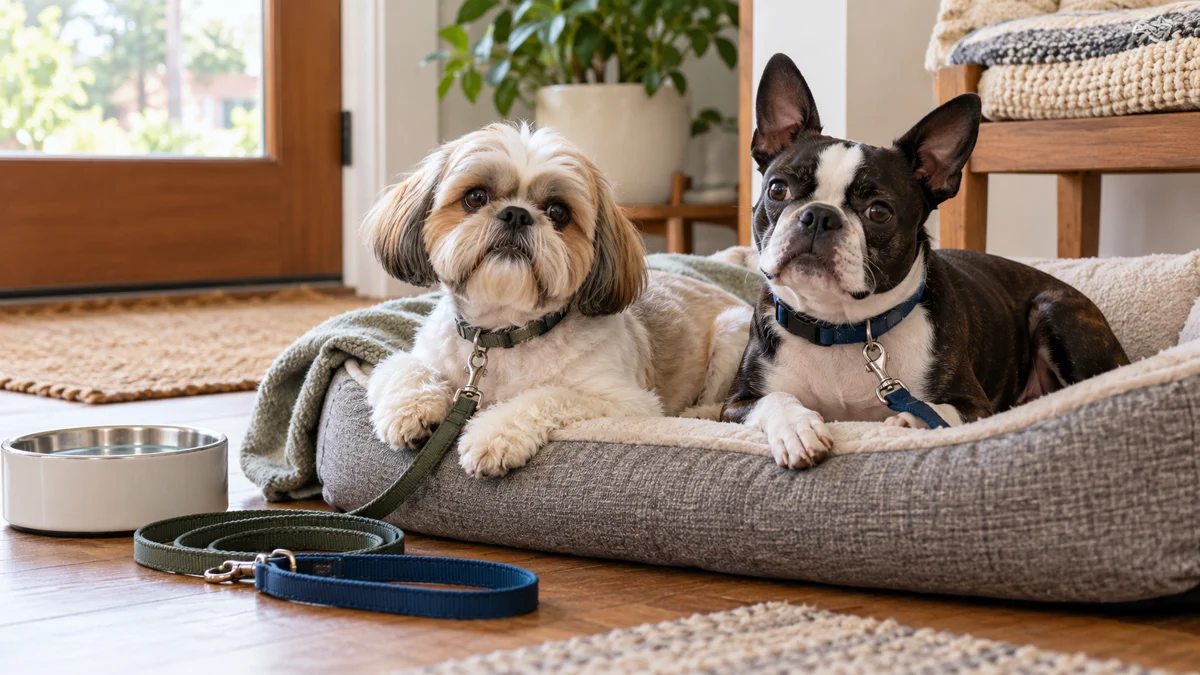
Boston Terriers are compact, people-oriented companions that typically weigh no more than about 25 pounds.
Their short coat is easier to maintain than the long or curly coats of many small breeds.
They are often described as friendly, bright and amusing, and many adapt well to urban life.
The trade-off is their shortened muzzle.
Owners should manage activity carefully during hot weather and avoid assuming that a short coat means the dog can exercise hard in every temperature.
Small Dogs for a More Relaxed Lifestyle
If you do not want a high-drive little athlete, companion-oriented breeds such as the Shih Tzu or Cavalier King Charles Spaniel may be more appropriate starting points than a terrier or highly active toy breed.
Boston Terriers can also fit some moderate-activity households.
But “calmer” should never mean no exercise.
Every healthy dog needs opportunities to walk, sniff, interact and use its brain.
9. Dachshund
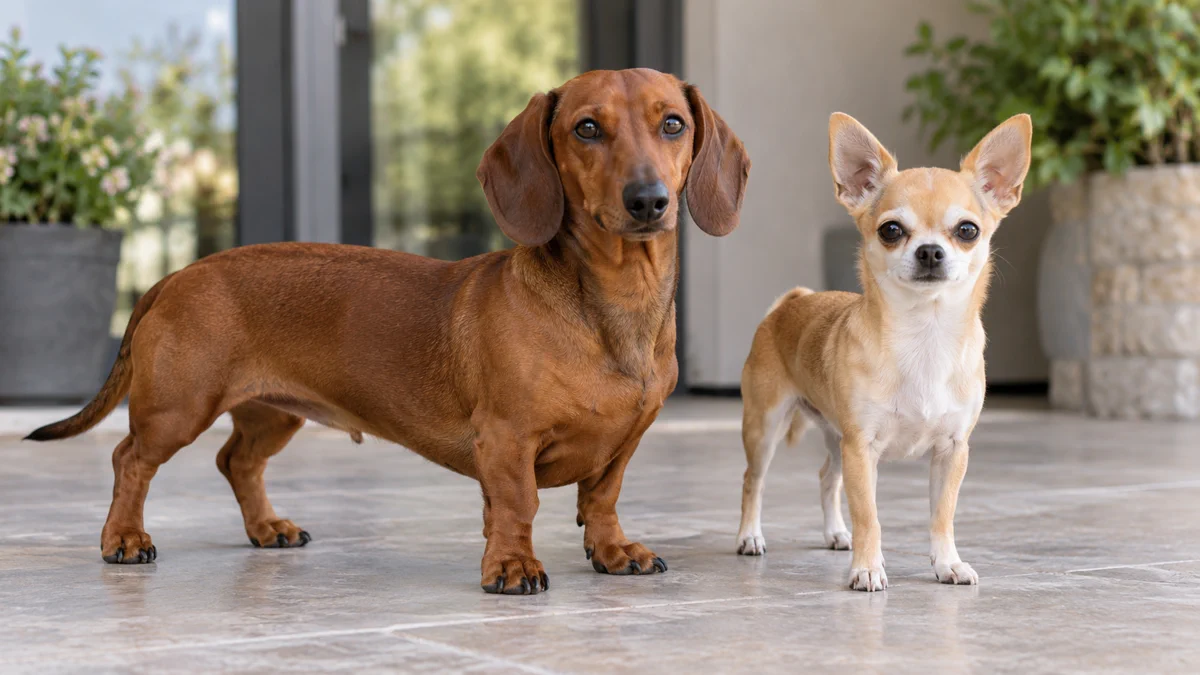
Dachshunds are among the most recognizable small dogs, but they are not classic lapdogs in temperament.
They were developed as independent hunting dogs.
Modern Dachshunds can be:
- Curious
- Friendly
- Bold
- Vigilant
- Independent
- Strongly interested in scent
Miniature Dachshunds weigh 11 pounds or less, while Standard Dachshunds are larger.
Their long-backed body also means weight control and thoughtful management of unnecessary high-impact jumping are particularly important.
10. Chihuahua
The Chihuahua is one of the smallest recognized dog breeds, weighing no more than about 6 pounds under the AKC breed standard.
That makes the breed extremely convenient for people who genuinely need a tiny adult dog.
But Chihuahuas are not personality-free accessories.
They are alert and often self-confident, and some can be vocal or reserved around unfamiliar people.
Their tiny body also makes them less suitable for rough handling by young children.
Small Does Not Mean the Same Personality
Compare the Dachshund and Chihuahua.
Both are small, but one developed as a scent-driven hunting dog while the other is an extremely compact companion with terrier-like confidence.
A Miniature Schnauzer was developed as a farm ratter. A Shih Tzu developed primarily as a palace companion. A Papillon can excel in agility.
Breed history matters because it helps explain the behavior you may see every day.
What Small Dog Is Good for a First-Time Owner?
AKC includes breeds such as Cavalier King Charles Spaniels, Papillons and Shih Tzus among breeds worth considering for first-time owners.
Havanese can also be highly trainable companions for people prepared for coat care and close companionship.
But there is no automatic beginner breed.
A first-time owner still needs to learn:
- House training
- Leash skills
- Socialization
- Body handling
- Grooming
- Preventive veterinary care
- Reading canine body language
Which Small Dogs Are Easiest to Train?
Toy Poodles and Papillons stand out as highly trainable small breeds.
Havanese are also intelligent and generally eager to learn with positive methods.
Miniature Schnauzers learn quickly but can become bored with repetitive sessions.
Trainability should not be confused with passivity. Some of the easiest small dogs to teach are also the dogs most likely to need ongoing mental stimulation.
Which Small Dog Needs the Least Grooming?
Short-coated breeds generally require less coat maintenance than curly or long-coated dogs.
Boston Terriers and smooth-coat Chihuahuas are examples.
But every dog still requires:
- Nail care
- Dental care
- Ear checks
- Routine bathing when needed
- Skin and coat monitoring
A short coat reduces brushing and clipping, not the entire care routine.
Which Small Dogs Shed Less?
Poodles, Bichon Frises and Miniature Schnauzers are common examples of lower-shedding small breeds.
The trade-off is grooming.
If you strongly dislike both shedding and professional coat maintenance, your options become narrower because those two traits often move in opposite directions.
Are Small Dogs Better for Young Children?
Not necessarily.
Some very small dogs are physically more fragile than larger breeds and may be easier for a young child to accidentally injure.
A slightly sturdier small breed can sometimes be a more practical household match than choosing the tiniest dog available.
Adults should supervise interactions regardless of breed.
Can Small Dogs Live With Large Dogs?
Yes, but compatibility is individual and the size difference creates physical risk.
Even friendly rough play from a 70-pound dog can injure a 7-pound companion.
Watch interactions carefully and prevent:
- Body slamming
- Hard chasing
- Rough wrestling
- Resource conflicts
How Much Exercise Does a Small Dog Need?
There is no universal small-dog exercise prescription.
A Shih Tzu, Papillon, Miniature Schnauzer and Dachshund all have different working histories and physical structures.
Use breed tendencies as a starting point, then adjust activity for:
- Age
- Health
- Body condition
- Weather
- Individual energy
Small Dog Breeds Are Not Automatically Low-Maintenance
Small dogs generally eat less food and require smaller equipment than large dogs, but other costs remain.
Professional grooming for a Poodle or Bichon can become a regular expense.
Dental care is important for many small breeds.
Training, veterinary care, boarding and pet insurance do not disappear simply because the dog weighs 12 pounds.
Do You Actually Need the Smallest Breed?
If your main reason for choosing small is apartment size or easier transport, you may not need a five-pound dog.
A sturdy 15- to 20-pound Miniature Schnauzer or Bichon can still be highly portable while being physically more substantial.
If extremely tiny adult size is genuinely important, see our guide to the smallest dog breeds.
Which Small Dog Breed Is Right for You?
| Your Priority | Breeds Worth Researching |
|---|---|
| Adaptable affectionate companion | Cavalier King Charles Spaniel |
| Apartment and city lifestyle | Havanese, Shih Tzu, Bichon Frise |
| Sturdy active family dog | Miniature Schnauzer |
| Lower shedding | Toy Poodle, Miniature Schnauzer, Bichon Frise |
| Very trainable tiny dog | Papillon or Toy Poodle |
| Shorter, simpler coat | Boston Terrier or smooth-coat Chihuahua |
| Bold hound personality | Dachshund |
| Extremely small adult size | Chihuahua |
| More relaxed companion lifestyle | Shih Tzu or Cavalier King Charles Spaniel |
10 Questions to Ask Before Choosing a Small Dog
- How much daily exercise can I provide?
- How long will the dog routinely be alone?
- How much barking can my household tolerate?
- Do I have young children?
- Will the dog live with larger dogs?
- How much shedding am I comfortable with?
- Can I budget for professional grooming?
- Do I want an easygoing companion or a training-focused dog?
- Are there breed-specific health concerns I should research?
- Would a 15-pound dog fit just as well as a 5-pound dog?
Final Thoughts
There is no single best small dog breed for every person.
Cavalier King Charles Spaniels can offer affectionate adaptability. Havanese and Bichon Frises are strong city-companion candidates. Miniature Schnauzers provide a sturdier, active terrier option. Papillons and Toy Poodles suit people who enjoy training. Shih Tzus may appeal to households seeking a more companion-focused lifestyle, while Chihuahuas serve people who genuinely want extremely compact adult size.
Every advantage also comes with a trade-off.
Lower shedding may mean more grooming. Tiny size can mean greater physical fragility. Easy apartment fit does not guarantee low barking. Intelligence can increase the need for mental stimulation.
The best approach is to choose by your real daily routine rather than a generic top-10 ranking.
Decide how much exercise, training, grooming, shedding, barking and companionship you can comfortably manage. Then choose the small breed whose normal adult behavior fits that life.
A good lifestyle match matters much more than whether a dog appears first on someone else’s list of the best small dogs.