By A CUTE PET STORY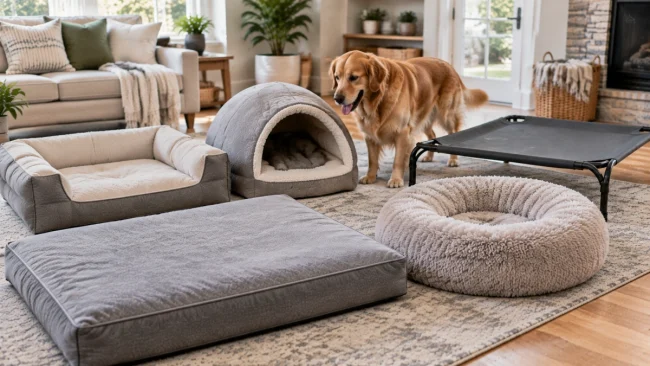
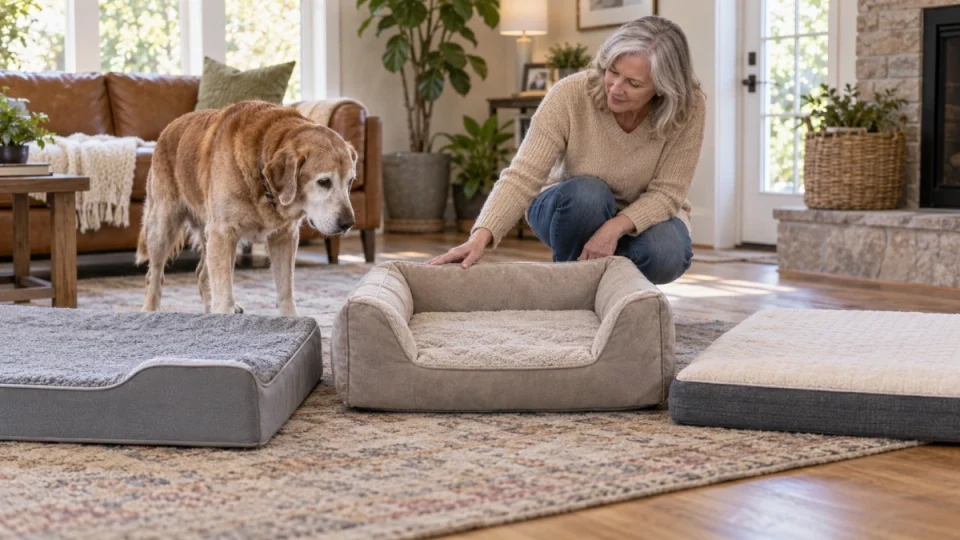
Dog beds come in many different styles, and each design solves different comfort, space, temperature, and cleaning needs. A flat mattress bed, bolster bed, cave bed, or elevated bed can all be a good choice depending on how your dog sleeps and where the bed will be used.
There is no single best dog bed type for every dog. The right choice depends on your dog’s sleeping position, body size, habits, environment, and daily routine.
Understanding the differences between dog bed styles makes it easier to choose a design that your dog will actually use.
You can also explore our complete Dog Beds topic hub for more guides about sizes, materials, cleaning, and support.
What Are the Different Types of Dog Beds?
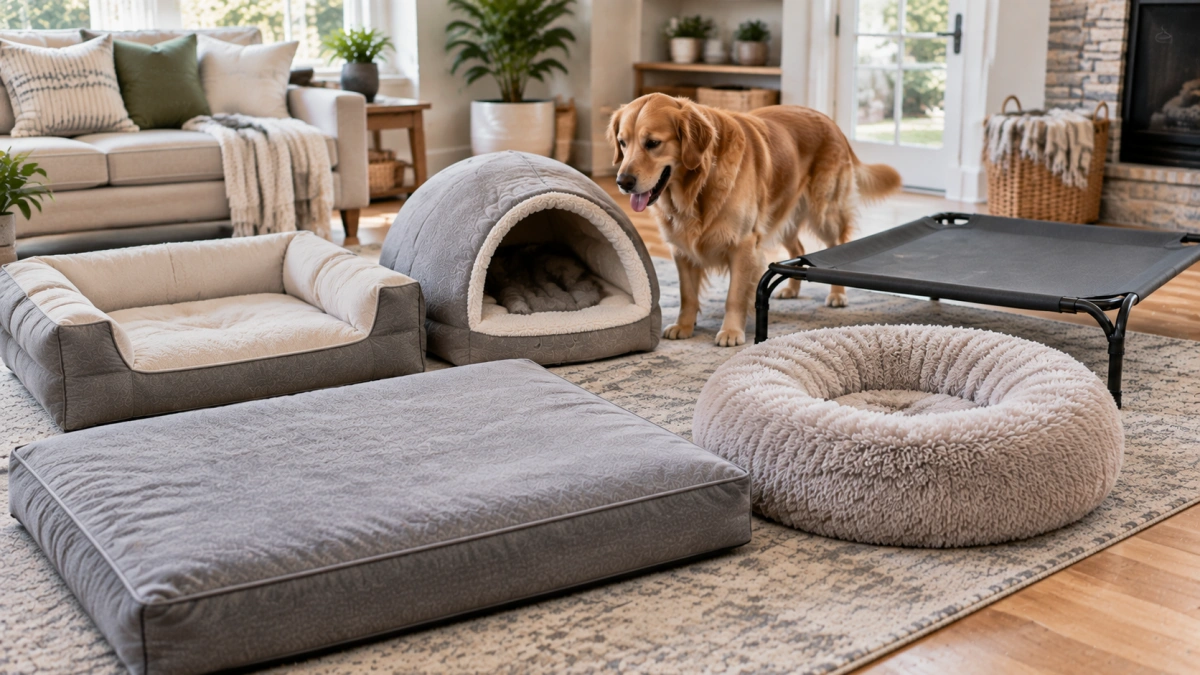
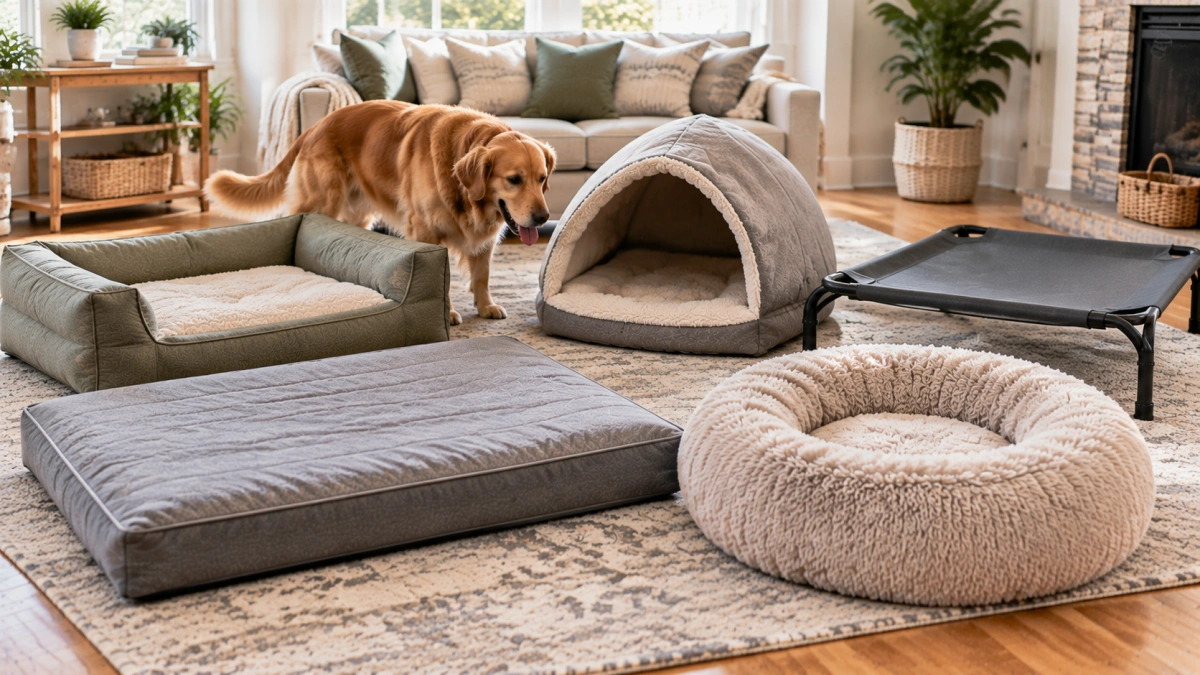
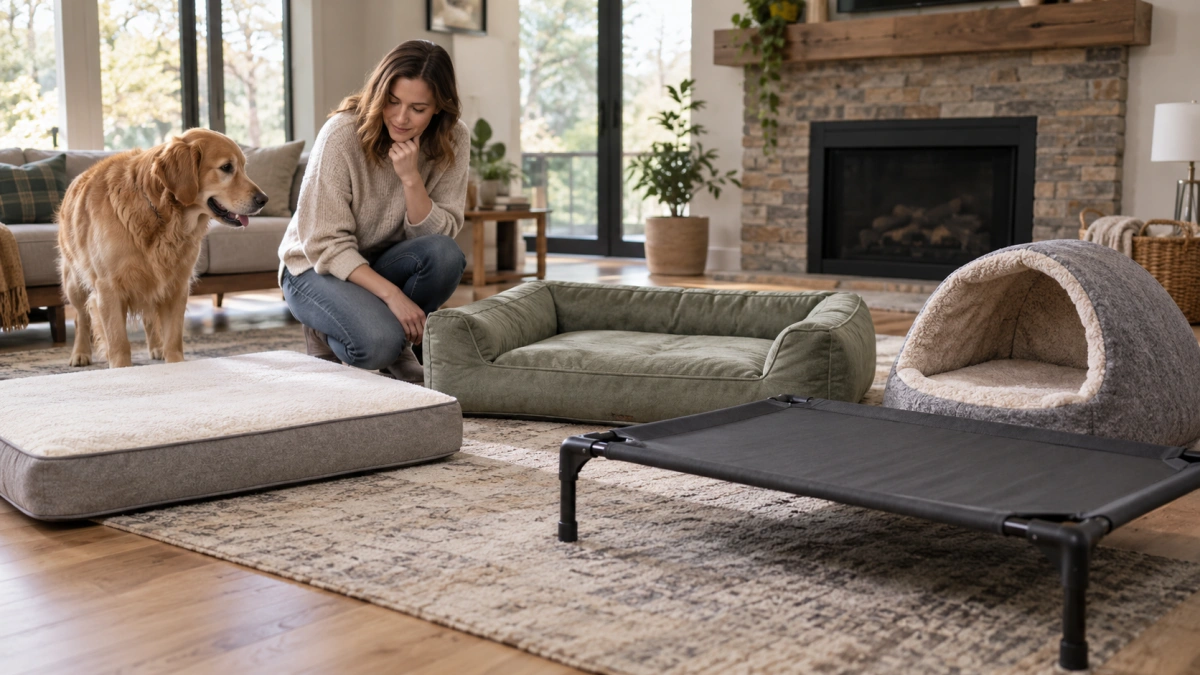
Most dog beds can be grouped into several major styles:
- Mattress dog beds
- Bolster dog beds
- Cave and covered dog beds
- Donut and round dog beds
- Elevated and raised dog beds
- Cooling and waterproof specialty beds
Each type changes how the dog interacts with the bed. Some designs provide more open sleeping space, while others create a more enclosed resting area.
Mattress Dog Beds
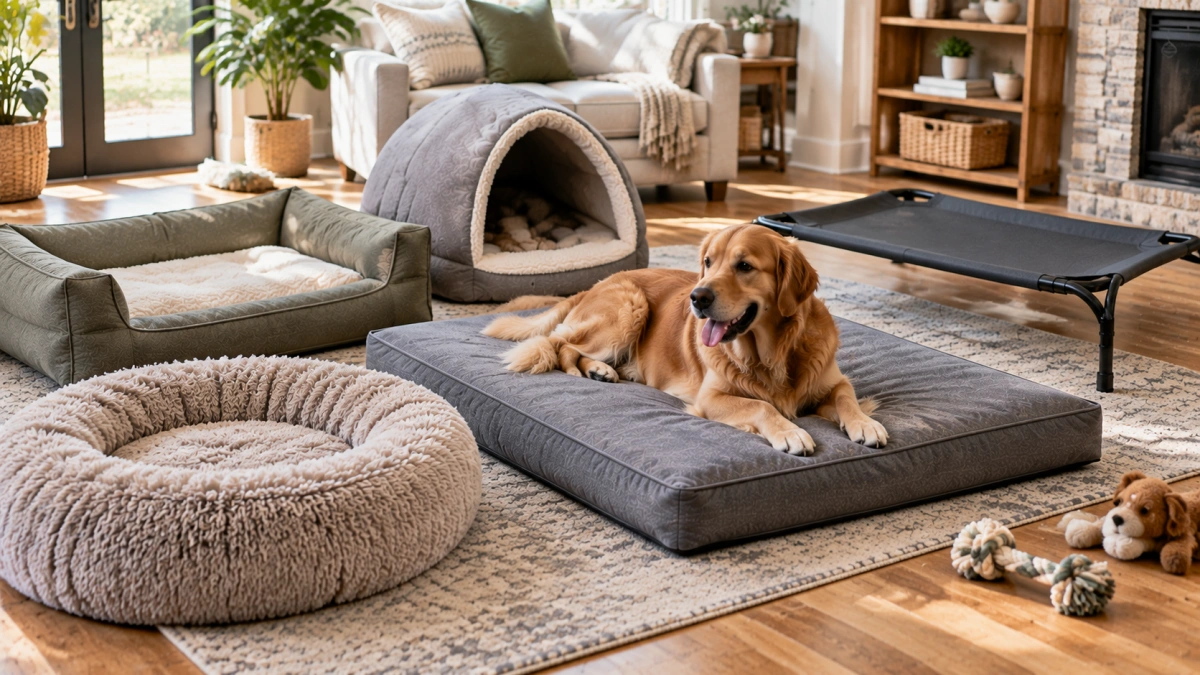
Mattress-style dog beds are simple, open designs that provide a flat sleeping surface without high surrounding edges.
They are popular because they offer:
- Maximum usable sleeping space
- Easy access from every direction
- Room for stretching and changing positions
- Simple cleaning and maintenance
Mattress beds are often suitable for dogs that like to stretch out, larger dogs that need more open space, or homes where a simple design fits better.
The main consideration is that some dogs enjoy having raised sides to lean against, which a flat mattress does not provide.
Bolster Dog Beds
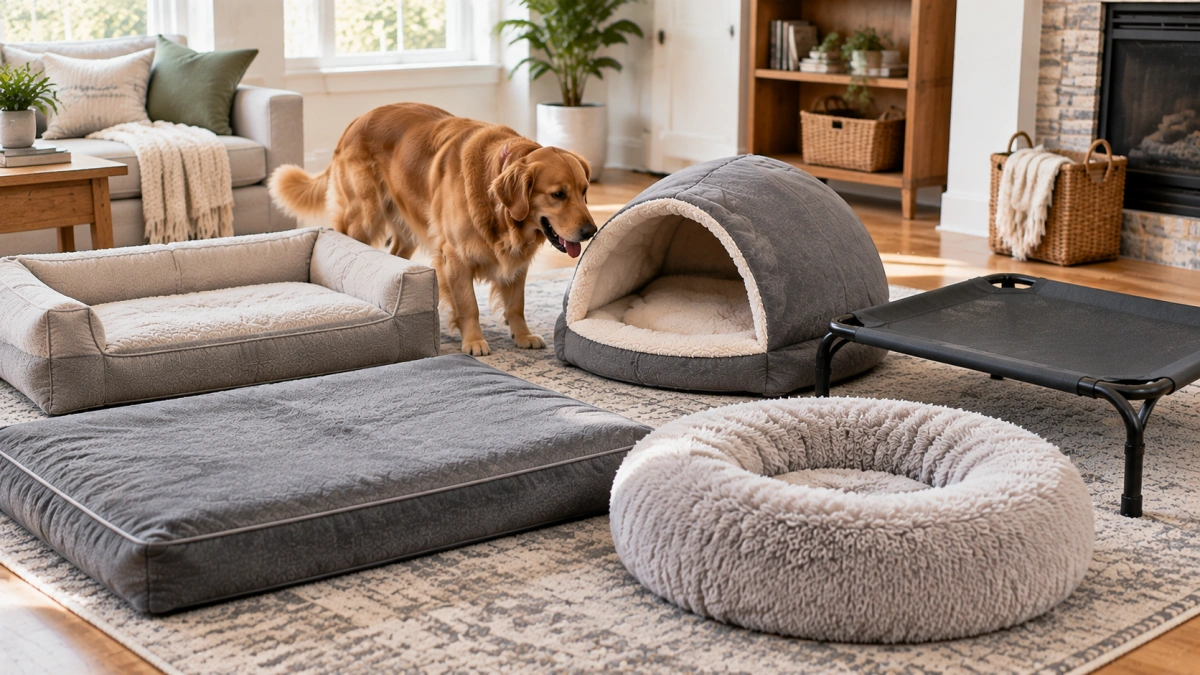
Bolster dog beds include raised edges around part or most of the bed. These raised sides create a more enclosed sleeping area and give dogs a place to rest their head.
Common benefits include:
- A comfortable place to lean
- A more secure sleeping feeling
- Support for dogs that like edges
- Extra structure around the sleeping area
However, bolsters also reduce the actual sleeping area compared with the outside dimensions.
Before choosing a bolster bed, check:
- Interior sleeping dimensions
- Bolster height
- Front entry height
- Whether your dog prefers open or enclosed spaces
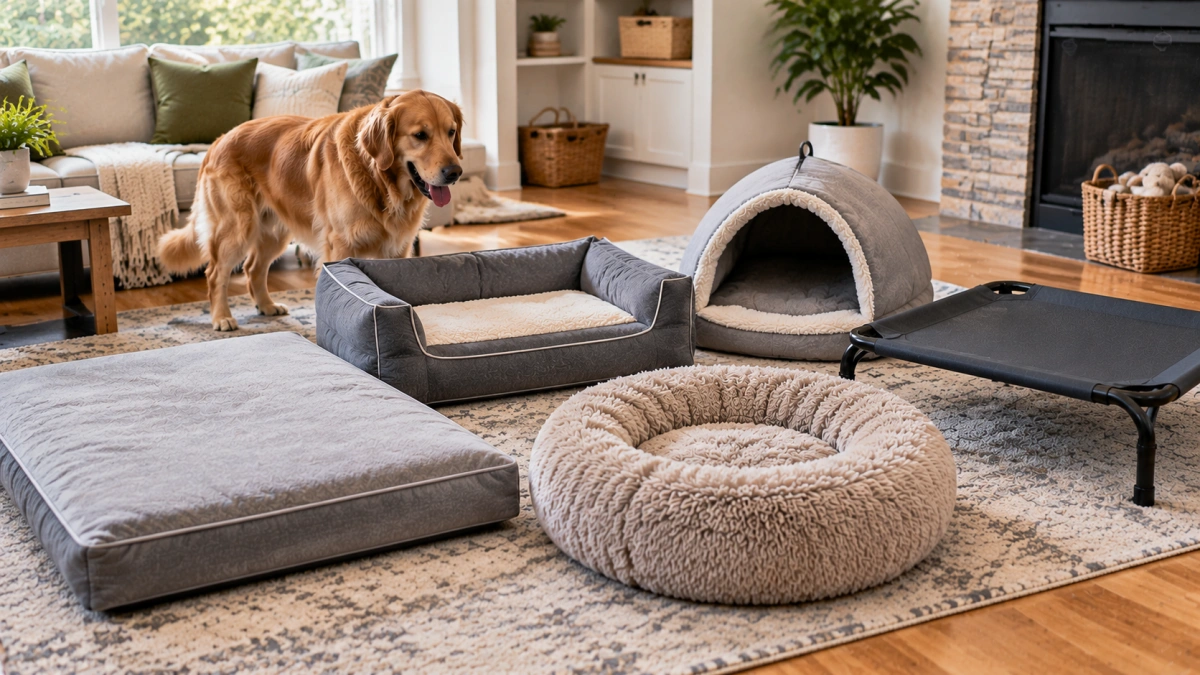
Cave and Covered Dog Beds
Cave-style dog beds create a partially enclosed sleeping area with a covered section or hood-like design.
They are often chosen by dogs that enjoy:
- Privacy
- Warm enclosed spaces
- Sleeping under blankets
- A more protected resting environment
Cave beds are usually better suited for dogs that naturally seek hidden or covered areas.
Consider:
- Whether the opening is large enough
- Whether the dog can enter easily
- Whether the cover can be removed and cleaned
- Whether the dog prefers open sleeping
Donut and Round Dog Beds
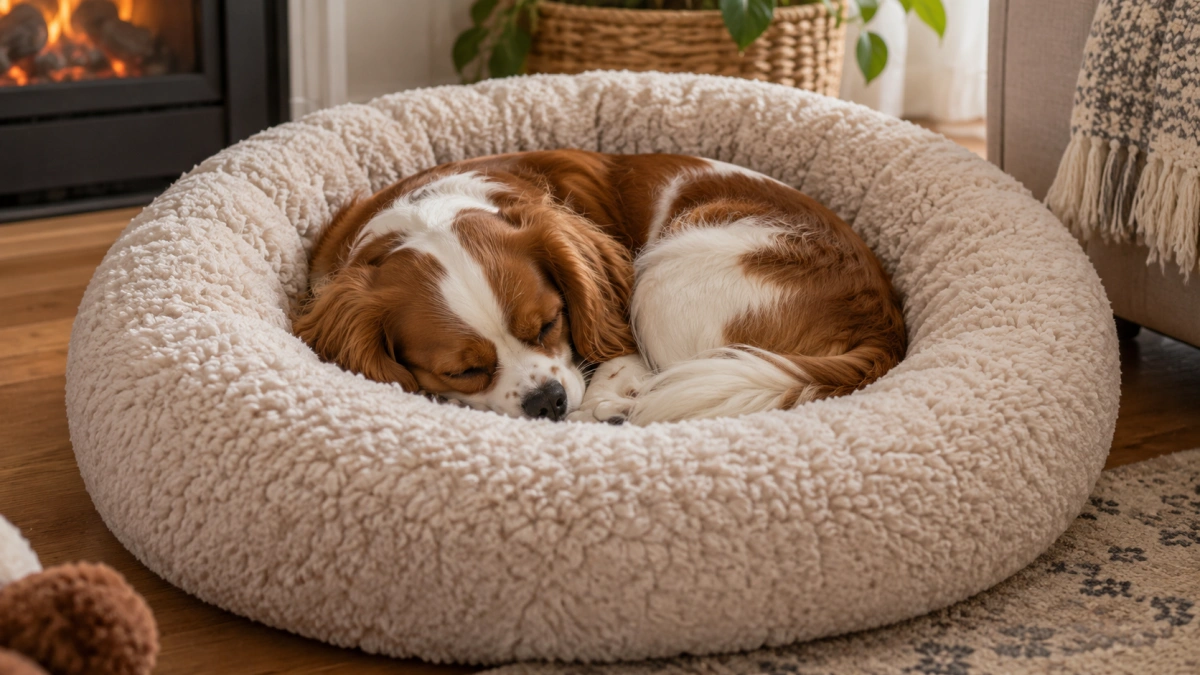
Donut-style dog beds use a circular shape with raised soft edges, creating a naturally enclosed sleeping area.
This style can work well for dogs that like to:
- Curl into a circle
- Rest against soft edges
- Create a comfortable nesting area
- Sleep in smaller spaces
The main limitation is that round beds may provide less useful stretching space compared with rectangular mattress designs.
Measure your dog’s normal sleeping position before choosing this style.
Elevated and Raised Dog Beds
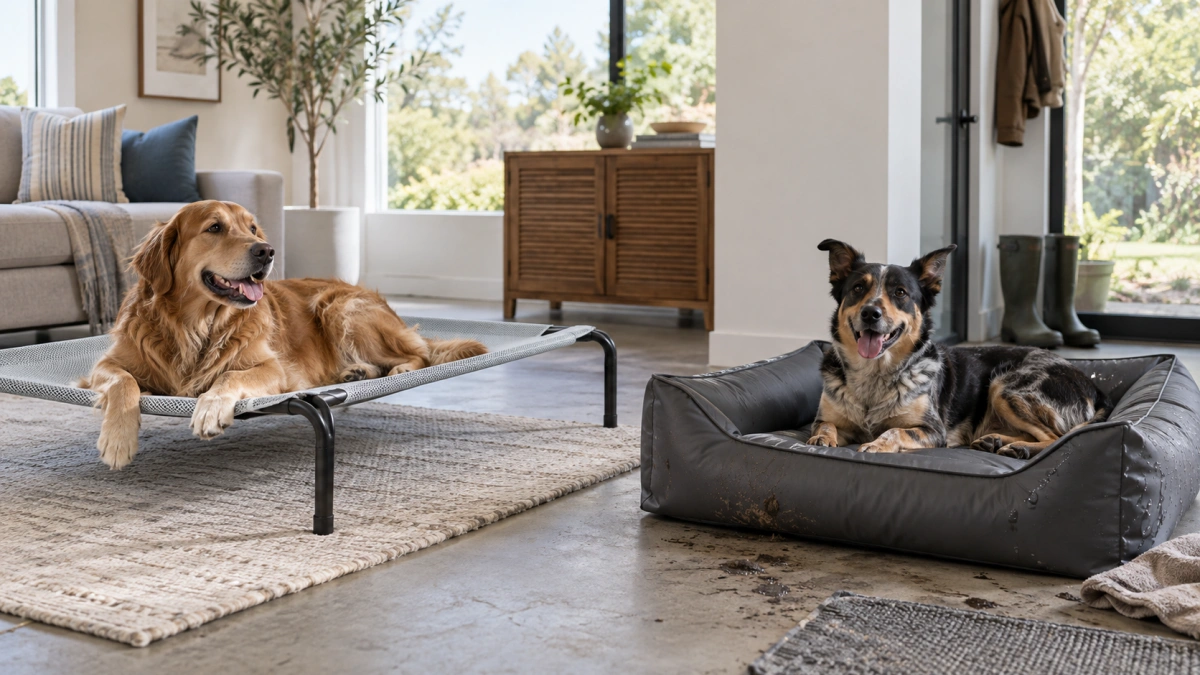
Elevated dog beds lift the sleeping surface above the floor using a frame structure.
Common benefits include:
- Airflow underneath the sleeping surface
- Easy cleaning around the bed
- A practical outdoor option
- A cooler sleeping surface in warm environments
Raised beds are commonly used in patios, outdoor areas, and homes where airflow is important.
Consider:
- Frame stability
- Surface durability
- Height compared with your dog’s size
- Whether your dog prefers soft cushioning
Cooling and Waterproof Dog Bed Types
Some dog beds focus on solving specific environment problems rather than changing the basic shape.
Cooling Dog Beds
Cooling-focused designs may use:
- Breathable fabrics
- Elevated structures
- Materials designed for airflow
- Lighter cover fabrics
Waterproof Dog Beds
Waterproof-focused designs may include:
- Water-resistant outer covers
- Protective inner liners
- Easy-clean materials
- Removable washable covers
These features are useful for certain environments, but the best choice depends on your dog’s habits and where the bed is used.
Which Dog Bed Type Is Best for Large Dogs?
Large dogs often need more than just a bigger bed. The style also affects comfort and usability.
Common considerations:
- Enough open sleeping space
- Strong internal support
- Durable cover materials
- Easy entry
- Room for stretching
Many large dogs prefer mattress-style beds because they provide more usable space, but some still enjoy bolster designs for head support.
The best choice depends on how the individual dog sleeps.
Choose a Dog Bed Type Based on Sleeping Style
| Sleeping Style | Potentially Suitable Bed Types |
|---|---|
| Full-body stretching | Mattress bed |
| Head resting against edges | Bolster bed |
| Curling and nesting | Donut or round bed |
| Seeking privacy | Cave bed |
| Prefers airflow | Elevated bed |
Common Dog Bed Style Mistakes
- Choosing only by appearance
- Ignoring the dog’s sleeping position
- Buying a style that is difficult to enter
- Ignoring cleaning requirements
- Choosing outside dimensions instead of usable space
- Assuming every dog likes the same design
How to Choose the Right Dog Bed Type
Before choosing a style, consider:
- Does my dog stretch out or curl up?
- Does my dog prefer open or enclosed spaces?
- Does my dog need airflow?
- Will the bed be used indoors or outdoors?
- How often will the cover need cleaning?
- Does the design fit my dog’s size?
Choosing the right dog bed type is only one part of finding a comfortable bed. The size of the sleeping area should also match your dog’s body length, sleeping position, and movement needs. Learn more about dog bed sizes before making your final choice.
Dog Bed Type Buying Checklist
- Does the style match my dog’s sleeping habit?
- Is the sleeping area large enough?
- Can my dog enter easily?
- Is the design easy to clean?
- Does it provide enough support?
- Will it fit the room and environment?
- Does my dog prefer open or enclosed spaces?
- Is the material suitable for daily use?
Final Thoughts
The best dog bed type depends on the individual dog, not simply the popularity of a certain design.
Mattress beds provide open space, bolster beds provide raised support, cave beds create privacy, and elevated beds improve airflow. Each style solves a different problem.
Choose the design that matches your dog’s sleeping habits, environment, and everyday comfort needs.