By
By 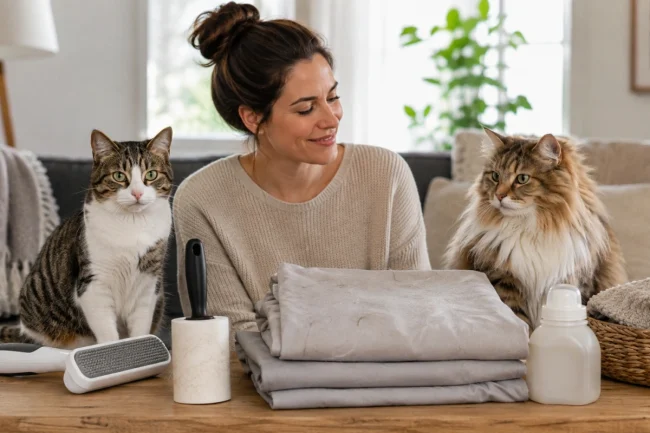
Choosing the right cat grooming brush starts with your cat, not the product label. Coat length, coat density, shedding level, and grooming tolerance determine whether a rubber brush, slicker brush, grooming mitt, soft bristle brush, or another tool will be the better fit.
Brush selection is only one part of grooming a cat successfully at home. A tool that removes a large amount of fur is not automatically better if it pulls the coat, irritates the skin, or makes your cat avoid future grooming sessions.
If you are building a complete routine, our cat grooming at home guide explains how brushing fits into regular coat care, while the cat grooming tools hub covers the wider range of tools used for different grooming jobs.
How to Choose a Cat Grooming Brush
The easiest way to narrow your choices is to evaluate four things: coat length, coat density, your grooming goal, and what your cat will comfortably tolerate.
Start With Coat Length
Short-haired cats usually need a tool that collects loose surface fur without reaching too aggressively into the coat. Rubber grooming brushes, grooming mitts, and soft bristle brushes are common starting options.
Medium- and long-haired cats usually need a tool that can move through more coat depth. Slicker and pin brushes may help with regular maintenance, but longer coats often benefit from a separate comb for checking hidden tangles.
| Coat Type | Good Starting Brush | Main Goal |
|---|---|---|
| Short, Fine Coat | Rubber or soft bristle brush | Collect loose surface fur |
| Short, Dense Coat | Rubber brush or gentle slicker | Manage heavier shedding |
| Medium Coat | Soft slicker brush | Loose fur and light tangles |
| Long Coat | Slicker or pin brush | Regular coat maintenance |
| Sensitive Cat | Soft brush or grooming mitt | Gentle grooming introduction |
Consider Coat Density
Hair length alone does not tell you everything. Two short-haired cats can have very different coats. One may have fine, close-lying fur, while another has a dense undercoat that releases much more loose hair.
During grooming, notice whether loose fur sits on top of the coat or whether the brush needs to reach deeper. If the brush repeatedly catches or requires pressure to work, the tool may not match the coat.
Match the Brush to the Grooming Goal
- Loose surface fur: Rubber brush or grooming mitt.
- Light tangles: Soft slicker brush.
- Long-coat maintenance: Slicker or pin brush combined with a comb.
- Finishing and smoothing: Soft bristle brush.
- Heavier shedding: A suitable slicker or carefully used deshedding tool.
If your main concern is finding tangles rather than collecting surface hair, read our guide to choosing the right cat grooming comb. A brush and comb perform different jobs, and longer coats often benefit from both.
Consider What Your Cat Will Tolerate
A technically suitable brush is not useful if your cat strongly dislikes it. Some cats tolerate flexible rubber tools more easily than metal pins, especially when they are new to grooming.
Begin with short sessions, gentle pressure, and areas your cat already enjoys being touched. Stop if your cat becomes increasingly tense, repeatedly tries to leave, or reacts strongly to the tool.
Cat Grooming Brush Types Explained
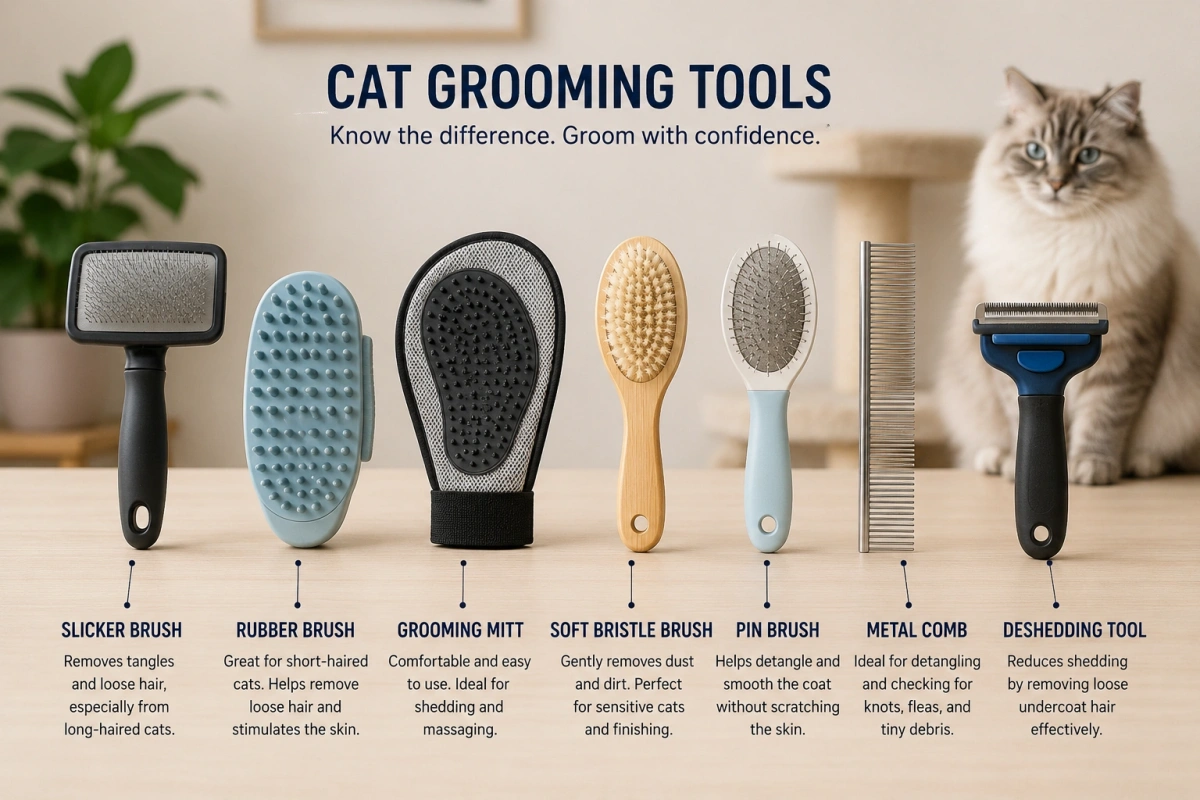
Slicker Brush
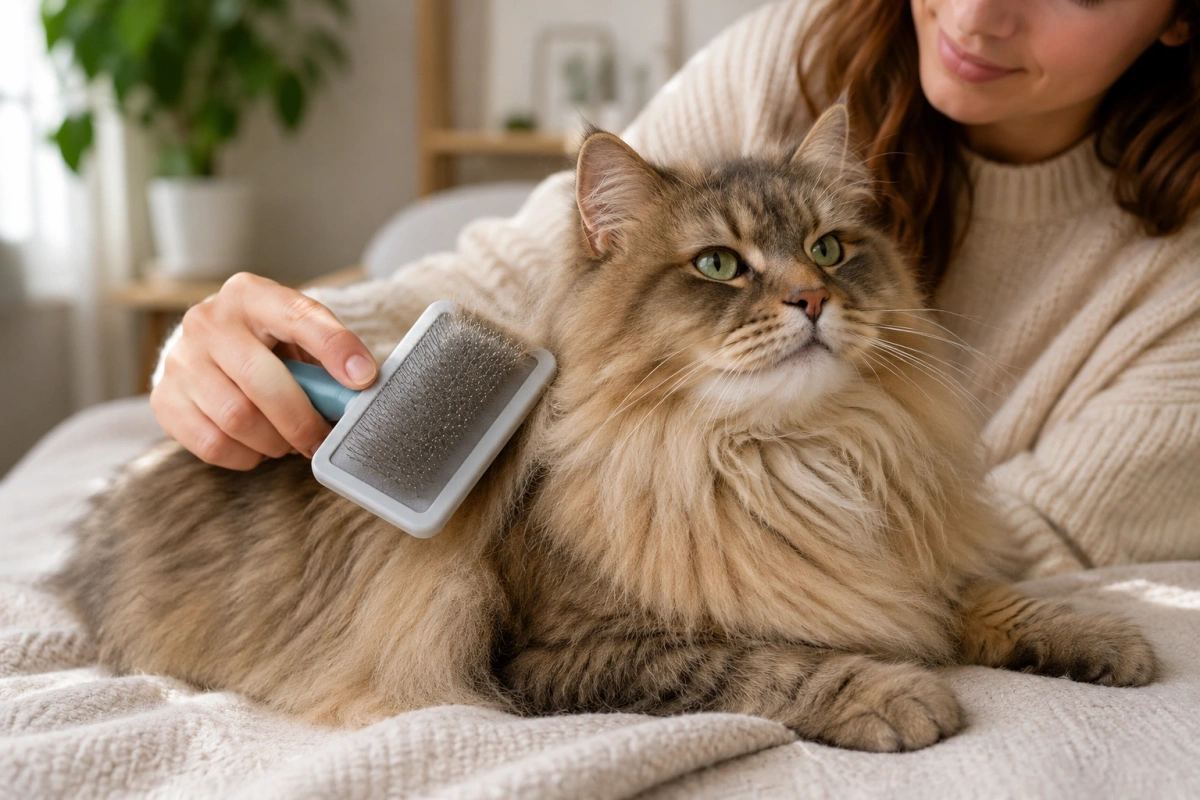
Slicker brushes use many fine pins across a flat or slightly curved head. They can help collect loose fur and work through light tangles on medium- and long-haired cats.
Use gentle pressure. If the pins repeatedly drag or catch, do not simply press harder.
Rubber Brush or Grooming Mitt
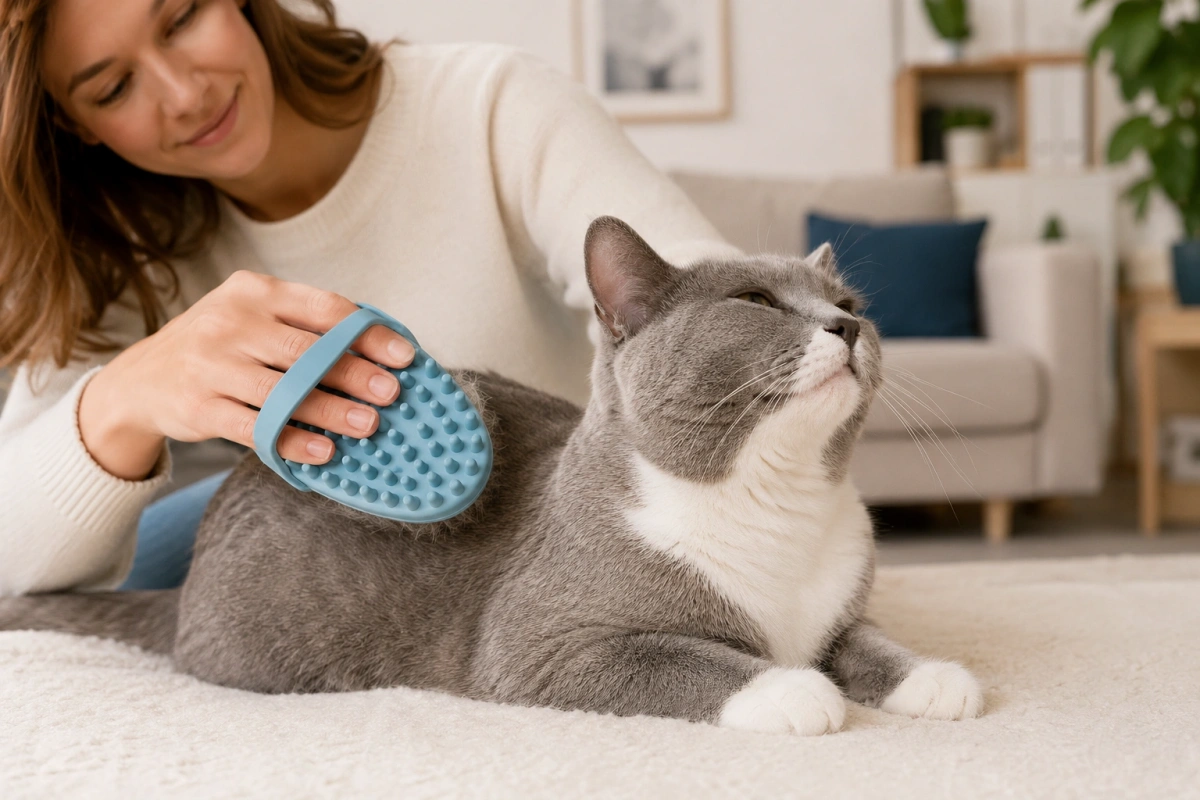
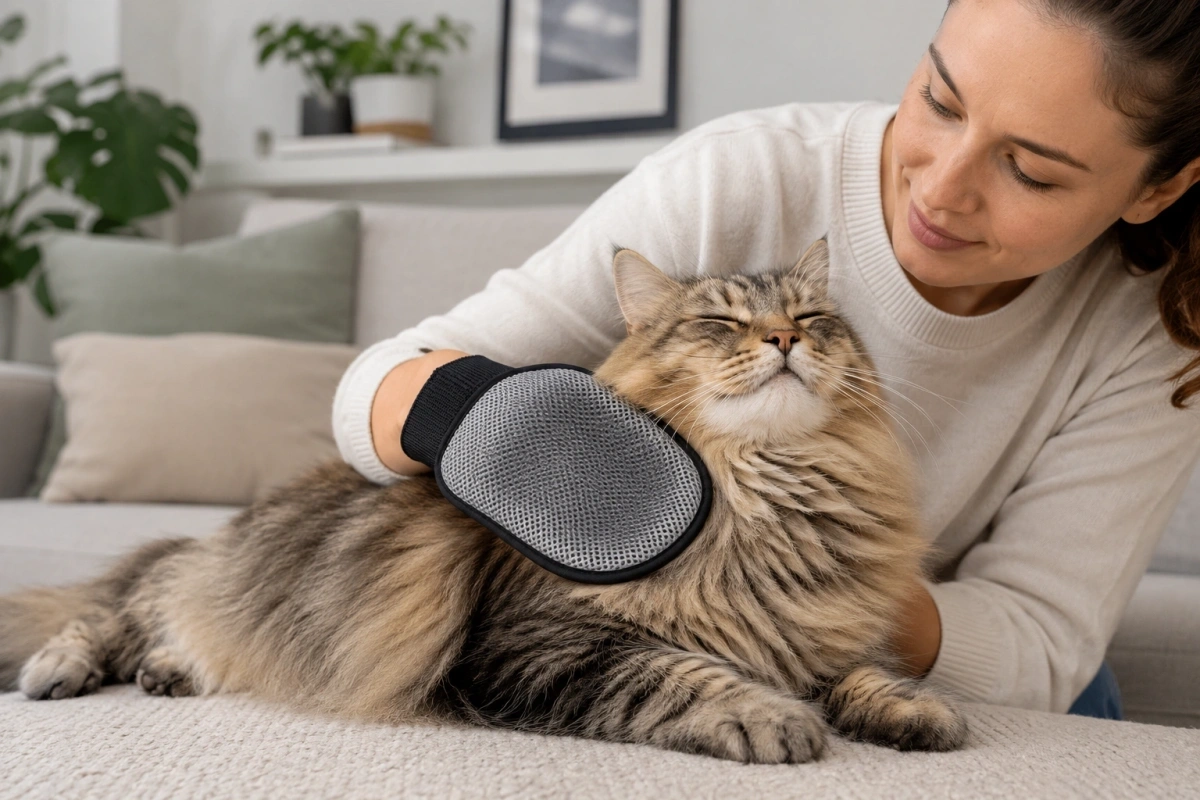
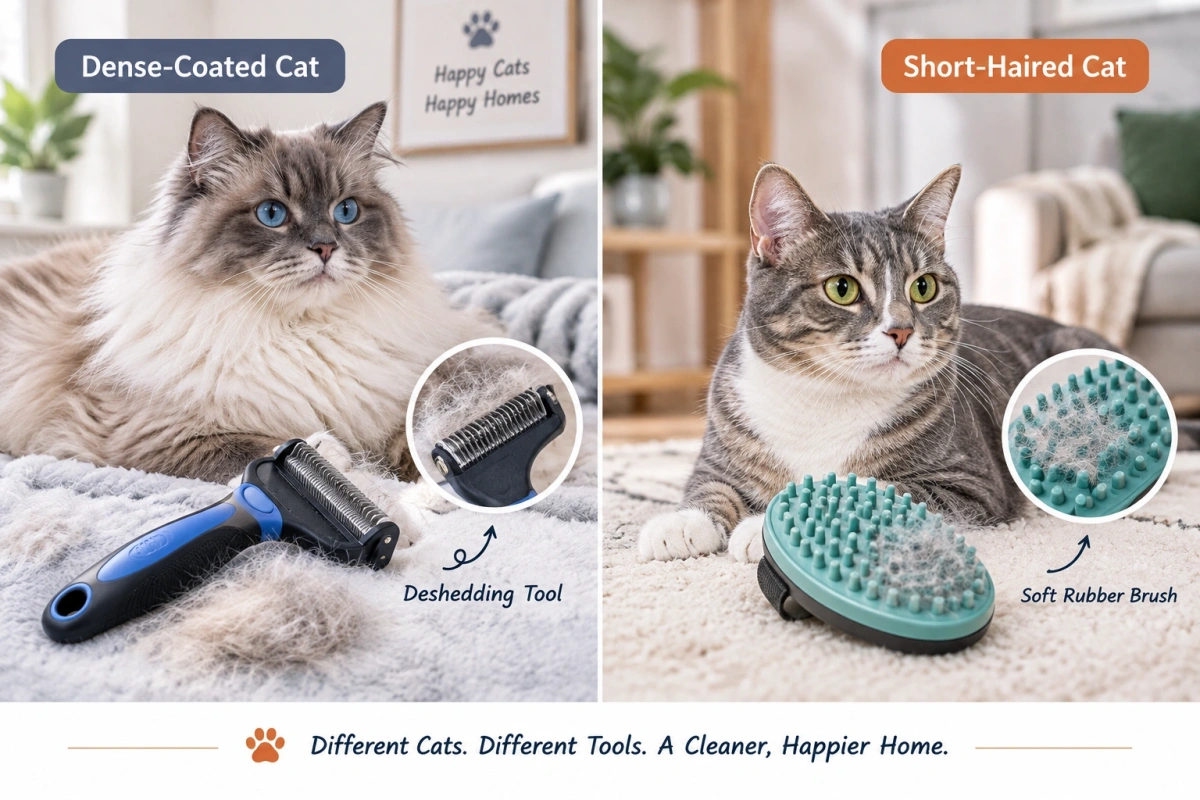
Rubber grooming tools use flexible nubs to collect loose fur. They are especially useful for short-haired cats and cats that dislike the sensation of traditional brushes.
Soft Bristle Brush
A soft bristle brush works well for light grooming, smoothing the coat, and cats that prefer gentler contact. Its limitation is depth: it will not usually reach hidden tangles in a long or dense coat.
Pin Brush
Pin brushes have longer, more widely spaced pins and can move through longer fur with less resistance than some slicker brushes. They are primarily useful for routine coat maintenance.
Deshedding Tool
Deshedding tools can remove loose hair from deeper areas of some dense coats, but not every cat needs one. Use them according to the manufacturer’s directions and avoid repeated aggressive passes over the same area.
Best Brush by Grooming Goal
| Goal | Best Starting Tool | What to Watch For |
|---|---|---|
| Remove loose fur | Rubber brush or mitt | Avoid excessive pressure |
| Manage light tangles | Soft slicker | Stop if the brush catches |
| Smooth the coat | Soft bristle brush | Primarily a finishing tool |
| Manage long hair | Slicker plus comb | Work in small sections |
| Introduce grooming | Soft brush or mitt | Keep sessions short |
What Brush Does a Short-Haired Cat Need?
Most short-haired cats do not need a complicated toolkit. A rubber brush, grooming mitt, or soft bristle brush is often enough for regular loose-fur removal.
If the coat is unusually dense, a deeper-reaching tool may sometimes help, but start with the gentlest option that produces good results.
What Brush Does a Long-Haired Cat Need?
Long-haired cats usually need more than surface brushing. A slicker or pin brush can maintain the coat, while a metal comb helps verify that tangles are not hiding underneath.
Pay extra attention behind the ears, under the front legs, around the chest, belly, and hindquarters, where friction can contribute to tangling.
What If Your Cat Hates Being Brushed?
Start with a softer tool rather than forcing a grooming brush your cat dislikes. A grooming mitt may feel closer to normal petting and can make introductory sessions easier.
- Keep sessions short.
- Start on the back or shoulders.
- Use slow, gentle strokes.
- Avoid forcing sensitive areas.
- Stop before your cat becomes highly frustrated.
Do You Really Need a Deshedding Tool?
Not every cat needs one. A short, fine coat with light shedding may be managed perfectly well with a rubber or soft brush.
A deshedding tool is more relevant when a cat has a dense coat and regular grooming leaves significant loose undercoat behind. More hair removed does not automatically mean better grooming.
Common Cat Grooming Brush Buying Mistakes
- Choosing the most aggressive tool first.
- Choosing only by hair length and ignoring coat density.
- Ignoring your cat’s grooming tolerance.
- Buying several brushes that perform the same function.
- Using tools intended for furniture directly on a cat.
How Many Cat Grooming Brushes Do You Need?
| Your Cat | Simple Grooming Setup |
|---|---|
| Short-haired, light shedding | Rubber or soft bristle brush |
| Short-haired, dense coat | Rubber brush plus optional deeper tool |
| Medium-haired | Slicker brush plus comb |
| Long-haired | Slicker or pin brush plus metal comb |
| Brush-sensitive | Grooming mitt or soft brush |
Final Thoughts
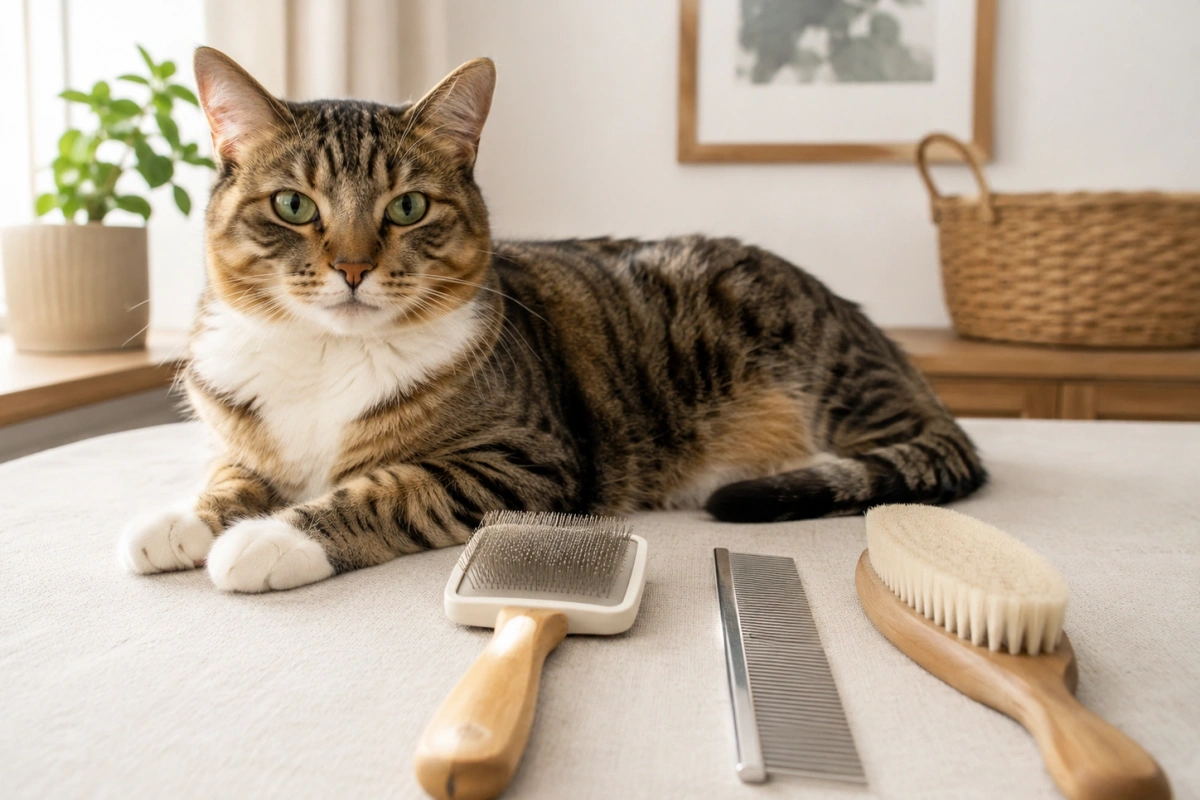
The best cat grooming brush is the one that matches your cat’s coat and keeps grooming comfortable. Short-haired cats often need only a simple rubber or soft brush, while longer coats usually require a brush-and-comb combination.
Start with the gentlest effective tool, watch how your cat and coat respond, and only add another tool when it solves a specific grooming problem.