By
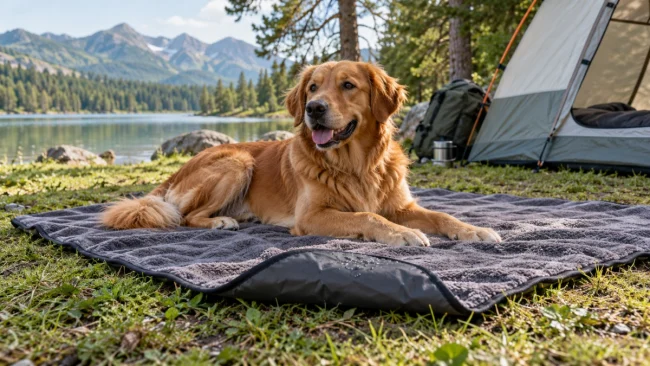
Outdoor dog blankets are designed for a different job than ordinary indoor throws. A fleece blanket that feels comfortable on a couch may quickly absorb moisture from wet grass, collect sand, or become difficult to clean after a day at a campsite.
A good outdoor blanket needs to balance two sides of the product: a comfortable surface where your dog can rest and a ground-contact layer that can handle dirt, moisture, abrasion, and repeated packing.
That does not mean every outdoor dog blanket needs to be completely waterproof or heavily insulated. A picnic in a dry park, a beach trip, and a cold campsite all create different requirements.
Start with where you will use the blanket, then choose the surface, backing, durability, insulation, size, and packability around that environment.
For more dog blanket guides covering materials, sizes, furniture, cars, and special features, visit our Dog Blankets topic hub.
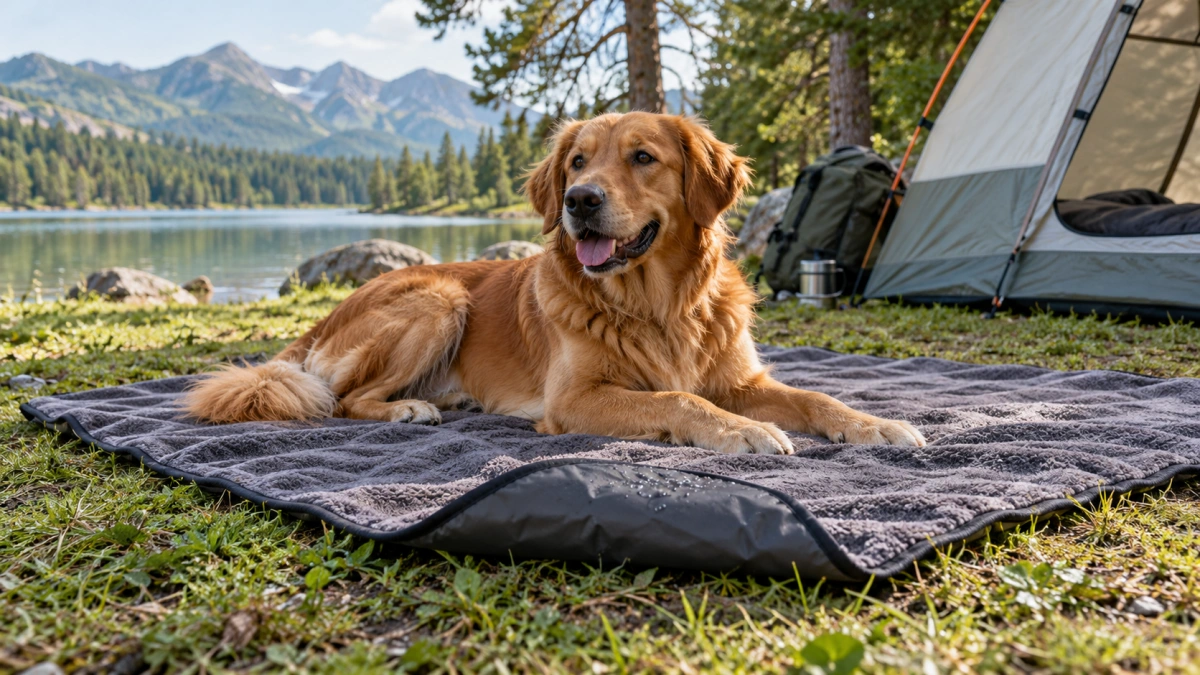
Quick Comparison: Which Outdoor Dog Blanket Setup Fits Your Trip?
| Use | Useful Construction | Main Priority | Main Trade-Off |
|---|---|---|---|
| Dry park or picnic | Lightweight washable blanket | Comfort and easy packing | Limited ground-moisture protection |
| Damp grass | Soft top + waterproof backing | Keep ground moisture away | More laundry bulk |
| Camping | Durable packable layered blanket | Ground protection and portability | More weight than a basic fleece throw |
| Beach | Smooth quick-clean surface | Sand removal and fast drying | Less plush comfort |
| Cool-weather campsite | Insulated top + ground barrier | Reduce heat loss to the ground | Bulkier and warmer |
| Vehicle-to-trail use | Compact washable travel blanket | Packability and multi-use | May provide less insulation |
What Makes an Outdoor Dog Blanket Different?
An ordinary dog blanket mainly needs to manage comfort, warmth, hair, and household washing.
An outdoor blanket may also face:
- Damp ground
- Grass
- Soil
- Sand
- Small twigs and debris
- Repeated folding
- Transport in a car or backpack
That changes the ideal construction.
Many useful outdoor designs combine:
- A comfortable upper surface
- Optional light insulation
- A moisture-resistant or waterproof bottom
- Durable edge construction
This allows the top and bottom of the blanket to perform different jobs.
Why the Bottom Layer Matters
When a blanket sits directly on the ground, moisture can enter from underneath even when it is not raining.
Common sources include:
- Dew
- Damp grass
- Wet soil
- Sand near water
- Moist picnic areas
An ordinary fleece blanket can absorb or transfer that moisture.
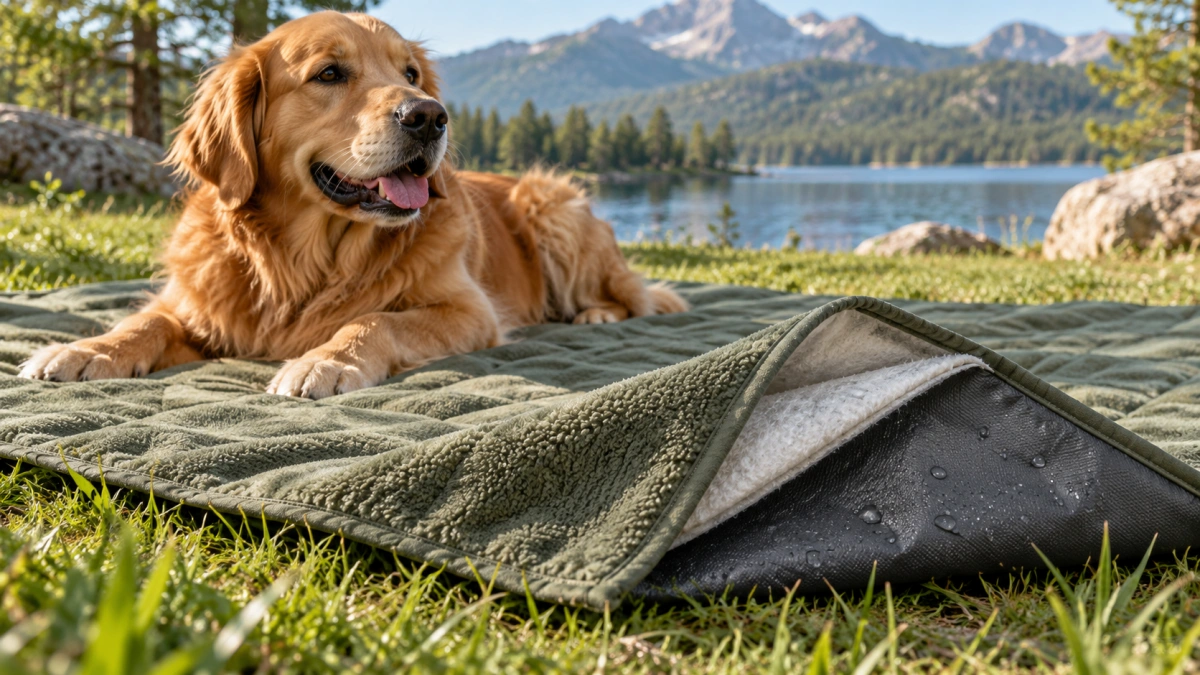
A purpose-designed outdoor blanket may use a coated nylon, polyester, laminated fabric, or another moisture barrier on the bottom.
Current outdoor blankets commonly use exactly this construction. For example, some designs combine a soft fleece or insulated top with polyurethane-coated nylon or another waterproof utility layer underneath.
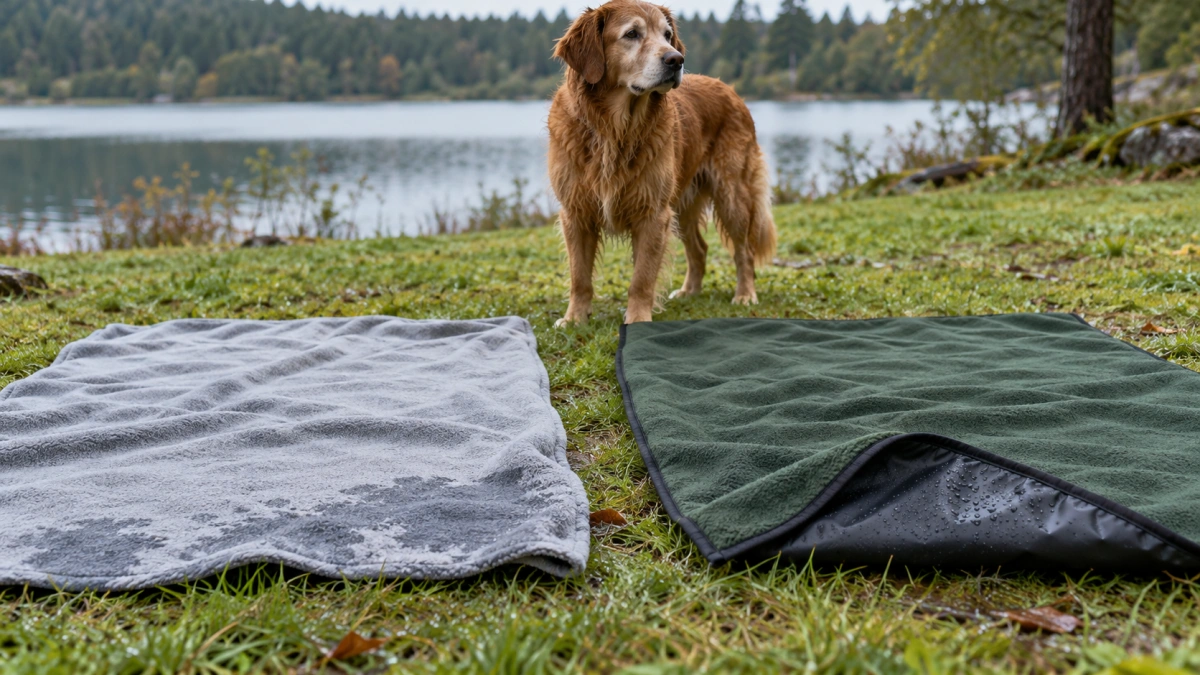
Waterproof vs Water-Resistant Outdoor Dog Blankets
These terms should not automatically be treated as identical.
Water-Resistant
A water-resistant fabric can slow light moisture and small splashes but may eventually allow water through.
Waterproof
A waterproof ground layer is designed to prevent water from passing through under the conditions for which the product was designed.
DWR
Durable Water Repellent, commonly shortened to DWR, is a surface treatment that helps water bead and roll away from fabric.
A DWR-treated upper surface does not necessarily mean the entire blanket has a fully waterproof barrier.
Check whether waterproofing applies to:
- The top
- The bottom
- An internal membrane
- The complete product
Waterproof Bottom vs Waterproof Entire Blanket
For ground use, a waterproof bottom is often the most important layer.
The dog can lie on a softer upper textile while the lower layer blocks moisture from the ground.
A fully waterproof upper surface may be useful when dealing with:
- Wet dogs
- Rain splashes
- Muddy paws
but it can also change softness, breathability, and drying behavior.
For a deeper explanation of liquid barriers, see our guide to waterproof dog blankets.
Outdoor Does Not Mean Permanently Weatherproof
A blanket designed for picnics and camping should not automatically be left outside permanently.
Repeated exposure to:
- Rain
- Standing water
- UV light
- Freeze-thaw cycles
- Mud
- Wind
can eventually degrade textiles, coatings, seams, and insulation.
After use, clean and dry the blanket and store it appropriately rather than treating it like permanent outdoor flooring.
How Large Should an Outdoor Dog Blanket Be?
For the dog to rest directly on the blanket, measure the dog’s normal sleeping footprint.
The blanket should usually provide enough area for:
- The dog’s full torso
- Head and paws
- Normal turning
- Stretching
- A useful dry margin around the body
For camping or picnics, extra space can also be useful for a water bowl or small amount of gear.
Do not automatically buy the largest blanket available.
Larger dimensions also mean:
- More carrying weight
- More folded volume
- More laundry bulk
Outdoor Dog Blankets for Camping
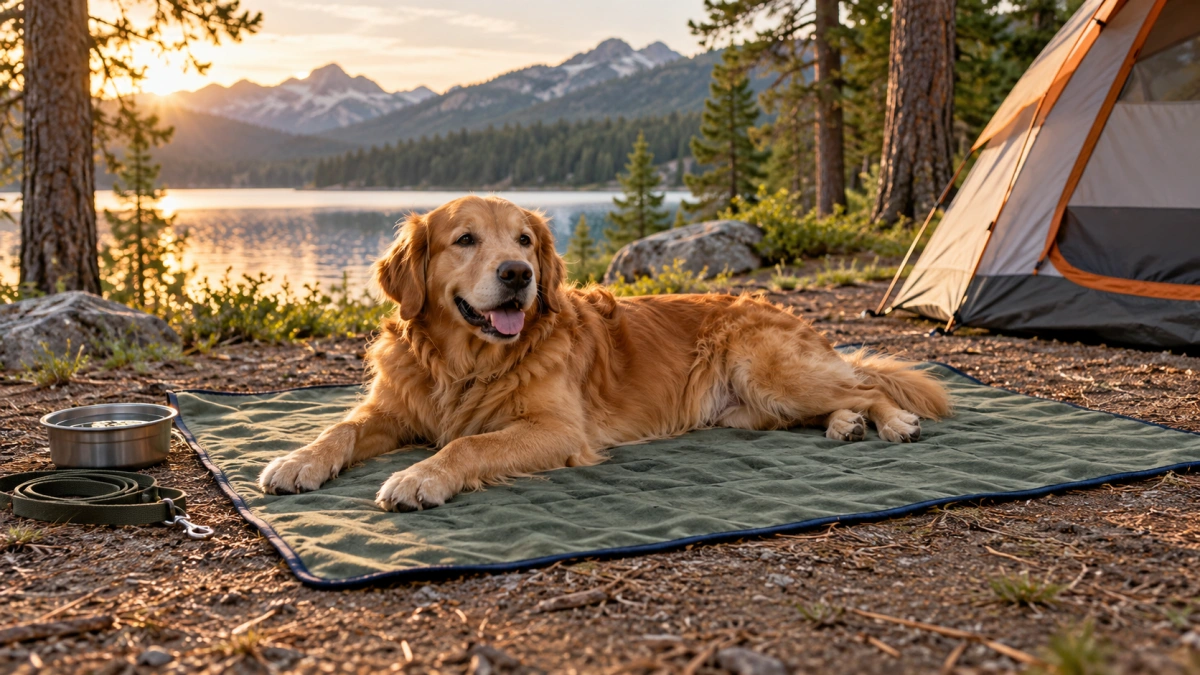
A camping blanket should work as part of the dog’s resting setup rather than the entire shelter system.
Useful features include:
- Moisture-resistant ground layer
- Washable upper surface
- Durable edges
- Compact packing
- Moderate insulation when conditions require it
Place the blanket in a protected resting area rather than assuming it can make extreme temperatures safe.
In very hot or very cold weather, changing the trip plan can be more appropriate than relying on additional bedding.
An Outdoor Blanket Is Not Shelter
A blanket does not replace protection from:
- Rain
- Wind
- Extreme heat
- Extreme cold
- Direct sun
During outdoor trips, your dog still needs access to appropriate shelter, shade, water, and a suitable temperature environment.
A waterproof blanket underneath the dog does not prevent heatstroke, and a thick blanket alone does not make unsafe cold exposure acceptable.
Outdoor Dog Blankets for Picnics and Parks
Picnic use is generally less demanding than multi-day camping.
Prioritize:
- Large usable area
- Easy folding
- Ground-moisture resistance
- Hair and dirt cleanup
- Machine washing when possible
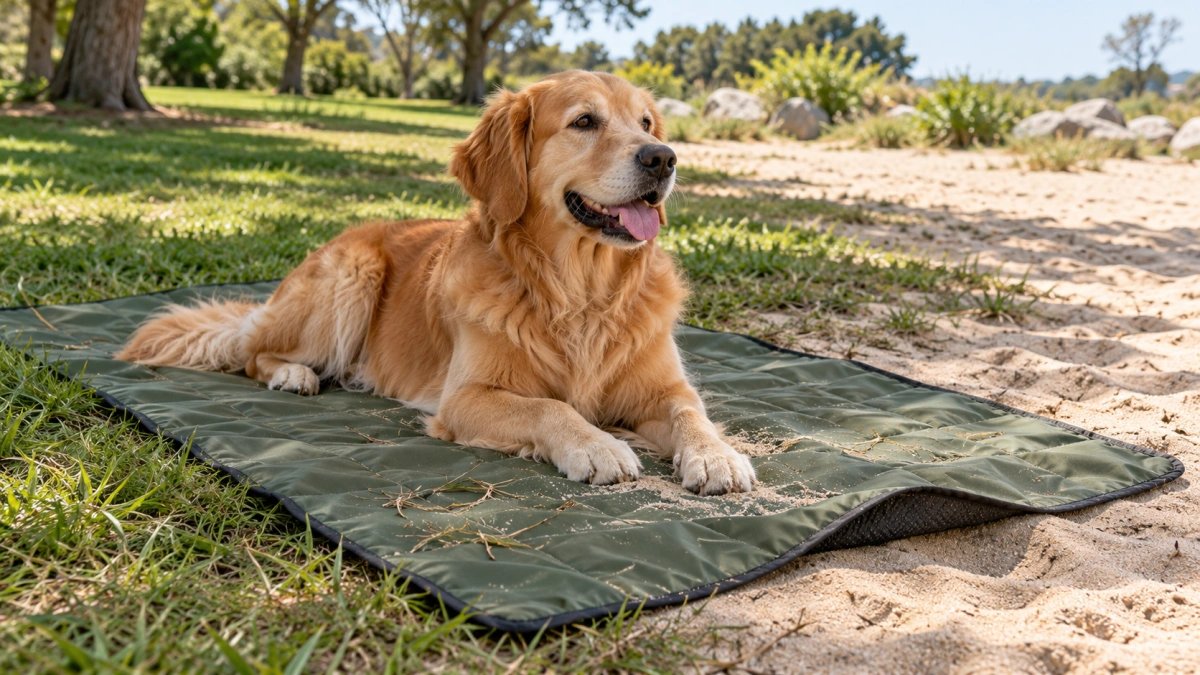
A smooth, durable upper surface may be easier to maintain than deep sherpa when the blanket is repeatedly exposed to dry grass and leaves.
Grass, Sand and Dirt Need Different Priorities
Grass
Look for moisture protection underneath and a top surface that releases dry plant debris easily.
Sand
Deep fleece and sherpa can trap fine sand between fibers.
A smoother surface may be easier to shake clean.
Dirt and Dry Soil
Choose fabrics that tolerate repeated shaking, brushing, and washing.
Muddy Ground
A durable waterproof underside becomes more useful, but avoid folding the dirty underside directly against the clean resting surface during storage.
Which Top Material Works Best Outdoors?
Low-Pile Polyester
A practical outdoor choice because it can be:
- Lightweight
- Fast drying
- Easy to shake clean
- Durable
Fleece
Fleece adds softness and moderate warmth.
It works well in cooler conditions but can trap grass, hair, and sand more readily than a smooth woven surface.
Sherpa and Deep Plush
These materials provide more warmth but are usually less convenient for dirty outdoor environments.
Quilted Synthetic Fabric
This can offer moderate padding while maintaining a relatively stable surface.
For deeper material comparison, see our guide to fleece and plush dog blankets.
Which Bottom Material Works Best?
The bottom layer needs to tolerate ground contact.
Useful constructions include:
- Coated polyester
- Coated nylon
- Oxford-style synthetic fabric
- TPU-laminated backing
- Other waterproof utility fabrics
Look for a bottom that is:
- Moisture resistant
- Easy to wipe
- Resistant to ordinary ground abrasion
- Flexible enough to fold
You do not need the bottom layer to feel plush because it is not the dog’s contact surface.
What About Ripstop Outdoor Blankets?
Ripstop-style woven fabric can be useful outdoors because reinforcing yarns can help limit the spread of small tears.
That is valuable around:
- Rough ground
- Branches
- Repeated packing
- General abrasion
But ripstop does not automatically make a blanket chew-proof.
For dogs that destroy bedding with their teeth, see our guide to durable dog blankets.
Durable Outdoors Does Not Mean Chew-Resistant
Outdoor durability mainly deals with environmental wear.
Examples include:
- Ground abrasion
- Repeated folding
- Dirt
- Moisture
- Transport
Chew resistance deals with concentrated force from a dog’s teeth.
A durable outdoor blanket can perform well on rough ground and still be easy for a determined chewer to tear.
Do You Need Insulation?
Not on every trip.
Insulation becomes useful when:
- The ground is cool
- The dog has a thin coat
- The dog rests for long periods
- The ambient temperature is cool
During warm conditions, additional insulation can be unnecessary or uncomfortable.
Choose warmth according to the dog, weather, ground temperature, and activity rather than simply because the blanket is marketed for camping.
Ground Insulation Matters Differently From Top Warmth
A dog lying directly on cold ground can lose heat through contact with that surface.
A blanket with some padding or insulation between the dog and the ground may improve comfort.
However, one thin blanket does not transform freezing ground into a safe sleeping environment.
For cold-weather overnight trips, the dog’s complete shelter and sleeping system matters more than one blanket.
Hot-Weather Outdoor Use
A thick insulated blanket is not automatically appropriate during summer.
In warm conditions, prioritize:
- Shade
- Water
- Airflow
- Lightweight materials
- The dog’s ability to move onto a cooler surface
A blanket does not prevent heatstroke.
If your dog shows excessive panting, weakness, confusion, collapse, or other signs of overheating, move the dog to a cooler environment and seek veterinary care.
Packability Matters More Outdoors
A blanket may work perfectly at home but become inconvenient once you need to carry it.
Compare:
- Folded dimensions
- Weight
- Carry handle
- Stuff sack
- Integrated straps
- Whether dirty surfaces stay contained after folding
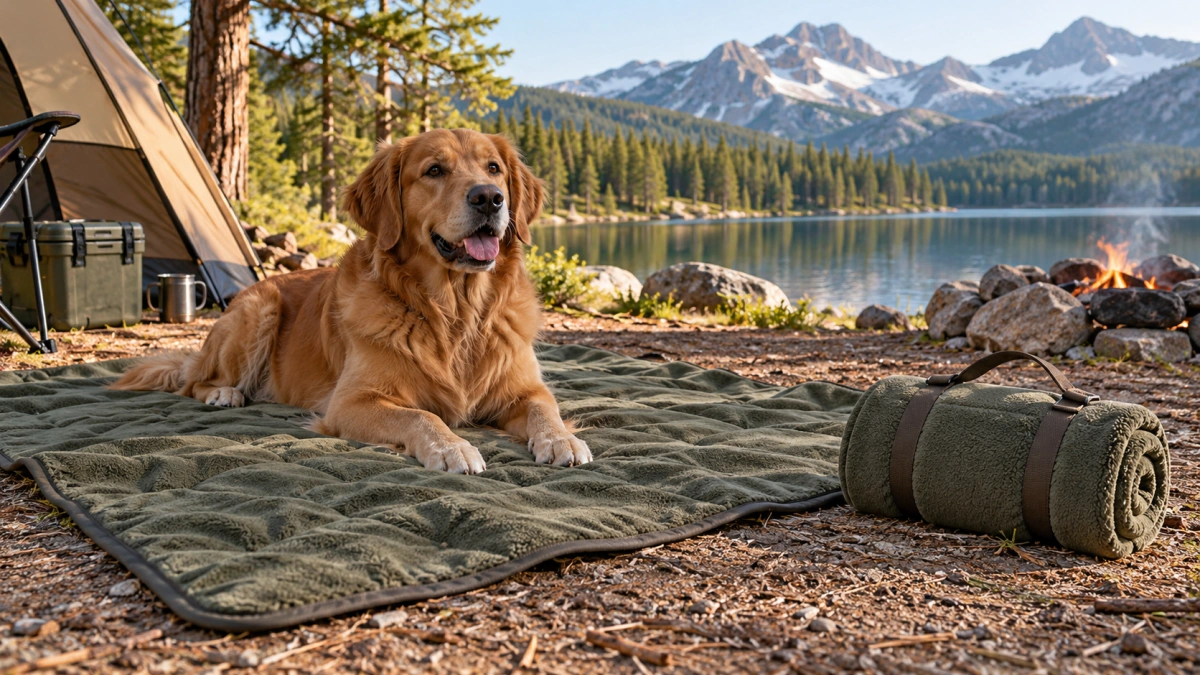
Current outdoor designs commonly fold or roll into compact bundles specifically because portability is part of the product’s function.
Should an Outdoor Blanket Have Corner Loops?
Corner loops can be useful on windy days because they allow the blanket to be secured according to the manufacturer’s design.
They can also help keep a large picnic blanket flatter on the ground.
However, loops should remain:
- Securely stitched
- Free of long loose cords
- Out of the dog’s chewing reach when not needed
Do not improvise long tether lines around a dog resting on the blanket.
Outdoor Dog Blankets at the Beach
Beach use creates a different cleaning challenge from wet grass.
Prioritize:
- Sand release
- Fast drying
- Lightweight construction
- Easy shaking
- Washability
Deep sherpa may collect fine sand much more readily than a smooth synthetic surface.
If the dog goes into the water, dry the dog before long periods of resting when conditions are cool or windy.
Outdoor Dog Blankets for Hiking Stops
For hiking, weight and packed size become more important.
A compact travel mat or lightweight ground blanket may be more practical than a large insulated picnic blanket.
The goal may simply be to create:
- A cleaner rest surface
- A familiar place cue
- A barrier from damp soil
You do not need a huge blanket for a short trail break.
Outdoor Blanket vs Portable Dog Bed
| Feature | Outdoor Blanket | Portable Dog Bed |
|---|---|---|
| Packability | Usually excellent | Moderate |
| Ground coverage | Large | More localized |
| Structural support | Low | Higher |
| Weight | Usually lower | Usually higher |
| Picnic use | Excellent | Limited |
| Sleeping support | Limited | Better |
For an older dog or a dog that needs more supportive sleeping surfaces, a portable bed may be more appropriate than relying on several folded blankets.
Outdoor Dog Blanket vs Car Blanket
There is some overlap, but the priorities differ.
A car blanket focuses on:
- Seat coverage
- Non-slip fit
- Seat anchors
- Vehicle upholstery
An outdoor blanket focuses more on:
- Ground moisture
- Dirt
- Abrasion
- Packability
If vehicle protection is your main need, see our guide to dog blankets for cars.
Can a Dog Sleep Outside on an Outdoor Blanket?
The fact that a blanket is designed for outdoor use does not mean it makes outdoor overnight sleeping safe in all weather.
Safe overnight conditions depend on:
- Temperature
- Wind
- Rain
- Dog size
- Coat
- Age
- Health
- Shelter
- Ground conditions
Extreme heat or cold can make camping inappropriate regardless of the blanket.
Use the blanket as one component of a safe environment, not as the environment itself.
Do Not Leave a Wet Blanket Under Your Dog
If water reaches the upper surface or the blanket becomes soaked:
- Replace it with a dry surface
- Dry the dog when needed
- Dry the blanket completely before storage
A product being marketed as outdoor does not mean wet fabric remains comfortable indefinitely.
How to Clean an Outdoor Dog Blanket
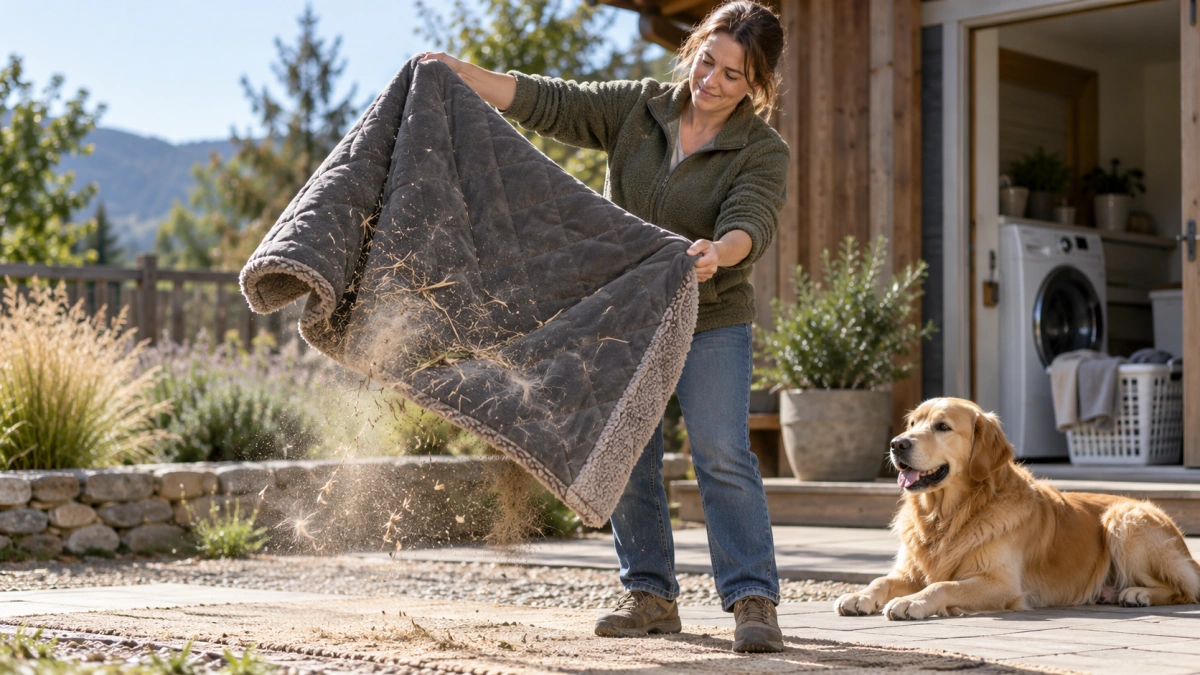
Remove as much dry debris as possible before using the washing machine.
A practical routine is:
- Shake off loose grass, leaves and sand.
- Brush or vacuum dog hair.
- Allow thick mud to dry enough to remove loose debris when appropriate.
- Inspect the waterproof backing.
- Inspect seams and corners.
- Follow the care label.
- Dry completely before folding or storing.
Do not automatically use the hottest wash or dryer setting.
Waterproof coatings, laminated layers, insulation, and DWR finishes can have specific care requirements.
Protect the Clean Side When Packing
After outdoor use, the bottom may contain:
- Dirt
- Grass
- Moisture
- Sand
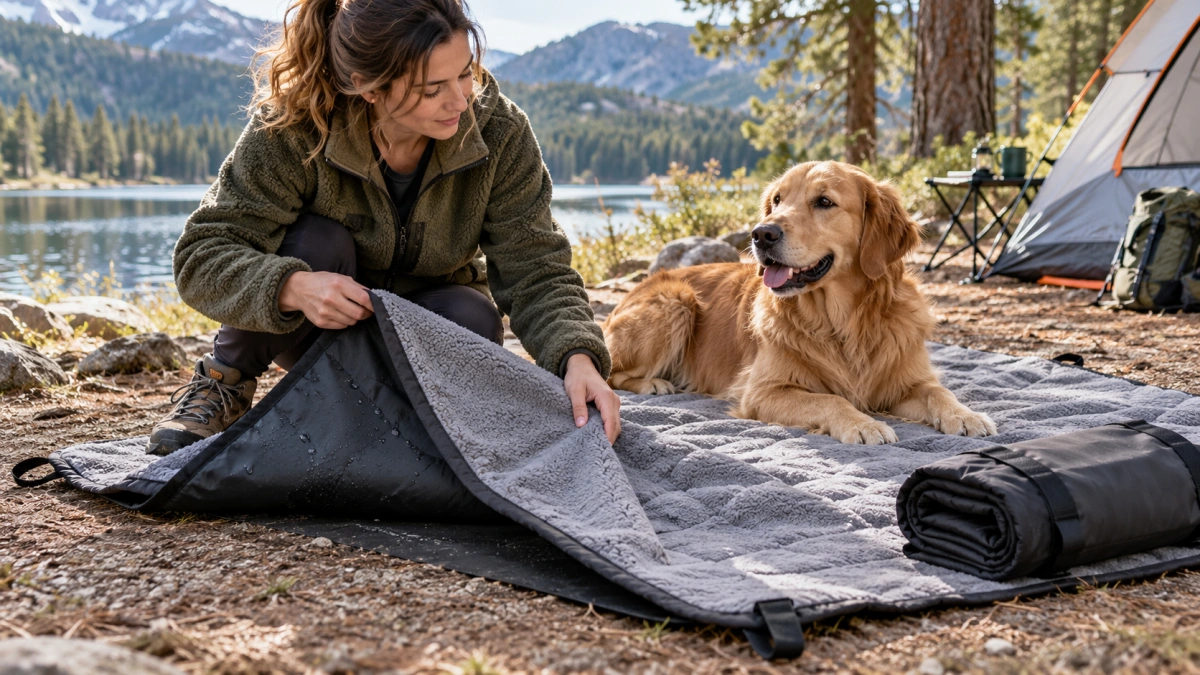
A useful folding design keeps the dirty ground-contact surface from being pressed directly against the clean top.
Some blankets fold into their own carry flap or storage pouch, which can also help contain debris during transport.
Machine Washable Does Not Mean Maintenance-Free
Even a machine-washable outdoor blanket should be inspected after rough use.
Check for:
- Peeling coatings
- Open seams
- Small punctures
- Delamination
- Frayed edges
- Damaged corner loops
A waterproof bottom that has developed holes may no longer provide the ground-moisture protection you bought it for.
Our 9-Point Outdoor Dog Blanket Check
Use these nine factors before choosing a blanket for camping, picnics, parks, beaches, or other outdoor use.
1. Ground Barrier
Does the underside provide the moisture protection required for the surfaces you use?
2. Top Surface
Is the dog-facing side comfortable and appropriate for the temperature?
3. Size
Can your dog lie and reposition fully on the usable area?
4. Durability
Can the lower fabric tolerate grass, dirt, sand, and normal ground abrasion?
5. Packability
Is the folded size and weight realistic for the way you travel?
6. Debris Release
Can grass, hair, sand, and dry dirt be shaken or brushed away easily?
7. Laundry
Can the blanket be cleaned without damaging its waterproof or water-resistant construction?
8. Weather Match
Does the amount of insulation make sense for the actual temperature and your dog’s coat?
9. Safety Boundary
Are you using the blanket as a resting surface rather than treating it as shelter from unsafe heat, cold, rain, or wind?
A good outdoor dog blanket is one that performs well against the ground while remaining practical enough to carry, clean, and dry after every trip.
Common Outdoor Dog Blanket Buying Mistakes
- Using an ordinary indoor fleece directly on wet ground
- Assuming water-resistant means fully waterproof
- Assuming DWR means the entire blanket is waterproof
- Ignoring the bottom layer
- Buying the warmest blanket for summer camping
- Buying deep sherpa for sandy beach use
- Choosing by unfolded size while ignoring packed size
- Ignoring carry weight
- Assuming ripstop means chew-proof
- Leaving an outdoor blanket outside permanently
- Folding muddy backing directly against the clean top
- Storing the blanket while damp
- Ignoring damaged waterproof coatings
- Using an outdoor blanket as a substitute for a supportive dog bed
- Treating a waterproof blanket as protection from extreme heat or cold
- Assuming a blanket makes outdoor overnight sleeping safe in every weather condition
Outdoor Dog Blanket Buying Checklist
- Where will I use the blanket most often?
- Will the ground usually be dry, damp, sandy, or muddy?
- Does the blanket have a waterproof or water-resistant bottom?
- Is the top comfortable for my dog?
- Do I need insulation?
- How much insulation is appropriate?
- What are the unfolded dimensions?
- Can my dog stretch fully on it?
- What are the packed dimensions?
- How much does it weigh?
- Does it include a carry handle, straps, or stuff sack?
- Are the edges reinforced?
- Does it use ripstop or another durable woven fabric?
- Are corner loops useful for my trips?
- Will the surface release sand and dog hair easily?
- Is it machine washable?
- What drying method is permitted?
- Can I keep the clean and dirty sides separated during packing?
- Will I dry it completely before storage?
- Am I treating it as a ground layer rather than weather shelter?
Final Thoughts
The best outdoor dog blankets combine indoor comfort with outdoor ground protection.
Start with the bottom. If you regularly use the blanket on damp grass, campsites, or picnic areas, a waterproof or strongly moisture-resistant backing is more useful than simply choosing thicker fleece.
Then consider the top surface. Low-pile synthetic fabrics are practical when sand, dirt, and hair cleanup matter, while fleece or light insulation can add comfort in cooler conditions.
Next, consider portability. A blanket that is comfortable but too bulky to carry may stay at home. Folded dimensions, weight, handles, integrated straps, and storage design all matter outdoors.
Keep durability in perspective. Ripstop fabrics and reinforced edges can help with ground abrasion and repeated travel, but outdoor durability does not automatically mean resistance to destructive chewing.
Most importantly, treat the blanket as one part of your dog’s outdoor setup. It can provide a cleaner, drier and more comfortable resting surface, but it cannot replace shade, water, shelter, appropriate temperatures, or a proper sleeping system when conditions become extreme.