By
By 
The right cat grooming comb depends on coat length, coat density, tooth spacing, and what you need the comb to do. Short-haired cats often need a finer or medium-tooth comb for light coat checks, while medium- and long-haired cats usually benefit from longer teeth and a combination of wide and fine spacing.
Choosing the comb is one small part of grooming a cat. The goal is not simply to pull out as much fur as possible; a useful comb should move through the coat comfortably and help identify tangles before they become difficult to manage.
For a broader look at brushes, combs, mitts, and other equipment, visit our cat grooming tools guide.
If you are comparing the cost of buying home grooming tools with using professional grooming services, our guide to cat grooming cost explains the main price factors and service differences.
How to Choose a Cat Grooming Comb
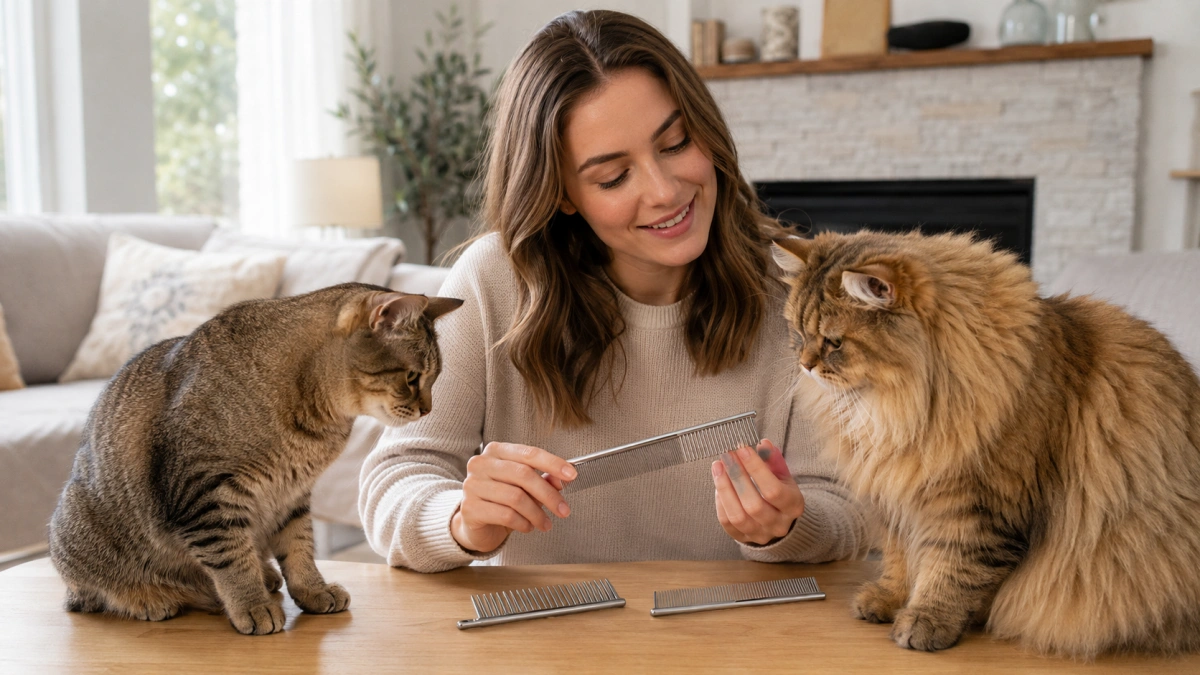
Start with three questions: how long is the coat, how dense is it near the skin, and are you mainly checking for tangles, removing loose fur, or finishing after brushing?
Start With Coat Length
| Coat Type | Good Starting Comb | Main Goal |
|---|---|---|
| Short Hair | Fine or medium-tooth comb | Light coat checks |
| Medium Hair | Combination comb | Loose fur and early tangles |
| Long Hair | Long-tooth combination comb | Reach through the full coat |
| Dense Coat | Long-tooth or undercoat comb | Check dense areas carefully |
Then Look at Tooth Spacing
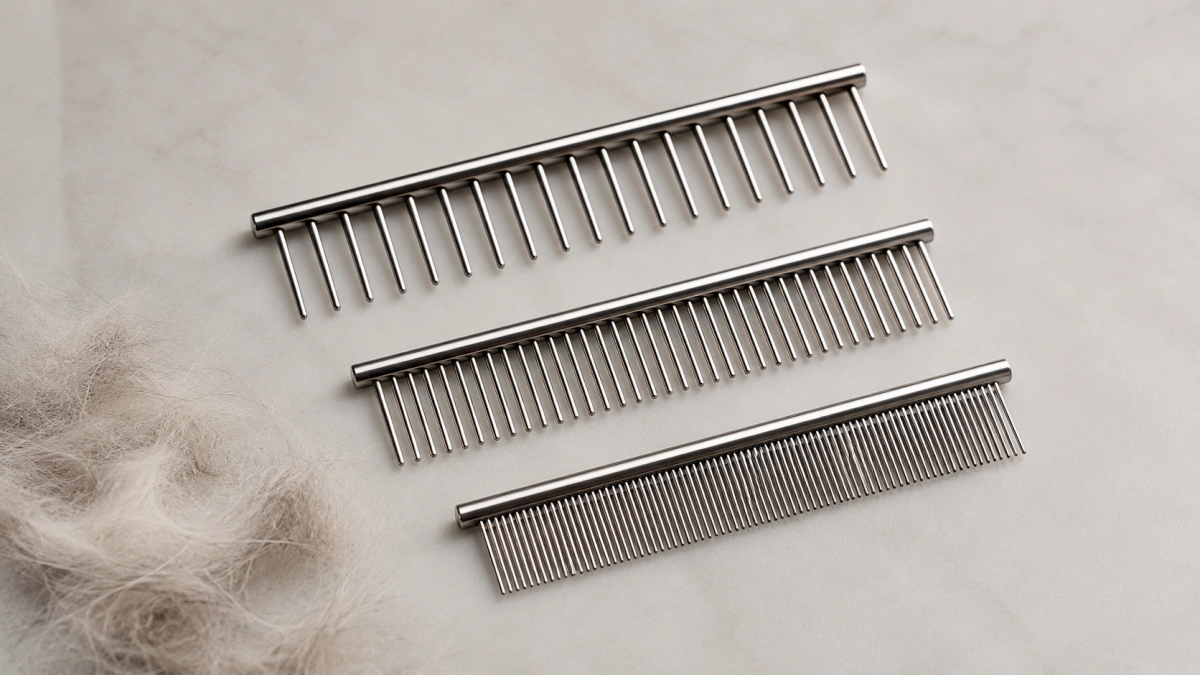
- Wide teeth: Useful for the first pass through long or thick hair.
- Medium spacing: Practical for general grooming.
- Fine teeth: Better for finishing and finding smaller tangles.
- Combination comb: Lets you start wide and finish fine with one tool.
If a fine-tooth comb catches repeatedly, do not pull harder. Return to wider spacing or work on the resistance gradually.
Match the Comb to the Grooming Goal
- Find tangles: Metal comb with enough tooth length to reach through the coat.
- First pass through long fur: Wide-tooth section.
- Final coat check: Fine-tooth section.
- Dense undercoat: Suitable undercoat comb used carefully.
If you are deciding whether a comb should be paired with a brush, see our guide to choosing the right cat grooming brush.
Types of Cat Grooming Combs Explained
Combination Metal Comb
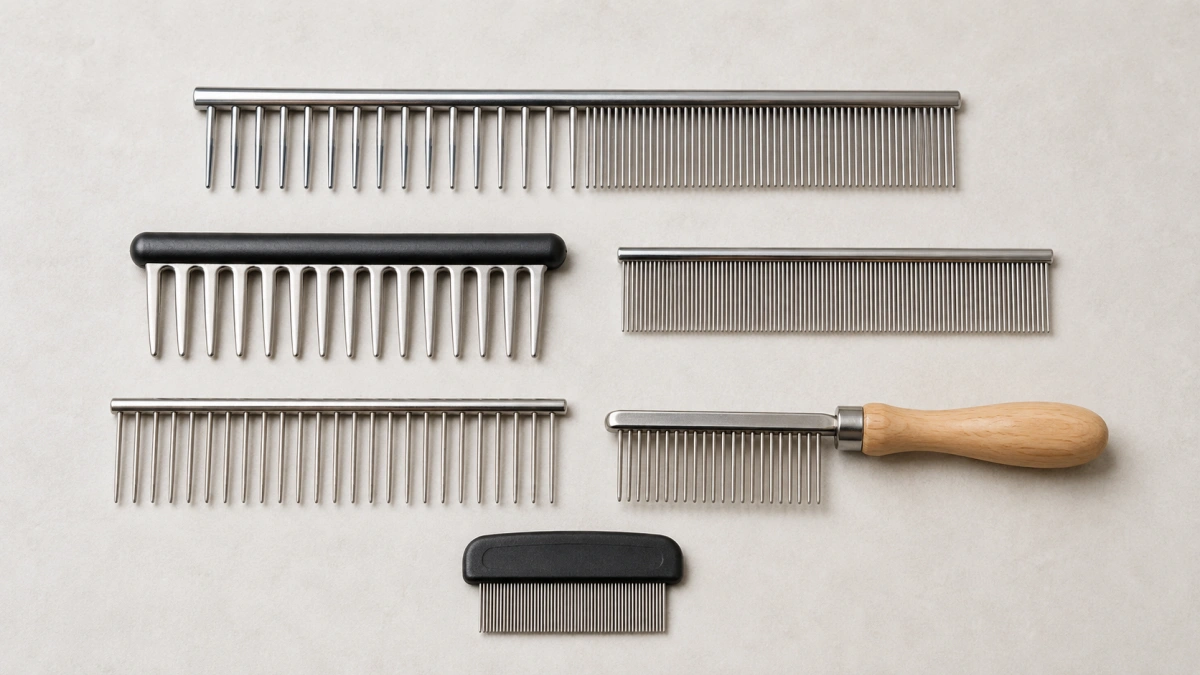
A combination comb includes wider and finer sections. It is one of the most versatile choices for medium- and long-haired cats because one side can make the first pass and the other can perform a finer final check.
Wide-Tooth Comb
Wide teeth create less resistance and are useful for moving through longer or thicker fur before using finer spacing.
Fine-Tooth Comb
Fine teeth are better for finishing and finding small remaining tangles. They should not be forced through thick or tangled areas.
Long-Tooth Metal Comb
Long teeth can reach deeper into medium and long coats, helping you identify tangles that may be hidden under the surface.
Undercoat Comb
Undercoat combs are designed for denser coats. They may help manage loose undercoat in some cats but should be used gently rather than repeatedly scraping the same area.
Flea Comb
A flea comb has very closely spaced teeth and serves a specialized purpose. It is primarily used for checking for fleas, flea dirt, and very small debris rather than general detangling.
Best Cat Grooming Comb by Coat Type
| Coat Type | Recommended Comb | Why |
|---|---|---|
| Short, Fine Coat | Fine or medium-tooth comb | Enough for light coat checks |
| Short, Dense Coat | Medium-tooth comb | Reaches deeper without excessive length |
| Medium Coat | Combination metal comb | Offers both wide and fine spacing |
| Long Coat | Long-tooth combination comb | Reaches through the coat |
| Dense Double Coat | Long-tooth or undercoat comb | Helps inspect dense undercoat |
What Comb Does a Short-Haired Cat Need?
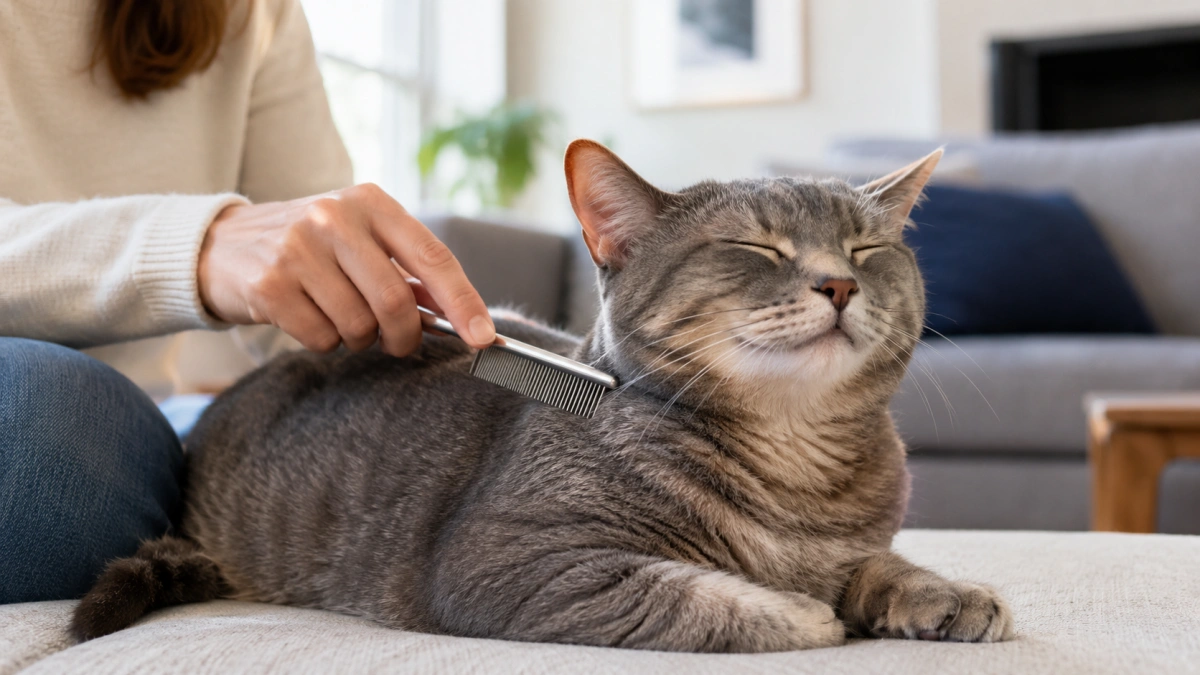
Short-haired cats usually do not need a long, heavy-duty comb. A fine- or medium-tooth comb is often enough for light checks and removing small amounts of loose hair.
For regular shedding control, a rubber brush may do more of the daily work, while the comb serves as a secondary checking tool.
What Comb Does a Long-Haired Cat Need?
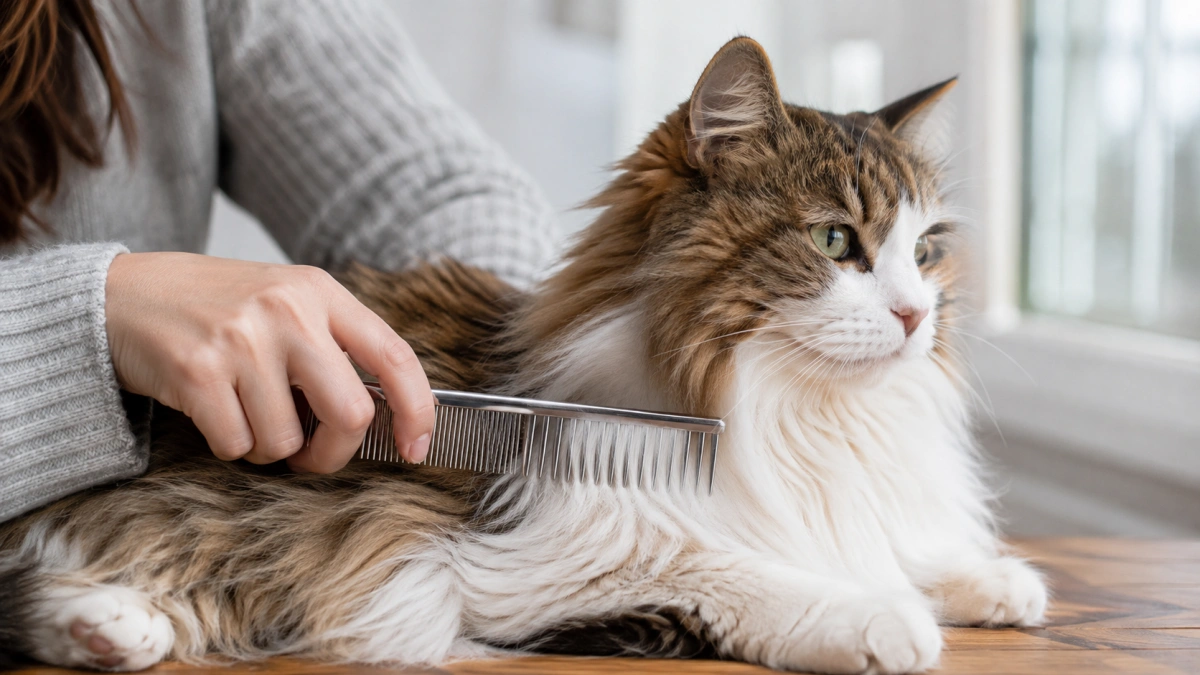
Long-haired cats benefit from teeth that can reach through the full coat. A long-tooth combination metal comb is one of the most practical options.
Begin with the wide side. Once it passes comfortably, use the finer side to check for smaller tangles.
- Behind the ears
- Under the front legs
- Chest
- Belly
- Hind legs
- Base of the tail
If you encounter a tight mat close to the skin, do not keep pulling it with the comb.
Wide-Tooth vs Fine-Tooth Cat Comb
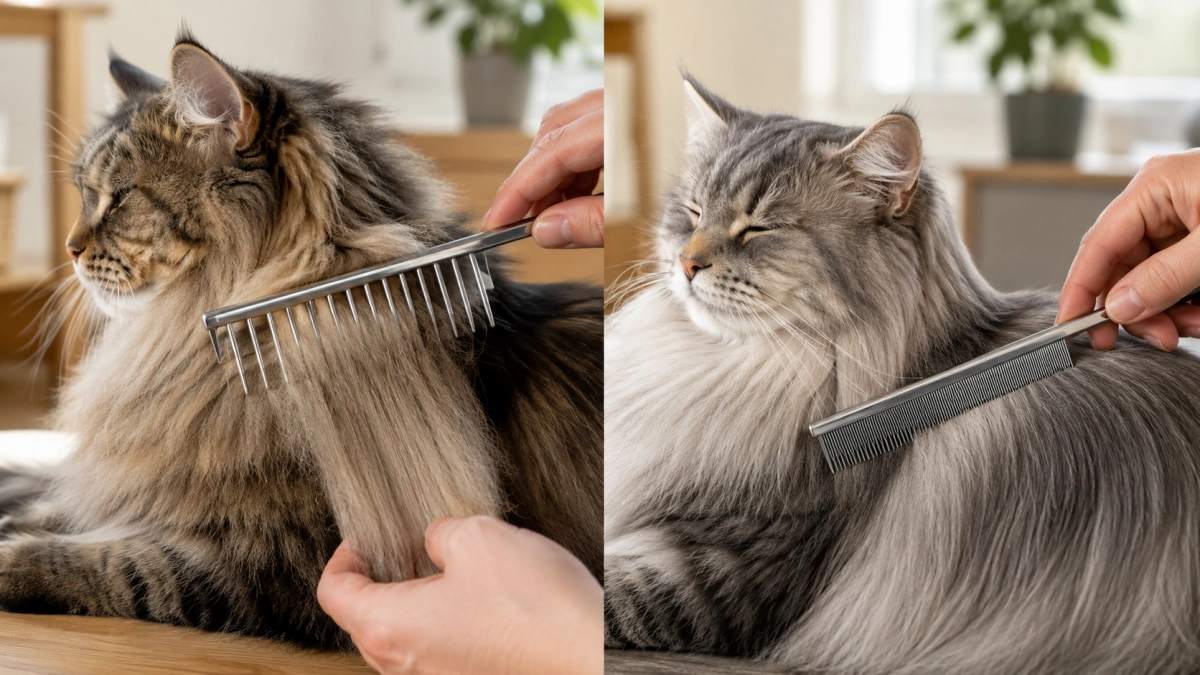
| Feature | Wide-Tooth | Fine-Tooth |
|---|---|---|
| Best Use | First pass | Finishing check |
| Resistance | Lower | Higher |
| Long Hair | Very useful | Use after wider combing |
| Short Hair | Often unnecessary | Useful for light checks |
| Tangles | Finds larger resistance | Finds smaller remaining tangles |
How to Comb a Cat Without Pulling the Coat
- Start on an area your cat tolerates well.
- Use wider teeth first on longer or denser coats.
- Comb in the natural direction of hair growth.
- Use short, gentle passes.
- Stop when the comb meets resistance.
- Work from the edge of a tangle rather than pulling through it.
- Move to finer teeth only after the wider side passes comfortably.
When a Comb Is Better Than a Brush
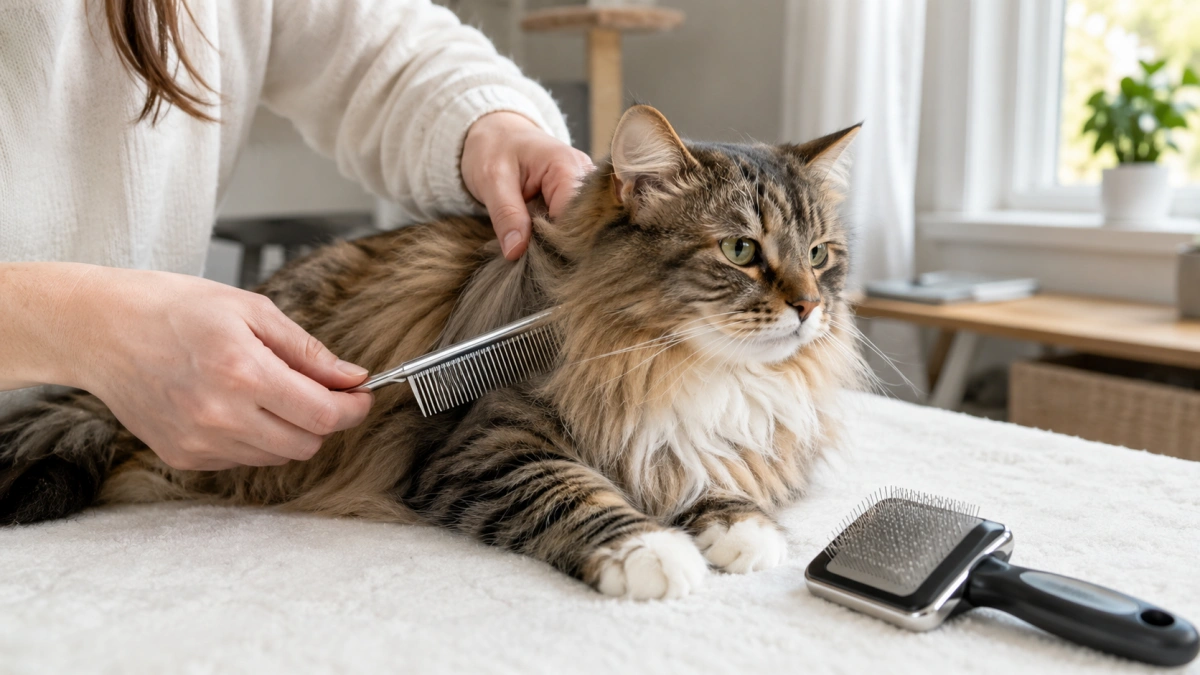
A comb is especially useful when you need to detect hidden tangles, check a medium or long coat after brushing, or work with greater precision in smaller areas.
A brush is generally better for collecting loose surface fur and performing broader everyday coat maintenance.
Common Cat Grooming Comb Buying Mistakes
- Choosing teeth that are too short for a long coat.
- Starting with fine teeth on tangled fur.
- Using a flea comb as a general detangling comb.
- Pulling harder when the comb stops.
- Buying several combs that perform the same job.
How Many Cat Grooming Combs Do You Need?
| Your Cat | Simple Comb Setup |
|---|---|
| Short-haired | Fine or medium-tooth comb |
| Medium-haired | Combination comb |
| Long-haired | Long-tooth combination comb |
| Dense double coat | Combination comb plus optional undercoat comb |
| Flea checking | Dedicated flea comb |
Final Thoughts
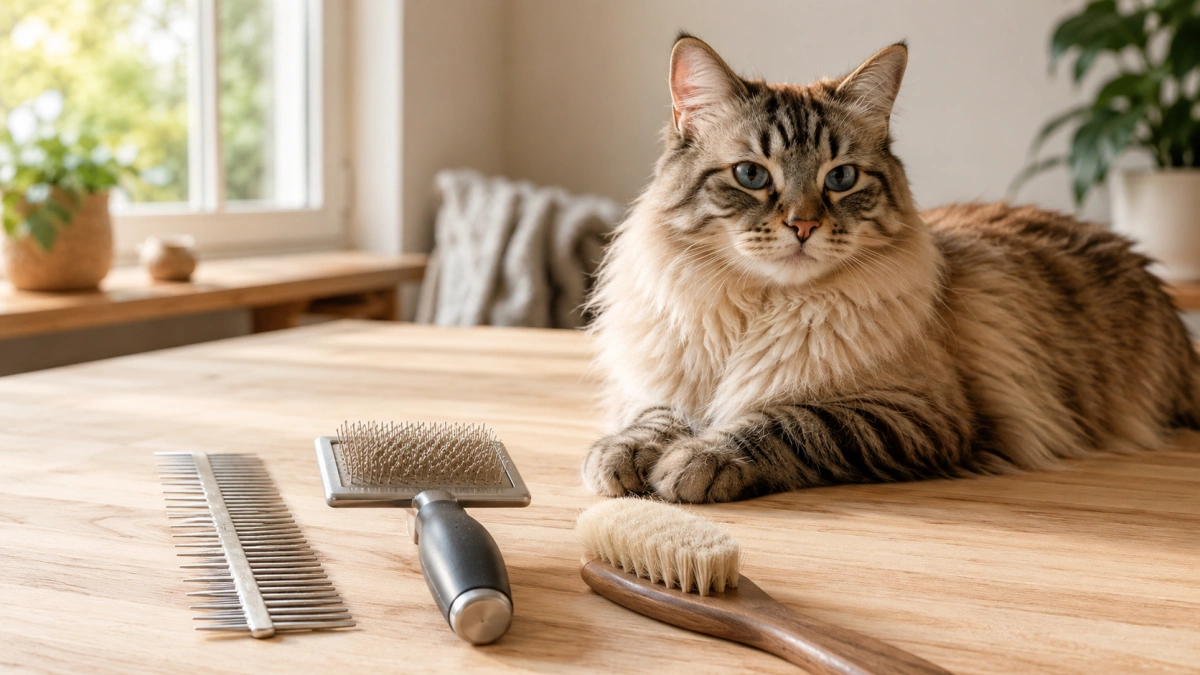
Choosing the right cat grooming comb comes down to tooth length, tooth spacing, coat density, and grooming purpose. Short-haired cats usually need a simpler comb, while long-haired cats benefit from longer teeth and wide-to-fine combination designs.
Start wider, move slowly, and only switch to finer teeth when the comb passes comfortably. A good comb should make coat checks more precise without making grooming more complicated.