By
By 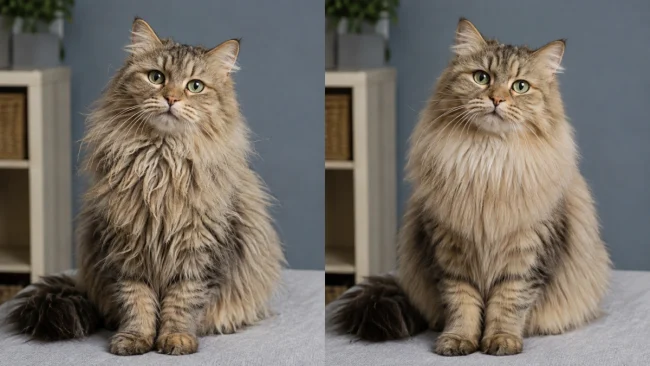
Cat grooming before-and-after results depend almost entirely on which service the cat received. A brush-out may leave the coat cleaner, smoother and less full of loose hair without changing its length at all, while a sanitary trim creates only a small local change and a lion cut can make the cat look dramatically different.
The most useful way to judge a grooming result is not by how dramatic the photo looks. Look for a coat that is cleaner and easier to maintain, mats that have been appropriately addressed, nails or hygiene areas that needed care, intact skin, and a cat that is comfortable after the appointment.
These changes are all possible outcomes of grooming a cat, but no single before-and-after transformation represents every grooming appointment.
What Should Change After Cat Grooming?
That depends on the starting condition and the service.
| Grooming Service | What May Change | What Usually Does Not Change |
|---|---|---|
| Brush-out | Loose coat, tangles, surface smoothness | Hair length |
| Bath and dry | Cleanliness, oiliness, coat separation | Natural coat color |
| Deshedding | Amount of trapped loose coat | Future shedding completely |
| Sanitary trim | Small rear hygiene area | Most body coat |
| Comb cut | Overall coat length | Natural face and basic body shape |
| Lion cut | Most torso coat length | Mane and selected fuller areas |
| Mat removal | Matted areas may become much shorter | Not always a perfectly uniform style |
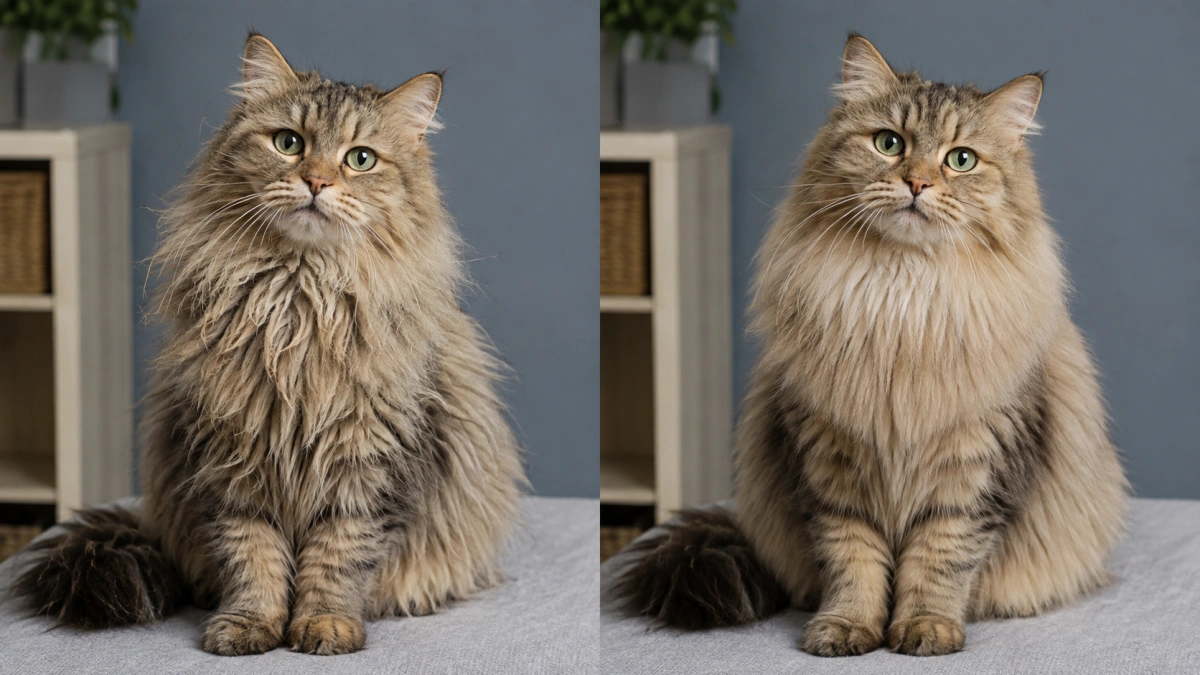
Before and After a Brush-Out
A brush-out often produces the least dramatic photo and one of the most useful grooming results.
Before grooming, the coat may contain loose fur, light tangles and areas where longer hairs have begun separating unevenly.
After a thorough brush-and-comb session:
- Loose surface coat should be reduced.
- Small manageable tangles may be gone.
- The coat should feel easier to comb through.
- The natural length remains essentially unchanged.
- The cat may look somewhat fluffier because compacted loose fur has been removed.
This is an important reminder that a successful groom does not require clipping.
Before and After a Cat Bath
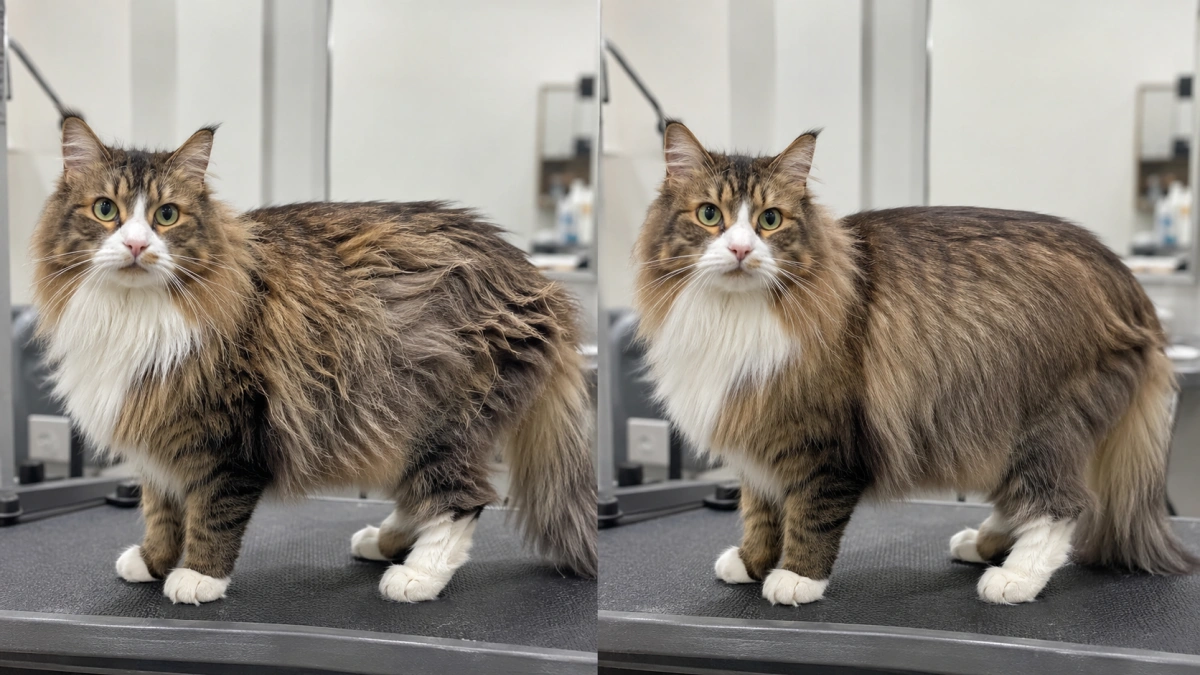
Bathing changes cleanliness and coat texture more than coat length.
Before a needed bath, the coat may look flatter, slightly oily or dirty.
After the cat is fully washed and dried, the coat may appear:
- Cleaner
- Less oily
- Better separated
- Fluffier
- More even in texture
A bath should not permanently change the natural color of a healthy coat.
Lighting, drying and photography can make an after-photo look brighter than the before image, so avoid treating photo brightness as proof of a superior grooming result.
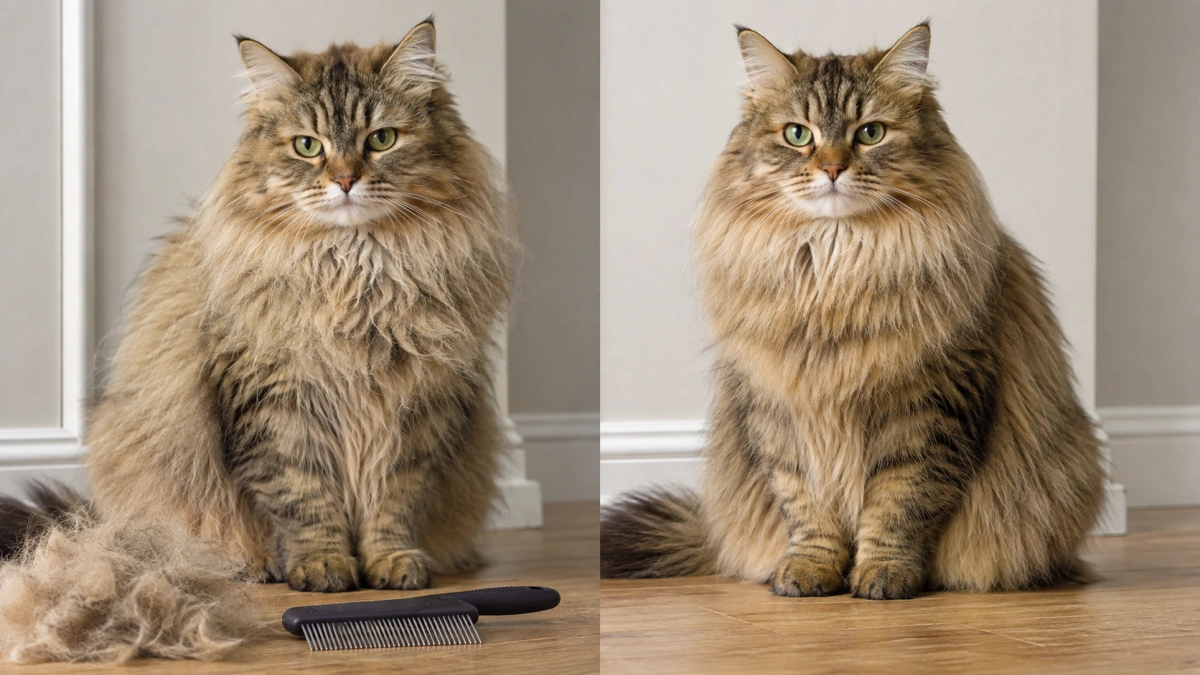
Before and After Deshedding
Deshedding is often misunderstood because owners expect the cat to stop shedding afterward.
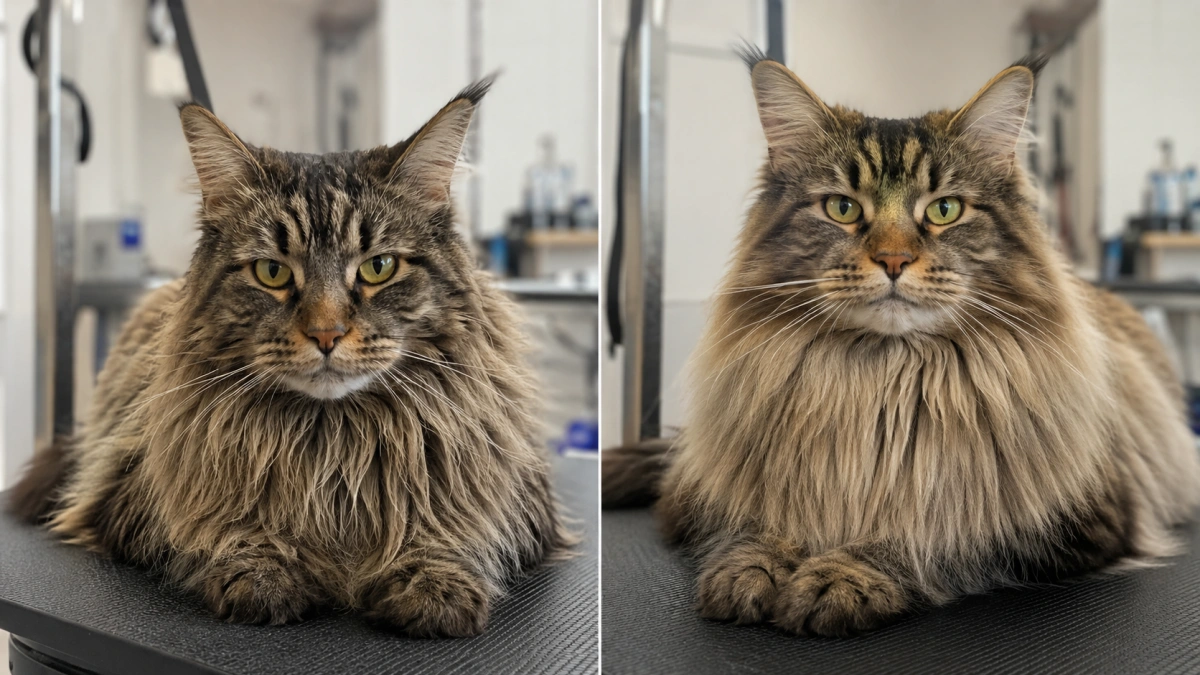
What the groomer can remove is loose coat that is already ready to come away or trapped within the surrounding fur.
After grooming, you may notice:
- Less loose fur coming away immediately
- A smoother-feeling coat
- Fewer clumps caught in longer fur
- A temporary reduction in loose hair around the home
Normal shedding will still continue because hair growth and shedding are ongoing biological processes.
Should a Cat Look Thinner After Deshedding?
Possibly a little, especially if the original coat contained a large amount of loose undercoat.
But an appropriate deshedding session should not leave a healthy coat looking dramatically stripped or patchy.
The goal is removing loose material and keeping the coat manageable, not extracting the maximum possible amount of fur.
Before and After a Sanitary Trim
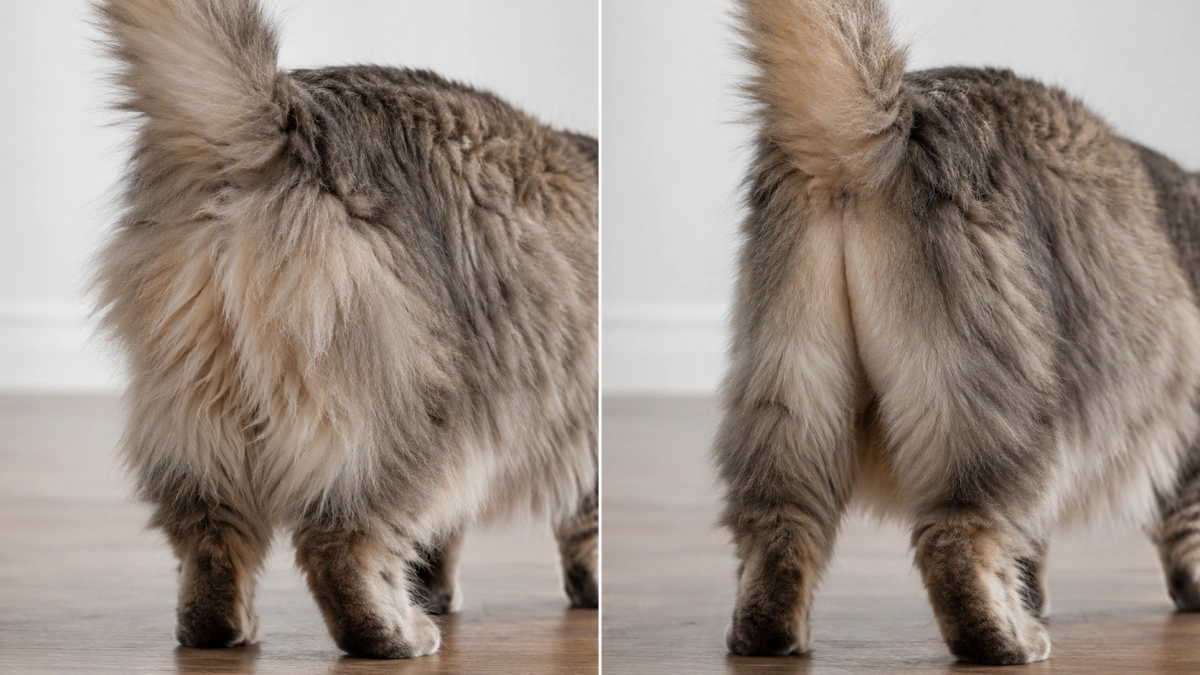
A sanitary trim creates a deliberately small visual change.
Before the trim, a long-haired cat may have heavy rear furnishings that repeatedly collect litter or waste.
After the trim, excess fur around the external hygiene area is shorter while most of the body coat looks the same.
Why a Small Before-and-After Difference Can Be Better
Grooming should solve the actual problem rather than create the largest possible visual transformation.
If a cat only has rear-fur hygiene trouble, a small sanitary trim may be more appropriate than clipping the entire body.
The same principle applies to localized belly or paw-fur maintenance.
Before and After a Lion Cut
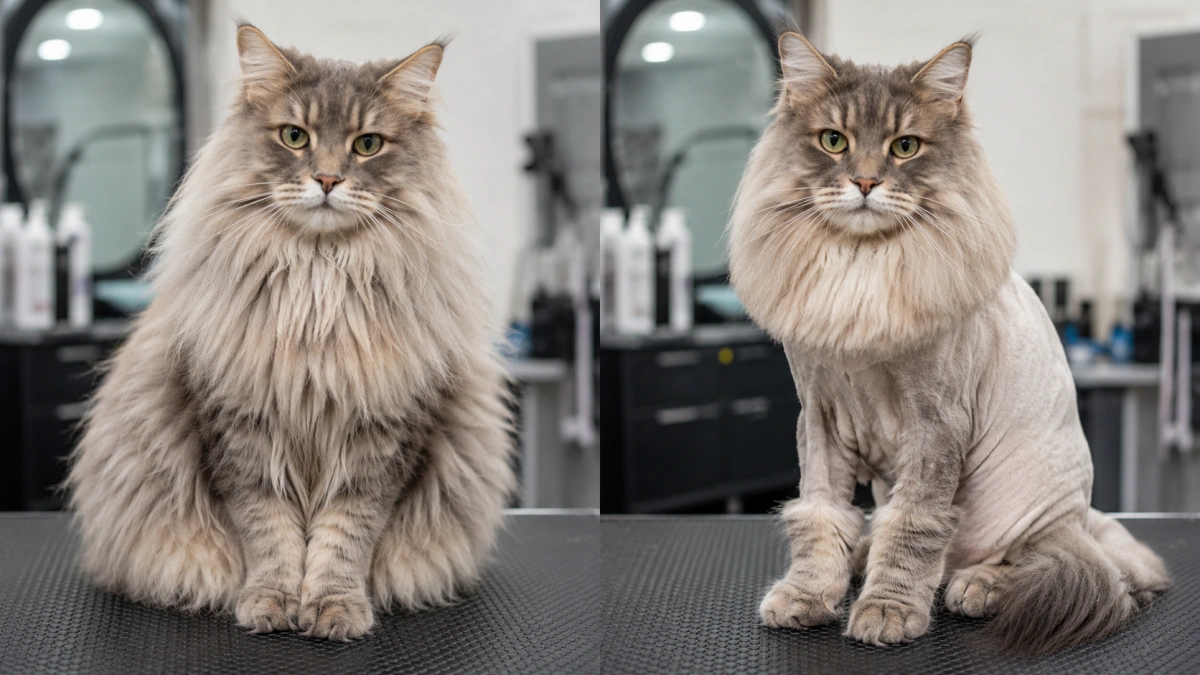
A lion cut produces one of the most dramatic before-and-after changes in feline grooming.
Before grooming, a long-haired cat may have a full torso coat, heavy belly fur and substantial side furnishings.
After the lion cut, most of the torso is clipped short while fuller fur is retained around the head and neck, selected lower-leg areas and usually the tail tip or tail.
A Lion Cut May Look More Dramatic Than Owners Expect
The first reaction many owners have is simply that their cat looks much smaller.
Long dense fur adds a surprising amount of visible volume. Once that coat is clipped, the actual body outline becomes much more obvious.
That does not mean the cat suddenly lost weight.
Before booking a dramatic haircut, look at realistic examples and discuss the expected remaining coat length with the groomer.
Before and After Mat Removal
Mat removal should be judged differently from an elective haircut.
If tight mats have to be clipped away, preserving a perfectly even style may not be possible.
The groomer’s priorities are:
- Remove coat that cannot be safely maintained.
- Avoid unnecessary pulling.
- Protect thin feline skin.
- Leave as much healthy manageable coat as practical.
That can create a result that looks uneven immediately after grooming, particularly when only certain areas were severely matted.
Should the Skin Look Red After Grooming?
Routine grooming should not leave obvious cuts, bleeding or significant skin irritation.
Very mild temporary pinkness may occasionally be visible after coat is removed from an area that was previously hidden or under tension from matting, but persistent redness, swelling, broken skin, discharge or clear pain should not be dismissed as a normal cosmetic result.
Contact your veterinarian if the skin looks significantly abnormal or your cat appears uncomfortable after grooming.
How Should Your Cat Act After Grooming?
There is no single normal personality change.
Some cats immediately return to eating, sleeping or playing normally. Others may hide for a while after travel and handling.
A cat that had uncomfortable mats removed may move or groom itself differently afterward, but do not assume every playful or quiet behavior was caused by the haircut itself.
Monitor the whole cat rather than interpreting one behavior from a social-media before-and-after clip.
What Changes Should You Expect After Nail Trimming?
Nail grooming may create almost no visible body-coat change.
The main result is that excessively sharp claw tips are shorter.
The cat should continue to walk and use the paws normally.
Limping, persistent paw sensitivity or bleeding is not an expected “after” result.
How Long Does Cat Hair Take to Grow Back After a Haircut?
There is no exact universal timeline.
Coat type, breed, age, health, season, how short the fur was clipped and the individual hair-growth cycle can all influence regrowth.
Long-haired cats generally take longer to return to their previous appearance than short-haired cats.
Why Can Regrowth Look Uneven at First?
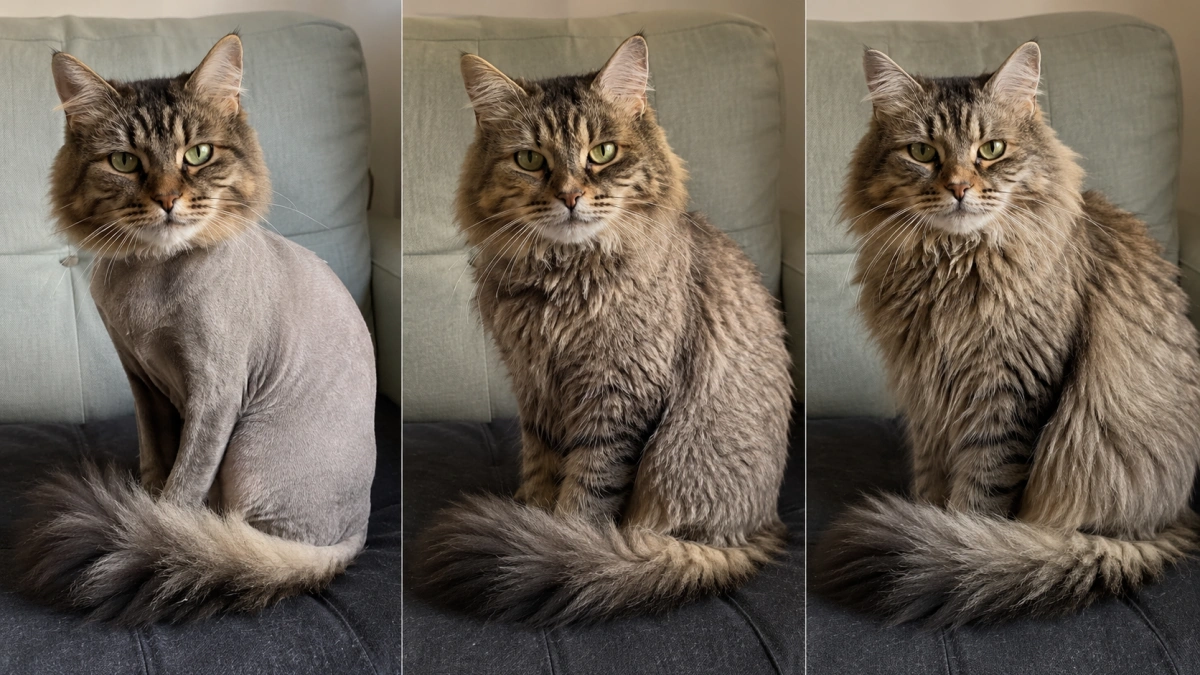
Not every hair is at the same point in its growth cycle when the coat is clipped.
Different parts of the body may therefore appear to fill in at different rates.
Texture can also look temporarily different while short new growth mixes with longer remaining coat.
Do not repeatedly shave the coat simply because early regrowth does not immediately resemble the original long finish.
What If the Coat Is Not Growing Back Normally?
Slow regrowth can occur for multiple reasons, but a coat that remains unusually sparse, develops bald areas, or is accompanied by abnormal skin should not automatically be treated as a grooming failure.
Health, nutrition, skin conditions and other underlying issues can affect hair growth.
If regrowth seems abnormal or your cat develops additional coat or skin changes, ask your veterinarian to evaluate the problem.
Can Grooming Permanently Change a Cat’s Coat?
A routine brush-out or bath should not fundamentally redesign a healthy coat.
After clipping, the coat may look temporarily different while it regrows. Owners sometimes report changes in texture or visual appearance, but predicting an individual cat’s final regrowth from a single haircut is difficult.
This is another reason not to shave a healthy coat repeatedly without a practical grooming reason.
What Does a Good Grooming Result Actually Look Like?
The best result is not always the most dramatic photo.
Look for:
- A coat that is clean and easier to maintain
- Loose fur appropriately reduced
- Tangles addressed without aggressive pulling
- Necessary hygiene areas maintained
- Healthy intact skin
- No obvious clipper injury or cuts
- Normal walking and paw use
- A cat that can settle comfortably after the appointment
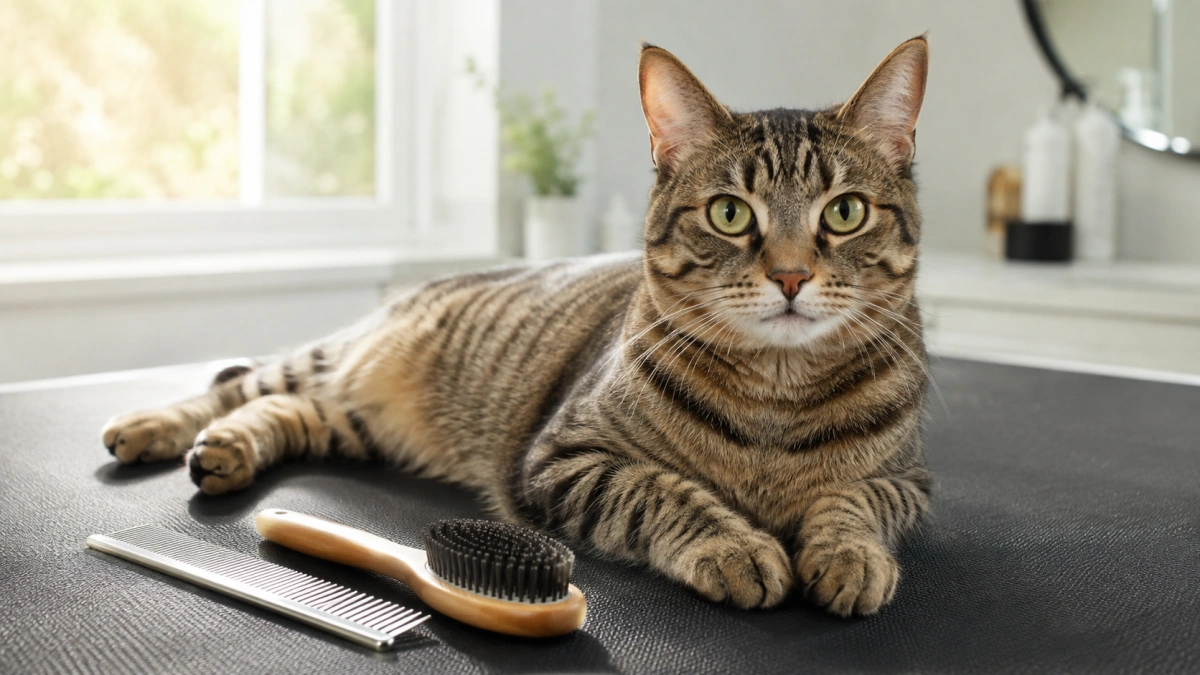
Do Not Judge Grooming Only by Social Media Before-and-After Photos
Photos can be useful, but they can also exaggerate the difference.
Changes in:
- Lighting
- Camera angle
- Cat posture
- Coat fluffing
- Background
- Image sharpening
can make an after-image look much more dramatic than the actual grooming change.
A fair comparison uses the same cat, similar angle, similar posture and similar lighting.
What Should You Ask the Groomer Before the Appointment?
Before a haircut or major coat change, ask:
- What exactly will be removed?
- How short do you expect the coat to be?
- Will most of the coat remain natural?
- Are any mats likely to change the planned style?
- What will the rear, belly, legs and tail look like?
- What should I expect during regrowth?
- How should I maintain the coat afterward?
If you are still deciding between different haircut options, our cat grooming styles guide compares natural coat grooming, sanitary trims, comb cuts, lion cuts and functional mat-removal clipping.
Before-and-After Expectations by Grooming Service
| Service | Expected Visible Change | Biggest Practical Benefit |
|---|---|---|
| Brush-out | Low to moderate | Cleaner separated coat |
| Bath and dry | Moderate | Cleanliness and coat texture |
| Deshedding | Low to moderate | Less trapped loose coat |
| Sanitary trim | Small | Hygiene |
| Comb cut | Moderate to large | Easier coat maintenance |
| Lion cut | Very large | Major reduction in body-coat length |
| Mat removal | Variable | Removal of unmanageable coat |
Final Thoughts
Cat grooming before-and-after results should match the service your cat actually needed.
A brush-out may barely change the silhouette while making the coat dramatically easier to maintain. A sanitary trim can solve one hygiene problem with almost no visible body change. A lion cut creates an obvious transformation, while mat removal may prioritize comfort and safety over a perfectly symmetrical haircut.
Judge the result by coat condition, skin integrity, practical maintenance and your cat’s overall comfort—not simply by how dramatic the after-photo looks.