By A CUTE PET STORY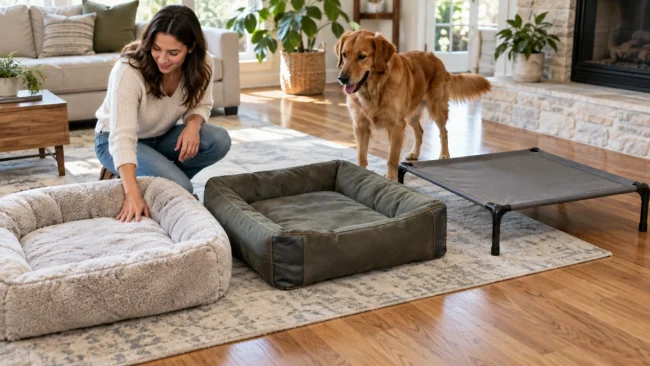
Durable dog beds are built to handle more wear than ordinary soft beds, but no material or design is completely indestructible. The right bed depends on how your dog actually damages bedding: chewing edges, digging at the surface, scratching seams, or simply compressing the filling over time.
Instead of relying only on labels such as “chew-proof” or “indestructible,” compare the complete construction. Fabric strength matters, but so do the corners, seams, zipper placement, exposed foam, frame design, and how easily your dog can grab an edge.
A good durable bed should solve the specific failure point that causes your current beds to wear out.
You can also explore our complete Dog Beds topic hub for more guides about sizing, materials, support, and different bed styles.
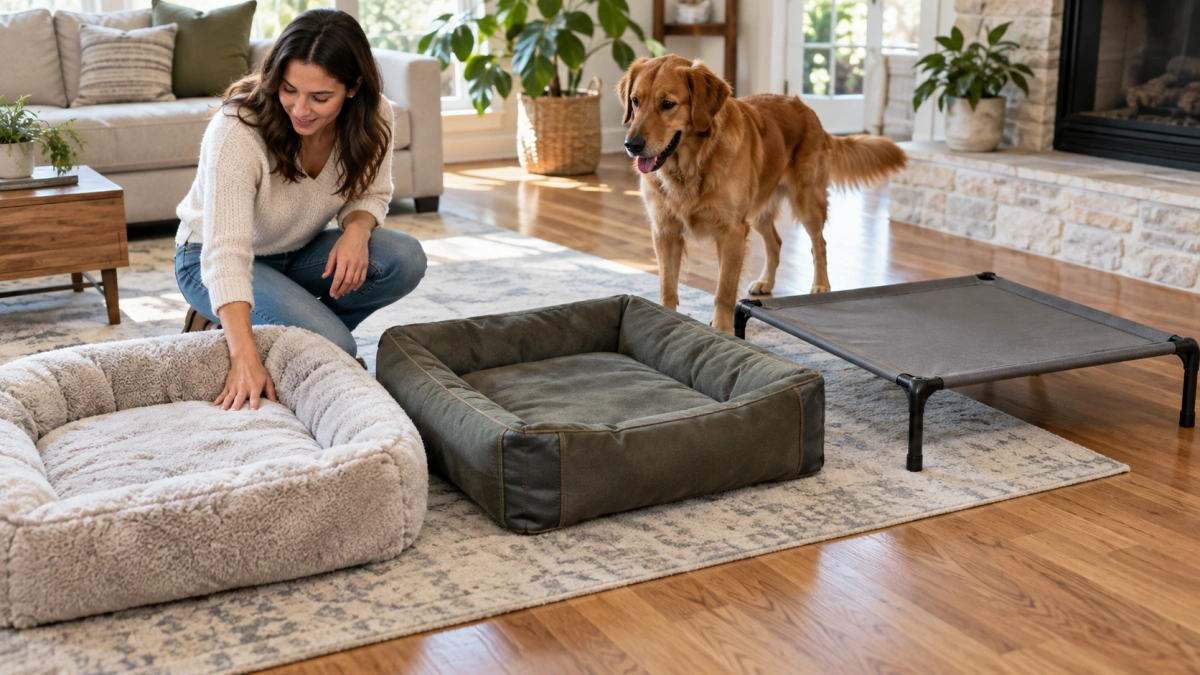
What Makes a Dog Bed Durable?
Durability comes from the whole bed rather than one material name.
A durable dog bed usually combines several features:
- Tightly woven or reinforced outer fabric
- Protected corners and edges
- Strong seams
- Hidden or protected zippers
- Minimal loose fabric
- Limited access to foam or filling
- A structure that holds its shape under repeated use
A tough fabric cover can still fail quickly if the zipper is exposed or the dog can easily grab a loose corner.
Chew-Resistant vs Chew-Proof vs Indestructible
These terms are often used loosely, so it helps to understand what they realistically mean.
| Term | Practical Meaning |
|---|---|
| Chew-resistant | Designed to make chewing damage more difficult |
| Chew-proof | Usually a stronger marketing claim, but not a guarantee against every dog |
| Indestructible | Common search language, not a realistic promise for every situation |
A persistent heavy chewer may eventually damage materials that work well for many other dogs. The goal is to reduce easy chew points and choose a design that matches the intensity of your dog’s behavior.
How Is Your Dog Destroying the Bed?
Before buying a tougher bed, identify how the current bed is failing.
| Damage Type | What You May Notice | What to Look For |
|---|---|---|
| Chewing | Damaged corners, seams, zippers, or exposed foam | Protected edges and fewer grab points |
| Digging | Surface wear, scratches, torn fabric | Tougher outer fabric and strong stitching |
| Flattening | Compressed filling or permanent low spots | More structured support materials |
| Mixed damage | Chewing plus digging or compression | Stronger overall construction |
This distinction matters because a bed designed to resist chewing may still flatten under a heavy dog, while a supportive foam bed may still be easy to tear at the corners.

Chewing, Digging and Flattening Are Different Problems
Chewing
Chewers often target anything they can grip with their teeth, especially corners, piping, tags, zipper pulls, and loose fabric.
Digging and Scratching
Dogs that circle, scratch, or dig before lying down place repeated abrasion on the top surface. For these dogs, surface toughness and seam strength matter more than simply hiding the zipper.
Flattening
Large or heavy dogs may not damage the cover at all but can gradually compress loose filling or soft foam.
If the main problem is flattening, durability also means maintaining shape and support over time.
The Weakest Parts of a Dog Bed
A dog rarely needs to destroy the strongest part of the fabric. One accessible weak point can be enough to open the bed.
Check these areas carefully:
- Corners
- Outer edges
- Piping
- Tags
- Seams
- Zipper pulls
- Loose fabric
- Openings around removable covers
A durable design reduces the number of places where teeth or claws can easily get underneath the material.
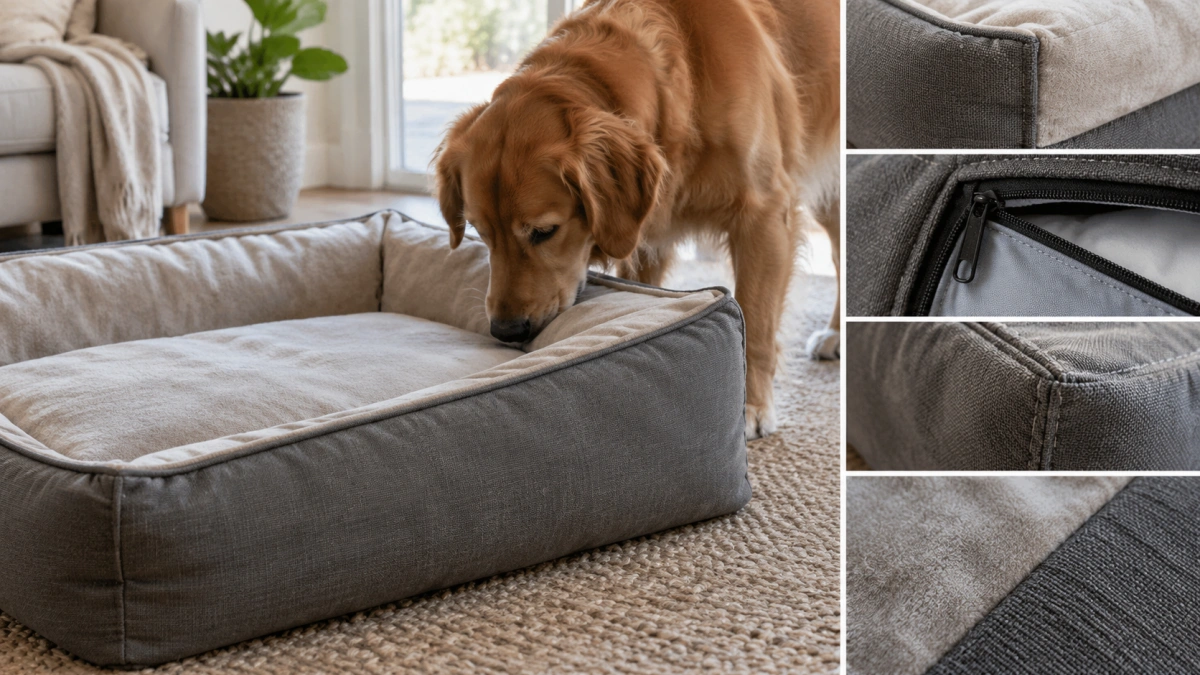
Best Materials for Durable Dog Beds
Durable dog beds may use heavy-duty woven fabrics designed to resist abrasion, scratching, and tearing better than thin plush covers.
Common material descriptions include:
- Ballistic-style fabric
- Ripstop-style fabric
- Heavy canvas-like fabric
- Reinforced polyester
- Heavy-duty woven synthetic covers
The fabric name alone does not guarantee performance. Compare the weave, thickness, seam construction, and how the cover is attached to the rest of the bed.
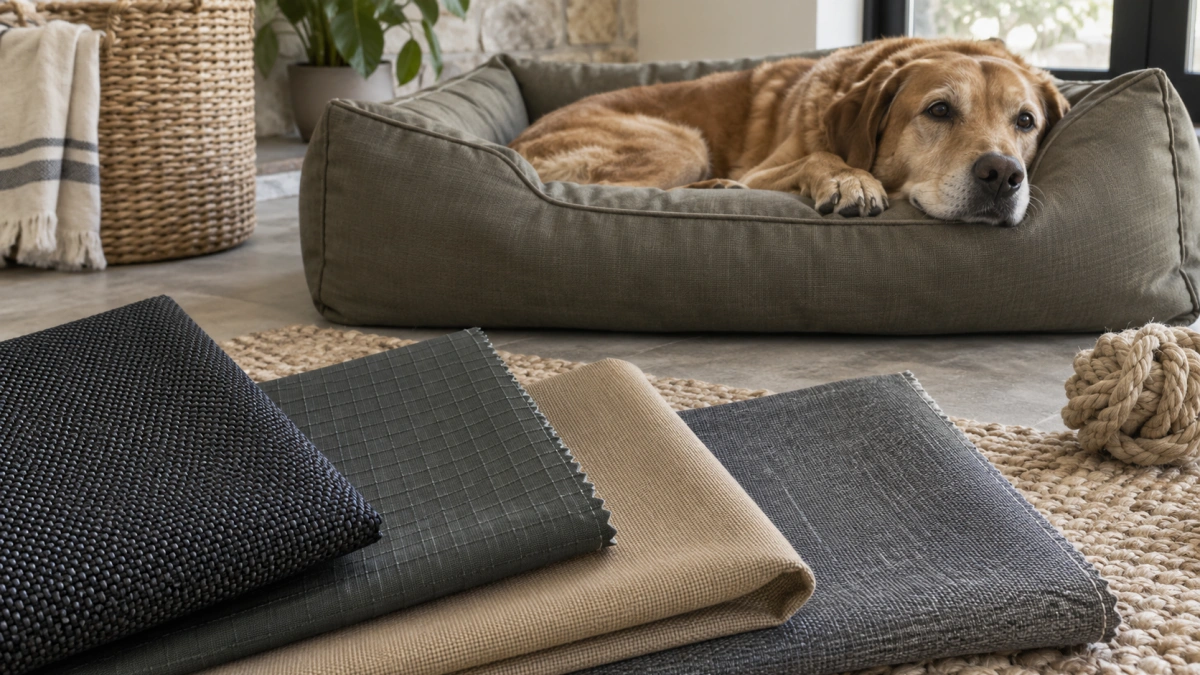
Why Construction Matters More Than Fabric Alone
Two beds using similar-looking fabric can perform very differently if one exposes more edges, seams, or foam.
Look for construction details such as:
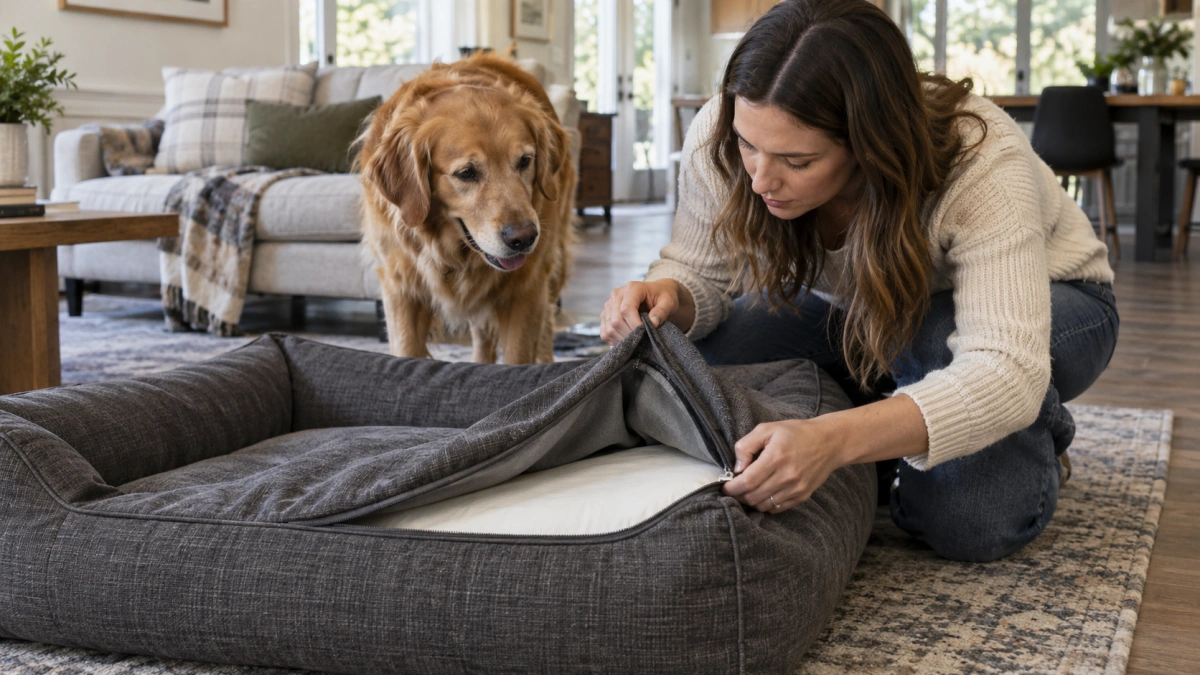
- Concealed zipper access
- Protected seams
- Minimal external piping
- Tightly fitted covers
- No loose corners
- No exposed foam
- Reinforced areas where dogs commonly grab
A strong material becomes much more useful when the design makes it difficult for the dog to get leverage on a weak point.
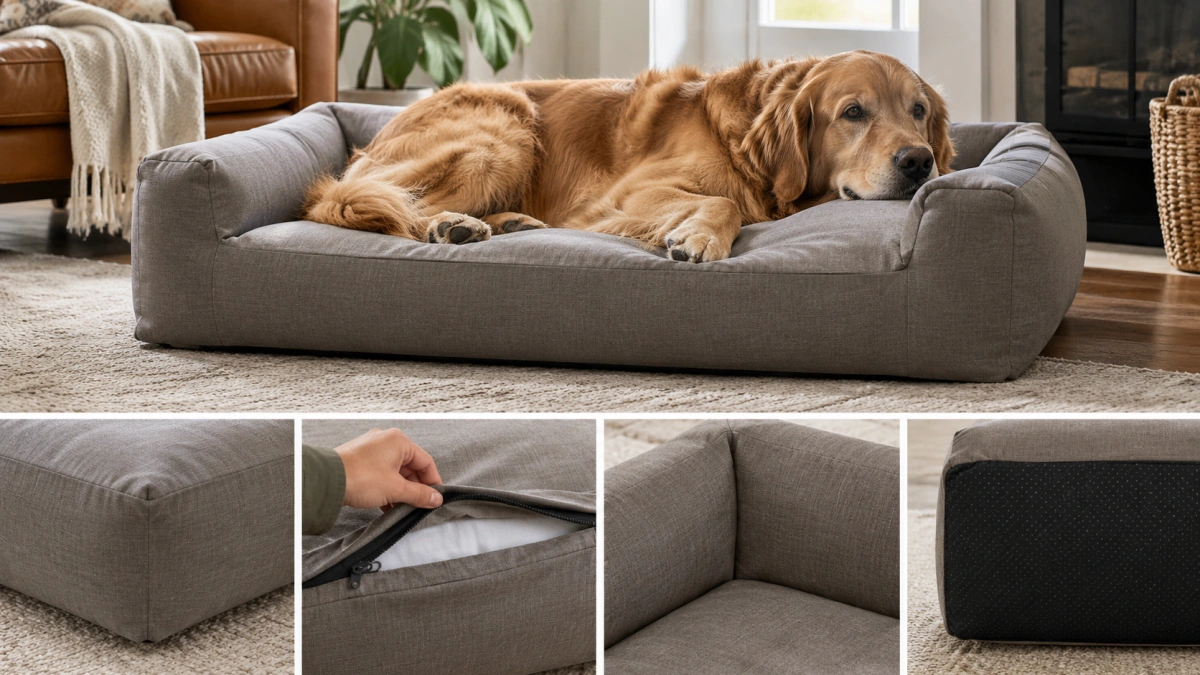
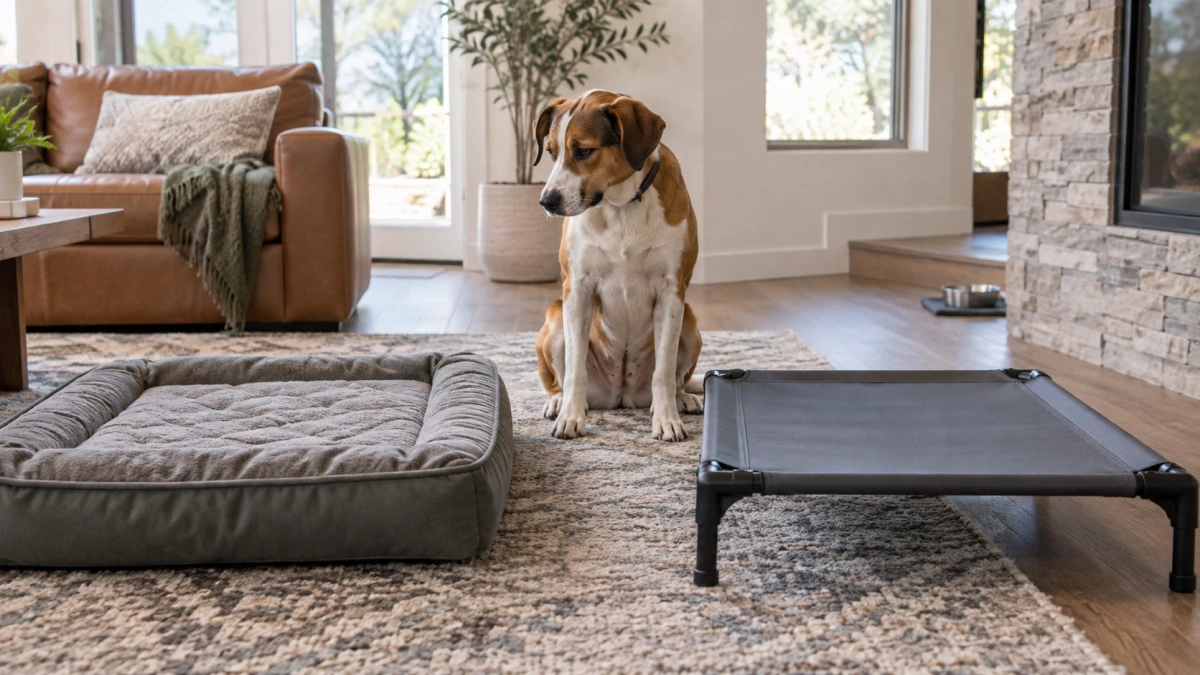
Soft Durable Beds vs Framed Elevated Beds
Durable dog beds generally fall into two broad construction styles: reinforced padded beds and framed elevated beds.
| Design | Advantages | Trade-Offs |
|---|---|---|
| Reinforced soft bed | Cushioned surface and familiar mattress feel | Still contains edges, seams, and internal filling |
| Framed elevated bed | Less loose material and fewer soft edges | Less plush cushioning |
Some framed designs protect the fabric edge inside the frame, which removes one of the easiest places for a dog to grab.
However, an elevated bed is not automatically the best choice for every dog. Consider sleeping preference, frame height, stability, and where the bed will be used.
Durable Dog Beds for Large Dogs
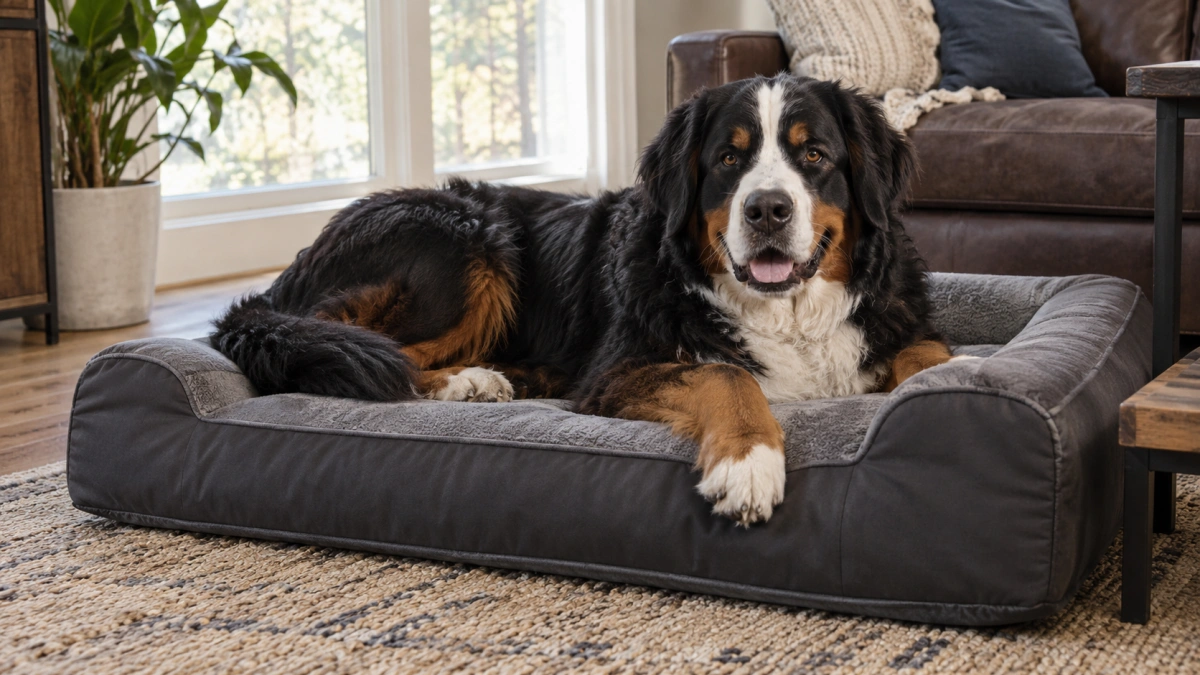
Large dogs add another challenge because durability must include both surface strength and resistance to compression.
Check:
- Whether the bed is large enough for normal sleeping positions
- Whether the surface holds its shape under body weight
- Whether seams are reinforced
- Whether the cover can handle repeated heavy use
- Whether edges remain protected at larger sizes
A bed that resists chewing but collapses quickly under a large dog is not truly durable for that use case.
Durable Beds for Crates and Kennels
Crates create a different environment because the bed must fit within fixed dimensions and may be used when the dog has fewer other objects nearby.
If you need bedding specifically for a crate, compare sizing, washable construction, edge exposure, and chew resistance separately. Our guide to dog crate beds explains what to look for when choosing bedding for crate use.
What to Look for in a Chew Warranty
A durability warranty can be useful, but only if you understand what it covers.
Before buying, check:
- How long the coverage lasts
- Whether chewing damage is specifically included
- Whether scratching and digging are included
- Whether the frame and fabric have different coverage
- Whether accessories or replacement covers are excluded
- Whether shipping or replacement fees apply
Do not assume that “chew warranty” means every type of damage is covered.
When a Tougher Bed Is Not Enough
A stronger bed can reduce damage, but it may not solve every destructive chewing problem.
Dogs may chew bedding for different reasons, including:
- Puppy teething
- Boredom
- Excess energy
- Stress
- A learned habit
If a dog repeatedly tears beds apart, focus on both the bed design and the behavior around it.
If your dog swallows pieces of fabric, foam, stuffing, or other bed materials, remove access to the damaged bed and contact a veterinarian for guidance.
Common Durable Dog Bed Buying Mistakes
- Assuming “indestructible” means impossible to damage
- Choosing only by fabric name
- Ignoring exposed zippers and corners
- Buying for chewing when the real problem is digging
- Ignoring compression under a heavy dog
- Choosing a bed too small because the durable version costs more
- Not reading warranty exclusions
- Continuing to use a bed after foam or filling becomes exposed
Durable Dog Bed Buying Checklist
- How does my dog usually damage beds?
- Are corners and edges protected?
- Is the zipper hidden or difficult to access?
- Are seams exposed?
- Can the dog reach the foam or filling?
- Is the fabric suited to chewing, digging, or both?
- Will the bed hold its shape under my dog’s weight?
- Is the cover removable and washable?
- Does the bed fit the intended space?
- What exactly does the warranty cover?
- Can damaged parts be replaced?
Final Thoughts
The best durable dog beds are not defined by one fabric name or an indestructible marketing claim. The most important question is how your dog damages beds and whether the construction protects those specific weak points.
For chewers, focus on protected edges, hidden seams, and limited access to foam. For diggers, surface toughness matters more. For large dogs, long-term compression resistance is another part of durability.
Choose the bed that matches your dog’s actual behavior rather than the strongest-sounding label on the product page.