By A CUTE PET STORY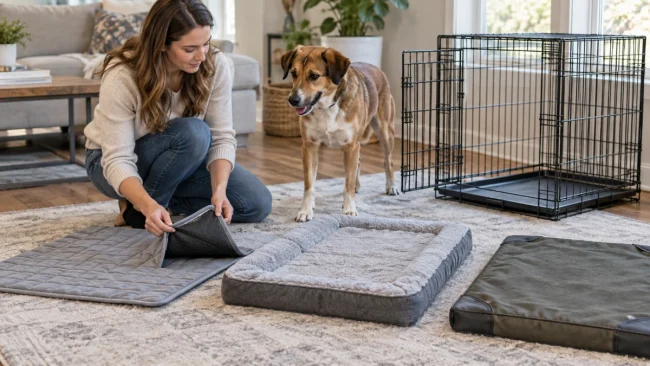
Dog crate beds need to fit a more restricted space than regular dog beds. A bed can be comfortable on the floor but still work poorly inside a crate if it is too thick, too large, difficult to wash, or easy for the dog to bunch up and chew.
The best dog crate beds balance five things: correct interior fit, enough cushioning, easy cleaning, stability, and durability for the way your dog behaves inside the crate.
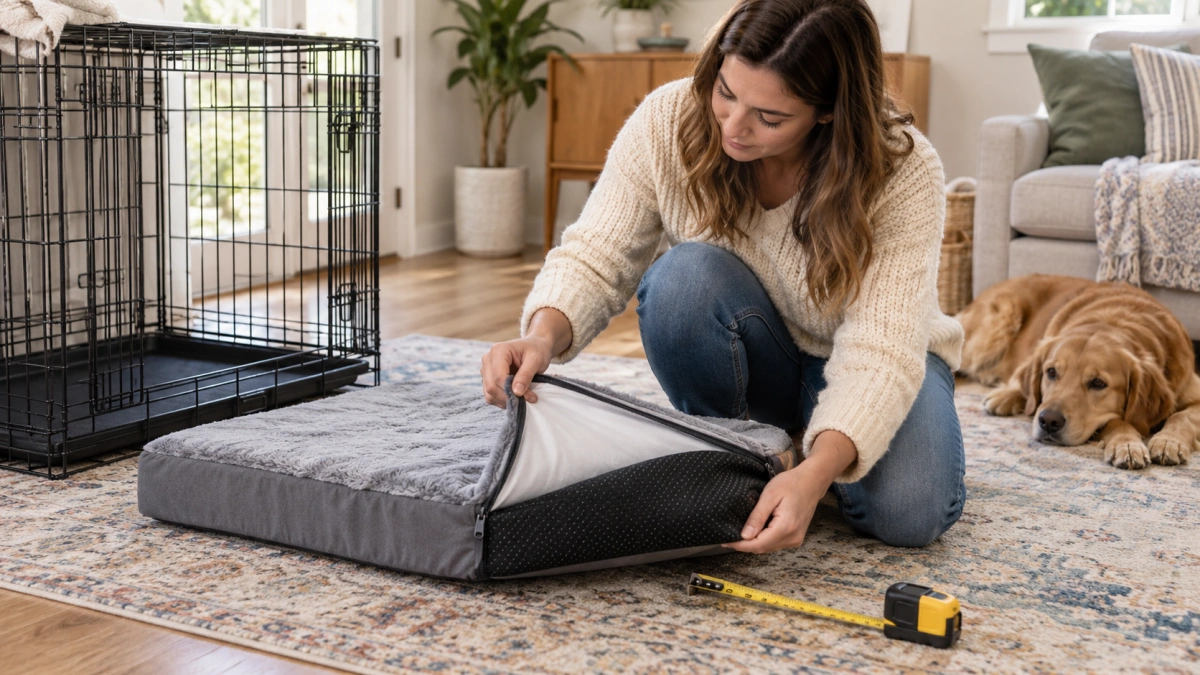
Start by measuring the crate itself rather than relying only on the crate’s advertised size. Then compare the bed’s actual dimensions, thickness, construction, and care instructions.
You can also explore our complete Dog Beds topic hub for more guides about sizing, durability, materials, and different sleeping needs.
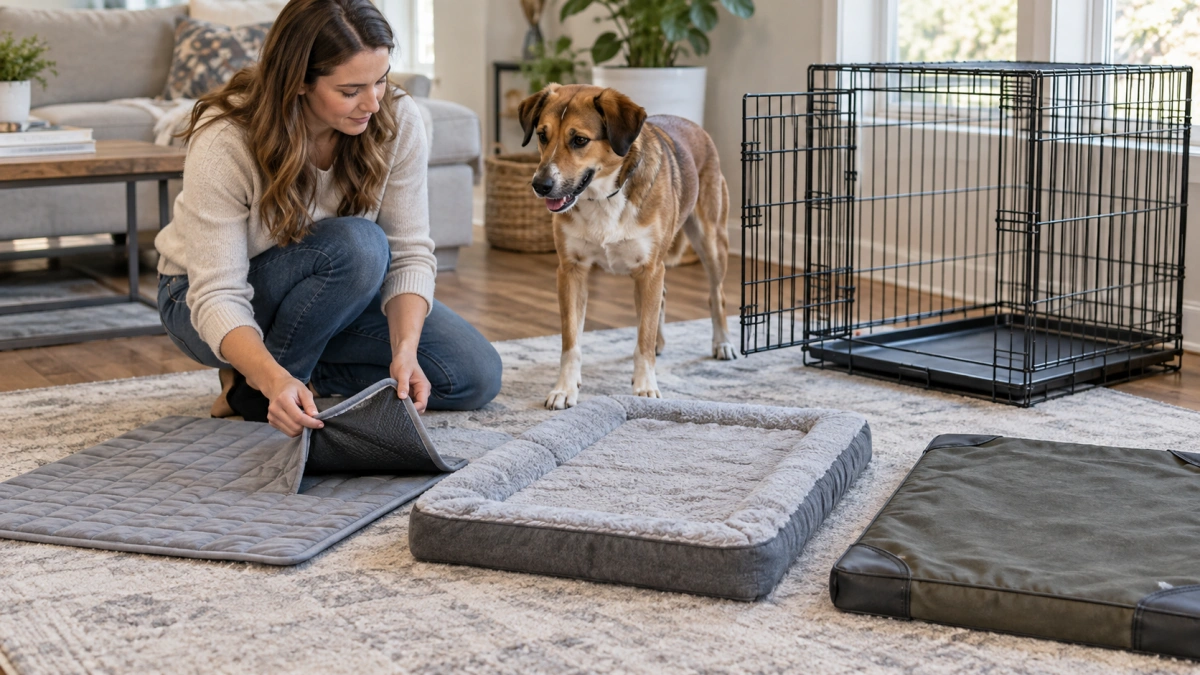
Does a Dog Crate Need a Bed?
A crate bed can provide cushioning, warmth, and a more comfortable resting surface, but not every dog needs the same type of bedding.
Whether bedding is appropriate depends on:
- The dog’s chewing behavior
- House-training progress
- How long the crate is used
- Room temperature
- The crate floor surface
- Whether the dog can safely use soft bedding
Some dogs do well with a padded crate bed, while others may temporarily need a simpler low-profile mat or no soft bedding if they repeatedly tear and swallow fabric or use bedding during ongoing house-training accidents.
Measure the Crate Before Buying a Bed
Do not choose a crate bed only from the crate label. Two crates described with the same nominal size can still have slightly different usable interior dimensions.
Measure:
- Interior floor length
- Interior floor width
- Available headroom
- Door and latch clearance
- Space remaining when a divider is used
Use the floor area where the bed will actually sit rather than the crate’s outside measurements.
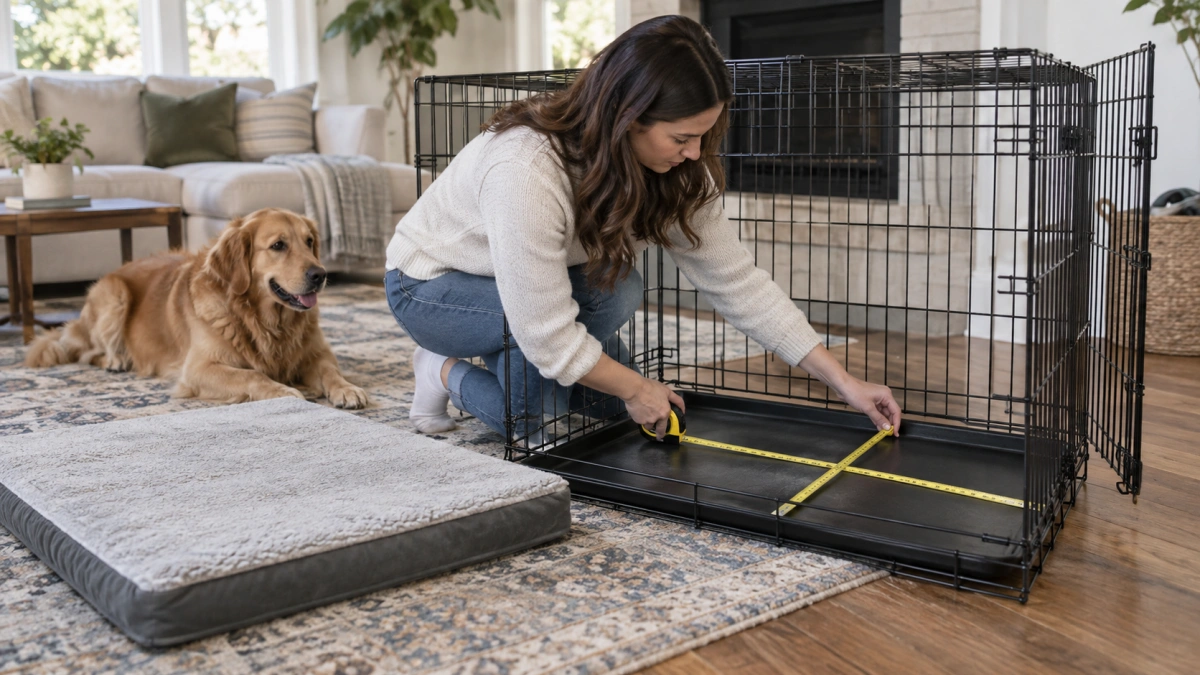
Crate Size vs Dog Size
A crate bed has to satisfy two limits at the same time: it must fit the crate and still provide enough usable resting space for the dog.
Check whether your dog can:
- Lie down naturally
- Turn around comfortably
- Stretch without being forced against thick bed edges
- Stand without the bed taking too much interior height
A bed should fit the crate floor without shrinking the dog’s usable space unnecessarily.
How Should a Crate Bed Fit?
A well-fitted crate bed should lie flat across the usable floor area without excessive curling, folding, or bunching.
A bed that is too large may:
- Fold upward at the corners
- Bunch near the door
- Create loose fabric that becomes easier to chew
- Reduce usable resting space
A bed that is too small may slide around more easily and leave large exposed areas of the crate tray.
The goal is a close, practical fit rather than simply choosing the biggest pad that can be pushed inside.
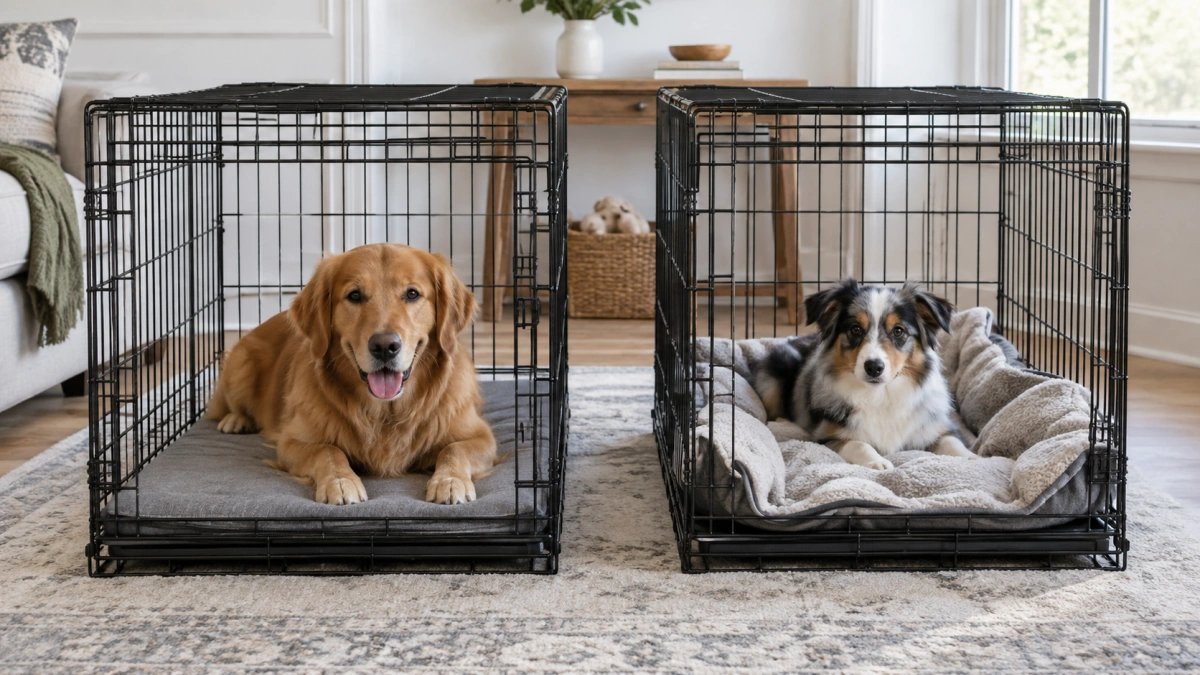
Crate Pad vs Regular Dog Bed
A crate pad is usually lower-profile and more rectangular than a regular dog bed.
| Feature | Crate Pad | Regular Dog Bed |
|---|---|---|
| Profile | Usually low and flat | May be thick or heavily padded |
| Shape | Designed for rectangular crate floors | May be round, bolster, sofa, or mattress style |
| Interior space | Uses less vertical and edge space | Bolsters may reduce crate room |
| Cleaning | Often designed for frequent maintenance | Varies widely |
| Stability | May include non-slip construction | May move or bunch more easily |
A regular dog bed can still be used in a crate if it fits properly, remains stable, does not block access, and is appropriate for the dog’s behavior.
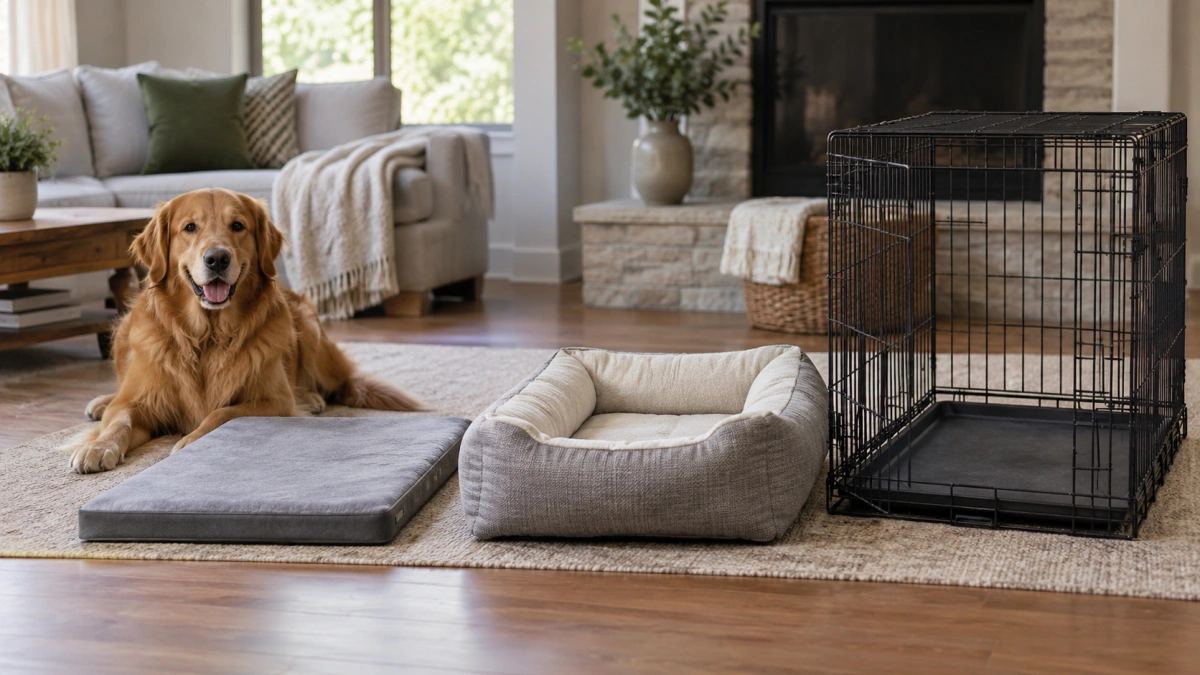
How Thick Should a Dog Crate Bed Be?
More thickness is not automatically better inside a crate.
A very thick bed can reduce headroom and make a smaller crate feel cramped, especially for taller dogs.
When comparing thickness, consider:
- Dog body size
- Crate height
- How much the pad compresses
- Whether the dog prefers firmer or softer bedding
- How easily the bed can be removed for cleaning
For many crates, a lower-profile pad provides cushioning without taking too much usable interior space.
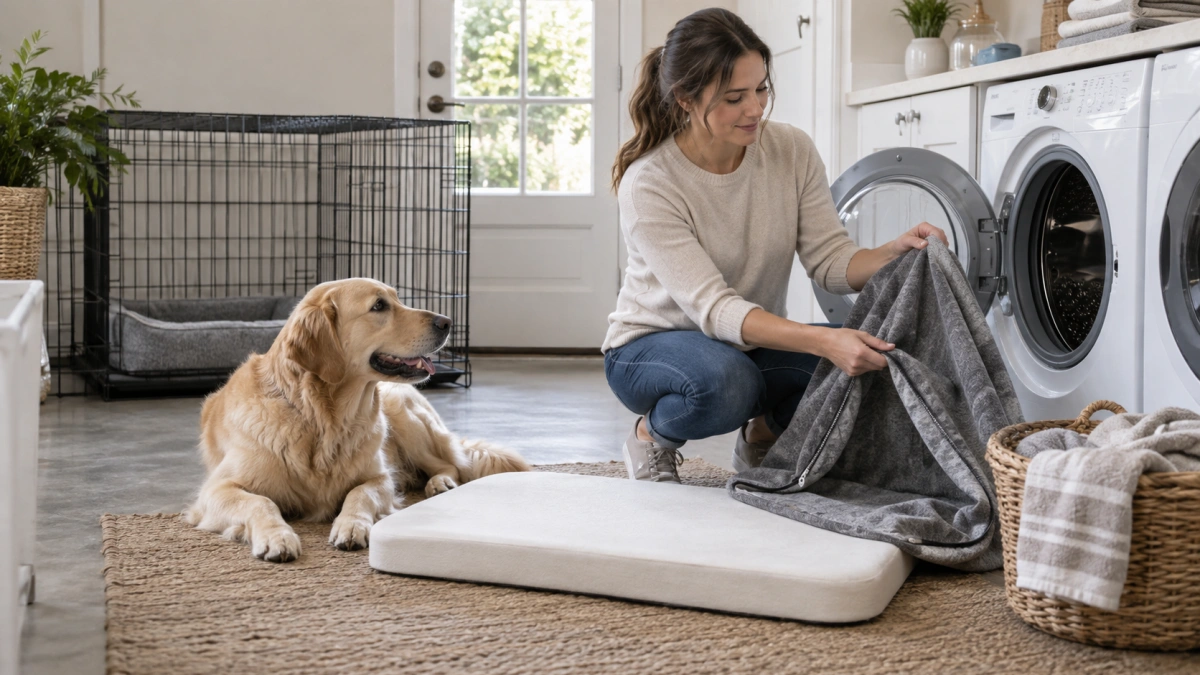
Washable Dog Crate Beds
Washability matters more in a crate because the bed may need frequent cleaning after muddy paws, shedding, drool, spills, or accidents.
Before buying, check what “washable” actually means.
- Can the entire pad go in the washing machine?
- Is only the outer cover machine washable?
- Does the inner pad require spot cleaning?
- Can the bed go in a dryer?
- Does it need to air dry?
- Is there a water-resistant or waterproof layer?
A removable cover can make a structured crate pad easier to maintain, while a fully washable thin pad may be convenient for puppies or frequent cleaning.
Crate Beds for Puppies and Accidents
Puppy crate bedding needs to be easy to clean because accidents can happen during house training.
Practical features include:
- Machine-washable fabric
- Fast-drying construction
- Removable covers
- Moisture-resistant backing
- Simple low-profile designs
If a puppy repeatedly eliminates in the crate and then uses soft bedding to cover the mess, temporarily simplifying or removing soft bedding may be appropriate while the house-training routine is reassessed.
Comfort still matters, but bedding should not interfere with safe crate training or make repeated accidents harder to manage.
Chew-Resistant Dog Crate Beds
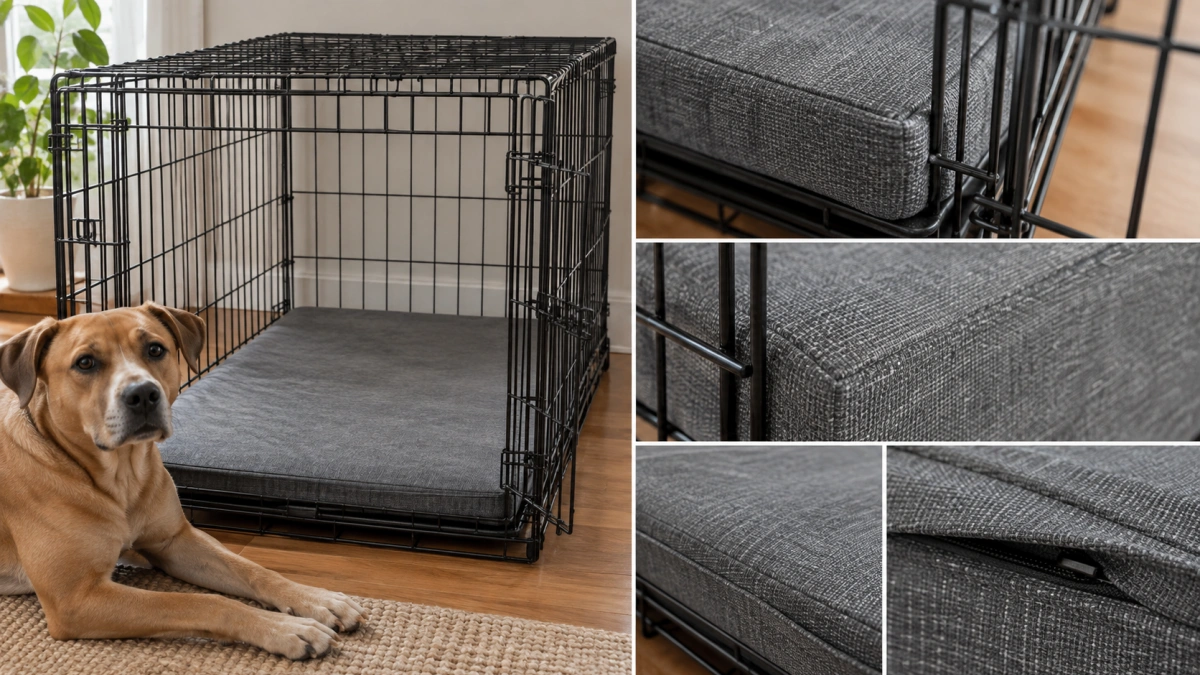
Crates can make bed construction especially important because dogs may have more opportunity to focus on exposed corners, seams, and loose fabric.
Look for:
- Minimal exposed corners
- Protected seams
- Concealed zipper access
- Tightly fitted covers
- Limited loose filling
- Fabric that resists scratching and digging
If chewing is the main reason your dog’s crate bedding keeps failing, our guide to durable dog beds explains how to compare weak points, fabrics, protected edges, and chew-resistant construction in more detail.
Keep the Bed From Sliding or Bunching
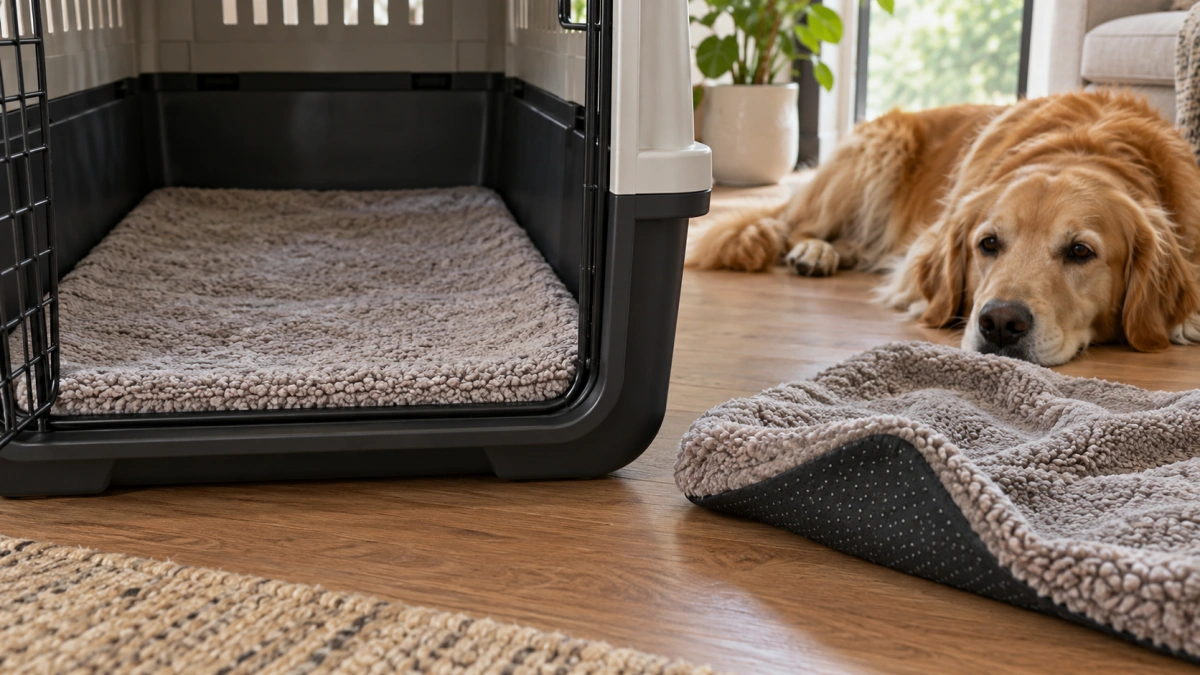
A correctly sized pad can still be frustrating if it constantly slides or folds inside the crate.
Useful stability features include:
- Non-slip backing
- A close fit to the crate tray
- Enough structure to remain flat
- Secure corner or anchor systems when designed for the crate
Avoid improvised ties, cords, or attachments that create new loose items the dog can reach.
Using a Crate Divider With a Growing Puppy
A divider changes the amount of floor space available, so the final adult crate size may not match the pad size needed during puppyhood.
Possible approaches include:
- Using a smaller washable pad during the divided stage
- Choosing bedding that can fold only if it remains flat and safe
- Replacing the pad as the divider moves
- Waiting to buy a full-size premium bed until the crate is opened to its adult configuration
Measure the usable divided area rather than buying only for the final crate dimensions.
When Crate Bedding May Not Be Appropriate
Soft bedding may need to be removed or changed when a dog repeatedly:
- Tears the cover apart
- Pulls out foam or stuffing
- Swallows pieces of fabric
- Bunches the bed dangerously
- Uses bedding to repeatedly cover crate accidents
If bedding is being torn apart and swallowed, remove the damaged material. Swallowed fabric, foam, or stuffing can be dangerous, so contact a veterinarian for guidance if ingestion occurs.
Common Dog Crate Bed Buying Mistakes
- Buying from the crate label without measuring the interior
- Choosing a bed so large that the edges curl upward
- Using a thick bolster bed that consumes too much crate space
- Assuming “washable” means the entire bed can be machine washed
- Ignoring zipper and seam exposure
- Using a slippery pad that constantly moves
- Buying adult-size bedding for a divided puppy crate
- Continuing to use bedding after stuffing becomes exposed
Dog Crate Bed Buying Checklist
- What are the crate’s actual interior dimensions?
- Will the bed lie completely flat?
- Does the dog still have enough headroom?
- Can the dog turn and lie down comfortably?
- Is the whole bed washable or only the cover?
- Will the pad dry easily after washing?
- Does it resist sliding and bunching?
- Are seams, corners, and zippers protected?
- Is the construction suitable for my dog’s chewing behavior?
- Will a crate divider change the required size?
- Can damaged bedding be removed quickly and safely?
Final Thoughts
The best dog crate beds fit the actual interior of the crate, stay flat during use, provide enough cushioning without taking excessive space, and are practical to clean.
For puppies, washability and changing crate dimensions may matter most. For chewers, protected edges and limited access to loose material become more important.
Measure the crate first, then choose bedding based on the dog’s behavior and your cleaning routine rather than relying only on the size printed on the crate box.