By

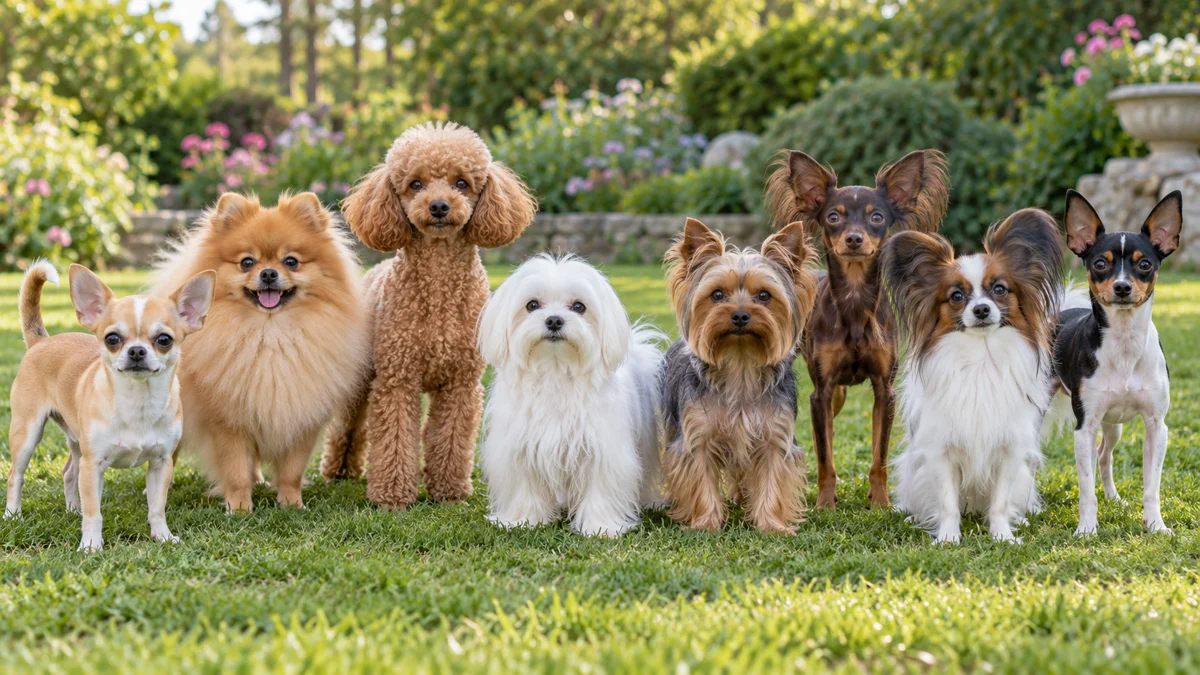
The smallest dog breeds stay remarkably compact even after puppyhood ends. Chihuahuas, Pomeranians, Toy Poodles, Maltese, Yorkshire Terriers, Russian Toys and several other toy breeds can remain under 10 pounds as healthy adults.
That tiny size can make everyday life easier in some ways. Small dogs need less physical space, fit into compact homes more easily and are simpler to transport than 70- or 100-pound breeds.
But smaller does not automatically mean easier.
Tiny dogs can be physically fragile, surprisingly energetic, highly vocal, difficult to house-train if routines are inconsistent and expensive to groom depending on coat type. Some also retain genuine terrier, watchdog or sporting-dog personalities despite weighing less than a household cat.
If your main goal is finding a compact companion, this guide compares the smallest dog breeds by adult size, personality, coat and lifestyle rather than simply searching for the tiniest puppy available.
For a wider selection, see our Small Dog Breeds guide.
What Counts as a Tiny Dog Breed?
There is no universal kennel-club definition stating that every dog under a specific weight officially belongs to a “tiny” category.
For practical comparison, however, breeds whose healthy adult weight commonly stays around 10 pounds or below represent the smallest end of the domestic-dog size range.
Current AKC breed information includes examples such as:
- Pomeranian: about 3–7 pounds
- Toy Poodle: about 4–6 pounds
- Chihuahua: no more than about 6 pounds under the breed standard
- Russian Toy: up to about 6.5 pounds
- Maltese: under 7 pounds
- Yorkshire Terrier: about 7 pounds
- Toy Fox Terrier: about 4–9 pounds
- Papillon: about 5–10 pounds
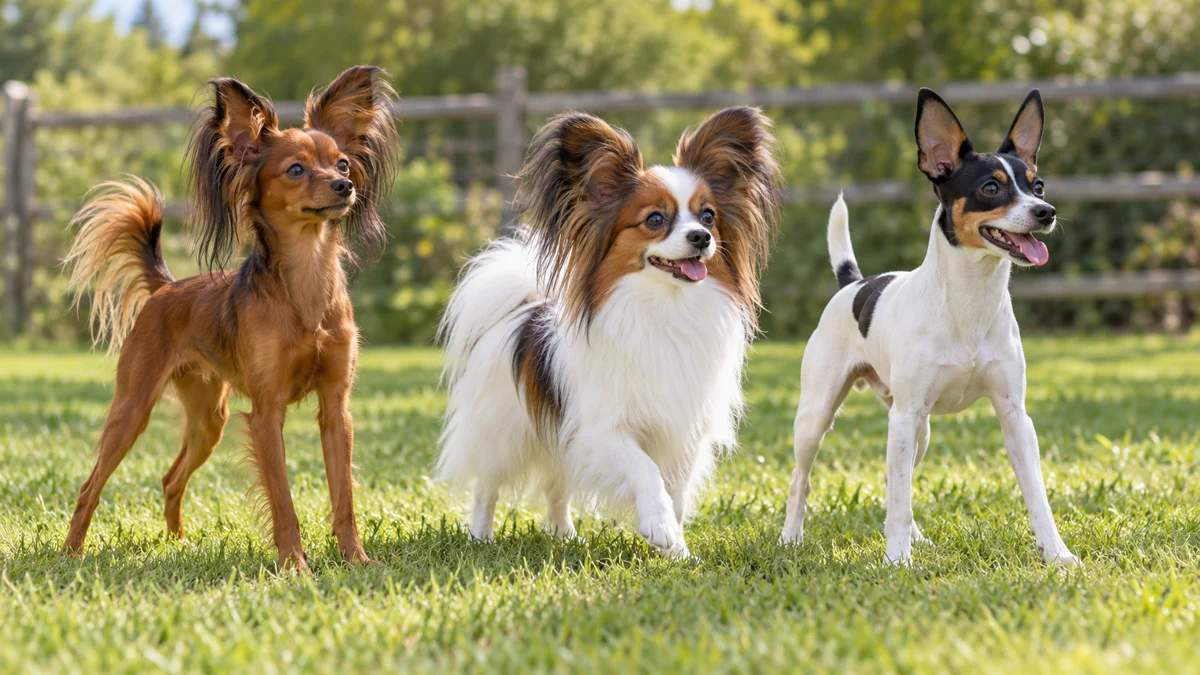
These dogs demonstrate that “tiny” includes several different structures. A Pomeranian is compact and fluffy, a Russian Toy is fine-boned and long-legged, and a Yorkshire Terrier combines tiny body size with a true terrier background.
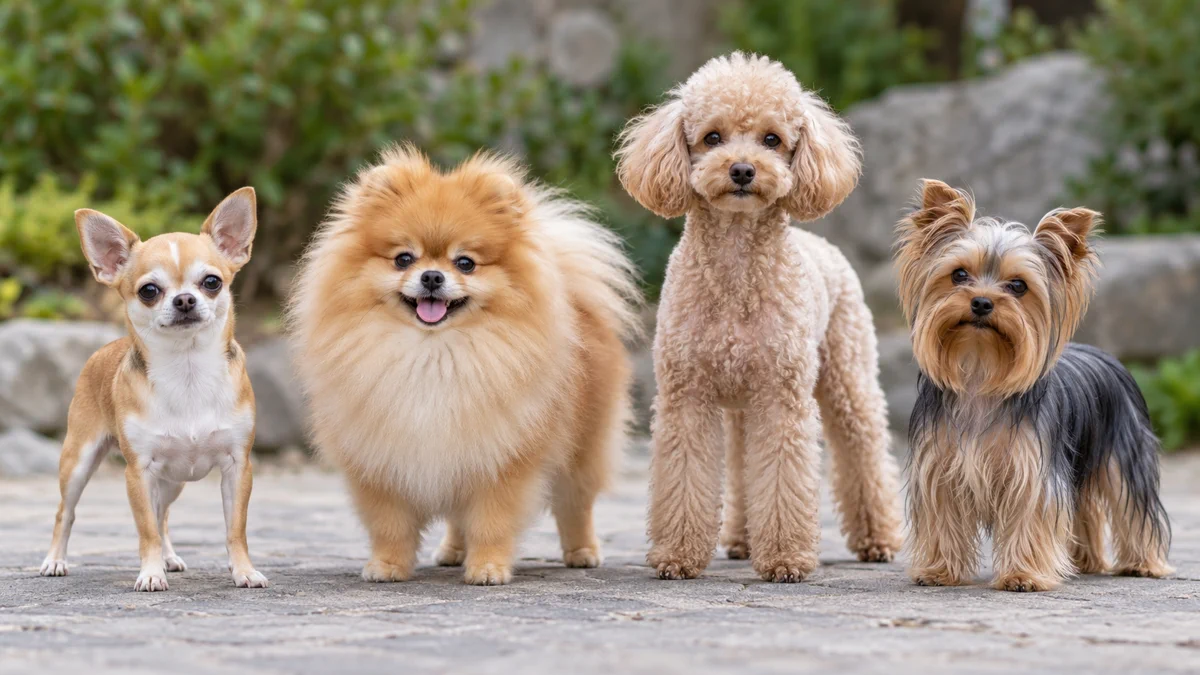
Quick Comparison of the Smallest Dog Breeds
| Breed | Typical Adult Size | Coat | Important Trait |
|---|---|---|---|
| Chihuahua | Up to about 6 lb | Smooth or long | Extremely compact and alert |
| Pomeranian | 3–7 lb | Dense double coat | Fluffy, lively and vocal |
| Toy Poodle | 4–6 lb | Curly | Highly intelligent and trainable |
| Russian Toy | Up to 6.5 lb | Smooth or long | Fine-boned, lively and athletic |
| Maltese | Under 7 lb | Long silky coat | Companion-oriented and adaptable |
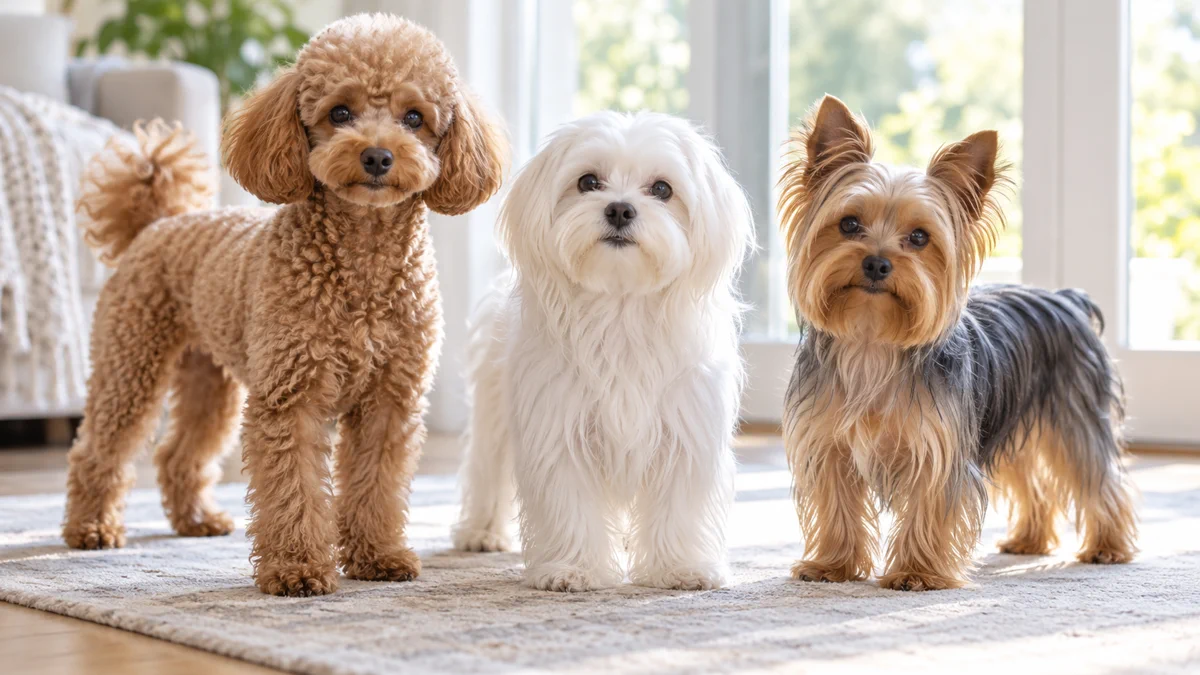
| Yorkshire Terrier | About 7 lb | Long silky coat | Tiny body with terrier personality |
| Toy Fox Terrier | 4–9 lb | Short smooth coat | Athletic toy-terrier blend |
| Papillon | 5–10 lb | Long silky coat | Highly active and trainable |
| Miniature Pinscher | 8–10 lb | Short smooth coat | Bold and energetic |
| Japanese Chin | 7–11 lb | Silky coat | Small companion breed |
1. Chihuahua
The Chihuahua is one of the strongest answers to the question, “What is the smallest dog breed?”
The AKC breed standard sets a maximum weight of 6 pounds, although healthy individual dogs vary within the standard.
Chihuahuas come in both smooth-coat and long-coat varieties.
Despite their tiny bodies, they are often:
- Alert
- Confident
- Strongly attached to their people
- Quick to notice unfamiliar activity
- More energetic than their size suggests
The breed’s tiny frame can be convenient in apartments and travel, but it also increases vulnerability to falls, rough handling and accidental injury.
2. Pomeranian
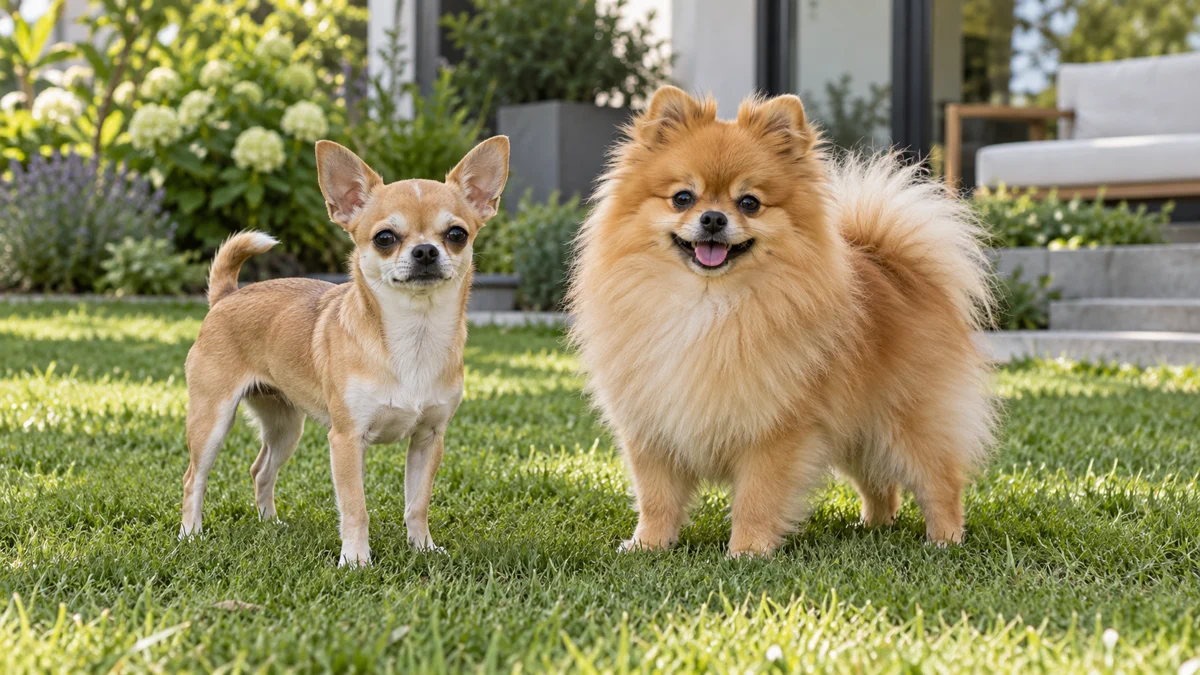
Pomeranians typically weigh only about 3 to 7 pounds, placing them among the smallest recognized dog breeds.
Their dense double coat creates the illusion of a larger body than they actually have.
Poms are descendants of larger Spitz-type dogs and still retain many classic Spitz characteristics, including alertness, intelligence and confidence.
Do not mistake the fluffy appearance for a passive personality.
Many Pomeranians enjoy:
- Training
- Trick work
- Short walks
- Play
- Being involved in household activity
3. Toy Poodle
The Toy Poodle is another remarkably small adult dog, typically around 4 to 6 pounds.
Its tiny size can be misleading because Poodles are highly intelligent, athletic dogs rather than simple lap companions.
Toy Poodles often enjoy:
- Obedience training
- Trick training
- Interactive games
- Agility-style activities appropriate for their size
- Daily walks
Their curly coat releases relatively little loose hair into the home compared with many shedding breeds, but it requires regular clipping and grooming.
A lower-shedding coat does not mean a lower-maintenance coat.
4. Russian Toy
The Russian Toy is one of the smallest breeds in the world.
AKC lists adults at approximately 8 to 11 inches tall and up to 6.5 pounds.
The breed has two coat varieties:
- Smooth
- Longhaired
Russian Toys are small and fine-boned but also lively, intelligent and playful.
Their delicate structure means owners need to take physical safety seriously, especially around large dogs, very young children and high furniture.
5. Maltese
Adult Maltese stand approximately 7 to 9 inches and weigh under 7 pounds according to current AKC breed information.
They were developed primarily as companion dogs and have a long history of living closely with people.
The breed is known for its white silky coat, dark eyes and compact body.
A full-length coat requires significant brushing, although many companion Maltese are kept in shorter practical trims.
AKC describes the breed as playful, charming and gentle.
6. Yorkshire Terrier
The Yorkshire Terrier generally stands about 7 to 8 inches and weighs approximately 7 pounds.
Although Yorkies became famous as fashionable companions, their history includes rodent control in textile mills.
That background is still visible in their confident, lively personality.
Yorkies can be:
- Affectionate
- Alert
- Bold
- Playful
- More terrier-like than their silky appearance suggests
The coat can be kept long or maintained in a shorter pet trim depending on owner preference.
7. Toy Fox Terrier
Toy Fox Terriers generally weigh approximately 4 to 9 pounds.
Their short smooth coat makes grooming relatively simple, but their personality carries significant terrier influence.
They are alert, athletic, intelligent and playful dogs that often enjoy training and active games.
If you are considering one specifically, see our Toy Fox Terrier breed guide.
8. Papillon
Papillons generally stand about 8 to 11 inches and weigh 5 to 10 pounds.
Their large butterfly-like ears make them appear delicate, but AKC describes the breed as athletic, intelligent and adaptable.
Papillons frequently excel in:
- Agility
- Obedience
- Trick training
- Interactive play
This is a good example of a tiny dog that should not be treated as a permanent lap ornament.
9. Miniature Pinscher
Miniature Pinschers weigh roughly 8 to 10 pounds.
They have short coats and compact, athletic bodies.
The breed is known for confidence, energy and alertness.
A Min Pin may fit easily into a small home, but it still benefits from regular walks, training and mental activity.
10. Japanese Chin
Japanese Chin generally weigh around 7 to 11 pounds.
They are companion dogs with silky coats and a distinctive expression.
Their small adult size makes them convenient for many homes, although coat care and careful handling remain important.
Tiny Dogs Can Still Be Athletic
One of the biggest mistakes people make is assuming a tiny dog has tiny exercise needs.
A Papillon, Toy Fox Terrier or Russian Toy can be remarkably lively despite weighing less than 10 pounds.
Their exercise may require less physical distance than a Labrador or Border Collie, but they still benefit from:
- Regular walks
- Training
- Sniffing
- Play
- Food puzzles
- Age-appropriate dog sports
Mental stimulation is especially important for intelligent toy breeds.
What Is the Smallest Dog Breed?
The Chihuahua is generally considered one of the smallest recognized dog breeds and has an AKC breed-standard maximum weight of 6 pounds.
However, “smallest” can be measured in more than one way.
Some breeds may overlap with the Chihuahua in weight while differing in height and body structure.
For example, Toy Poodles commonly weigh around 4 to 6 pounds but have a different build, while Russian Toys can weigh up to 6.5 pounds and appear taller because of their long legs.
Instead of trying to identify one universally smallest individual dog, compare normal adult breed ranges.
What About the World’s Smallest Individual Dog?
Individual record-holding dogs should not be used as a target when choosing a pet.
A record-setting individual may be significantly smaller than the normal healthy range for its breed.
The goal should be a healthy dog that fits its breed standard and has functional movement, normal development and good quality of life—not the smallest dog a breeder can possibly produce.
Is “Teacup” an Official Dog Size?
No.
Terms such as “teacup,” “micro,” “pocket” or “mini” are sometimes used in advertising to describe unusually small dogs, but they are not automatically official breed varieties.
AKC breed standards define the legitimate sizes and varieties for recognized breeds.
For example:
- Poodles officially include Toy, Miniature and Standard varieties.
- Dachshunds have recognized size distinctions within their breed system.
- A “teacup Chihuahua” is not a separate AKC breed.
- A “teacup Pomeranian” is not a separate AKC breed.
Be cautious when extremely small size is marketed as a premium feature rather than focusing on health, structure and responsible breeding.
Why Breeding for Extreme Smallness Can Be a Problem
There is a difference between choosing a naturally tiny recognized breed and deliberately trying to produce an abnormally small individual.
Responsible breeders work toward their breed standard rather than attempting to create the smallest puppy possible for marketing purposes.
When evaluating a breeder, focus on:
- Breed-standard size
- Health testing
- Temperament
- Pedigree information
- How puppies are raised
- Whether the breeder discusses realistic adult size
Claims such as “micro,” “extreme tiny” or guaranteed unusually low adult weights deserve additional scrutiny.
Do Tiny Dog Breeds Really Stay Small?
Yes, established toy breeds have relatively predictable adult size ranges.
A healthy Pomeranian does not grow into a 30-pound adult. A Maltese does not become Labrador-sized.
However, individual dogs still vary.
When purchasing a puppy, ask to see:
- The parents
- Adult relatives when possible
- Breed-standard information
- Accurate puppy weight records
Do not rely entirely on online puppy-size calculators or guarantees that a very young puppy will mature to one exact number of pounds.
Tiny Dog Breeds vs Small Dog Breeds
Every tiny breed is a small dog, but not every small dog is truly tiny.
For example, breeds such as Miniature Schnauzers, West Highland White Terriers and some other small dogs may weigh 15 to 20 pounds or more.
They are still compact compared with a Labrador but physically much more substantial than a 5-pound Chihuahua or Toy Poodle.
If you do not specifically need the smallest possible adult size, a slightly larger small breed may sometimes be easier to handle in an active household.
Are Tiny Dog Breeds Good for Apartments?
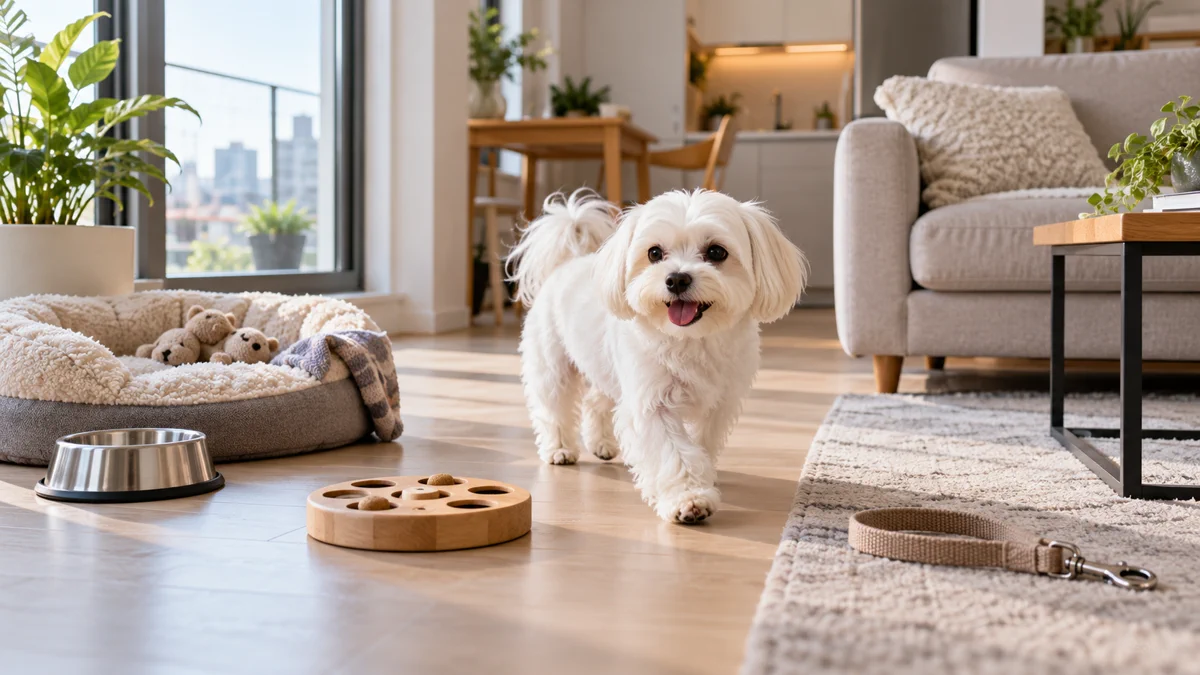
Their physical footprint is a major advantage.
Tiny dogs need smaller beds, crates and feeding areas, and they take up little floor space.
However, apartment suitability also depends on:
- Barking
- Exercise
- House training
- Separation tolerance
- Response to hallway noise
A vocal 6-pound dog can create more neighbor complaints than a quiet 50-pound adult.
Size helps, but behavior determines whether apartment living actually works.
Are Tiny Dogs Easier to Exercise?
They often need less total physical distance to become tired, but they still need daily activity.
A few laps around the living room should not replace normal exploration of the outside world.
Small dogs benefit from opportunities to:
- Walk
- Sniff
- Explore
- Train
- Play
- Interact with their environment
Adjust distance and intensity to the individual dog’s age, health and breed.
Small Size Requires Extra Safety
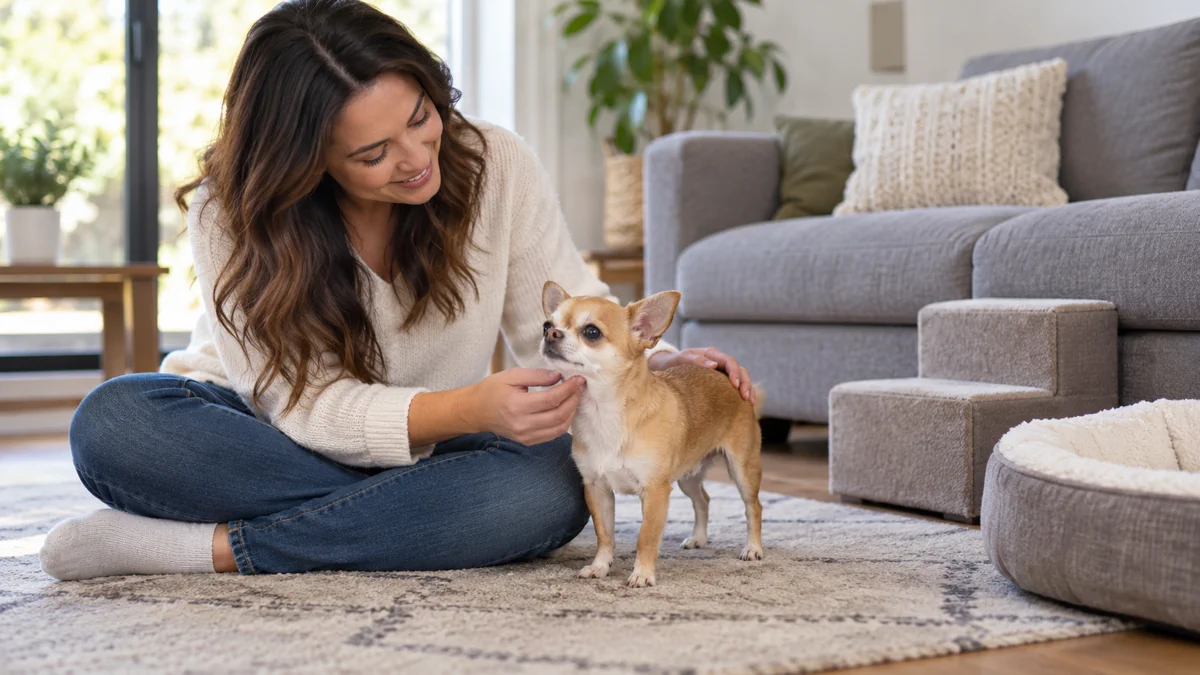
A dog weighing five pounds experiences the household differently from a 50-pound dog.
Owners should think about:
- Falls from beds and sofas
- Being stepped on
- Doors closing unexpectedly
- Rough handling
- Interactions with large dogs
- Jumping from someone’s arms
- Open staircases
This becomes especially important in homes with very young children.
AKC notes that some very small dogs may be too delicate for boisterous households with young children and should have a safe place where they can be left alone when necessary.
Tiny Dogs and Young Children
Small size does not automatically make a breed a better children’s dog.
A toy dog can be easier for a child to overpower or accidentally injure.
Adults should teach children to:
- Keep the dog on the floor rather than constantly carrying it
- Avoid grabbing or squeezing
- Leave sleeping dogs alone
- Avoid chasing the dog
- Respect food and resting areas
Supervision matters regardless of how friendly the breed may be.
Can Tiny Dogs Live With Large Dogs?
Yes, but body-size differences require management.
A friendly 70-pound dog can accidentally injure a 5-pound companion during normal play.
Introductions should be controlled, and owners should watch for:
- Body slamming
- Chasing
- Rough wrestling
- Resource guarding
- Large-dog pawing
Compatibility depends on individual temperament as well as breed.
Are Tiny Dogs Easy to Travel With?
They are physically easier to transport than large breeds.
A small carrier takes up less vehicle space, and tiny dogs are easier to lift when necessary.
But travel policies vary by airline, hotel and carrier, so do not assume a dog automatically qualifies for in-cabin air travel simply because it is small.
Always check current carrier dimensions and pet rules before booking.
Do Small Dogs Eat Much Less?
Tiny dogs require fewer total calories than large dogs, but this does not mean nutrition becomes unimportant.
Because daily portions are small, extra treats can quickly become a meaningful percentage of the dog’s calorie intake.
Use appropriately sized food and monitor body condition rather than assuming a tiny dog cannot become overweight.
Dental Care Is Especially Important
Several toy breeds are prone to dental crowding or periodontal problems.
For example, AKC’s current Russian Toy guidance specifically highlights dental health as an important area of routine care.
Begin tooth brushing early and discuss preventive dental care with your veterinarian.
Do not assume that bad breath or heavy tartar is simply normal because the dog is small.
Grooming Varies Dramatically
Tiny dogs can have almost every coat type.
Short Coat
Chihuahuas and Toy Fox Terriers can have very simple coat-care routines depending on variety.
Heavy Double Coat
Pomeranians require regular brushing to manage their dense coat.
Curly Coat
Toy Poodles generally require professional or skilled home clipping.
Long Silky Coat
Maltese and Yorkshire Terriers need consistent grooming if kept in longer coat.
The physically smallest dog is not necessarily the lowest-maintenance dog.
Tiny Dogs Still Need Training
Unwanted behavior is often tolerated longer in tiny dogs because it feels less physically threatening.
But a small dog still benefits from learning:
- Recall
- Loose-leash walking
- Calm greetings
- Handling
- Settling
- House-training routines
- Comfort with being alone
Training improves quality of life regardless of body size.
Which Tiny Breed Needs the Least Grooming?
Short-coated breeds such as smooth-coat Chihuahuas and Toy Fox Terriers generally require less coat maintenance than Maltese, Pomeranians or Toy Poodles.
However, every breed still requires routine:
- Nail care
- Dental care
- Ear checks
- Skin monitoring
Low coat maintenance should not be confused with maintenance-free ownership.
Which Tiny Breed Is Most Active?
Papillons, Toy Fox Terriers, Miniature Pinschers and Russian Toys can all be surprisingly active for their size.
Toy Poodles are also highly trainable and mentally energetic.
If you want a true couch companion, do not select solely from a list of the smallest breeds. Research temperament and activity level separately.
Which Tiny Breed Is Best for First-Time Owners?
There is no universal winner.
A first-time owner’s ideal breed depends on:
- Training experience
- Grooming tolerance
- Children
- Other pets
- Activity level
- Daily schedule
- Budget
Instead of asking only for the smallest breed, compare the complete lifestyle of several dogs.
Our Best Small Dog Breeds guide is designed for that next step.
Which Tiny Dog Breed Is Right for You?
| If Your Priority Is… | Start Researching… |
|---|---|
| Extremely compact adult size | Chihuahua |
| Tiny fluffy Spitz | Pomeranian |
| Very small and highly trainable | Toy Poodle |
| Tiny long-legged companion | Russian Toy |
| Gentle white companion breed | Maltese |
| Tiny dog with terrier confidence | Yorkshire Terrier |
| Short coat and athletic terrier personality | Toy Fox Terrier |
| Small athletic dog for training | Papillon |
| Bold short-coated toy breed | Miniature Pinscher |
10 Questions to Ask Before Choosing a Tiny Dog
- Do I genuinely need a dog under 10 pounds?
- Are there very young children in my home?
- Will the dog regularly interact with much larger dogs?
- How much barking can I tolerate?
- How much grooming do I want to do?
- Can I provide daily exercise and training?
- Can I protect a tiny dog from high furniture and falls?
- Am I prepared for regular dental care?
- Does the breeder focus on health rather than extreme smallness?
- Would a slightly larger small breed actually fit my lifestyle better?
Final Thoughts
The smallest dog breeds include Chihuahuas, Pomeranians, Toy Poodles, Russian Toys, Maltese, Yorkshire Terriers, Toy Fox Terriers and Papillons.
Many of these breeds stay under 10 pounds as healthy adults, making them genuinely compact companions rather than dogs that only look tiny during puppyhood.
But the smallest body does not guarantee the easiest dog.
Toy Poodles and Papillons can be highly active and trainable. Yorkies and Toy Fox Terriers retain terrier characteristics. Pomeranians need substantial coat care. Tiny Chihuahuas require thoughtful protection from accidental injury.
Avoid choosing a puppy simply because someone advertises it as “teacup,” “micro” or unusually tiny. Those labels are not official breed classifications.
Instead, choose an established breed whose normal healthy adult size, temperament, coat and activity needs fit your household.
Tiny can be convenient. Healthy, well-matched and responsibly bred matters much more.