By A CUTE PET STORY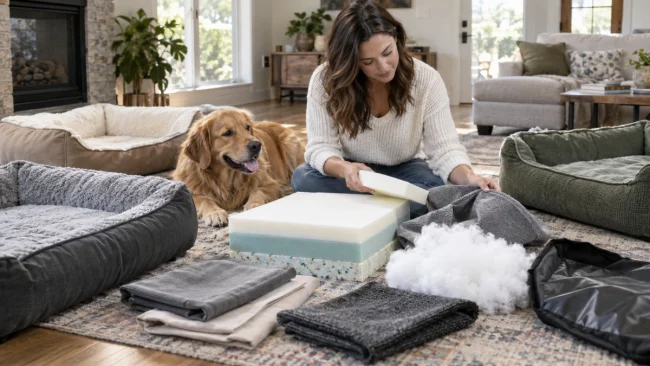
Choosing a dog bed is not only about size and shape. The materials inside the bed and the fabrics used on the outside determine how comfortable, supportive, durable, and easy to clean the bed will be.
Different dogs have different needs. A heavy dog may need a more structured foam base, a dog that gets hot may prefer breathable fabrics, and a dog that creates more mess may need removable washable covers and protective layers.
Understanding dog bed materials helps you compare products based on construction rather than only appearance or marketing claims.
You can also explore our complete Dog Beds topic hub for more guides about sizing, support, cleaning, and different bed styles.
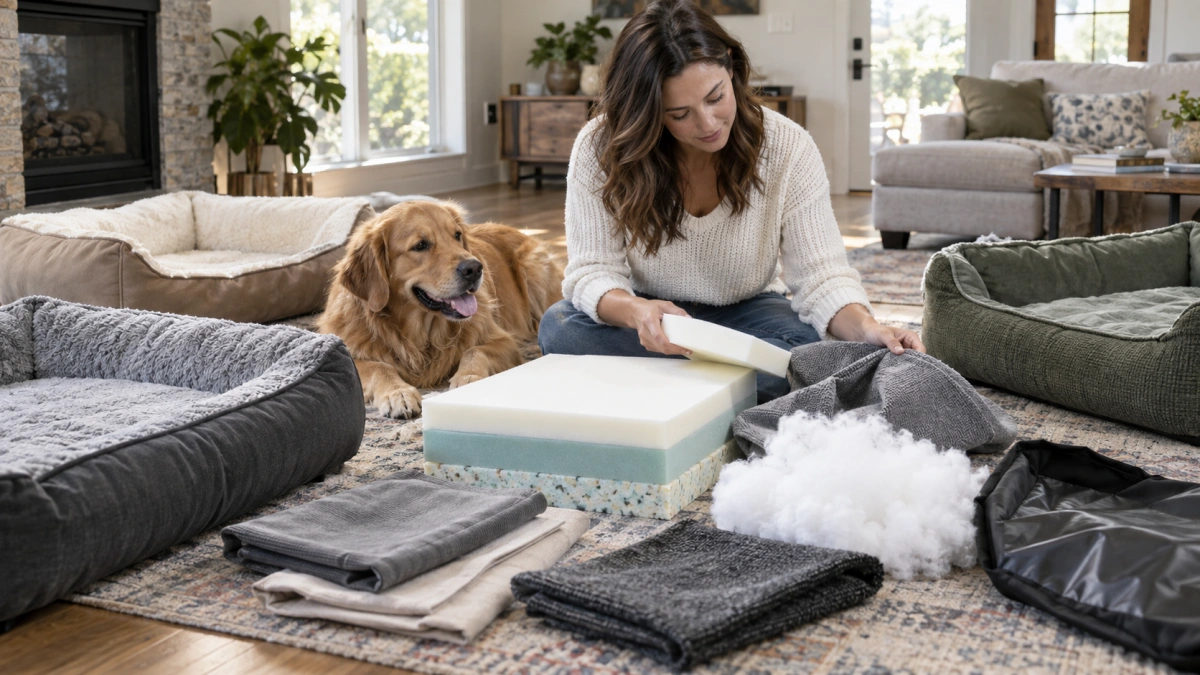
What Are Dog Beds Made Of?
Most dog beds are built from several different material layers rather than one single material.
A typical dog bed may include:
- Outer fabric cover
- Foam or fiber filling
- Support layer
- Waterproof or moisture-resistant liner
- Bottom grip or non-slip material
Each layer has a different purpose. The soft outer fabric affects feel and cleaning, while the internal filling determines support and durability.
Dog Bed Foam Types Explained
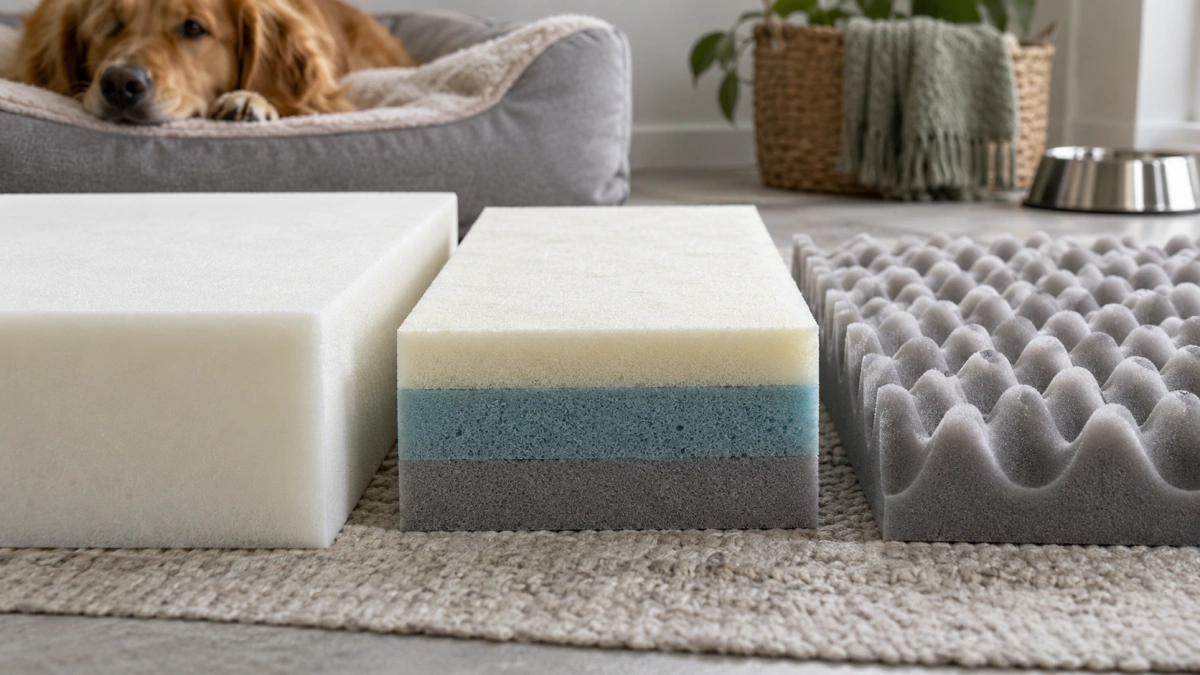
Foam is one of the most important materials in structured dog beds because it affects how the bed responds under your dog’s body weight.
| Foam Type | Main Characteristics | Common Consideration |
|---|---|---|
| Memory Foam | Compresses under pressure and returns toward its original shape | Construction quality and thickness matter |
| Support Foam | Provides a firmer base layer | Often combined with softer top layers |
| Egg-Crate Foam | Textured surface design | May feel lighter and more flexible |
| Layered Foam | Combines multiple foam types | Performance depends on the combination |
| Shredded Foam | Small foam pieces inside a cover | Pieces may shift over time |
The phrase “memory foam dog bed” does not always mean the entire bed is made from memory foam. Some products use memory foam only as one layer above another support material.
Memory Foam Dog Beds: What to Check
Memory foam is popular because it creates a more structured sleeping surface compared with loose fiber filling.
When comparing memory foam dog beds, look at:
- Whether the foam is solid or layered
- The overall bed construction
- How much support foam is underneath
- Whether the bed keeps its shape after repeated use
- Whether the cover can be removed
A thick memory foam label alone does not tell you how the complete bed performs.
Dog Bed Filling Types Explained
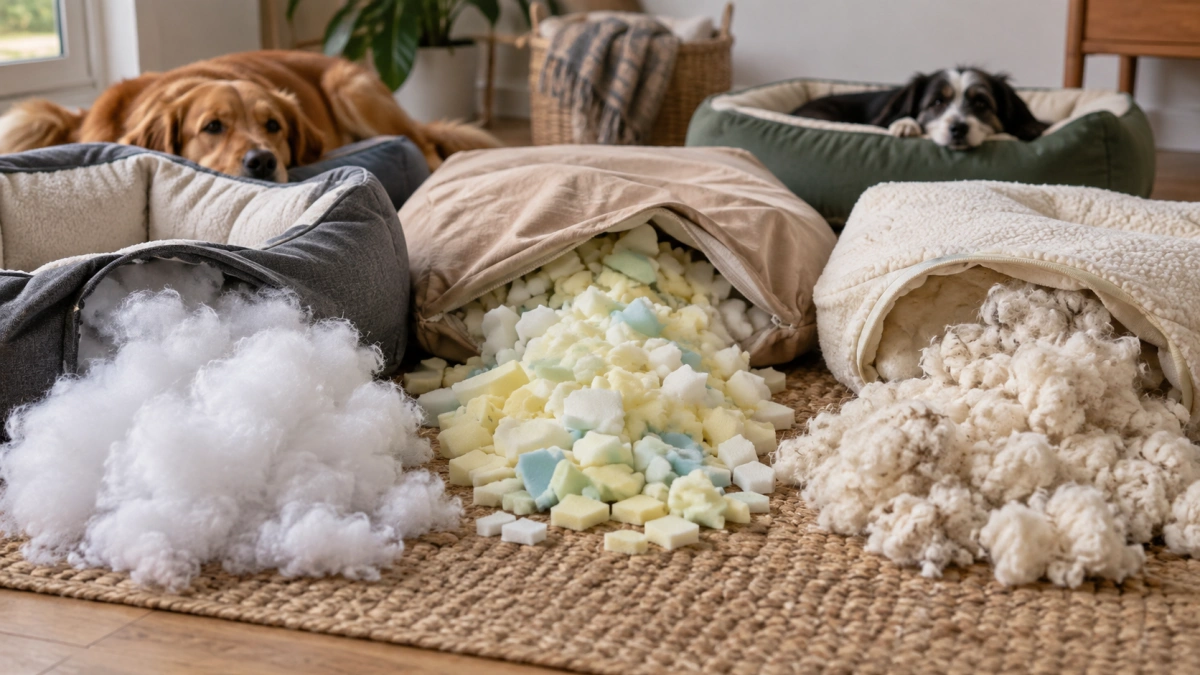
Not all dog beds use foam. Many traditional beds use soft fillings that create a different sleeping experience.
| Filling Type | Common Features | Consideration |
|---|---|---|
| Polyester Fiber Fill | Soft, lightweight, fluffy feel | May flatten over time |
| Shredded Foam | Adjustable loose foam pieces | May require reshaping |
| Cotton-Like Fill | Soft traditional cushioning | Support depends on density |
| Mixed Filling | Combination of materials | Performance varies by construction |
Soft filling can be comfortable, but dogs with heavier bodies may compress loose materials faster than lighter dogs.
Choosing the Right Dog Bed Fabric
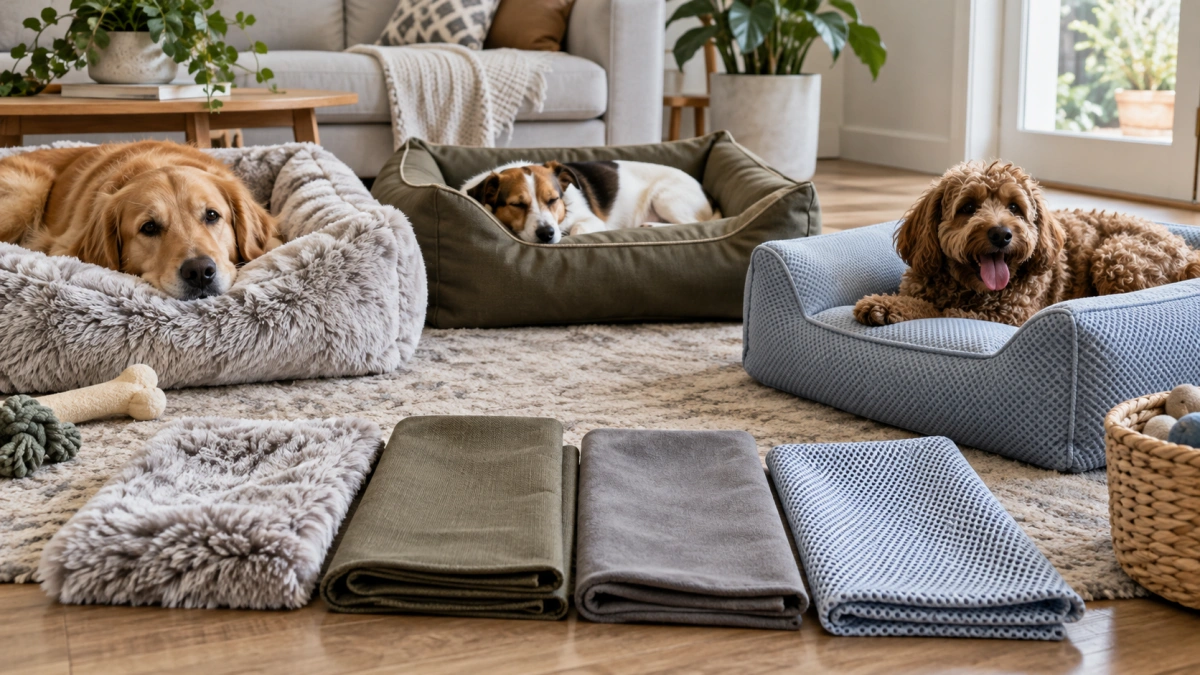
The outer fabric affects how the bed feels, how long it lasts, and how easy it is to maintain.
| Fabric Type | Common Benefit | Consideration |
|---|---|---|
| Plush Fabric | Soft and comfortable feel | May collect more hair and debris |
| Canvas | Durable and practical | May feel less soft |
| Microfiber | Smooth and easy-care surface | Quality varies between products |
| Cooling Fabric | Designed for a lighter surface feel | Cooling performance depends on construction |
The best fabric depends on your dog’s habits. A long-haired dog, outdoor dog, or frequent mess-maker may need a different cover than a dog that mostly sleeps indoors.
Waterproof Dog Bed Materials
Water protection is often misunderstood because “waterproof” can refer to different parts of the bed.
A dog bed may use:
- Water-resistant outer fabric
- Waterproof inner liner
- Protective foam cover
- Moisture-resistant bottom layer
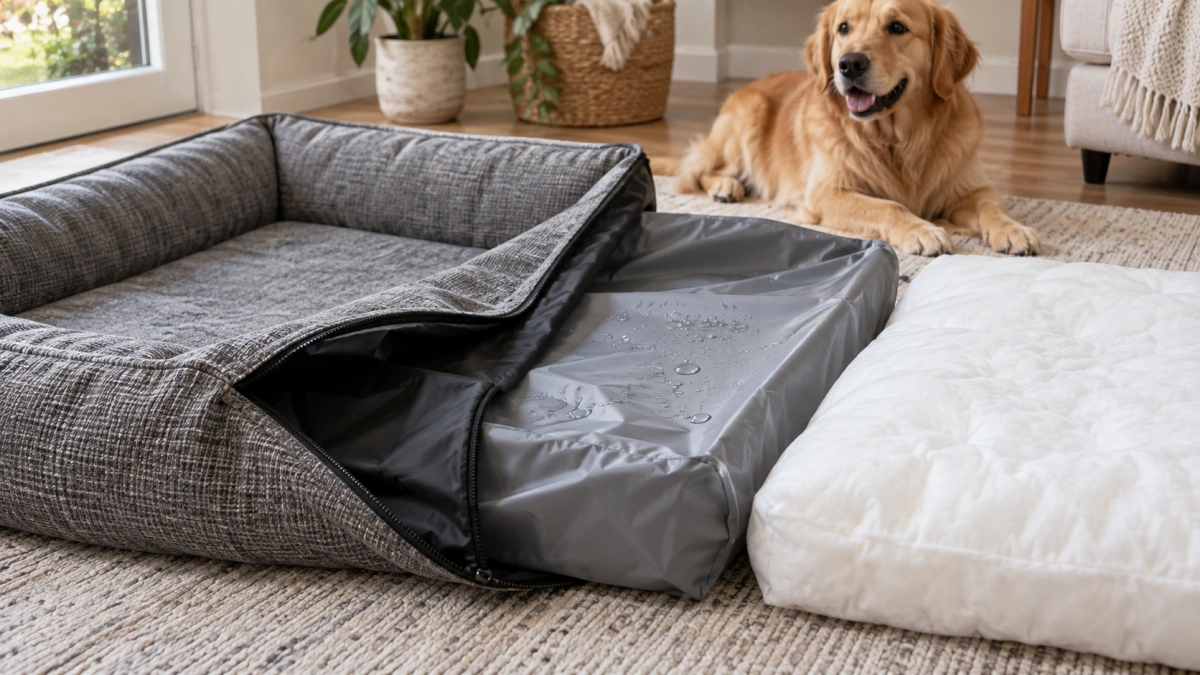
A waterproof outer surface can help with quick spills, while an internal waterproof liner protects the filling or foam core.
For beds with foam inserts, the protective inner layer is especially important because the foam itself is usually much harder to clean than the removable cover.
Washable Dog Bed Materials
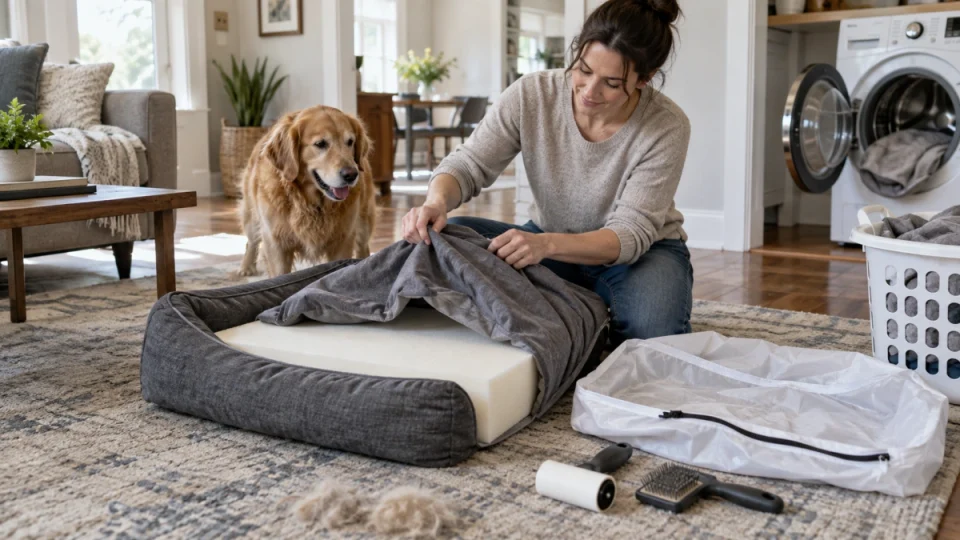
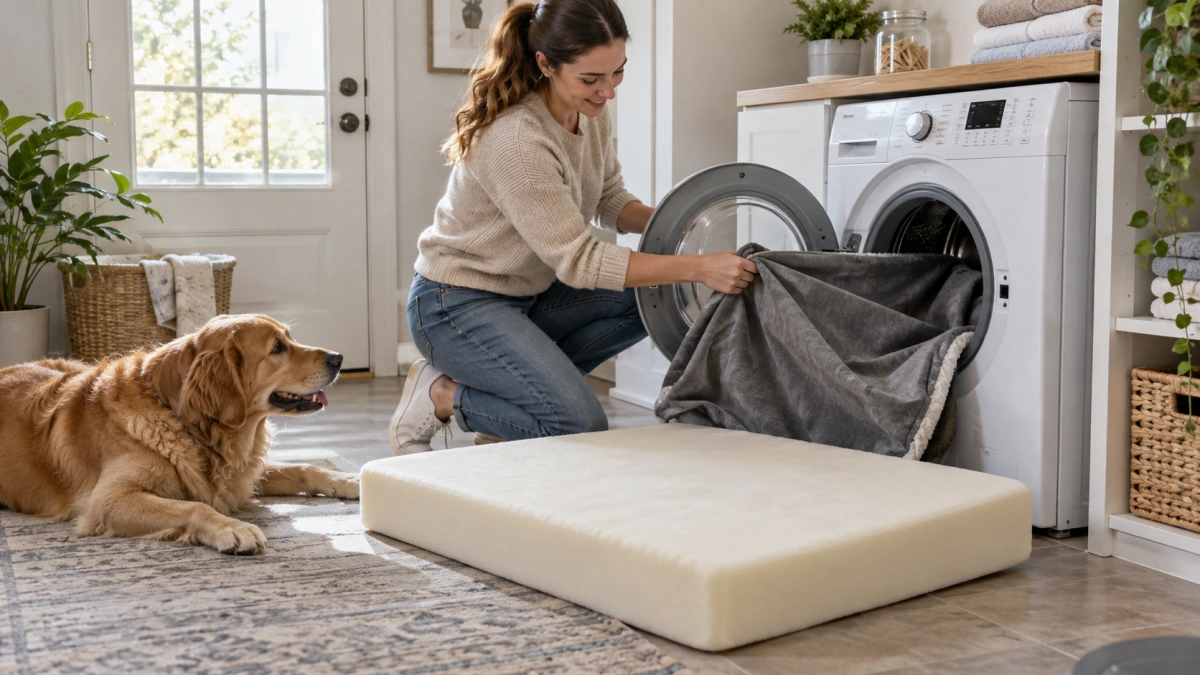
A washable cover is one of the most practical features a dog bed can have.
Look for:
- Removable covers
- Strong zippers
- Machine-washable fabrics
- Separate foam protection layers
- Easy drying instructions
Before buying, check whether the manufacturer means the entire bed is washable or only the cover.
Large foam beds especially benefit from removable covers because the inner structure may not fit inside a normal washing machine.
Durable Dog Bed Materials for Heavy Use
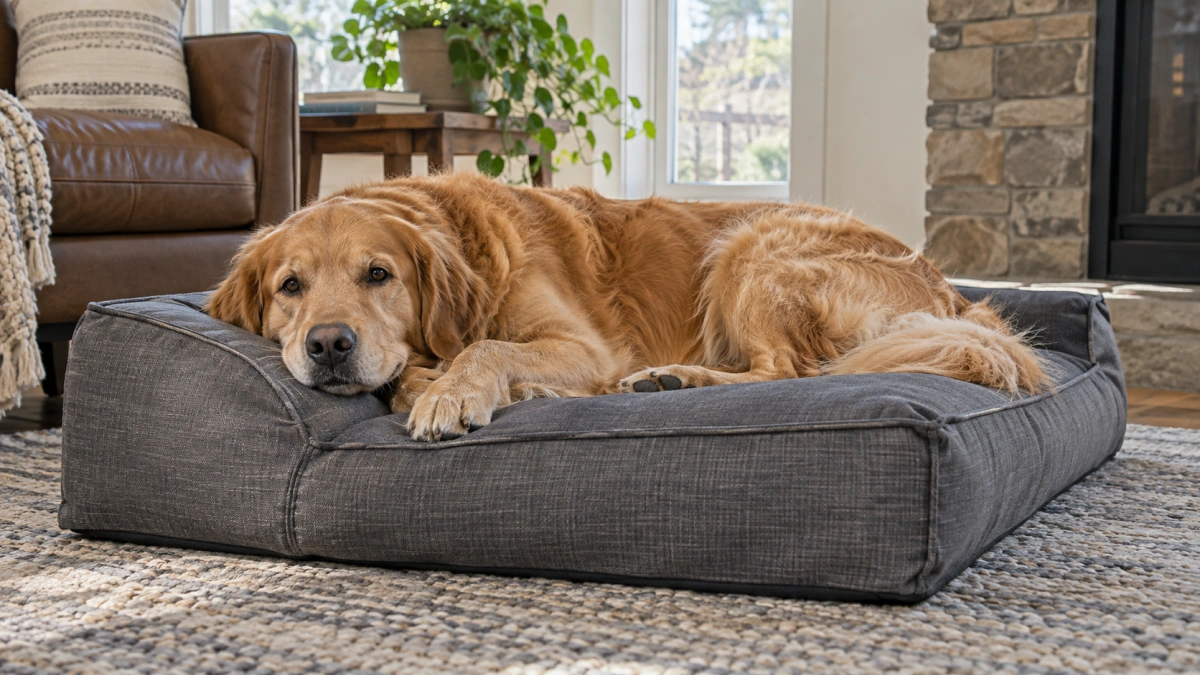
Dogs that scratch, nest, carry toys, spend many hours on the bed, or have heavier body weight place more stress on materials.
For higher durability, consider:
- Strong outer fabrics
- Reinforced seams
- Dense foam structures
- Replaceable covers
- Easy maintenance designs
A durable dog bed is not necessarily the thickest or most expensive option. It is the one whose materials match how the dog actually uses it.
Cooling Dog Bed Materials
Some dogs prefer cooler sleeping surfaces, especially in warm environments or homes without constant air conditioning.
Materials and designs that may feel cooler include:
- Breathable fabrics
- Less enclosed bed shapes
- Elevated designs that allow airflow
- Lighter cover materials
A cooling label alone does not guarantee a specific temperature result. Room conditions, coat type, sleeping habits, and bed construction all influence comfort.
How to Choose Dog Bed Materials Based on Your Dog
Material is only one part of choosing the right dog bed. The size of the sleeping area should also match your dog’s body and sleeping style. Learn how to choose the correct dog bed sizes before buying.
| Dog Situation | Material Consideration |
|---|---|
| Heavy dog | Structured foam and durable cover |
| Senior dog | Supportive surface and easy cleaning |
| Hot sleeper | Breathable fabric and airflow |
| Mess-prone dog | Removable washable cover and liner |
| Chewer or scratcher | More durable fabric construction |
Dog Bed Material Buying Checklist
- What material is used inside the bed?
- Is the filling suitable for my dog’s weight?
- Is the foam solid, layered, or shredded?
- Is the outer fabric durable enough?
- Can the cover be removed?
- Is there a waterproof protective layer?
- Will the material collect too much hair?
- Does the fabric match my dog’s temperature preference?
- Can replacement covers be purchased?
- Does the material match how my dog actually uses the bed?
Final Thoughts
The best dog bed materials depend on the combination of comfort, support, durability, and maintenance.
Memory foam, fiber filling, durable fabrics, waterproof liners, and washable covers each solve different problems. The right choice comes from matching the material construction with your dog’s size, habits, and environment.
Instead of choosing a bed because it looks soft or premium, check what it is made of and how those materials will perform in your home every day.