By
By 
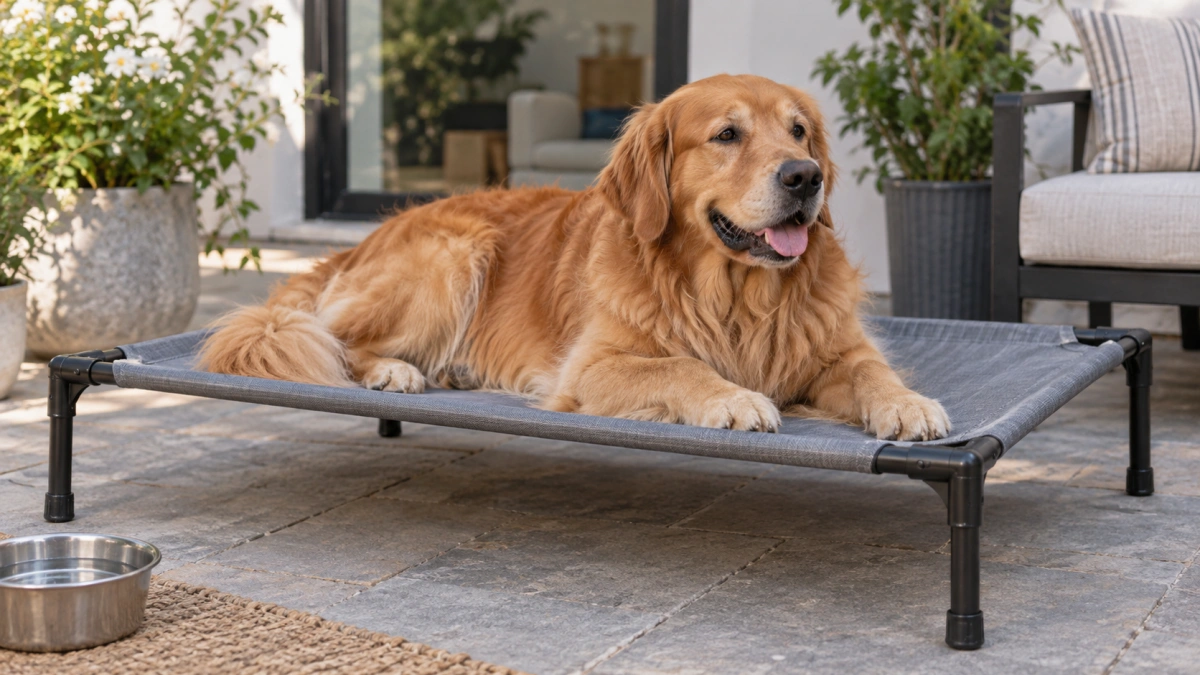
Raised dog beds, also called elevated dog beds, provide a different sleeping experience from traditional floor-level beds. Instead of placing the sleeping surface directly on the ground, these beds use a raised frame and breathable platform to create space underneath.
The main reasons people choose raised dog beds include improved airflow, easier cleaning underneath, less direct contact with cold or damp floors, and a design that works well in many indoor and outdoor environments.
However, a raised bed is not automatically the best option for every dog. The right choice depends on your dog’s sleeping habits, size, environment, and comfort preferences.
You can also explore our complete Dog Beds topic hub for more guides about bed styles, sizing, materials, and everyday use.

What Is a Raised Dog Bed?
A raised dog bed is a bed design where the sleeping surface is lifted above the floor using a frame structure.
Most elevated dog beds include:
- A supporting frame
- A stretched fabric or mesh sleeping platform
- Raised legs or supports
- A gap between the bed and the floor
Unlike traditional padded beds that sit directly on the ground, elevated beds create an open space underneath the dog.
This different structure changes how the bed handles airflow, cleaning, portability, and outdoor use.
Raised Dog Beds vs Traditional Dog Beds
Raised beds and traditional dog beds solve different problems. Neither design is universally better because each has different strengths.
| Feature | Raised Dog Bed | Traditional Dog Bed |
|---|---|---|
| Airflow | More open space underneath | Usually limited airflow below |
| Floor contact | Minimal direct contact | Usually sits directly on the floor |
| Cleaning | Easy access underneath | Requires moving the entire bed |
| Sleeping feel | Usually firmer and flatter | Often softer and more cushioned |
| Outdoor suitability | Commonly used outdoors | Depends on materials |
Some dogs prefer the firm, stable surface of a raised bed, while others prefer the softness and enclosure of traditional padded beds.
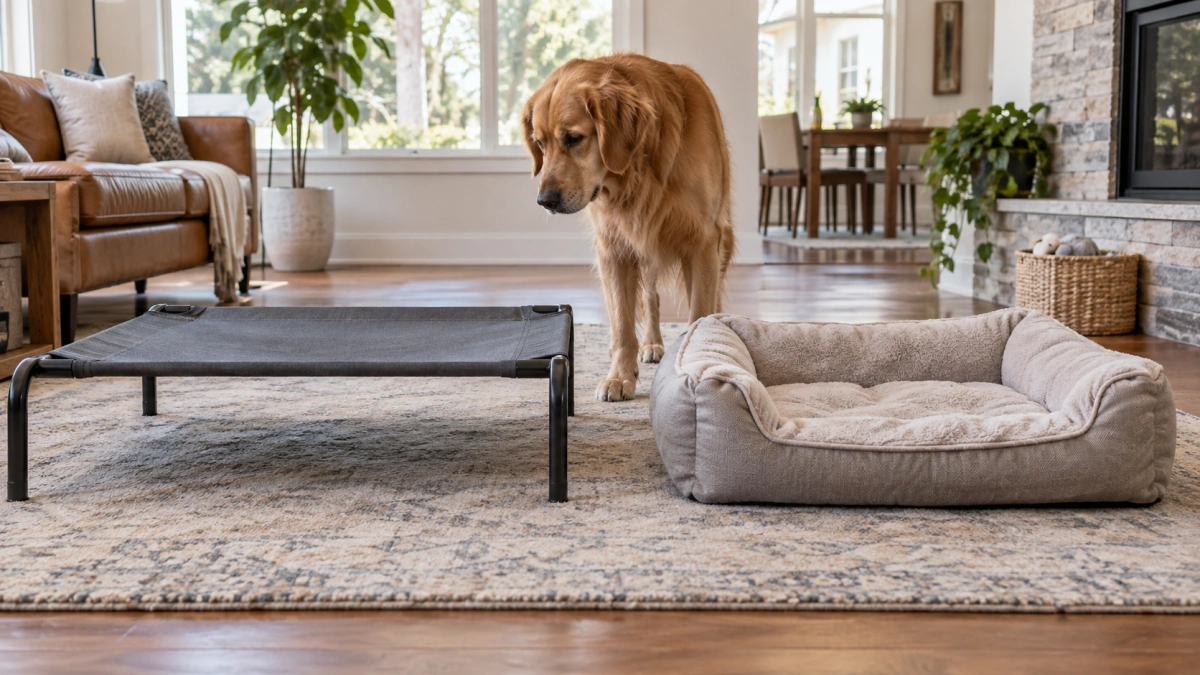
Benefits of Elevated Sleeping Design
The biggest difference between a raised bed and a floor bed is the space created underneath the sleeping surface.
Common benefits include:
- More airflow around the sleeping area
- Less direct contact with cold or damp floors
- Easier cleaning underneath the bed
- A lightweight design that is easy to move
- A firm and stable sleeping surface
These features make raised beds especially popular for warm climates, outdoor areas, patios, kennels, and homes where easy maintenance is important.
Cooling and Airflow Advantages
Because the sleeping platform is lifted above the floor, air can move beneath the bed more freely compared with many traditional floor beds.
A raised design may be useful in situations where:
- The floor surface becomes warm
- The dog spends time outdoors
- The room has limited airflow near the ground
- The dog prefers a firmer sleeping surface
A raised bed does not replace proper temperature management, shade, or fresh water, but its open structure can provide a different resting environment compared with a thick bed placed directly on the floor.
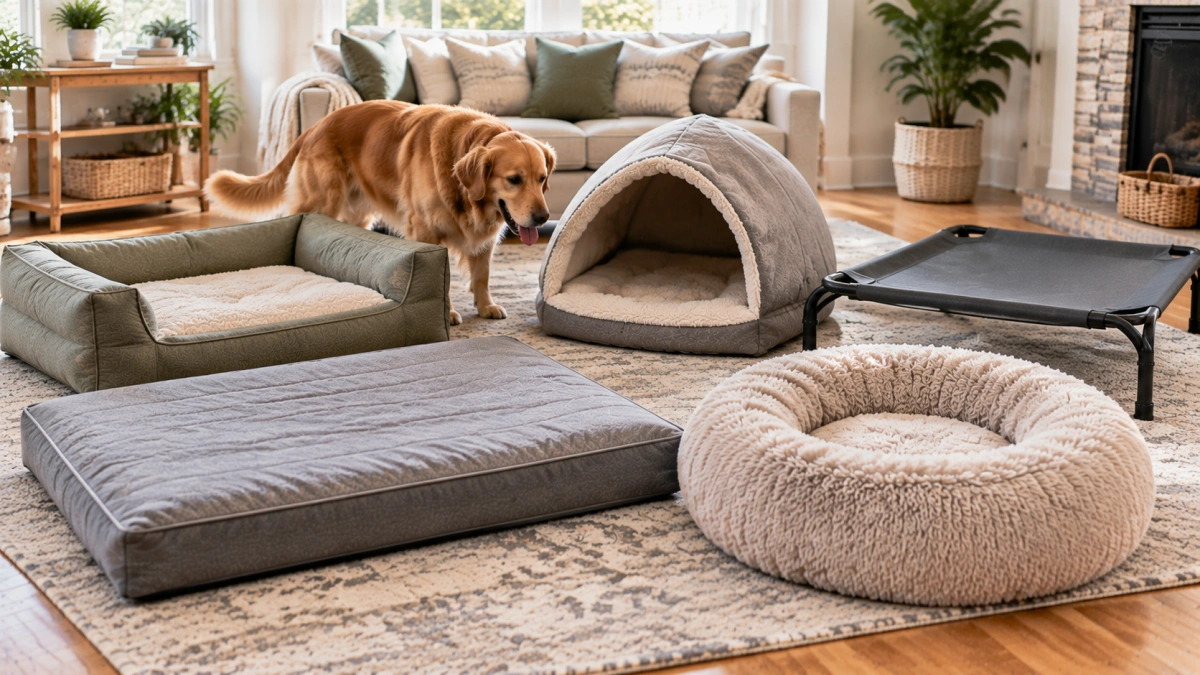
Indoor vs Outdoor Use Cases
Raised dog beds are commonly used both indoors and outdoors because their design solves several practical problems.
Indoor Use
Inside the home, raised beds can work well for owners who want:
- Easier floor cleaning
- A bed that stays away from cold flooring
- A simple low-maintenance sleeping area
- A firmer alternative to plush beds
Outdoor Use
Outdoor raised beds are popular because the elevated structure helps separate the sleeping surface from:
- Damp ground
- Dirt and debris
- Patio surfaces
- Uneven outdoor areas
If your main goal is a bed designed specifically for weather exposure, moisture, and outdoor conditions, see our guide to outdoor dog beds.
Common Raised Dog Bed Materials
The durability of a raised dog bed depends on both the frame and the sleeping platform.
Metal Frames
Metal frames are commonly chosen for their strong structure and long-term durability.
Check:
- Frame stability
- Coating quality
- Joint construction
- Weight and portability
Plastic or Composite Frames
Plastic and composite frames can be lightweight and easy to move.
Important factors include:
- Frame rigidity
- Connection strength
- Suitability for the dog’s size
Wooden Raised Beds
Wooden designs can provide a furniture-style appearance for indoor spaces.
Consider:
- Finish protection
- Maintenance needs
- Indoor or outdoor placement
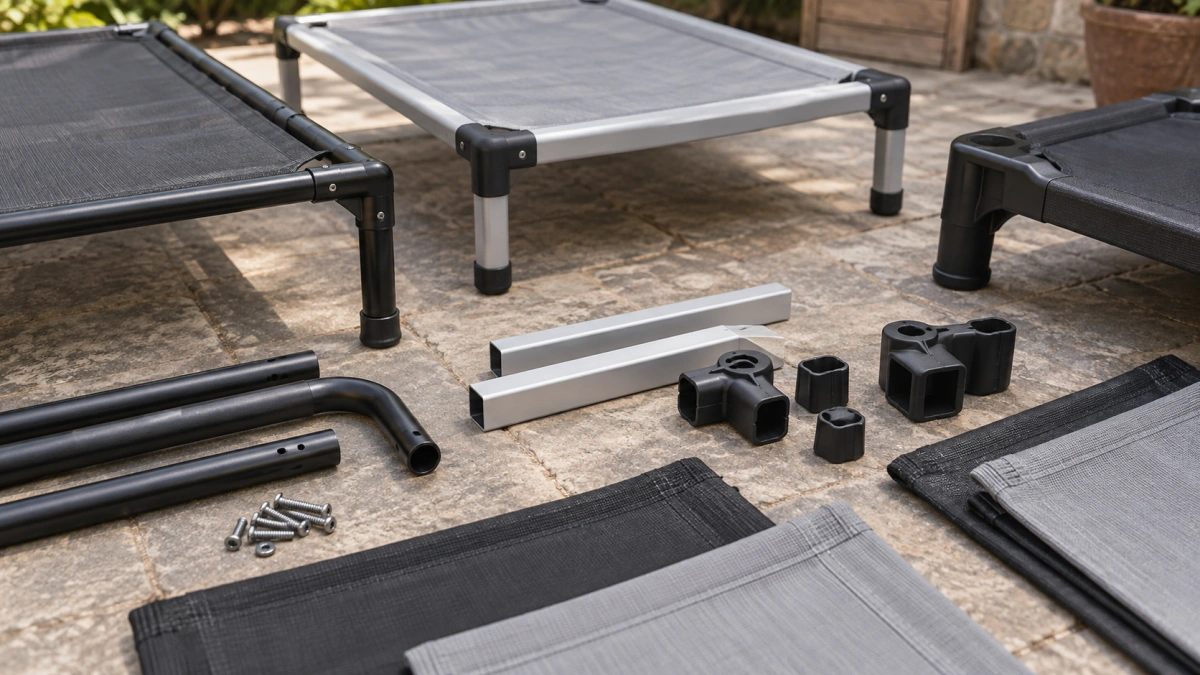
Choosing the Right Frame and Fabric
The frame supports the structure, but the fabric platform is the surface your dog uses every day.
Look for:
- Tight fabric attachment
- Strong edge reinforcement
- Materials that resist stretching
- Easy cleaning
- Replacement options when available
A strong frame with a weak fabric platform may still create a disappointing long-term bed.
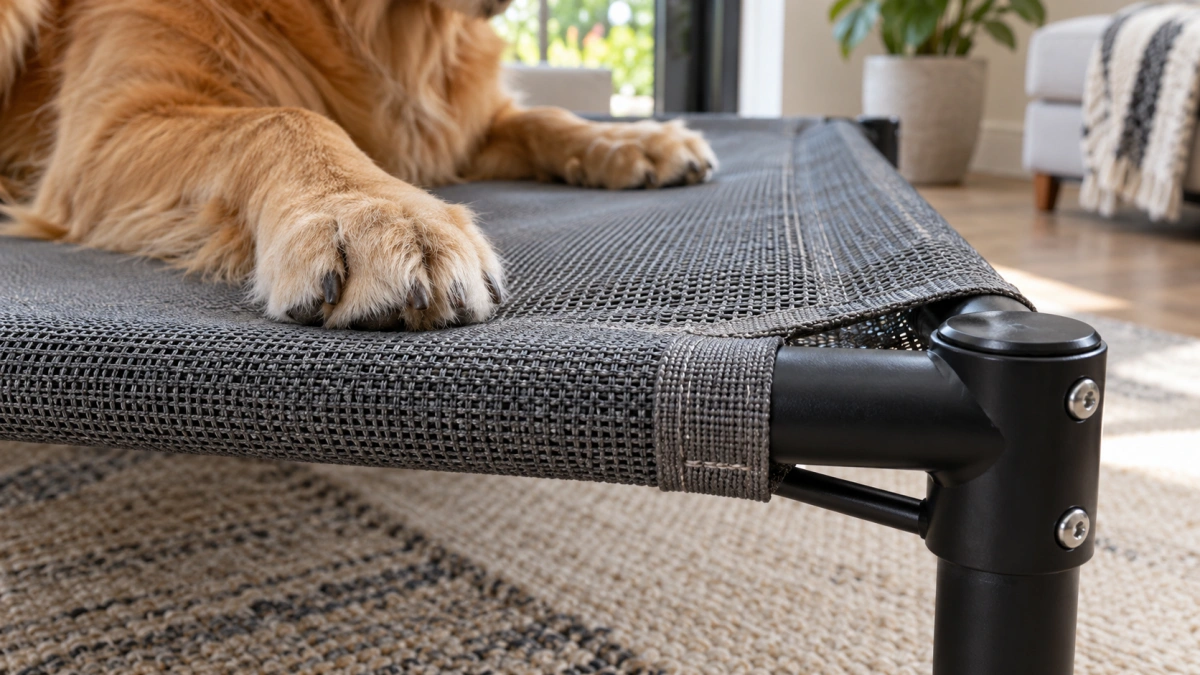
Raised Beds for Large Dogs
Large dogs place more load on the frame and sleeping surface, so size and stability become especially important.
Before choosing a raised bed for a larger dog, check:
- Frame stability
- Platform size
- Fabric tension
- Weight capacity information
- Whether the dog has enough room to turn and stretch
A raised bed should provide a stable resting surface without excessive movement or sagging.
Cleaning and Maintenance
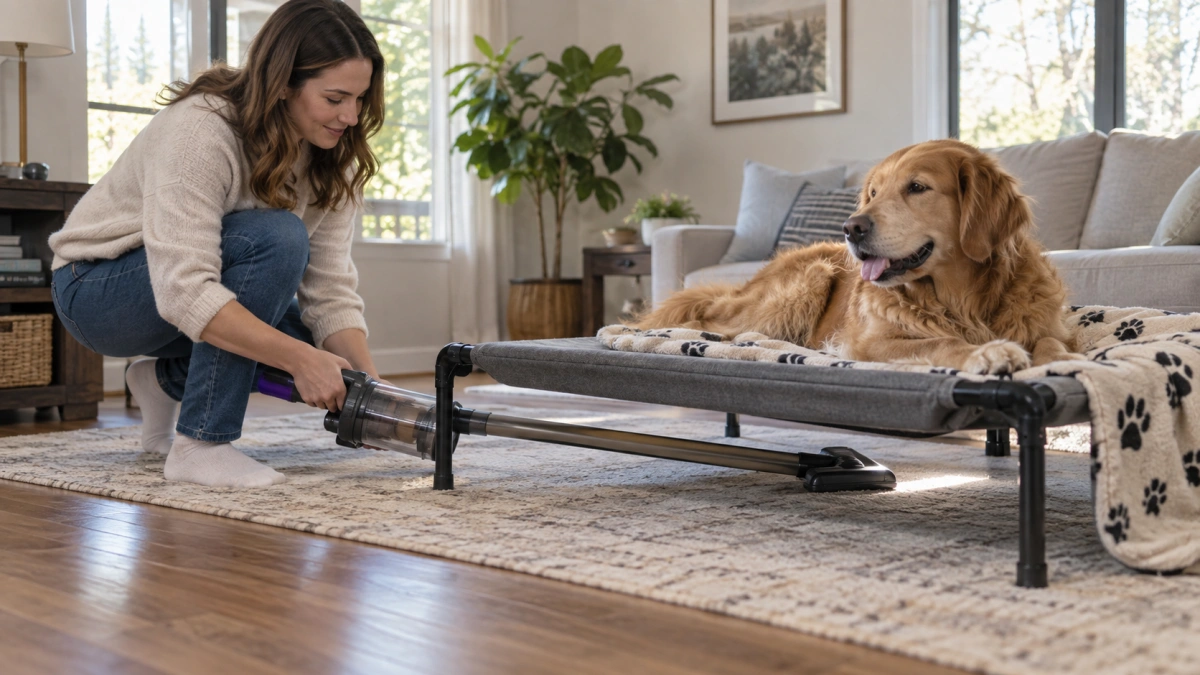
One practical advantage of raised dog beds is the open space underneath, which makes everyday floor cleaning easier.
Maintenance usually includes:
- Removing hair from the fabric surface
- Wiping the frame
- Cleaning dirt underneath the bed
- Checking fabric tension
- Inspecting connection points
The sleeping surface still requires regular cleaning because a raised design does not prevent dirt, hair, or moisture from reaching the fabric.
When a Raised Bed May Not Be the Best Choice
A raised dog bed may not match every dog’s preferences.
Consider another style if your dog:
- Prefers deep cushioning and soft surfaces
- Likes enclosed sleeping spaces
- Avoids elevated surfaces
- Needs a warmer sleeping environment
- Does not feel comfortable stepping onto a raised platform
The best bed is the one your dog actually chooses to use comfortably.
Common Raised Dog Bed Buying Mistakes
- Choosing only by appearance
- Ignoring frame stability
- Buying the wrong size for the dog
- Assuming every raised bed is outdoor-ready
- Ignoring fabric quality
- Forgetting cleaning access underneath
- Choosing height without considering the dog’s comfort
Raised Dog Bed Buying Checklist
- Is the bed size suitable for my dog’s sleeping position?
- Is the frame stable?
- Does the fabric platform stay tight?
- Is the material suitable for indoor or outdoor use?
- Can the surface be cleaned easily?
- Does the height match my dog’s comfort?
- Will the bed fit the intended location?
- Does my dog prefer firm or soft sleeping surfaces?
- Is the construction suitable for my dog’s size?

Final Thoughts
Raised dog beds provide a practical alternative to traditional floor beds by creating airflow, easier cleaning, and separation from the ground.
The right choice depends on your dog’s sleeping habits, environment, size, and comfort preferences.
Before buying, compare the frame, fabric platform, dimensions, and intended use instead of choosing only because a bed is labeled as elevated.