By
By 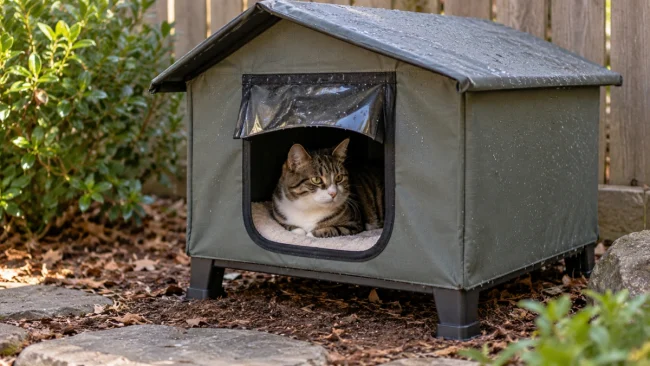
Outdoor cat beds are designed to provide cats with a protected resting area in outdoor environments where weather conditions, moisture, temperature changes, and shelter location all affect comfort.
Unlike indoor cat beds, outdoor sleeping spaces need to consider more than softness. Rain protection, wind exposure, insulation, durability, and placement all influence whether a cat will actually use the shelter.
The best outdoor cat bed is not simply the warmest or most enclosed option. It should match the environment, climate, and the cat’s natural behavior while providing a dry and protected resting space.
You can also explore our complete Cat Beds topic hub for more guides about cat bed styles, sizing, materials, and comfort features.
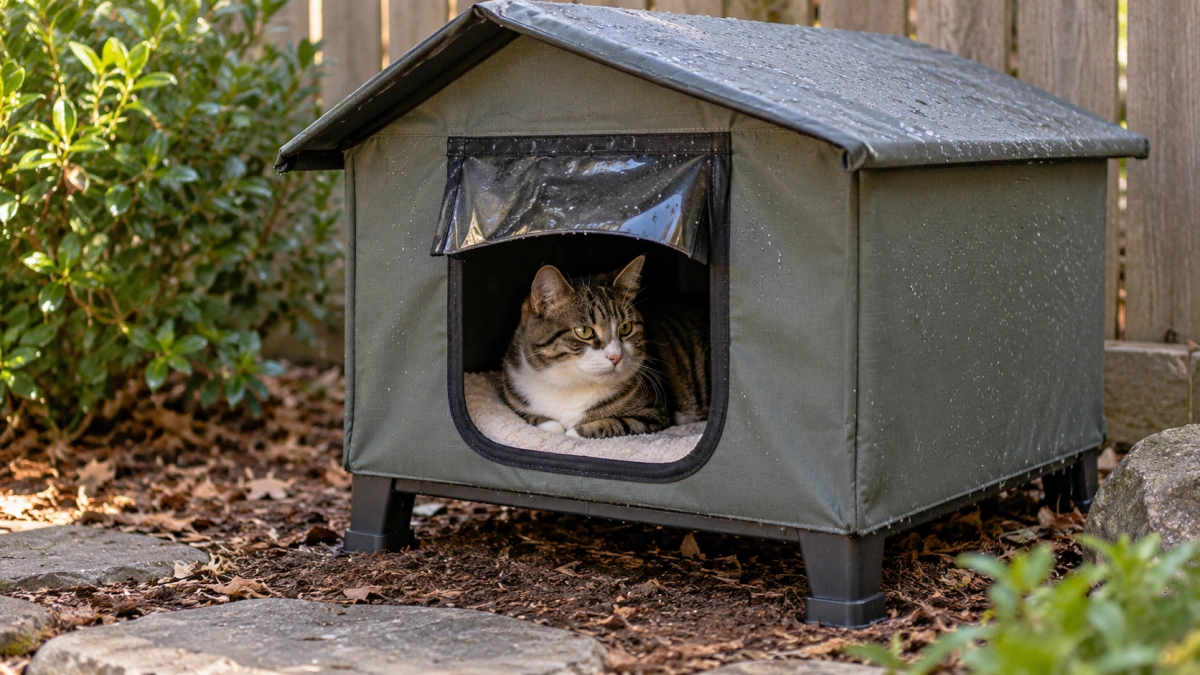
What Makes an Outdoor Cat Bed Different?
An outdoor cat bed needs to handle conditions that indoor beds normally avoid.
Important factors include:
- Rain and moisture
- Wind exposure
- Temperature changes
- Direct sunlight
- Dirt and debris
- Outdoor durability
A soft indoor bed may feel comfortable, but it may not remain practical when exposed to changing outdoor conditions.
Outdoor sleeping areas should balance comfort with protection.
Indoor Covered Beds vs Outdoor Cat Shelters
A covered cat bed and an outdoor shelter may look similar, but they solve different problems.
| Feature | Indoor Covered Bed | Outdoor Cat Shelter |
|---|---|---|
| Main purpose | Privacy and comfort | Weather protection and shelter |
| Important factors | Softness, shape, cleaning | Moisture, wind, insulation, durability |
| Location | Indoor living space | Outdoor environment |
| Material focus | Comfort fabrics | Weather-resistant construction |
An indoor cave bed is not automatically suitable for outdoor use. Outdoor conditions require different material and construction considerations.
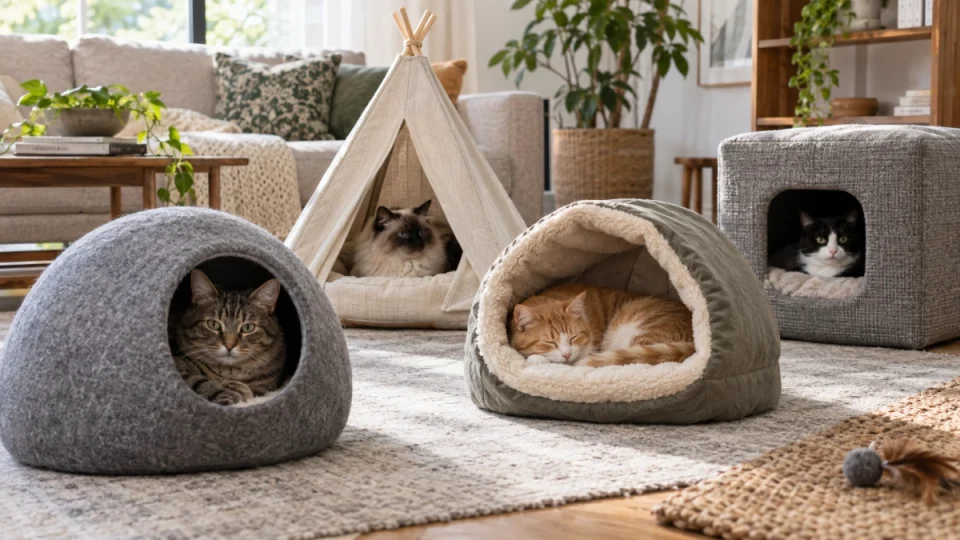
If you are choosing an indoor enclosed sleeping space, our guide to covered cat beds explains cave styles, privacy, entrance size, and indoor placement.
Weather Conditions Outdoor Cat Beds Need to Handle
Outdoor cats experience changing conditions throughout the year. A practical shelter should consider the local environment rather than only the appearance of the bed.
The main challenges include:
- Rain and humidity
- Cold temperatures
- Wind
- Heat and direct sunlight
- Seasonal changes
The right design depends heavily on where the shelter is placed and what weather exposure it receives.
Rain and Moisture Protection
Keeping the sleeping area dry is one of the most important parts of outdoor cat shelter design.
Useful features include:
- Water-resistant outer materials
- Covered entrances
- Raised bottoms
- Protected sleeping surfaces
- Good airflow to reduce moisture buildup
A waterproof label alone does not explain every part of the shelter. Check whether the exterior, seams, bottom, and interior sleeping area are designed to handle moisture.
A dry shelter is usually more practical than a heavily padded shelter that absorbs water and remains damp.
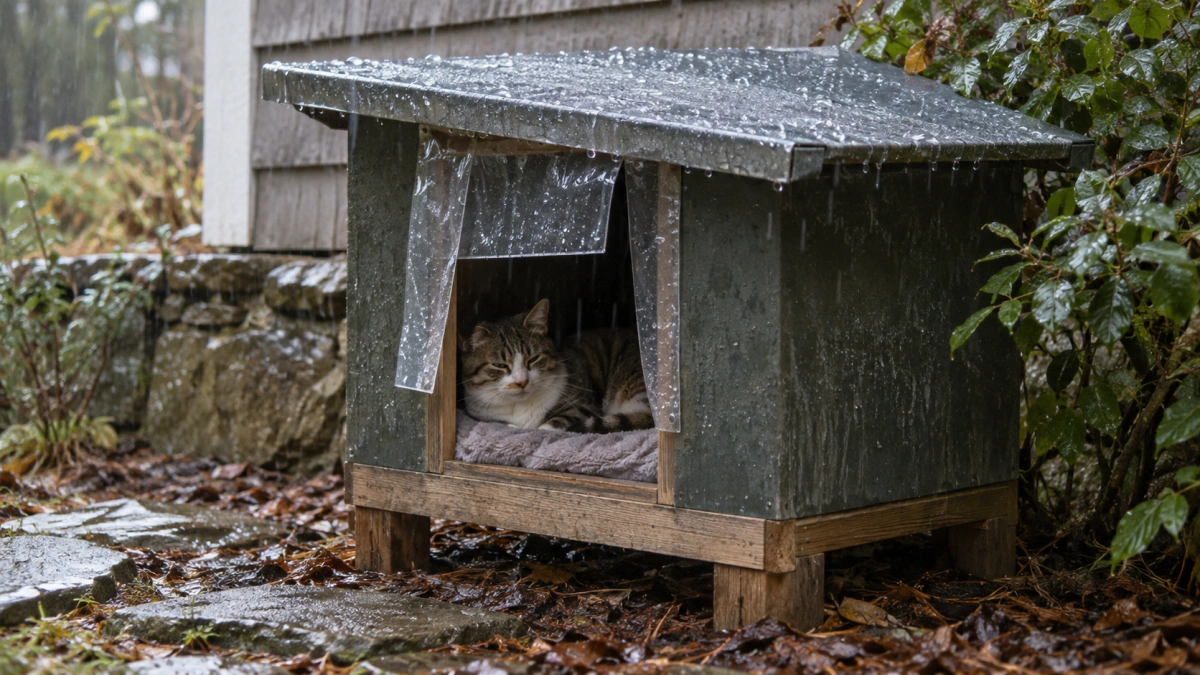
Wind Protection and Shelter Placement
Wind can make an outdoor sleeping area feel much colder, even when the temperature itself is not extremely low.
Consider placing outdoor cat beds:
- Against a wall or protected structure
- Away from direct wind paths
- Under a covered area when possible
- In a quiet location with easy access
A good shelter in a poor location may perform worse than a simpler shelter placed correctly.
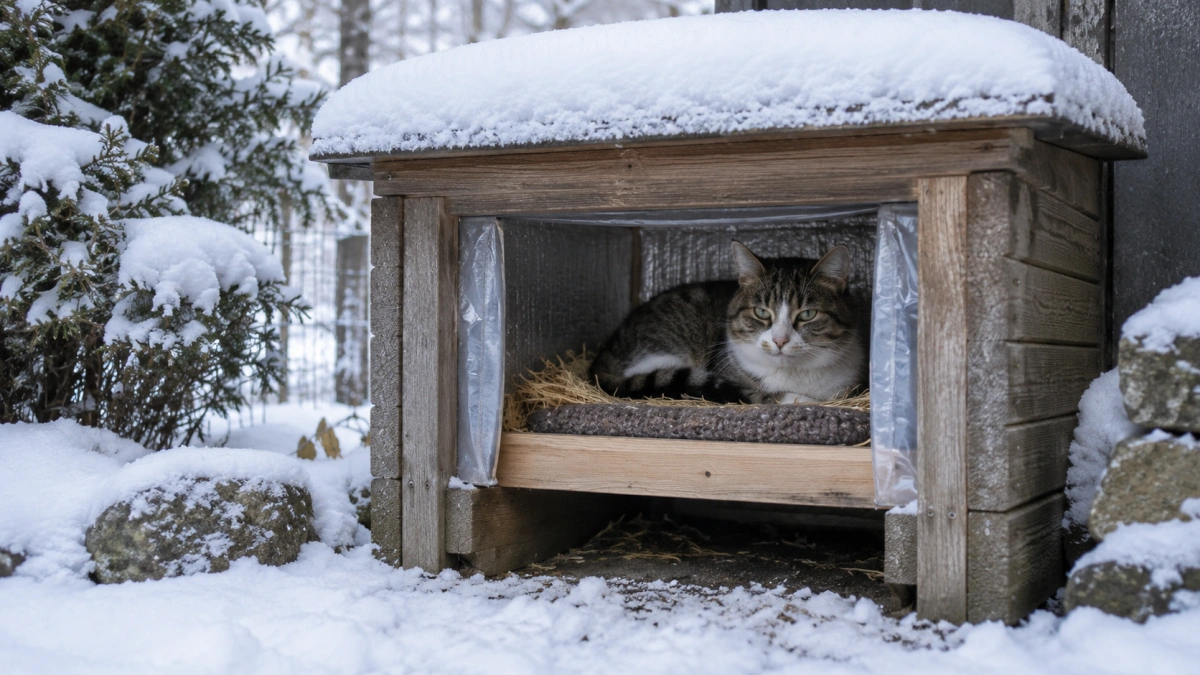
Choosing Outdoor Cat Beds for Winter
Winter outdoor cat beds should focus on keeping the sleeping area dry, protected, and comfortable.
Important considerations include:
- Insulated construction
- Protection from wind
- Dry bedding materials
- Raised sleeping surface
- Appropriate shelter size
A larger shelter is not always better in cold weather. Excess unused space may make it harder for a small cat to maintain a comfortable resting environment.
The goal is enough room to turn around and rest naturally while still providing a protected space.
Heated Outdoor Cat Beds: What to Consider
Heated outdoor cat beds can provide additional warmth, but outdoor heating products require careful consideration.
Before choosing a heated option, check:
- Whether it is designed for outdoor use
- Electrical safety instructions
- Cable protection
- Weather exposure limitations
- Manufacturer guidelines
A heated bed should be used as part of a suitable shelter setup, not as a replacement for protection from rain, wind, and moisture.
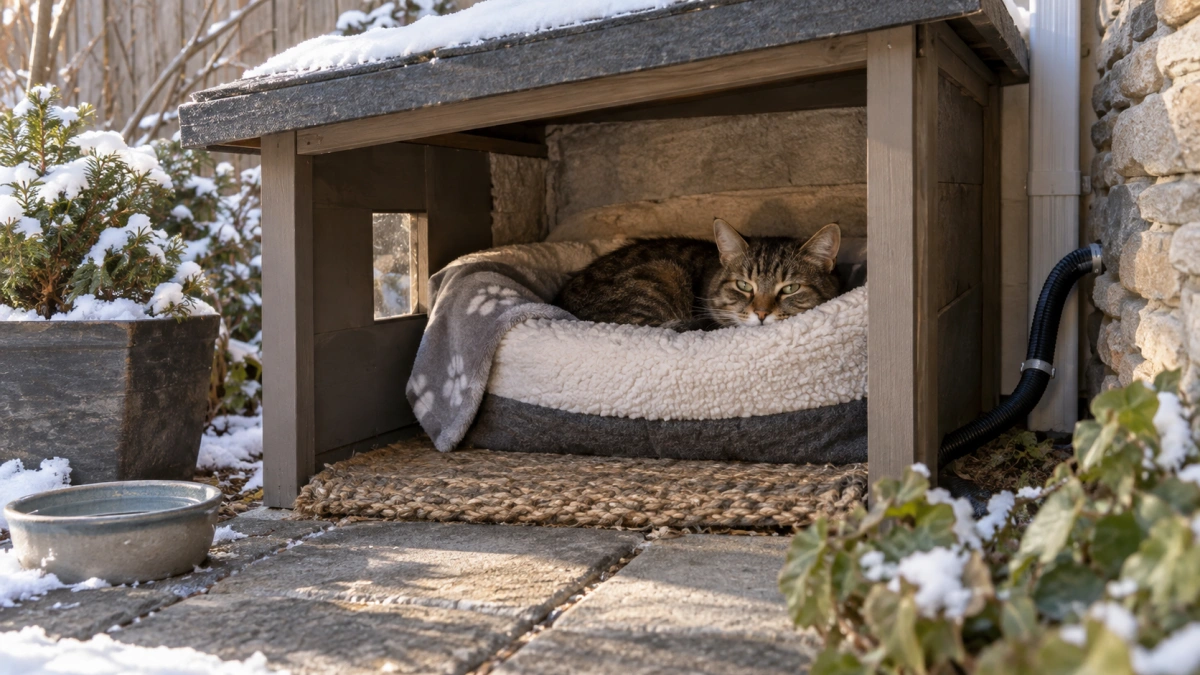
Summer Heat and Ventilation
Outdoor cat beds should not only be designed for winter.
During warmer weather, enclosed shelters may become uncomfortable if they trap too much heat.
Consider:
- Shade from direct sunlight
- Air circulation
- Breathable materials
- Cool resting surfaces
- Seasonal bedding changes
A shelter that works well in winter may need adjustments during hot weather.
Weatherproof Materials Explained
| Material | Outdoor Considerations |
|---|---|
| Polyester fabric | Common exterior material with easy cleaning |
| Oxford fabric | Durable surface often used for outdoor products |
| Fleece lining | Soft and warm but needs moisture protection |
| Foam inserts | Need protection from water exposure |
| Plastic shelter shells | Easy cleaning and weather resistance |
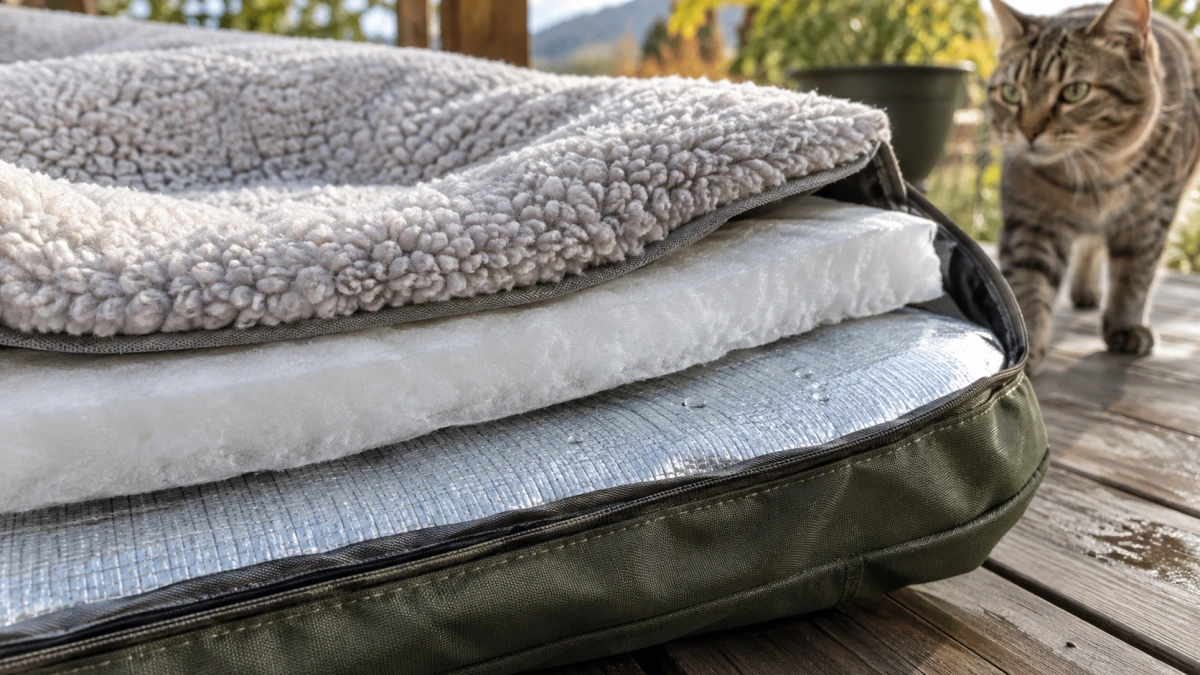
The best outdoor construction often combines multiple layers:
- Weather-resistant exterior
- Dry insulated interior
- Comfortable sleeping surface
- Easy maintenance design
How Large Should an Outdoor Cat Bed Be?
Outdoor shelter size requires a balance.
A cat needs enough room to:
- Enter comfortably
- Turn around
- Curl into a resting position
- Change position when needed
However, extremely oversized shelters may provide less efficient protection in colder environments because there is more unused air space.
Choose a size that allows natural movement while maintaining a protected resting area.
Best Bedding Materials for Outdoor Use
Outdoor bedding materials should consider moisture, cleaning, and durability.
Useful characteristics include:
- Drying ability
- Easy cleaning
- Resistance to moisture buildup
- Comfortable texture
- Ability to replace worn materials
A very soft material that stays damp may be less practical than a simpler material that remains dry.
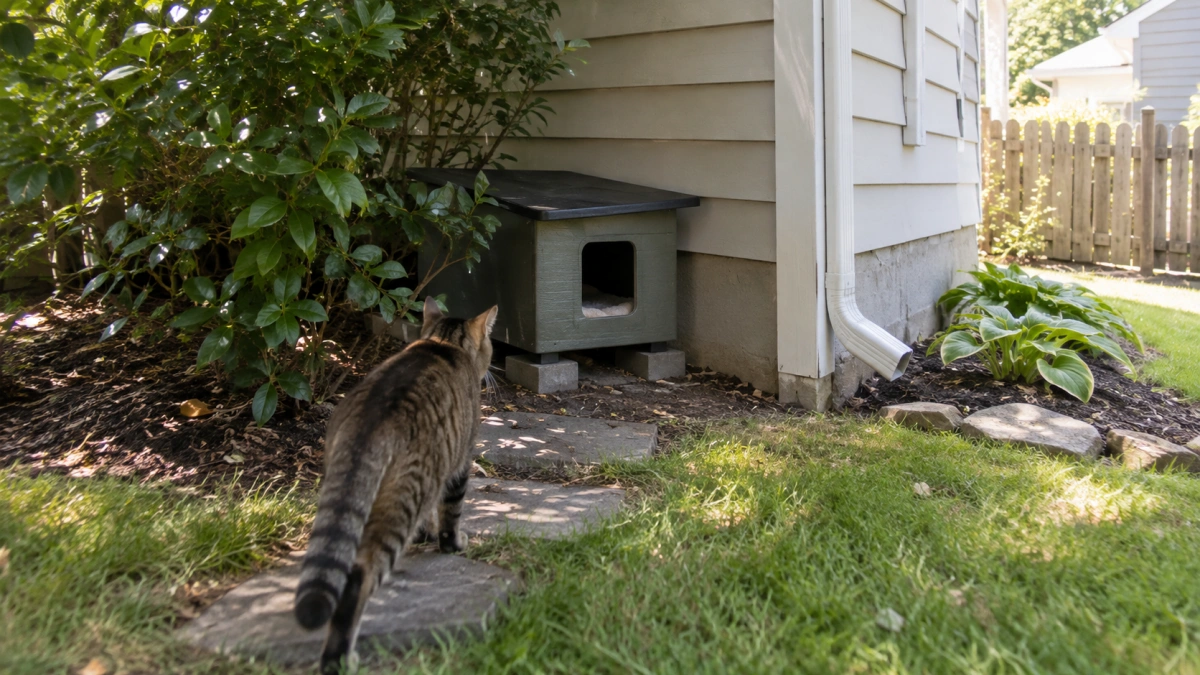
Where Should You Place an Outdoor Cat Bed?
Placement can determine whether a cat uses an outdoor shelter.
Good locations often include:
- Protected corners
- Covered areas
- Quiet spaces
- Locations familiar to the cat
- Areas away from heavy traffic
Avoid locations with:
- Direct rain exposure
- Flood risk
- Extreme afternoon sunlight
- Frequent disturbance
Why Won’t a Cat Use an Outdoor Shelter?
Some cats ignore new outdoor shelters even when they appear comfortable.
Possible reasons include:
- The location is unfamiliar
- The shelter has a new smell
- The entrance feels uncomfortable
- The cat prefers another resting place
- The shelter is too exposed
- The temperature does not match the cat’s preference
Try placing the shelter near an area the cat already chooses and allow time for the cat to investigate naturally.
Cleaning and Maintaining Outdoor Cat Beds
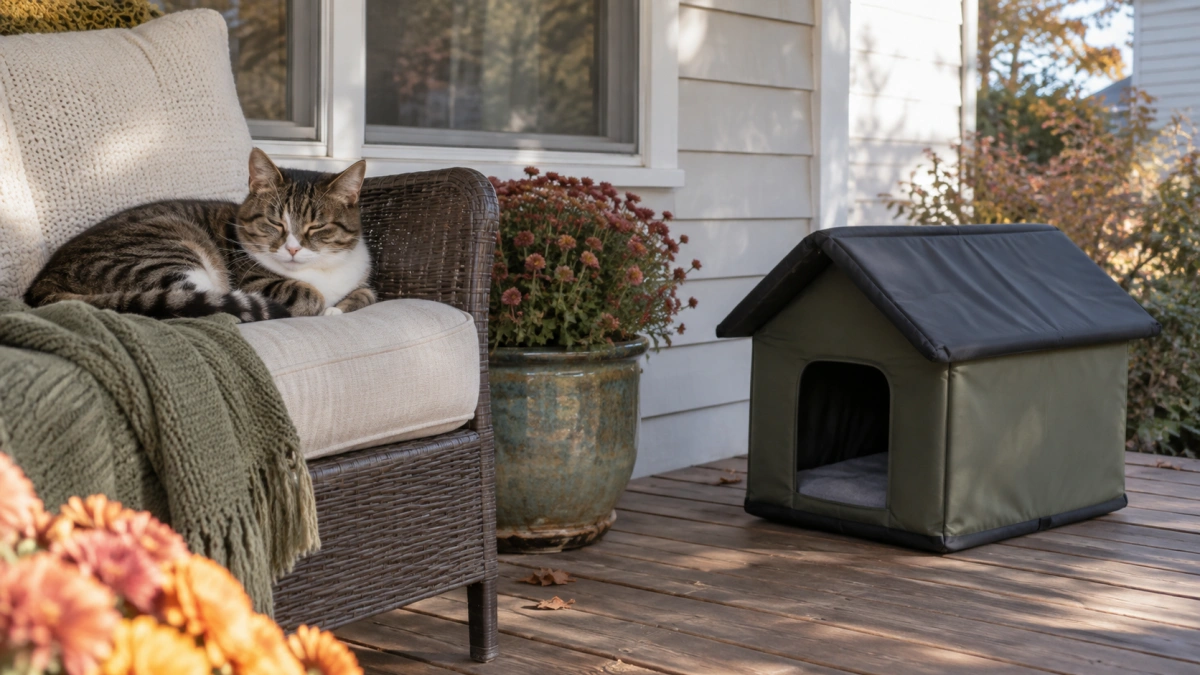
Outdoor shelters collect different types of dirt compared with indoor beds.
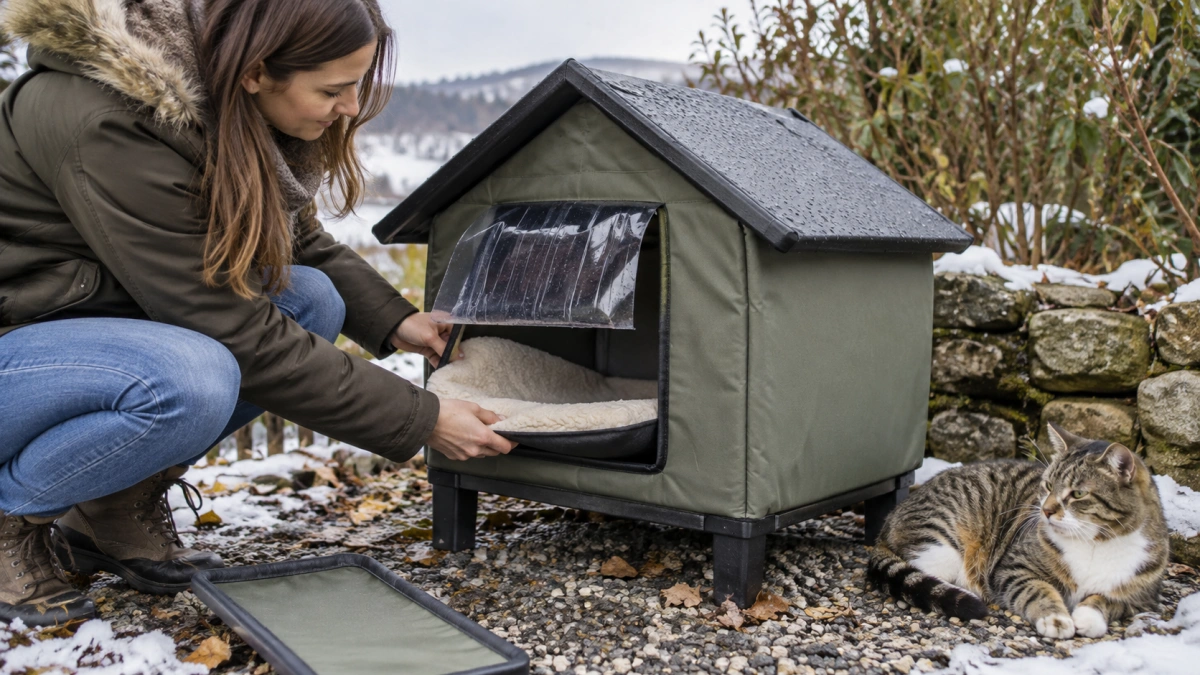
Regularly check:
- Moisture inside the shelter
- Dirt and debris buildup
- Fabric condition
- Interior bedding condition
- Signs of wear
Removable and washable parts can make long-term maintenance much easier.
Outdoor Cat Bed Buying Checklist
- Is the shelter designed for outdoor conditions?
- Does it protect against rain and wind?
- Can the sleeping area stay dry?
- Is the size appropriate for the cat?
- Does it provide enough ventilation?
- Are materials suitable for the climate?
- Is placement protected and accessible?
- Can bedding be cleaned or replaced?
- Does any heating feature include proper safety information?
Final Thoughts
The best outdoor cat beds are designed around the environment where they will be used.
Focus on weather protection, dryness, insulation, ventilation, material durability, placement, and easy maintenance rather than choosing only the softest option.
A practical outdoor shelter should give cats a safe, comfortable resting place while handling the challenges of changing outdoor conditions.