By
By 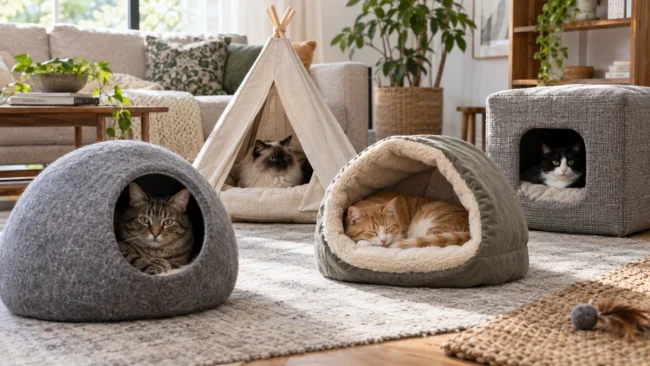
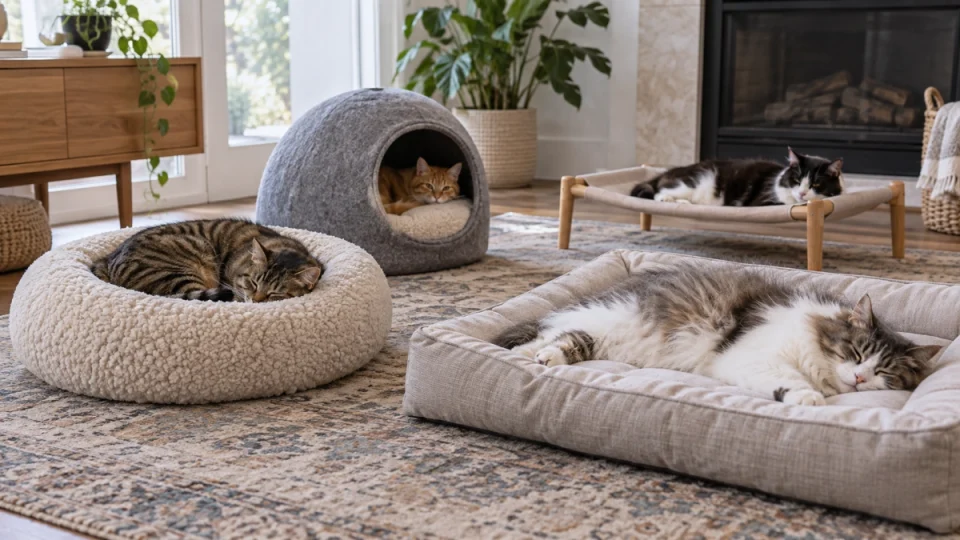
Covered cat beds provide cats with a more enclosed resting space compared with traditional open beds. These designs can include cave beds, hooded beds, felt igloos, tents, cubes, and other partially covered sleeping areas.
However, the best covered cat bed is not simply the one with the most coverage. Cats have different preferences for privacy, visibility, warmth, space, and sleeping positions. A good choice should match how your cat naturally rests.
Before choosing an enclosed cat bed, consider the entrance size, interior space, structure, material, placement, cleaning needs, and whether your cat actually enjoys enclosed spaces.
You can also explore our complete Cat Beds topic hub for more guides about cat bed styles, sizing, materials, and comfort features.
What Is a Covered Cat Bed?
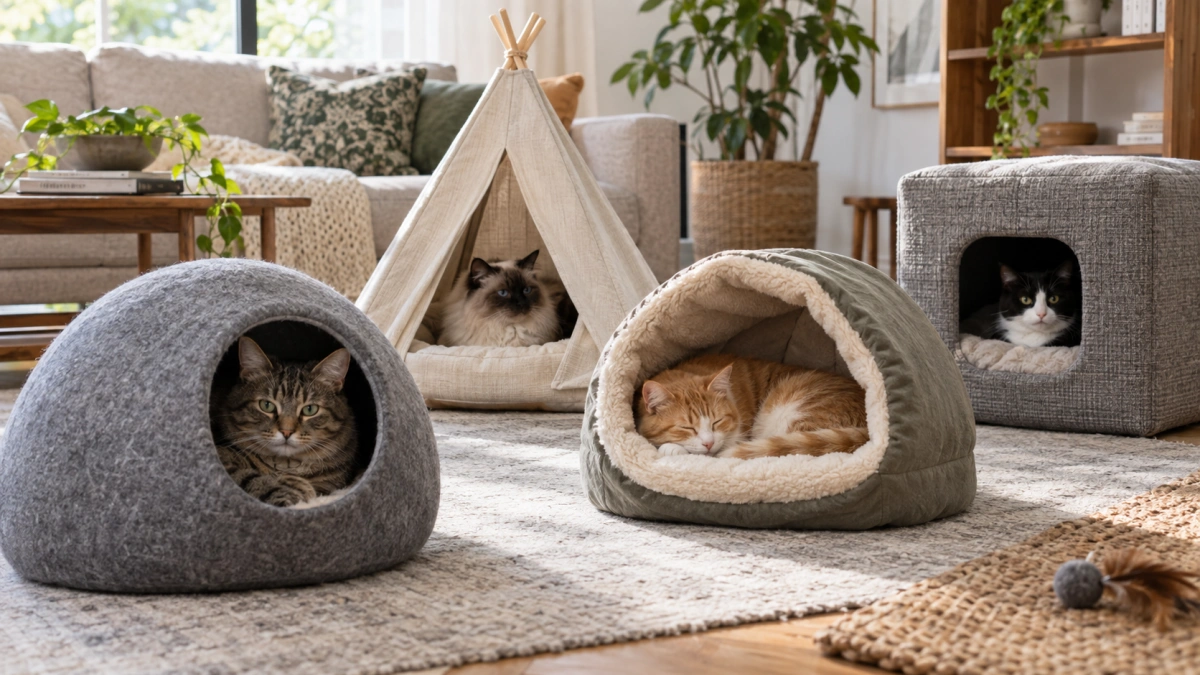
A covered cat bed is a sleeping space that provides some level of overhead or side enclosure compared with a traditional open cushion.
Common designs include:
- Felt cave beds
- Igloo-style cat beds
- Hooded beds
- Tent-style beds
- Cat cubes
- Burrow or blanket-style beds
The amount of enclosure varies greatly. Some designs only provide a soft roof, while others create a more private enclosed space with walls on multiple sides.
Because covered cat beds are a broad category, choosing the right structure matters more than simply choosing a product labeled “covered.”
Covered, Enclosed and Cave Cat Beds: What Is the Difference?
These terms are often used interchangeably, but they can describe different levels of enclosure.
| Type | Typical Design | Privacy Level |
|---|---|---|
| Hooded bed | Open bed with a soft cover or roof | Low to medium |
| Cave bed | More enclosed structure with an entrance | Medium to high |
| Igloo bed | Rounded enclosed sleeping space | High |
| Tent bed | Fabric shelter-style structure | Medium |
| Cube bed | Box-shaped enclosed space | Medium to high |
| Burrow bed | Cat enters under a blanket-like layer | High |
A cat that likes sleeping under blankets may enjoy deeper enclosure, while a cat that prefers watching the room may prefer a more open covered design.
Why Do Some Cats Like Enclosed Sleeping Spaces?
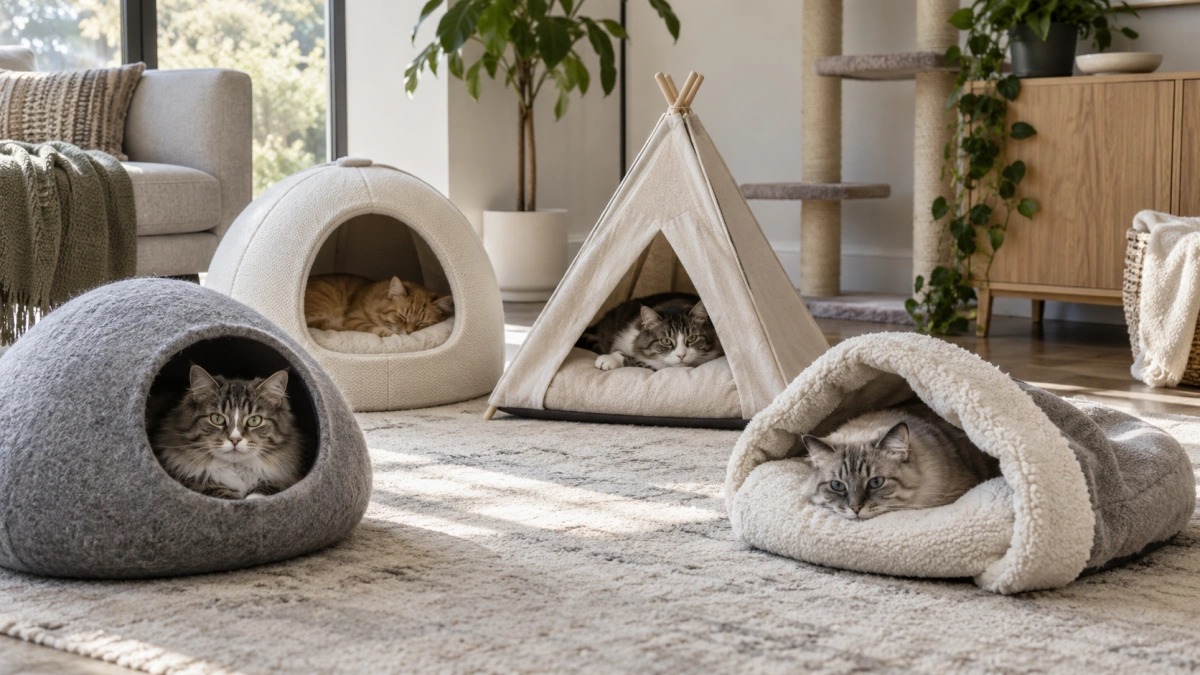
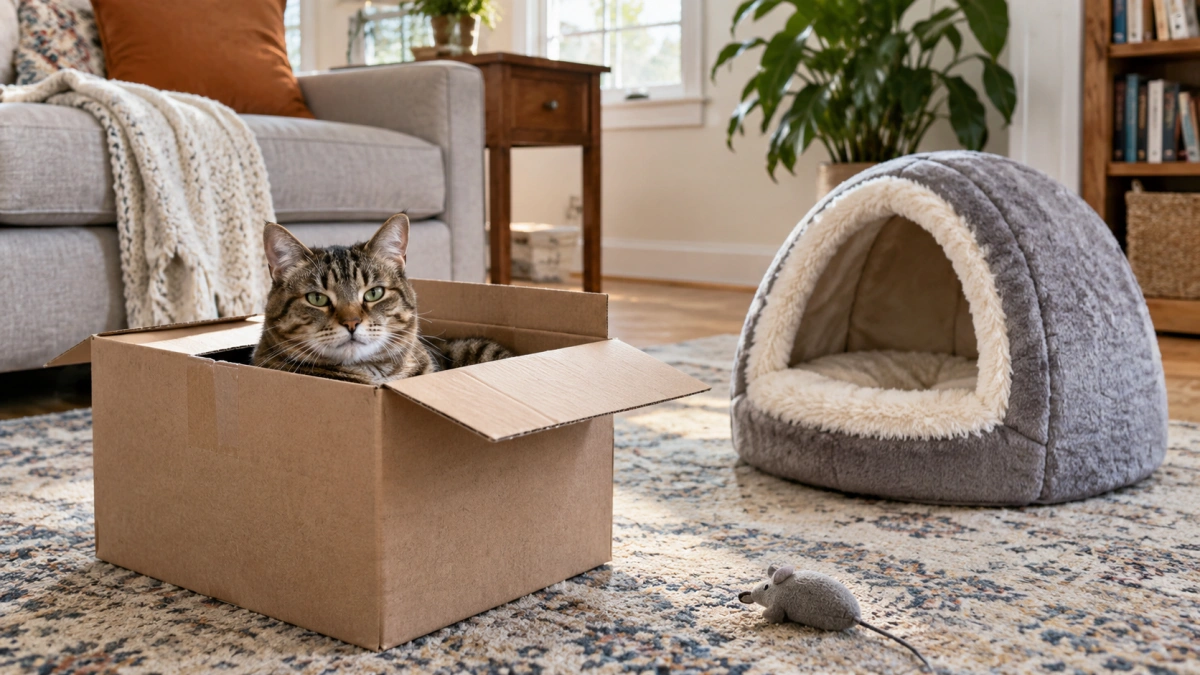
Some cats naturally choose places that provide partial privacy, such as boxes, corners, furniture gaps, or spaces under blankets.
An enclosed bed may appeal to cats that enjoy:
- Reduced visual exposure
- A quieter resting area
- A more protected sleeping position
- A smaller personal space
- A cozy surrounding structure
However, not every cat prefers a cave-style bed. Some cats feel more comfortable in open beds where they can see their surroundings and leave quickly.
The best choice depends on the individual cat’s behavior.
Types of Covered Cat Beds
Felt Cave Beds
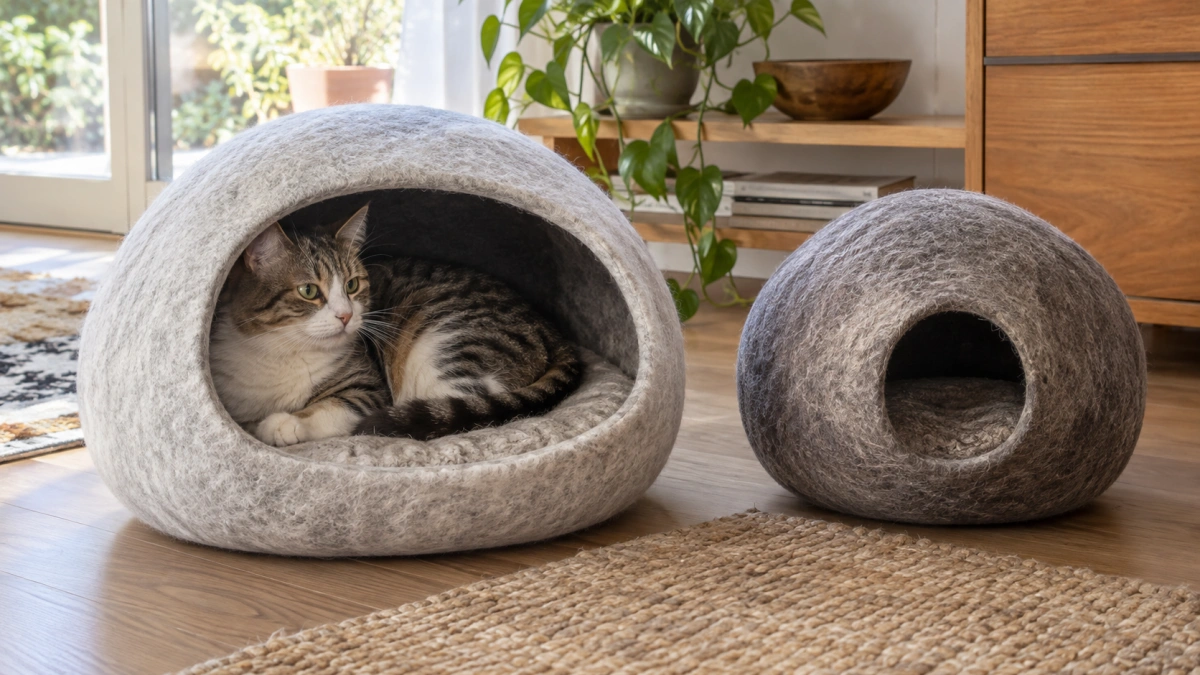
Felt cave beds often have a naturally structured shape that creates a defined enclosed space.
Potential advantages include:
- Shape stability
- Quiet interior
- Simple appearance
- Less flexible walls
Check whether the opening is large enough and whether the interior provides enough room for the cat to turn around.
Soft Hooded Cat Beds
Soft hooded beds combine an open sleeping area with overhead coverage.
They may work well for cats that want some privacy but do not enjoy a fully enclosed cave.
Because the roof is often flexible, check whether it maintains its shape during everyday use.
Tent-Style Cat Beds
Tent-style beds create a small shelter-like environment.
They are often lightweight and easy to move, but the stability of the frame or fabric structure can vary.
Cube and House-Style Beds
Cube beds provide a more defined enclosed area with clear walls and a single entrance.
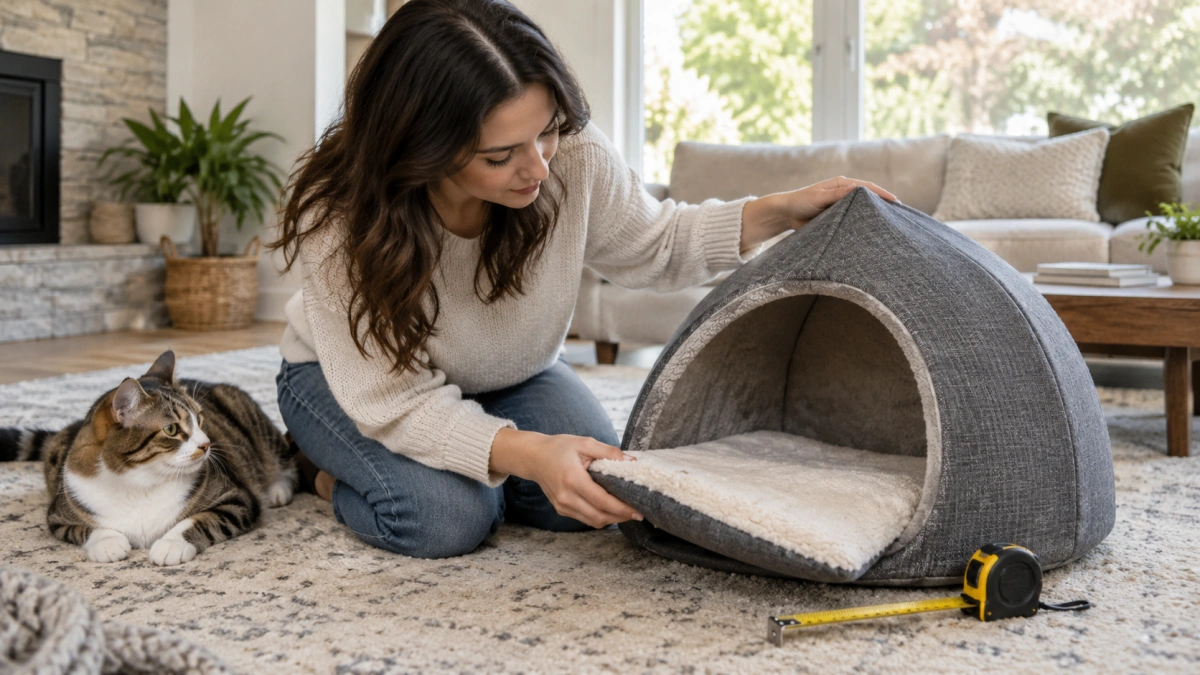
For larger cats, check:
- Entrance width
- Interior height
- Sleeping length
- Ability to turn around comfortably
Structured Cave vs Soft Collapsible Cave
One important difference between covered cat beds is whether the structure stays upright or collapses easily.
| Type | Characteristics |
|---|---|
| Structured cave | Maintains a defined enclosed shape |
| Soft collapsible cave | Flexible and easier to fold or move |
Neither design is automatically better. Some cats prefer a firm enclosed shape, while others enjoy softer flexible materials.
A useful question is:
Will the bed still feel like a comfortable hiding space after weeks of use?
How Much Coverage Does Your Cat Need?
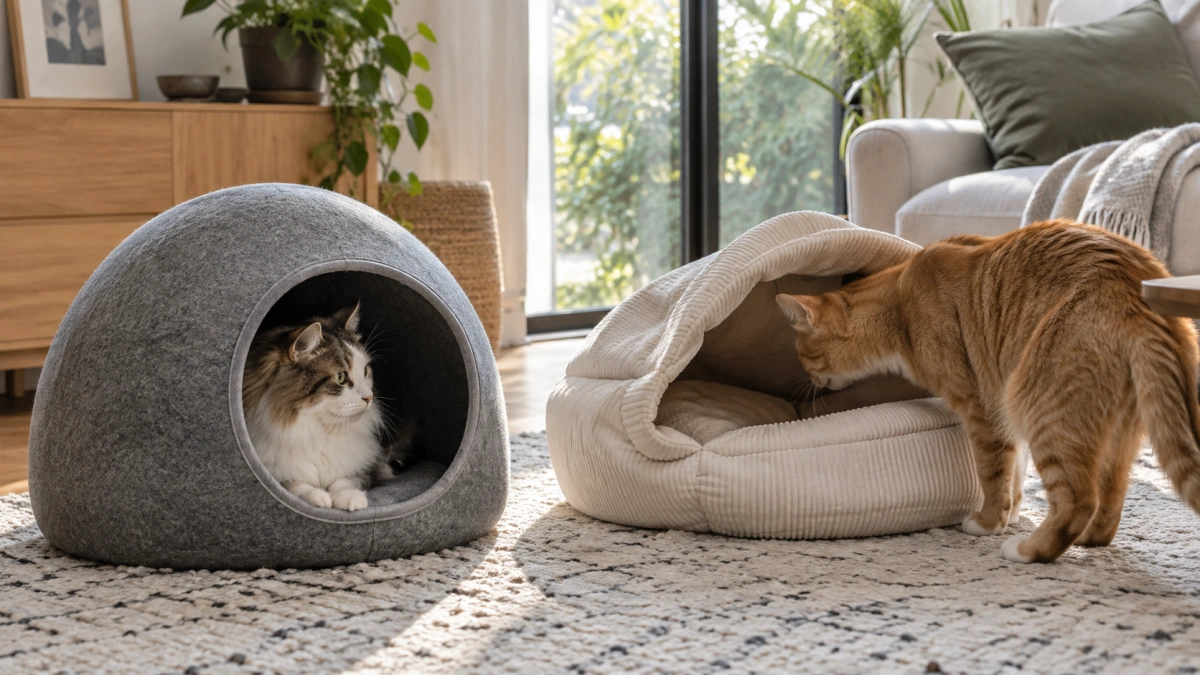
More coverage does not always mean more comfort.
Some cats enjoy:
- A fully enclosed cave
- A partially covered hood
- A bed with raised sides
- An open sleeping surface
Observe whether your cat already chooses:
- Boxes
- Blanket piles
- Closets
- Open sofas
- Window areas
These existing habits can provide clues about the level of enclosure your cat may prefer.
How to Choose the Right Entrance Size
The entrance is one of the most important features of a cave-style bed.
A cat should be able to:
- Enter comfortably
- Turn around inside
- Adjust sleeping position
- Leave without difficulty
A large outer shell does not guarantee a comfortable entrance.
Check:
- Entrance width
- Entrance height
- Interior cavity size
- Whether thick fabric reduces usable opening space
Interior Size Matters More Than Outside Size
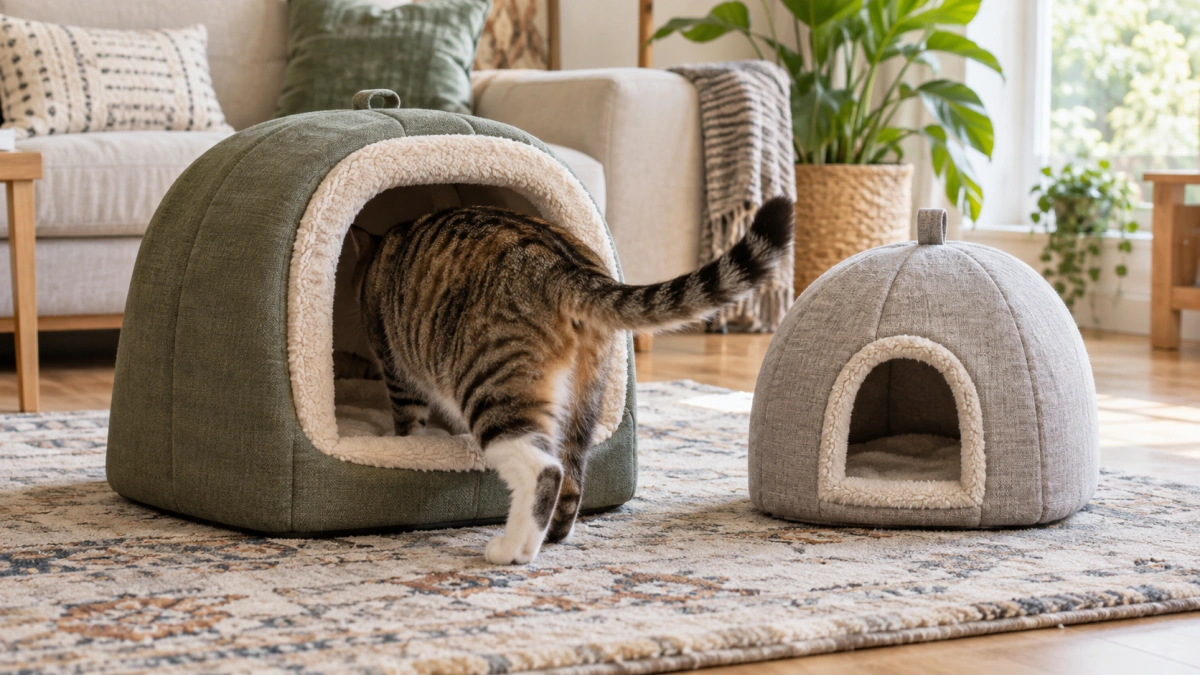
Covered beds often appear larger from the outside because the walls, roof, and padding add extra dimensions.
When comparing cave beds, look beyond:
- Overall height
- Exterior width
- Decorative shape
Instead focus on:
- Interior sleeping area
- Available headroom
- Turning space
- Sleeping posture
This is especially important for large cats that need enough room to curl, stretch, and reposition.
Are Covered Cat Beds Warmer?
An enclosed design may feel warmer than a completely open bed because the surrounding material can reduce airflow and create a more sheltered space.
This can be appealing for cats that seek:
- Blankets
- Sunny areas
- Warm rooms
- Soft enclosed spaces
However, a covered bed is not automatically suitable for every season.
Cats that prefer cooler surfaces may choose open beds, floors, or areas with more airflow during warmer weather.
Cat Cave Bed Materials Compared
| Material | Typical Characteristics |
|---|---|
| Felt | Structured shape and firm walls |
| Plush fabric | Soft texture and warmer feel |
| Woven fabric | More furniture-like appearance |
| Foam-supported walls | More structured construction |
| Foldable fabric | Lightweight and portable |
Consider material based on your cat’s texture preference, room temperature, cleaning routine, and whether the structure needs to stay upright.
Where Should You Put a Covered Cat Bed?
Location can strongly influence whether a cat accepts a new enclosed bed.
Good placement options often include:
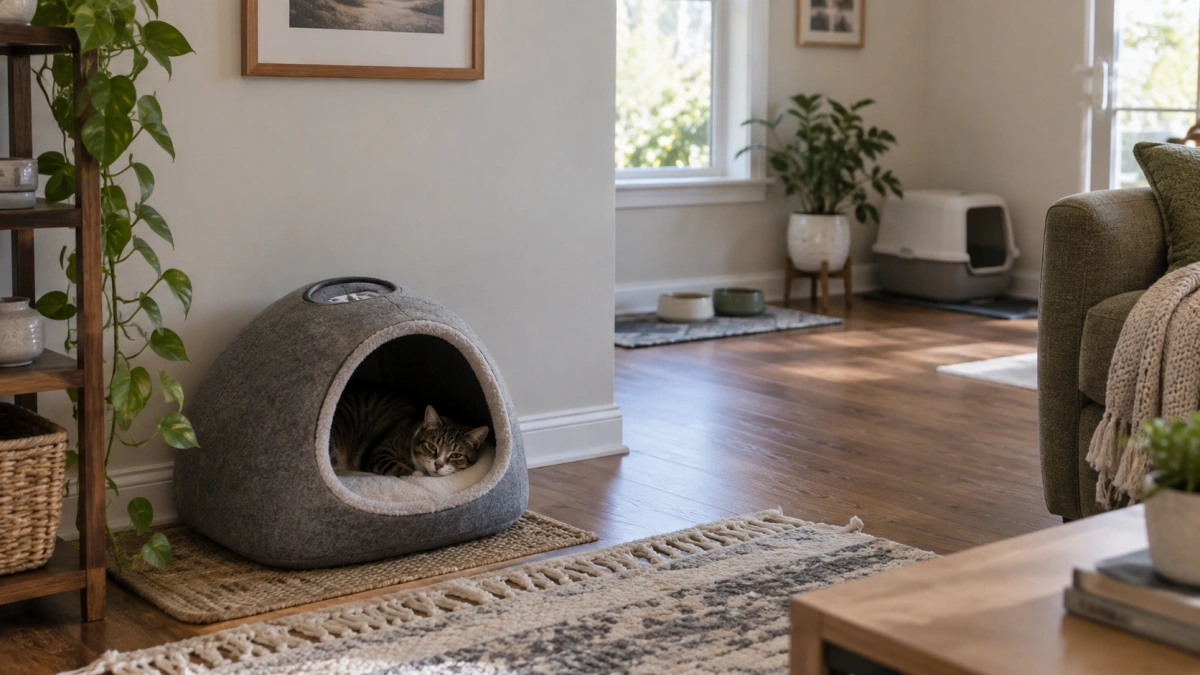
- A quiet corner
- A familiar sleeping area
- A low-traffic room
- A place where the cat already rests
Avoid placing a covered bed directly beside noisy appliances, busy walkways, food bowls, or litter boxes.
Why Won’t My Cat Use a Cave Bed?
Some cats completely ignore a new covered bed, even when it looks comfortable.
Common reasons include:
- The location feels unfamiliar
- The entrance feels too small
- The interior feels cramped
- The material texture is unfamiliar
- The bed is too warm
- The roof feels unstable
- The cat prefers open sleeping spaces
Try placing the bed near an existing favorite resting location and allow the cat to explore it naturally.
Covered Cat Beds in Multi-Cat Homes
In homes with multiple cats, placement matters even more.
An enclosed bed should allow the cat to enter and leave comfortably without another cat easily blocking the only entrance.
Consider:
- Multiple resting locations
- Enough distance between sleeping areas
- Easy access routes
- Whether one cat controls the area
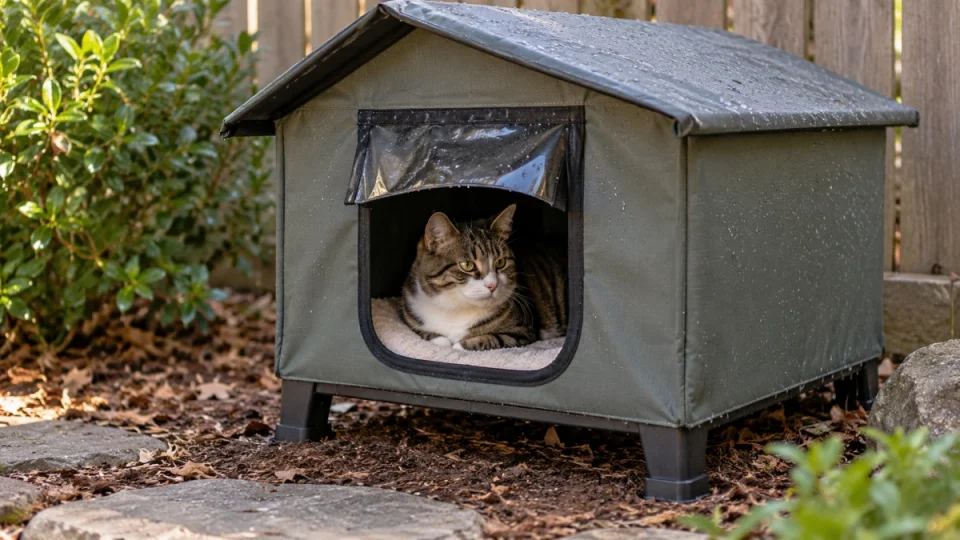
Can You Use a Covered Cat Bed Outside?
A covered cat bed designed for indoor use should not automatically be treated as an outdoor shelter.
Outdoor environments introduce different requirements, including:
- Rain protection
- Wind exposure
- Temperature changes
- Weather-resistant materials
- Long-term durability
If you need a shelter designed for outdoor conditions, see our guide to outdoor cat beds for weather, warmth, and shelter considerations.
How to Clean an Enclosed Cat Bed
Covered beds can collect hair and debris in areas that are harder to reach than open beds.
Before buying, check:
- Removable covers
- Washable cushions
- Cleaning instructions
- Interior accessibility
- Drying requirements
A beautiful cave bed that is difficult to clean may become inconvenient over time.
Covered Cat Bed Buying Checklist
- Does my cat enjoy enclosed spaces?
- Is the entrance large enough?
- Can my cat turn around inside?
- Does the structure keep its shape?
- Is the material suitable for my home temperature?
- Will the cat have enough interior space?
- Is the location quiet and familiar?
- Can the bed be cleaned easily?
- Is it designed for indoor or outdoor use?
Final Thoughts
Covered cat beds can provide a cozy and private resting option, but the right choice depends on the individual cat.
Focus on entrance size, interior space, structure, material, temperature, placement, and cleaning rather than simply choosing the most enclosed design.
A successful cave-style sleeping space is one that matches your cat’s natural behavior and becomes a place they actually choose to use.