By
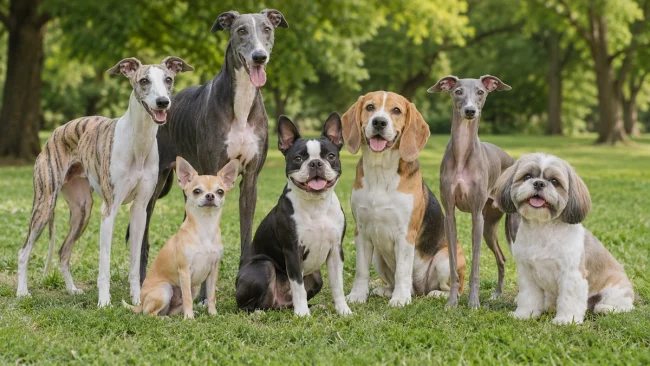
Low-maintenance dog breeds sound appealing, especially if you want a companion without spending hours every week brushing, trimming, exercising or cleaning up after the dog.
But there is no truly maintenance-free dog.
Every dog needs food, exercise, training, veterinary care, dental care, nail trimming, social interaction and daily attention. The real question is which parts of dog ownership you want to minimize.
One person may define low maintenance as a short coat that rarely needs professional grooming. Another may want a dog that settles quietly indoors. Someone living in a small apartment may prioritize body size, while another owner may care most about barking, shedding or exercise.
That distinction matters because a dog can be easy in one category and demanding in another.
A Whippet has a very simple short coat but still needs exercise and safe opportunities to move. A Poodle sheds relatively little but needs regular clipping. A Chihuahua takes up almost no physical space but still needs training, dental care and protection from accidental injury.
Use this guide to decide what “low maintenance” means for your household before selecting a breed.
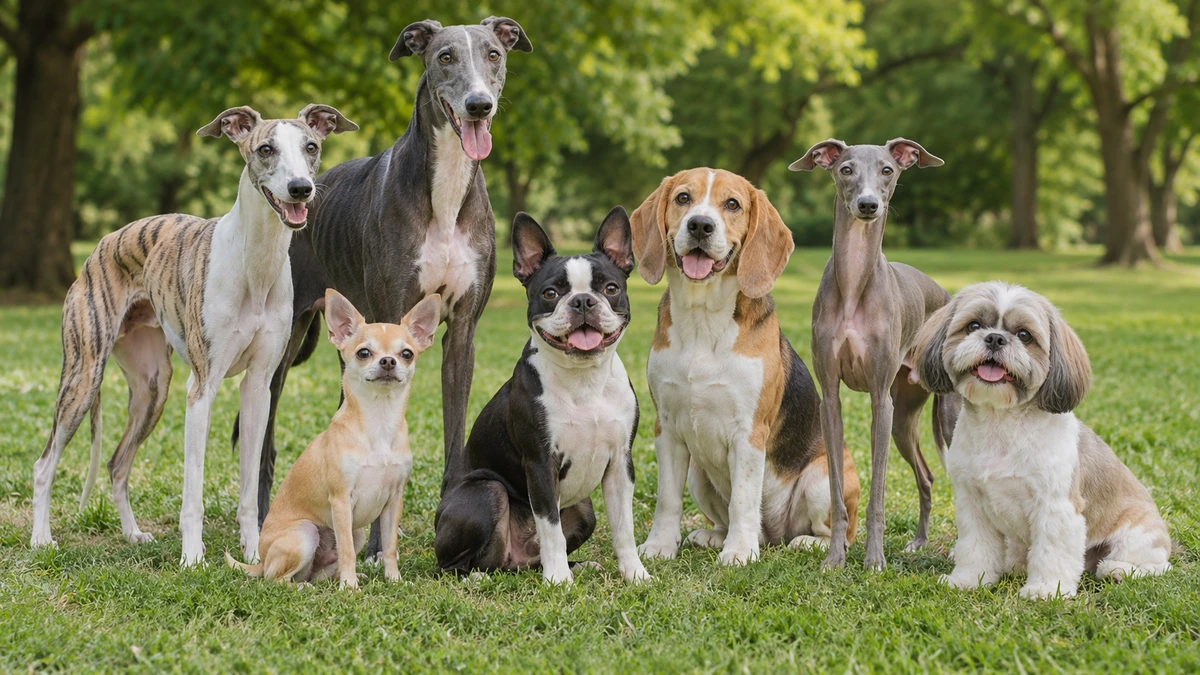
What Makes a Dog Low Maintenance?
A realistic low-maintenance dog usually scores relatively well in several, but not necessarily all, of the following areas:
- Simple coat care
- Limited professional grooming
- Manageable exercise requirements
- Ability to settle indoors
- Moderate training difficulty
- Manageable barking
- Appropriate adult size for your home
- Limited drooling
- Manageable shedding
Health and temperament also matter, but no breed should be described as guaranteed healthy, easy to train or effortless to live with.
Low Maintenance Is Not One Trait
| Type of Maintenance | What Usually Makes It Easier | Possible Trade-Off |
|---|---|---|
| Grooming | Short smooth coat | May still shed considerably |
| Shedding | Curly or continuously growing coat | Often needs professional grooming |
| Exercise | Moderate-energy companion temperament | Still needs daily activity |
| Space | Small adult size | Small dogs may bark or need intensive training |
| Training | People-oriented, responsive temperament | Intelligent breeds may need more mental stimulation |
| Cleaning | Low drooling and lower shedding | Coat care may increase elsewhere |
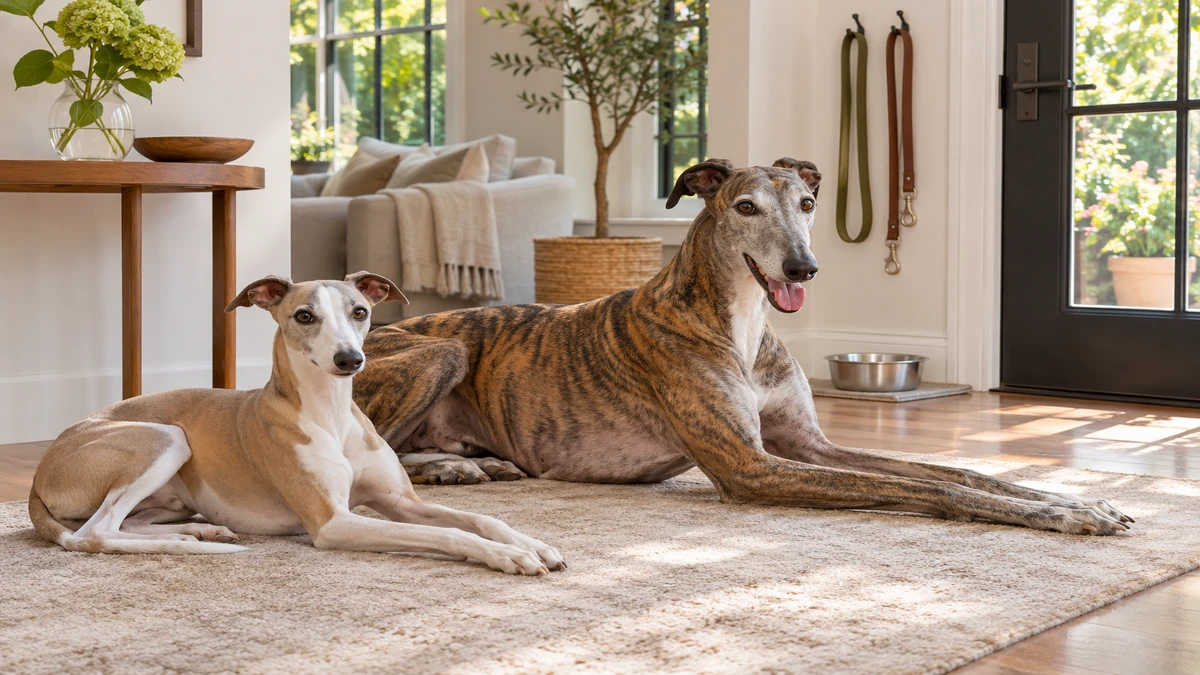
1. Whippet
The Whippet is one of the strongest examples of a dog that can be relatively easy to maintain in several practical areas.
Adults generally weigh about 25 to 40 pounds and have very short, smooth coats.
Coat maintenance is minimal compared with curly, long-haired or heavy double-coated breeds.
Routine care generally involves:
- Occasional brushing
- Bathing when needed
- Nail trimming
- Dental care
- Ear checks
Whippets are famous sprinters, but that does not mean they spend all day running around the house.
Many are calm indoors after appropriate exercise and can adapt to apartment living when their movement needs are met.
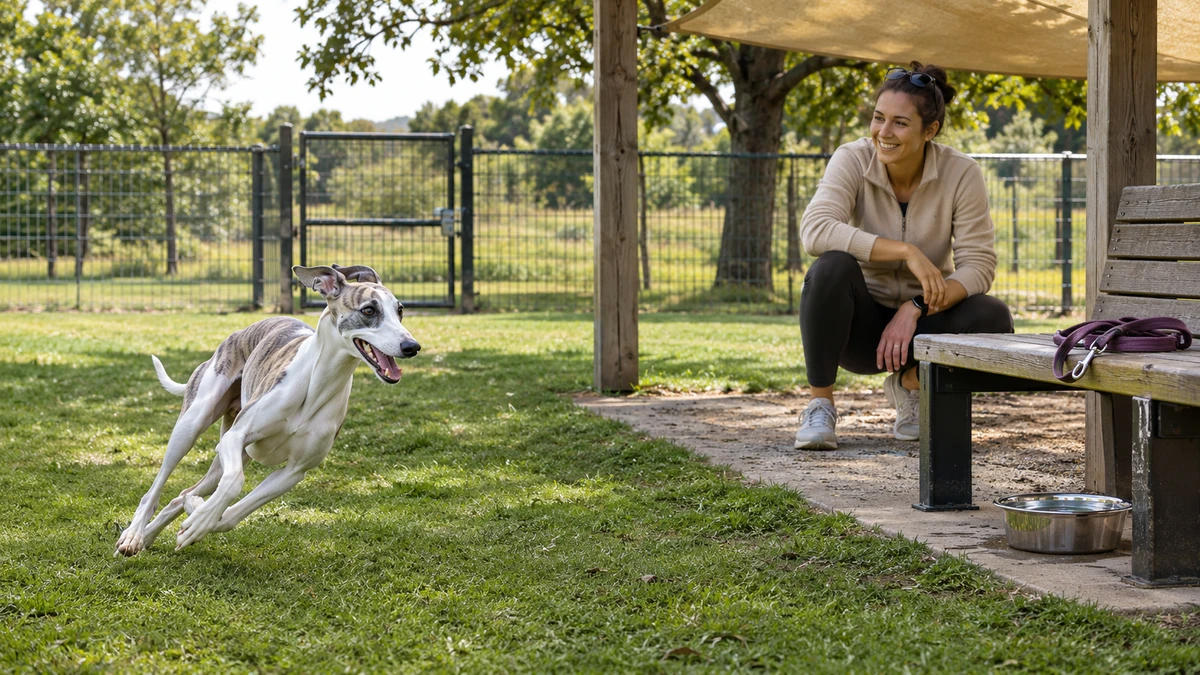
The important trade-off is prey drive. A Whippet should not simply be released off leash in an unsecured area because a fast-moving animal may trigger chasing.
2. Greyhound
Greyhounds provide a larger version of the short-coated sighthound lifestyle.
Their coat requires little more than routine brushing and bathing.
Despite their racing reputation, adult Greyhounds are often far calmer indoors than people expect.
However, low coat maintenance should not be confused with zero exercise or zero training.
Greyhounds still need daily walks, secure exercise opportunities and thoughtful management of prey drive.
They are also physically large dogs, which affects:
- Bed size
- Crate size
- Transportation
- Food
- Medication costs
So they may be low maintenance in grooming but not necessarily in total ownership cost.
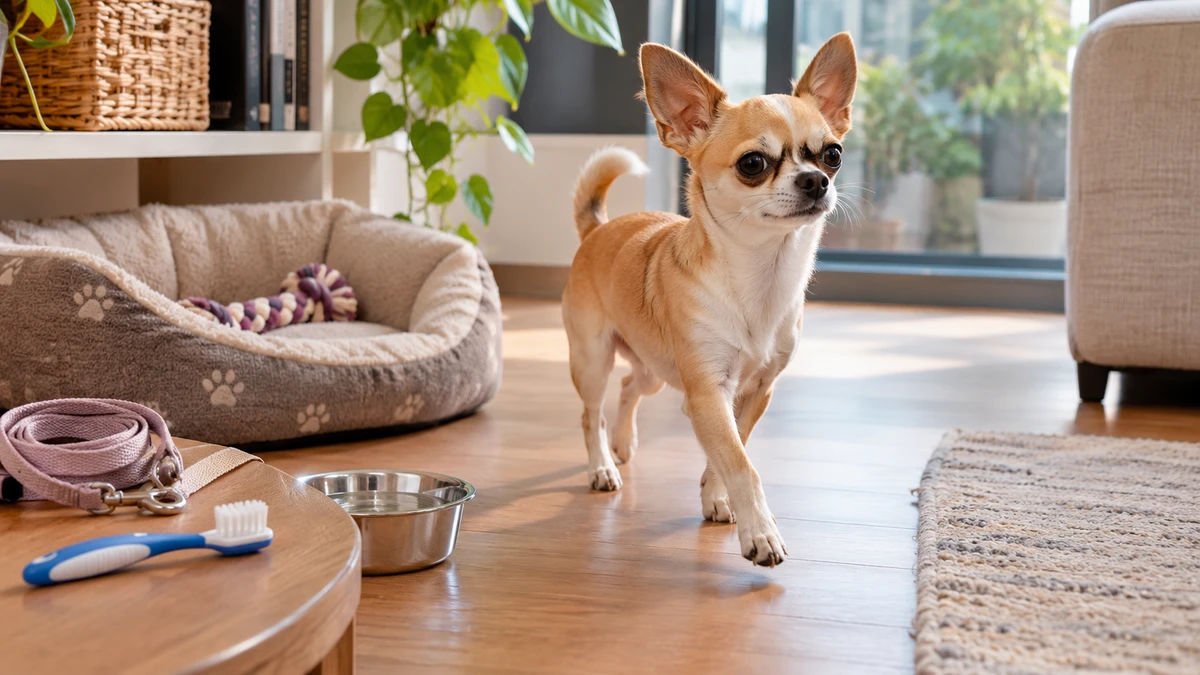
3. Smooth-Coat Chihuahua
For someone specifically searching for small dog breeds with low maintenance requirements, the smooth-coat Chihuahua is worth researching.
Its tiny body requires very little physical space, and the short coat needs only occasional brushing and normal bathing.
Exercise requirements are also relatively manageable. Short walks, play and normal household movement can provide appropriate activity for many adult Chihuahuas.
But tiny size creates other responsibilities.
Owners need to consider:
- Physical fragility
- Dental care
- House training
- Barking
- Cold-weather comfort
- Safe interactions with large dogs and young children
A Chihuahua should still be trained as a dog rather than treated as an accessory that is carried everywhere.
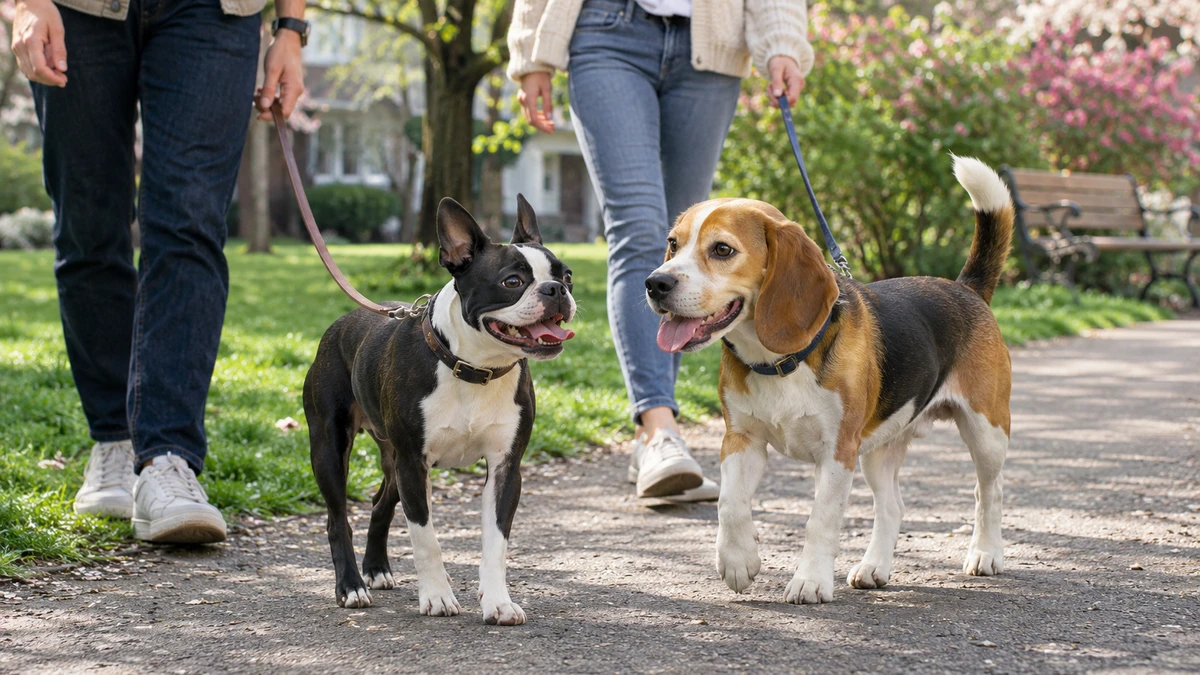
4. Boston Terrier
Boston Terriers have fine, short coats that require relatively little grooming.
Weekly brushing can remove loose hair, and bathing is generally occasional rather than intensive.
Their compact bodies also make them convenient for urban and suburban homes.
Exercise needs vary among individuals. Some adults are satisfied with brisk daily walks and play, while others need more active sessions.
However, the Boston Terrier’s shortened muzzle means climate and exercise management deserve attention, particularly in warm conditions.
This illustrates an important principle: simple grooming does not automatically equal simple total care.
5. Beagle
Beagles are relatively straightforward from a grooming perspective.
Their short coat needs routine brushing rather than professional clipping or elaborate maintenance.
But Beagles were developed as scent hounds.
That background brings characteristics including:
- Strong interest in smells
- Need for regular exercise
- Potential vocalization
- Independent decision-making
- Need for secure outdoor management
A Beagle may be low maintenance at the grooming table while requiring considerably more effort in exercise and training.
6. Italian Greyhound
Italian Greyhounds have one of the simplest coats in the dog world.
The short, fine hair requires very little brushing and dries quickly after bathing.
Their small body also makes them convenient in compact homes.
However, their delicate structure changes the maintenance equation.
Owners need to consider:
- Cold-weather protection
- Safe furniture heights
- Care around rough play
- Safe interactions with young children
They may be low maintenance in grooming but require thoughtful physical management.
7. Shih Tzu in a Practical Short Trim
At first glance, a Shih Tzu may seem like a strange addition to a low-maintenance list because the traditional coat can grow long and require extensive brushing.
The equation changes when a companion Shih Tzu is kept in a practical shorter trim.
AKC includes the breed among options for some first-time owners and notes that a shorter puppy-style cut can make coat maintenance easier.
Shih Tzus also generally require less strenuous exercise than many sporting, herding or terrier breeds.
But a shorter haircut does not make the coat maintenance-free.
Regular clipping, facial care, bathing and brushing remain necessary.
What Does Low Grooming Really Mean?
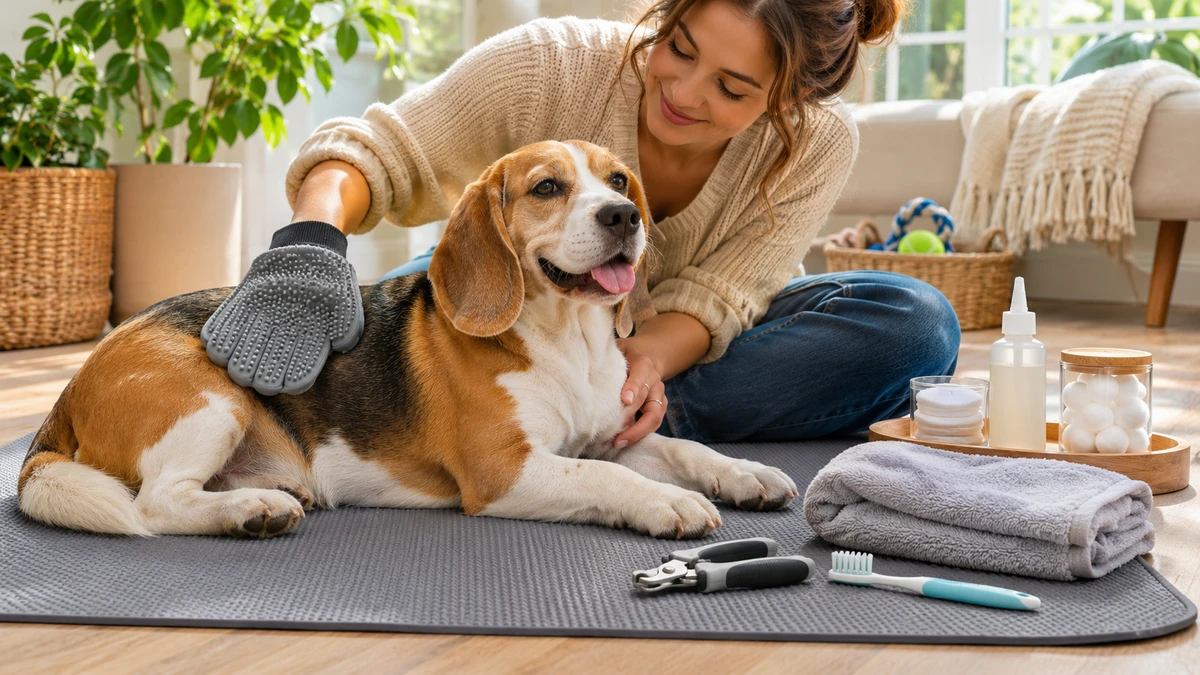
A low-grooming dog still needs routine body care.
Even a smooth-coated Whippet or Chihuahua requires:
- Nail trimming
- Dental care
- Ear checks
- Bathing when necessary
- Skin monitoring
The advantage is primarily that you are less likely to spend hours detangling a long coat or paying for frequent professional haircuts.
Dog Breeds With Minimal Grooming Needs
If grooming is your main definition of maintenance, short-coated breeds are often easier.
Examples worth researching include:
- Whippet
- Greyhound
- Italian Greyhound
- Boston Terrier
- Beagle
- Boxer
- Vizsla
- Weimaraner
- Great Dane
- Smooth-coat Chihuahua
But several dogs on this list have high exercise or training requirements.
A Vizsla can be extremely simple to brush and still be a demanding dog for a sedentary household.
A Great Dane has an easy coat but giant-dog costs and logistics.
A Doberman has a simple coat but requires meaningful exercise and training.
Always separate grooming maintenance from total ownership maintenance.
Low Shedding Is Not the Same as Low Maintenance
This is one of the most common mistakes in breed selection.
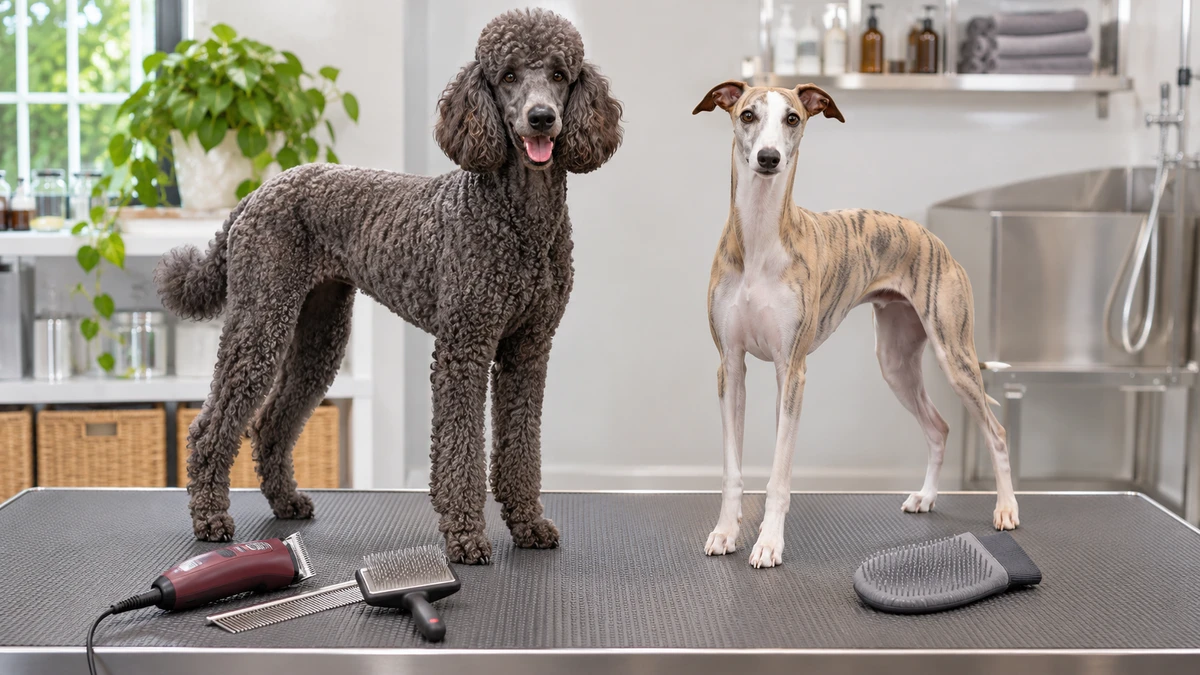
A Poodle may leave relatively little loose hair around your home, but its coat continues growing and needs brushing and regular clipping.
A Bichon Frise also sheds relatively little, yet the curly coat needs significant maintenance.
Meanwhile, a Whippet may shed somewhat but needs almost no professional coat styling.
Therefore:
- Low shedding describes how much loose hair reaches the environment.
- Low grooming describes how much coat work the dog needs.
- Low maintenance describes the total workload of ownership.
These are three different concepts.
For a coat-specific comparison, see our Low-Shedding Dog Breeds guide.
Low Grooming Does Not Mean Low Exercise
Short coats are frequently found on athletic breeds.
Examples include:
- Vizsla
- Weimaraner
- Doberman Pinscher
- Boxer
All can be easy to groom while still requiring substantial physical activity.
This is why coat maintenance should never be the only criterion when choosing a supposedly easy dog.
Whippets: A Good Example of Balanced Maintenance
Whippets are particularly useful in this discussion because their maintenance profile is relatively balanced.
Their short coat requires little grooming.
They can be calm and quiet indoors.
They are medium-sized rather than giant.
But they still need regular exercise and secure opportunities to move.
Current AKC guidance notes that Whippets may need roughly one to two hours of physical activity across the day, despite their tendency to spend considerable time relaxing afterward.
Are Small Dogs Lower Maintenance?
Sometimes, but not automatically.
Small dogs usually offer practical advantages:
- Less food
- Smaller beds and crates
- Easier transportation
- Less physical strength to manage
- Better fit in compact homes
But a small dog can still require frequent grooming, extensive training or large amounts of mental stimulation.
A Toy Poodle is tiny but highly intelligent and grooming-intensive.
A Miniature Schnauzer is small but alert and active.
A Dachshund is compact but may be vocal, independent and strongly scent-driven.
Small Dog Breeds With Lower Overall Maintenance
Depending on your priorities, breeds worth researching include:
- Smooth-coat Chihuahua
- Boston Terrier
- Italian Greyhound
- Short-trimmed Shih Tzu
Each still has important trade-offs.
There is no small breed that combines zero grooming, zero exercise, zero barking and effortless training.
Are Lazy Dog Breeds Low Maintenance?
Not necessarily.
A dog that spends more time resting may require less intense exercise, but other care can remain substantial.
A large calm dog still requires food, veterinary care, transportation and physical space.
A long-coated low-energy dog may still need frequent grooming.
A brachycephalic dog may require careful heat and exercise management.
Energy level is therefore only one part of maintenance.
Are Low-Energy Dogs Better for Busy People?
Not automatically.
Dogs still need:
- Bathroom breaks
- Social interaction
- Training
- Enrichment
- Exercise
- Veterinary care
A dog that enjoys sleeping for much of the day should not be interpreted as an animal that can routinely be ignored for very long periods.
Can a Dog Be Low Maintenance but High Cost?
Absolutely.
A breed can have a simple coat and easy daily routine while still creating substantial expenses.
Large dogs generally cost more in areas such as:
- Food
- Medication
- Crates
- Beds
- Boarding
- Transportation
Health conditions can also outweigh any savings from simple grooming.
Maintenance should include both time and money.
Great Dane: Easy Coat, Giant-Dog Maintenance
The Great Dane is a perfect example.
Its short coat requires relatively little grooming beyond brushing and occasional bathing.
But calling a Great Dane an overall low-maintenance dog would ignore its enormous body size.
Everything from food portions to beds, crates, vehicles and veterinary handling becomes larger.
This is why a breed should never receive a universal low-maintenance label based only on its coat.
Boston Terrier: Easy Coat but Climate Matters
Boston Terriers also illustrate the importance of looking beyond coat care.
Their fine coats shed relatively little and require simple weekly brushing.
But their short muzzle makes heat management important.
A breed can therefore be low maintenance in grooming and still require more careful environmental management.
Chihuahua: Tiny Does Not Mean Zero Care
The smooth-coat Chihuahua requires little coat work and relatively modest physical space.
However, owners still need to pay attention to:
- Dental care
- Nail trimming
- Barking
- Socialization
- Safe handling
- Cold weather
Good dog ownership never becomes zero-maintenance simply because the dog weighs six pounds.
What About Health?
Health needs should always be part of the maintenance calculation.
No responsible breed guide can promise that one breed will never develop expensive or time-consuming health problems.
When researching a breed:
- Review national parent-club health recommendations
- Ask breeders about recommended testing
- Understand normal breed structure
- Budget for preventive veterinary care
- Consider pet insurance or an emergency fund
A simple coat cannot compensate for choosing irresponsibly bred dogs.
Low Maintenance for First-Time Owners
A first-time owner may value different traits from an experienced dog-sport competitor.
Useful characteristics can include:
- Moderate exercise requirements
- Adaptability
- Responsive training style
- Manageable adult size
- Simple grooming
AKC includes Whippets and several companion breeds among options worth researching for first-time owners.
But individual lifestyle remains more important than a generic “beginner dog” label.
Low-Maintenance Dogs for Apartments
Apartment residents should consider:
- Indoor calmness
- Barking
- Adult size
- Exercise access
- Elevators or stairs
- Separation tolerance
Whippets can adapt surprisingly well to apartments when properly exercised because they tend to settle indoors and are not known for constant barking.
Small dogs such as Chihuahuas physically fit into almost any apartment, but vocal behavior can become more important when neighbors share walls.
Low-Maintenance Dogs for Families
For families, maintenance also includes how easily the dog’s normal behavior fits household life.
Consider:
- Children’s ages
- Dog size
- Activity level
- Noise
- Training time
- Other pets
A dog should never be selected solely because a list labels it “easy.”
For broader family-focused selection, see our Family Dog Breeds guide.
Which Low-Maintenance Dog Breed Is Right for You?
| Your Main Priority | Breeds Worth Researching |
|---|---|
| Simple coat + calm indoor behavior | Whippet |
| Larger calm sighthound | Greyhound |
| Very small + simple smooth coat | Smooth-coat Chihuahua |
| Compact urban companion | Boston Terrier |
| Simple coat + scent-hound personality | Beagle |
| Tiny sighthound + minimal coat care | Italian Greyhound |
| Lower exercise + companion lifestyle | Shih Tzu in a practical short trim |
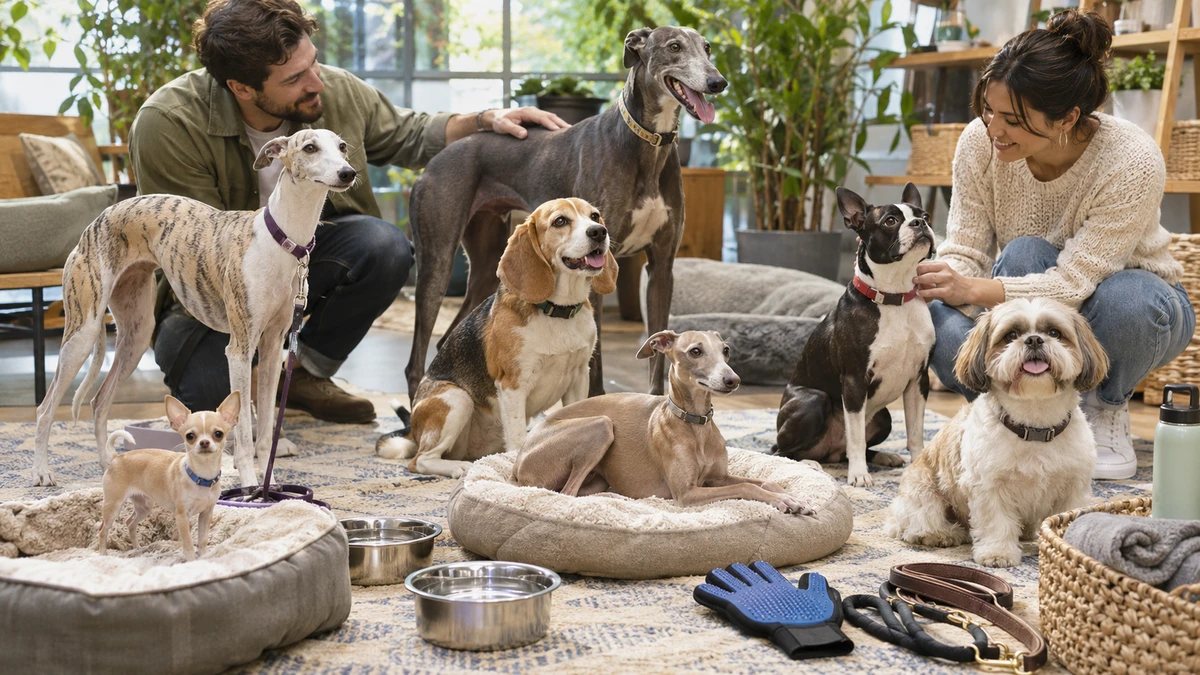
10 Questions to Define “Low Maintenance” for Yourself
- How much daily exercise can I realistically provide?
- How much brushing do I want to do?
- Can I afford regular professional grooming?
- How much shedding can I tolerate?
- How much barking can my home tolerate?
- How much dog can I physically manage?
- How much time can I spend training?
- Will the dog regularly be alone?
- Do I have young children or other pets?
- Am I trying to minimize time, cost, cleaning, or all three?
What Is Not a Low-Maintenance Dog?
A breed is unlikely to feel low maintenance for you if its normal needs conflict with your lifestyle.
Examples include:
- A high-drive working dog in a sedentary household
- A full-coated breed for someone who hates brushing
- A vocal dog in a noise-sensitive apartment
- A giant dog when transportation space is limited
- A very tiny dog in a rough, chaotic household
Breed matching is more useful than universal rankings.
Final Thoughts
Low-maintenance dog breeds are not dogs that need no work. They are breeds whose normal requirements fit relatively easily into a particular owner’s lifestyle.
Whippets are a strong example for people who want a simple coat and calm indoor behavior while still providing regular exercise. Greyhounds offer a similar larger-dog profile. Smooth-coat Chihuahuas combine tiny size with easy coat care, while Boston Terriers have simple grooming requirements and compact bodies.
Other breeds may be easy in one area and demanding in another. Beagles have simple coats but strong scent-hound instincts. Poodles shed little but require clipping. Great Danes are easy to brush but expensive to house and feed.
That is why the most useful question is not, “What is the lowest-maintenance dog?”
Ask instead, “Which type of maintenance am I comfortable doing every day for the next decade or longer?”
Choose a dog whose grooming, exercise, training, size, temperament and financial requirements fit your real routine.
The easiest dog to care for is the one whose normal needs already match the life you live.