By
By Cooling cat beds are designed to give cats a more comfortable resting surface during warmer weather, but not every cooling bed works the same way. Some use gel or other heat-absorbing materials, some rely on breathable fabrics, and others use elevated mesh designs to increase airflow underneath the cat.
A cooling bed can be useful when your cat naturally seeks tile, hardwood, shaded corners, or other cooler surfaces during summer. However, it should be treated as one part of a comfortable warm-weather environment rather than a substitute for fresh water, shade, airflow, or a suitably cool room.
The best option depends on how your cat sleeps, which surfaces it prefers, how warm the room becomes, and whether you want a gel mat, breathable fabric bed, elevated design, or another cooling-focused surface.
You can also explore our complete Cat Beds topic hub for more guides about bed styles, seasonal comfort, materials, and everyday use.

What Is a Cooling Cat Bed?
A cooling cat bed is a broad category of sleeping products designed to provide a less heat-retaining or cooler-feeling surface than many thick plush beds.
Common types include:
- Self-cooling gel mats
- Breathable cooling fabrics
- Elevated mesh beds
- Water-filled cooling pads
- Gel-topped cushioned beds
These designs do not all cool in the same way, so the word “cooling” should not be treated as one specific technology.
How Do Cooling Cat Beds Work?
Cooling cat beds generally work through one or more of three basic approaches:
- Absorbing heat from the contact area
- Reducing insulation around the cat
- Increasing airflow around the sleeping surface
Some products use gel or another thermal material that absorbs some heat when the cat lies on the surface. Others simply use thinner, more breathable fabrics that retain less warmth than plush bedding.
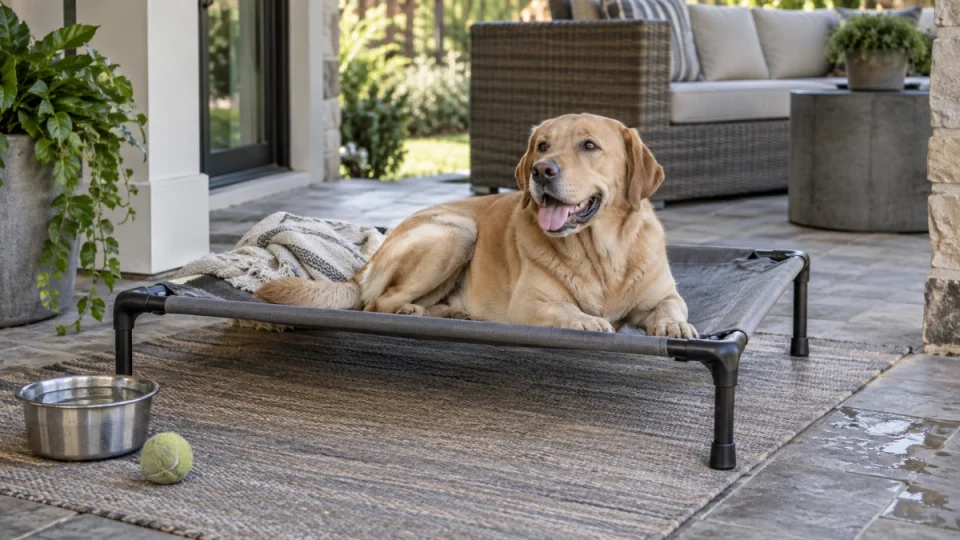
Elevated beds use a different approach by lifting the sleeping surface above the floor so air can move underneath.
Gel vs Fabric vs Elevated Cooling Beds
| Cooling Bed Type | Main Cooling Approach | Best For |
|---|---|---|
| Self-cooling gel mat | Absorbs heat from the contact surface | Cats that like flat, cool-feeling surfaces |
| Cooling fabric bed | Uses breathable or low-insulation material | Cats that still prefer a soft bed |
| Elevated mesh bed | Allows airflow underneath | Cats that like firmer, open resting areas |
| Water-filled pad | Uses cooler thermal mass | Cats comfortable with a flatter sleeping surface |
The best option is the one that matches your cat’s surface preference and normal sleeping behavior.

Do Self-Cooling Cat Mats Need Electricity?
Many self-cooling gel mats do not require electricity, water, or refrigeration.
These products are designed to react to pressure and body contact, providing a cooler-feeling surface for a period of time.
A self-cooling mat is different from an electrically powered cooling appliance. It does not create refrigerated air or actively lower the temperature of the entire room.
Some mats may also need time without pressure before the surface returns to its original cooling performance, depending on the design.

Do Cooling Cat Beds Actually Work?
Cooling beds can provide a cooler or less heat-retaining resting surface, but their effect depends on the material, room temperature, and how the cat uses the bed.
A gel mat may feel noticeably cooler than a plush bed when first used, while a breathable fabric bed may simply trap less heat.
An elevated mesh bed can improve airflow without using gel or electricity.
These products can help provide another comfortable resting option, but they do not turn a hot room into a cool environment.
Why Won’t My Cat Use a Cooling Bed?
Buying a cooling bed does not guarantee your cat will use it.
Common reasons a cat may ignore the bed include:
- The surface feels unfamiliar
- The material is too smooth or too firm
- The bed is placed in the wrong location
- The cat prefers tile, hardwood, or another familiar surface
- The bed has a smell the cat dislikes
- The shape does not match the cat’s sleeping style
Try placing the cooling bed near one of your cat’s existing summer resting locations rather than expecting the cat to move to a completely different part of the home.
Avoid forcing the cat onto the bed. Surface preference is highly individual.

Cooling Bed vs Tile and Hard Floors
Some cats naturally choose tile, hardwood, bathtubs, or other hard surfaces during warm weather because those areas may feel cooler than thick bedding.
A cooling bed may provide a softer alternative, but it is not automatically better than the surface your cat already prefers.
If your cat repeatedly leaves a cooling mat to lie on tile, that may simply reflect its preferred texture and temperature.
Observe the cat’s behavior rather than assuming a purpose-built cooling bed must replace every natural cool resting spot.

Where to Put a Cooling Cat Bed
Placement can make a large difference in how useful a cooling bed feels.
Choose an area that is:
- Out of direct sunlight
- Well ventilated
- Easy for the cat to reach
- Close to a familiar sleeping location
- Dry and stable
Avoid placing the bed in a sunny window simply because that is where the cat sleeps during cooler months. Summer preferences may change.
Keep fresh water available nearby, but do not place water where spills could constantly soak the bed or make the surrounding floor slippery.

Cleaning and Inspecting Cooling Beds
Cleaning depends heavily on the cooling technology.
Gel Cooling Mats
Many gel mats are designed to be wiped clean rather than machine washed.
Check for:
- Damaged seams
- Punctures
- Leaks
- Surface wear
Stop using a gel or liquid-filled product if the outer material is damaged or the contents are leaking.
Cooling Fabric Beds
Cooling fabric beds may have removable covers or washable surfaces. Follow the care label to avoid damaging the material.
Elevated Mesh Beds
Elevated beds may require washing the mesh surface and wiping the frame separately.

Cooling Beds During Hot Weather
A cooling bed can provide another comfortable resting surface during warm weather, but it should be part of a broader summer setup.
Also provide:
- Fresh water
- Shaded resting areas
- Good airflow
- A comfortably cool indoor environment
During very hot conditions, room temperature matters more than simply adding another cooling product.
A cooling mat may feel pleasant, but it cannot make an unsafe overheated environment safe by itself.
A Cooling Bed Is Not Heatstroke Treatment
A cooling bed is a comfort product, not a treatment for serious overheating.
If a cat develops concerning signs such as severe weakness, collapse, excessive panting, heavy drooling, vomiting, or other signs of significant heat stress, move the cat to a cooler environment and contact a veterinarian promptly.
Do not rely on a cooling mat alone when the cat appears seriously overheated.
When Your Cat Prefers Warmth Instead
Not every cat wants a cooler sleeping surface, even during summer.
Some cats continue to seek:
- Soft blankets
- Sunny spots
- Enclosed beds
- Warm furniture
If your cat consistently prefers warmer resting areas, our guide to heated cat beds explains electric heated and self-warming options and how they differ.
Common Cooling Cat Bed Buying Mistakes
- Assuming every cooling bed uses the same technology
- Expecting a cooling mat to refrigerate the room
- Choosing by cooling claims without considering surface preference
- Placing the bed in direct sunlight
- Ignoring cleaning instructions
- Continuing to use a damaged gel mat
- Assuming every cat will prefer a cooling bed over tile
- Using a cooling bed as the only summer heat-management strategy
Cooling Cat Bed Buying Checklist
- What cooling method does the bed use?
- Does it require electricity, water, or refrigeration?
- Does the surface match my cat’s preferred texture?
- Is the sleeping area large enough?
- Can the bed be placed in a shaded location?
- How should it be cleaned?
- Can I inspect the mat for punctures or leaks?
- Does my cat prefer flat, soft, or elevated surfaces?
- Will the bed work with my home’s summer temperature?
- Does my cat already prefer another cooler surface?

Final Thoughts
Cooling cat beds can provide a more comfortable summer sleeping option, but the best design depends on how the bed actually cools and what surface your cat prefers.
Gel mats, breathable fabric beds, elevated mesh beds, and other cooling products all work differently. Compare the cooling method, cleaning requirements, placement, durability, and your cat’s behavior rather than relying only on the word “cooling.”
Most importantly, use a cooling bed as one part of a comfortable warm-weather environment that also includes fresh water, shade, airflow, and an appropriately cool room.