By
By 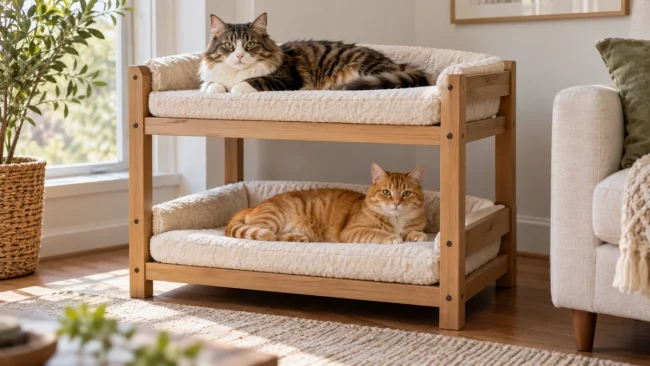
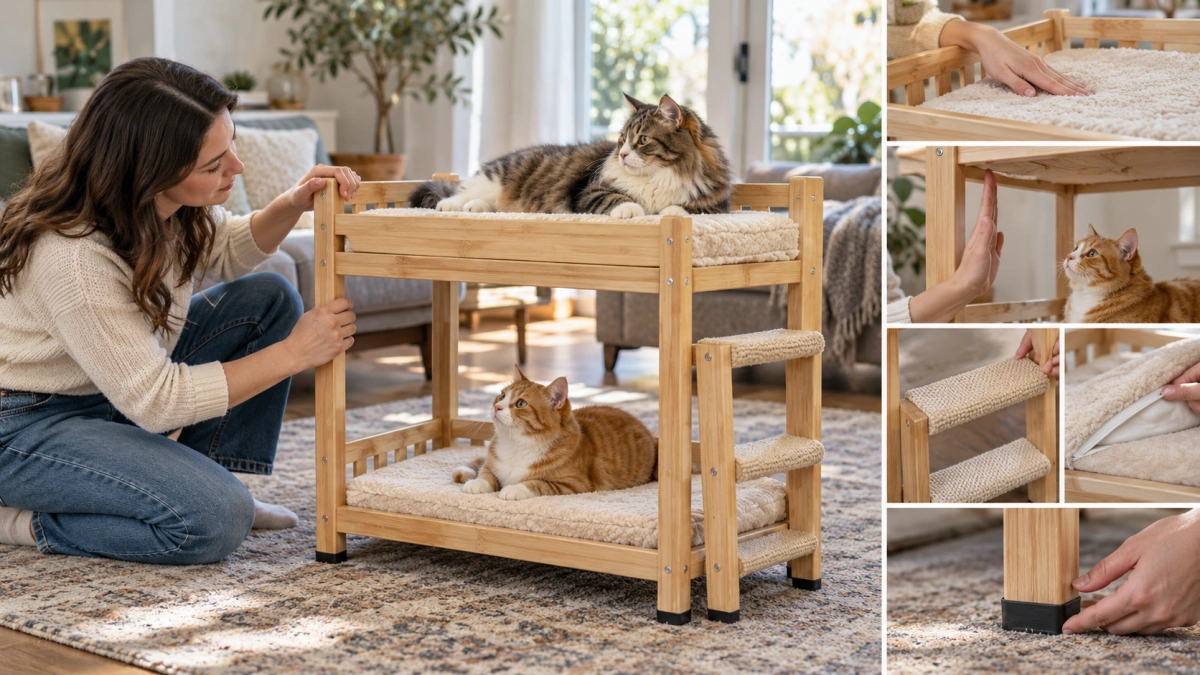
Cat bunk beds create two or more sleeping levels within a relatively small amount of floor space. Some look like miniature human bunk beds, while others use stacked platforms, shelves, cushions, or open frames to create separate upper and lower resting areas.
The idea can be especially appealing in multi-cat homes, but a bunk bed should not be chosen only because it looks cute or saves space. Each level still needs enough usable room, a stable supporting structure, practical access, and a location where the cats can rest without feeling trapped or crowded.
Not every pair of cats will want to share one piece of furniture either. Some cats happily sleep close together, while others prefer completely separate resting areas in different parts of the home.
For more guides covering cat bed sizes, materials, shapes, and sleeping preferences, visit our Cat Beds topic hub.
What Is a Cat Bunk Bed?
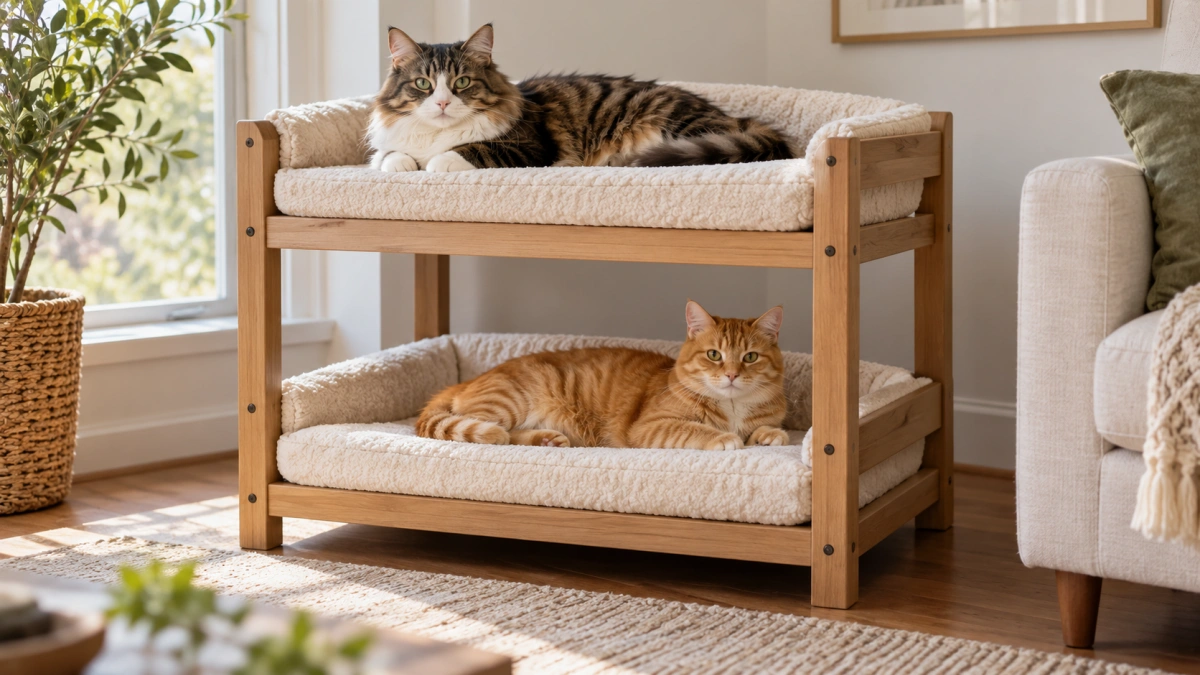
A cat bunk bed is a piece of cat furniture with two or more vertically arranged sleeping surfaces.
Common designs include:
- Two stacked cushioned platforms
- Wooden miniature bunk-bed frames
- Fabric hammock levels
- Open shelf-style sleeping structures
- Multi-level cat furniture with beds built in
Some are designed primarily for one cat that likes choosing between different heights. Others are large enough for two cats to occupy separate levels at the same time.
The term “bunk bed” is not standardized, so focus on the actual construction rather than the product name.
Why Would a Cat Use a Multi-Level Bed?
Cats often choose different sleeping places throughout the day.
A multi-level bed gives the cat more than one resting option in the same general area.
One level may provide:
- A higher observation point
- A quieter place away from floor activity
- A warmer or sunnier position
- A more open view of the room
The lower level may feel more sheltered or be easier to access.
The ability to choose between levels is often more useful than simply having the tallest possible sleeping surface.
Cat Bunk Bed vs Elevated Cat Bed
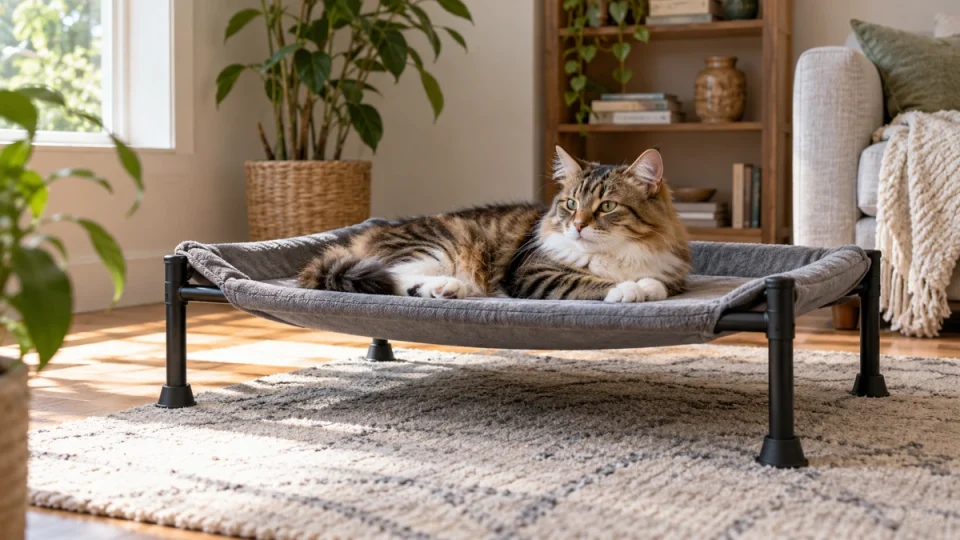
An elevated cat bed provides one raised sleeping surface. A cat bunk bed provides multiple sleeping levels within the same structure.
If your cat simply prefers sleeping a few inches above the floor, a single elevated cat bed may be enough.
A bunk bed makes more sense when:
- You want multiple resting levels
- Two compatible cats may use the furniture
- Your cat likes switching between high and low sleeping spots
- You want to use vertical space rather than more floor space
Neither design is automatically better. Choose according to the cats, the room, and how the sleeping space will actually be used.
How Much Space Does Each Bunk Need?
Each level should be treated as an individual cat bed.
Do not assume that the furniture is large enough simply because its total height or width looks substantial.
For both upper and lower bunks, check:
- Usable platform length
- Usable platform width
- Cushion thickness
- Raised edges or frame rails
- Room to turn around
A cat should be able to curl, reposition, and lie naturally without constantly hanging over the edge.
Check Lower-Level Headroom
The lower bunk has an additional sizing issue: vertical clearance.
There should be enough space between the lower and upper platforms for the cat to enter, sit, turn, and settle comfortably.
A lower level that is wide enough but extremely low overhead may not function as a comfortable bed for a larger cat.
Stability Matters More Than Style
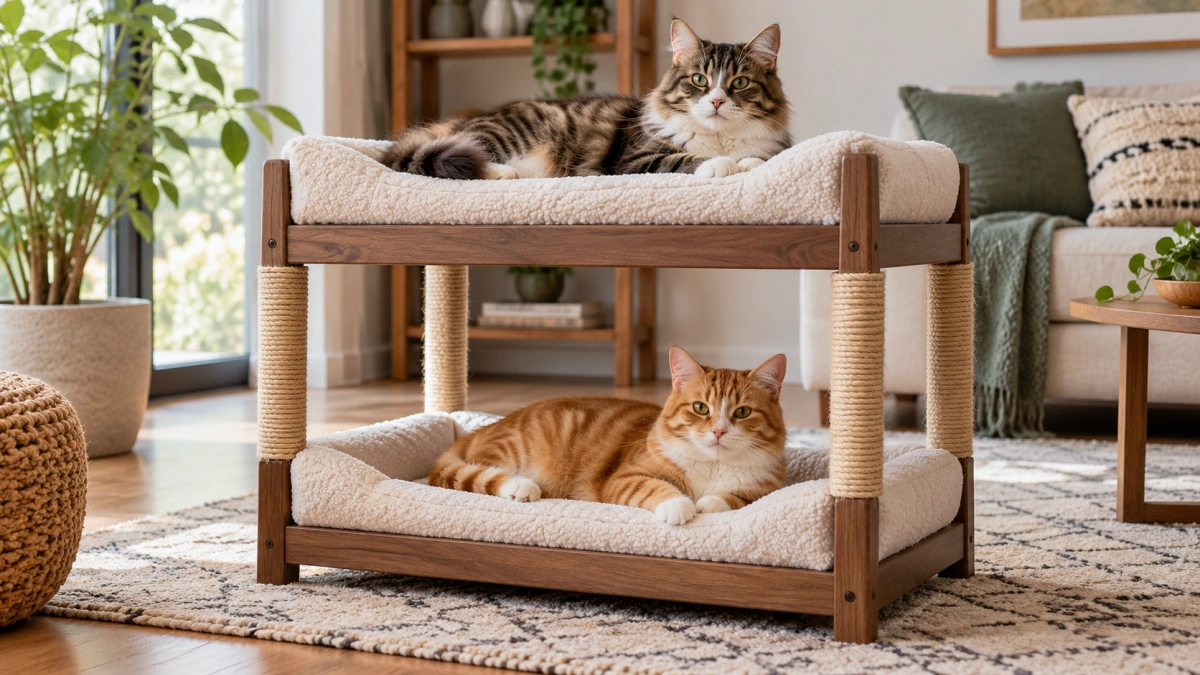
A cat bunk bed has a higher center of gravity than a flat floor bed, so stability deserves close attention.
The furniture needs to remain secure while a cat:
- Jumps onto a level
- Climbs between platforms
- Turns around
- Kneads the bedding
- Pushes off to jump away
Before use, check:
- Whether the base sits flat
- Whether the frame rocks
- Whether joints are tight
- Whether the upper level flexes
- Whether feet slide on hard flooring
- Whether the structure suits the cat’s weight
A decorative miniature bed that feels unstable when pushed by hand is not a good choice for regular climbing and sleeping.
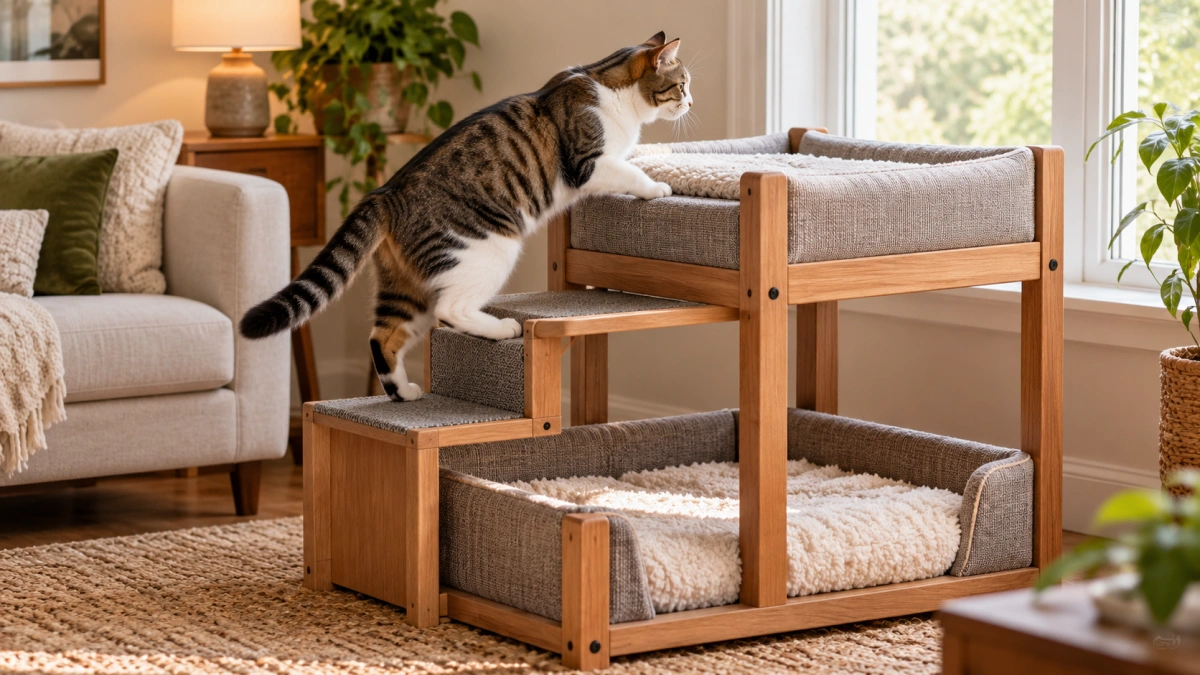
How Should Cats Access the Upper Bunk?
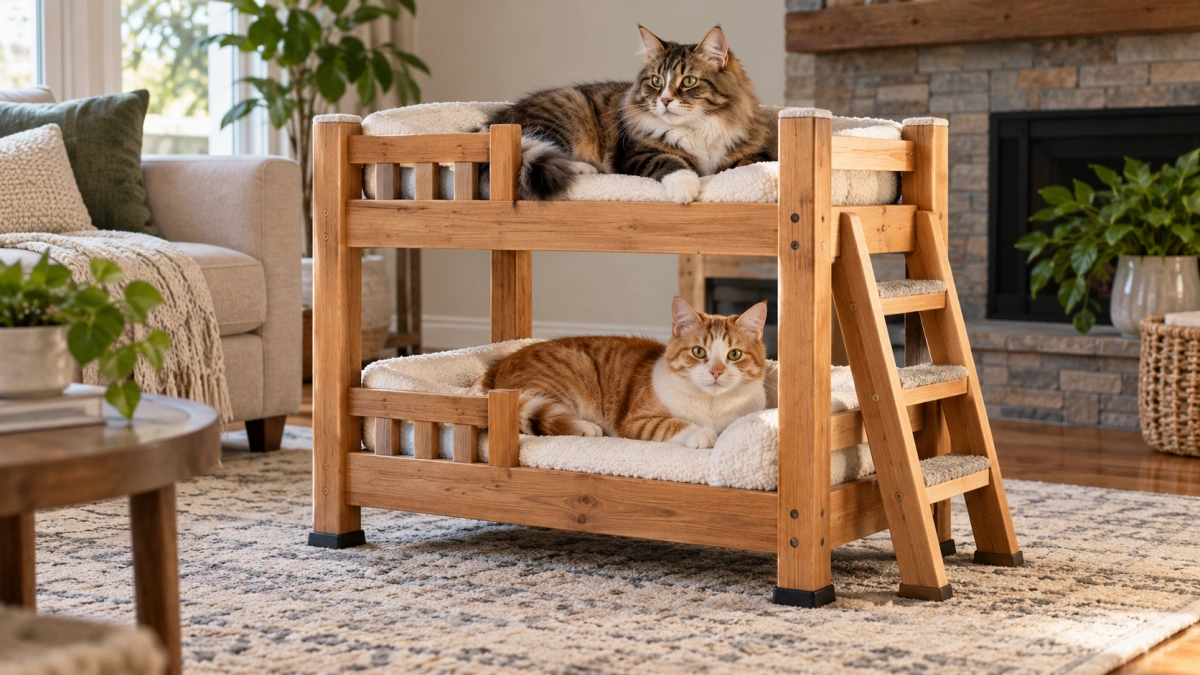
The upper level should have a realistic access route.
Young active cats may easily jump onto a low upper platform, but the design should still provide enough landing area.
Other useful access features include:
- A built-in step
- A wide intermediate ledge
- A lower platform positioned as a step
- A nearby sturdy piece of cat furniture
Avoid designs that expect the cat to jump through a narrow opening or land on a small unstable edge.
The way down also matters. A cat should have enough room to turn toward a comfortable exit route rather than being forced into a difficult drop.
Are Cat Bunk Beds Good for Multi-Cat Homes?
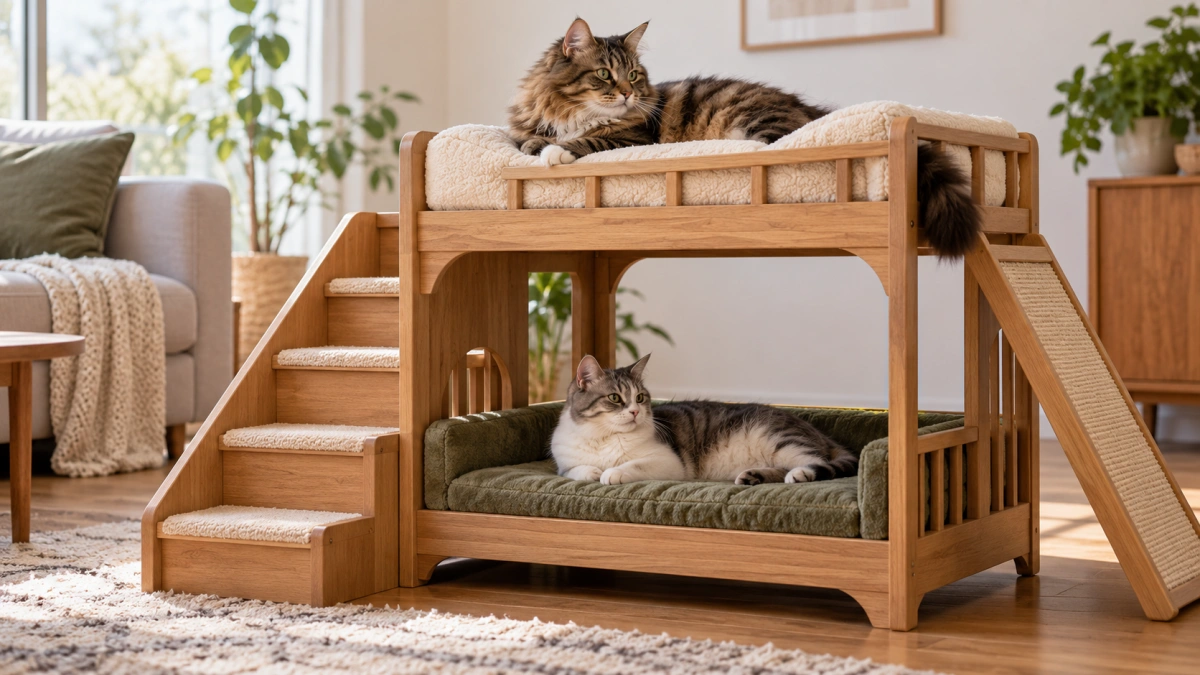
They can be useful in some multi-cat homes, but one bunk bed should not be treated as the only sleeping resource for several cats.
Cats vary greatly in how comfortable they are sharing resting areas.
A bonded pair may willingly sleep on adjacent levels. Two cats that merely tolerate each other may prefer more distance.
In a multi-cat home, provide several resting options in different areas so one cat cannot control access to every preferred bed.
Also watch the access route.
If the cat on the lower bunk can block the only path to the upper level, the design may create unnecessary conflict.
Do Two Cats Need Separate Beds?
Even cats that regularly sleep together should have other resting choices.
Cats may want different sleeping locations depending on:
- Time of day
- Temperature
- Noise
- Sunlight
- Household activity
- Whether another cat is nearby
A bunk bed can add two useful resting surfaces, but it does not replace the value of additional beds, boxes, perches, or quiet sleeping areas elsewhere in the home.
Should Both Bunks Be the Same Size?
Matching sizes are simple, but they are not essential.
A wider lower platform and slightly smaller upper platform may work if both still provide enough room for the cats expected to use them.
However, do not make the upper level so small that it is only usable as a sitting perch when the product is intended to function as a sleeping bed.
If you have cats of different sizes, decide which cat is most likely to use each level and check the actual sleeping area accordingly.
Upper Bunk vs Lower Bunk: Which Do Cats Prefer?
There is no universal preference.
The upper bunk may appeal to a cat that likes:
- Elevated observation spots
- More open views
- Distance from floor-level activity
The lower bunk may appeal to a cat that prefers:
- Easier access
- More overhead cover
- A quieter enclosed feeling
- Less climbing
Some cats may switch between both depending on the situation.
Allow your cat to choose instead of repeatedly placing it on the level you think it should prefer.
Cat Bunk Beds for Large Cats
Large cats need more than a wider overall frame.
Check each level individually for:
- Usable width
- Usable depth
- Weight capacity
- Platform flex
- Lower-level headroom
- Entry and exit space
A structure that looks large in a product photo may still have short sleeping platforms.
For larger cats, rigid platforms and a broad stable base may be particularly useful.
For more detailed sizing guidance, see our cat beds for large cats guide.
Cat Bunk Beds for Senior Cats
A senior cat may still enjoy multi-level furniture, but access should match its current mobility.
A useful setup may allow the older cat to use the lower bunk while a younger or more agile cat uses the upper level.
For an older cat, check:
- Low step-in height
- A stable lower cushion
- Nonslip flooring around the bed
- Enough room to turn
- No need to jump to reach the preferred level
If the senior cat still prefers an upper level, intermediate steps or ramps may make access easier.
Do not assume a cat can comfortably make the same jumps throughout its entire life.
Are Cat Bunk Beds Good for Kittens?
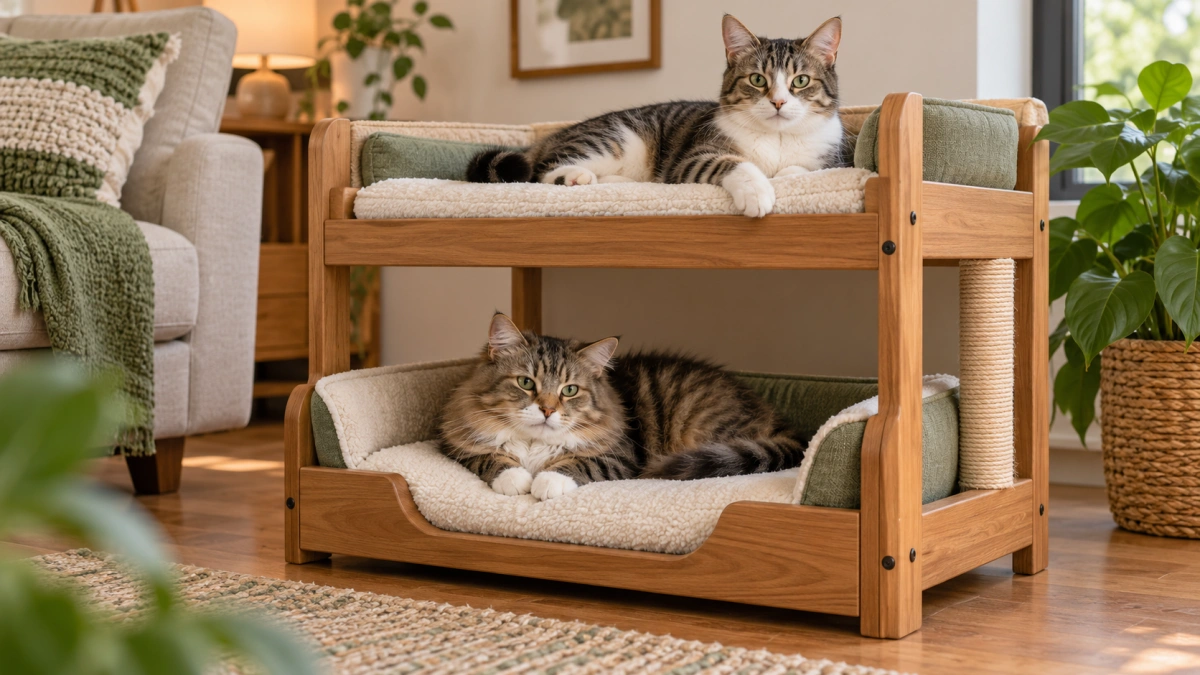
Kittens often enjoy climbing and exploring, but a bunk bed still needs to be stable and appropriately sized.
Pay attention to:
- Gaps where a kitten could become stuck
- Loose fabric
- Accessible cords
- Sharp hardware
- Very high drop distances
- Unstable lightweight frames
A product that works for an adult cat is not automatically suitable for a very small kitten.
Inspect the structure carefully and follow the manufacturer’s age, weight, and assembly recommendations.
Wooden vs Fabric Cat Bunk Beds
Wooden Bunk Beds
Wooden designs generally use rigid sleeping platforms with cushions placed on top.
Potential advantages include:
- Firm structural support
- Stable sleeping surfaces
- Replaceable cushions
- Easy visual inspection of the frame
The main consideration is whether the structure is properly assembled and whether edges, fasteners, and joints remain secure.
Fabric or Hammock-Style Bunks
Fabric versions may use tensioned sleeping surfaces stretched across a frame.
These can feel softer or more flexible, but check:
- Fabric tension
- Seam condition
- Attachment points
- Amount of sag
- Washability
The best material depends on your cat’s sleeping preferences and how easy the furniture is to maintain.
How Much Vertical Clearance Should There Be?
The lower level should not feel like a narrow gap beneath the upper platform.
Your cat should be able to:
- Enter without crouching excessively
- Sit or partially sit if needed
- Turn around
- Lie in its normal position
- Exit without squeezing
This is especially important for large cats and cats with thick coats.
Check the interior height rather than the total height of the furniture.
Where Should You Put a Cat Bunk Bed?
A good placement is usually a quiet area where your cats already choose to rest.
Look for a location that is:
- On a level floor
- Away from busy walkways
- Easy to approach from more than one direction
- Not directly beside loud appliances
- Comfortable in temperature
- Large enough for the full furniture footprint
A wall-side location can help keep the bed out of traffic while still giving the upper level a view across the room.
Do not wedge the furniture into a narrow corner if doing so blocks one cat’s ability to leave when another approaches.
Can You Put a Cat Bunk Bed Near a Window?
Yes, if the furniture remains stable and the window area itself is safe.
A window-side bunk bed may provide:
- A sunny upper sleeping level
- An outdoor view
- A lower shaded sleeping option
Check whether direct sunlight makes the upper cushion excessively warm and make sure blinds, curtain cords, or window hardware do not create hazards.
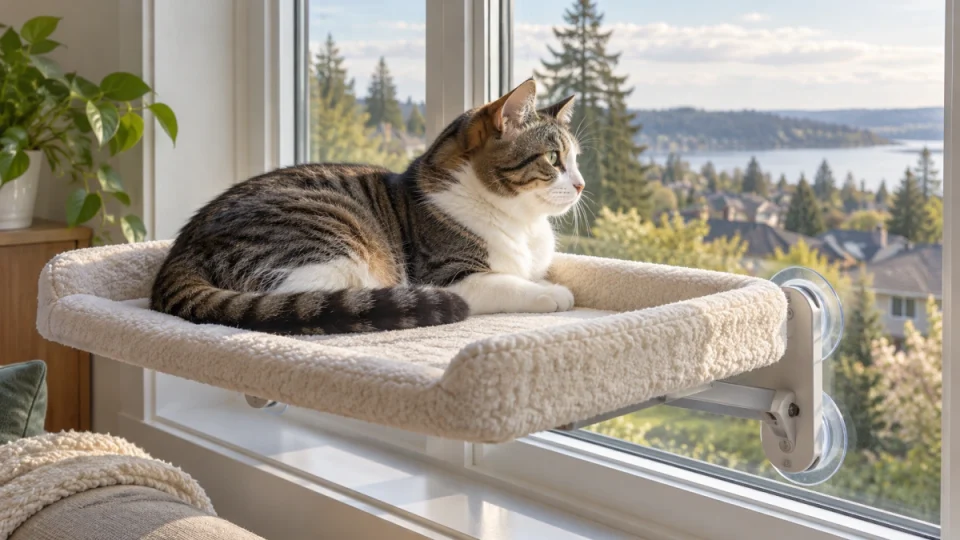
If your main goal is to create a bed directly against the glass, our guide to window cat beds covers dedicated window perches and hammocks.
Can a Cat Bunk Bed Save Floor Space?
It can use vertical space more efficiently than placing two full beds side by side.
However, the furniture still needs a stable footprint.
Do not choose a very narrow base simply to save a few more inches of floor space if doing so makes the structure easier to tip.
Measure:
- Total width
- Total depth
- Total height
- Access space around the bed
Also leave enough space for cats to jump down or walk away comfortably.
Do Cats Like Round Bunks or Rectangular Bunks?
Shape preference depends on how the cat normally sleeps.
A rectangular platform generally offers more usable stretching space, while a round or donut-style cushion may suit cats that naturally curl tightly.
If the bunk bed uses removable cushions, you may be able to choose a cushion shape that better matches each cat’s preference.
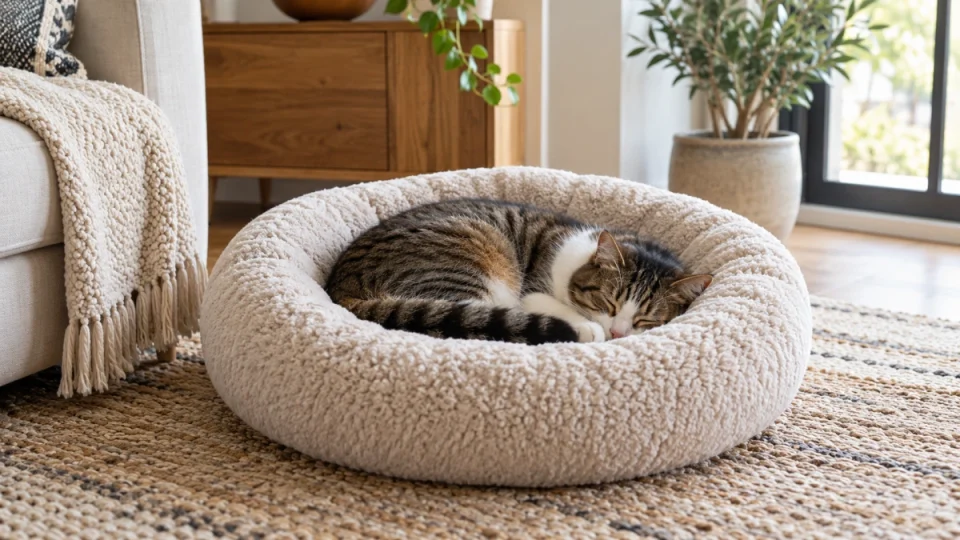
Our guide to round and donut cat beds explains how circular bed shape affects usable sleeping space.
Cleaning and Maintaining a Cat Bunk Bed
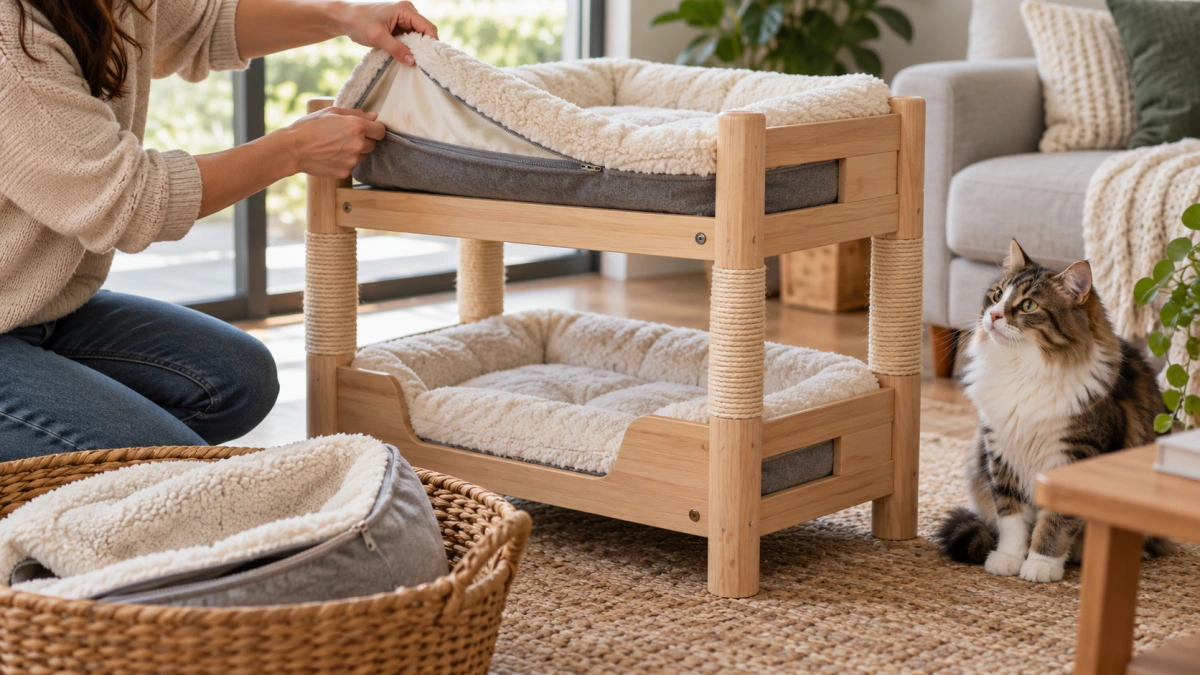
Multi-level furniture has more surfaces, joints, and corners than a simple floor bed, so regular cleaning also provides a useful opportunity to inspect the structure.
Useful cleaning features include:
- Removable cushions
- Machine-washable covers
- Wipe-clean platforms
- Accessible corners
- Replaceable sleeping pads
While cleaning, inspect:
- Screws and fasteners
- Wooden joints
- Fabric seams
- Hammock attachments
- Platform supports
- Nonslip feet
Tighten or repair loose parts before allowing cats to use the furniture again.
Can Two Cats Sleep on the Same Level?
Only if the sleeping platform is large enough for both cats and the structure is designed to support their combined weight.
Even then, do not assume they want to share.
Cats that sleep touching each other on a sofa may happily share a wide lower bunk. Other cats may prefer separate levels or entirely separate furniture.
Let their normal social behavior guide the decision rather than trying to place both cats on one platform.
Common Cat Bunk Bed Buying Mistakes
- Choosing mainly because the furniture looks cute
- Ignoring individual platform dimensions
- Forgetting lower-bunk headroom
- Buying a narrow unstable structure
- Ignoring combined weight in a multi-cat home
- Providing no practical route to the upper level
- Assuming two cats automatically want to share
- Using one bunk bed as the home’s only resting resource
- Ignoring access needs of senior cats
- Choosing cushions that cannot be cleaned
- Failing to recheck screws, joints, and fabric
Cat Bunk Bed Buying Checklist
- How many cats are likely to use the bed?
- Is each level large enough?
- Does the lower bunk have enough headroom?
- Is the frame stable?
- What is the stated weight capacity?
- Can my cat reach the upper level easily?
- Is there a safe route back down?
- Can one cat block another cat’s access?
- Are the cushions removable?
- Can the covers be washed?
- Does the base stay secure on my floor?
- Will the furniture fit without blocking walkways?
- Do my cats have other sleeping choices elsewhere?
Final Thoughts
Cat bunk beds can provide useful multi-level sleeping space for cats that enjoy switching between raised and lower resting positions.
They can also work in some multi-cat homes, especially when compatible cats willingly use separate levels. However, the furniture should supplement other resting locations rather than becoming the only place several cats are expected to share.
Choose a bunk bed by checking the actual dimensions of every sleeping level, lower-level headroom, frame stability, weight capacity, access routes, cushion washability, and the amount of space available in your home.
The best design gives your cats choices. One cat may prefer the upper lookout, another may choose the sheltered lower bunk, and both should still be free to sleep somewhere completely different whenever they want.