By
By 
Cat beds for large cats need more than a “large” size label. What matters most is the actual usable sleeping area, the way your cat normally sleeps, and whether the bed stays supportive under a bigger body.
A long cat that stretches out may need much more usable length than a cat that curls tightly, even if both weigh the same. Thick bolsters, deep donut walls, or narrow cave entrances can also reduce the space your cat can actually use.
For large cats, compare real dimensions, interior sleeping space, support, access, stability, and washability instead of relying only on product size names.
You can also explore our complete Cat Beds topic hub for more guides about bed styles, seasonal comfort, materials, and sizing.
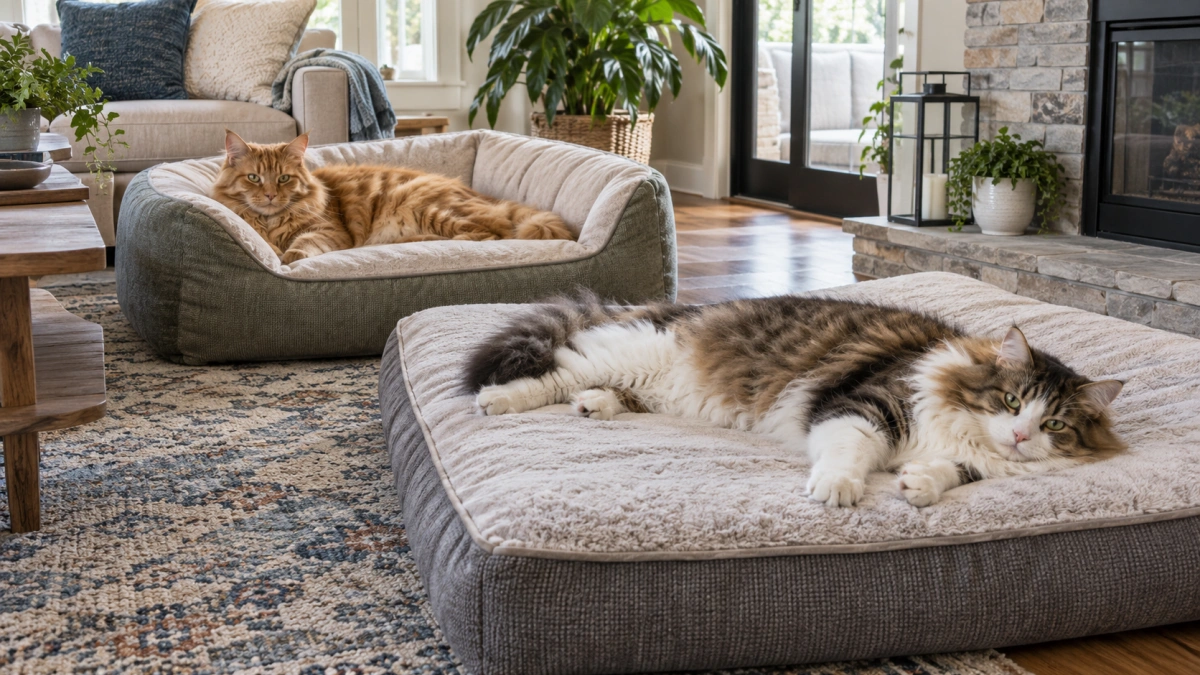
What Makes a Cat Bed Large Enough?
A bed is large enough when your cat can rest in its normal sleeping position without looking cramped or consistently hanging over the edges.
For large cats, check:
- Usable sleeping length
- Usable sleeping width
- Interior diameter on round beds
- Space taken up by bolsters
- Entrance size on enclosed beds
- Platform size on elevated beds
The best measurement depends on how your cat actually sleeps rather than on body weight alone.
Why “Large” Size Labels Can Be Misleading
Size names are not standardized across brands.
One manufacturer’s “Large” bed may be similar in actual dimensions to another manufacturer’s “Medium” or “Extra Large.”
Instead of comparing labels, compare the measurements listed for each bed.
Also check whether those measurements describe:
- The full outside dimensions
- The actual sleeping surface
- The inside of a bolster bed
- The diameter of a donut bed
- The interior cavity of a covered bed
These numbers can represent very different amounts of usable space.
How to Measure Your Cat for a Bed
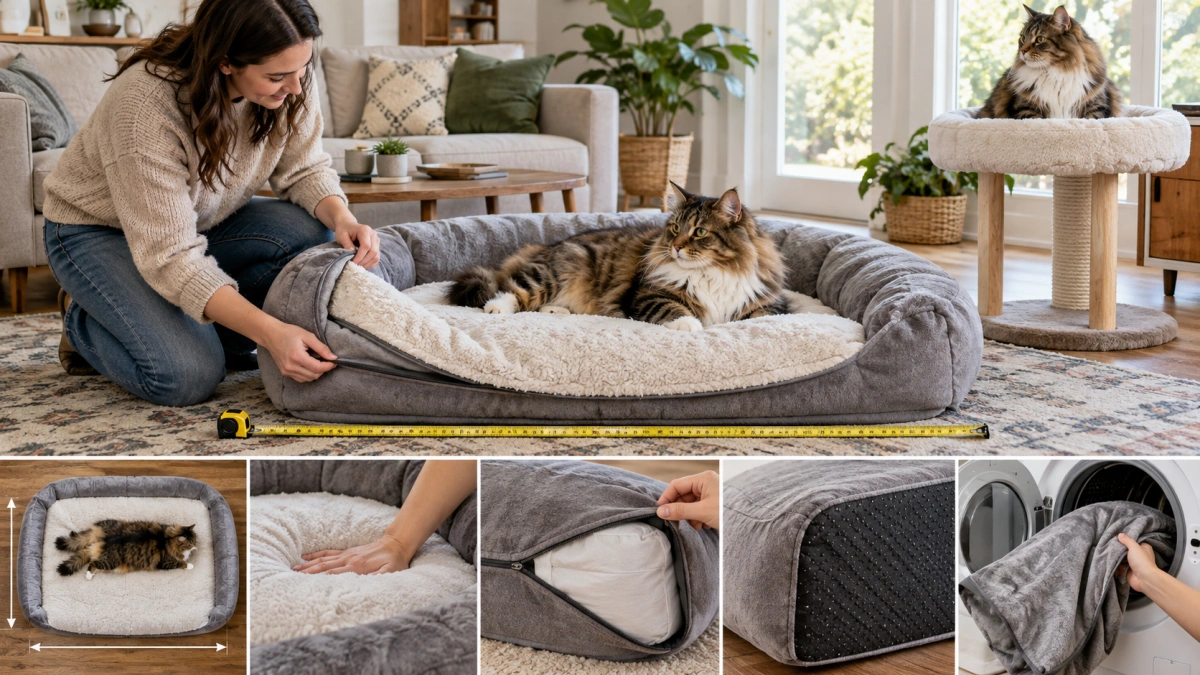
You do not need a complicated formula. Start by observing how your cat normally sleeps.
Step 1: Watch the Sleeping Position
Notice whether your cat usually curls tightly, lies on its side, or stretches out fully.
Step 2: Estimate the Space It Uses
When your cat is relaxed, measure the approximate length and width of the sleeping area it naturally occupies.
Step 3: Add Repositioning Room
The bed should leave enough extra room for the cat to turn, stretch, or change position without immediately pressing against every edge.
Step 4: Compare With Usable Bed Space
Use the interior or actual sleeping dimensions whenever they are available rather than relying only on outside measurements.
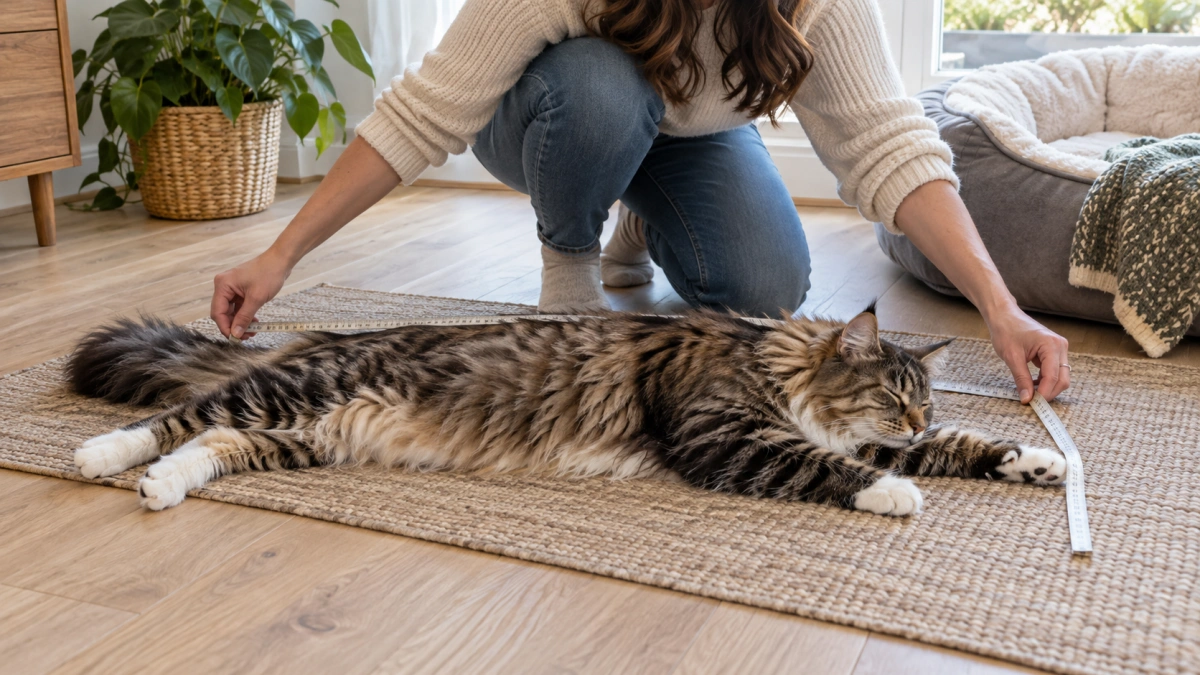
Usable Sleeping Area vs Outside Dimensions
The biggest sizing mistake is assuming the outside dimensions equal the amount of room available to the cat.
For example, a bolster bed may look large because of its total width, but thick side walls can take up a significant amount of that space.
Similarly, an oversized donut bed may still have a relatively small center sleeping area.
Always ask:
- How much of the bed is actually flat or usable?
- How thick are the raised sides?
- Does the cat fit inside the sleeping area without being forced against the edge?
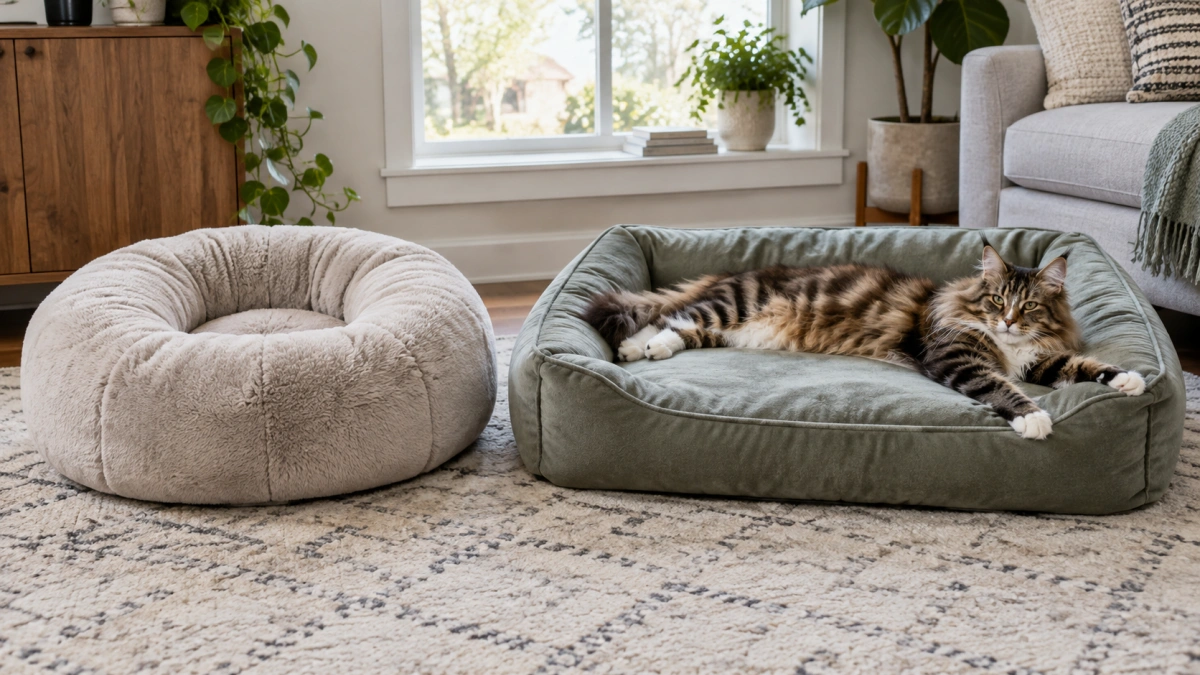
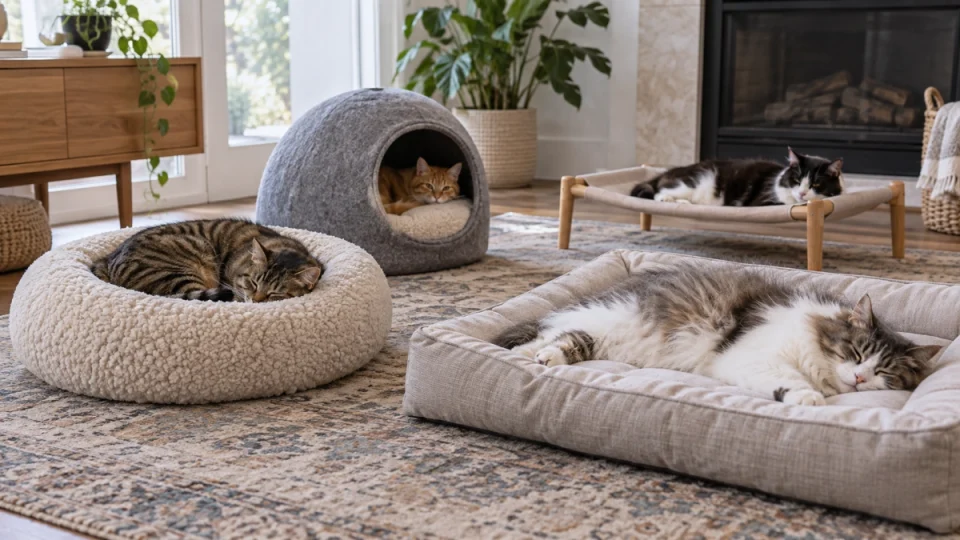
Best Bed Shapes for Large Cats
Different shapes work better for different sleeping habits.
| Bed Type | What to Check for a Large Cat |
|---|---|
| Flat mattress | Enough length and width for stretching |
| Bolster or sofa bed | Interior mattress area after side walls are excluded |
| Donut bed | Center sleeping diameter, not just total diameter |
| Cave or covered bed | Entrance size and interior dimensions |
| Elevated bed | Platform size and manufacturer weight limit |
| Window bed | Platform dimensions, attachment method, and weight rating |
If you are still deciding which overall bed style best matches your cat’s sleeping behavior, our guide to the best cat beds explains open, covered, elevated, round, and flat options in more detail.
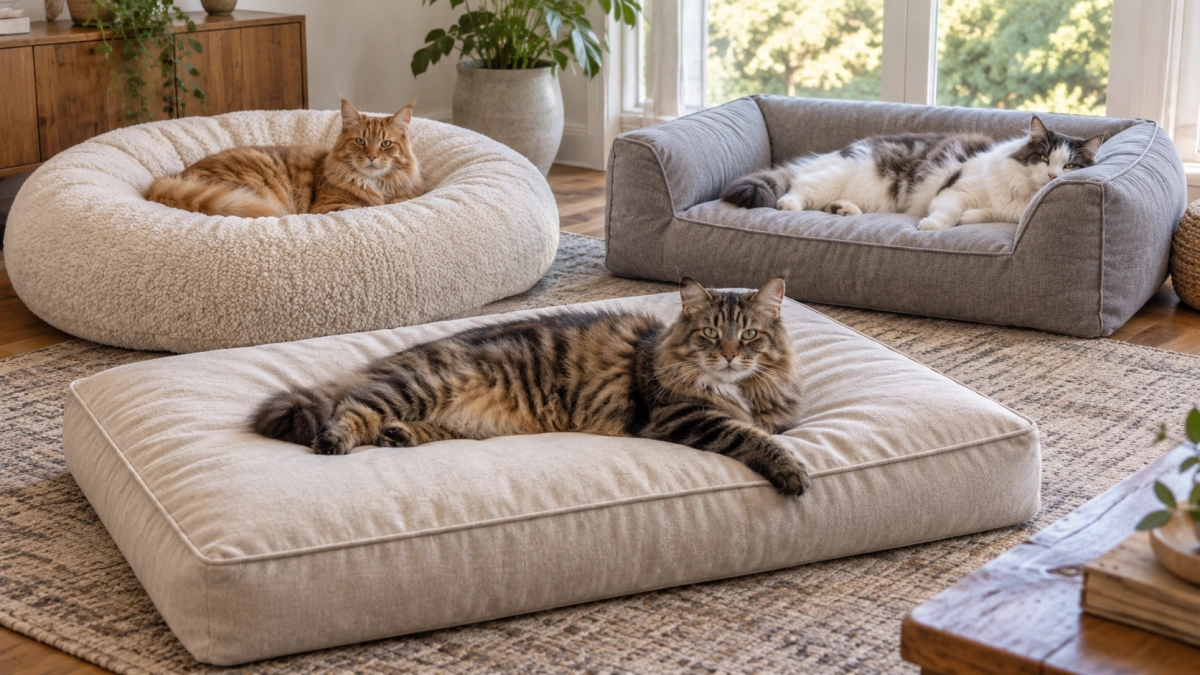
Flat Beds for Cats That Stretch Out
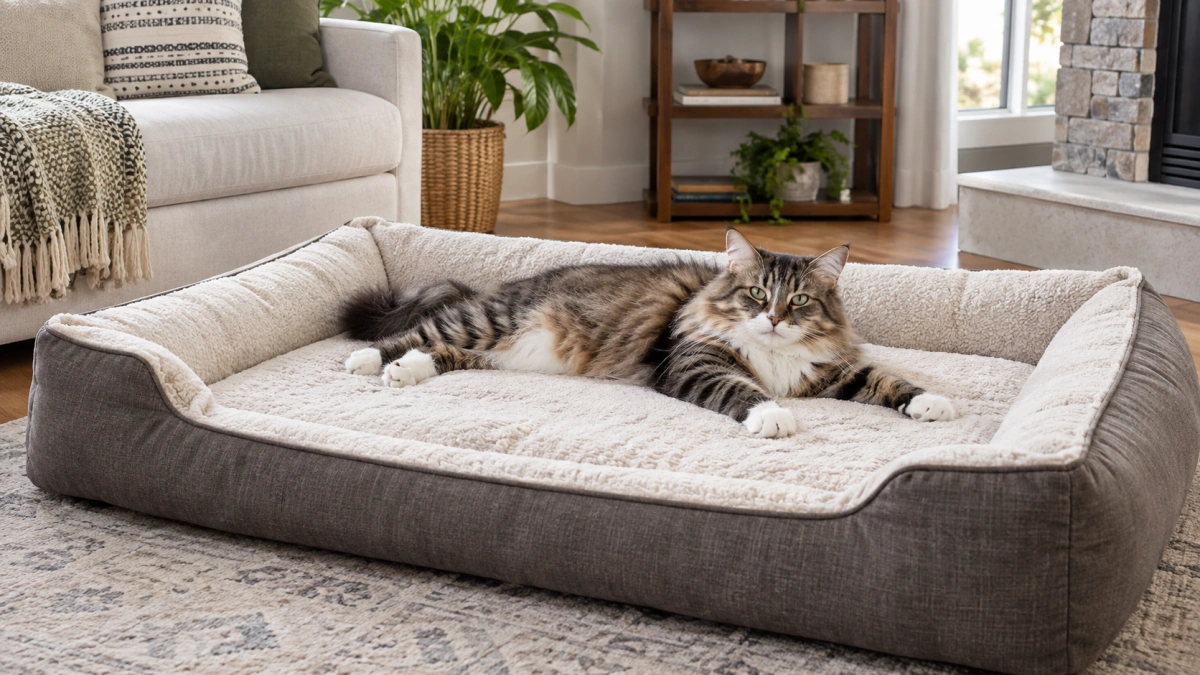
Flat rectangular beds are often a practical choice for long-bodied cats because most of the listed surface can be used for sleeping.
They may be especially suitable for cats that:
- Sleep fully stretched
- Change positions frequently
- Dislike high sides
- Prefer open resting areas
Look for enough length that the cat can extend its body without having the head, hips, or legs constantly hanging over the edge.
Donut and Bolster Beds for Large Cats
Large donut and bolster beds can work well for cats that like leaning against an edge or curling into a defined sleeping space.
However, these designs often lose a significant amount of usable room to their side walls.
Check:
- Interior diameter
- Center sleeping width
- Bolster thickness
- Whether the sides collapse inward
- Whether the cat can reposition comfortably
A large outside diameter does not guarantee a large interior sleeping area.
Covered and Cave Beds: Check the Interior
Covered beds require two separate fit checks: the entrance and the inside cavity.
A large cat needs enough room to:
- Enter without squeezing through the opening
- Turn around inside
- Lie down without excessive contact with the walls
- Exit easily
Do not judge a cave bed by its outside shell alone. Thick walls and narrow entrances can reduce the actual usable space substantially.
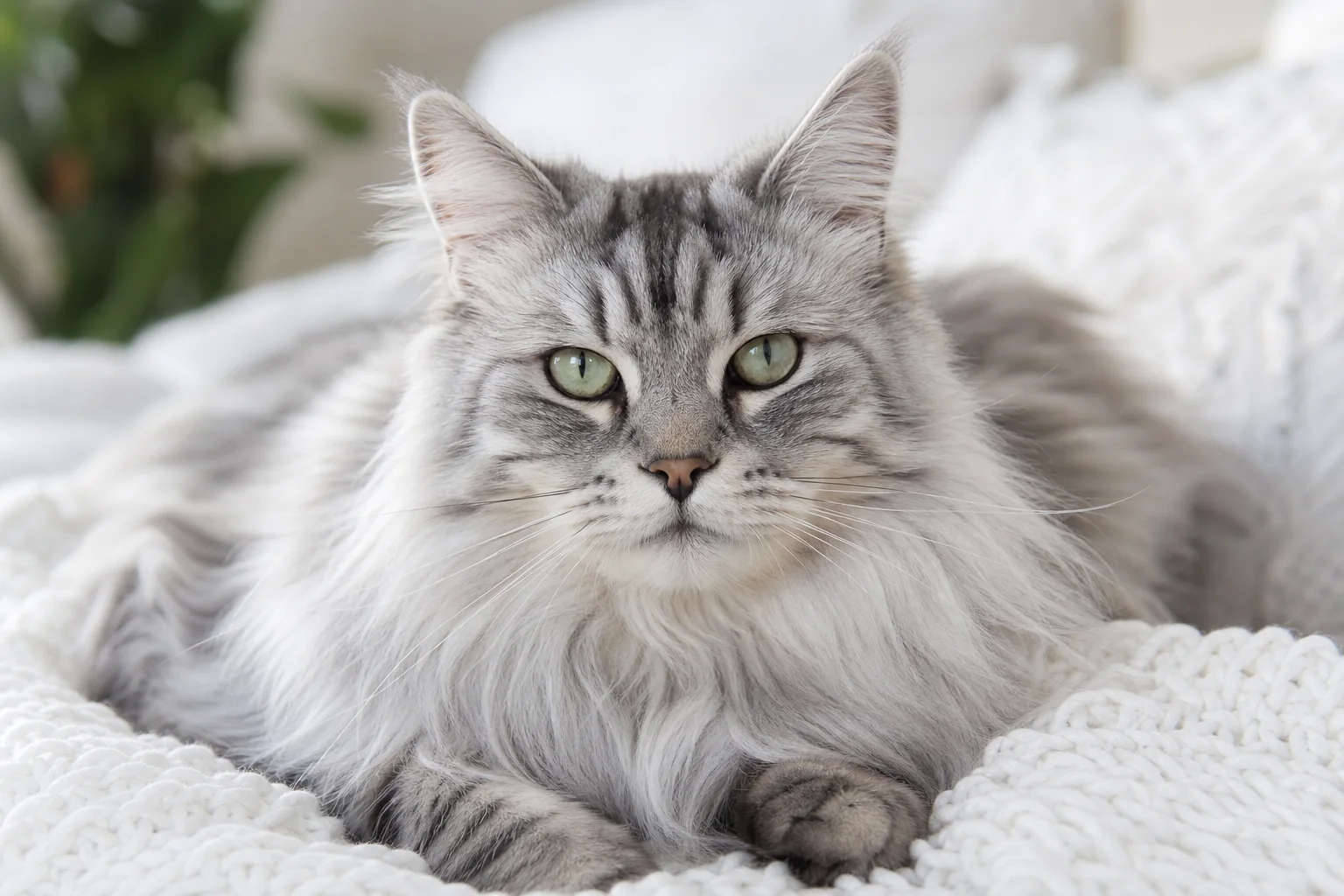
Cat Beds for Maine Coons
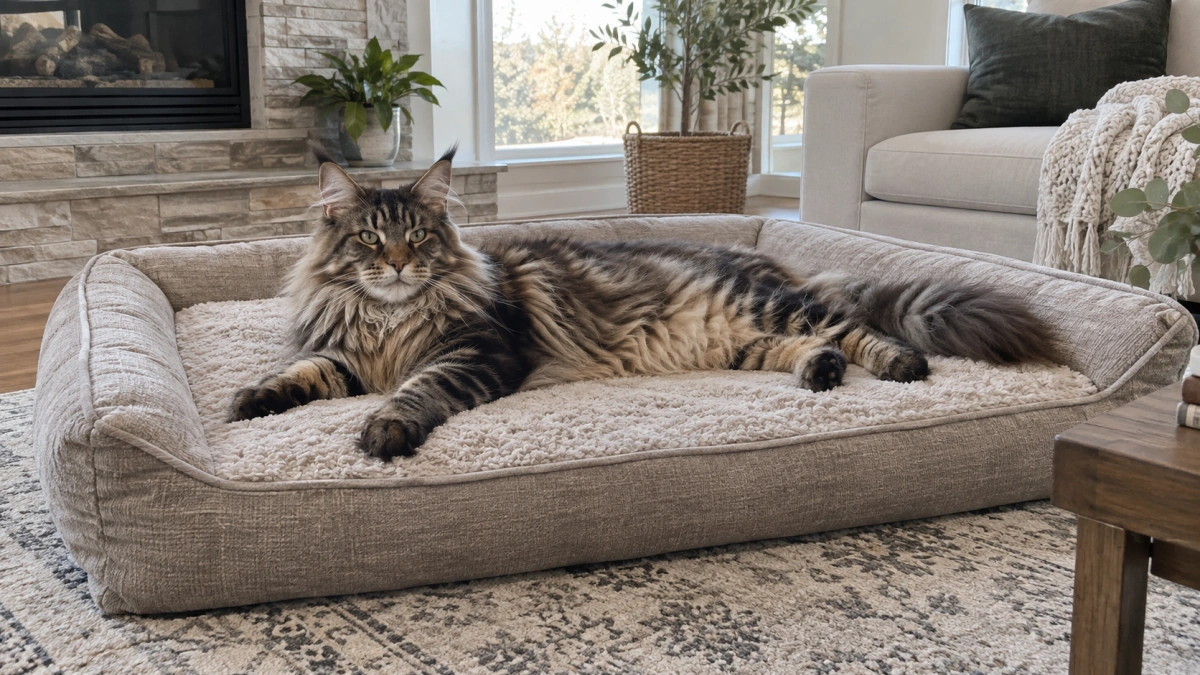
Maine Coons are a common reason people search for large cat beds because they can develop long bodies and substantial adult frames.
For a Maine Coon, prioritize:
- Extra usable length
- Wide sleeping surface
- Stable cushioning
- Strong base construction
- Room for full-body stretching
A standard cat bed may work for some individuals, but many adult Maine Coons benefit from looking beyond typical cat-bed sizing and comparing actual interior dimensions carefully.
Choosing a Bed for a Growing Large-Breed Kitten
A large-breed kitten may outgrow a snug bed before reaching full adult size.
Instead of choosing only for the kitten’s current body size, consider:
- Expected adult frame
- Likely sleeping position
- Whether the bed can remain useful as the cat grows
- Whether the surface is still large enough for stretching later
A slightly roomier bed may provide more useful life than one that fits the kitten closely today.
However, very young cats may still prefer smaller enclosed spaces for some naps, so there is no requirement that every resting spot must be oversized.
How Much Support Does a Large Cat Bed Need?
Support is not about making medical promises. It is about whether the bed maintains a usable, stable sleeping surface under the cat’s weight.
Check whether:
- The padding compresses completely to the floor
- The base stays level
- The filling returns to shape
- The edges collapse inward
- The sleeping surface remains stable when the cat moves
A thicker bed is not automatically more supportive if the filling compresses quickly and does not recover.
Foam vs Fiberfill for Larger Cats
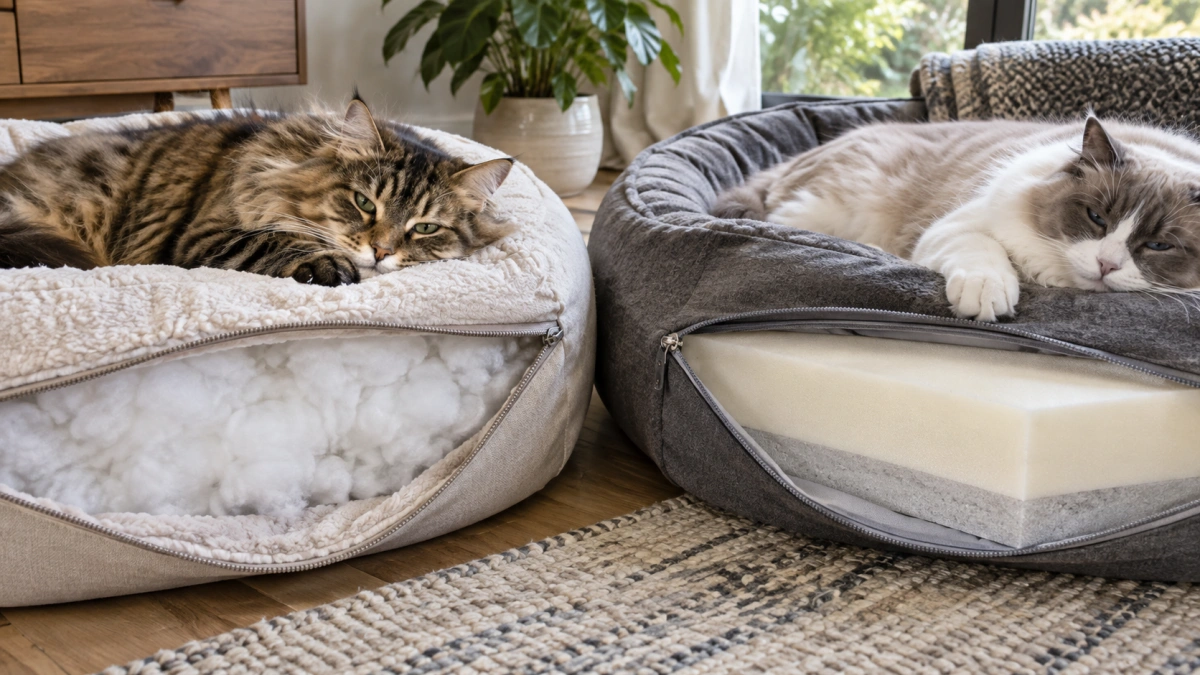
| Filling Type | Typical Characteristics |
|---|---|
| Structured foam | Provides a more defined, level sleeping surface |
| Fiberfill | Softer and more nest-like but may compress more |
| Layered foam with soft cover | Combines structure with a softer top surface |
| Thin mat | Low profile and often easy to clean, but less cushioned |
Neither foam nor fiberfill is automatically better for every large cat.
The most useful choice is the one that matches the cat’s preferred surface while maintaining enough shape for regular use.
Can Large Cats Use Dog Beds?
Yes. A dog bed can be a practical option for a large cat if the dimensions, materials, construction, and entry height suit the cat.
Dog-sized beds may offer:
- More usable length
- Wider flat sleeping surfaces
- Larger foam inserts
- More size choices
There is no rule that a cat must sleep in a product labeled specifically as a cat bed.
Focus on fit, comfort, stability, and cleaning features rather than the animal pictured on the packaging.
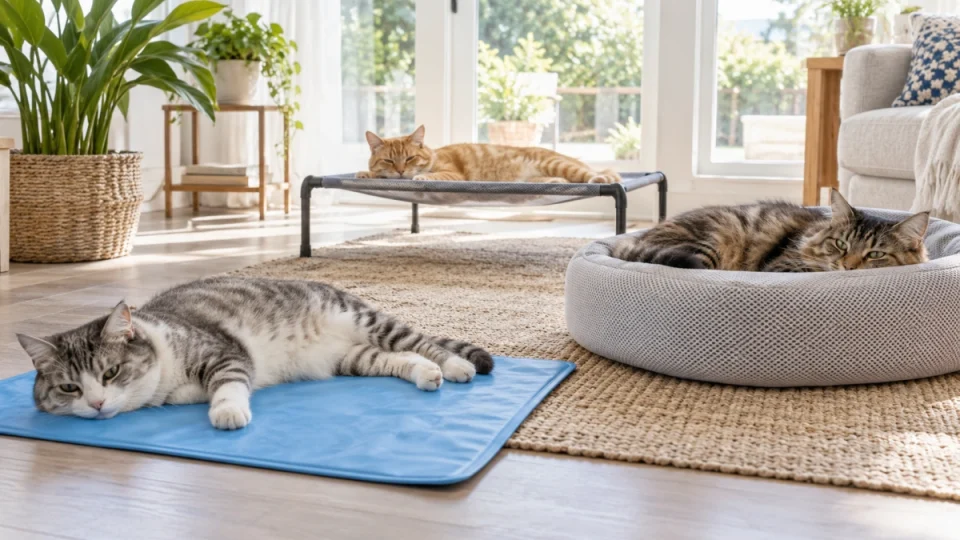
Elevated and Window Beds: Check Weight Limits
Elevated and window beds add another consideration beyond sleeping area: structural capacity.
Check:
- The manufacturer’s stated weight limit
- Platform dimensions
- Frame stability
- Mounting method
- Whether the cat can get on and off safely
Do not estimate load capacity from appearance alone.
For a large cat, both the platform area and the stated weight rating should be appropriate for the individual animal.
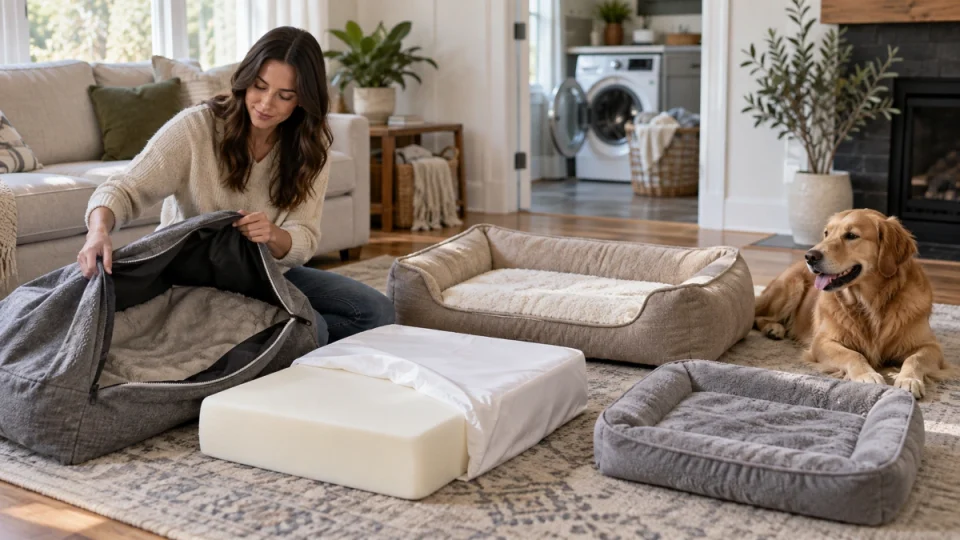
Cleaning and Washability for Large Cat Beds
Large beds can be harder to clean simply because they take up more space.
A thick oversized bed may not fit easily inside a household washing machine.
Useful features include:
- Removable washable cover
- Separate foam or cushion insert
- Wide zipper opening
- Easy hair removal
- Clear drying instructions
If the whole bed is marketed as machine washable, compare its actual size with your washer capacity before buying.
Common Large Cat Bed Buying Mistakes
- Buying only by the “Large” size label
- Looking at outer dimensions instead of interior sleeping space
- Choosing by weight alone
- Ignoring the cat’s normal sleeping position
- Buying a donut bed with a small center
- Ignoring cave-bed entrance size
- Assuming thick padding always means better support
- Ignoring weight limits on elevated beds
- Buying for a large-breed kitten’s current size only
- Choosing a bed too large to clean practically
Large Cat Bed Buying Checklist
- What position does my cat normally sleep in?
- What is the actual usable sleeping area?
- Are the listed dimensions outside or inside measurements?
- Does the cat have enough room to stretch or turn?
- How much space do bolsters take up?
- Is a cave entrance wide enough?
- Does the bed keep its shape under the cat’s weight?
- Is there a manufacturer weight limit for elevated designs?
- Can the cover be removed and washed?
- Will the bed still work if a large-breed kitten grows substantially?
Final Thoughts
The best cat beds for large cats are sized around real sleeping space rather than a generic “Large” label.
Measure how your cat actually sleeps, compare usable interior dimensions, and account for the space taken up by bolsters, walls, and enclosed designs. For Maine Coons and other large or long-bodied cats, extra length and stable support can be especially important.
A roomy flat cat bed, oversized bolster bed, appropriately sized cave, or even a dog-sized pet bed can all work well when the dimensions, support, access, stability, and cleaning features match the individual cat.