By
By 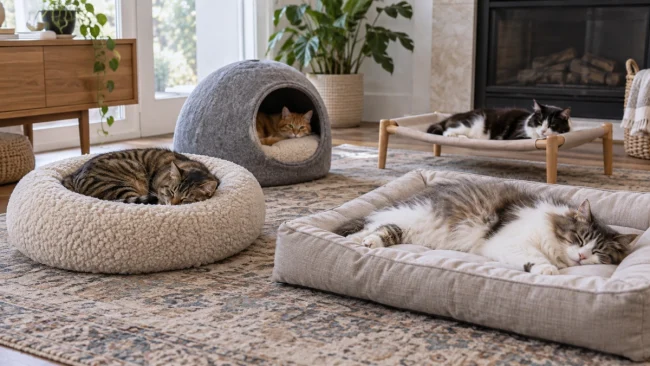
The best cat beds are not defined by one shape, material, or price. Cats sleep in different positions, seek different levels of privacy, and may prefer warm, cool, elevated, soft, or open resting areas.
A better way to choose a bed is to start with how your cat already sleeps. A cat that curls tightly may prefer a round or bolster bed, while a cat that stretches out may need a larger flat surface. Cats that hide under blankets may prefer a cave-style bed, while others may choose an open bed near a window or elevated resting spot.
Size, material, placement, temperature, and washability all matter, but the most important question is whether the bed matches your cat’s normal behavior.
You can also explore our complete Cat Beds topic hub for more guides about sizing, seasonal comfort, materials, and different cat bed styles.
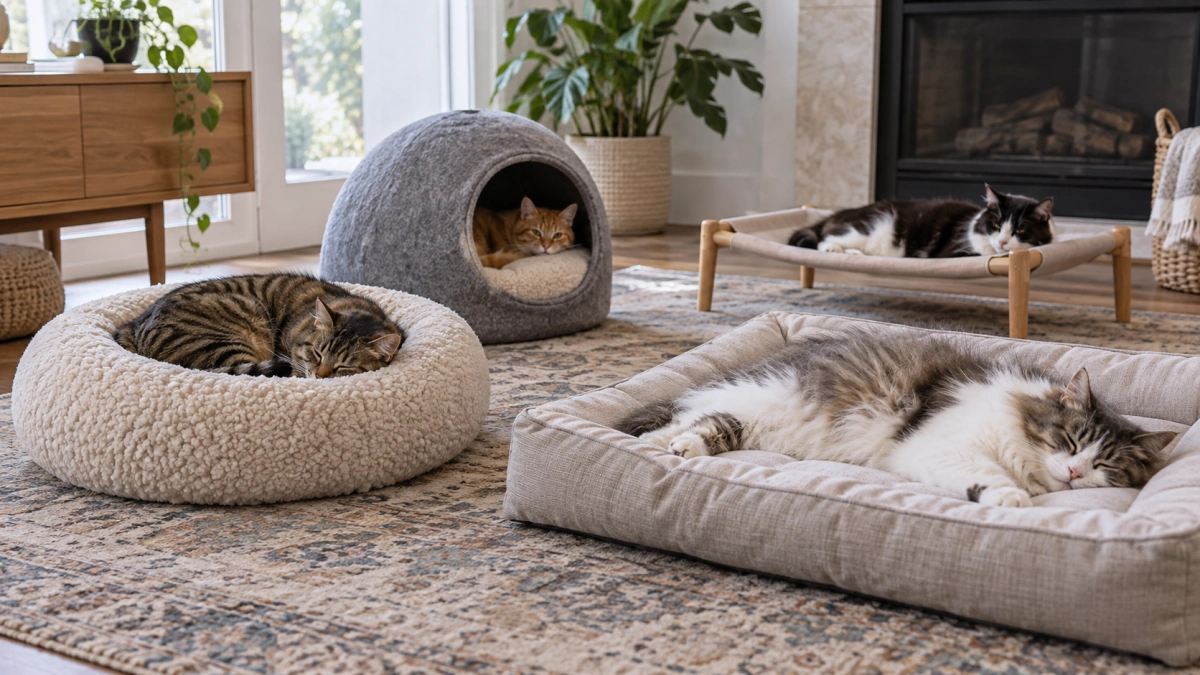
What Makes a Cat Bed “Best”?
There is no single cat bed that works best for every cat.
A practical choice should match several things at the same time:
- Your cat’s usual sleeping position
- Preferred level of enclosure
- Body size and usable sleeping space
- Surface texture
- Room temperature
- Where the bed will be placed
- How easy it is to clean
A highly rated or expensive bed can still go unused if the shape, location, or texture does not match what the cat prefers.
Start With How Your Cat Already Sleeps
Before comparing products, watch where and how your cat rests for several days.
Look for patterns.
If Your Cat Curls Into a Tight Ball
A round bed, donut bed, or bolster-style bed may feel more natural because the raised or curved edges create a defined sleeping area.
If Your Cat Stretches Out
A flat rectangular bed or larger mattress-style surface may provide more usable length.
If Your Cat Hides Under Blankets
A cave, hooded, or enclosed bed may provide the privacy and partial coverage the cat already seeks.
If Your Cat Sleeps on Open Furniture
An open bed with low sides may feel more familiar than a deeply enclosed design.
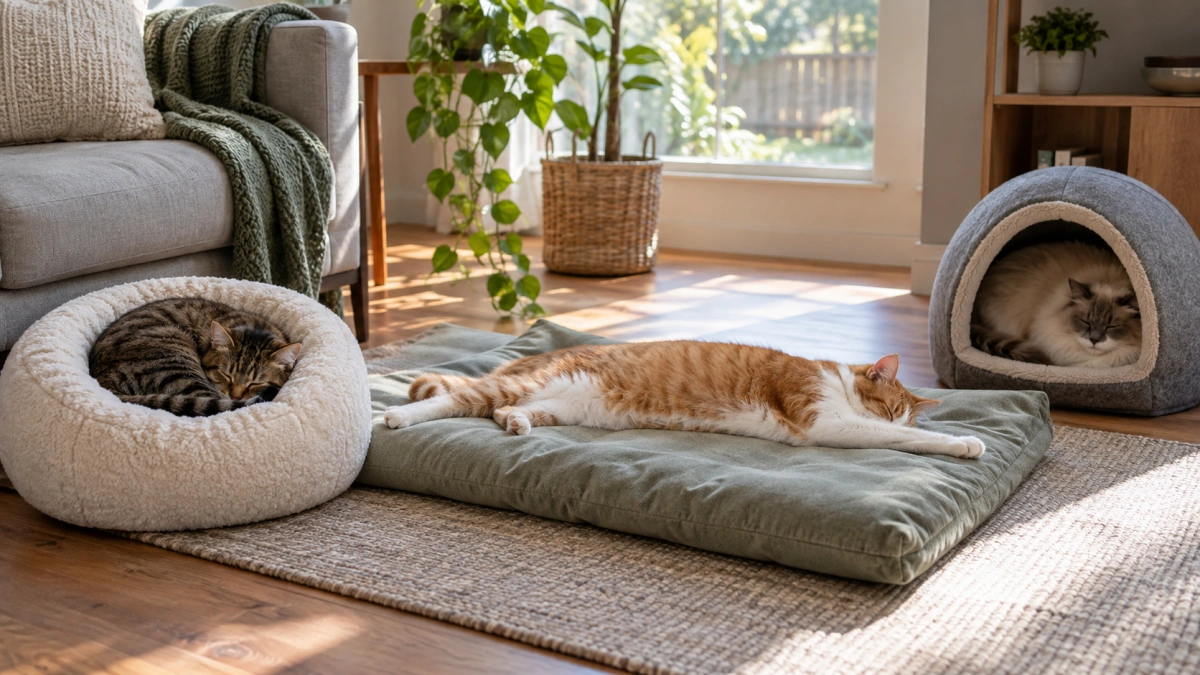
Cat Bed Types Compared
| Bed Type | Typical Features | May Suit Cats That |
|---|---|---|
| Round or donut | Curved shape, often raised edges | Like curling up |
| Bolster bed | Raised sides with open center | Like leaning against an edge |
| Flat mattress | Open sleeping surface | Stretch out while sleeping |
| Cave or covered bed | Enclosed or partially enclosed | Seek privacy or hidden spaces |
| Elevated bed | Raised sleeping area | Prefer height or airflow |
| Window bed | Resting area near a window | Like watching outdoors |
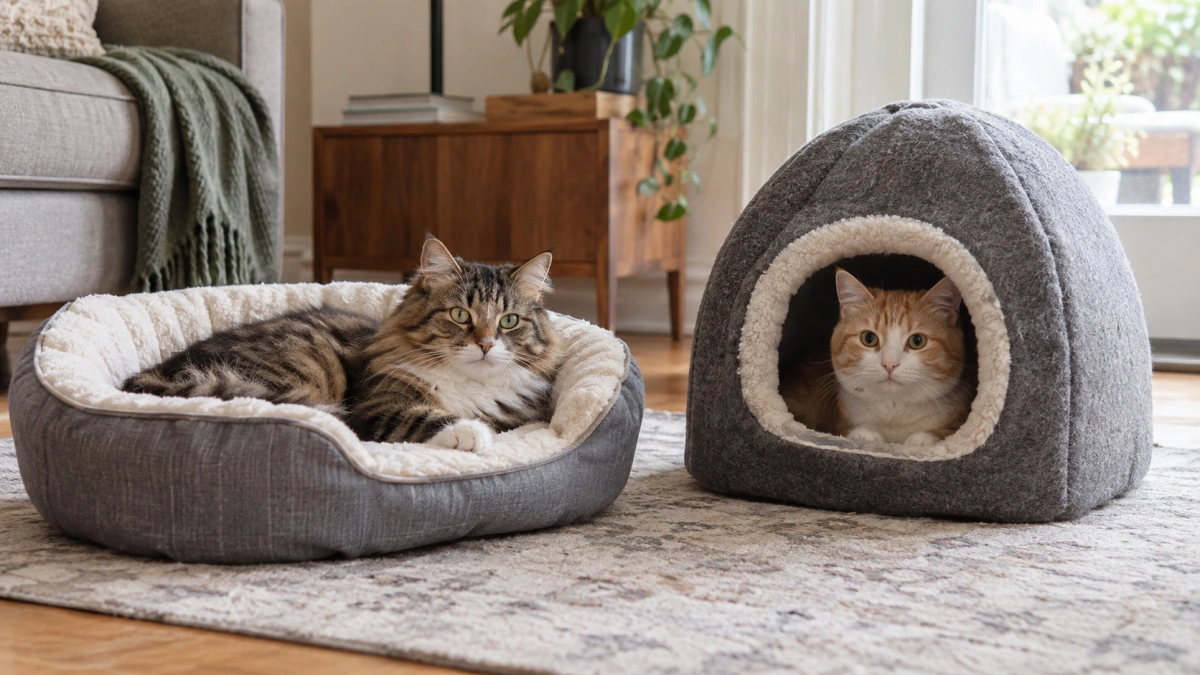
Round and Donut Beds
Round and donut-style beds are common choices for cats that curl tightly while sleeping.
The curved shape can create a more defined resting area, while raised edges give the cat something to lean against.
Before choosing one, check:
- Usable center diameter
- Height of the surrounding edge
- Whether the filling keeps its shape
- Whether the cover or whole bed is washable
A very deep donut bed may feel cozy to one cat but too enclosed to another.
Covered and Cave Beds
Covered cat beds create a more private resting space.
They may appeal to cats that already sleep:
- Under blankets
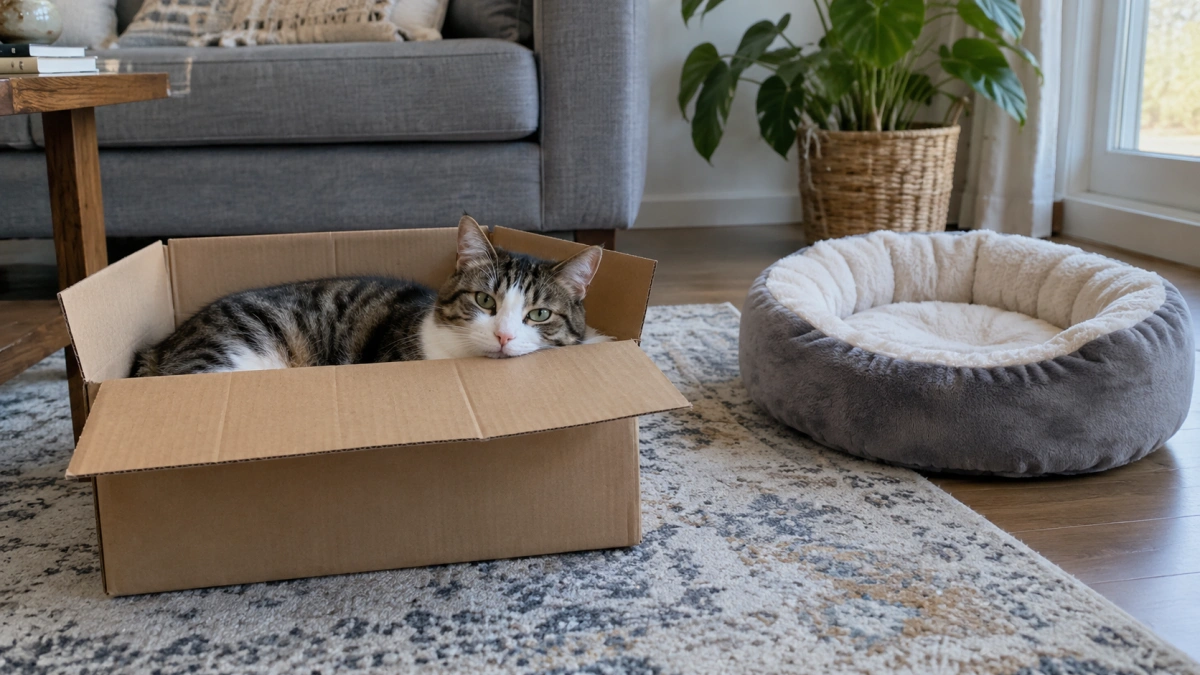
- Inside cardboard boxes
- Behind furniture
- In closets or other hidden spaces
Check the entrance height and opening size carefully. The cat should be able to enter, turn around, and rest comfortably without feeling cramped.
Covered designs can also retain more warmth than open beds, which may be useful in cooler environments but less appealing to cats that actively seek cooler sleeping surfaces.
Flat and Mattress-Style Beds
Flat beds are useful for cats that prefer stretching rather than curling.
They also provide a relatively open sleeping surface, which may suit cats that want to keep their surroundings visible.
Useful features can include:
- Low entry
- Enough length for full-body stretching
- Stable cushioning
- Removable washable cover
- Non-slip bottom
A flat bed can also be easier to place on the floor, furniture, or another familiar resting area.
Elevated, Window and Perch Beds
Some cats prefer where a bed is located more than the bed itself.
Elevated or window-based sleeping areas can appeal to cats that like observing their surroundings from above.
When choosing an elevated sleeping option, check:
- Stability
- Secure attachment
- Usable sleeping space
- Safe access
- Whether the height is appropriate for the individual cat
Older cats or cats that move less easily may prefer a lower, more accessible resting location even if they previously enjoyed higher perches.
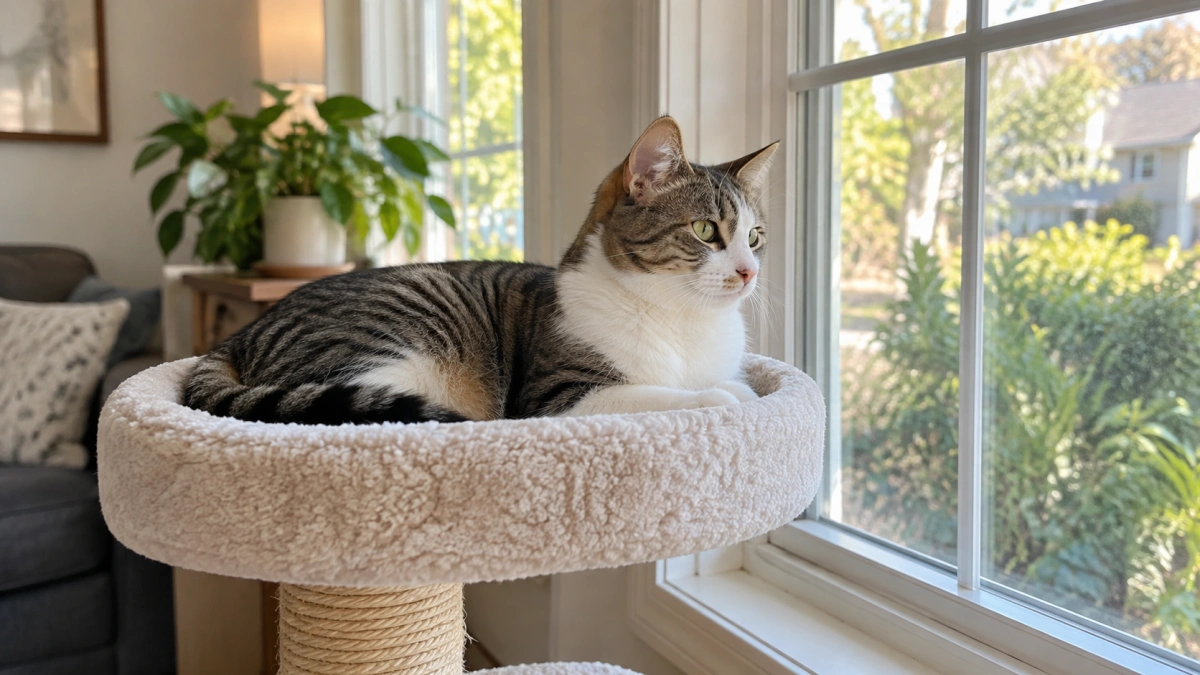
Heated, Self-Warming and Cooling Beds
Temperature preference can influence which bed a cat accepts.
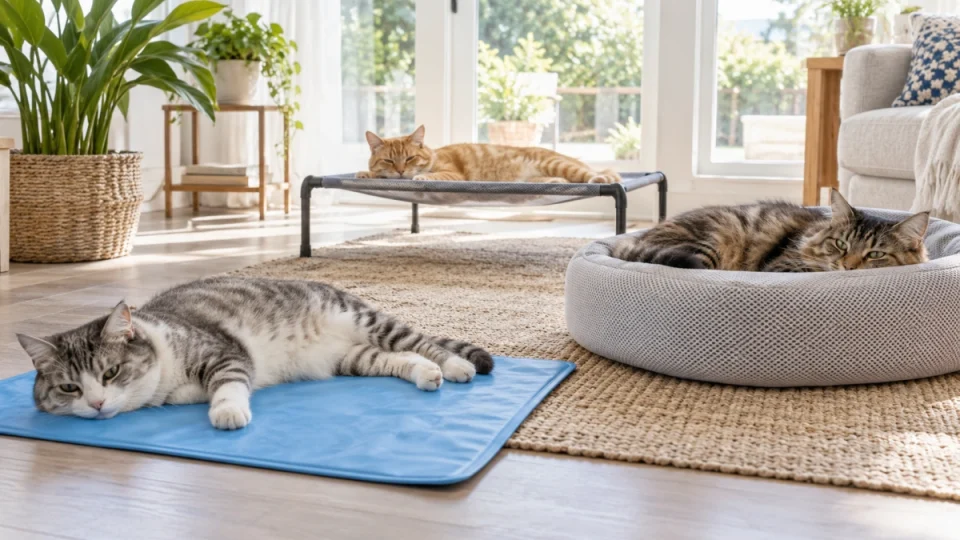
Some cats seek sunny windows, blankets, or warmer rooms and may prefer a self-warming or heated sleeping surface.
Others leave plush beds during warm weather and choose tile, hardwood, or other cooler surfaces.
Instead of assuming one temperature-focused bed is always better, watch whether your cat naturally seeks warmer or cooler places.
How to Choose the Right Cat Bed Size
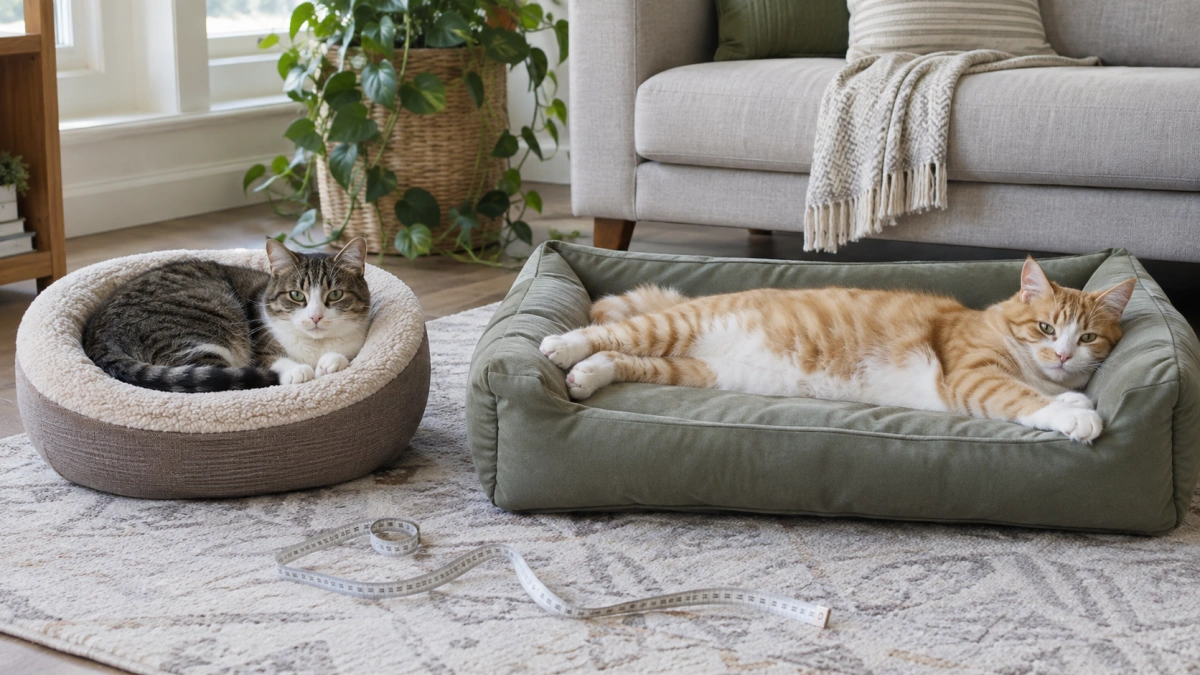
Cat bed size should be based on usable sleeping space, not only the size label printed on the product.
A cat that curls tightly may fit comfortably in a relatively compact bed, while a cat that stretches fully needs more length.
Before buying, consider:
- Your cat’s body length
- Typical sleeping position
- How much of the bed is occupied by bolsters or raised sides
- Whether the cat prefers snug or open sleeping spaces
The listed outside dimensions may be larger than the actual usable sleeping area, especially on thick bolster and donut beds.
If standard beds often look cramped for your cat, our guide to cat beds for large cats explains sizing and support considerations in more detail.
Cat Bed Materials and Cushioning
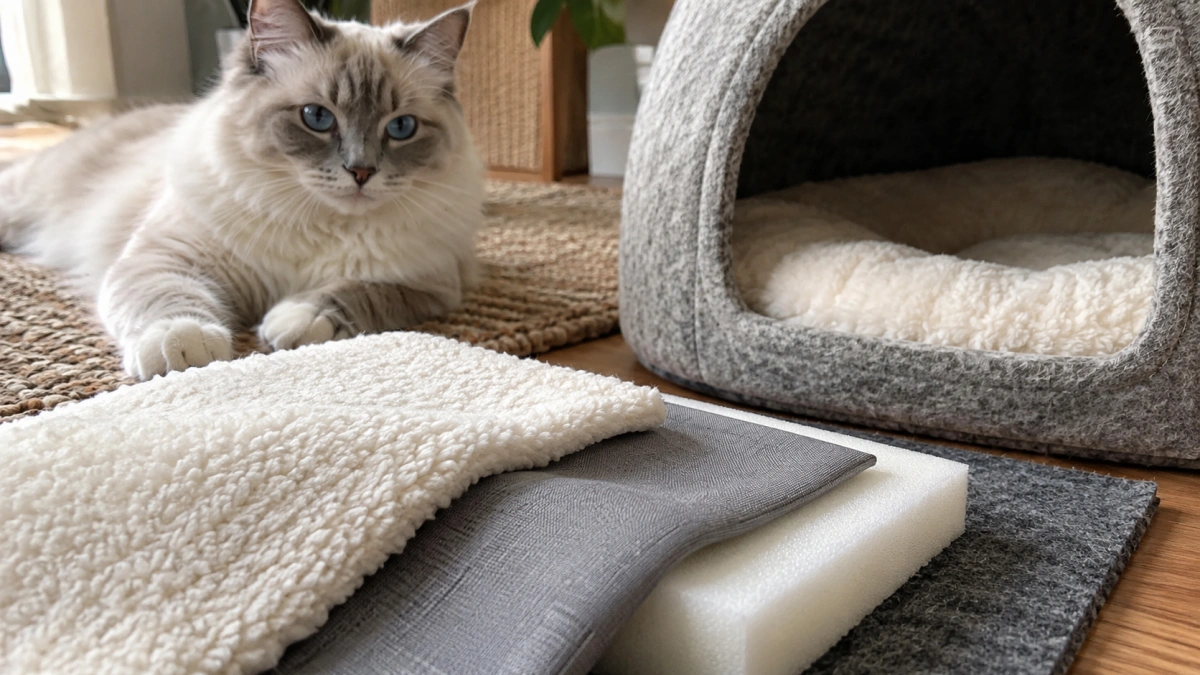
Material affects softness, warmth, airflow, structure, and cleaning.
| Material or Surface | Typical Feel | Considerations |
|---|---|---|
| Plush or fleece | Soft and warmer-feeling | Can attract hair and retain more warmth |
| Cotton or woven fabric | Less plush and often more breathable | Useful for cats that dislike deep fleece |
| Foam | More structured cushioning | Check whether the cover is removable |
| Felt | Firm and shape-holding | Common in cave-style beds |
| Mesh | Open and breathable | Useful when airflow matters |
A softer surface is not automatically better. Some cats prefer firmer mats, carpet, cardboard, or even hard floors.
Choosing a Bed for Senior Cats
For an older cat, accessibility can matter as much as softness.
Look for features such as:
- Low entry
- Stable sleeping surface
- Comfortable cushioning
- Easy access from the floor
- A location close to the cat’s normal activity area
A product described as “orthopedic” or “therapeutic” should not automatically be treated as providing a medical benefit.
Focus instead on practical features such as cushioning, stability, entry height, and whether the cat can get in and out comfortably.
Where Should You Put a Cat Bed?
Placement can determine whether a cat uses a bed at all.
Good locations often include areas where the cat already chooses to rest.
Examples include:
- A quiet bedroom corner
- Near a familiar window
- Beside a sofa
- On a stable elevated platform
- In a low-traffic room
Avoid moving the cat’s only preferred resting area just because a new bed looks better somewhere else in the home.
If possible, place the new bed near an existing favorite spot first.
Why Won’t My Cat Use the New Bed?
It is common for a cat to ignore a new bed, even when the bed is soft, expensive, or highly rated.
Possible reasons include:
- The location is unfamiliar
- The surface texture feels different
- The bed is too warm
- The bed is too exposed
- The bed is too enclosed
- The size does not match the cat’s sleeping position
- The bed has a new or unfamiliar smell
- The cat already has a preferred resting place
Try placing the bed in a familiar area and allowing the cat to investigate it without being forced onto the surface.
A familiar blanket or other item carrying the cat’s normal scent may also make the bed feel less unfamiliar.
Cheap vs Luxury Cat Beds
Price alone does not determine whether a cat will use a bed.
A simple affordable bed that matches the cat’s preferred shape, texture, and location may be more successful than a luxury bed that does not fit those preferences.
Instead of judging only by price, compare:
- Usable sleeping space
- Material quality
- Stability
- Washability
- Construction
- Placement options
Design details such as modern colors, decorative shapes, or furniture-style construction can matter to the owner, but they do not guarantee that the cat will prefer the bed.
What Makes a Cat Bed Easy to Clean?
Cleaning is an important part of choosing a bed that will be practical over time.
Look for:
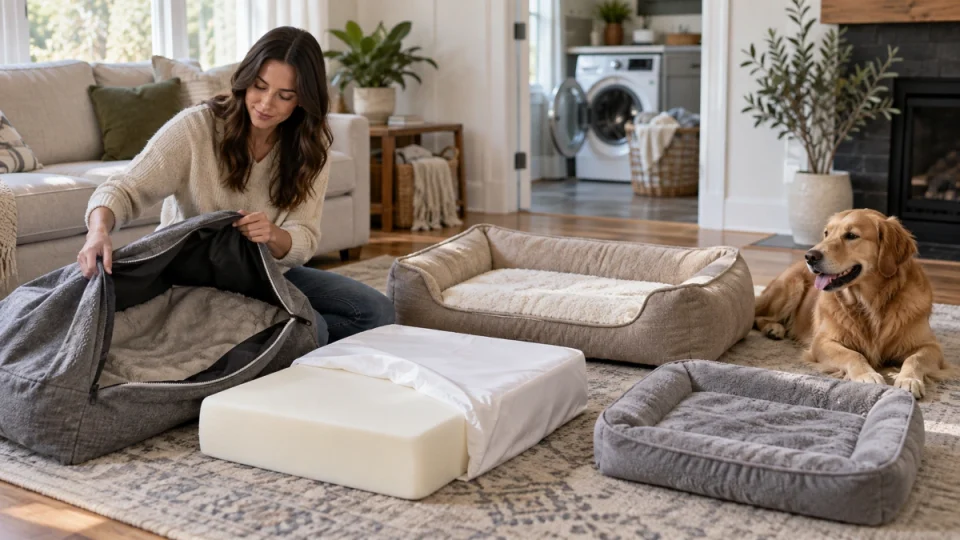
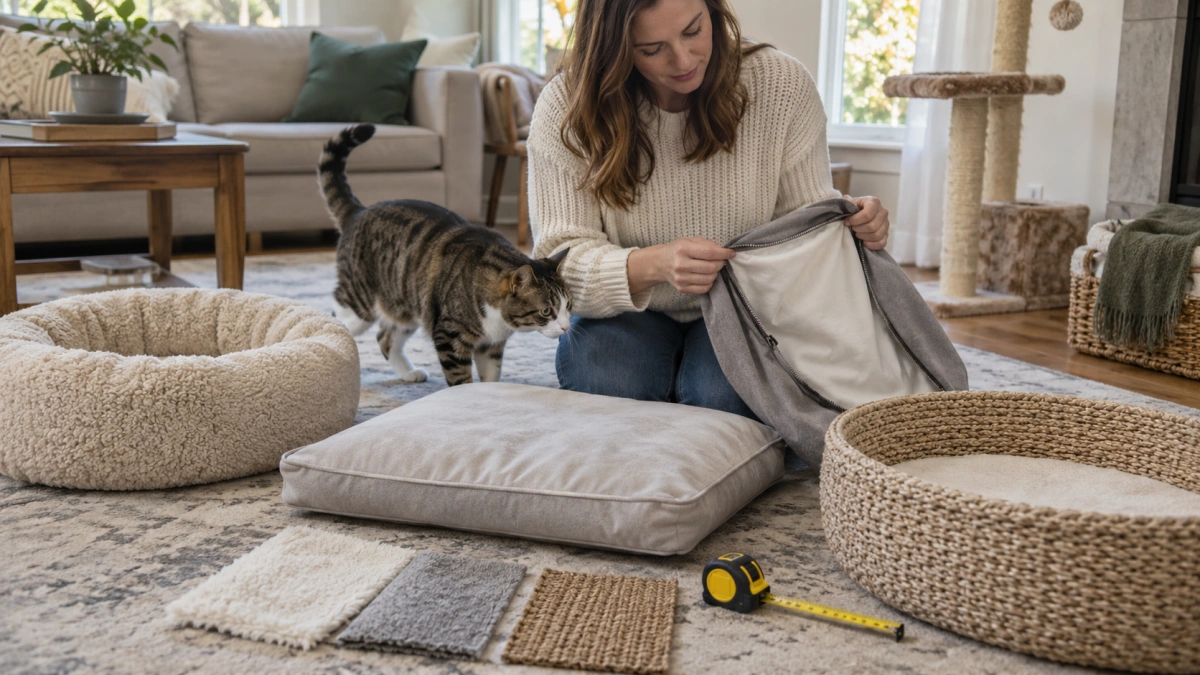
- Removable washable cover
- Clear washing instructions
- Easy hair removal
- Simple internal construction
- Materials that dry thoroughly
If the bed contains foam or another structured insert, check whether the insert itself can be washed or whether only the cover is washable.
Machine washable does not always mean every part of the bed can go in the washing machine or dryer.
Best Cat Bed Buying Checklist
- How does my cat normally sleep?
- Does my cat curl, stretch, hide, or sleep elevated?
- Does the bed provide enough usable sleeping space?
- Is the entrance easy to access?
- Does my cat prefer soft or firm surfaces?
- Does my cat usually seek warm or cool places?
- Will the bed fit a familiar resting location?
- Is the bed stable?
- Can the cover or bed be cleaned easily?
- Am I choosing based on my cat’s behavior rather than appearance alone?
Final Thoughts
The best cat beds are the ones that match how the individual cat already prefers to rest.
Start with sleeping position, privacy preference, size, surface texture, temperature, and favorite resting location. Then compare practical details such as stability and washability.
Do not assume the most expensive, softest, or most elaborate bed will automatically be the most successful. A simple bed in the right shape and location can be a much better match for the cat using it.