By
By 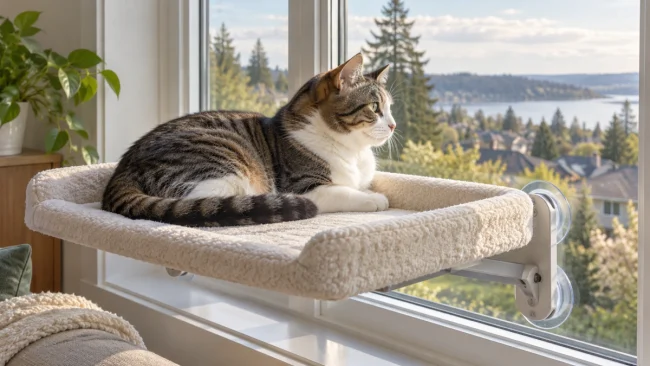
Window cat beds turn a favorite observation spot into a dedicated place for resting, watching outdoor activity, and enjoying natural light. Depending on the design, the bed may attach directly to the glass, sit on a window sill, clamp to a frame, or stand independently beside the window.
The best window cat bed is not simply the one that places your cat closest to the glass. It needs to fit your window, support your cat’s weight, provide enough usable sleeping space, remain stable when the cat jumps onto it, and offer an easy way to get on and off.
Window safety matters too. A perch should be used beside a closed window or another properly secured window setup. It should never be treated as protection against an open, unsecured window.
For more guides covering bed sizes, materials, sleeping styles, and placement, explore our Cat Beds topic hub.
What Is a Window Cat Bed?
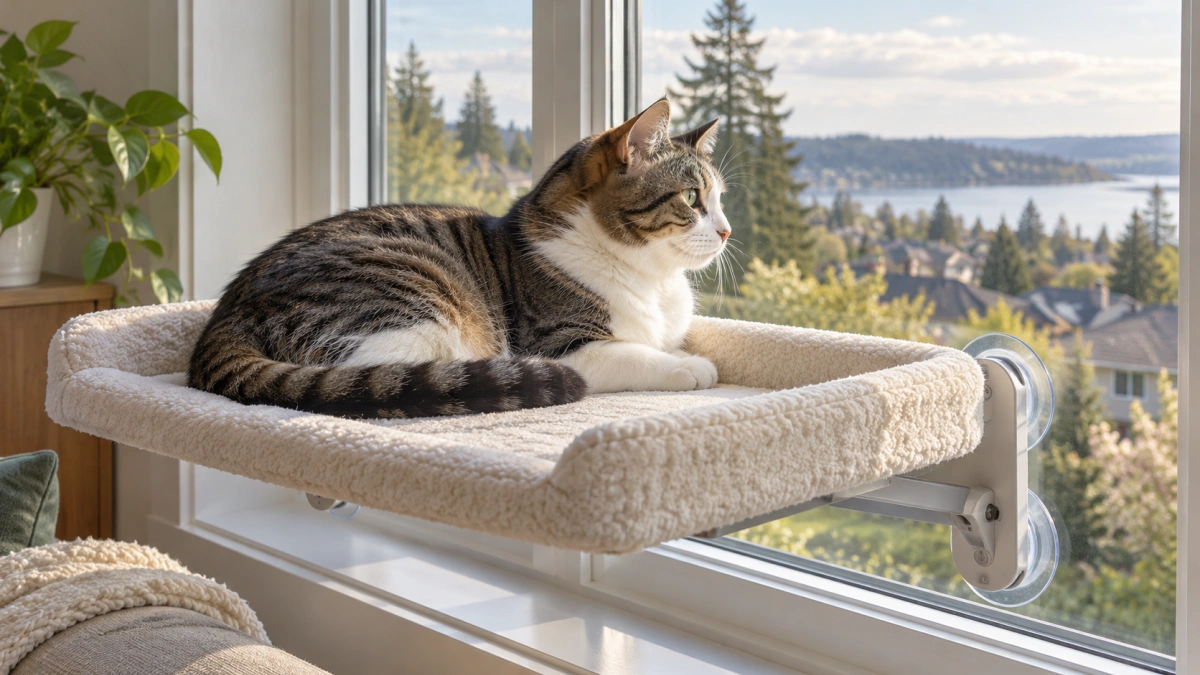
A window cat bed is a resting surface designed to position a cat beside or directly against a household window.
Depending on the design, it may be described as a:
- Cat window perch
- Window hammock
- Window shelf
- Window sill bed
- Suction cup cat bed
- Window lounger
- Cat window seat
These names overlap considerably. What matters most is how the bed attaches, how much weight it supports, how much usable sleeping space it provides, and whether the mounting method suits your particular window.
Why Do Cats Like Sleeping Near Windows?
Many cats naturally spend time beside windows because the location combines several things they may find appealing.
A window can provide:
- A view of outdoor movement
- Natural daylight
- A warm resting area during sunny periods
- A raised observation position
- Visual activity such as birds, people, or trees
That does not mean every cat wants a window bed. Some cats prefer enclosed sleeping areas, quiet interior rooms, sofas, or other resting surfaces.
Watch where your cat already spends time. A cat that repeatedly chooses the same windowsill is a stronger candidate for a dedicated window bed than a cat that rarely approaches windows.
What Types of Window Cat Beds Are Available?
Window beds generally fall into several major mounting styles.
Suction Cup Window Perches
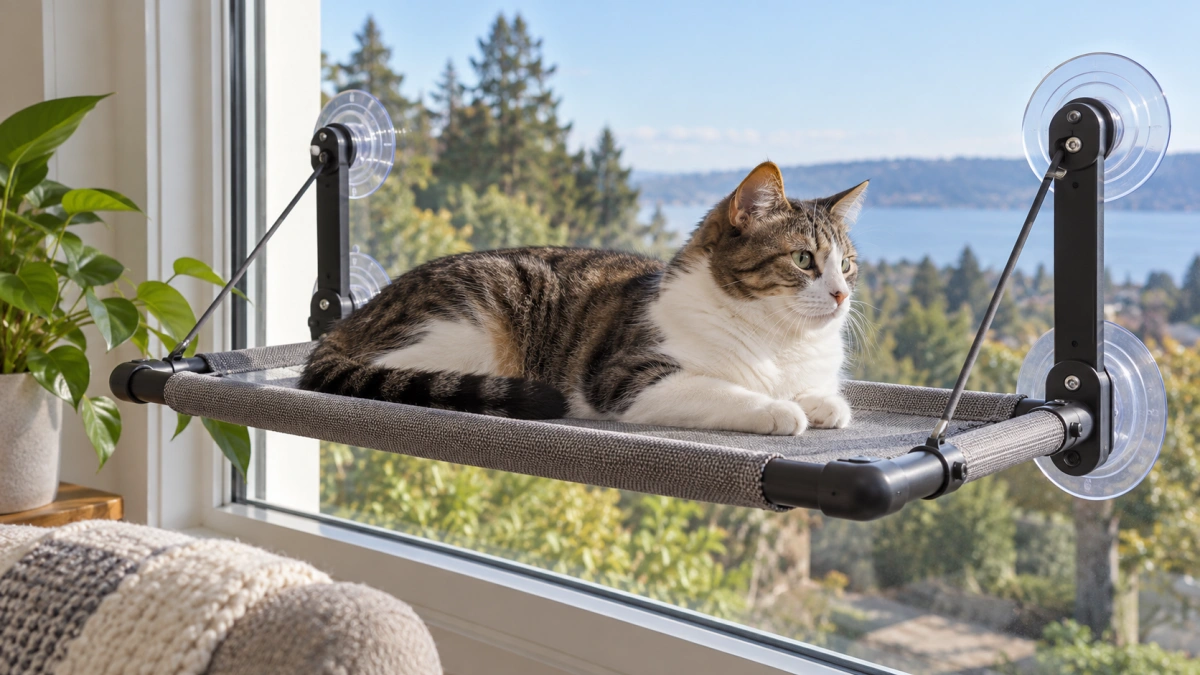
These attach directly to smooth glass with several suction cups.
They are popular because they require no drilling and can work even when the window sill itself is narrow.
Window Sill Perches
These rest on, clamp to, or extend from a suitable sill.
They can provide a more rigid sleeping platform but require a window sill that matches the mounting design.
Freestanding Window Beds
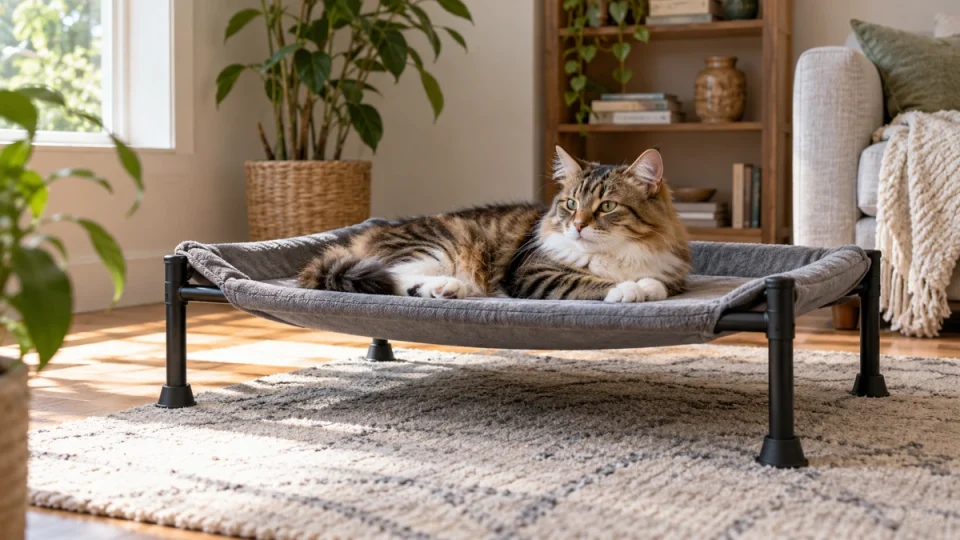
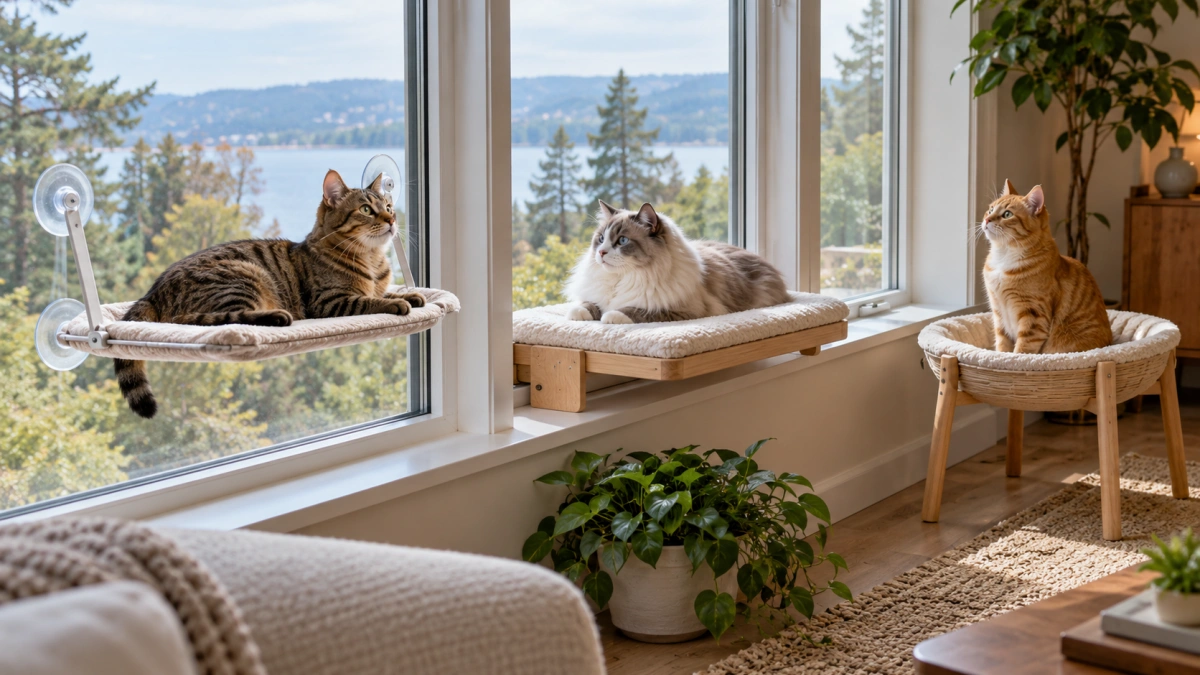
These do not attach to the window at all. Instead, a raised frame or small piece of cat furniture is positioned beside the window.
This can be a useful alternative when the glass is unsuitable for suction cups or when you do not want the sleeping surface supported by the window.
Window Perch vs Window Hammock
The terms are often used interchangeably, but the sleeping surfaces can feel different.
A rigid perch generally uses a firmer platform supported by a frame. A hammock typically uses flexible fabric that gives slightly under the cat’s body.
| Feature | Window Perch | Window Hammock |
|---|---|---|
| Sleeping surface | Usually firmer | Usually flexible |
| Body support | Platform-style | Sling-style |
| Movement | Usually less movement | May flex slightly |
| Cat preference | Useful for cats liking firm surfaces | Useful for cats liking fabric cradles |
Neither type is automatically better. Choose according to your cat’s preferred sleeping surfaces and the stability of the complete mounting system.
Are Suction Cup Cat Window Beds Safe?
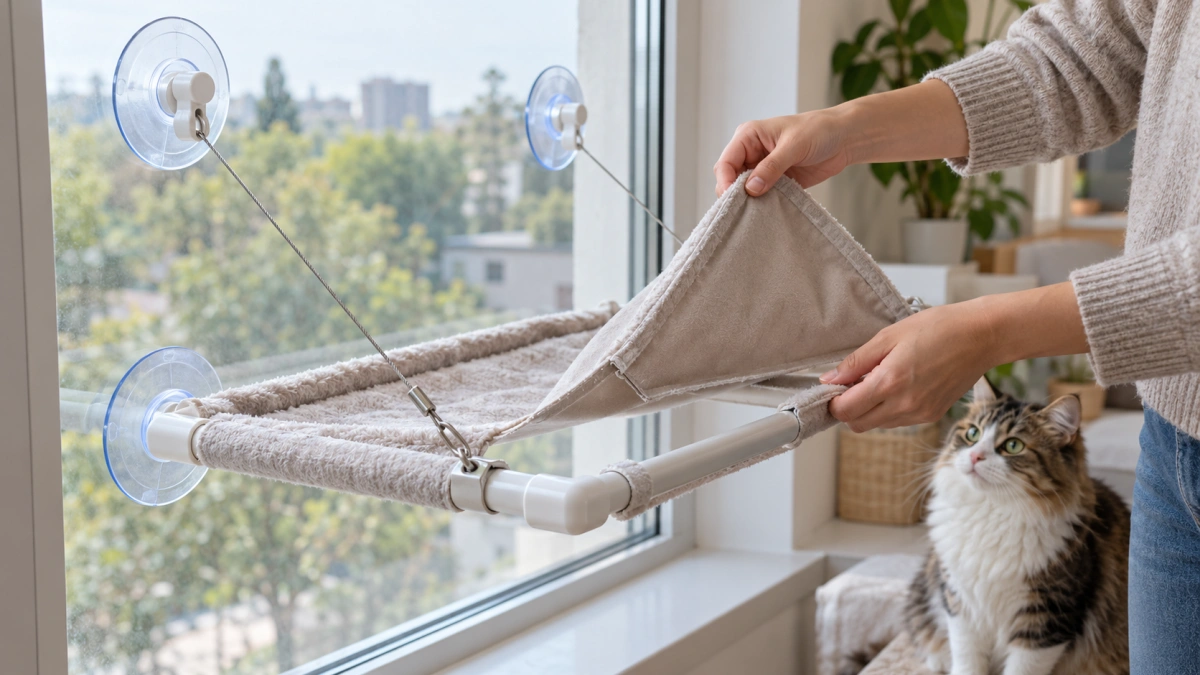
A suction-mounted bed can provide a stable resting surface when the product is appropriate for the cat and window, installed according to the manufacturer’s instructions, and inspected regularly.
Before relying on suction cups, check:
- The manufacturer’s stated weight limit
- The condition of every suction cup
- The number of mounting points
- The condition of the frame or support cables
- Whether the glass surface is appropriate for suction mounting
- Whether the platform remains level under load
Smooth, intact glass is generally much more suitable for suction mounting than textured or uneven surfaces.
Clean the glass and suction cups according to the product instructions before mounting. Dust, oils, residue, or damaged suction cups can interfere with a reliable seal.
After installation, firmly test the empty perch before allowing your cat onto it.
Check Your Window Before Buying
Not every window works with every cat bed.
Before purchasing, look at:
- Available glass area
- Glass surface texture
- Window opening direction
- Sill width
- Window frame design
- Nearby blinds or curtains
- Available access space
A large suction-mounted platform may not fit a window divided into many small panes.
A sill-mounted perch may not work on a window with almost no sill.
Measure the intended installation area before comparing products.
How Large Should a Cat Window Perch Be?
The resting platform should accommodate your cat’s normal window sleeping position.
Check whether your cat can:
- Sit without balancing on the edge
- Turn around
- Curl comfortably
- Lie on its side
- Reposition without slipping off
Do not judge size only from product photographs. Photos may feature a smaller cat and can make the platform appear larger than it really is.
Compare the actual platform width and depth with the space your cat normally uses while resting.
Weight Capacity Matters
A window bed supports a moving animal rather than a motionless object.
Your cat may jump onto the platform, turn quickly, stretch against the edge, or launch away from it.
Always follow the manufacturer’s stated weight limit and consider every cat that may use the bed.
If two cats regularly share the same perch, their combined weight matters.
Do not assume that a product suitable for one average cat will automatically support two cats or one much larger cat.
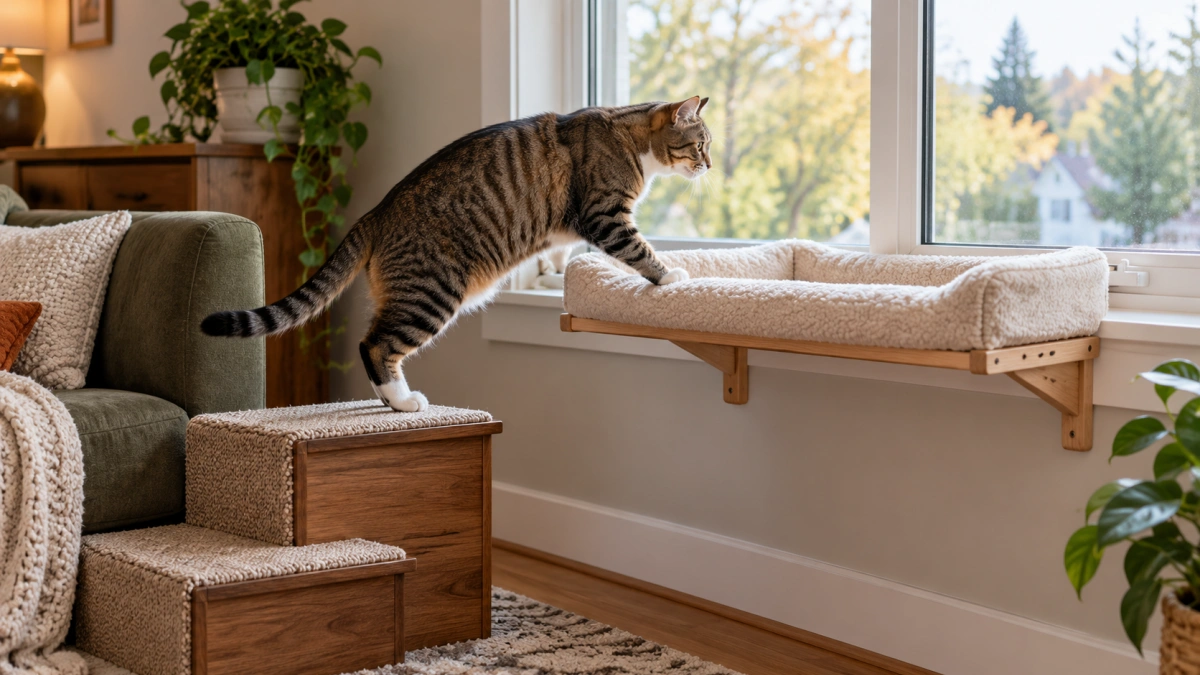
How High Should You Install a Window Cat Bed?
The ideal height depends on your cat’s age, mobility, confidence, and the surrounding furniture.
An active adult cat may comfortably reach a higher perch, while a kitten, senior cat, or cat with reduced mobility may benefit from a lower installation.
Consider how your cat will reach the perch before deciding where to mount it.
Useful access points may include:
- A sturdy chair
- A stable cat step
- A cat tree platform
- A broad window sill
- Another secure intermediate surface
Avoid positioning the bed where the only access requires an unnecessarily difficult leap.
Keep Open Windows Safe
A window perch does not make an open window safe.
Cats can become intensely focused on birds, insects, or other outdoor activity and can accidentally fall from an unsecured opening.
If the window can open where your cat has access, use an appropriate secure screen or other cat-safe window protection and make sure it is correctly fitted.
Do not rely on the window bed itself, a narrow ledge, or a child window guard to prevent a cat from falling.
Also pay particular attention to tilt-and-turn windows. Partially tilted windows can create dangerous gaps where a cat may become trapped.
Do Window Cat Beds Get Too Hot in the Sun?
Sunlight is one reason many cats enjoy window resting spots, but direct sun can make a surface much warmer than the surrounding room.
Consider:
- Which direction the window faces
- How long direct sunlight reaches the perch
- The season
- Indoor temperature
- The material of the sleeping surface
- Whether the cat has cooler places available
Your cat should always be able to leave the sunny perch and choose another resting area.
Do not use a window bed as the cat’s only comfortable sleeping option.
Window Cat Beds for Large Cats
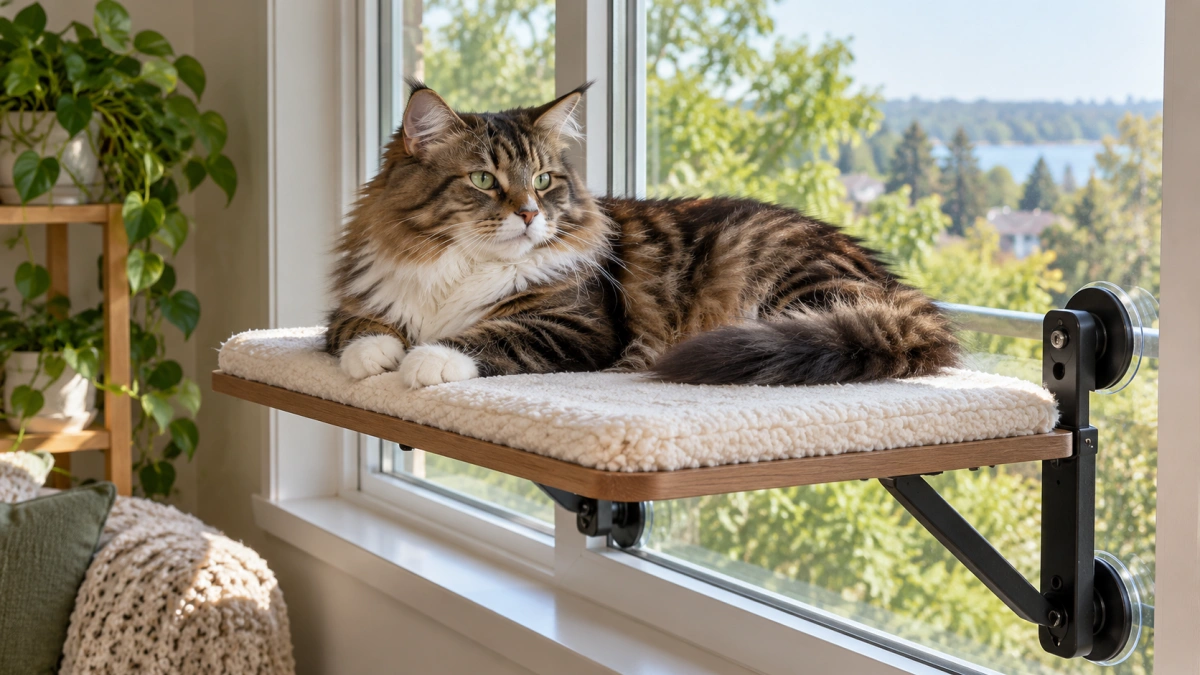
Large cats need both more sleeping space and a mounting system designed for greater loads.
When comparing window beds for a larger cat, check:
- Published weight capacity
- Platform width
- Platform depth
- Frame construction
- Number of attachment points
- Amount of fabric sag
The sleeping platform should remain reasonably level and stable rather than tilting or sagging excessively under the cat.
If your cat often finds conventional beds too small, our guide to cat beds for large cats explains how to measure usable sleeping space in more detail.
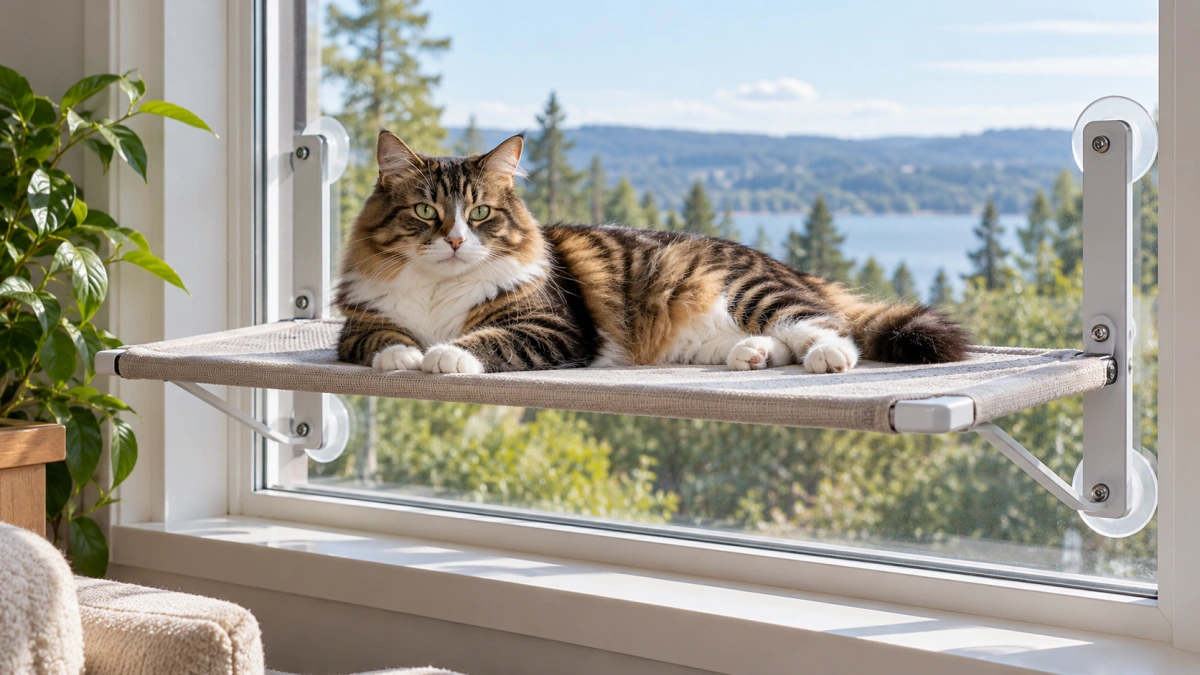
Window Beds for Senior Cats
An older cat may still enjoy looking outside while becoming less comfortable with large jumps.
You do not necessarily need to remove window access altogether.
Instead, consider:
- A lower perch position
- A wider sleeping platform
- A firm stable surface
- Nearby intermediate steps
- A nonslip access route
Observe how your cat moves rather than assuming it can comfortably reach the same window position it used years earlier.
A sudden decline in jumping ability, repeated missed jumps, stiffness, or obvious discomfort should be discussed with a veterinarian rather than solved only by changing furniture.
Suction Cup vs Sill-Mounted Window Beds
| Factor | Suction Cup Bed | Sill-Mounted Bed |
|---|---|---|
| Requires usable sill | No | Usually yes |
| Mounting surface | Smooth compatible glass | Suitable sill or frame |
| Drilling | Usually no | Depends on design |
| Main inspection point | Suction seal and hardware | Clamp, bracket, or sill fit |
| Repositioning | Often relatively easy | Varies by design |
Choose the mounting method that works with the actual window rather than trying to adapt an incompatible product.
Window Cat Beds vs Freestanding Elevated Beds
You do not have to attach a bed to the glass to give your cat a raised window view.
A freestanding raised bed beside the window may be preferable when:
- The glass is unsuitable for suction cups
- The window has small divided panes
- You want easier repositioning
- You have a very large cat
- You prefer floor-supported furniture
Our guide to elevated cat beds covers freestanding raised sleeping platforms and placement in more detail.
Are Hammock-Style Window Beds Comfortable?
Comfort depends on the individual cat.
Some cats enjoy a flexible fabric surface that forms around the body. Others prefer rigid shelves, thick cushions, or flat furniture.
Look at where your cat currently sleeps.
A cat that chooses:
- Soft blankets may enjoy a padded hammock
- Firm windowsills may prefer a rigid platform
- Mesh furniture may accept a breathable sling
- Plush sofas may prefer an added cushion
The most expensive window bed will still go unused if its surface does not match your cat’s preferences.
How to Introduce a Cat to a New Window Bed
Allow your cat to investigate the bed voluntarily.
Do not repeatedly place the cat on a newly installed perch.
Instead:
- Install the bed securely
- Leave an easy access route
- Keep the surrounding area familiar
- Add a familiar washable blanket if the design allows it
- Give the cat time to investigate
Some cats use a new window bed immediately. Others may take days or weeks before treating it as a normal sleeping location.
Cleaning and Maintaining a Window Cat Bed
Window beds collect fur, dust, skin oils, and debris just like other pet bedding.
A removable washable surface can make maintenance much easier.
During cleaning, inspect:
- Suction cups
- Frame joints
- Support cables
- Fabric seams
- Zippers
- Clamps or brackets
Replace damaged components rather than continuing to use a perch with cracked suction cups, weakened fabric, bent supports, or unstable mounting hardware.
After removing and reinstalling a suction-mounted bed, test it again before returning it to use.
What If the Suction Cups Keep Falling?
Do not continue putting your cat on a perch that repeatedly loses its seal.
Possible reasons include:
- Dirty glass
- Residue on the suction cups
- Textured glass
- Damaged or aging cups
- An unsuitable mounting surface
- Incorrect installation
- A load beyond the product’s intended capacity
Follow the manufacturer’s installation instructions and replace worn components when replacement parts are available.
If the mounting surface is fundamentally unsuitable, switch to a sill-mounted or freestanding design instead of repeatedly trying to make the suction system work.
Can Two Cats Share a Window Bed?
They can only share a perch if the platform provides enough usable space and the product is designed to support their combined weight.
Even then, your cats may prefer separate resting places.
In a multi-cat home, providing more than one desirable window or elevated resting location can reduce competition over a single perch.
Do not assume that because two cats occasionally sit together, a one-cat platform is automatically suitable for both.
Common Window Cat Bed Buying Mistakes
- Ignoring the product weight limit
- Buying before measuring the window
- Mounting suction cups on unsuitable glass
- Choosing a platform that is too narrow
- Installing the perch too high for the cat
- Providing no easy access route
- Assuming an open window is safe because a perch is present
- Ignoring direct heat from strong sunlight
- Never checking suction cups or hardware again
- Assuming every cat prefers a hammock
- Expecting two cats to share a one-cat perch
Window Cat Bed Buying Checklist
- Does my cat already enjoy sitting by windows?
- Will the product fit my window?
- Is the mounting method compatible with the glass or sill?
- Does the stated weight capacity suit my cat?
- Is the usable platform large enough?
- Can my cat turn and lie comfortably?
- Is the frame stable?
- Are there multiple secure attachment points?
- Can my cat reach the perch easily?
- Is the window itself secure?
- Can the sleeping surface be cleaned?
- Can mounting components be inspected and replaced?
- Will the location become excessively hot in direct sun?
Final Thoughts
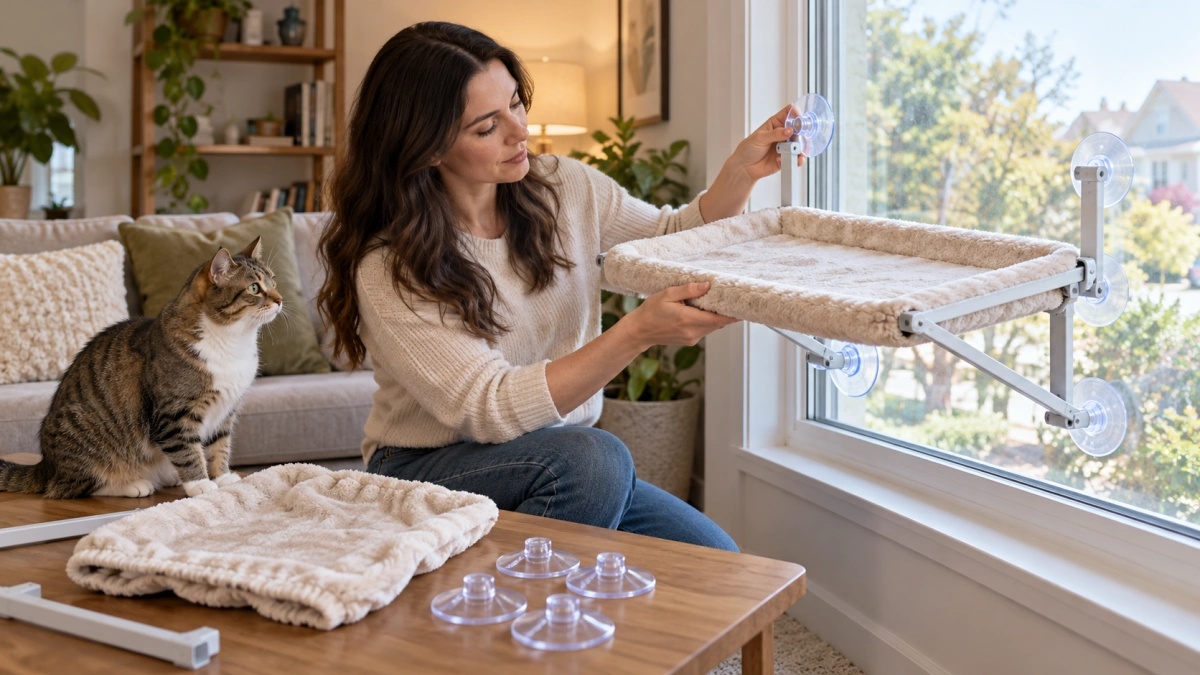
Window cat beds can turn an existing favorite lookout into a more comfortable resting place without taking up much additional floor space.
Suction-cup hammocks work well with suitable smooth glass, while sill-mounted perches offer another option for compatible windows. A freestanding elevated bed can provide a similar view without attaching anything to the window.
Whatever style you choose, prioritize window compatibility, weight capacity, usable sleeping space, secure mounting, easy access, regular inspection, and safe window protection.
Most importantly, follow your cat’s existing habits. A cat that already spends hours beside a particular window is much more likely to appreciate a thoughtfully placed perch than one selected only because the product looks attractive.