By
By 
Cleaning a dog bed regularly helps keep your pet’s sleeping area fresh, comfortable, and easier to maintain. However, different dog bed designs require different cleaning methods.
A removable cover, foam insert, waterproof layer, or thick bolster structure can all change how a dog bed should be washed. Using the wrong method may damage the fabric, reduce cushion shape, or leave moisture trapped inside.
The safest approach is to identify the bed construction first, remove loose hair and dirt, clean each part correctly, and make sure everything dries completely before use.
You can also explore our complete Dog Beds topic hub for more guides about dog bed types, materials, sizes, and cleaning features.
How Often Should You Clean a Dog Bed?
The ideal cleaning schedule depends on your dog, the bed material, and how the bed is used.
Dog beds may need more frequent cleaning if your dog:
- Sheds heavily
- Spends a lot of time outdoors
- Tracks dirt onto the bed
- Sleeps on the bed every day
- Has accidents or wet fur
Regular maintenance does not always require a full wash. Vacuuming hair, removing debris, and washing covers when needed can help keep the bed in better condition between deeper cleanings.
Check the Dog Bed Care Instructions First
Before washing any dog bed, check the manufacturer’s care instructions.
Different components may require different methods:
- Machine washable covers
- Hand-clean only foam inserts
- Spot-clean waterproof surfaces
- Air drying recommendations
A dog bed that looks washable may contain materials that should not go through a washing machine.
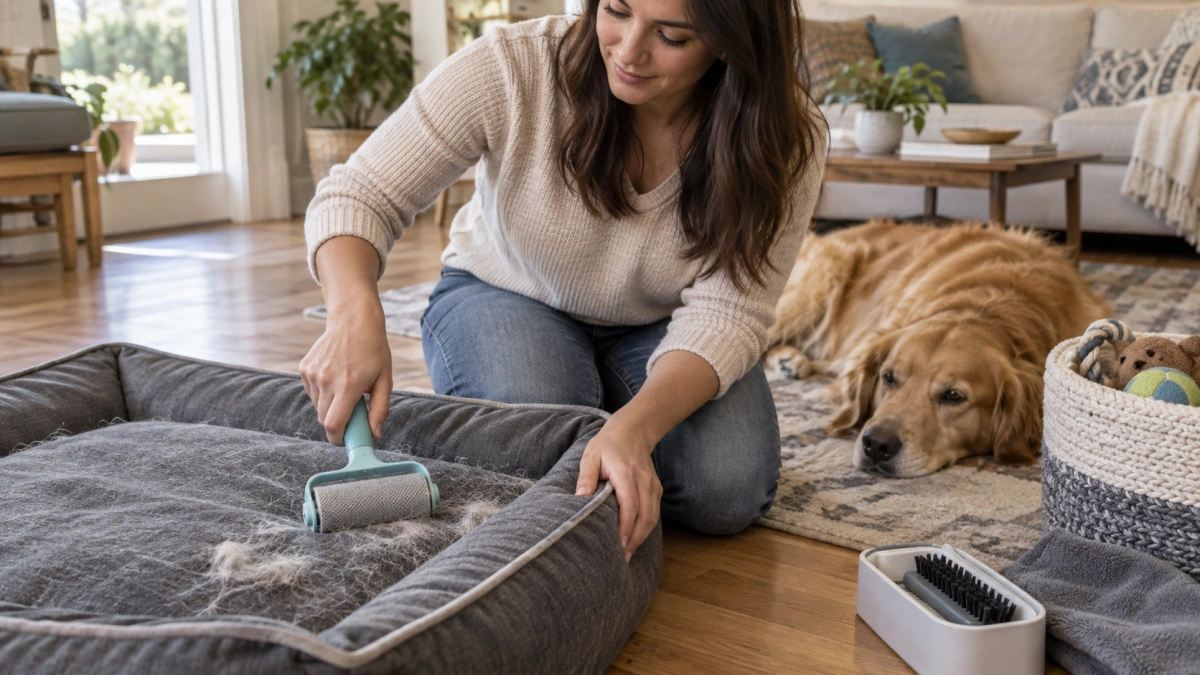
Remove Dog Hair Before Washing
Removing loose dog hair before washing makes the cleaning process easier and helps prevent excess hair from collecting inside the washing machine.
Useful preparation steps include:
- Vacuuming the surface
- Using a pet hair remover tool
- Brushing away trapped fur
- Removing visible dirt and debris
Hair often collects around seams, corners, and raised edges, so check these areas carefully.
How to Wash Removable Dog Bed Covers
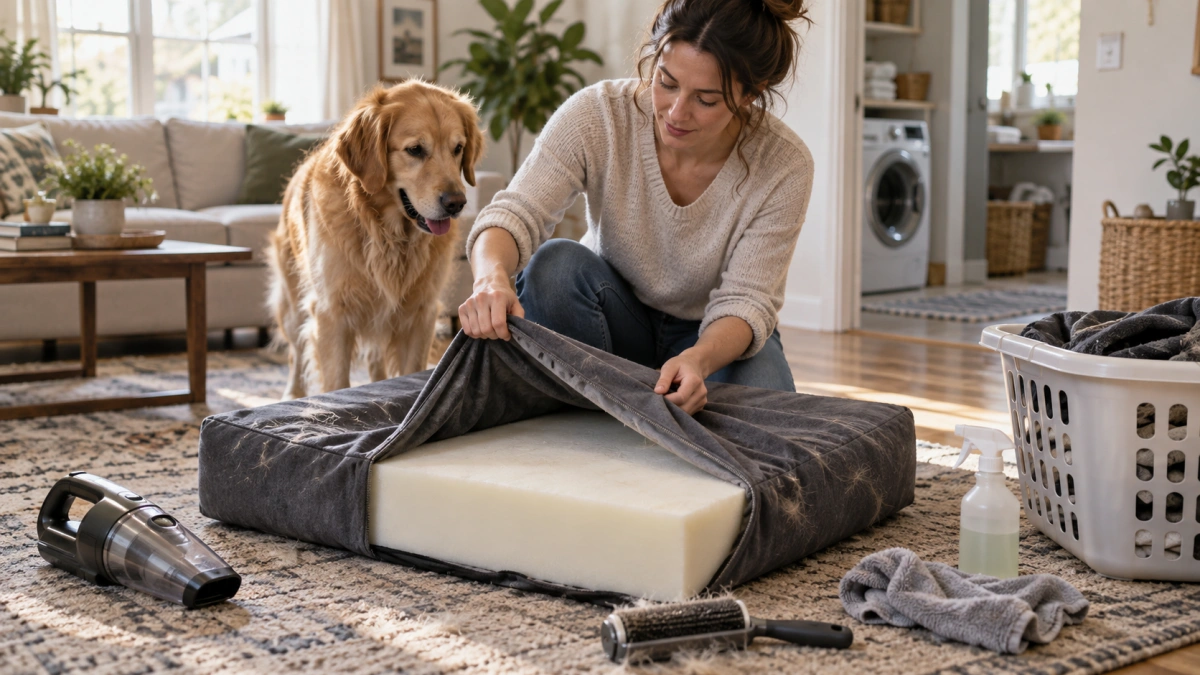
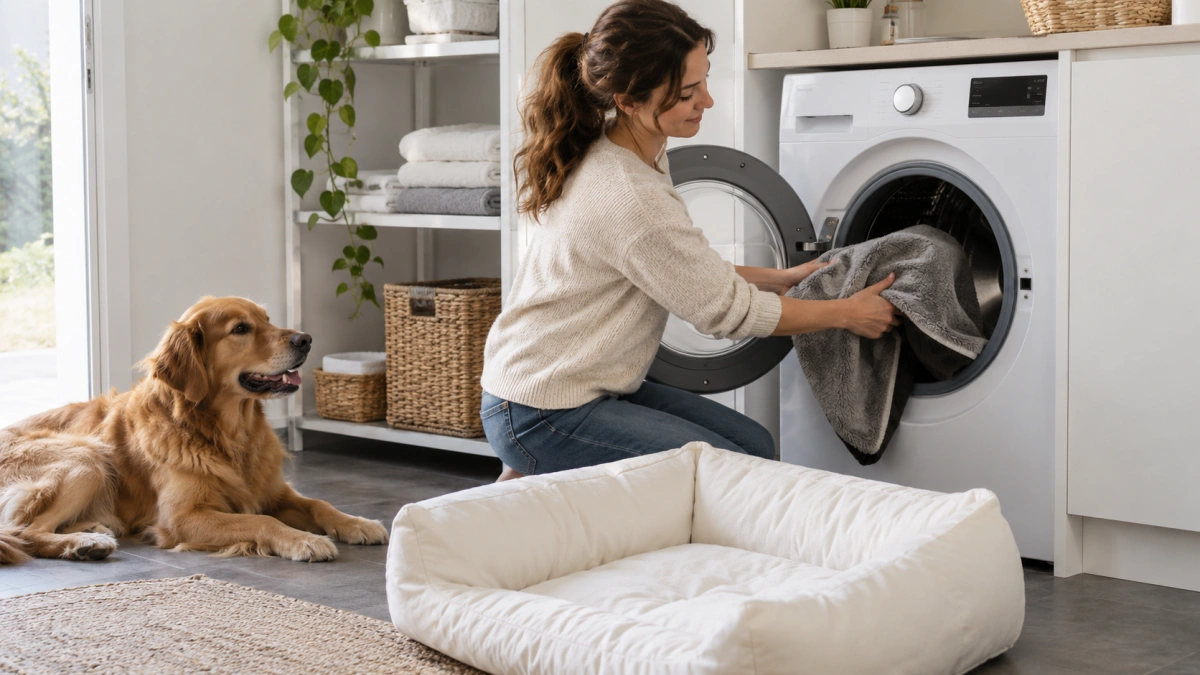
Many modern dog beds are designed with removable covers because the outer fabric collects most hair, dirt, and everyday buildup.
Before washing the cover:
- Remove loose hair
- Close zippers if recommended
- Check washing temperature instructions
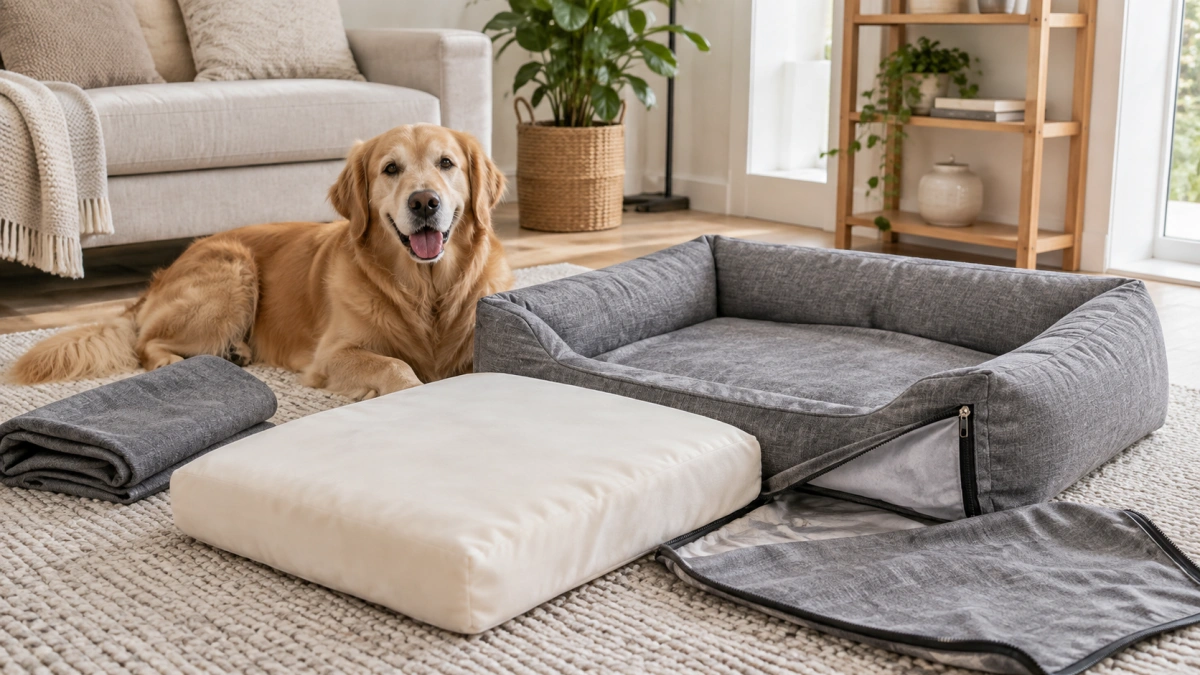
- Separate the cover from foam or filling
After washing, make sure the cover is completely dry before putting it back onto the cushion.
How to Clean Foam Dog Bed Inserts
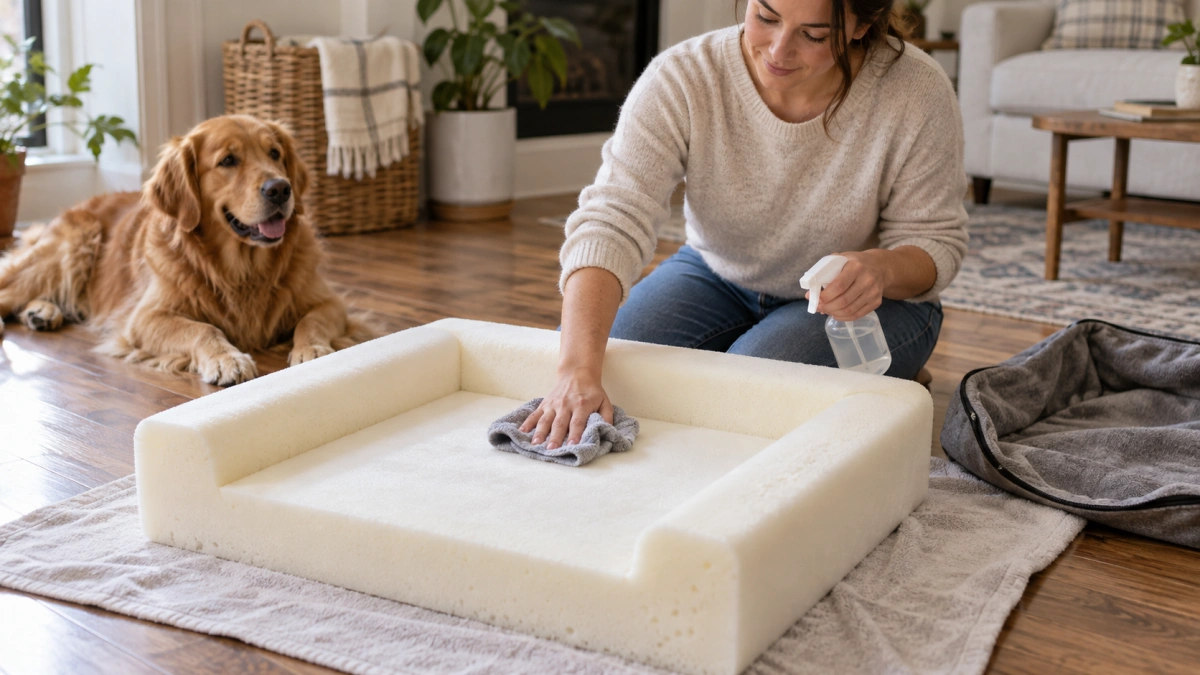
Foam inserts require more careful handling than removable fabric covers.
Many foam cushions should not simply be placed into a washing machine because excess water can become trapped inside the material.
For foam dog beds, consider:
- Vacuuming surface debris
- Spot cleaning dirty areas
- Using minimal moisture
- Allowing complete drying time
The most important step is ensuring the foam dries fully before placing it back inside the cover.
How to Clean Different Dog Bed Types
| Dog Bed Type | Cleaning Approach |
|---|---|
| Removable cover bed | Wash the cover according to care instructions |
| Foam mattress bed | Spot clean and dry thoroughly |
| Bolster bed | Clean seams, edges, and removable parts carefully |
| Waterproof bed | Wipe the outer surface and follow material instructions |
| Plush bed | Remove trapped hair before washing |
How to Remove Dog Bed Odors
Dog bed odors often come from a combination of hair, dirt, moisture, and regular use.
To keep a dog bed fresher:
- Wash removable covers regularly
- Allow the bed to fully dry
- Remove trapped hair
- Clean areas where dirt collects
- Avoid leaving moisture inside cushions
If odors return quickly after cleaning, check whether moisture remains trapped inside the filling or foam.
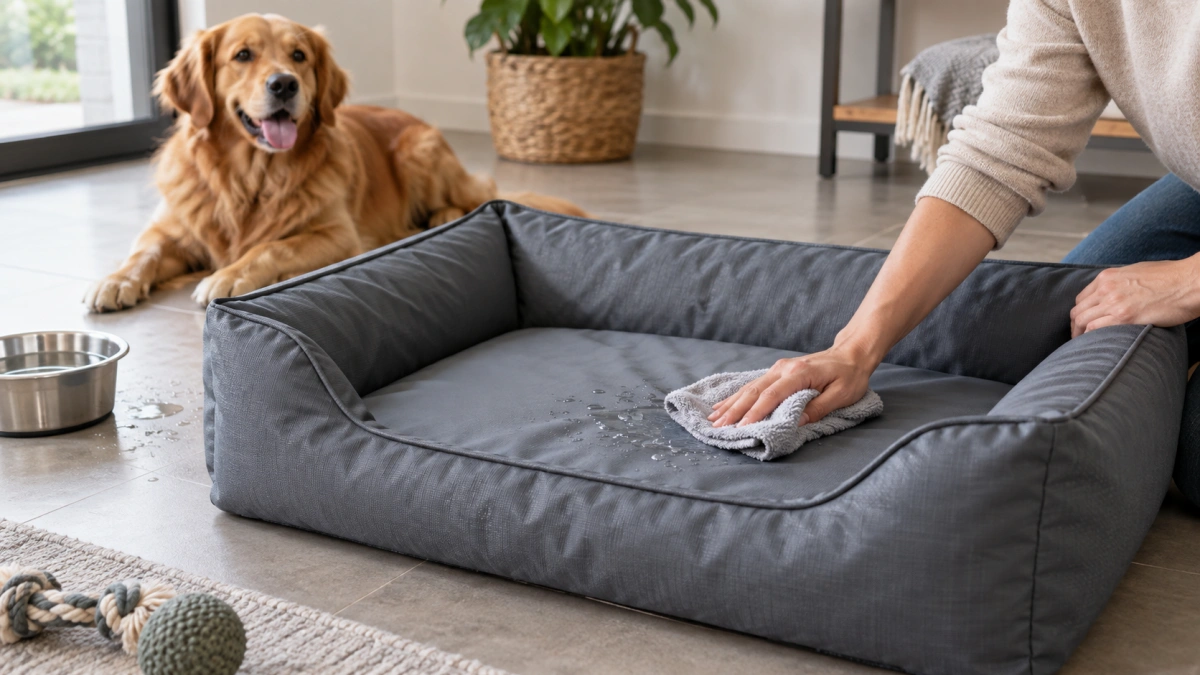
Cleaning Waterproof Dog Beds
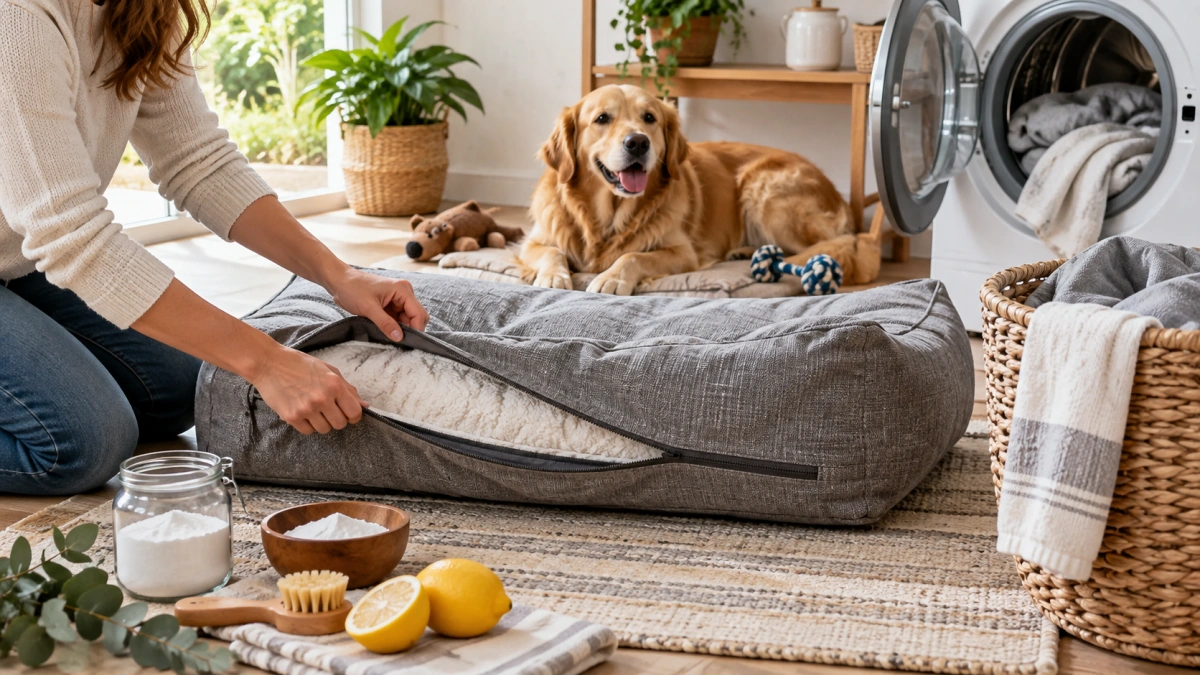
Waterproof dog beds are often easier to maintain because their outer surfaces can resist moisture and spills.
However, waterproof does not mean maintenance-free.
Regular cleaning may still be needed for:
- Hair buildup
- Dirt on the surface
- Food crumbs
- Outdoor debris
Use cleaning methods suitable for the specific waterproof material to avoid damaging protective layers.
Drying Dog Beds Correctly
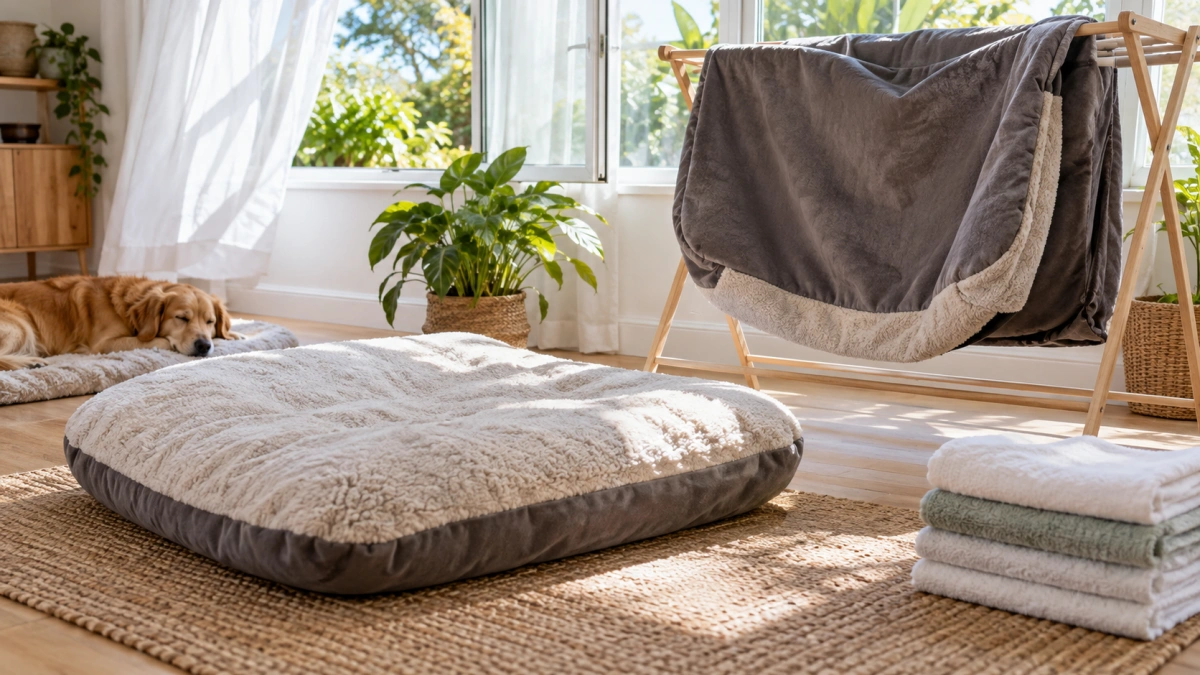
Drying is one of the most important parts of dog bed cleaning.
A cover may feel dry on the outside while moisture remains inside thicker cushions.
Before using the bed again:
- Check thick areas and seams
- Allow airflow around cushions
- Avoid storing damp bedding
- Make sure foam has dried completely
A properly dried dog bed helps maintain the material and prevents unpleasant moisture buildup.
Common Dog Bed Cleaning Mistakes
- Washing the entire bed without checking instructions
- Ignoring trapped hair before washing
- Putting wet foam back inside the cover
- Using cleaning methods unsuitable for the material
- Ignoring seams and hidden corners
- Replacing covers before they are fully dry
Features of Easy-to-Clean Dog Beds
If cleaning convenience is important, certain dog bed features make maintenance easier.
Look for:
- Removable washable covers
- Separate cushion inserts
- Durable outer fabrics
- Easy-access zippers
- Quick-drying materials
- Replaceable components
Dogs that spend more time outdoors or shed heavily may benefit from designs that make regular cleaning simpler.
For dogs with specific material preferences or owners looking for easier-maintenance fabrics, you can also learn more about hypoallergenic dog beds and how materials and covers affect maintenance.
Dog Bed Cleaning Checklist
- Remove loose hair before washing
- Check the care label
- Separate covers and inserts
- Use the correct cleaning method
- Dry all parts completely
- Clean hidden corners and seams
- Maintain washable covers regularly
- Choose easy-clean materials when replacing a bed
Final Thoughts
Cleaning a dog bed safely depends on understanding how the bed is built. Removable covers, foam inserts, waterproof surfaces, and plush materials all require different care methods.
The most effective routine combines regular hair removal, correct washing methods, complete drying, and choosing a dog bed design that matches your cleaning needs.
A clean dog bed is easier to maintain when the materials and construction support regular care from the beginning.