By
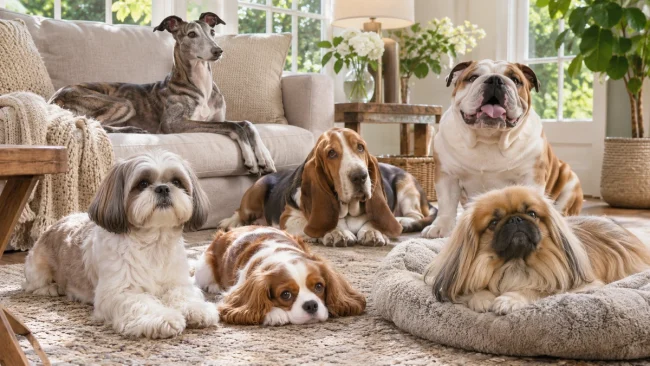
Lazy dog breeds are better described as low-energy or lower-activity dogs. They may enjoy sleeping for long stretches, settling quietly around the home and living at a slower pace than high-drive herding, sporting or working breeds.
But no healthy dog should be expected to spend its entire life on the sofa.
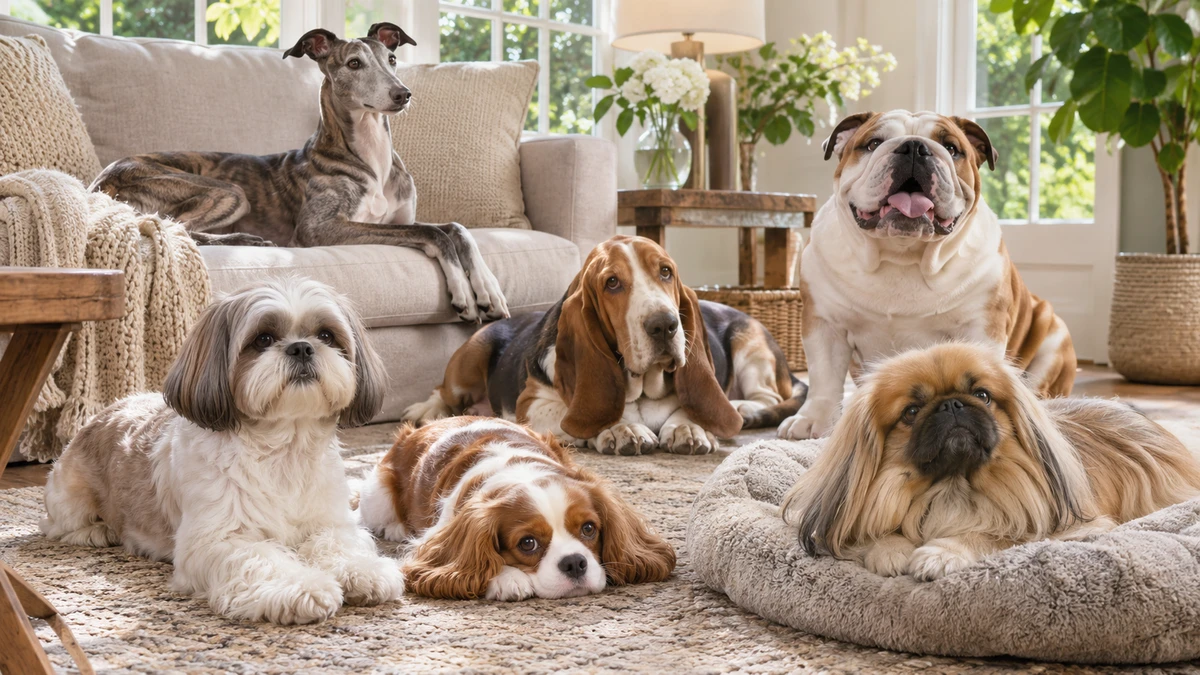
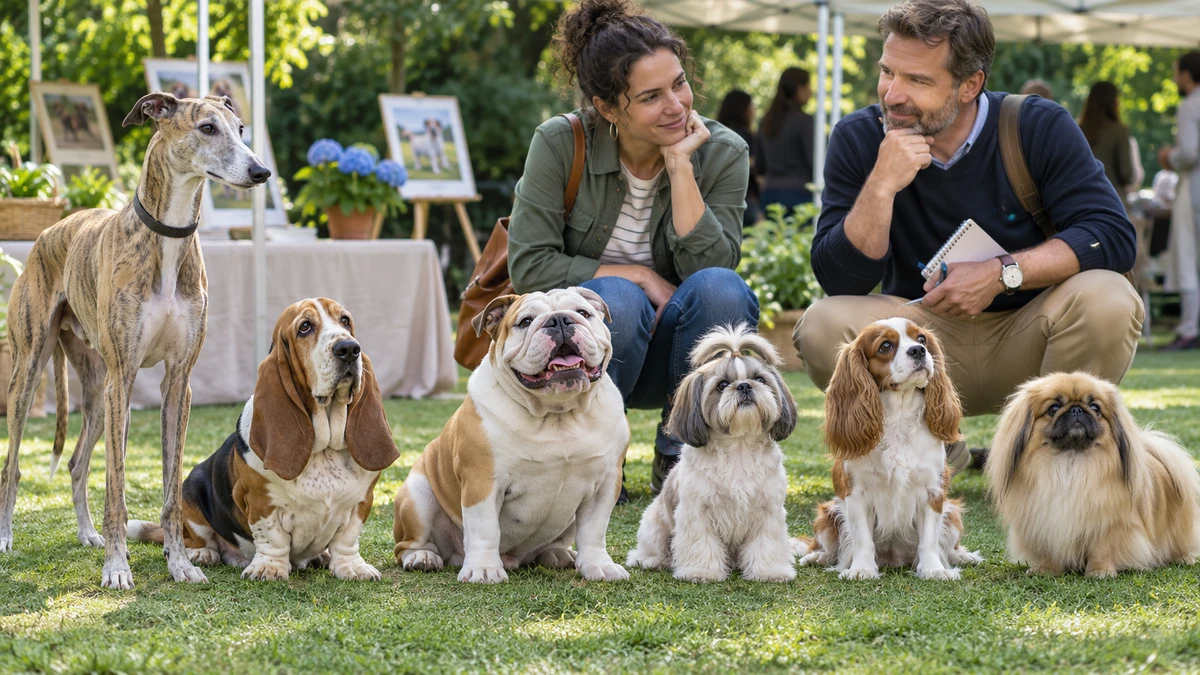
Greyhounds, Basset Hounds, Bulldogs, Shih Tzus, Cavalier King Charles Spaniels and Pekingese are examples of breeds that may fit relatively relaxed households, but each still needs daily movement, mental stimulation, training and normal veterinary care.
The type of exercise also matters. A Greyhound may enjoy a short opportunity to move quickly and then spend hours relaxing. A Basset Hound may prefer a slower sniffing walk. A Shih Tzu can often meet much of its activity requirement through short walks and indoor play.
This guide looks at lower-energy breeds for people who prefer a more relaxed lifestyle while separating normal calmness from inactivity, obesity or poor health.
What Does “Low-Energy Dog” Actually Mean?
Energy level describes how much physical activity and mental stimulation a dog typically needs to remain comfortable and satisfied.
A lower-energy dog may:
- Settle indoors more easily
- Spend more time resting between activities
- Need less sustained vigorous exercise
- Prefer shorter or slower walks
- Be satisfied with moderate daily play
It does not mean the dog should never exercise.
Daily movement supports body condition, mobility, mental stimulation and normal behavior for every breed.
Lazy Is Not the Same as Calm
These terms overlap, but they describe different things.
A low-energy dog needs relatively little physical activity.
A calm dog tends to have a steady, less excitable temperament.
A dog can be both, but not always.
For example, a Basset Hound may enjoy long periods of rest but become highly determined when an interesting scent appears. A Cavalier can settle happily on the sofa yet become enthusiastic about a walk. A large dog can have moderate exercise needs while still becoming excited by visitors.
If temperament and quiet household behavior are your main priority, see our Calm Dog Breeds guide.
Quick Comparison of Lower-Energy Dog Breeds
| Breed | General Energy Profile | Size | Main Consideration |
|---|---|---|---|
| Greyhound | Moderate activity, often relaxed indoors | Large | Prey drive and secure exercise |
| Basset Hound | Low-key, slower-paced | Medium, heavy-bodied | Scent drive and weight control |
| Bulldog | Moderate to lower activity | Medium | Heat and breathing management |
| Shih Tzu | Relatively low exercise needs | Small | Coat and facial care |
| Cavalier King Charles Spaniel | Adaptable, moderate activity | Small | Needs companionship and health research |
| Pekingese | Generally sedate, modest exercise | Small | Coat and heat management |
1. Greyhound
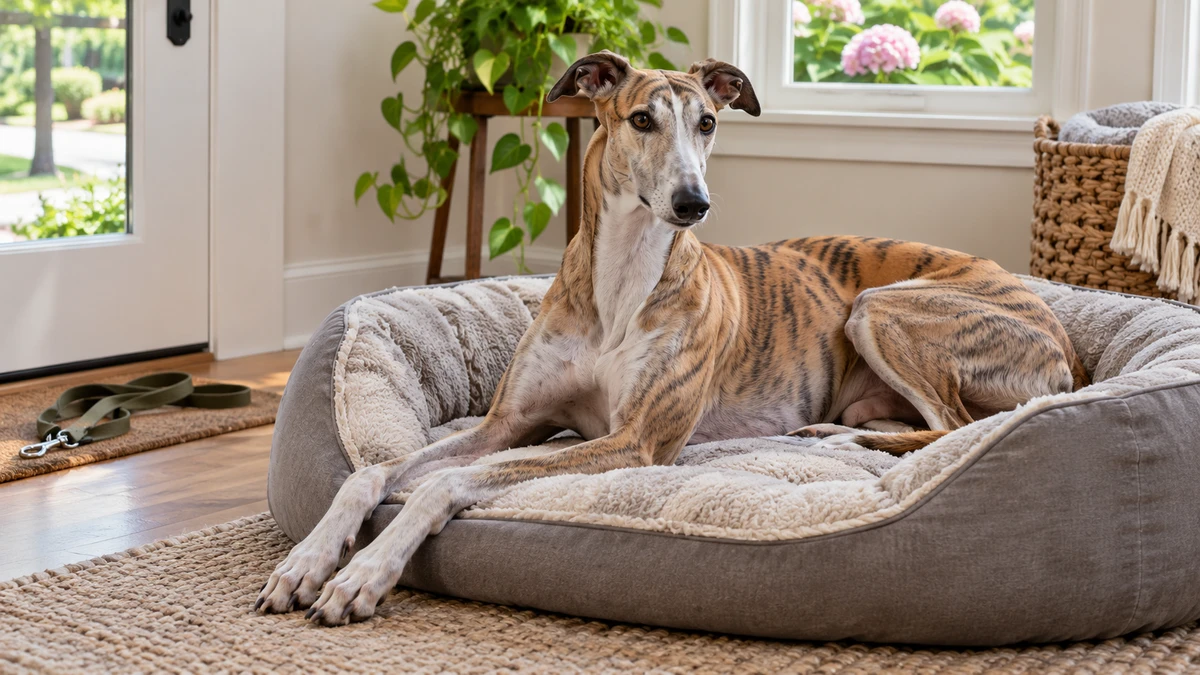
The Greyhound is one of the most misunderstood breeds in discussions about energy level.
Because Greyhounds are famous for extraordinary running speed, people sometimes assume they require constant high-intensity exercise.
In reality, adult Greyhounds often spend considerable time resting between periods of activity.
They still need regular walks and opportunities to move, but they are sprinters rather than endurance dogs designed to work continuously all day.
Adult Greyhounds are large dogs, generally around 60 to 70 pounds depending on sex.
Their advantages for a relaxed household can include:
- Short, simple coat
- Gentle temperament
- Ability to settle indoors
- Moderate rather than nonstop activity
Their sighthound heritage means secure outdoor management matters. Fast-moving animals can trigger chasing, so fenced exercise areas and leash use are important.
2. Basset Hound
The Basset Hound is one of the breeds most naturally associated with a slow-paced lifestyle.
AKC describes Bassets as charming, patient and low-key.
Adults stand no higher than about 15 inches but can weigh approximately 40 to 65 pounds because of their heavy bone and substantial bodies.
They often enjoy relaxing at home after a walk or play session.
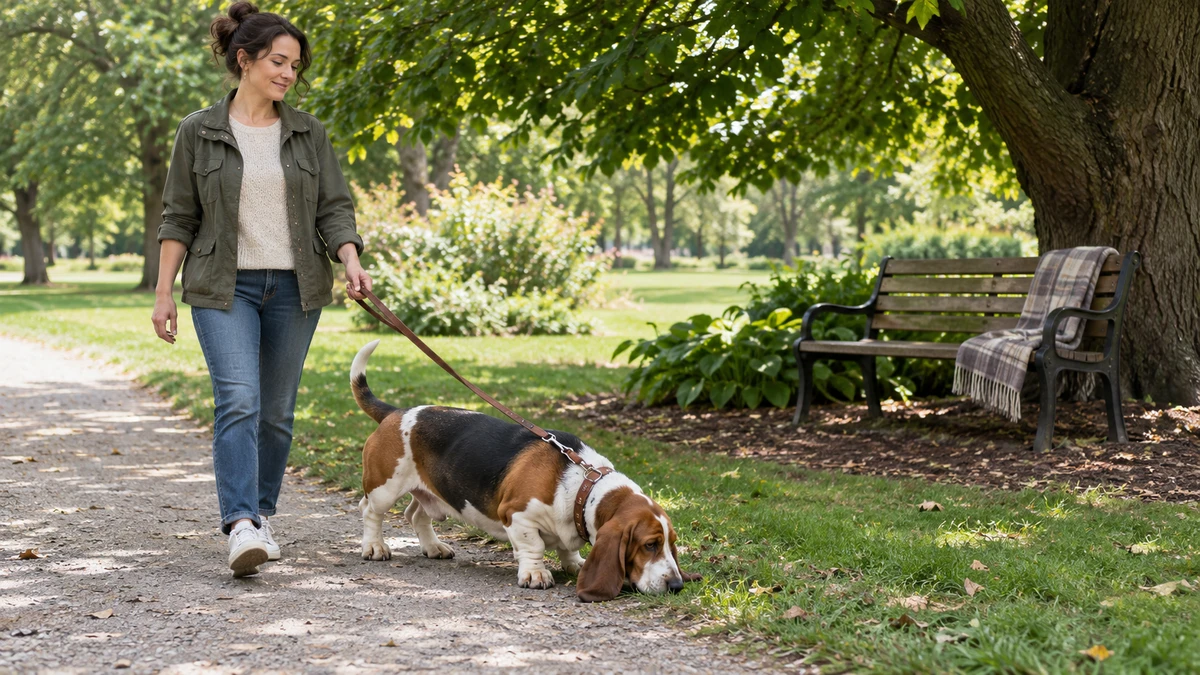
However, a Basset is still a scent hound.
Once it discovers an interesting smell, the dog can become remarkably determined.
Owners should expect:
- Leash walks
- Plenty of sniffing
- Potential vocalization
- Independent behavior
- Consistent weight management
Because they are low-slung and substantial, maintaining a healthy body condition is particularly important.
3. Bulldog
Bulldogs are well known for enjoying relaxed household life.
AKC describes them as mellow dogs that are happy relaxing near their owners, although they also enjoy walks and occasional play.
Moderate activity helps maintain healthy body condition.
The important limitation is heat.
Because of their short muzzle, Bulldogs can have difficulty managing strenuous activity in hot and humid conditions.
Owners should therefore focus on comfortable, moderate exercise rather than interpreting limited heat tolerance as a reason to avoid activity completely.
Bulldogs also require routine care of skin folds and other breed-specific areas.
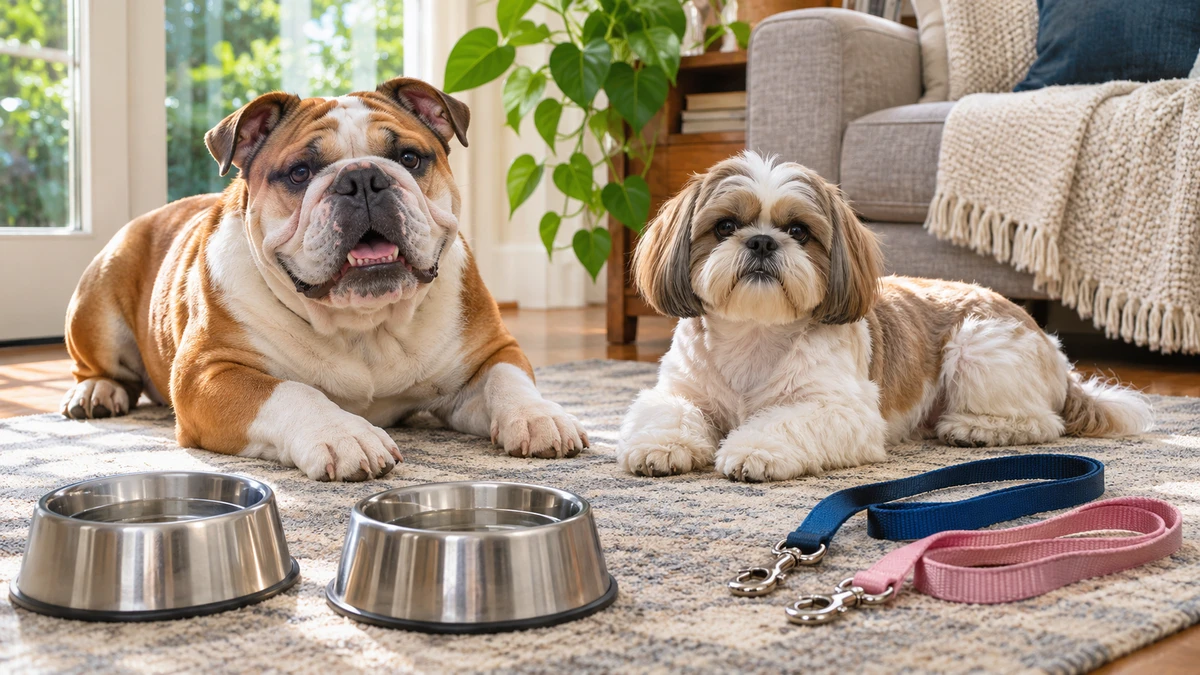
4. Shih Tzu
The Shih Tzu was developed primarily as a house companion rather than a hunting or working dog.
That heritage is reflected in relatively modest exercise requirements.
AKC states that short daily walks and indoor play can satisfy the activity needs of many Shih Tzus.
Adults usually weigh approximately 9 to 16 pounds, making them easy to accommodate in small homes.
But lower exercise requirements should not be confused with low total maintenance.
A full Shih Tzu coat requires significant grooming.
Many family pets are kept in practical shorter trims to simplify coat care.
5. Cavalier King Charles Spaniel
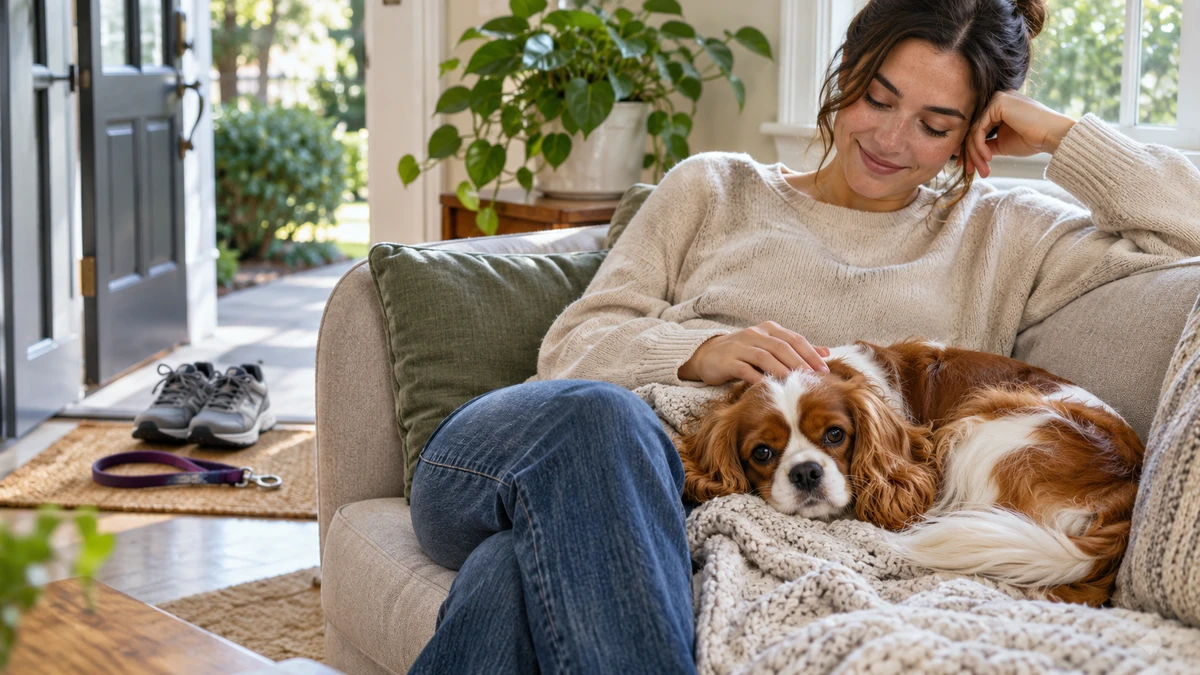
The Cavalier King Charles Spaniel is better described as adaptable than truly lazy.
Cavaliers were bred as lapdogs but retain sporting-spaniel heritage.
They generally enjoy moderate walks, outdoor activities and even dog sports, yet many are equally happy curling up beside their owners afterward.
That flexibility can make them appealing to households that alternate between relaxed days and moderate activity.
Adults typically weigh approximately 13 to 18 pounds.
Cavaliers are strongly companion-oriented and generally do not thrive when routinely left alone for long periods.
Prospective owners should also research current breed-club health-testing recommendations before choosing a puppy.
6. Pekingese
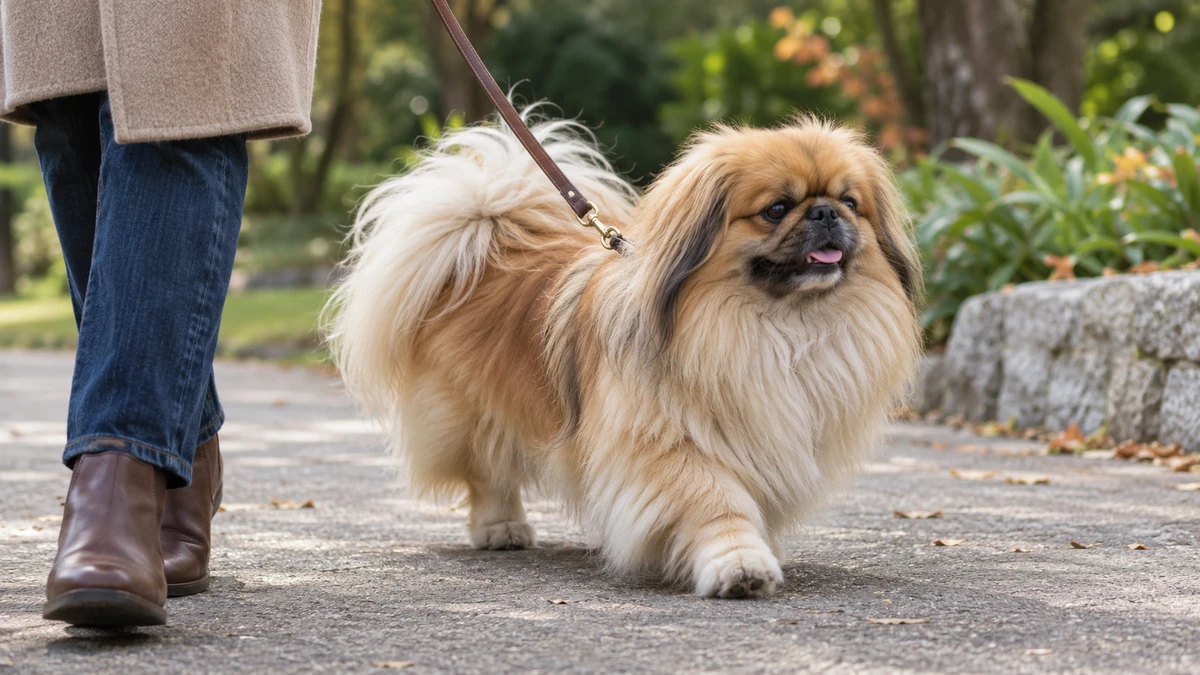
Pekingese are compact companion dogs developed for palace life in ancient China.
AKC describes them as fairly sedate most of the time with modest exercise requirements.
Adults stand approximately 6 to 9 inches and weigh up to about 14 pounds.
Their smaller bodies and slower lifestyle can suit people who prefer shorter walks.
However, the breed has a substantial double coat that requires regular brushing, and its short muzzle makes hot-weather management important.
Pekingese can also be independent and opinionated rather than automatically easy to train.
Small Low-Energy Dog Breeds
If you specifically want a compact dog for a more relaxed lifestyle, breeds worth researching include:
- Shih Tzu
- Pekingese
- Cavalier King Charles Spaniel
- Some adult Chihuahuas
But do not assume every small dog is low energy.
Papillons, Miniature Pinschers, many terriers and some other tiny breeds can be extremely active despite their size.
Adult size predicts how much physical space a dog occupies, not how much mental or physical activity the dog needs.
Large Low-Energy Dog Breeds
Greyhounds are one of the clearest large-breed examples because many adults can relax well indoors once appropriately exercised.
Some giant breeds may also appear slower-paced than high-drive working dogs, but large size adds other forms of maintenance.
Large dogs generally need:
- More food
- Larger beds
- Larger vehicles or transport space
- Higher medication doses in some situations
- More physical strength to manage
Never choose a giant breed simply because it spends considerable time sleeping.
Low Energy Does Not Mean No Exercise
Every healthy adult dog needs regular opportunities to move.
Exercise provides more than calorie burning.
It also offers:
- Sniffing
- Environmental exploration
- Social information
- Mental stimulation
- Training opportunities
- Normal physical movement
For a lower-energy dog, the routine may be shorter or slower rather than absent.
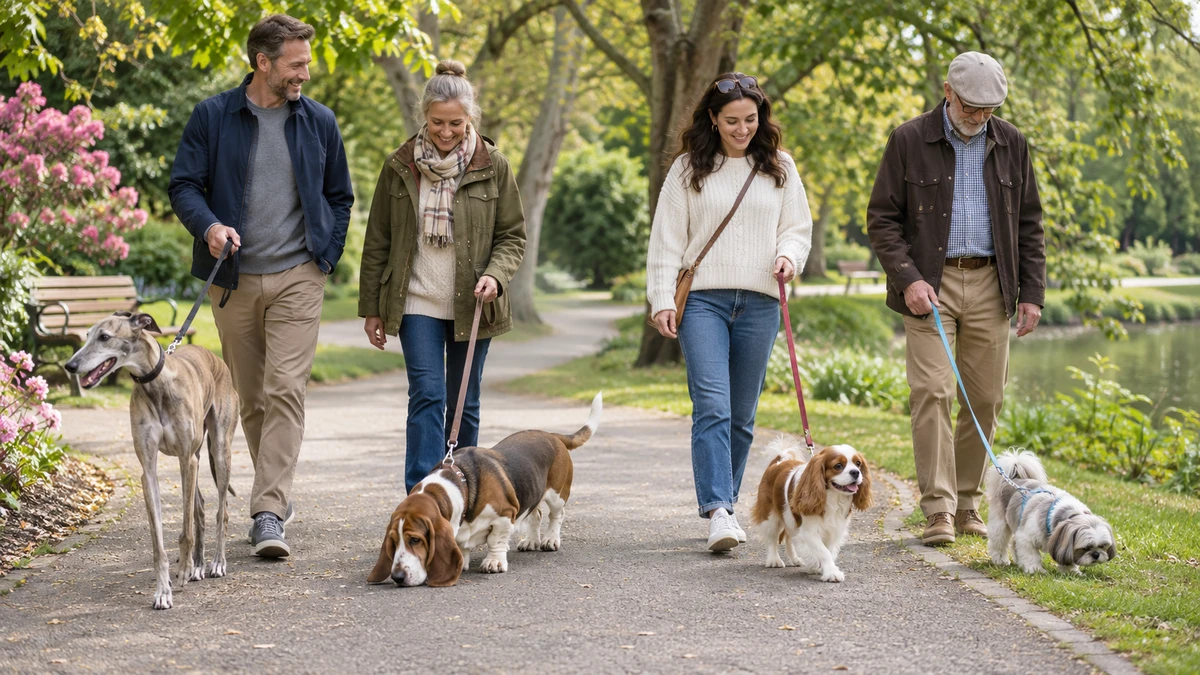
Why a Dog That Suddenly Becomes Lazy Needs Attention
A naturally relaxed breed is different from an individual dog whose normal behavior suddenly changes.
If an ordinarily active dog suddenly becomes unusually reluctant to move, stops participating in normal activities or shows other concerning changes, do not simply assume the dog has become lazy.
Changes in behavior can have many causes, and veterinary evaluation may be appropriate when the change is significant or persistent.
Low Energy vs Poor Fitness
A dog can have modest exercise requirements and still be physically fit.
Low energy should not mean:
- Obesity
- Weak muscles
- Difficulty walking from lack of conditioning
- Constant breathlessness
Appropriate nutrition and regular moderate activity help lower-energy dogs maintain healthy body condition.
Can Low-Energy Dogs Become Overweight?
Yes.
Dogs that expend fewer calories can gain weight if food portions and treats exceed their needs.
This becomes particularly important with breeds that strongly enjoy food or have relatively limited daily activity.
Monitor body condition rather than using breed reputation as an excuse for gradual weight gain.
Are Low-Energy Dogs Good for Apartments?
Often, but energy level is only one factor.
Apartment suitability also depends on:
- Barking
- Adult size
- Elevator or stair access
- Separation tolerance
- Indoor behavior
A large Greyhound may take up more floor space than a small terrier yet potentially settle more quietly indoors.
A small dog can physically fit anywhere while still barking at every hallway sound.
Are Lazy Dog Breeds Good for Seniors?
Some lower-energy breeds may suit people who prefer shorter, slower walks.
But age alone should never determine breed choice.
Also consider:
- Dog weight
- Leash strength
- Grooming requirements
- Transportation
- Veterinary costs
- Risk of tripping around a small dog
A 65-pound Greyhound may be calm but still require more physical management than a 12-pound companion breed.
Are Low-Energy Dogs Better for Busy Owners?
Not automatically.
Lower exercise needs do not eliminate the need for human interaction.
Cavaliers and Shih Tzus, for example, were developed to live closely with people.
A dog that enjoys lounging beside you may actually be poorly suited to being left alone for extremely long periods every day.
Does Low Energy Mean Easy to Train?
No.
Energy and trainability are separate characteristics.
Basset Hounds can be relatively laid-back yet highly independent because they were bred to follow scent trails without constant human direction.
Pekingese also tend to have independent personalities.
Meanwhile, Cavaliers are generally responsive and eager to please while still being adaptable to relaxed household life.
Does Low Energy Mean Quiet?
Again, not necessarily.
Basset Hounds may spend considerable time resting and still have powerful voices.
Some companion breeds may alert to hallway noises, visitors or activity outside windows.
If noise level is your priority, use our Calm Dog Breeds guide and the dedicated quiet-breed content separately.
Does Low Energy Mean Low Maintenance?
No.
Exercise is only one category of dog care.
A lower-energy dog can still require:
- Daily coat care
- Professional grooming
- Skin-fold cleaning
- Dental care
- Training
- Special climate management
A Shih Tzu, for example, needs relatively little vigorous exercise but can require extensive grooming if kept in a full coat.
For total ownership workload, see our Low-Maintenance Dog Breeds guide.
Low-Energy Puppies Are Still Puppies
Breed tendencies become more useful when considering adult dogs.
Puppies of even traditionally relaxed breeds can be:
- Playful
- Mouthy
- Curious
- Destructive
- Unable to settle for long
Do not choose a puppy expecting it to immediately behave like a mature couch companion.
Adult and Senior Dogs May Be More Predictable
If your main priority is finding a dog with an established lower-energy lifestyle, an adult dog can sometimes provide more predictable information than a young puppy.
A rescue organization or responsible breeder may be able to describe an adult dog’s actual activity level, household behavior and temperament.
Individual variation still matters within every breed.
Weather Changes Exercise Needs
Exercise routines should adapt to climate and breed structure.
Bulldogs, Shih Tzus and Pekingese have shorter muzzles and require additional caution in hot conditions.
Greyhounds have very little body fat and short coats, so cold-weather comfort can also require attention.
A lower-energy lifestyle does not eliminate environmental management.
Which Low-Energy Dog Breed Is Right for You?
| Your Priority | Breed Worth Researching |
|---|---|
| Large dog that settles well indoors | Greyhound |
| Slow-paced scent hound | Basset Hound |
| Mellow medium companion | Bulldog |
| Small dog with minimal exercise needs | Shih Tzu |
| Adaptable sofa-and-walk companion | Cavalier King Charles Spaniel |
| Small sedate independent companion | Pekingese |
10 Questions to Ask Before Choosing a Low-Energy Dog
- How much walking can I realistically provide every day?
- Do I want a small, medium or large dog?
- How much grooming am I prepared to do?
- How much barking can my household tolerate?
- Will the dog spend long periods alone?
- Do I have children or other pets?
- Can I manage breed-specific heat or cold sensitivity?
- Am I comfortable managing prey drive or scent drive?
- Can I maintain healthy body weight despite lower activity?
- Do I want a truly low-energy dog or simply a dog that is calm indoors?
Final Thoughts
Lazy dog breeds are more accurately described as dogs with lower or more moderate exercise requirements.
Greyhounds often combine brief athletic activity with long periods of indoor relaxation. Basset Hounds are famously low-key but retain strong scent-hound instincts. Bulldogs generally enjoy moderate walks and plenty of downtime. Shih Tzus were developed as house companions and can meet much of their exercise requirement through short walks and indoor play.
Cavalier King Charles Spaniels offer a more adaptable middle ground, enjoying walks and activities while also being happy to curl up beside their people. Pekingese tend to live at a slower pace but bring coat care and independent personalities.
None of these dogs should spend every day inactive.
Regular movement, sniffing, training, appropriate nutrition and human interaction remain essential even for the most relaxed breeds.
Choose a lower-energy dog because its normal activity level fits your routine—not because you want a dog that requires nothing from you.