By
By 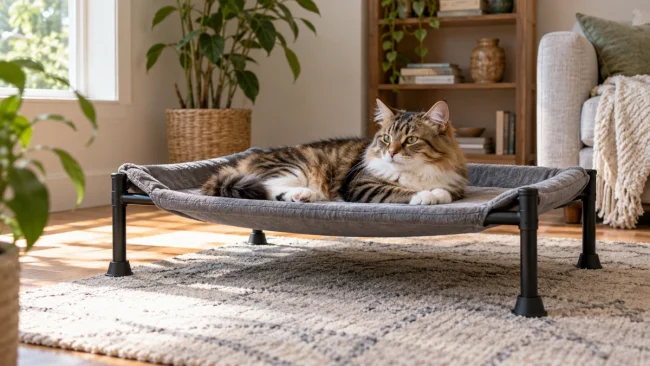
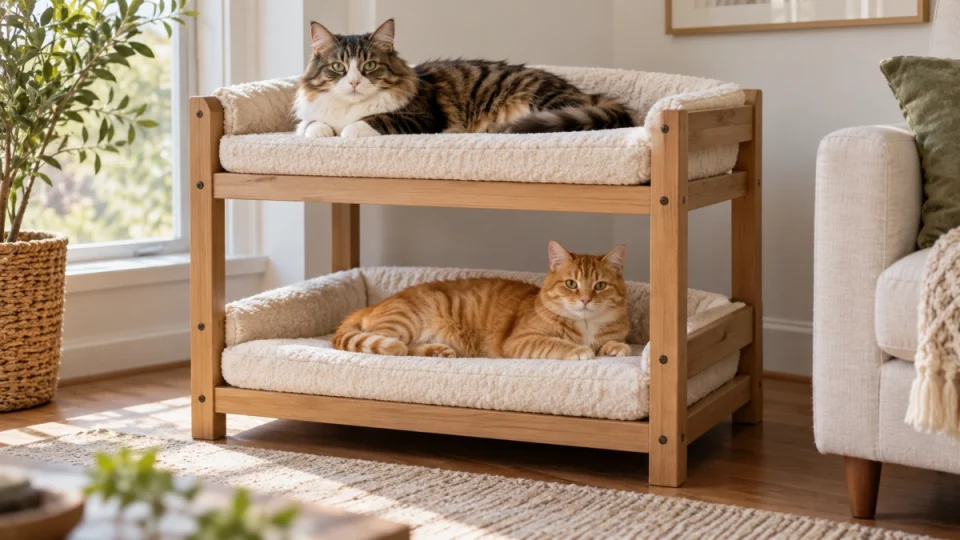
Elevated cat beds lift the sleeping surface above floor level, creating a raised resting spot that may appeal to cats that already choose chairs, shelves, sofas, cat trees, or other higher places for naps.
However, “elevated” can describe many different designs. Some cat beds sit only a few inches above the floor on short legs, while others use mesh, wooden frames, padded platforms, or hammock-style sleeping surfaces.
The right choice depends on much more than height. Stability, usable sleeping space, access, placement, surface material, cleaning, and your cat’s existing habits are usually more important than simply choosing the tallest design.
For more guides covering different sleeping styles, sizes, materials, and cat bed designs, visit our Cat Beds topic hub.
What Is an Elevated Cat Bed?
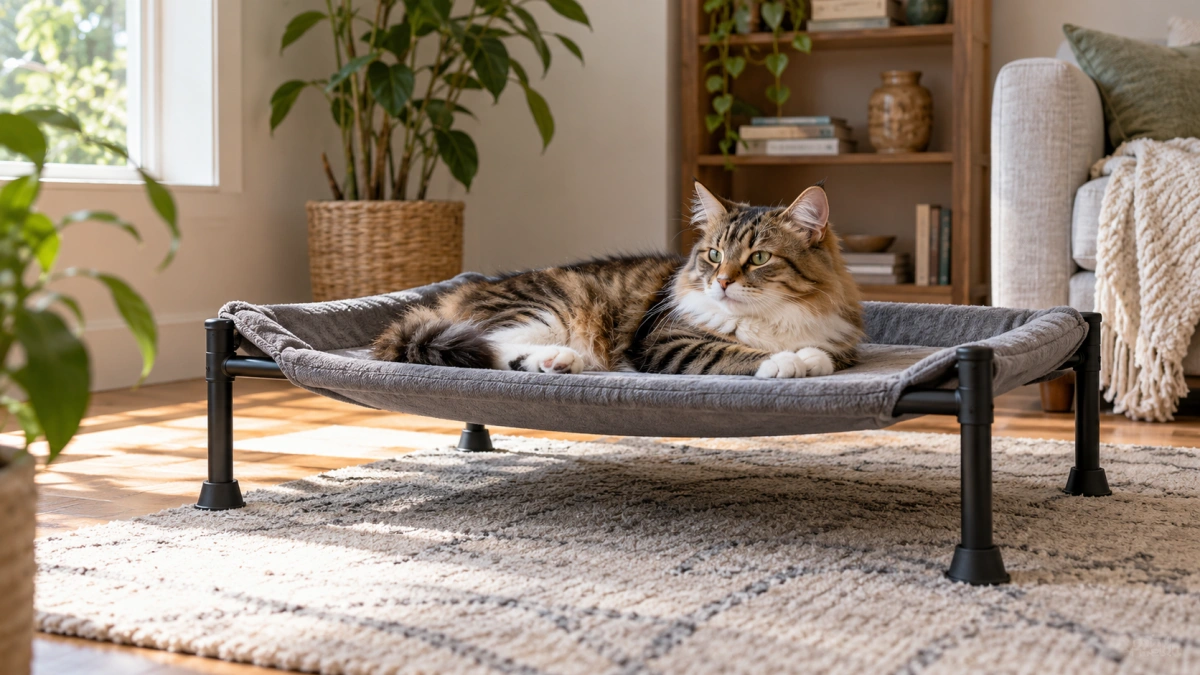
An elevated cat bed is any dedicated sleeping surface that is raised above the floor by a frame, legs, platform, sling, or other supporting structure.
Common designs include:
- Low raised cushioned beds
- Mesh cat cots
- Wooden platform beds
- Fabric sling beds
- Raised loungers
- Cat-tree sleeping platforms
Some elevated beds are only slightly higher than the floor. Others are incorporated into much taller cat furniture.
For most homes, the important question is not how high the bed can go, but whether your cat can reach it comfortably and whether the structure remains stable during normal use.
Why Do Some Cats Prefer Raised Sleeping Spots?
Many cats already choose sleeping places above floor level even when no dedicated raised bed is available.
You may notice your cat resting on:
- The back of a sofa
- A chair
- A shelf
- A cat tree platform
- A windowsill
- The top of sturdy furniture
A raised position can give the cat a clearer view of the surrounding room while creating some distance from activity taking place at floor level.
This does not mean every cat wants the highest possible bed. Some cats prefer a modest amount of elevation, while others continue choosing floor-level cushions, enclosed beds, or human furniture.
Watch the places your cat already chooses before deciding whether an elevated bed matches its normal behavior.
Elevated Cat Bed vs Cat Tree
An elevated cat bed and a cat tree can overlap, but they are not the same product.
A freestanding elevated bed is generally designed primarily as a resting surface. A cat tree usually combines several activities, such as:
- Climbing
- Scratching
- Resting
- Observing
- Hiding
If your cat already has enough climbing and scratching opportunities but repeatedly chooses slightly raised furniture for naps, a simple elevated bed may be sufficient.
If your cat needs more vertical movement and multiple platforms, a cat tree may provide a broader range of functions.
How High Should an Elevated Cat Bed Be?
There is no single ideal height for every cat.
The appropriate height depends on:
- Your cat’s age
- Mobility
- Jumping habits
- Body size
- Preferred sleeping locations
- The design of the room
A low raised bed can provide an off-the-floor resting surface without requiring a large jump.
A higher platform may appeal to an active cat that already climbs onto furniture and cat trees comfortably.
Do not assume that more height automatically makes the bed better.
Stability Matters More Than Height
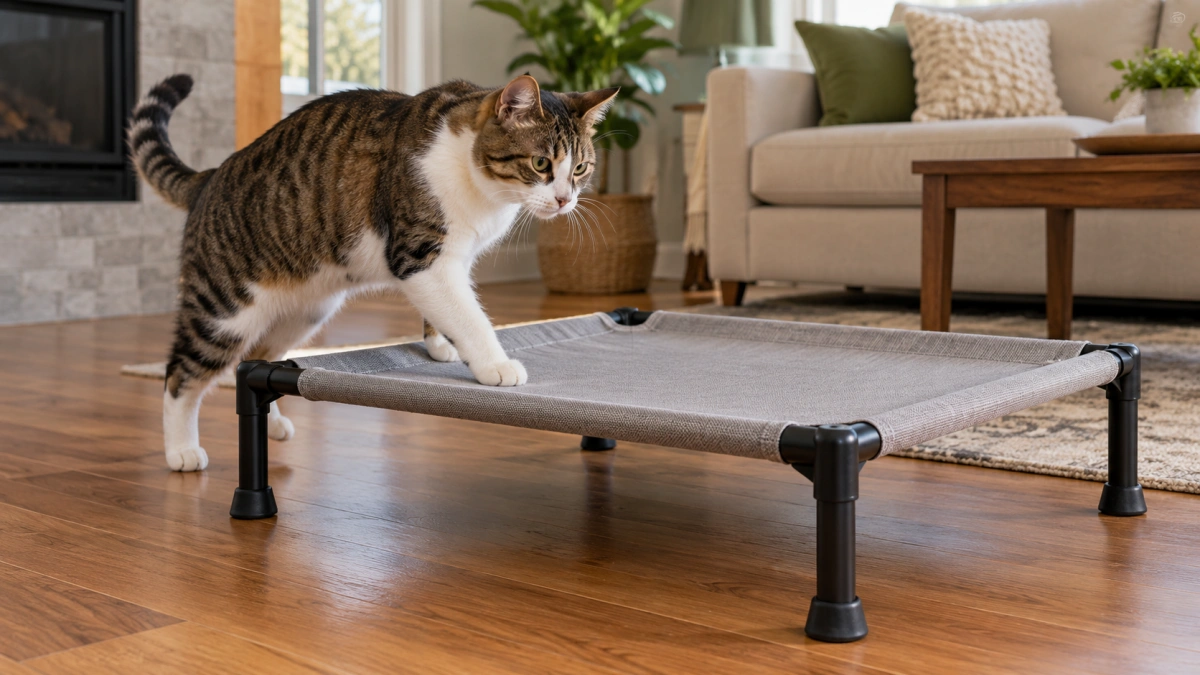
A raised sleeping surface needs to remain stable while your cat jumps onto it, turns around, kneads, stretches, and jumps off again.
Before using an elevated bed, check:
- Whether every leg sits firmly on the floor
- Whether the frame rocks or twists
- Whether joints are secure
- Whether the sleeping surface shifts
- Whether the feet slide on hard flooring
- Whether the product is suitable for your cat’s weight
A lightweight bed is not necessarily unstable, but it should not tip or slide during normal use.
Recheck screws, joints, fabric tension, and attachment points periodically because repeated use can gradually loosen components.
Check the Usable Sleeping Area
As with any cat bed, exterior dimensions can be misleading.
A frame may measure wider than the actual fabric, cushion, or mesh surface where the cat lies.
Check whether your cat can:
- Lie in its normal sleeping position
- Turn around comfortably
- Curl without hanging over the edge
- Stretch if it normally sleeps stretched out
This becomes especially important for large cats.
If your cat regularly outgrows standard beds, see our guide to cat beds for large cats for more detailed sizing considerations.
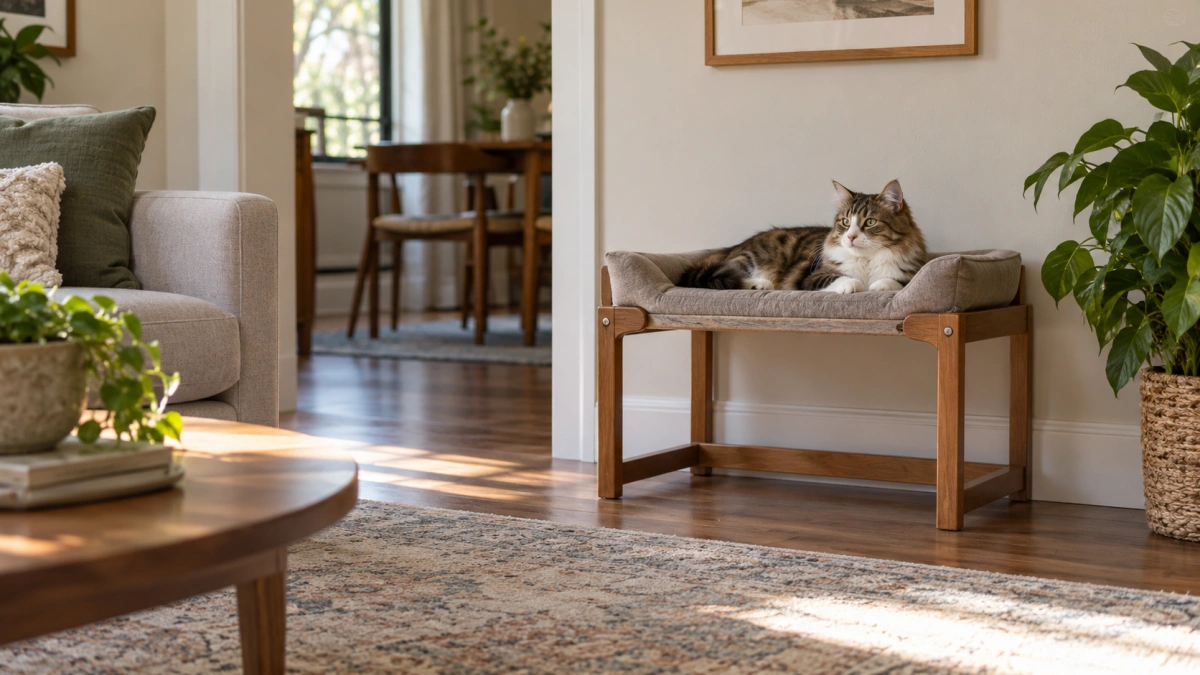
Where Should You Put an Elevated Cat Bed?
Placement can matter as much as the bed itself.
A good starting point is an area your cat already uses for resting.
Consider a location that is:
- Quiet
- Away from constant foot traffic
- On a stable level floor
- Easy for the cat to approach
- Comfortable in temperature
- Positioned where the cat can observe the room
Placing a new bed in the middle of a busy hallway simply because there is free floor space may make it less appealing.
A quiet wall or corner with a useful view of the room is often a more practical starting point.
Can You Put an Elevated Cat Bed Near a Window?
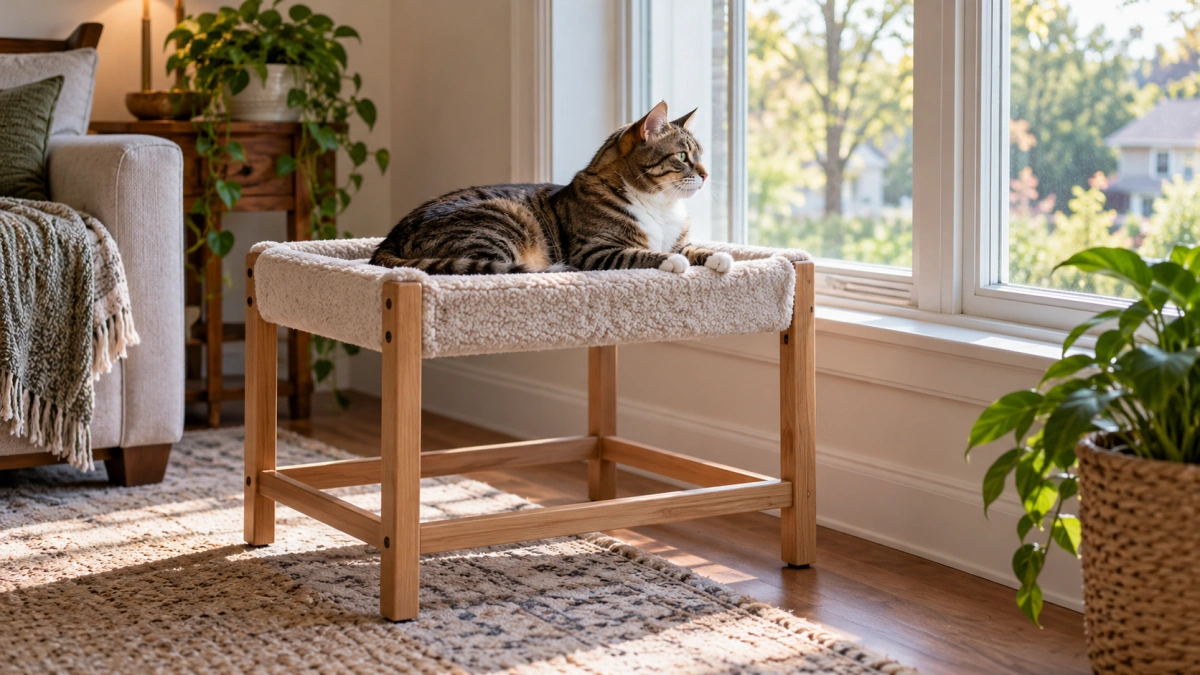
Yes, a freestanding elevated bed can be placed near a window if the location is stable, comfortable, and free from avoidable hazards.
A window location may appeal to cats that already spend time watching outdoor activity.
Before choosing the spot, check:
- Whether the floor is level
- Whether the bed can slide
- Whether strong direct sunlight makes the area too warm
- Whether cold drafts affect the location
- Whether blinds or curtain cords are accessible
- Whether the cat has a clear way on and off the bed
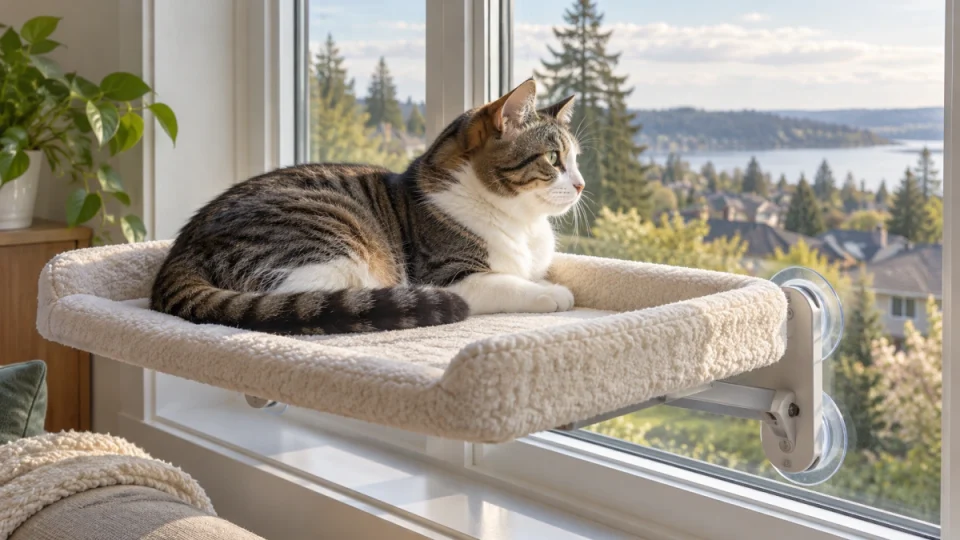
A freestanding raised bed near a window is different from a bed that attaches directly to glass.
For suction-mounted, sill-mounted, and hammock-style window designs, see our guide to window cat beds.
Should an Elevated Bed Be Against a Wall?
It does not have to be, but placing a freestanding bed near a wall can work well in many rooms.
A wall-side position can:
- Keep the bed away from walking routes
- Reduce the number of directions people approach from
- Create a more defined resting location
- Leave the center of the room open
However, avoid wedging the bed into a space that blocks your cat’s normal entry or exit.
The sleeping spot should remain easy to approach.
Mesh vs Cushioned Elevated Cat Beds
Raised beds use different sleeping surfaces, and the surface can influence whether your cat accepts the bed.
Mesh Elevated Beds
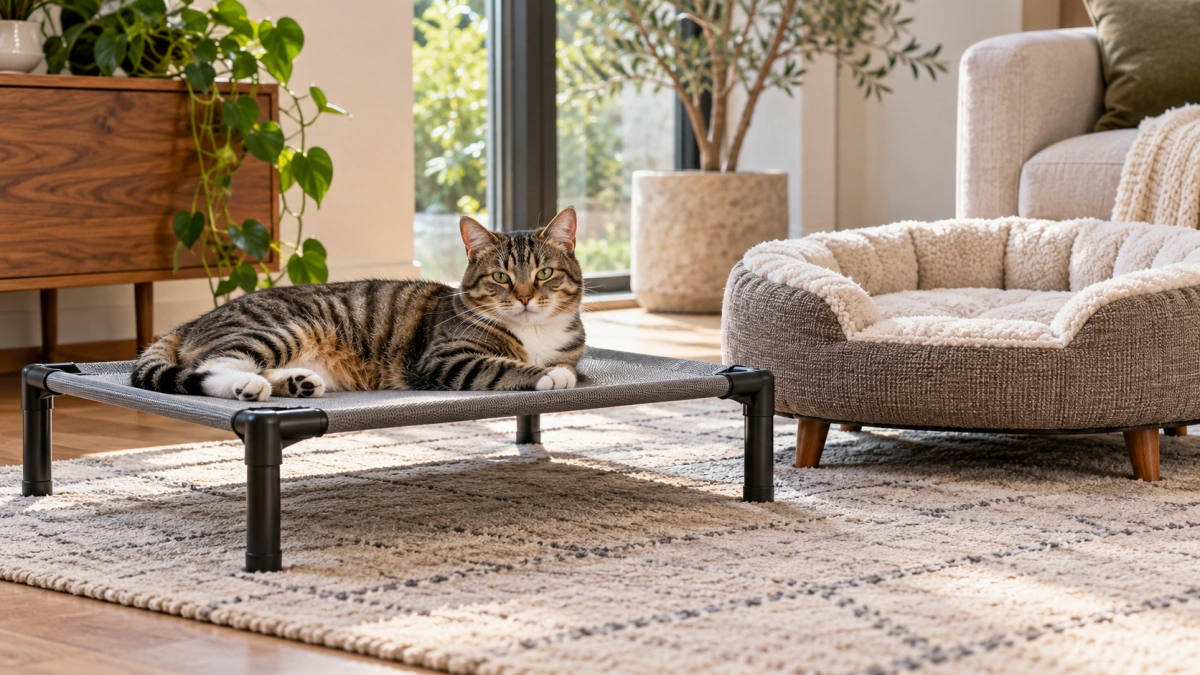
A mesh or tensioned fabric surface usually creates a firmer resting platform with open space underneath.
Potential advantages include:
- Air movement beneath the sleeping area
- Less bulky cushioning
- Easy removal of loose fur on some designs
- A different texture from plush bedding
However, cats that strongly prefer thick blankets or padded furniture may not find a firm mesh surface as attractive.
Cushioned Raised Beds
These designs combine elevation with a padded cushion or mattress.
They may be a better match for cats that prefer:
- Soft upholstery
- Blankets
- Padded furniture
- More insulation beneath the body
Watch your cat’s existing surface preferences rather than assuming one material is universally better.
Can Elevated Cat Beds Help With Airflow?
Beds that use an open frame and breathable sleeping surface can allow air to move beneath the cat instead of trapping the sleeping surface directly against the floor.
That can make elevated mesh designs useful in warm rooms for cats that already prefer open, firmer resting places.
However, an elevated bed does not lower the temperature of the room.
During hot weather, access to an appropriately cool environment, water, shade, and ventilation remains more important than any particular bed design.
For temperature-focused options, our guide to cooling cat beds compares elevated mesh designs with other summer sleeping surfaces.
Elevated Cat Beds for Senior Cats
Some older cats still enjoy resting above floor level but may become less willing or able to make large jumps.
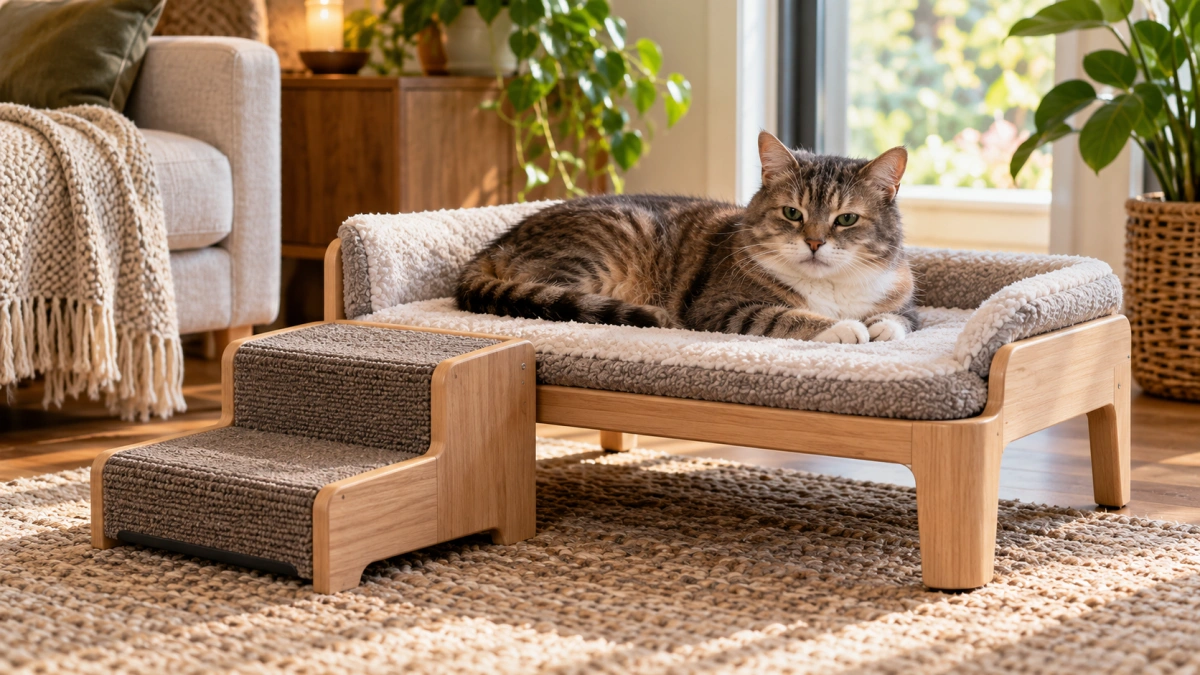
A lower raised bed may provide a useful compromise.
For an older cat, consider:
- A modest bed height
- A stable sleeping surface
- Wide enough usable space
- Nonslip feet
- An easy approach
- A nearby step or intermediate platform if needed
Do not assume that a cat that used to sleep on a high shelf will always be comfortable reaching the same height.
Changes in mobility, hesitation before jumping, or repeated missed jumps deserve attention, especially if the change is sudden.
Elevated Beds for Large Cats
Larger cats place greater demands on a raised frame and sleeping surface.
Check:
- Manufacturer weight limits
- Platform width
- Platform length
- Frame construction
- Fabric tension
- Leg stability
The bed should not sag excessively or become unstable simply because the cat occupies most of the sleeping area.
If two cats regularly sleep together, consider their combined weight and the amount of usable surface rather than evaluating the bed for only one cat.
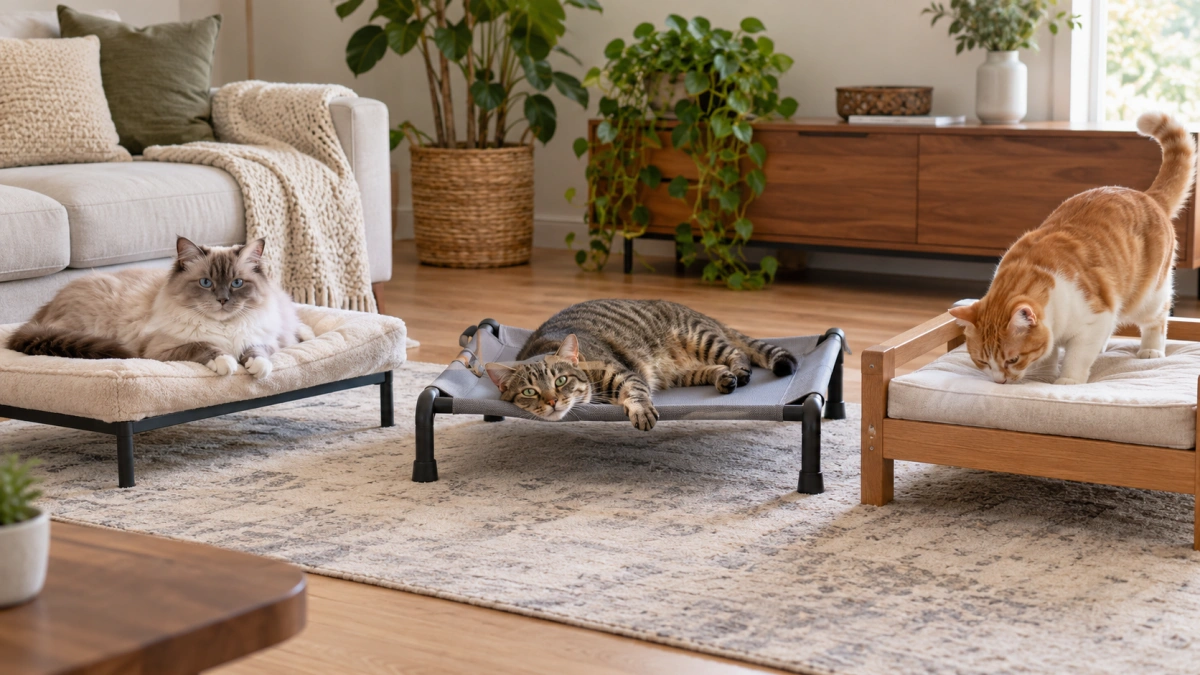
Elevated Cat Beds in Multi-Cat Homes
In a home with several cats, one elevated resting place may become more valuable than expected.
Instead of expecting every cat to share the same raised bed, provide multiple resting options when practical.
Those locations do not all need to be identical.
For example, one cat may prefer:
- A low raised cot
- A cat tree platform
- A cushioned shelf
- A window-side resting spot
Giving cats different resting choices can make it easier for each cat to select a location that suits its own preferences.
How to Introduce a New Elevated Cat Bed
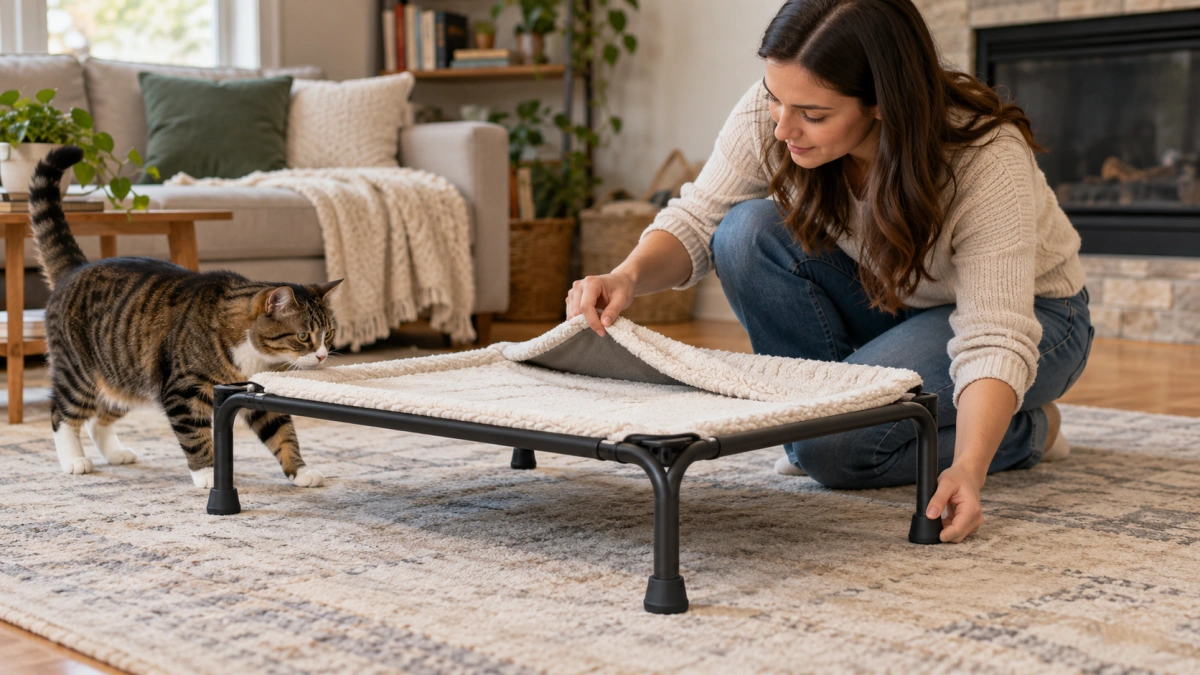
Place the bed in a familiar resting area and allow your cat to investigate it without being placed onto the surface.
You can make the surface more familiar by adding a blanket or fabric your cat already uses, provided it does not make the bed unstable or slippery.
Avoid repeatedly moving the bed during the first few days.
Some cats investigate immediately, while others may take longer to include a new object in their normal sleeping routine.
If the cat continues choosing a nearby chair, sofa, or shelf instead, consider whether the location or surface is more important than the bed itself.
Cleaning an Elevated Cat Bed
Cleaning depends on whether the bed uses mesh, fabric, foam, or a removable cushion.
Useful maintenance features include:
- Removable fabric panels
- Machine-washable covers
- Wipe-clean frames
- Replaceable cushions
- Easy access underneath for vacuuming
Check manufacturer care instructions before washing the sleeping surface.
Also inspect the frame while cleaning. Look for loose screws, damaged seams, stretched fabric, cracks, or unstable joints before returning the bed to normal use.
Common Elevated Cat Bed Buying Mistakes
- Choosing the tallest bed instead of the most stable one
- Ignoring the cat’s existing sleeping habits
- Buying by exterior dimensions only
- Ignoring the usable sleeping surface
- Overlooking the product weight limit
- Placing the bed in a busy walkway
- Ignoring slippery flooring
- Choosing a height that is difficult for an older cat
- Assuming every cat prefers mesh
- Failing to recheck joints and fasteners
Elevated Cat Bed Buying Checklist
- Does my cat already prefer raised sleeping places?
- Is the platform large enough?
- Can my cat enter and leave easily?
- Is the height appropriate for my cat?
- Does the frame remain stable?
- Is the bed suitable for my cat’s weight?
- Are the feet nonslip?
- Does the sleeping surface match my cat’s preferences?
- Can the fabric or cushion be cleaned?
- Is the intended location quiet?
- Can my cat see the room from the bed?
- Will the bed fit safely near the wall or window?
Final Thoughts
Elevated cat beds can be a useful option for cats that already choose chairs, shelves, cat trees, and other raised resting places.
The best design is not necessarily the highest one. Stability, usable sleeping space, safe access, suitable height, surface preference, placement, and easy cleaning are more important.
Start by watching where your cat already sleeps. A cat that repeatedly chooses slightly raised furniture may enjoy a low freestanding bed, while a confident climber may prefer a higher platform or cat-tree sleeping area.
Place the bed somewhere calm, stable, and easy to reach, then allow your cat to decide whether the new raised sleeping spot fits its normal routine.