By
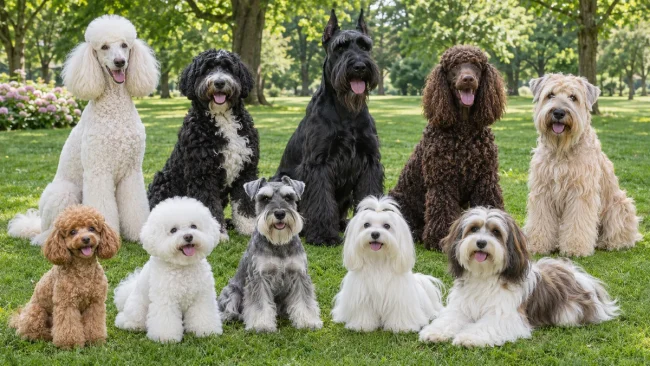
Low-shedding dog breeds can dramatically reduce the amount of loose hair you find on clothing, furniture and floors, but there is an important distinction between “low shedding” and “does not shed.”
No dog is completely shed-free. Hair naturally reaches the end of its growth cycle, and even breeds commonly marketed as non-shedding lose some hair or skin material. The difference is that certain curly, silky, wiry or continuously growing coats release far less visible hair into the environment.
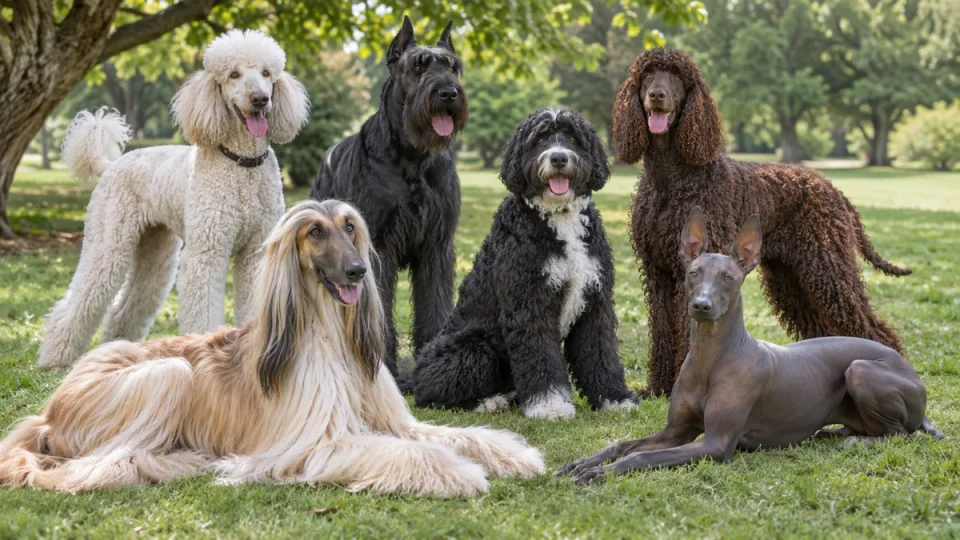
Poodles, Bichon Frises, Schnauzers, Maltese, Havanese, Portuguese Water Dogs and several water and terrier breeds are well-known examples.
Low shedding can be especially appealing if you dislike dog hair around the home, but it comes with a major trade-off: many of the breeds that shed the least require some of the most consistent brushing, clipping and professional grooming.
This guide compares low-shedding breeds across small, medium and large sizes and explains the difference between shedding, coat maintenance and dog allergies.
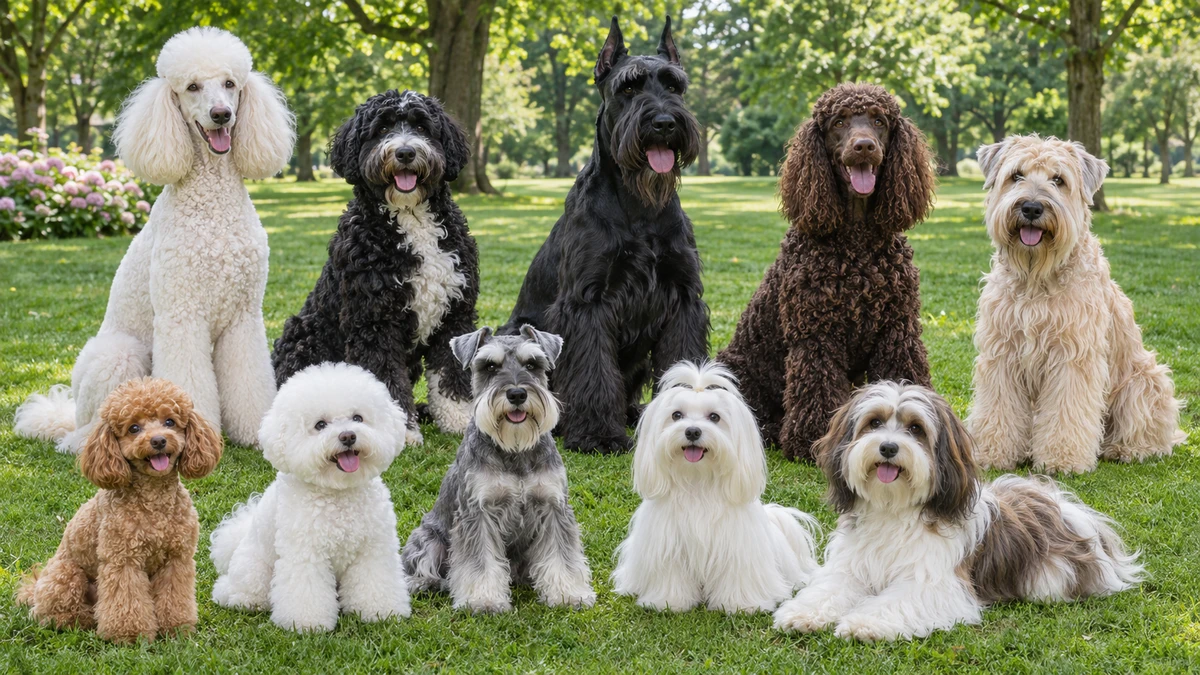
What Does Low Shedding Actually Mean?
Shedding is the natural process through which old or damaged hair leaves a dog’s coat.
Some breeds release substantial amounts of hair directly into the environment. Others retain much of the loose hair within curly, wiry or long-growing coats until brushing or grooming removes it.
A low-shedding dog may therefore leave noticeably less hair on:
- Carpets
- Sofas
- Clothing
- Car seats
- Dog bedding
But the hair has not magically disappeared. In many low-shedding breeds, it must be manually removed through coat maintenance.
Quick Comparison of Low-Shedding Dog Breeds
| Breed | General Size | Coat Type | Shedding | Grooming |
|---|---|---|---|---|
| Poodle | Toy to large | Curly | Very low | High |
| Bichon Frise | Small | Curly double coat | Very low | High |
| Miniature Schnauzer | Small | Wiry double coat | Very low | Moderate to high |
| Maltese | Very small | Silky long hair | Low | High when kept long |
| Havanese | Small | Soft long coat | Low | Moderate to high |
| Lagotto Romagnolo | Medium | Curly woolly coat | Low | Moderate |
| Kerry Blue Terrier | Medium | Soft wavy coat | Low | High |
| Soft Coated Wheaten Terrier | Medium | Soft silky coat | Low | High |
| Portuguese Water Dog | Medium-large | Curly or wavy | Low | High |
| Giant Schnauzer | Large | Wiry double coat | Low | Moderate to high |
| Irish Water Spaniel | Medium-large | Dense curly coat | Low | Moderate to high |
1. Poodle
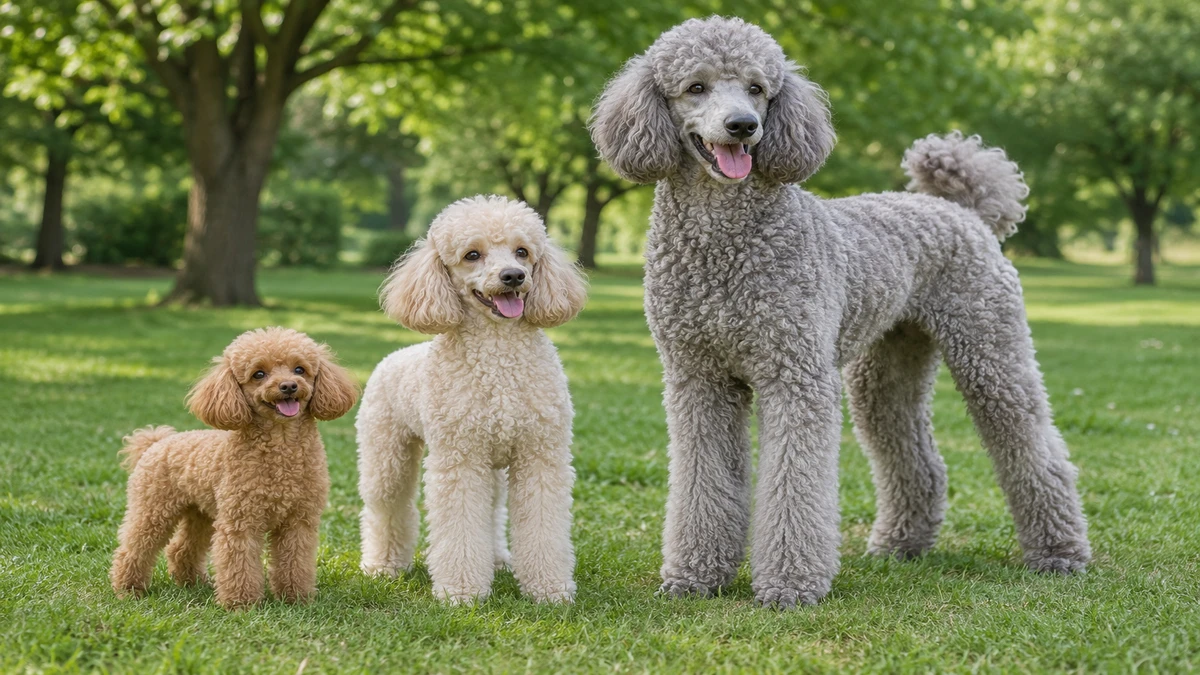
The Poodle is probably the best-known example of a low-shedding dog breed.
It comes in three recognized sizes:
- Toy
- Miniature
- Standard
All three share the characteristic curly coat and relatively low level of loose hair around the home.
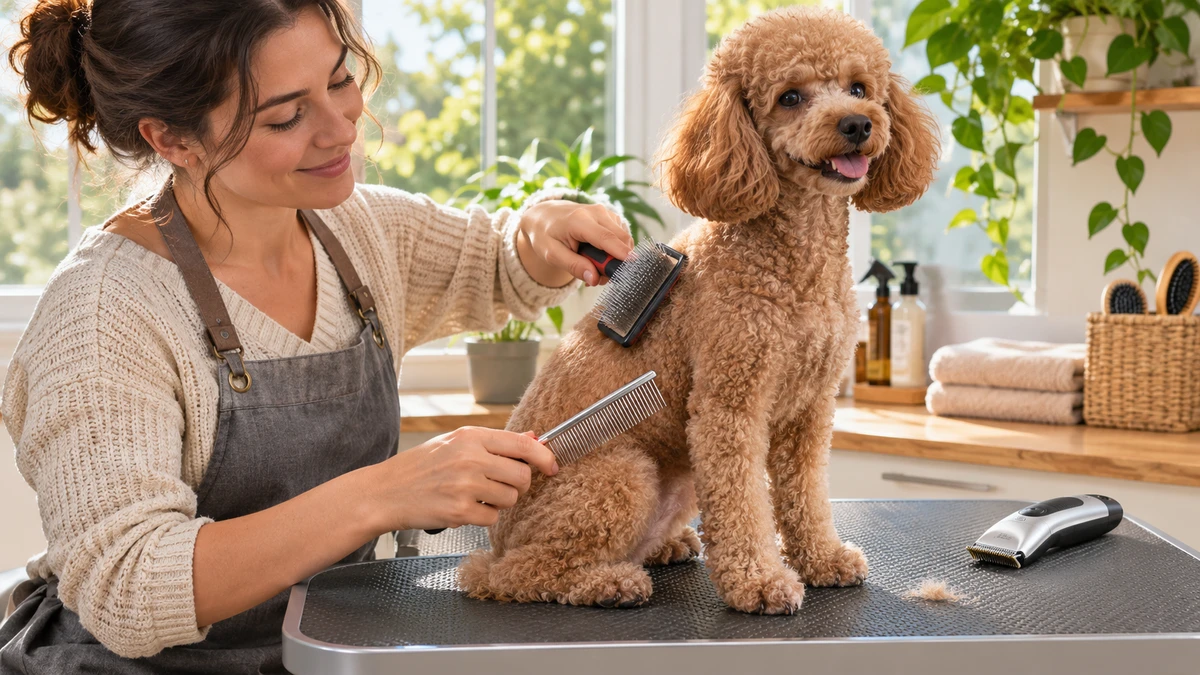
The coat continues growing and can mat close to the skin if not maintained.
Most pet Poodles are kept in shorter practical trims rather than complex show clips.
Owners should expect regular:
- Brushing
- Combing
- Bathing
- Clipping
Poodles are also highly intelligent and active dogs. Choosing one only because it sheds little can be a mistake if you are not interested in training, exercise and mental stimulation.
2. Bichon Frise
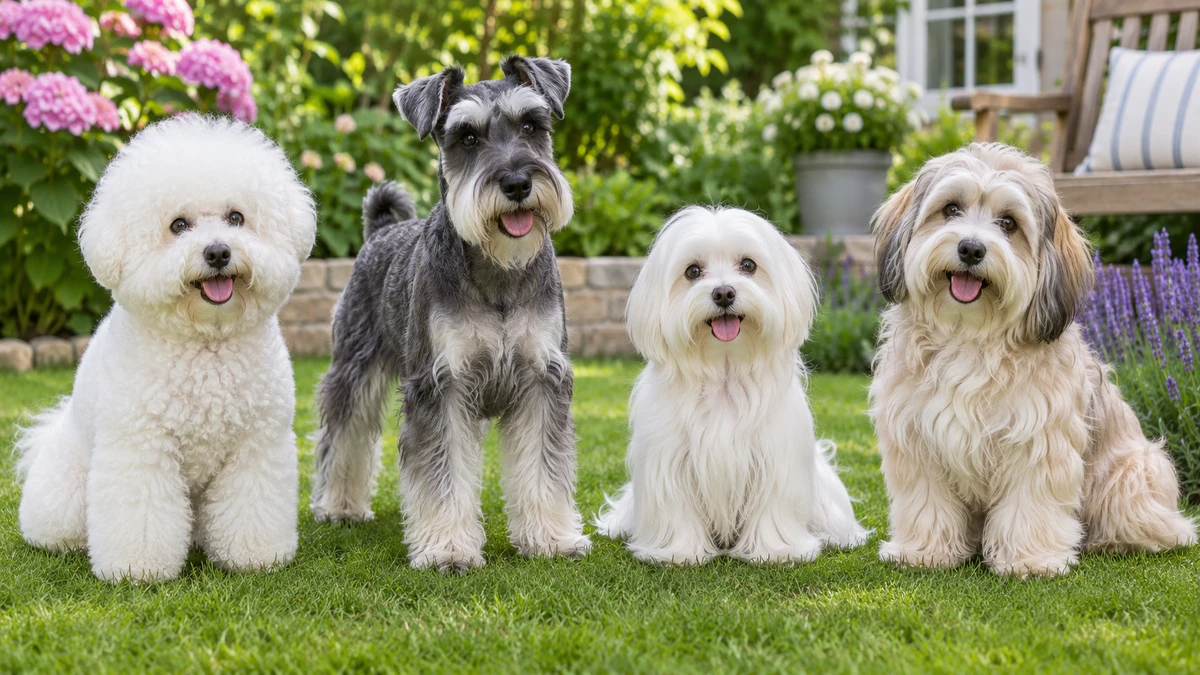
The Bichon Frise has a soft curly coat that releases very little visible hair into the home.
Loose hairs tend to remain trapped within the coat instead of falling freely onto furniture.
That advantage creates a grooming responsibility.
The trapped hair needs to be brushed out before it contributes to tangles and mats.
Most companion Bichons also require regular professional trimming.
This makes the breed an excellent illustration of the central low-shedding trade-off: less vacuuming can mean more grooming.
3. Miniature Schnauzer
Miniature Schnauzers have a wiry double coat and shed very little compared with many similarly sized dogs.
The breed is physically sturdier than many tiny companion breeds and brings a lively terrier personality.
Most pet Miniature Schnauzers are clipped regularly rather than maintained through traditional hand-stripping.
Their beard and leg furnishings also need brushing.
Low shedding does not reduce the breed’s need for exercise, play or training.
4. Maltese
The Maltese has long silky hair that sheds minimally compared with dense double-coated dogs.
When kept at full length, the coat requires daily brushing and combing to prevent mats.
Many family pets are kept in shorter companion trims to simplify maintenance.
Their tiny adult size also makes Maltese a popular choice for people who want both minimal loose hair and a compact companion.
5. Havanese
Havanese have long, soft coats that shed relatively little.
The coat can still tangle, especially around the ears, legs and areas affected by collar or harness friction.
Owners who keep the hair long may need frequent brushing, while shorter trims can reduce everyday maintenance.
Havanese are strongly companion-oriented dogs and generally prefer being involved in family life.
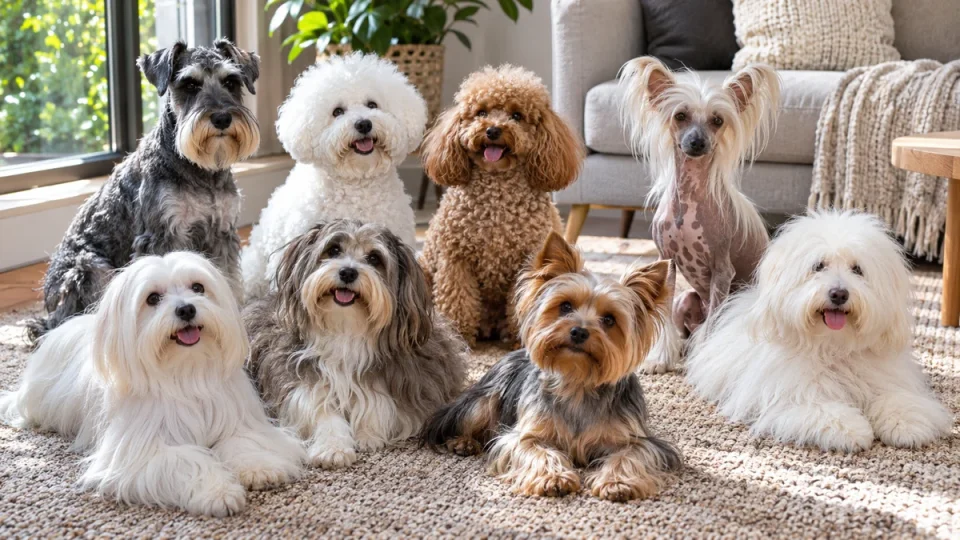
Small Low-Shedding Dog Breeds
Small dogs offer some of the largest variety in the low-shedding category.
Options include:
- Toy Poodle
- Miniature Poodle
- Bichon Frise
- Miniature Schnauzer
- Maltese
- Havanese
- Coton de Tulear
- Shih Tzu
- Yorkshire Terrier
- Chinese Crested
Their temperaments are not interchangeable.
A Miniature Schnauzer is an alert terrier. A Havanese is primarily a companion breed. A Toy Poodle can be highly athletic and training-focused. A Maltese is extremely compact.
If your search is specifically limited to smaller dogs, see our Small Low-Shedding Dog Breeds guide.
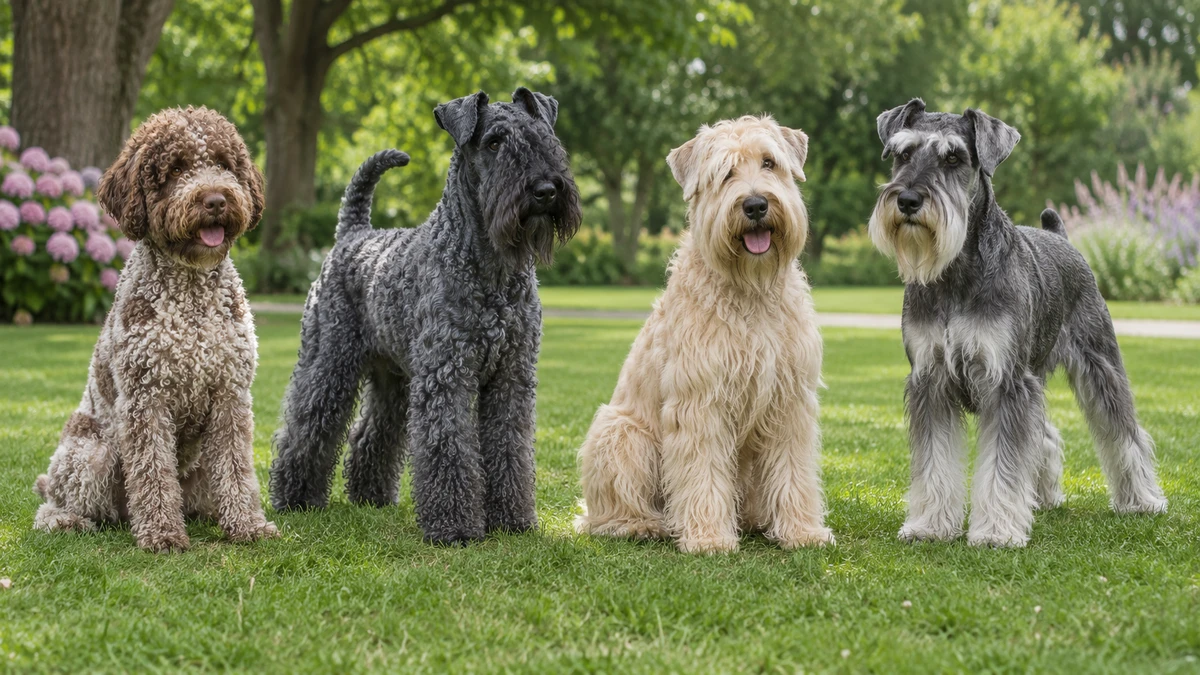
6. Lagotto Romagnolo
The Lagotto Romagnolo is a medium-sized Italian breed with a dense curly coat.
It is best known today for truffle hunting, which reflects an active working background rather than a purely decorative role.
The woolly curls shed relatively little into the environment.
The coat requires regular maintenance and periodic trimming so that it does not become heavily matted.
7. Kerry Blue Terrier
Kerry Blue Terriers have a distinctive soft, wavy coat that does not follow the heavy seasonal shedding pattern of many double-coated breeds.
Their coat grows continuously and needs regular brushing and trimming.
This is also a genuine terrier with intelligence, confidence and substantial activity needs.
Low shedding should therefore be considered only one part of the ownership decision.
8. Soft Coated Wheaten Terrier
The Soft Coated Wheaten Terrier has a silky, softly waving coat that releases relatively little loose hair.
The coat needs regular grooming to prevent mats.
Wheatens are active dogs and generally need significant daily exercise and interaction.
A family looking for a low-shedding medium-sized dog may find the breed attractive, but it should not be confused with a low-energy companion.
9. Standard Schnauzer
The Standard Schnauzer occupies the middle position between the Miniature and Giant Schnauzer.
Its dense wiry coat sheds relatively little when maintained correctly.
Beard and leg furnishings need regular brushing, and the body coat is generally clipped or hand-stripped depending on owner goals.
The Standard Schnauzer is athletic, intelligent and alert.
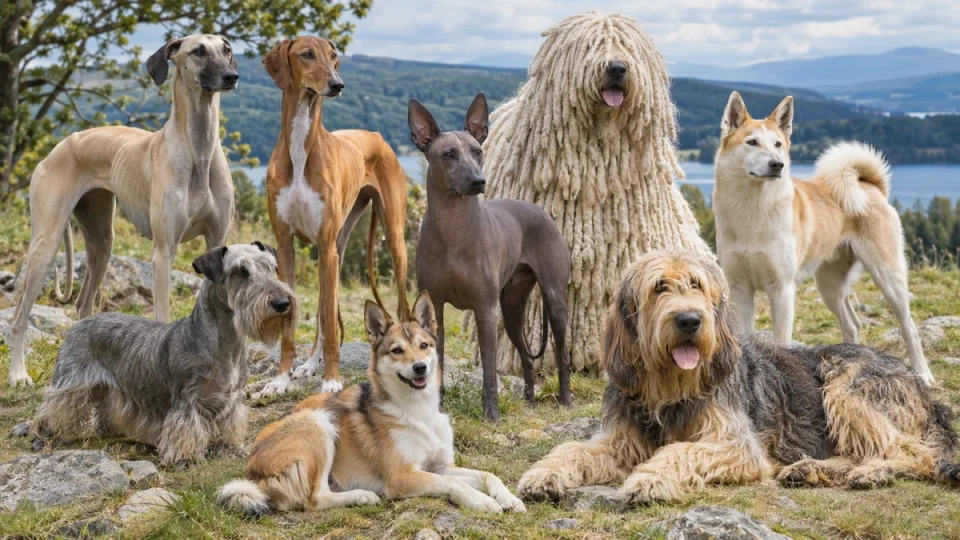
Medium Low-Shedding Dog Breeds
Good medium-sized options to research include:
- Lagotto Romagnolo
- Kerry Blue Terrier
- Soft Coated Wheaten Terrier
- Standard Schnauzer
- Spanish Water Dog
- Bedlington Terrier
These dogs offer an alternative for people who want more physical substance than a toy breed without moving into 70- or 100-pound dog territory.
10. Portuguese Water Dog
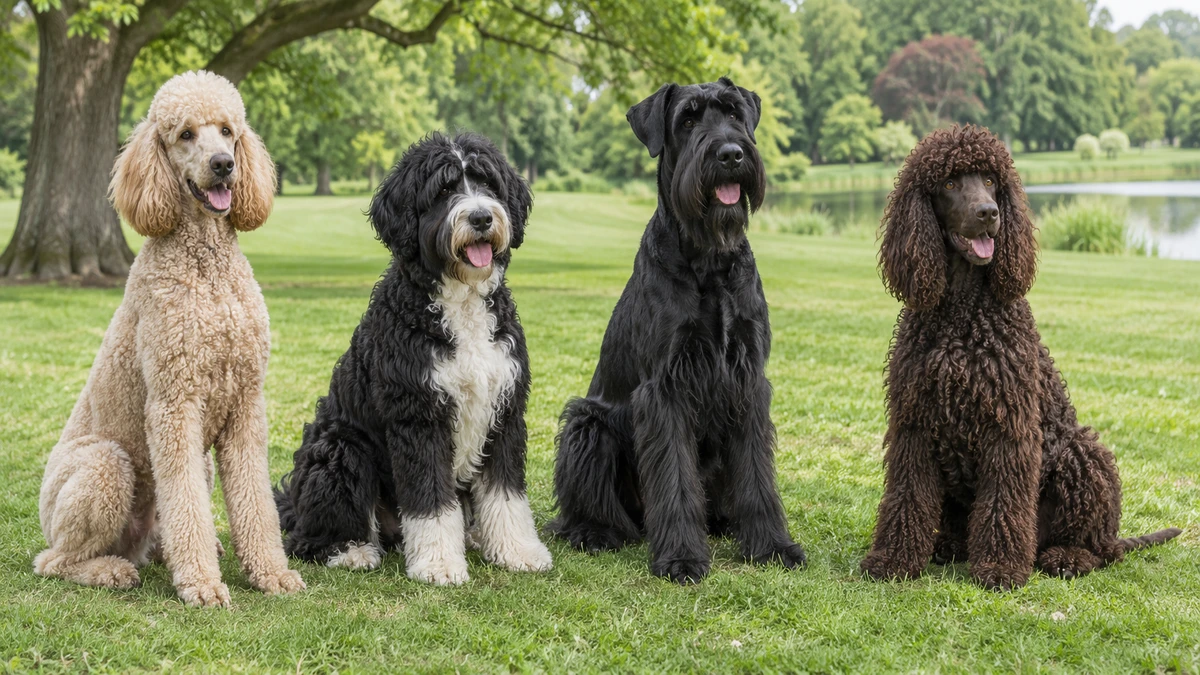
Portuguese Water Dogs have tight curls or wavy coats that shed relatively little.
They were developed as athletic working dogs helping fishermen along Portugal’s coast.
That history still matters.
Modern Portuguese Water Dogs are energetic, intelligent and highly trainable.
They need vigorous exercise and regular coat maintenance.
Many companion dogs are kept in a practical retriever clip.
11. Giant Schnauzer
Giant Schnauzers combine a low-shedding wiry coat with a large, powerful working-dog body.
They need regular brushing and periodic clipping or stripping, but they leave considerably less loose hair around the home than many large double-coated dogs.
However, they are not a simple solution for someone whose only requirement is low shedding.
Giant Schnauzers are intelligent, energetic, protective working dogs requiring substantial training, exercise and socialization.
12. Irish Water Spaniel
Irish Water Spaniels have dense liver-colored curls and a distinctive smooth “rat tail.”
Their coat sheds relatively little but needs consistent brushing and periodic trimming.
As a Sporting breed, the Irish Water Spaniel is active and generally needs significant physical and mental exercise.
Large Low-Shedding Dog Breeds
Larger options include:
- Standard Poodle
- Portuguese Water Dog
- Giant Schnauzer
- Irish Water Spaniel
- Barbet
- Airedale Terrier
- Bouvier des Flandres
The larger the dog, the larger the grooming job can become.
More body surface area means more coat to brush, wash, dry and trim.
For a dedicated comparison, visit our Large Low-Shedding Dog Breeds guide.
What About Hairless Dog Breeds?
Hairless breeds can dramatically reduce traditional coat shedding, but hairless does not mean maintenance-free or allergen-free.
Examples include:
- American Hairless Terrier
- Hairless Chinese Crested
- Hairless Xoloitzcuintli
- Hairless Peruvian Inca Orchid
Skin still requires care, and hairless dogs still produce biological allergens.
Sun exposure, cold weather and skin condition may also require special management depending on breed and environment.
Are Non-Shedding Dog Breeds Really Non-Shedding?
The term “non-shedding” is commonly used in breed descriptions and search queries, but it should not be interpreted literally.
Even low-shedding coats lose some hair.
The difference is often where the loose hair goes.
With a Poodle or Bichon, it tends to remain caught in the surrounding coat until brushing removes it.
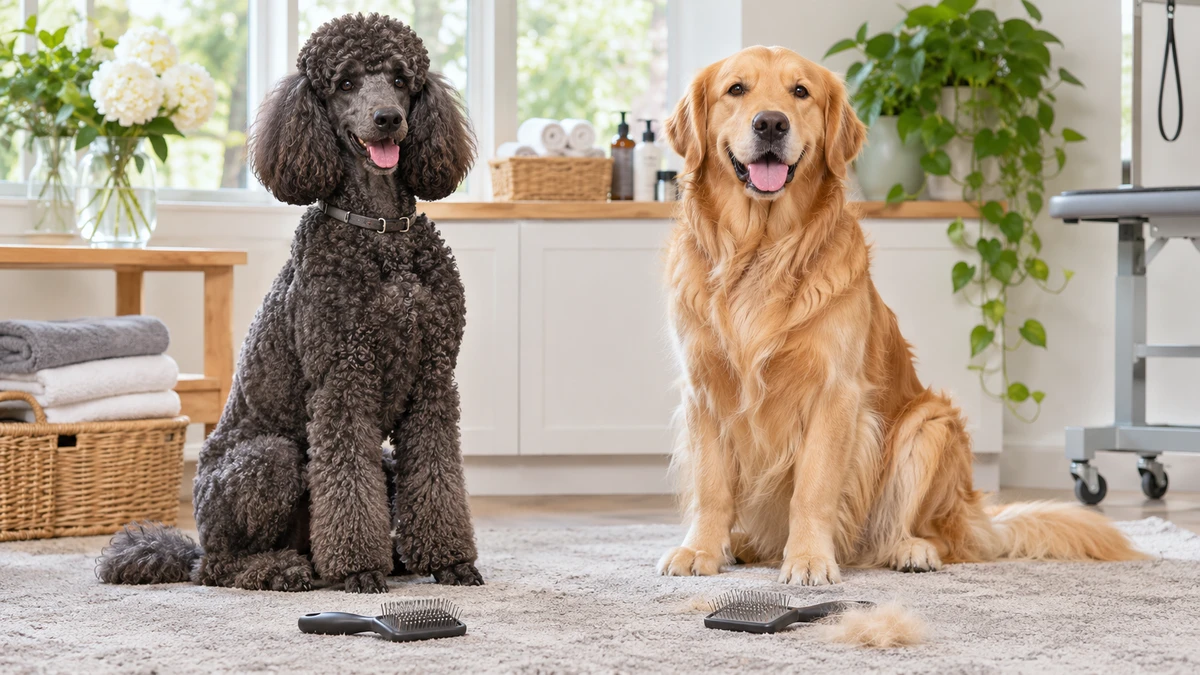
With a Labrador Retriever or Golden Retriever, much more loose hair can leave the body directly and end up throughout the home.
Why Do Some Dog Breeds Shed Less?
Several coat characteristics can reduce visible shedding.
Longer Hair-Growth Cycles
Some breeds grow hair for longer periods before individual hairs enter the shedding phase.
Curly Coats
Curls can trap loose hairs close to the body until grooming removes them.
Wiry Coats
Several terriers and Schnauzers retain dead coat that can be removed through brushing, clipping or stripping.
Hairless Genetics
Hairless breeds simply have much less body hair available to shed, although they still produce allergens.
Low Shedding Does Not Mean Low Maintenance
In many cases, the opposite is true.
A short-coated Labrador may leave much more hair around your home than a Poodle, but the Labrador generally does not need professional clipping every few weeks.
Low-shedding breeds may require:
- Brushing to the skin
- Combing
- Mat prevention
- Professional clipping
- Hand-stripping
- Regular bathing
- Thorough drying
This distinction is important enough that shedding level and maintenance level should always be evaluated separately.
Which Dog Breeds Shed the Least?
There is no universal scientific ranking from first to last, but breeds widely recognized for very low visible shedding include:
- Poodles
- Bichon Frises
- Schnauzers
- Maltese
- Havanese
- Portuguese Water Dogs
- Irish Water Spaniels
- Kerry Blue Terriers
- Lagotto Romagnolos
- American Hairless Terriers
Actual household hair varies with coat length, grooming routine, individual dog and season.
Which Dog Breeds Shed the Most?
At the opposite end are breeds with dense double coats or naturally high shedding levels.
Examples commonly associated with substantial shedding include:
- Golden Retriever
- German Shepherd Dog
- Siberian Husky
- Labrador Retriever
- Akita
- Chow Chow
- Samoyed
- Alaskan Malamute
Several of these breeds shed throughout the year and may also experience periods of much heavier seasonal coat loss.
This does not make them poor pets. It simply means owners need to be comfortable with regular brushing, vacuuming and loose hair around the home.
Why Do Double-Coated Dogs Shed So Much?
A double coat contains two main layers:
- Protective outer guard hairs
- Soft insulating undercoat
The undercoat changes with environmental and seasonal conditions and can release large amounts of hair during coat transitions.
This is why a relatively short-coated Labrador can still shed considerably more visible hair than a long-coated Maltese.
Hair length alone does not predict shedding.
Does Seasonal Shedding Affect Every Dog?
Not equally.
Double-coated dogs often show more obvious seasonal coat changes.
Continuously growing coats such as those seen in Poodles follow a different growth pattern and do not typically produce the same dramatic seasonal “coat blow.”
Indoor climate and individual biology can also influence shedding patterns.
Low Shedding Is Not the Same as Hypoallergenic
This is the most important health-related distinction in the article.
Dog allergies can involve proteins found in:
- Dander
- Saliva
- Skin secretions
- Other biological material
Loose hair can transport allergens through the home, so reduced shedding may help some people manage exposure.
But no breed can guarantee that an allergic person will not react.
Two dogs of the same breed may even produce different reactions in the same person.
Are Poodle Mixes Guaranteed to Be Low Shedding?
No.
Mixed-breed coat inheritance can be less predictable than the established coat of a recognized pure breed.
A puppy with one Poodle parent may inherit different combinations of coat traits from both parents.
Some individuals may shed very little, while others may shed noticeably more.
Do not assume that adding “-doodle” to a breed name guarantees a non-shedding adult coat.
Can Grooming Reduce Shedding?
Yes, grooming can reduce how much loose hair reaches the home, especially in moderate or heavy shedders.
Useful routines include:
- Regular brushing
- Using tools appropriate for the coat
- Bathing when needed
- Thoroughly drying dense coats
- Removing loose undercoat during seasonal shedding
Grooming does not change a genetically heavy-shedding breed into a low-shedding breed, but it can make the hair much easier to manage.
Should You Shave a Heavy-Shedding Dog?
Routine shaving is not an appropriate solution for many double-coated breeds.
The outer coat and undercoat serve different protective functions, and shaving can affect normal coat regrowth.
Regular brushing and undercoat removal are generally more appropriate ways to manage shedding unless a veterinarian or professional groomer recommends clipping for a specific reason.
Low-Shedding Dogs for Apartments
Small low-shedding breeds can make sense in compact homes, but shedding level alone does not determine apartment suitability.
Consider:
- Barking
- Energy
- Exercise
- Separation tolerance
- Neighbor proximity
A Miniature Schnauzer may leave little hair on the furniture while still being a lively, alert dog that notices hallway activity.
A Toy Poodle may physically fit almost anywhere but need significant mental engagement.
Low-Shedding Dogs for Families
Family suitability depends more on temperament and household fit than coat type.
Examples families may research include:
- Poodle
- Bichon Frise
- Havanese
- Miniature Schnauzer
- Portuguese Water Dog
- Soft Coated Wheaten Terrier
Adult size, energy, children’s ages and training requirements should all be considered independently of shedding.
Does Low Shedding Mean Less Cleaning?
Often there is less loose hair to vacuum, but a dog still introduces:
- Dirt
- Dander
- Pollen
- Saliva
- Mud
- Outdoor debris
A low-shedding coat can reduce one category of household cleaning, not eliminate pet-related cleaning entirely.
Which Low-Shedding Dog Has the Easiest Coat?
There is no universal winner.
Most classic low-shedding dogs exchange visible shedding for some form of coat maintenance.
A hairless dog may reduce brushing but require skin care.
A Poodle needs clipping.
A Schnauzer needs clipping or stripping.
A Maltese requires brushing when kept long.
A Spanish Water Dog follows a specialized curly-coat routine.
The better question is which maintenance style you prefer.
Low Shedding vs Low Maintenance
These are two separate search intentions.
Low shedding describes what happens to the coat.
Low maintenance describes the total work required to live comfortably with the dog, including:
- Grooming
- Exercise
- Training
- Health management
- Cleaning
- Behavioral needs
A Standard Poodle can be low shedding but relatively high maintenance because of grooming and exercise.
For that broader question, see our Low-Maintenance Dog Breeds guide.
Which Low-Shedding Dog Breed Is Right for You?
| Your Priority | Breeds Worth Researching |
|---|---|
| Very small low-shedding dog | Toy Poodle, Maltese |
| Friendly curly small companion | Bichon Frise |
| Sturdy small terrier-type dog | Miniature Schnauzer |
| Social small companion | Havanese |
| Medium curly working dog | Lagotto Romagnolo |
| Medium terrier | Kerry Blue Terrier or Wheaten Terrier |
| Highly trainable larger dog | Standard Poodle |
| Active water dog | Portuguese Water Dog |
| Large powerful working dog | Giant Schnauzer |
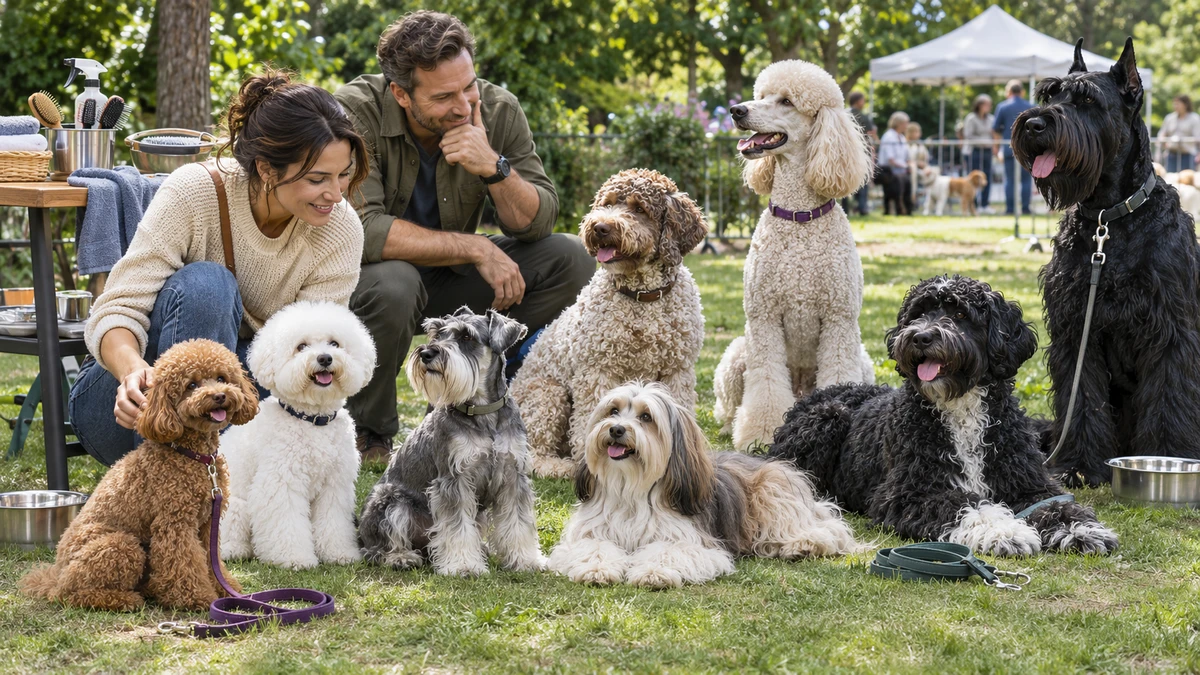
10 Questions to Ask Before Choosing a Low-Shedding Dog
- Do I dislike loose dog hair, or am I specifically dealing with allergies?
- How much professional grooming can I afford?
- How often am I willing to brush the dog?
- What adult size fits my home?
- How much daily exercise can I provide?
- Do I want a companion, terrier, sporting dog or working breed?
- Do I have children or other pets?
- How long will the dog routinely be alone?
- Have I spent time with adult dogs of the breed if allergies concern me?
- Would I still want this breed if shedding were not part of the decision?
Final Thoughts
Low-shedding dog breeds come in almost every practical size, from tiny Toy Poodles and Maltese to Standard Poodles, Portuguese Water Dogs and Giant Schnauzers.
Bichon Frises, Havanese, Schnauzers, Lagotto Romagnolos, Kerry Blue Terriers, Irish Water Spaniels and several other breeds also release relatively little visible hair around the home.
But the least-shedding breed is not automatically the easiest dog to own.
Curly coats trap hair and need brushing. Long-growing hair requires trimming. Wiry coats may need clipping or stripping. Athletic water and working dogs require significant exercise regardless of how little hair reaches your sofa.
And low shedding is not the same as hypoallergenic. All dogs can produce allergens through dander, saliva and skin.
Use shedding level as one filter in your breed search, then compare temperament, size, energy, grooming and training.
The right dog is not simply the one that sheds the least. It is the one whose complete care requirements fit the life you can realistically provide.