By
By 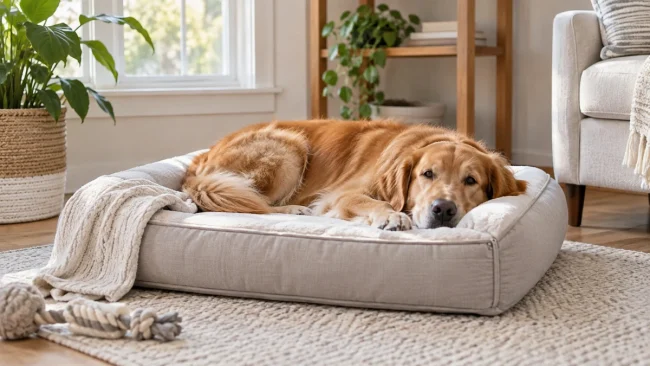
Hypoallergenic dog beds are designed for owners who want to pay closer attention to materials, cleaning convenience, and overall bed maintenance.
The term “hypoallergenic” does not mean a dog bed can completely prevent allergies or reactions. Instead, it is usually used to describe products designed with materials and features that may help reduce common sources of buildup, such as trapped hair, dust, moisture, and difficult-to-clean fabrics.
Choosing the right dog bed involves looking at the materials, washable components, cover design, filling type, and how easily the bed can be maintained over time.
You can also explore our complete Dog Beds topic hub for more guides about dog bed materials, sizes, styles, and cleaning features.
What Are Hypoallergenic Dog Beds?
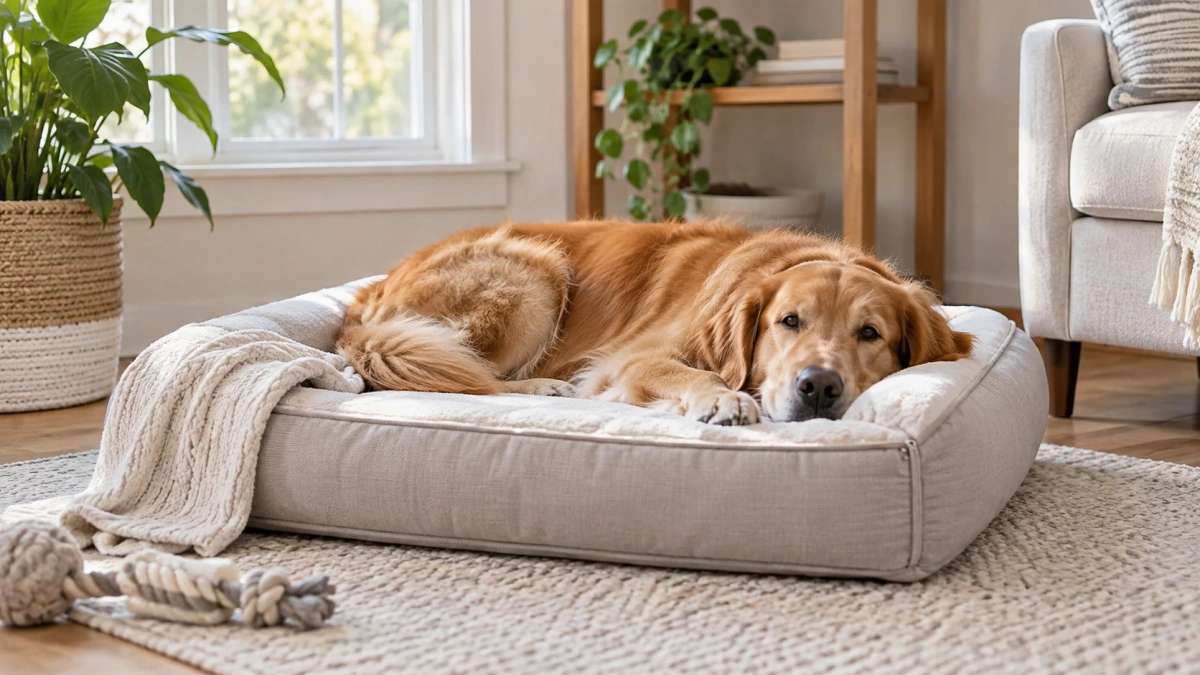
Hypoallergenic dog beds generally refer to beds made with materials and designs that focus on easier maintenance, cleaner surfaces, and reduced buildup of common irritants.
Common features may include:
- Washable covers
- Smooth easy-clean fabrics
- Removable components
- Durable materials
- Less complicated construction
However, no dog bed can guarantee that it will prevent every possible sensitivity issue. The most practical approach is choosing a bed that is easier to clean and maintain based on your dog’s needs.
Dog Bed Materials and Allergen Considerations
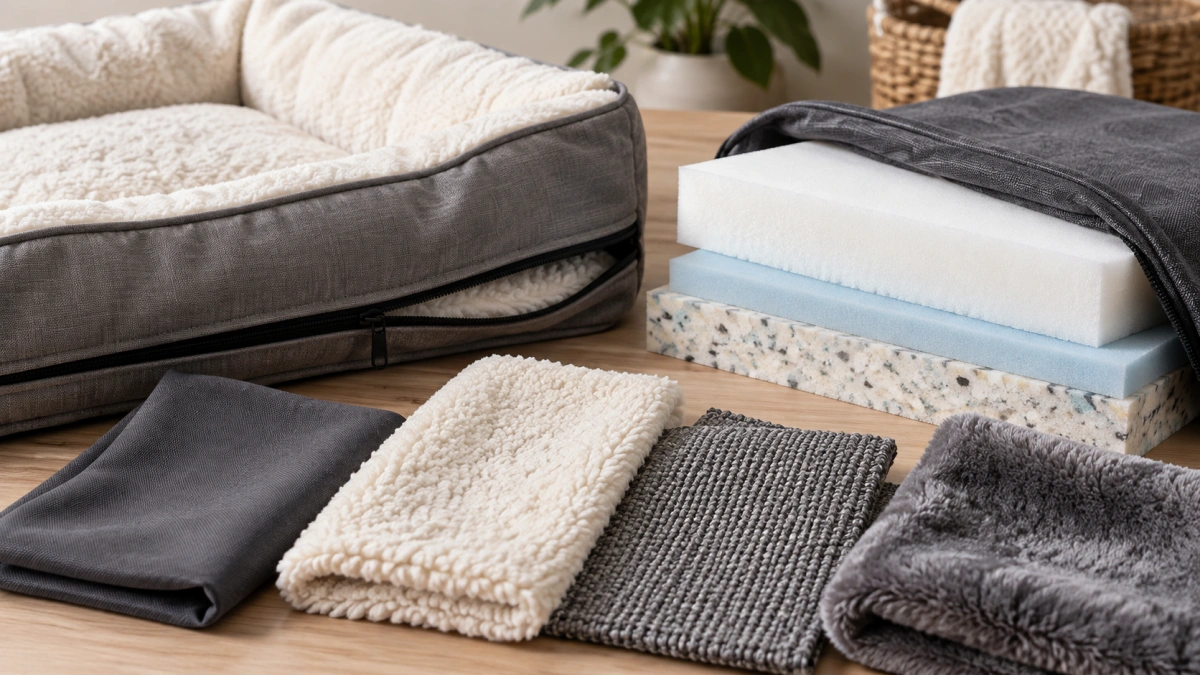
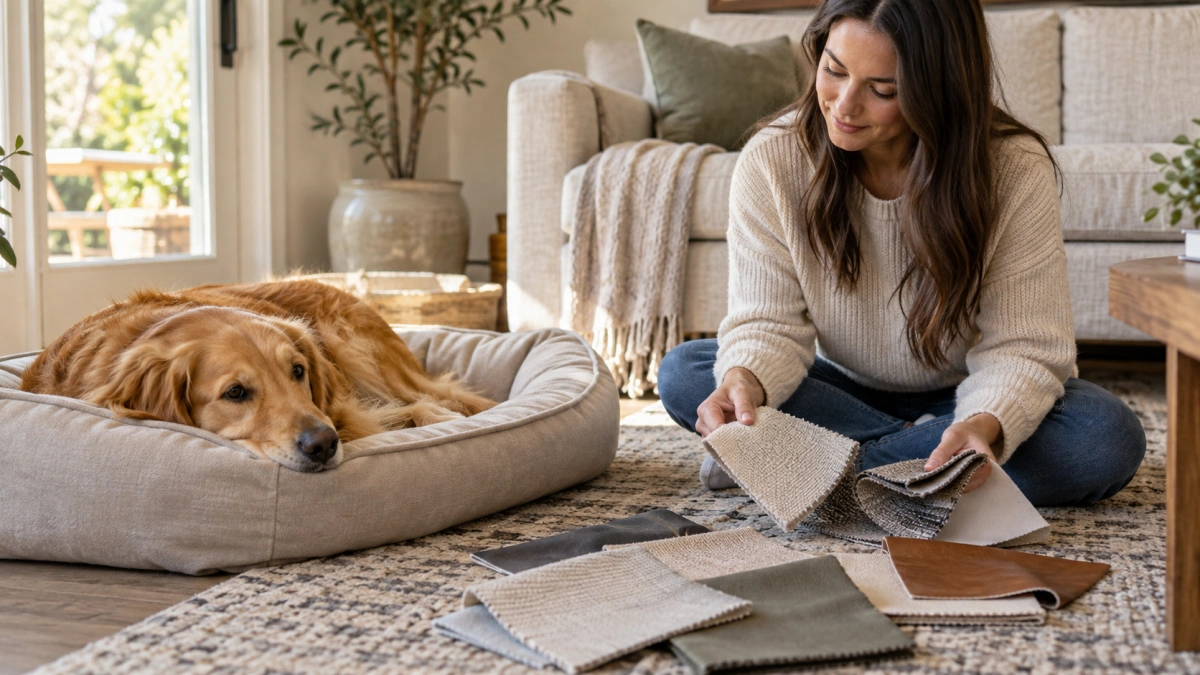
The material of a dog bed affects how easily hair, dirt, moisture, and debris can be removed.
Common dog bed materials include:
| Material | Maintenance Considerations |
|---|---|
| Microfiber | Smooth surface that can be easier to clean |
| Woven fabric | Durable texture but may collect debris depending on construction |
| Plush fabric | Soft feel but may require more frequent hair removal |
| Water-resistant fabric | Helps with easier surface cleaning |
| Foam filling | Needs proper protection and cleaning methods |
The best material depends on your dog’s habits, shedding level, activity, and how often you want to clean the bed.
Why Washable Covers Matter
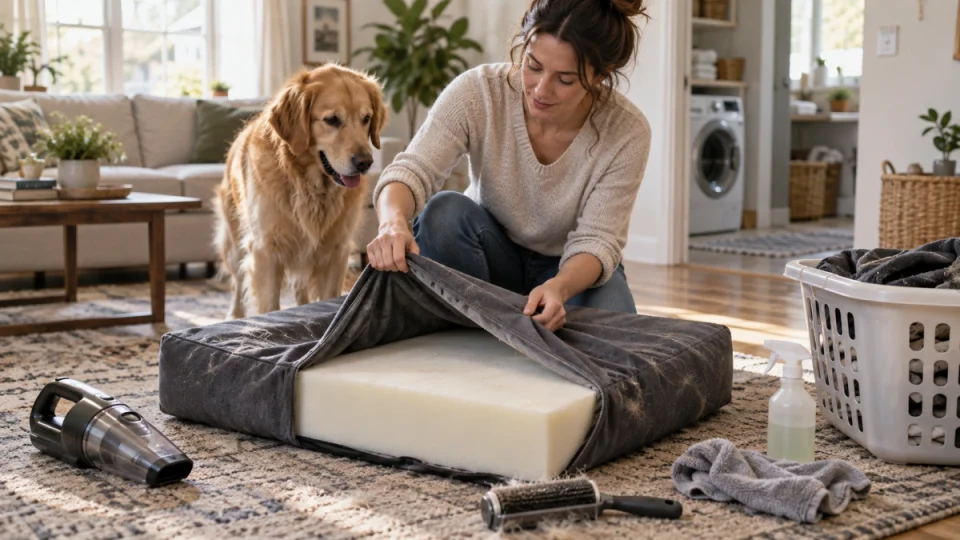
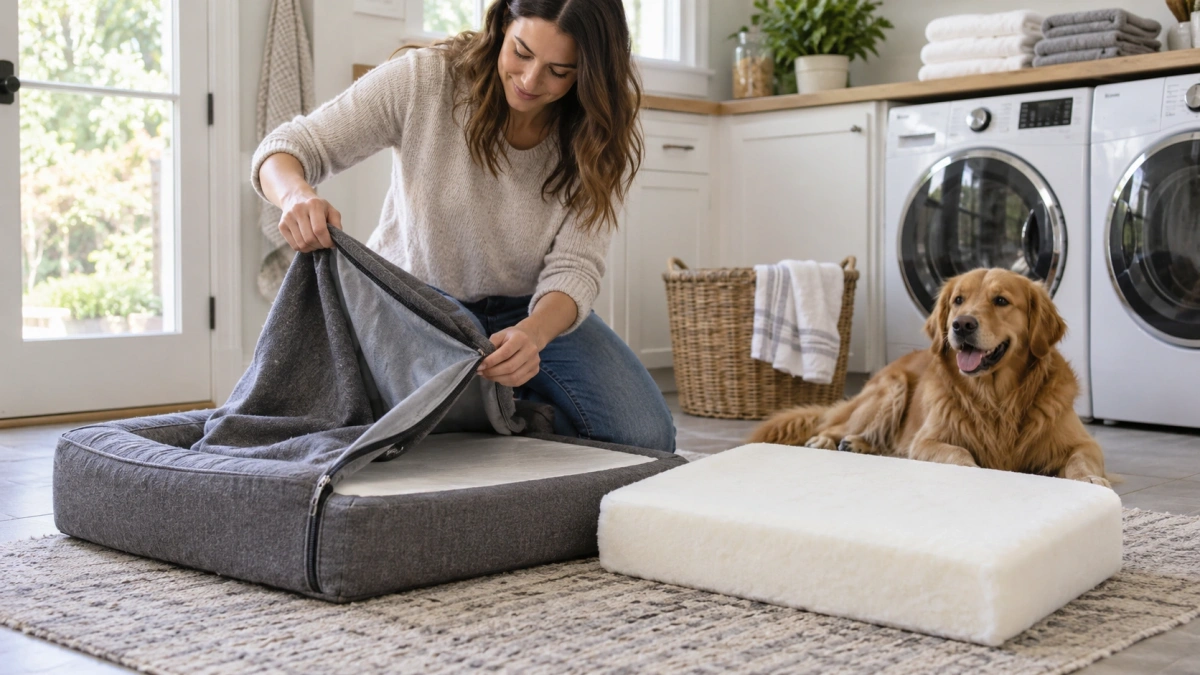
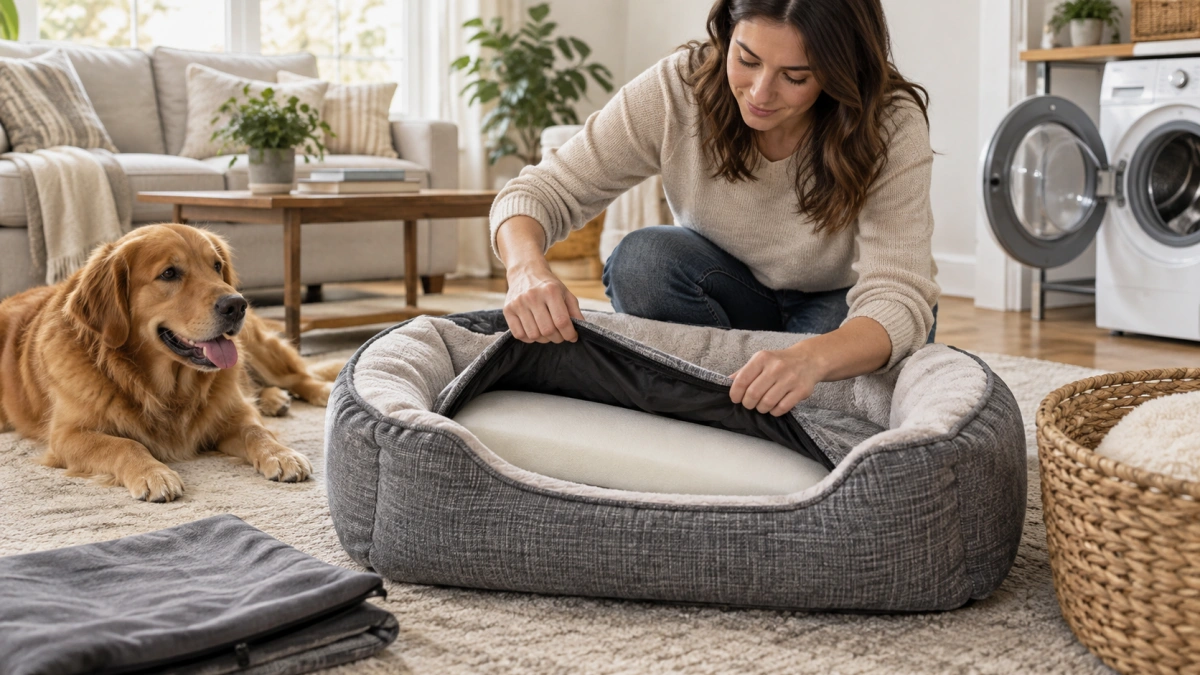
A removable washable cover is one of the most useful features for maintaining a cleaner dog bed.
The cover is usually the part that collects:
- Loose fur
- Dirt from paws
- Outdoor debris
- Everyday moisture
- Food particles
Instead of replacing the entire bed, a washable cover allows regular cleaning while protecting the inner cushion.
Look for:
- Easy zipper access
- Durable fabric
- Machine washable construction
- Separate cushion inserts
Choosing Easy-to-Maintain Dog Bed Materials
A practical hypoallergenic-style dog bed is often one that can be cleaned regularly without complicated care.
Consider:
- How easily hair can be removed
- Whether the fabric traps dirt
- How quickly materials dry
- Whether covers can be removed
- Whether replacement parts are available
A very soft material may feel comfortable, but if it is difficult to clean, maintaining the bed regularly can become harder.

Understanding Non Toxic Dog Beds
Many owners searching for non toxic dog beds are looking for transparency about materials, construction, and manufacturing choices.
When evaluating a dog bed, consider:
- Material information provided by the manufacturer
- Cover fabric type
- Filling material details
- Construction quality
- Cleaning instructions
“Non toxic” is a broad marketing term, so it is useful to look for specific material information rather than relying only on labels.
Cleaning Considerations for Hypoallergenic Dog Beds
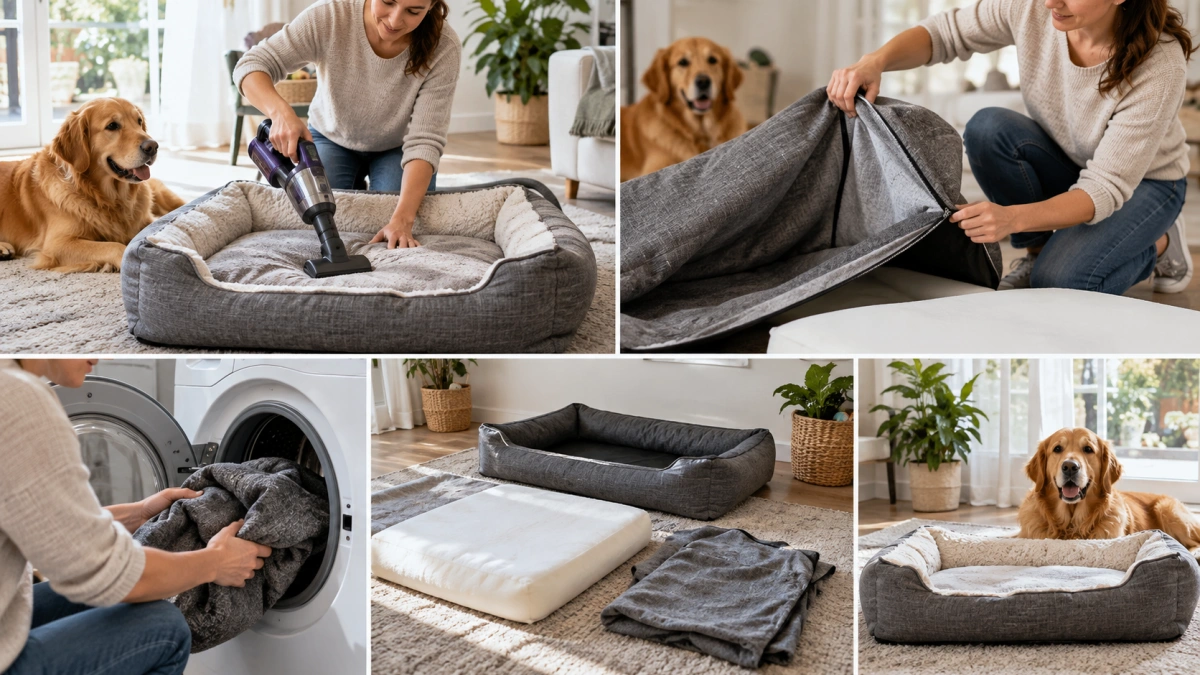
Cleaning is one of the most important parts of maintaining any dog bed.
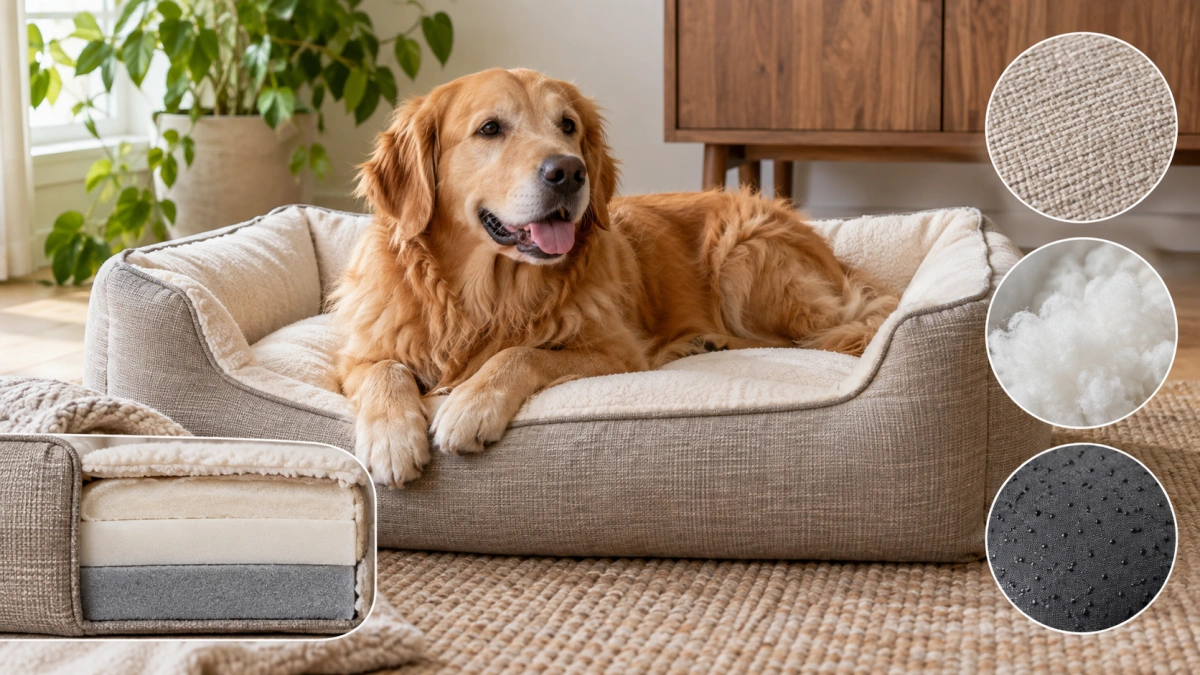
Useful cleaning features include:
- Removable covers
- Washable outer materials
- Separate foam inserts
- Easy access to hidden areas
- Quick drying fabrics
A well-designed bed makes regular maintenance easier because the parts that collect the most dirt can be cleaned separately.
For detailed washing steps, including covers, foam inserts, odors, and drying methods, see our guide on how to clean dog beds.
Choosing a Dog Bed Based on Your Dog’s Needs
The right dog bed should match both the dog and the owner’s maintenance routine.
Consider:
- Does your dog shed heavily?
- Does your dog spend time outdoors?
- Does your dog prefer soft or firm surfaces?
- Will the bed need frequent washing?
- Does your dog sleep hot or cold?
A simple, easy-to-maintain design may be more practical than a complicated bed with difficult-to-clean materials.
Hypoallergenic Dog Beds Buying Checklist
- Does the bed have a removable washable cover?
- Are the materials clearly described?
- Can hair and dirt be removed easily?
- Is the cushion insert protected?
- Can the bed dry completely after cleaning?
- Does the construction make maintenance simple?
- Does the material match your dog’s habits?
Final Thoughts
Hypoallergenic dog beds are mainly about choosing practical materials, easier cleaning features, and a design that supports regular maintenance.
Instead of relying only on labels, compare washable covers, fabric types, filling protection, cleaning instructions, and overall construction.
A dog bed that is easier to clean and maintain can provide a more comfortable long-term resting space for both dogs and their owners.