By A CUTE PET STORY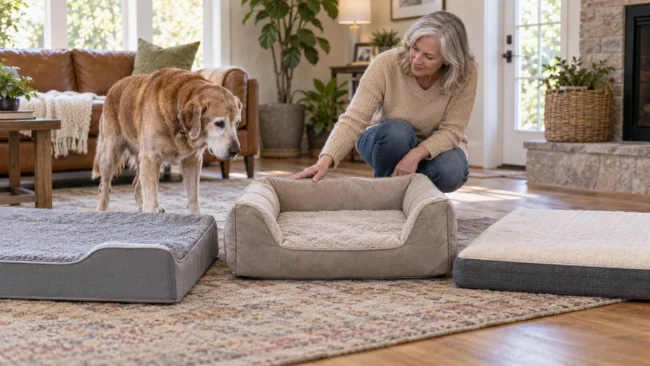
Senior dogs often need a different type of resting environment as their daily habits change. A comfortable senior dog bed is not only about softness or thickness. The right choice should balance support, easy access, stability, cleaning, and how easily your dog can get comfortable.
A very thick or heavily cushioned bed may look comfortable, but it may not be practical if a dog struggles to step onto it, change positions, or stand up afterward.
The best senior dog beds are designed around the dog’s actual movement, sleeping habits, and everyday routine.
For more details about foam construction and supportive materials, you can also read our guide to orthopedic dog beds.
You can also explore our complete Dog Beds topic hub for more guides on sizing, materials, and different sleeping needs.
What Makes a Good Senior Dog Bed?
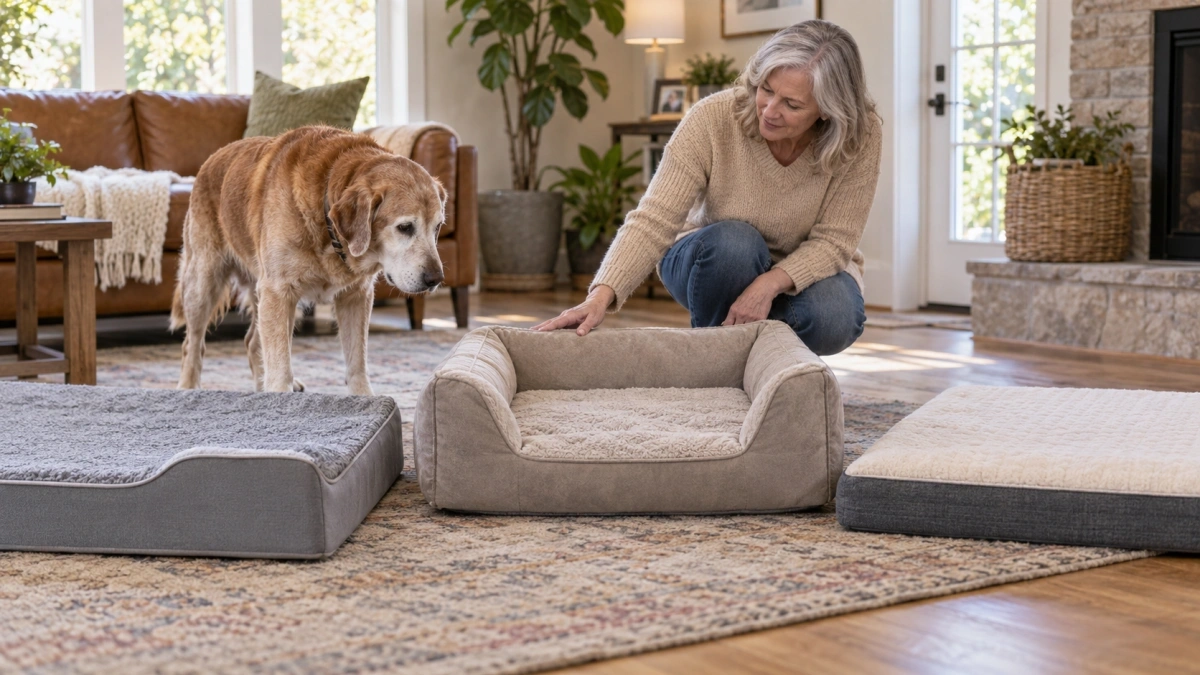
A senior dog bed should support comfortable resting while remaining easy for the dog to use every day.
Important factors include:
- Comfortable support without excessive sinking
- Easy entry and exit
- Stable placement on the floor
- Enough space for natural sleeping positions
- Washable materials
- A shape that matches the dog’s habits
A bed that looks premium but is difficult to enter may not become the place where your dog actually chooses to rest.
Support Is Only One Part of Senior Dog Comfort
Many senior dog bed discussions focus only on orthopedic foam, but comfort depends on more than the material inside the bed.
A supportive bed should also consider:
- How easily the dog reaches the sleeping surface
- Whether the dog can reposition comfortably
- Whether the surface stays stable
- Whether the bed is placed somewhere convenient
- Whether cleaning is manageable
A supportive foam core can be useful, but the overall design needs to match the dog’s daily abilities and preferences.
Why Entry Height Matters
One of the biggest differences between a senior-friendly bed and a regular bed is how easy it is to get onto.
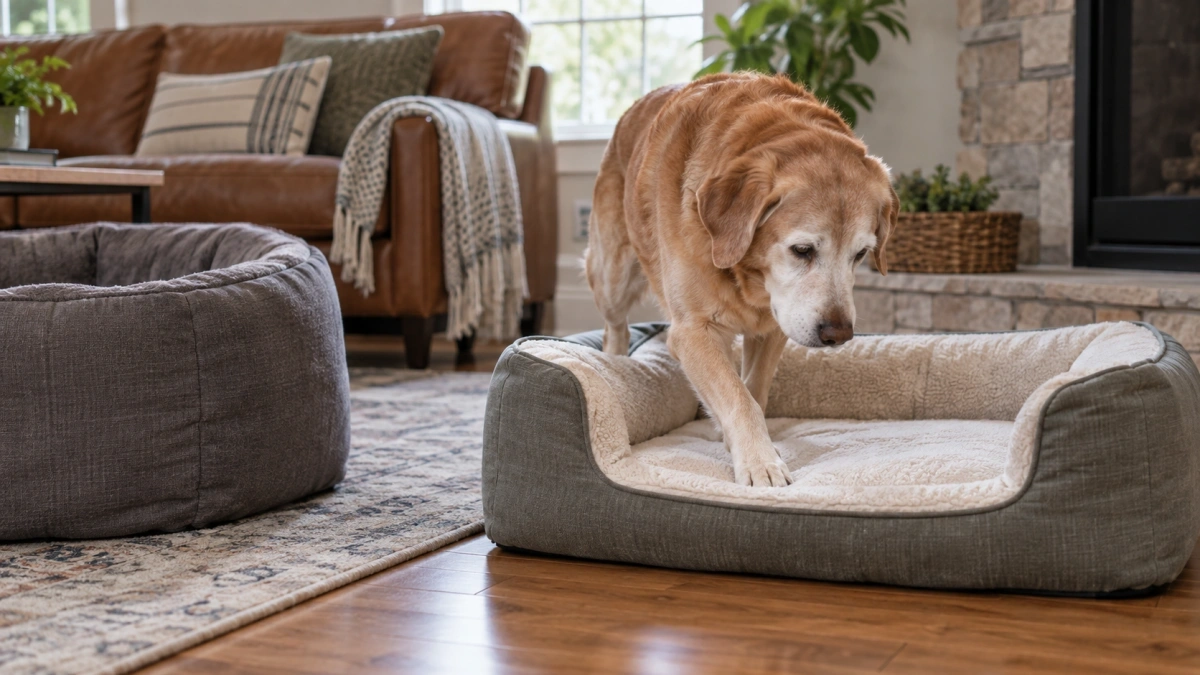
High-sided beds with thick bolsters can provide a comfortable place to lean, but they may require more effort to step over.
Consider:
- How high the front edge is
- Whether the dog has to climb over a raised side
- Whether the sleeping surface is close enough to the floor
- Whether the dog approaches the bed confidently
The ideal design depends on the individual dog. Some older dogs still enjoy a raised edge for head support, while others prefer a more open design.
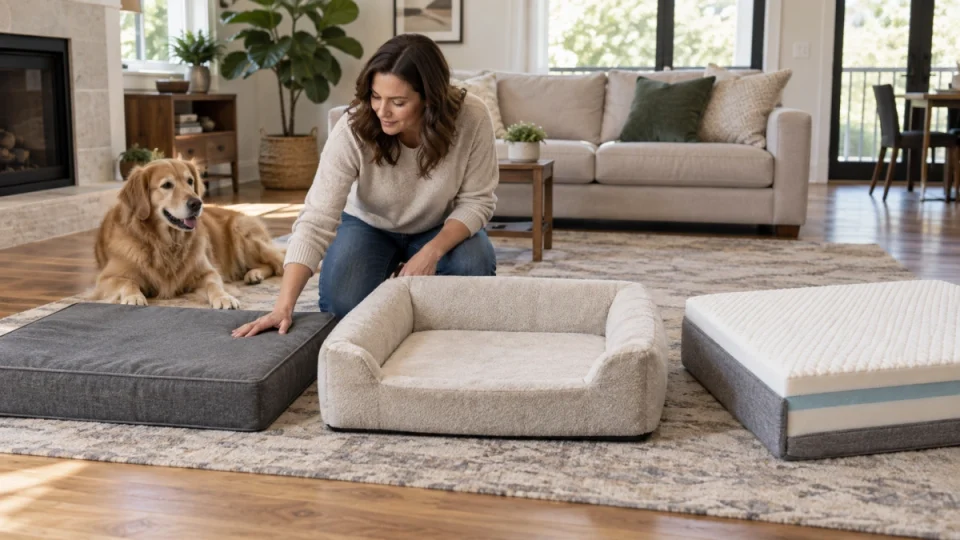
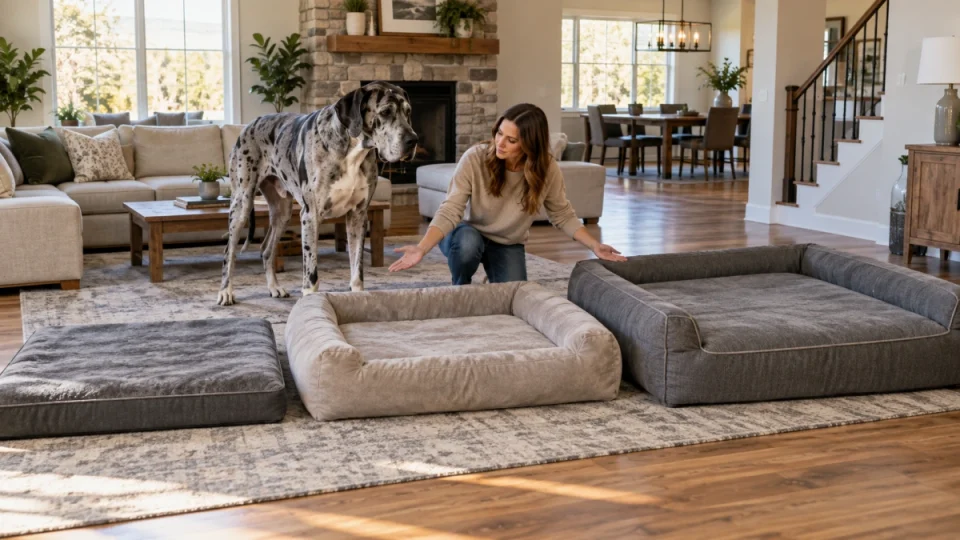
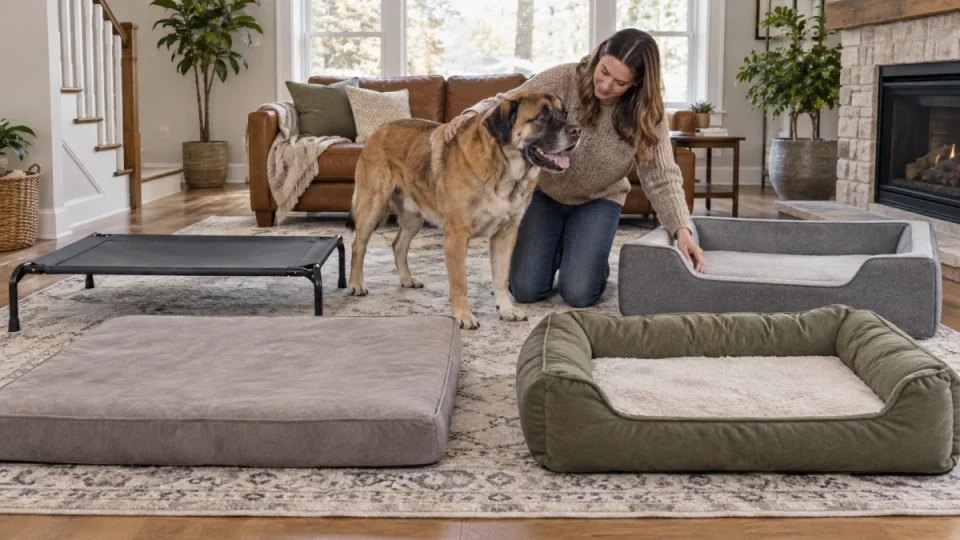
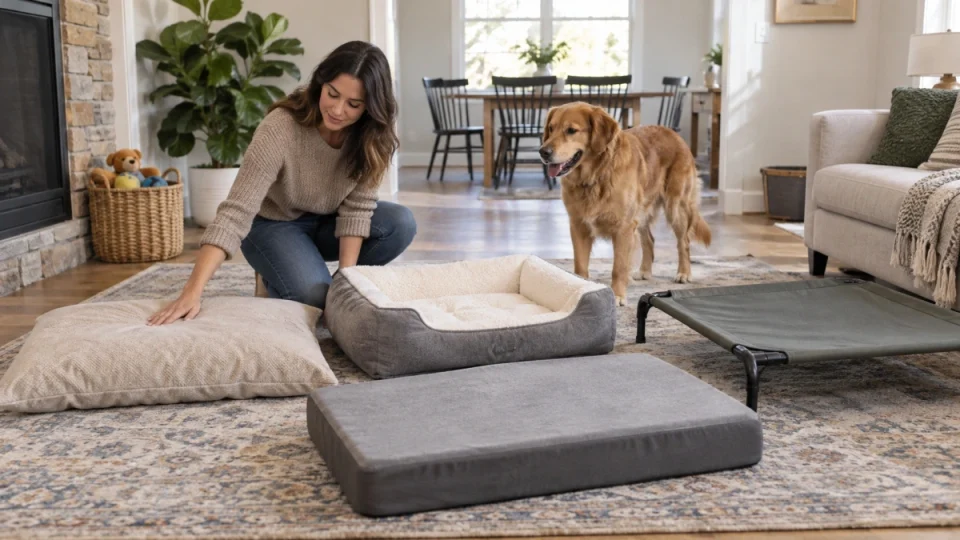
Low-Entry vs Bolster Beds for Senior Dogs
| Bed Design | Potential Benefit | Consideration |
|---|---|---|
| Low-entry bed | Easier access from the front | Less enclosed feeling |
| Three-sided bolster | Provides head and body support | Still keeps one open side |
| Four-sided bolster | More surrounding support | May require stepping over higher edges |
| Flat mattress | Maximum open sleeping space | No raised edge for leaning |
For many senior dogs, an open front combined with a supportive sleeping surface provides a practical balance between comfort and accessibility.
How Firm Should a Senior Dog Bed Be?
The softest possible bed is not always the most comfortable option.
A bed that compresses too deeply may make it harder for some dogs to change position or stand up.
When evaluating firmness, observe:
- Does the dog sink deeply into the surface?
- Does the bed recover after use?
- Does the dog move around comfortably?
- Does the dog choose the bed voluntarily?
- Does the surface remain stable?
The goal is a balance between cushioning and structure, not simply maximum softness.
Watch How Your Dog Gets Up
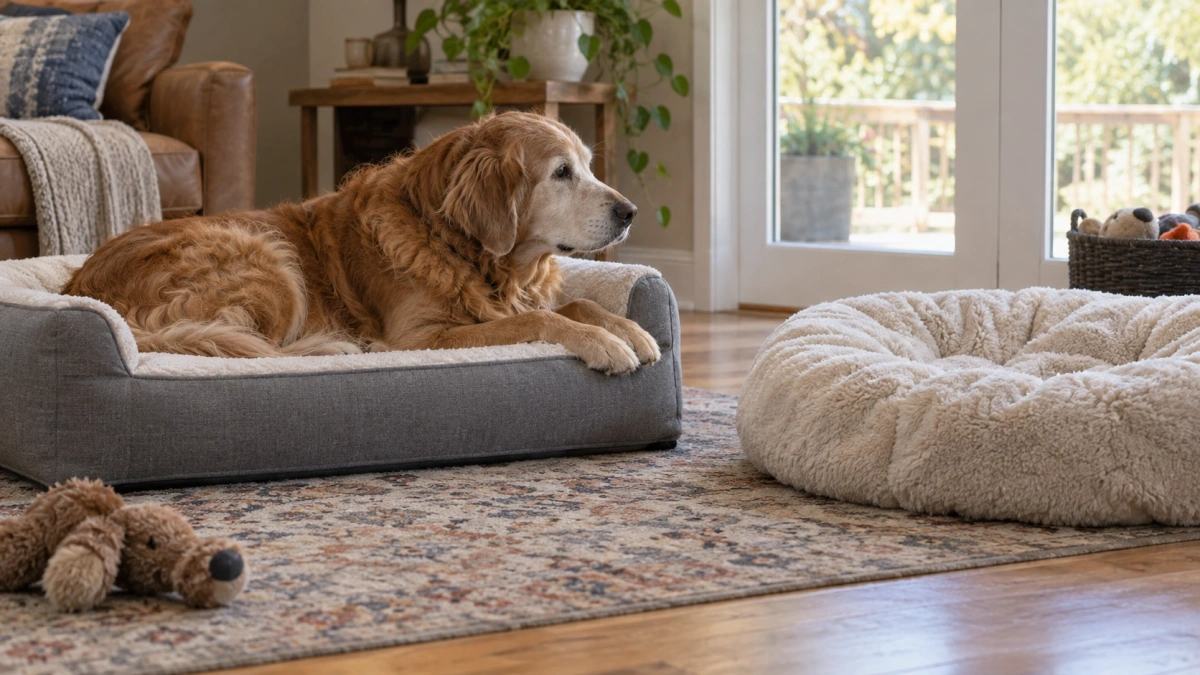
One of the most useful ways to judge whether a bed fits a senior dog is to observe what happens when the dog stands up.
Simple Getting-Up Check
- Let your dog rest naturally on the bed.
- Observe how easily the dog changes position.
- Watch the transition from lying down to standing.
- Notice whether the dog slips or struggles for footing.
- Compare the dog’s behavior on different surfaces.
This is not a medical assessment. It is simply a practical way to understand whether the bed design fits your dog’s daily routine.
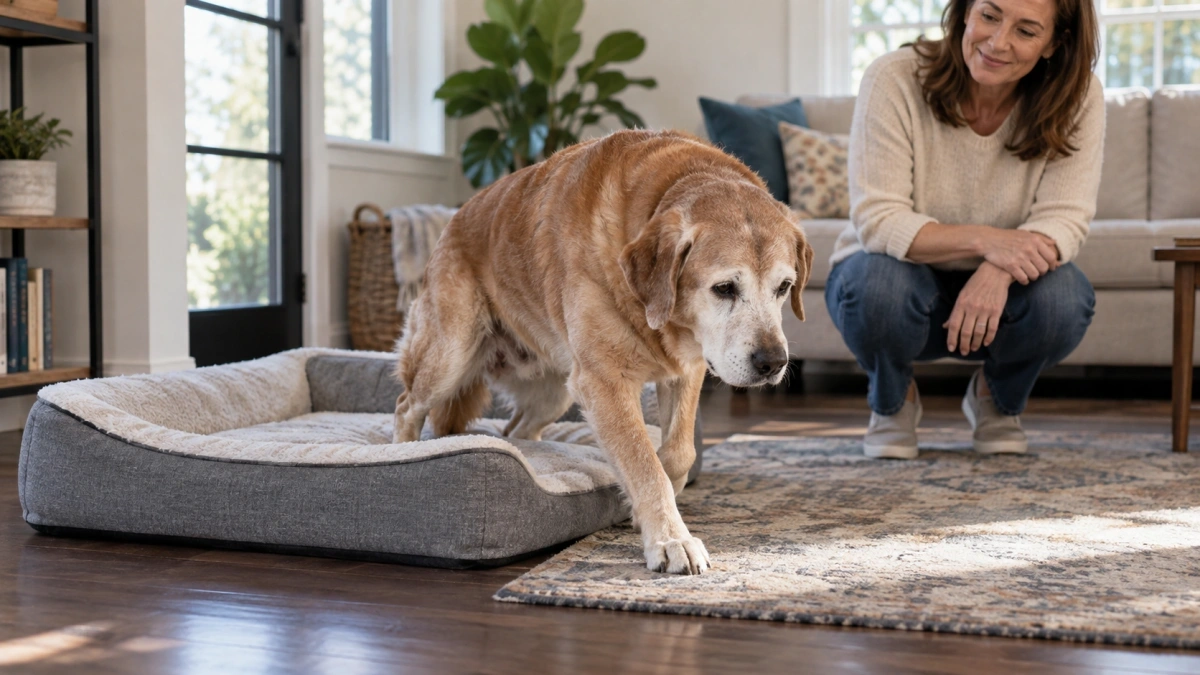
Floor Traction Around the Bed
Sometimes the challenge is not the bed itself but the surface around it.
Smooth floors such as hardwood, tile, or polished surfaces can make it harder for some dogs to approach or leave the bed confidently.
Helpful setup considerations include:
- Non-slip bed bottoms
- A stable rug underneath or nearby
- A clear walking path
- Enough space to turn around comfortably
- Avoiding locations that require jumping or climbing
A good resting area includes the space around the bed, not only the bed itself.
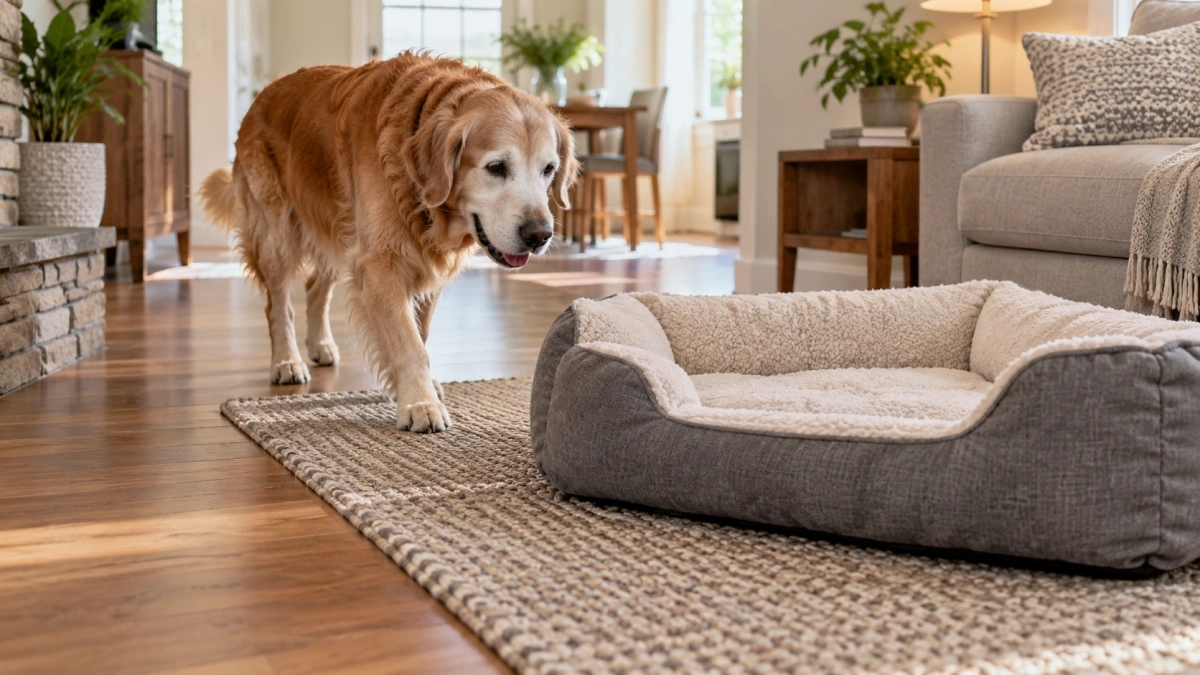
Where to Place a Senior Dog Bed
Bed location can affect how often a senior dog uses it.
A practical location is usually:
- Close to normal family activity
- Easy to reach without stairs
- Away from cold drafts
- Not blocking walking paths
- Large enough for the dog to enter and turn around
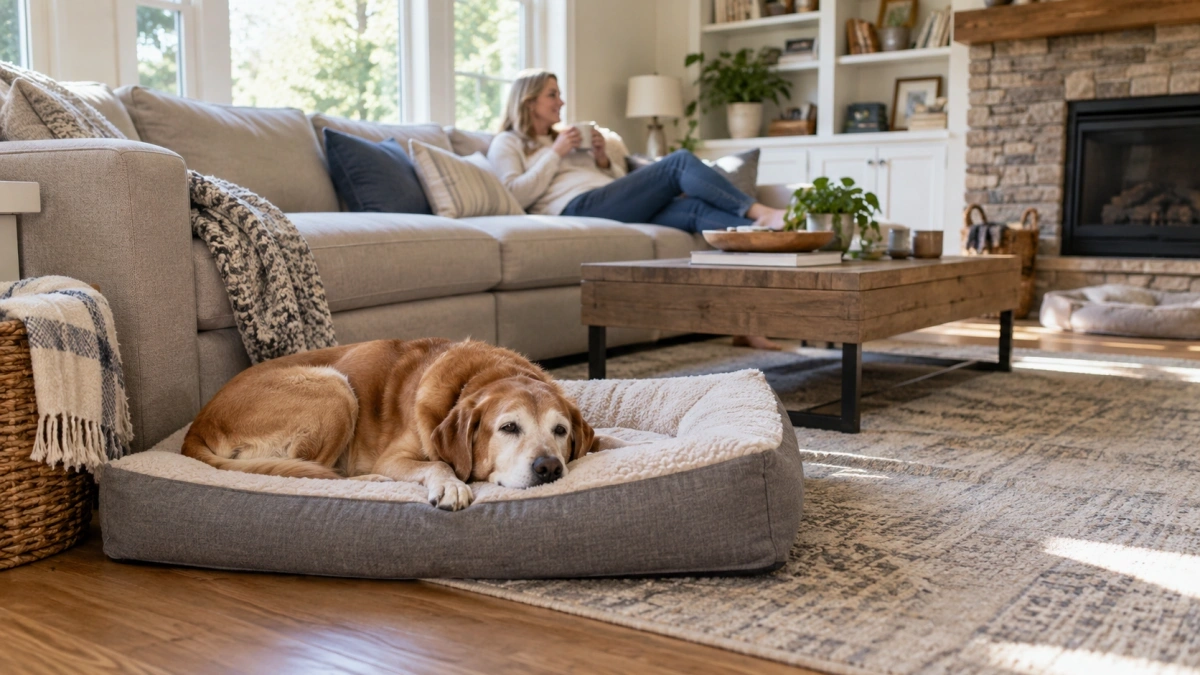
Many dogs prefer resting near their family rather than being isolated in another room.
A good location reduces unnecessary movement while keeping the dog connected to daily household activity.
Washability and Everyday Accidents
Senior dogs may require more frequent cleaning because of changes in daily habits, so practical construction matters.
Look for:
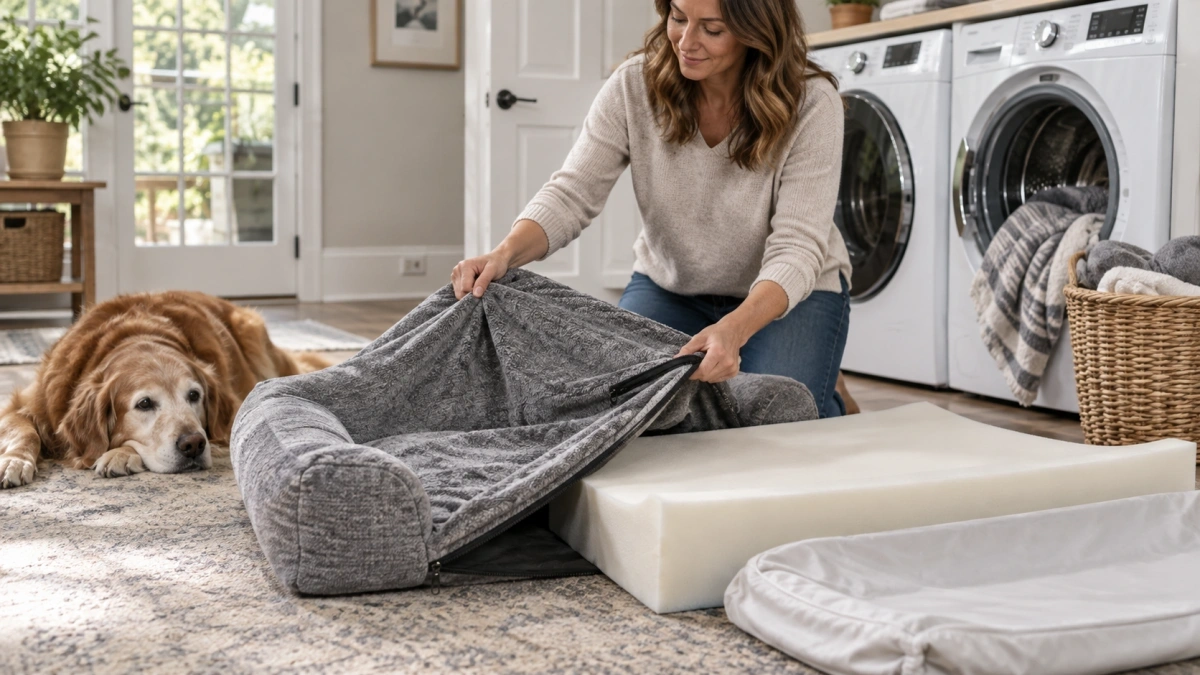
- Removable washable covers
- Protective inner liners
- Wide zipper openings
- Separate foam inserts
- Replacement covers
- Simple reassembly after washing
Always check whether the entire bed is washable or only the outer cover.
A removable cover can make regular maintenance much easier without needing to replace the entire bed.
Warm Beds and Heated Bed Safety
Some older dogs prefer warmer resting areas, especially in cooler environments. However, warmth preferences vary between individual dogs.
Options may include:
- Warmer room placement
- Blankets or washable covers
- Self-warming materials
- Heated beds designed with safety features
If using an electric heated bed, consider:
- Whether the dog can move away from the heat
- Whether cords are protected
- Whether the product is used according to instructions
- Whether moisture exposure is avoided
A heated bed should add comfort, not create a situation where the dog cannot safely leave the warm area.
When a New Bed Is Not Enough
A different bed can improve the resting environment, but it cannot identify the cause of sudden changes in movement or comfort.
Pay attention to changes such as:
- Sudden reluctance to move
- Persistent limping
- Difficulty standing
- Major changes in normal behavior
- Visible discomfort
- Reduced interest in normal activities
These changes may have different causes, so a new bed should not replace professional evaluation when there are concerning signs.
Senior Dog Bed Buying Checklist
- Can my dog step onto the bed comfortably?
- Is the front entry height appropriate?
- Does the bed provide support without excessive sinking?
- Can my dog change positions easily?
- Is the floor around the bed stable?
- Is the location easy for my dog to reach?
- Can the cover be removed and washed?
- Is the foam protected from moisture?
- Does the bed match my dog’s sleeping style?
- Am I choosing comfort features that my dog will actually use?
Final Thoughts
The best dog beds for senior dogs are not simply the thickest or softest options. They combine supportive materials with practical details such as low entry, stable placement, easy cleaning, and a design that matches how the dog moves.
A senior dog bed should make everyday rest easier, not create another obstacle to climb over or navigate.
Choose based on your dog’s actual habits, movement, and comfort preferences rather than relying only on labels like orthopedic, premium, or extra thick.