By A CUTE PET STORY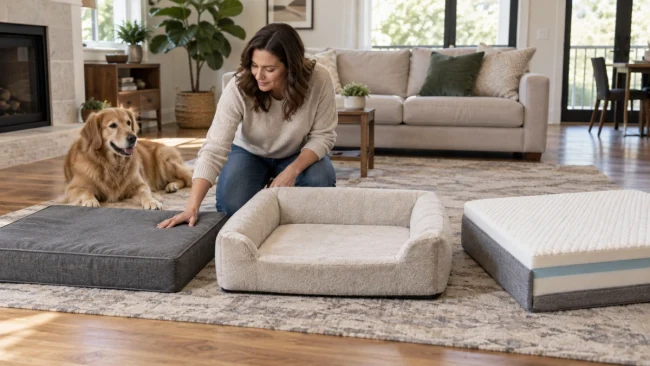
Orthopedic dog beds are designed to provide a more structured resting surface than a basic fluffy bed, but the word “orthopedic” does not guarantee that every product uses the same foam, thickness, or support system.
The most useful way to compare these beds is to look past the label and check what is actually inside: the foam construction, how much it compresses under your dog, whether the bed bottoms out, how easy it is to enter, and whether the cover can be removed and cleaned.
For dogs that are older, heavier, or simply prefer a firmer sleeping surface, these details matter more than marketing terms alone.
You can also browse our Dog Beds topic hub for more guides on bed types, sizes, cleaning, and support.
What Is an Orthopedic Dog Bed?
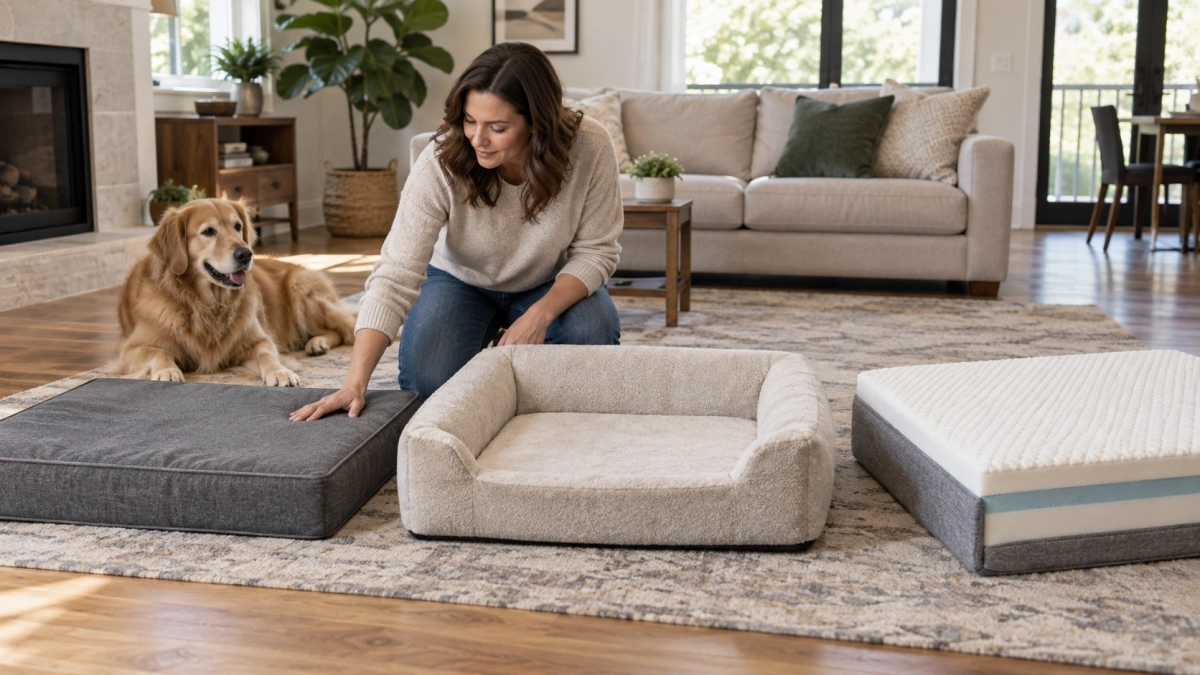
An orthopedic dog bed usually refers to a bed built with foam or another supportive material intended to hold the dog’s body more evenly than loose, highly compressible filling.
However, there is no single universal construction that every orthopedic bed must use.
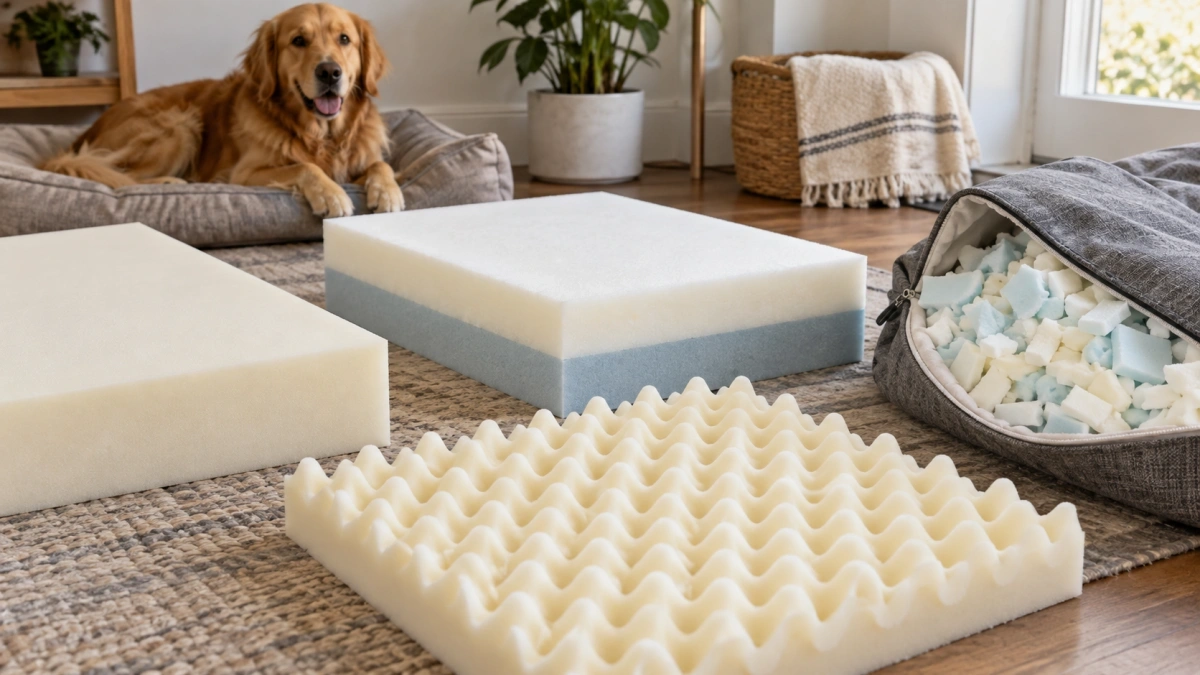
A product may contain:
- Solid memory foam
- Memory foam over a firmer support layer
- Egg-crate or convoluted foam
- Shredded foam
- A combination of foam and fiber fill
That means two products labeled “orthopedic” can feel very different once a dog lies on them.
Does “Orthopedic” Always Mean Better?
Not necessarily. The label tells you how the product is being positioned, but it does not tell you everything about the construction.
Before buying, check:
- What type of foam or filling is used
- Whether the bed has one layer or multiple layers
- How much the surface compresses under the dog’s weight
- Whether the dog sinks close to the floor
- Whether the bed has a low or high entry
- How much usable sleeping space remains inside bolsters
- Whether the cover can be removed
The better question is not simply “Is this orthopedic?” but “Does this construction actually match my dog’s body size and sleeping needs?”
Memory Foam vs Other Foam Types
Memory foam dog beds are popular because memory foam compresses under body weight and gradually returns toward its original shape after pressure is removed.
But not every memory foam dog bed uses the same construction.
| Foam Type | Basic Structure | Main Trade-Off |
|---|---|---|
| Solid memory foam | One continuous foam layer | Can feel softer or warmer depending on construction |
| Layered foam | Memory foam over a firmer support base | Usually more structured but often more expensive |
| Egg-crate foam | Convoluted foam surface | Can feel lighter and more flexible |
| Shredded foam | Loose foam pieces inside a cover | Pieces may shift with use |
| Mixed fill | Foam combined with fiber or other filling | Performance depends heavily on construction |
A label such as “memory foam dog bed” does not tell you whether the entire bed is made from memory foam or whether memory foam is only one part of a layered design.
Support vs Softness
Softness and support are not the same thing.
A very soft bed may feel comfortable when you press it by hand but compress heavily once a large dog lies on it. A firmer bed may hold its shape better but still be comfortable if the dog prefers a more stable surface.
Likewise, thickness alone does not guarantee support.
A thick cushion filled with very loose material may flatten more than a thinner but denser foam structure.
When comparing beds, observe:
- How far the dog’s body sinks
- Whether the surface stays level
- Whether the foam rebounds after use
- Whether permanent depressions begin to form
- Whether the dog can rise comfortably from the bed
How to Check Whether a Dog Bed Bottoms Out
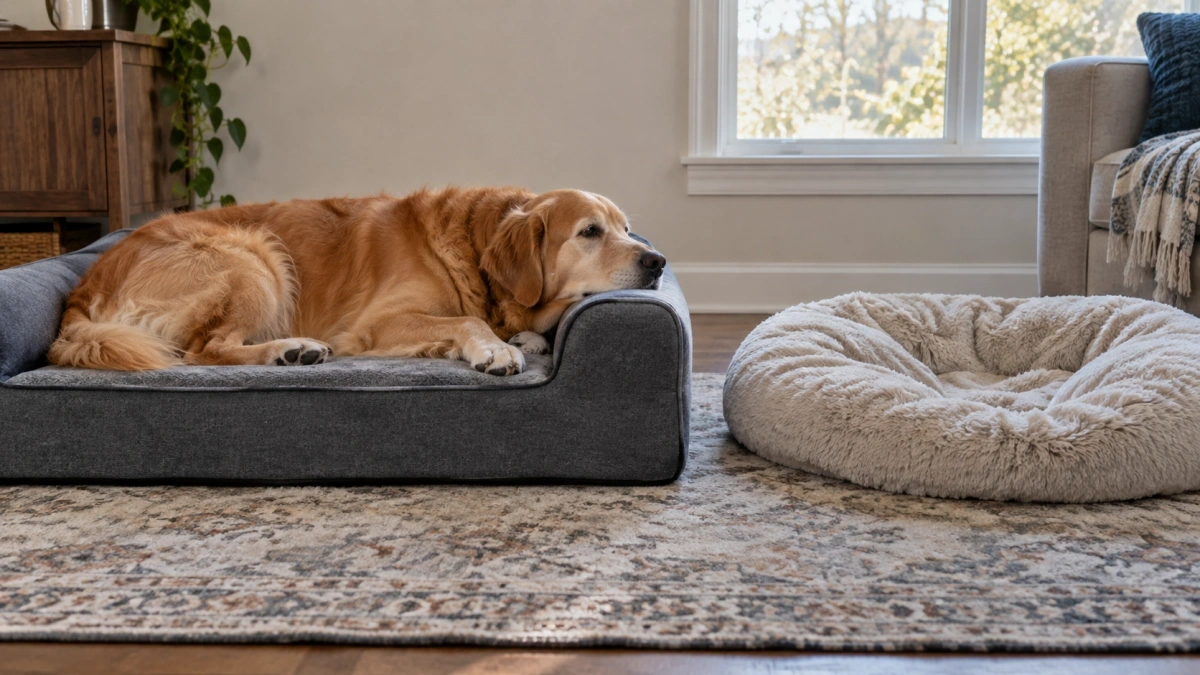
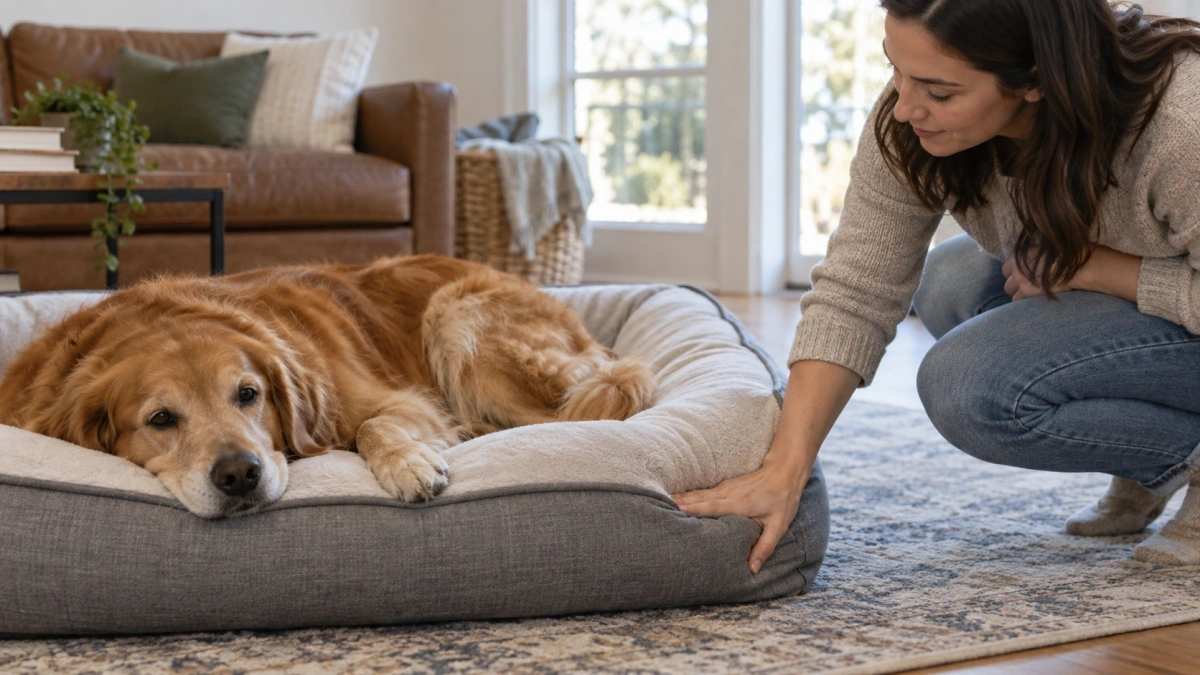
One practical way to judge support is to see whether the sleeping surface compresses so much that the dog is effectively resting close to the floor.
Simple Bottom-Out Check
- Let your dog lie on the bed in a normal position.
- Look at how much the cushion compresses under the heaviest parts of the body.
- Check whether there is still visible structure between the dog and the floor.
- Observe whether the foam rebounds after the dog gets up.
- Watch for permanent dents after repeated use.
This is not a medical test. It is simply a practical way to compare how a bed behaves under your dog’s actual body weight.
Orthopedic Dog Beds for Large Dogs
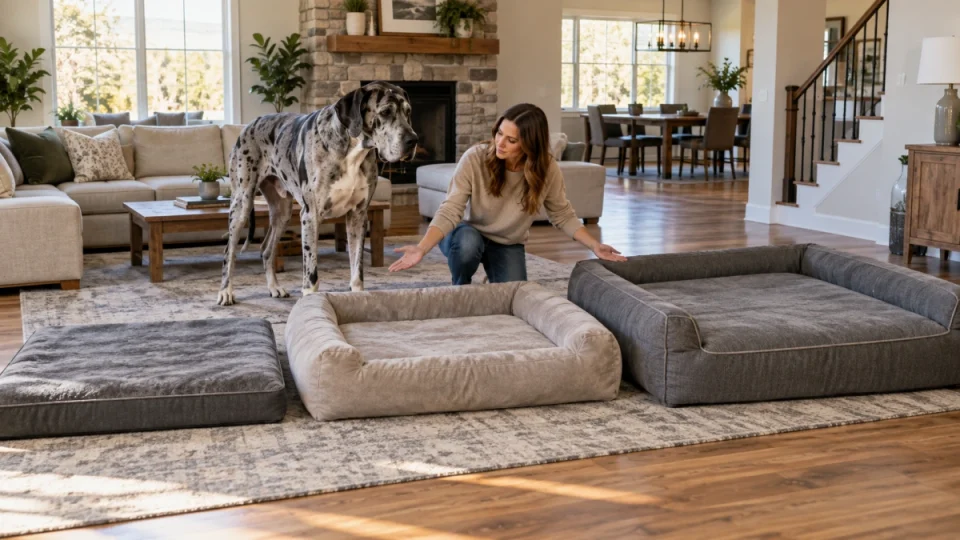
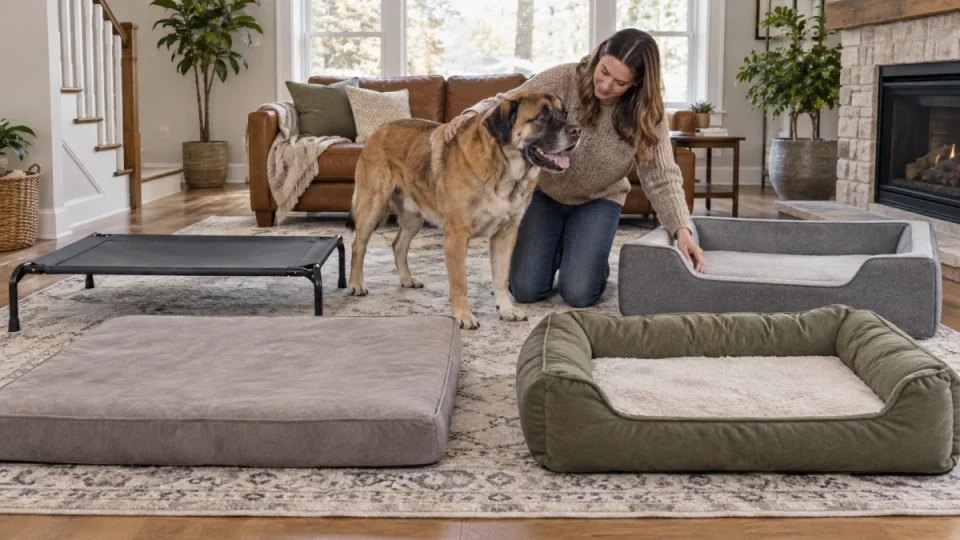
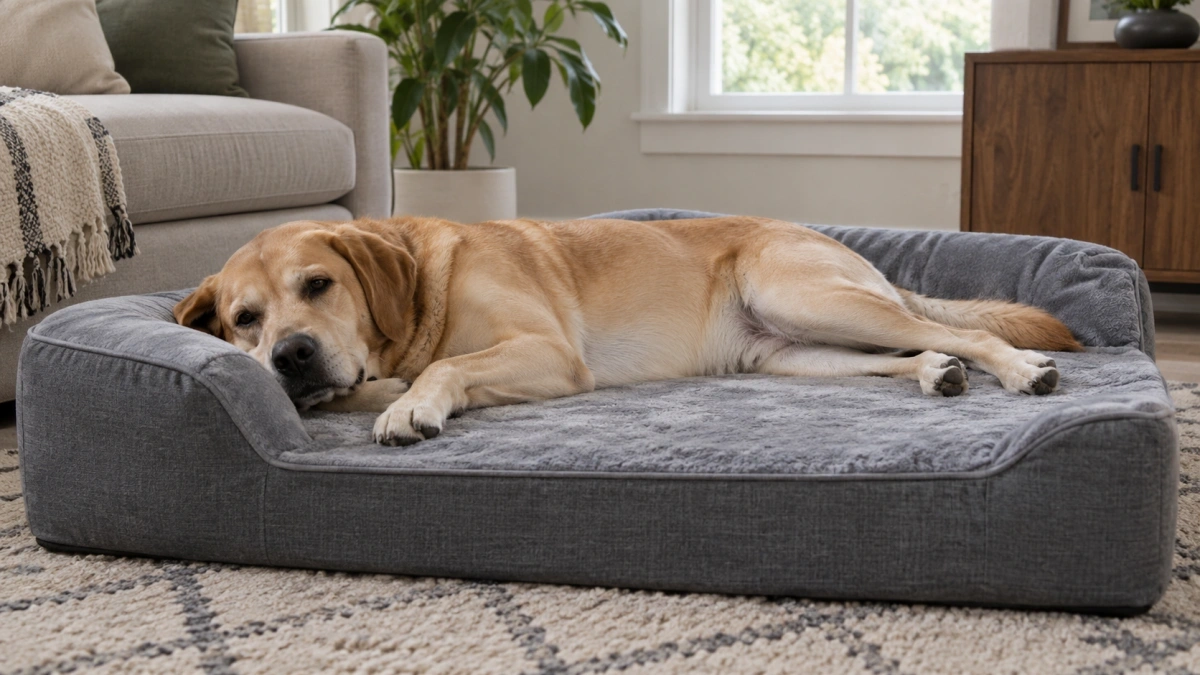
Large and heavy dogs can compress the same bed much more than smaller dogs, so construction matters more as body weight increases.
For orthopedic dog beds for large dogs, check:
- Usable sleeping length and width
- Foam structure under body weight
- Whether the bed keeps the dog off the floor
- How quickly the surface recovers
- Whether the cover can be removed from a large foam core
- Whether the dog can step onto the bed without difficulty
Also pay attention to bolsters. A large orthopedic bed may have impressive outside dimensions but much less inner sleeping space once the raised sides are included.
How Firm Should an Orthopedic Dog Bed Be?
There is no universal firmness level that works for every dog.
A useful bed should provide enough cushioning for comfort while still maintaining structure under the dog’s weight.
Too soft can mean:
- Deep sinking
- Difficulty changing position
- The body resting close to the floor
- Filling moving away from frequently used areas
Too firm can mean:
- The dog avoids the bed
- The surface feels less comfortable than the dog’s preferred resting spots
- The dog repeatedly chooses sofas, rugs, or softer surfaces instead
Your dog’s behavior is useful information. If a new bed looks supportive but the dog consistently avoids it, the firmness, temperature, shape, or location may not match the dog’s preference.
Bolsters, Entry Height and Sleeping Style
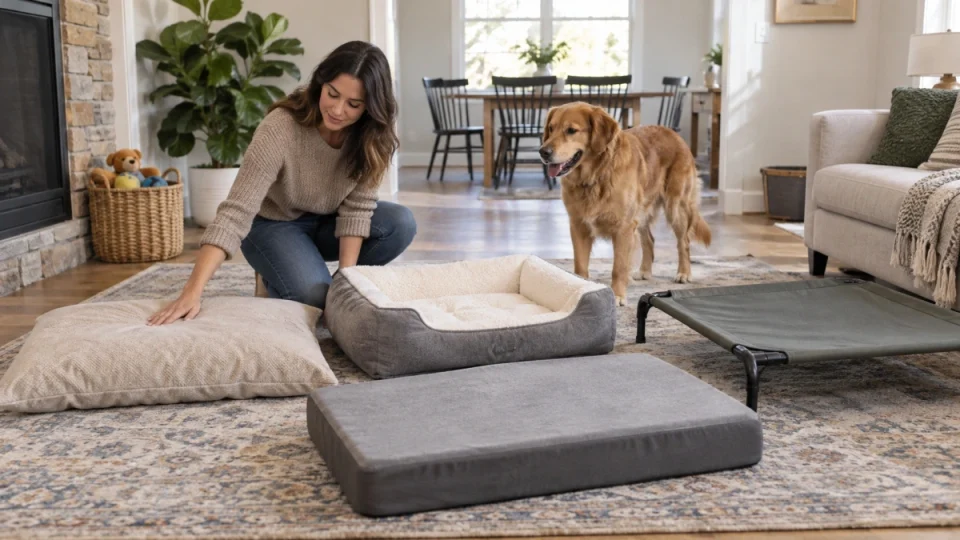
Bolsters can be useful for dogs that like resting their head or body against an edge, but high sides can also make some orthopedic beds harder to enter.
| Design | Potential Benefit | Main Trade-Off |
|---|---|---|
| Four high bolsters | Enclosed feeling and multiple head-rest areas | Higher step-over height |
| Three-sided bolster | Raised support with one open side | Still reduces some inner space |
| Low front entry | Easier access | Less enclosure at the front |
| Flat mattress | Maximum open sleeping surface | No raised edge for leaning |
Dogs that move more slowly, dislike stepping over high edges, or frequently change positions may prefer an open-front or flat design.
Orthopedic Beds for Older Dogs
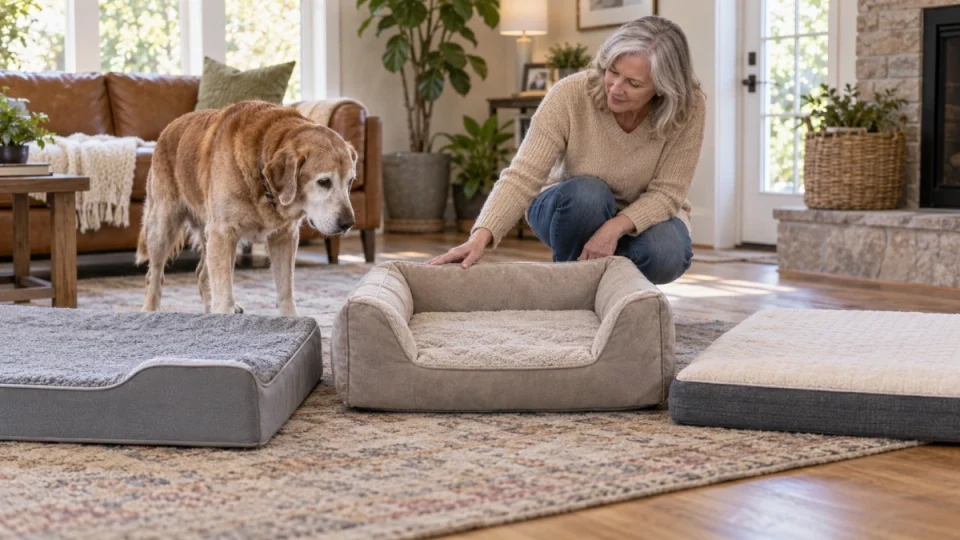
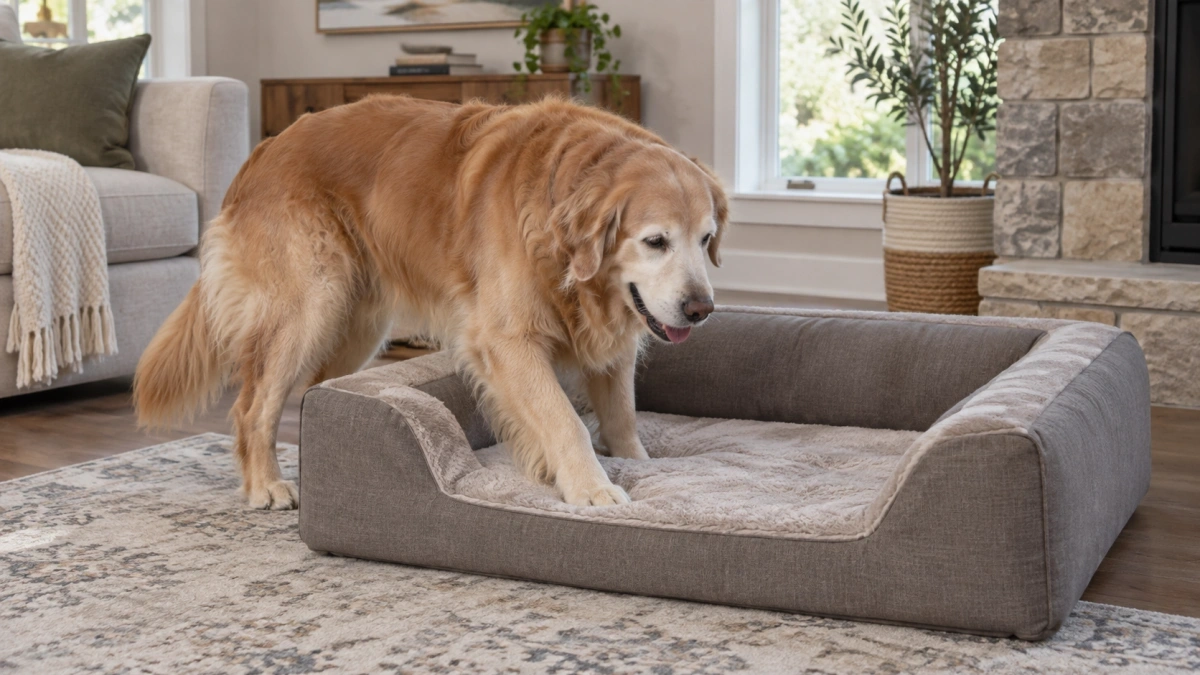
Older dogs often need more than just a soft surface. Ease of entry, ability to stand up, traction around the bed, bed placement, and cleaning can all matter.
A thick supportive bed may still be a poor fit if the dog has to climb over a high edge to reach it.
For a broader guide focused specifically on access, mobility, placement, and everyday use, see our article on dog beds for senior dogs.
Washable Covers and Waterproof Liners
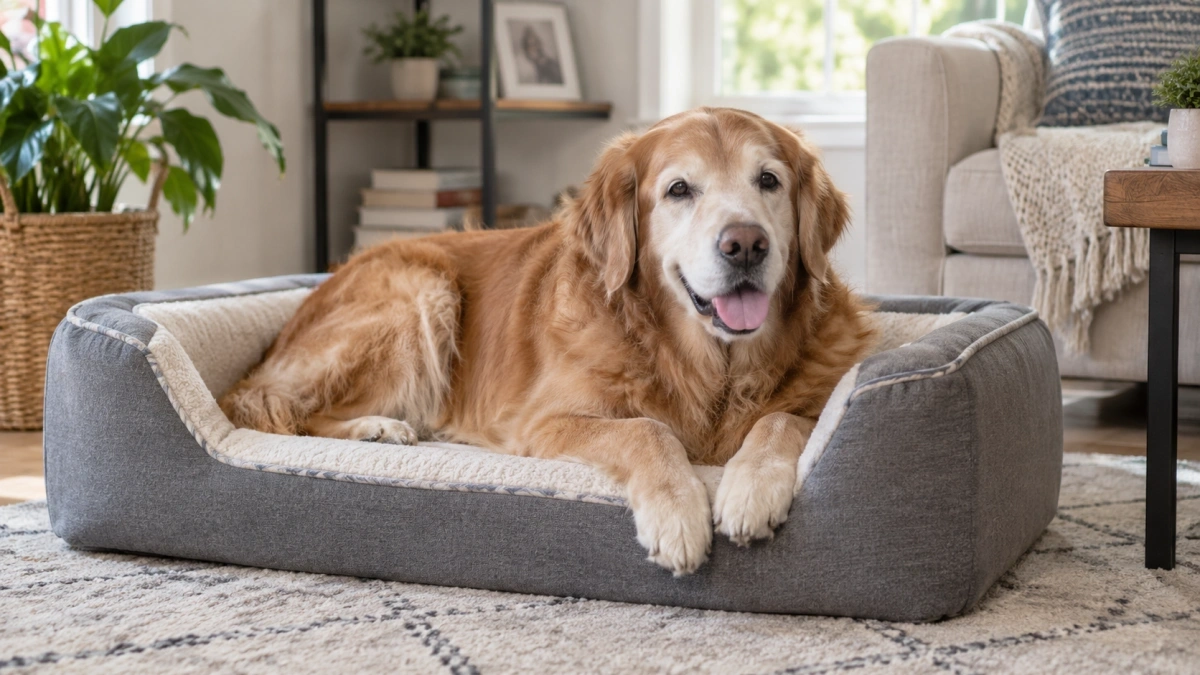
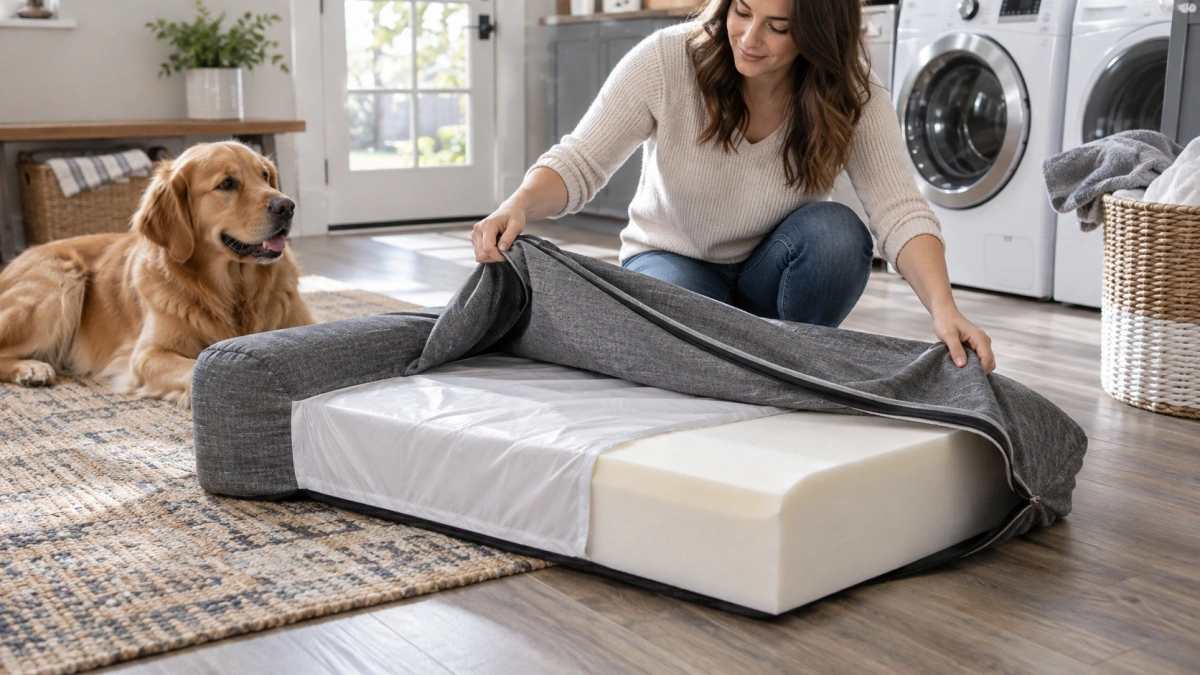
Most foam cores are not as easy to wash as a simple fabric dog bed, so the cover system matters.
Look for:
- A fully removable cover
- Machine-washable care instructions
- A wide zipper opening
- A separate protective liner
- Removable bolster inserts
- Replacement covers
- Clear drying instructions
A waterproof or water-resistant liner can help protect the foam from moisture, but it still needs to be used and cleaned according to the manufacturer’s instructions.
Before purchasing, check whether “machine washable” refers to the whole bed, the cover only, or individual inserts.
Do Orthopedic Beds Sleep Hot?
Some dense foam beds can retain more warmth than thin mats or elevated cots, especially in warm rooms.
If your dog regularly leaves plush bedding to sleep on tile, hardwood, or another cool surface, temperature preference may matter as much as cushioning.
Possible options include:
- More breathable covers
- Less enclosed bed shapes
- Open-front bolsters
- Bed placement away from direct heat
- Elevated beds for dogs that strongly prefer airflow
Cooling claims vary widely, so it is better to compare materials and your dog’s actual behavior than to rely only on a “cooling” label.
Are Orthopedic Dog Beds Worth It?
They can be worth the extra cost when the construction solves a real need rather than simply adding an orthopedic label.
Paying more may make sense when:
- A large dog repeatedly flattens loose-fill beds
- You want a more structured sleeping surface
- You need a removable washable cover
- You want a protective inner liner
- The dog uses the bed for many hours each day
- You need a low-entry design with structured cushioning
- You have repeatedly replaced beds because they collapse or become difficult to clean
A more expensive orthopedic bed is not automatically better. It still needs to fit the dog’s size, sleeping style, mobility, temperature preference, and your household’s cleaning routine.
When Bed Choice Is Not Enough
A supportive bed can improve the resting environment, but it should not be used as a substitute for veterinary evaluation when a dog has signs of pain or major mobility change.
Contact a veterinarian if your dog develops:
- Persistent limping
- Difficulty standing or lying down
- Reluctance to move normally
- Sudden stiffness
- Visible pain during movement
- Major changes in activity
- New sensitivity when touched
These signs can have many causes, and choosing a different dog bed cannot identify or treat the underlying problem.
Orthopedic Dog Bed Buying Checklist
- What foam or fill is actually inside the bed?
- Is it solid, layered, egg-crate, shredded, or mixed?
- Does the bed maintain structure under my dog’s weight?
- Does my dog sink close to the floor?
- Is the usable sleeping area large enough?
- Can my dog enter the bed comfortably?
- Do bolsters reduce too much sleeping space?
- Can the cover be removed and machine washed?
- Is the foam protected by an inner liner?
- Are replacement covers available?
- Does the bed match my dog’s temperature preference?
- Am I paying for useful construction or mainly for the orthopedic label?
Final Thoughts
The best orthopedic dog beds are not defined by the word “orthopedic” alone. Foam construction, compression, usable sleeping space, entry height, cleaning, and how the bed behaves under your dog’s actual weight matter more.
Read the construction details, watch how the surface compresses, and make sure the dog can comfortably get onto and off the bed.
A well-matched supportive bed can be a useful part of your dog’s everyday comfort, but persistent pain or mobility changes should always be evaluated separately rather than treated as a bedding problem.