By
By 
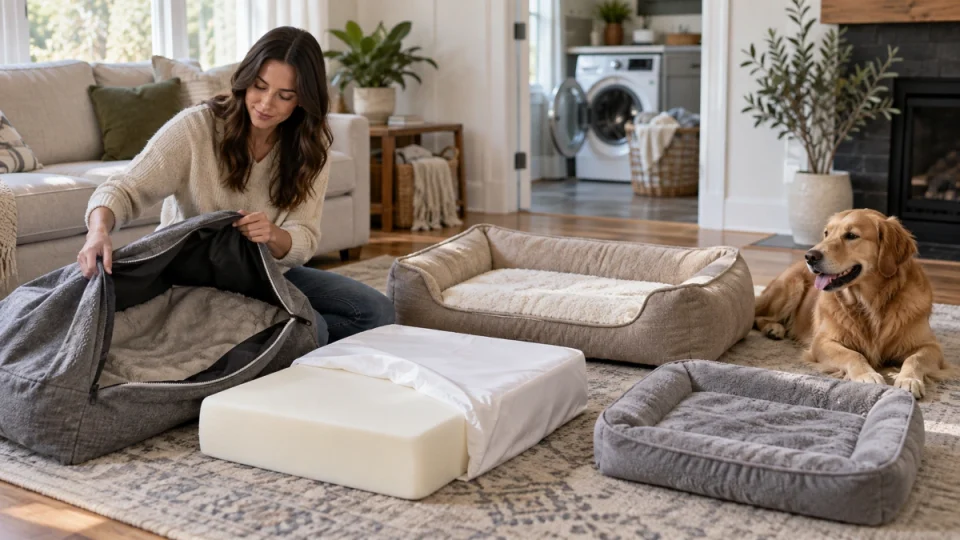
Covers for dog beds can be a practical way to refresh an existing bed, make wash days easier, or replace fabric that has become worn while the inner cushion or foam is still usable. However, replacement covers are not always universal, and choosing the right one requires more than matching a label such as small, medium, or large.
The most important factors are the dimensions and shape of the existing insert, the cover’s zipper and opening design, fabric type, washing instructions, and whether the product is a cover only or includes any internal cushion or filling.
For a broader look at dog bed styles, sizing, support, and materials, visit our complete Dog Beds topic hub.
What Is a Dog Bed Replacement Cover?
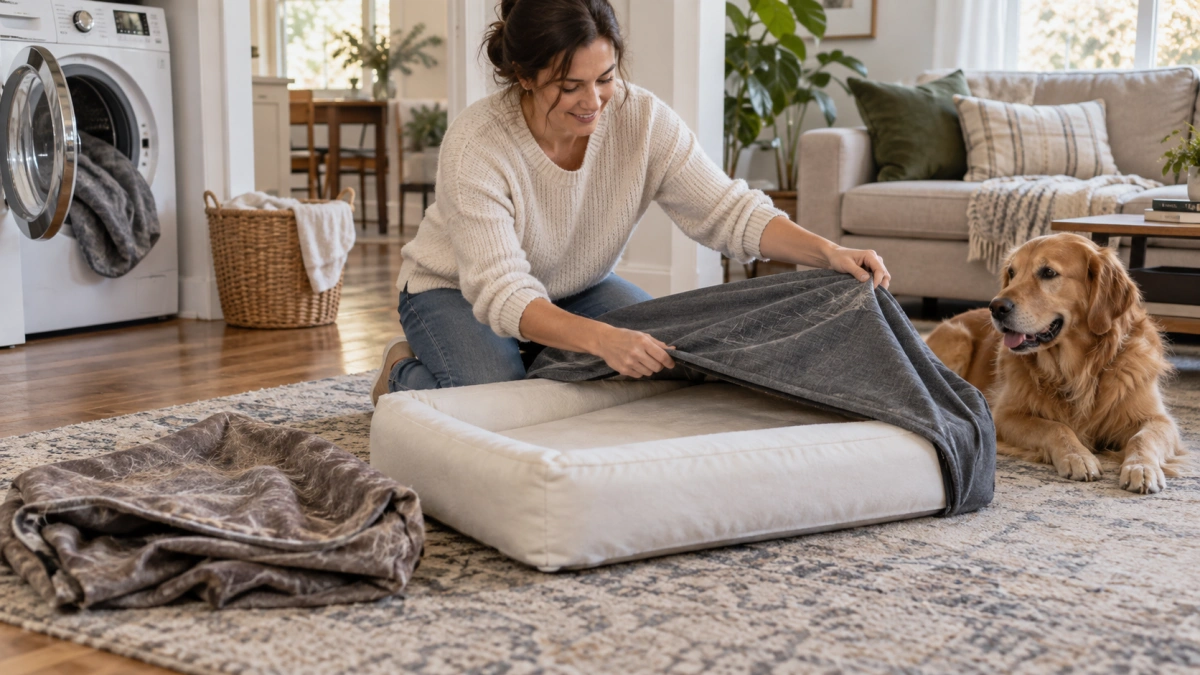
A dog bed replacement cover is an outer fabric shell designed to fit over an existing bed insert, cushion, foam core, or bolster system.
It can be useful when:
- The original cover is worn or stained
- You want a second cover for wash days
- The inner bed is still supportive and usable
- You want a different fabric or surface texture
- You need a cleaner outer layer without replacing the entire bed
A replacement cover does not automatically include the inner mattress, foam, filling, or bolster pieces.
Check What Is Included Before Buying
One of the easiest mistakes is assuming a replacement-cover listing includes the complete dog bed.
Before ordering, check whether the product includes:
- Cover only
- Foam insert
- Fiber-filled cushion
- Bolster inserts
- Protective inner liner
- Any additional removable pad
If the listing says “replacement cover only,” your existing insert must usually be reused.
This is especially important when the product photos show the cover fitted over a complete bed, because the internal cushion may only be shown for demonstration.
How to Measure for a Dog Bed Cover
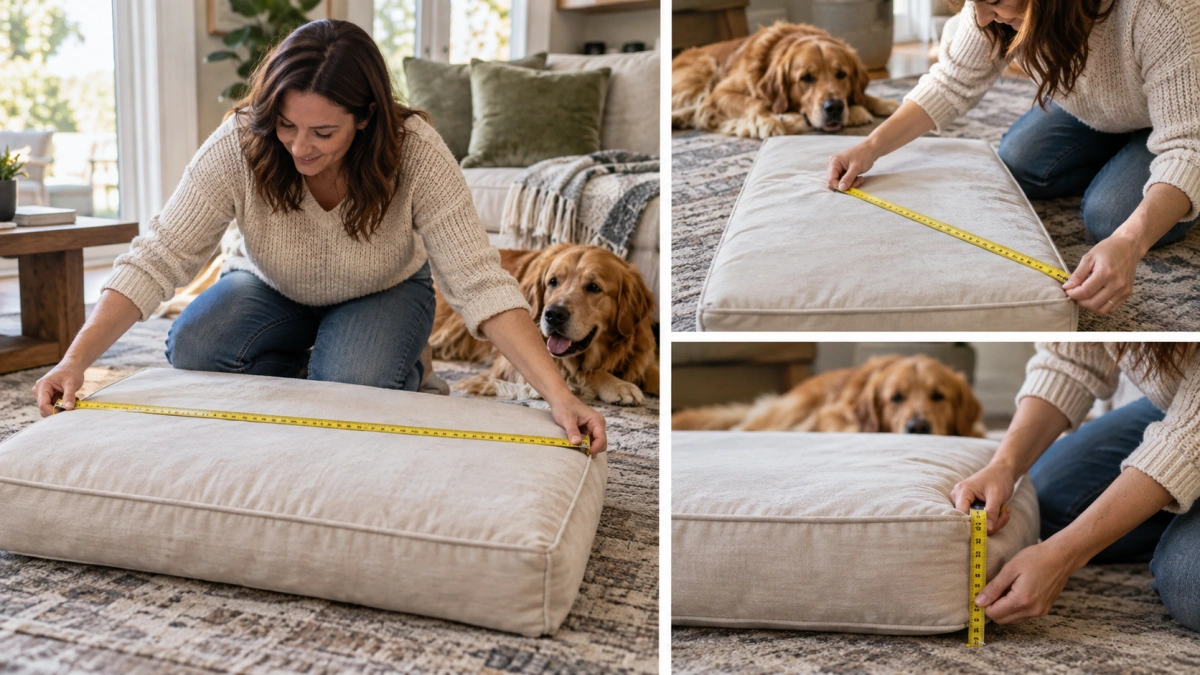
Measure the bed insert you already own rather than relying only on your dog’s weight or the original size label.
For a Rectangular Bed
Measure:
- Length
- Width
- Thickness or height
Measure the insert when it is lying flat and in its normal shape. If the foam is compressed while measuring, the cover you choose may be too tight once the insert expands again.
For a Round Bed
Check:
- Overall diameter
- Bed depth
- Center cushion shape
- Any raised outer ring
For a Bolster Bed
A bolster bed may require measurements for both the base cushion and the raised sides.
If the cover is designed for a specific model, use the manufacturer’s compatibility information instead of assuming another cover with similar outside dimensions will fit.
Model-Specific vs Universal Dog Bed Covers
Replacement covers generally fall into two groups: model-specific covers and more flexible universal-style covers.
| Cover Type | Advantages | Things to Check |
|---|---|---|
| Model-specific | Designed around a particular bed shape and insert | Exact model and size compatibility |
| Universal rectangular | Can fit many simple mattress-style inserts | Length, width and thickness |
| Duvet-style | More flexible with soft or loose filling | Finished shape and amount of filling |
| Bolster-specific | Maintains raised sides and structured shape | Number and position of bolster inserts |
Model-specific covers usually provide the most predictable fit, but they only work when your existing bed matches the intended design.
A universal cover can offer more flexibility, especially for a simple rectangular insert, but measuring carefully becomes more important.
Replacement Covers for Rectangle, Donut and Bolster Beds
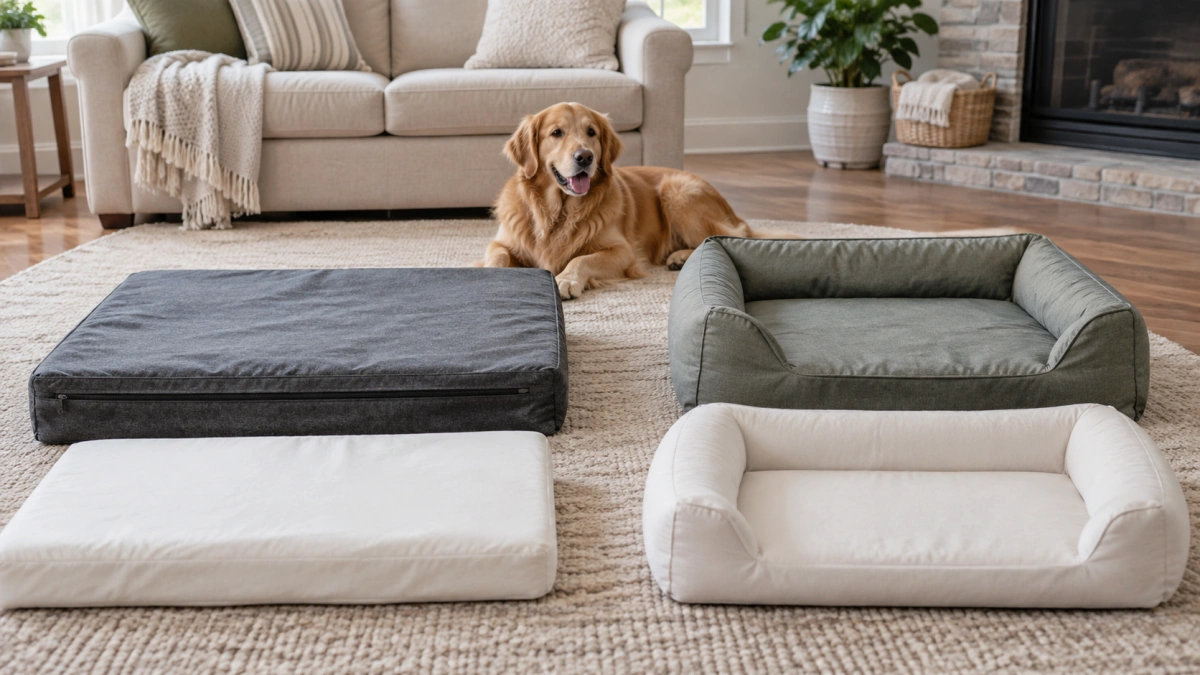
The shape of the bed determines how complicated replacement-cover fit can become.
Rectangular Dog Beds
These are generally the easiest to match because the cover can often be compared using length, width, and thickness.
Donut Dog Beds
Donut-style beds can be more difficult because the outer ring, center sleeping area, and depth all affect the final shape.
If a donut bed has a removable cover, check whether the entire insert comes out as one piece or whether the center and outer ring are separate.
Bolster Dog Beds
Bolster beds may have separate foam or fiber inserts for the base, back, and sides.
A replacement cover designed for a different bolster configuration may look similar in photos but fail to fit once all the inserts are installed.
How Should a Dog Bed Cover Fit?
A replacement cover should fit closely enough to keep the insert in shape without requiring excessive stretching.
A cover that is too loose may:
- Bunch under the dog
- Shift around the insert
- Make the bed look uneven
- Create excess fabric around the edges
A cover that is too small may:
- Place excessive tension on seams
- Compress the insert
- Make the zipper difficult to close
- Distort the shape of the bed
A snug fit is usually preferable to either extreme.
Do not force an undersized cover over a foam insert simply because the outside dimensions look close.
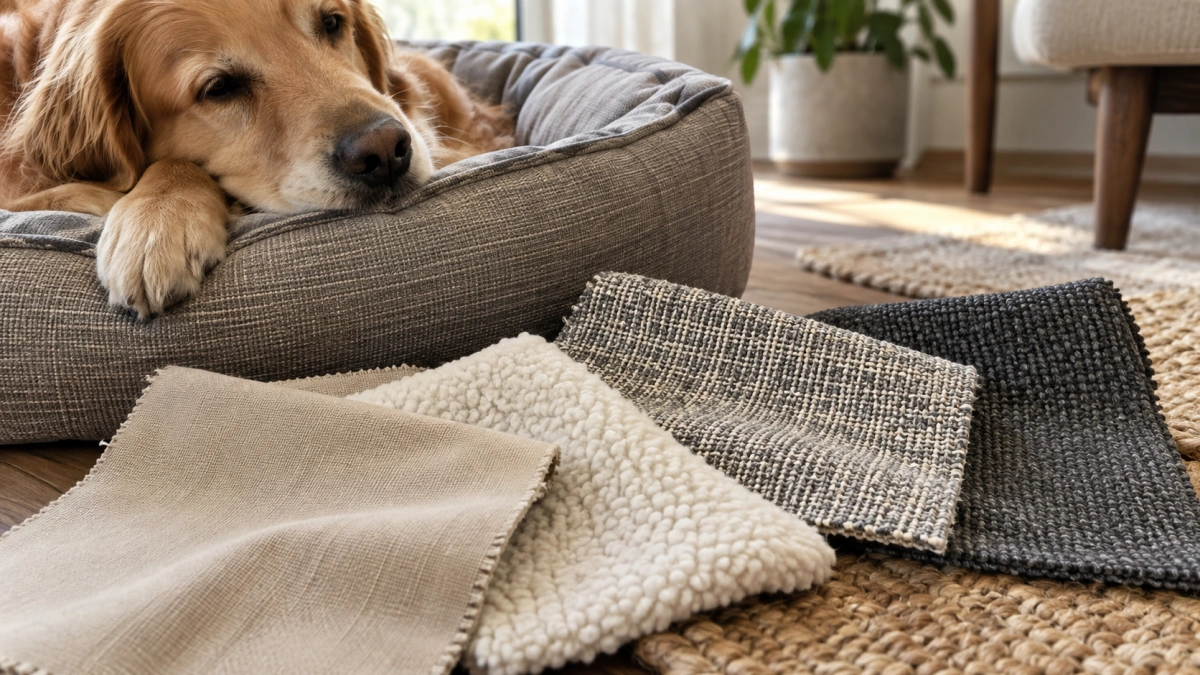
Dog Bed Cover Fabrics Compared
Fabric affects comfort, cleaning, appearance, and durability.
| Fabric Type | Typical Characteristics | Good Fit For |
|---|---|---|
| Cotton or canvas | Breathable, familiar fabric feel | Everyday indoor use |
| Fleece or plush | Soft and warmer-feeling | Dogs that prefer cozy surfaces |
| Upholstery fabric | More structured and furniture-like | Living-room dog beds |
| Durable woven fabric | More resistant to routine wear | Active dogs and frequent use |
| Water-resistant fabric | Can help with light moisture and damp paws | Mess-prone areas |
Water-resistant fabric should not automatically be treated as waterproof. A cover may slow light moisture without fully preventing liquid from reaching the inner bed.
Why Zipper Design Matters
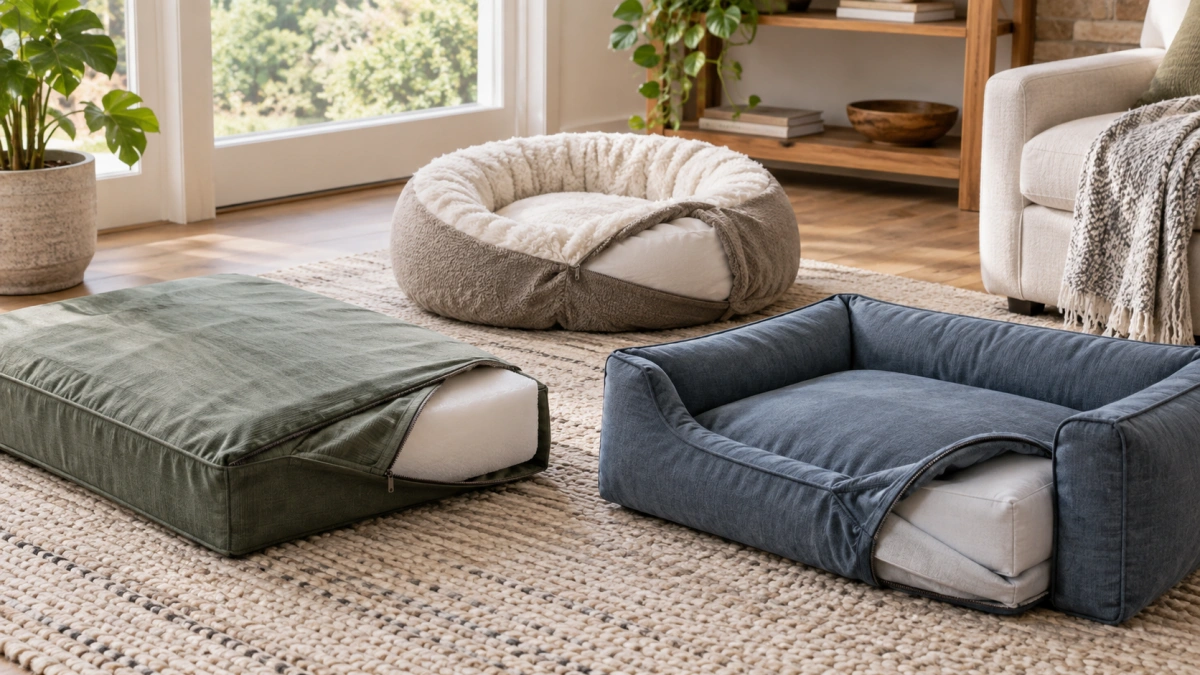
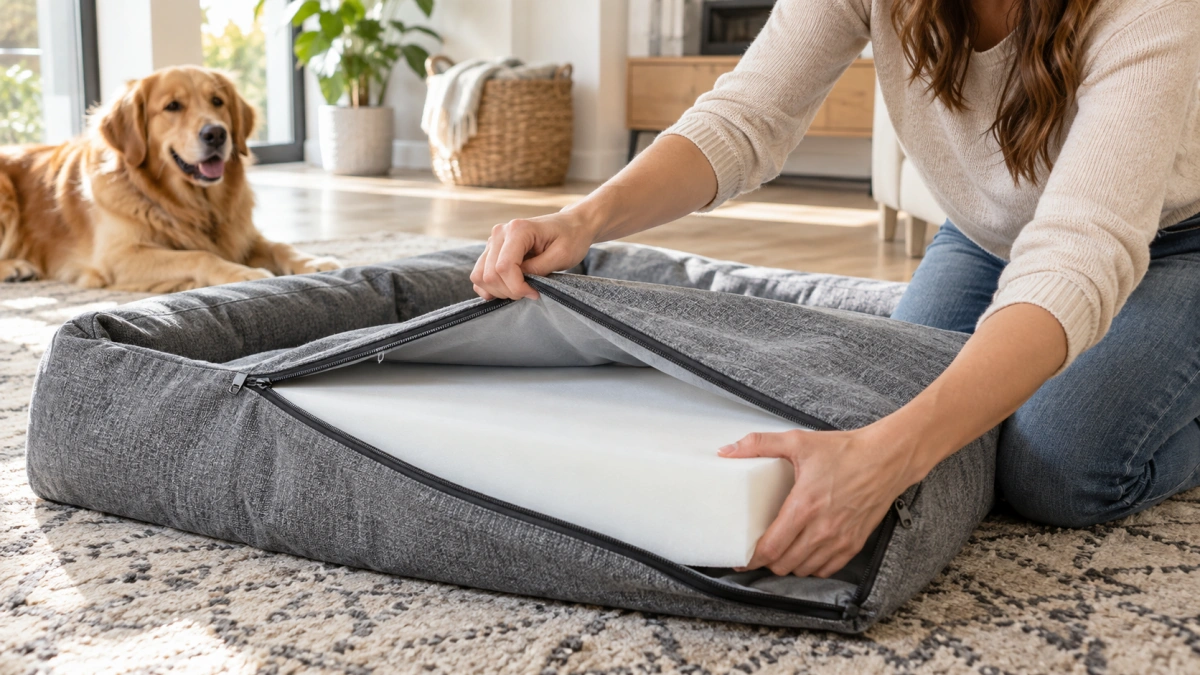
A replacement cover may have the correct dimensions but still be difficult to use if the opening is too small.
Check:
- How long the zipper opening is
- Where the zipper is positioned
- Whether the insert can slide in without folding excessively
- Whether bolster sections have separate openings
- Whether the zipper closes without heavy tension
A wide opening is especially useful for thick foam because it reduces the amount of bending and compressing required during reassembly.
Hidden or recessed zipper designs may also keep the hardware less exposed when the dog is lying on the bed.
How to Wash a Dog Bed Cover
There is no single washing method that applies to every replacement cover.
A practical routine is:
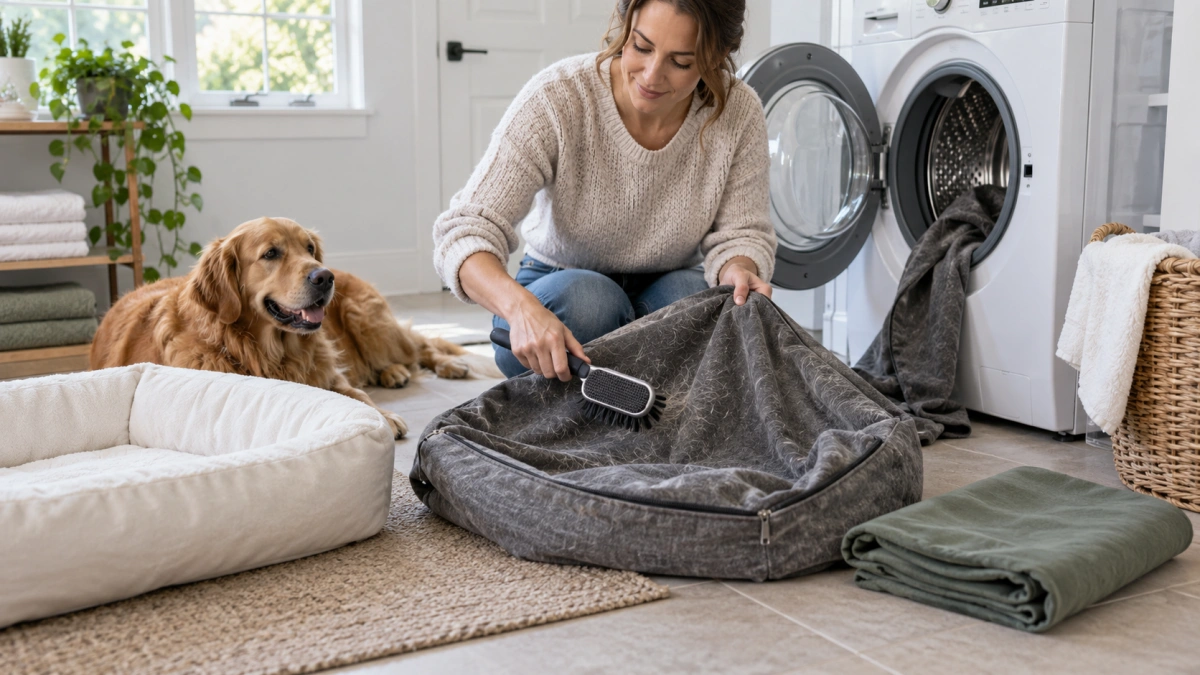
Step 1: Remove Loose Hair
Vacuum, brush, or shake off loose dog hair before washing.
Step 2: Remove the Cover
Take out the foam, filling, and bolster pieces unless the care instructions specifically state otherwise.
Step 3: Check the Care Label
Confirm:
- Recommended water temperature
- Wash cycle
- Detergent guidance
- Drying method
- Whether the zipper should be open or closed during washing
Step 4: Wash Only as Directed
Some covers require cold water and a gentle cycle, while others allow different settings.
Step 5: Dry Completely
Air dry or use only the dryer setting allowed by the care label.
Do not reinstall a damp cover over foam or filling.
If you are choosing the entire bed around easy cleaning rather than replacing only the fabric shell, our guide to washable dog beds explains removable covers, foam protection, washer capacity, and easy-clean bed construction.
Replacement Cover vs Spare Cover
A replacement cover and a spare cover can be the same physical product, but they solve different problems.
| Use | Why You Need It |
|---|---|
| Replacement cover | The original cover is worn, stained, damaged, or no longer usable |
| Spare cover | The original cover is still usable, but you want another cover during washing or drying |
A spare cover can be especially convenient when the main cover needs to air dry or when the dog uses the same bed every day.
When a New Cover Is Enough — and When It Is Not
Replacing only the outer cover can make sense when the inner bed is still in good condition.
A new cover may be enough if:
- The foam still keeps its shape
- The cushion remains supportive
- The inner bed is clean and dry
- Only the fabric is worn or stained
- The zipper or seams on the original cover have failed
Consider replacing more than the cover if:
- The foam is badly compressed
- The inner insert is damaged
- The bed no longer holds its shape
- Persistent contamination has reached the core
- The internal structure is failing
A fresh cover can improve the surface of a usable bed, but it cannot restore a damaged or collapsed core.
Common Dog Bed Cover Buying Mistakes
- Buying by small, medium, or large label alone
- Measuring the dog instead of the existing insert
- Assuming the listing includes foam or filling
- Ignoring bed thickness
- Assuming another brand’s cover will fit
- Ignoring bolster configuration
- Choosing fabric without checking care instructions
- Assuming water-resistant means waterproof
- Ignoring zipper opening size
- Forcing an undersized cover over the insert
Dog Bed Cover Buying Checklist
- Is this a cover only?
- What insert or bed model is it designed to fit?
- Have I measured length, width, and thickness?
- Does the bed have a rectangular, round, donut, or bolster shape?
- Does the cover match the number and position of inserts?
- Is the fabric suitable for my dog’s sleeping preference?
- Is the material washable?
- What are the drying instructions?
- Is the zipper opening large enough for easy installation?
- Do I need a replacement cover, a spare cover, or both?
Final Thoughts
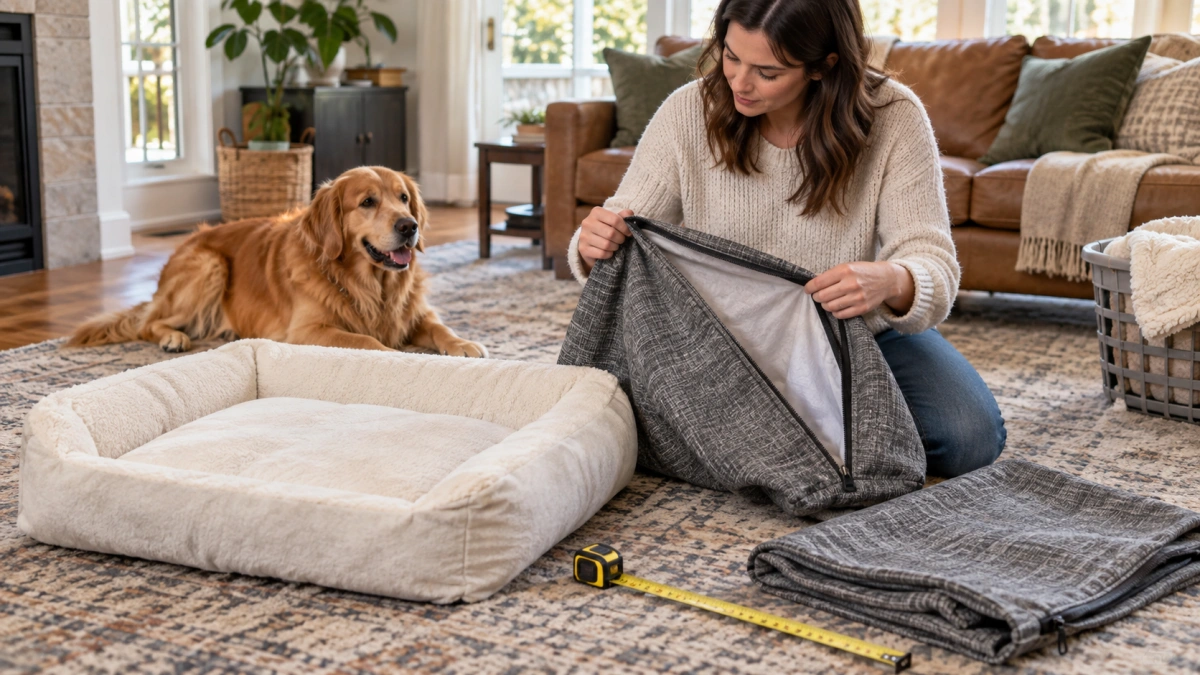
Choosing covers for dog beds is mainly a compatibility problem. The right replacement cover needs to match the existing insert’s dimensions, thickness, shape, bolster configuration, and zipper requirements.
Fabric and washability matter too, but neither can compensate for poor fit. Measure the actual bed insert, confirm exactly what is included, and follow the care instructions for the specific cover you buy.
If the inner bed is still supportive and clean, a replacement or spare cover can extend its useful life and make routine washing much easier.