By
By 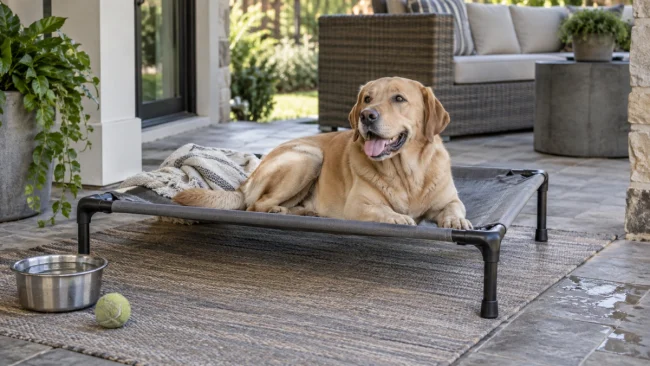
Outdoor dog beds are designed for environments where regular indoor beds may struggle with moisture, dirt, sunlight, and frequent cleaning. The right outdoor bed should balance weather resistance, comfort, durability, and easy maintenance.
A good outdoor dog bed is not simply a bed placed outside. It needs materials and construction that match the conditions where it will be used, whether that is a patio, deck, balcony, garage, camping area, or backyard.
Before choosing an outdoor dog bed, consider the location, weather exposure, cleaning requirements, and your dog’s sleeping habits.
You can also explore our complete Dog Beds topic hub for more guides about different bed styles, materials, sizing, and everyday use.
What Is an Outdoor Dog Bed?
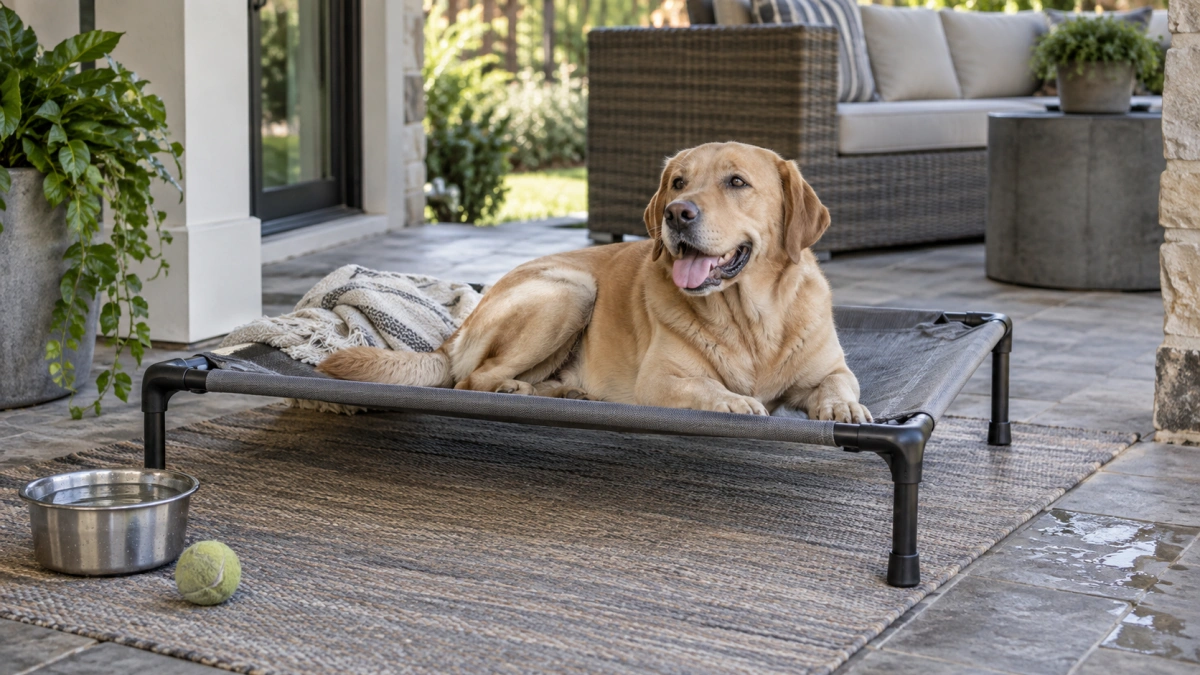
An outdoor dog bed is designed for use in areas exposed to outdoor conditions such as dirt, moisture, temperature changes, and sunlight.
Compared with many indoor beds, outdoor-focused designs usually prioritize:
- Durable fabrics
- Easy cleaning
- Faster drying
- Moisture resistance
- Stable construction
- Portability
The best outdoor dog bed depends on where it will actually be placed. A covered patio has different requirements from an open backyard area exposed to rain and direct sun.
Outdoor Dog Beds vs Indoor Dog Beds
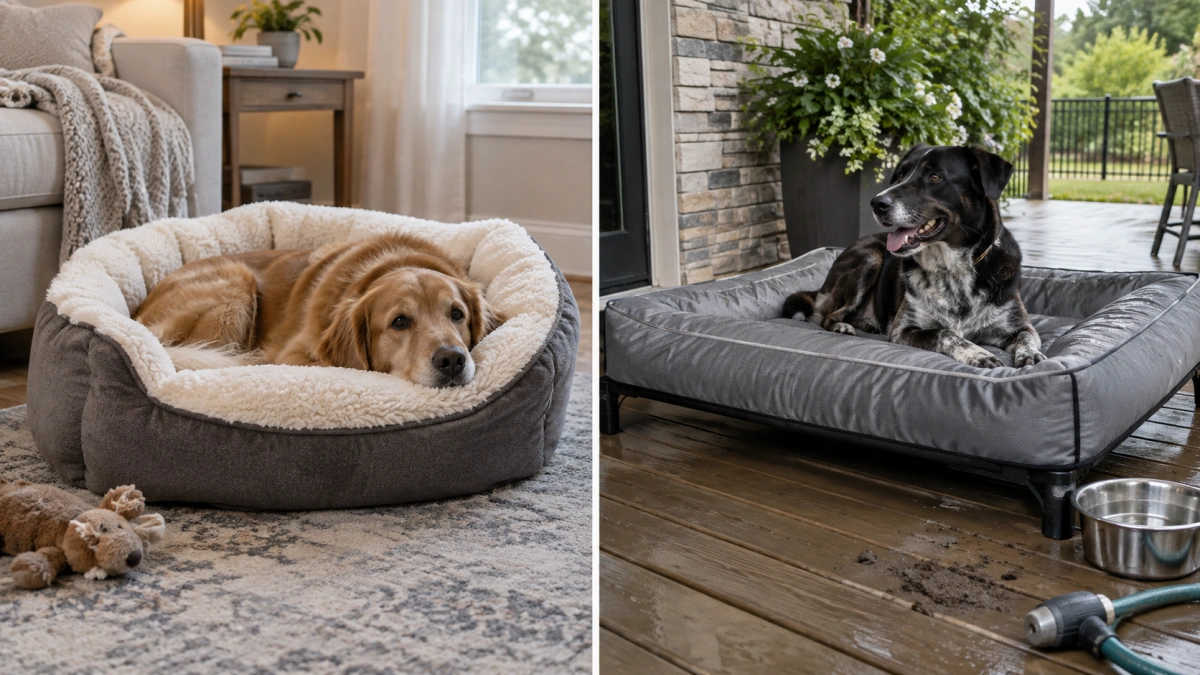
Indoor and outdoor dog beds are built around different priorities.
| Feature | Outdoor Dog Bed | Indoor Dog Bed |
|---|---|---|
| Material focus | Durability and easy cleaning | Comfort and interior style |
| Moisture handling | Usually higher resistance | Depends on fabric |
| Cleaning | Designed for dirt and outdoor debris | Often focused on hair and normal household use |
| Portability | Often easier to move | Depends on construction |
| Weather exposure | Built for outdoor conditions | Usually limited |
An indoor bed may work outside temporarily, but long-term outdoor use requires materials designed for more demanding conditions.
Waterproof vs Water-Resistant vs Weather-Resistant
Outdoor dog bed descriptions often use similar words that have different meanings.
Waterproof
Waterproof materials are designed to prevent water from passing through under specific conditions.
However, waterproof does not always mean the entire bed can stay outside permanently in every weather condition.
Water-Resistant
Water-resistant materials help slow moisture absorption and handle light exposure such as small spills, wet paws, or brief outdoor use.
Weather-Resistant
Weather-resistant construction considers multiple outdoor factors, including:
- Moisture
- Sunlight
- Temperature changes
- Outdoor dirt
When choosing an outdoor dog bed, evaluate the entire construction instead of relying on a single label.
Best Materials for Outdoor Dog Beds
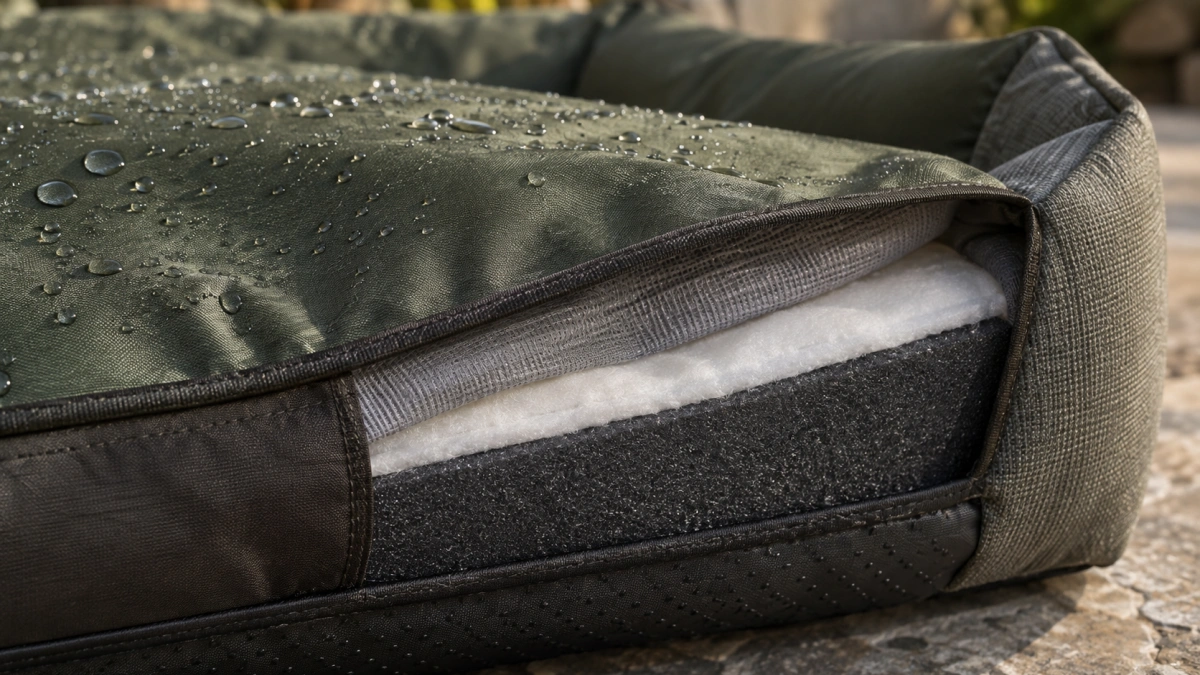
Outdoor durability depends on both the surface fabric and the internal construction.
Synthetic Fabrics
Synthetic materials are commonly used outdoors because they can be easier to clean and maintain.
Look for:
- Tightly woven fabric
- Scratch resistance
- Quick drying properties
- Easy surface cleaning
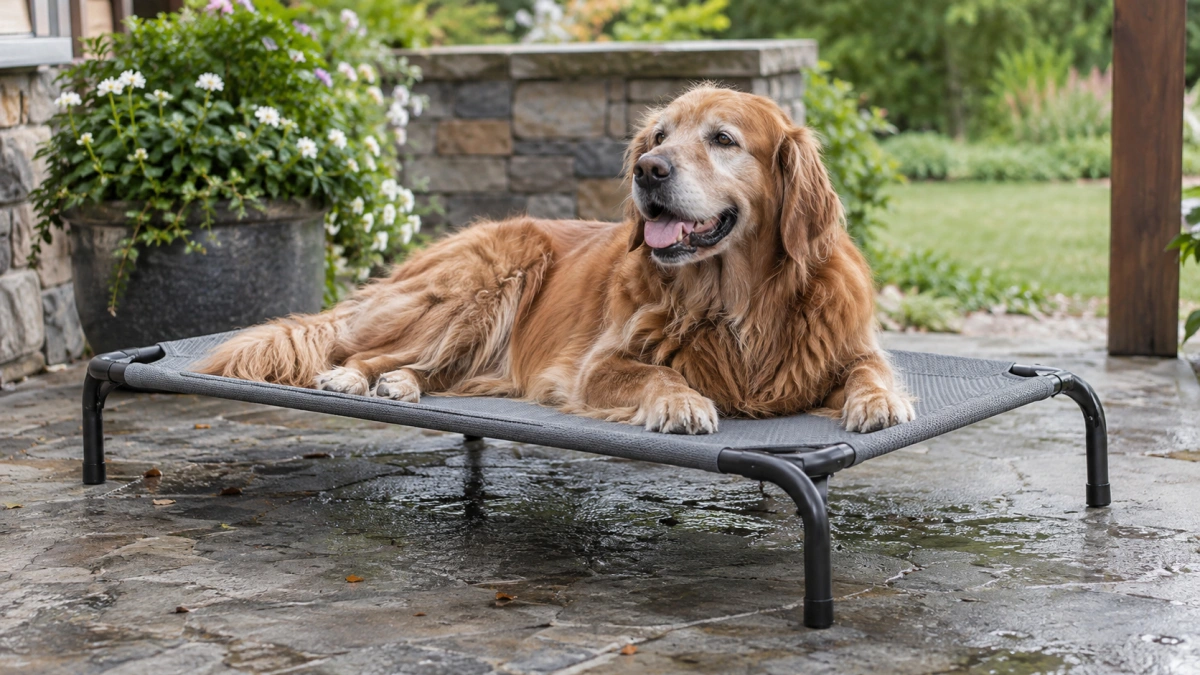
Mesh Platforms
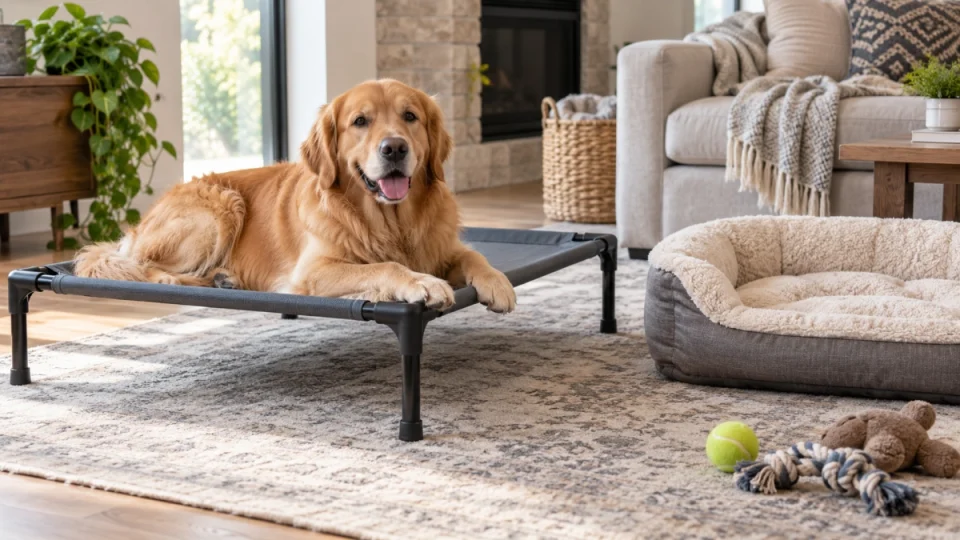
Mesh surfaces are common in elevated outdoor beds because they allow airflow and can dry quickly after moisture exposure.
Foam and Cushioned Materials
Foam can provide extra comfort but requires more consideration outdoors because moisture trapped inside can take longer to dry.
If using a cushioned outdoor bed, check whether the cover and inner materials are designed for outdoor maintenance.
Raised Outdoor Beds and Airflow
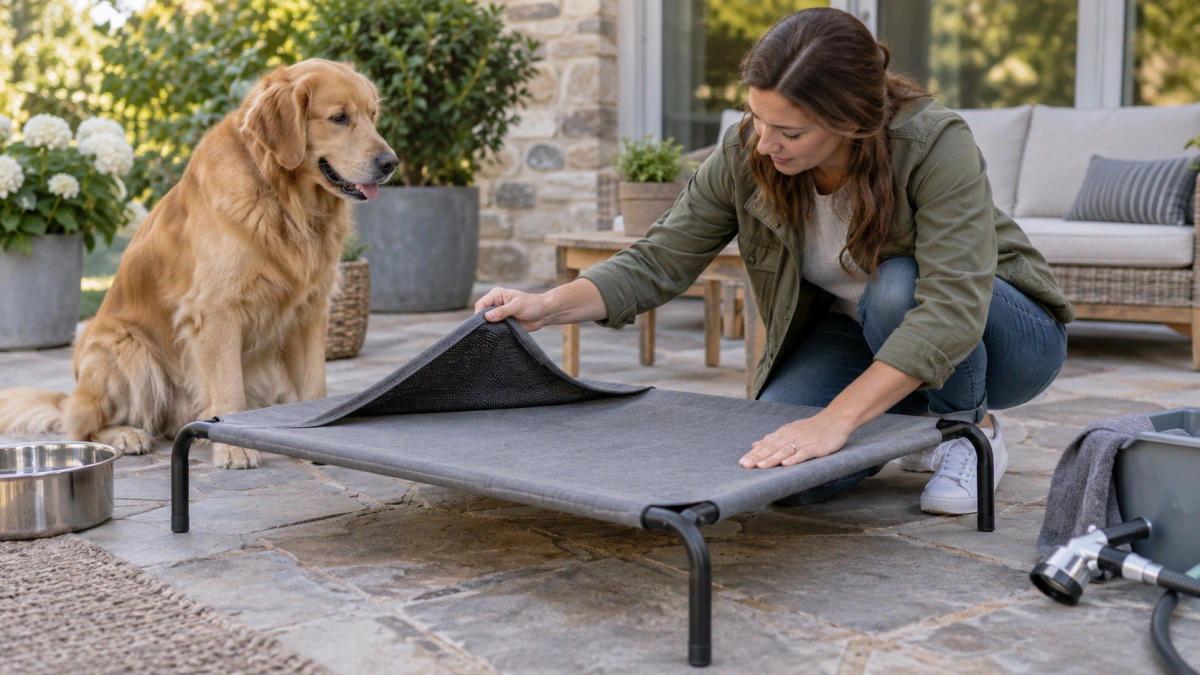
Raised designs are popular for outdoor use because they lift the sleeping surface away from the ground.
Benefits can include:
- Less contact with damp surfaces
- Improved airflow underneath
- Easier cleaning around the bed
- A practical option for patios and outdoor areas
For a deeper explanation of elevated designs, see our guide to raised dog beds.
Choosing a Bed for Patio, Deck and Garage
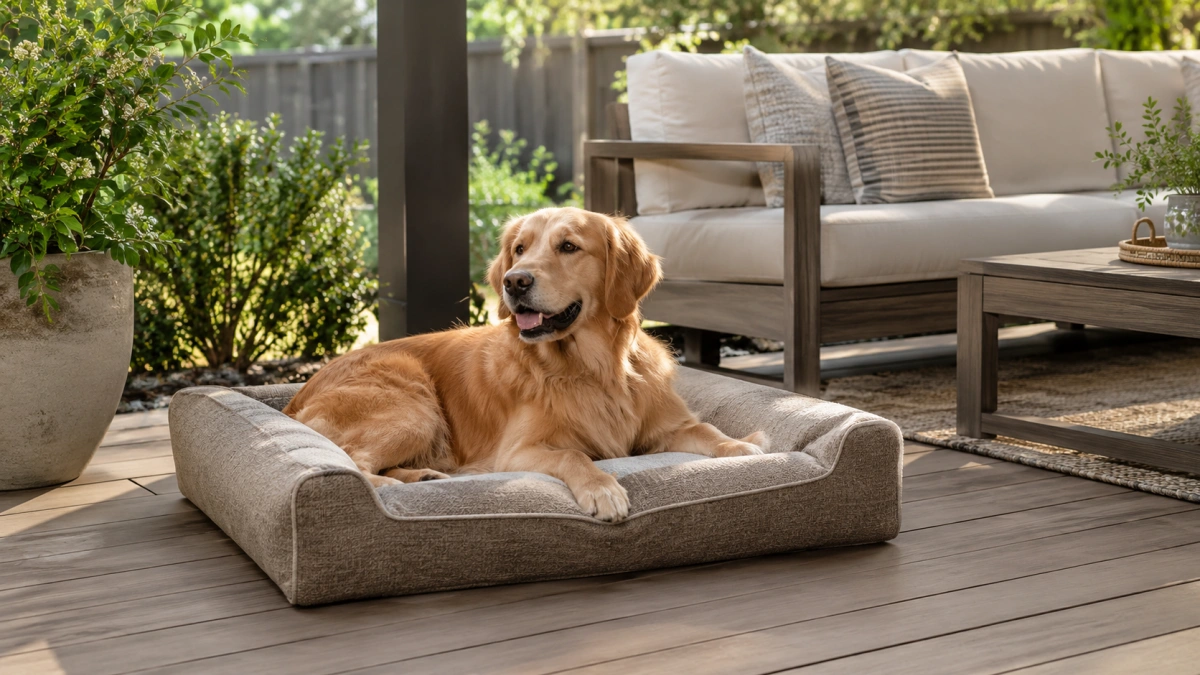
Patio Areas
Patios usually need beds that handle:
- Sun exposure
- Dust
- Outdoor furniture movement
- Occasional moisture
Deck Areas
Deck spaces may collect leaves, dirt, and moisture between boards, making easy cleaning important.
Garage Areas
Garage beds may need:
- Durable surfaces
- Resistance to dirt
- Easy movement
- Comfort for resting areas
The best outdoor dog bed depends on the specific environment rather than simply whether it is labeled outdoor.
UV Protection and Sun Exposure
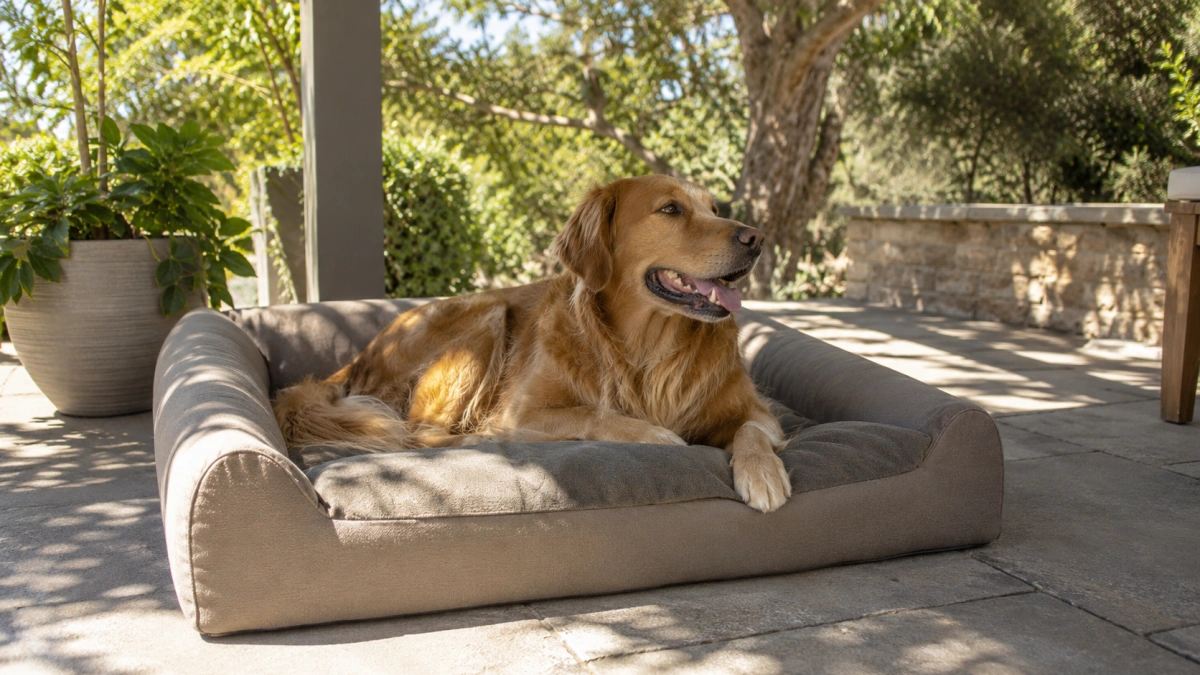
Long-term sunlight can affect outdoor materials over time.
Direct sun exposure may contribute to:
- Fabric fading
- Material weakening
- Surface wear
To extend the life of an outdoor dog bed:
- Use shaded locations when possible
- Rotate the bed position
- Follow cleaning instructions
- Store the bed during extreme weather
A durable outdoor bed still benefits from thoughtful placement.
Cleaning Dirt, Mud and Hair
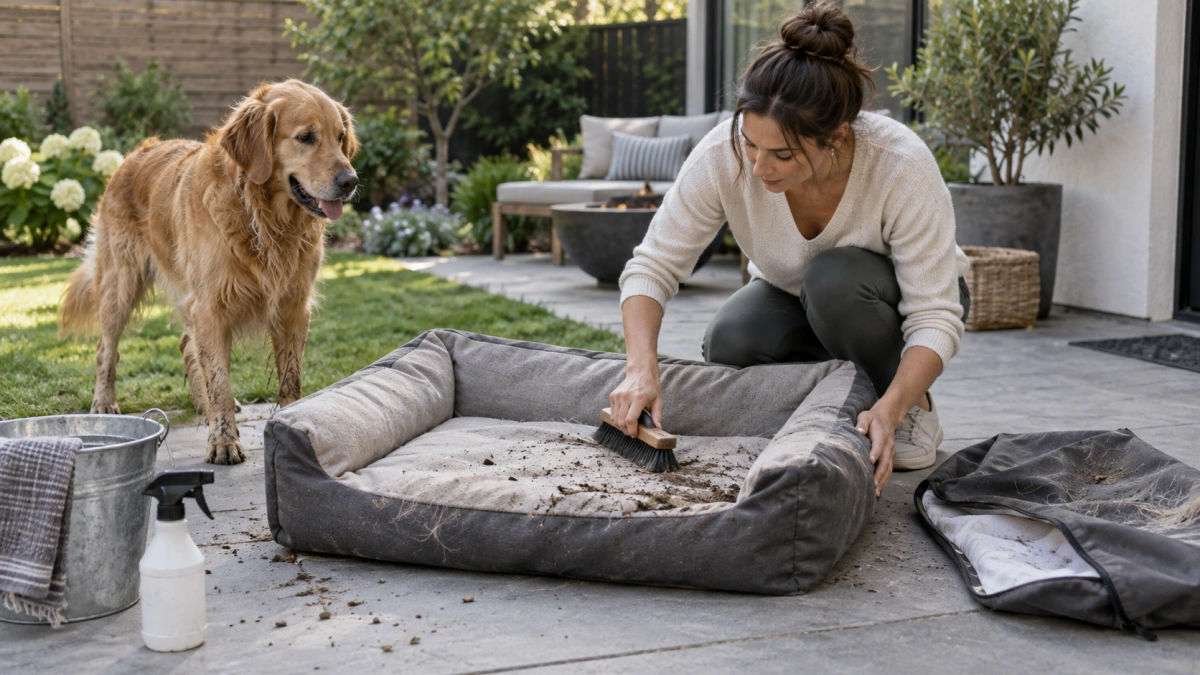
Outdoor beds often collect more than normal indoor bedding.
Common issues include:
- Mud
- Leaves
- Dust
- Wet paws
- Loose hair
Useful cleaning features include:
- Removable covers
- Washable fabric
- Quick-drying materials
- Easy-to-wipe surfaces
- Simple construction without difficult-to-clean areas
Portable Outdoor Dog Beds
Portable outdoor beds are useful for travel, camping, visits, and temporary outdoor areas.
Important features include:
- Lightweight construction
- Easy carrying
- Fast setup
- Simple cleaning
- Durable materials
A portable outdoor bed should be practical to move without sacrificing the dog’s comfort.
When to Bring the Outdoor Bed Indoors
Even weather-resistant beds may need protection during extreme conditions.
Consider storing the bed when there is:
- Heavy rain
- Extreme temperatures
- Long periods without use
- Severe weather exposure
Outdoor durability does not mean a bed should be ignored. Regular inspection helps identify wear before the structure becomes unsafe.
Common Outdoor Dog Bed Buying Mistakes
- Assuming waterproof means unlimited outdoor exposure
- Using indoor plush beds outside permanently
- Ignoring UV exposure
- Choosing fabric without considering cleaning
- Ignoring where the bed will actually be placed
- Forgetting storage during extreme weather
- Choosing appearance over construction quality
Outdoor Dog Bed Buying Checklist
- Where will the bed be placed?
- Does the material match the weather conditions?
- Is the fabric easy to clean?
- Does it dry quickly?
- Can it handle dirt and pet hair?
- Is the frame or base stable?
- Will sunlight affect the material over time?
- Does the size fit the dog’s sleeping style?
- Can the bed be stored when needed?
Final Thoughts
The best outdoor dog beds are designed around the environment where they will be used. Weather resistance, easy cleaning, durability, and comfort all matter when choosing a bed for outside spaces.
A waterproof label alone does not define a good outdoor bed. Consider the full construction, material quality, placement, and your dog’s habits.
Whether you need a patio bed, travel option, or elevated outdoor design, choose a bed that fits both the conditions and your dog’s daily routine.