By
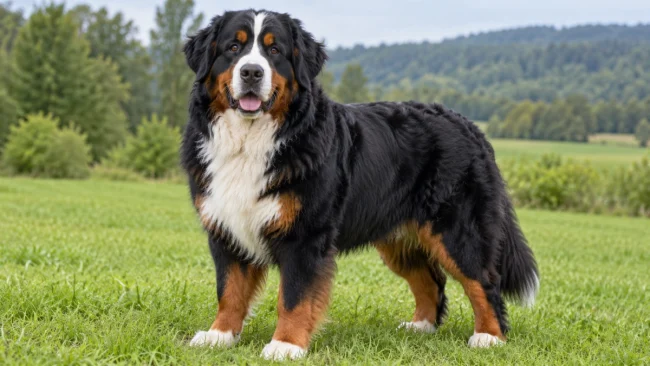
The Bernese Mountain Dog is a large Swiss working breed known for its distinctive black, white and rust coat, calm presence and strong attachment to family. Originally developed as a versatile farm dog, the Berner combines substantial size and strength with a temperament that is typically gentle, affectionate and eager to work with people.
That appealing personality can make the breed look easy to live with, but Bernese Mountain Dogs come with important practical considerations. They are large dogs that shed heavily, need regular grooming and training, prefer significant human companionship and have a relatively short average lifespan compared with many smaller breeds.
If you are researching Bernese Mountain Dog dog breeds because you are considering bringing one home, look beyond the striking tricolor appearance. Size, coat care, training, exercise, climate, household space and long-term health planning all matter.
You can explore more breeds in our Dog Breeds guide or compare other substantial dogs in our Large Dog Breeds topic.
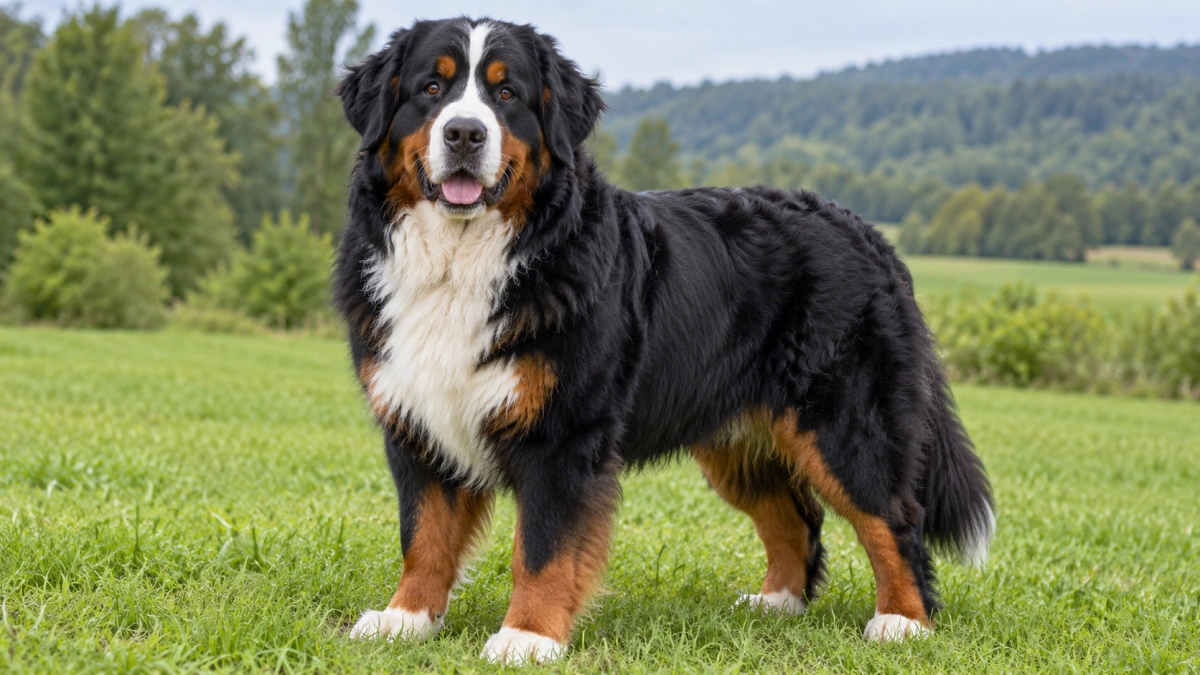
Bernese Mountain Dog at a Glance
| Trait | Typical Bernese Mountain Dog |
|---|---|
| Breed Group | Working Group |
| Origin | Switzerland |
| Male Height | 25–27.5 inches |
| Female Height | 23–26 inches |
| Male Weight | 80–115 pounds |
| Female Weight | 70–95 pounds |
| Life Expectancy | About 7–10 years |
| Coat | Thick, moderately long double coat |
| Color | Black with rust and white markings |
| Shedding | Moderate to heavy, with seasonal increases |
| Temperament | Good-natured, affectionate, calm and often somewhat reserved with strangers |
| Exercise | Moderate daily activity |
Where Did the Bernese Mountain Dog Come From?
The Bernese Mountain Dog developed in Switzerland as one of the traditional Swiss mountain farm dogs often grouped under the German term Sennenhunde.
Historically, Berners worked closely with farmers. Their jobs could include moving livestock, guarding farm property and pulling carts carrying products such as milk and cheese.
That working history helps explain several characteristics still associated with the breed today:
- Substantial physical strength
- Strong connection with people
- Ability to learn practical tasks
- Comfort in cooler climates
- Natural suitability for drafting and carting work
The first Bernese Mountain Dogs recorded as coming to the United States arrived during the 1930s, and the American Kennel Club recognized the breed in 1937.
Bernese Mountain Dog Size and Appearance
A Bernese Mountain Dog is unmistakably a large breed, but a well-proportioned Berner should look sturdy and balanced rather than excessively bulky.
According to the AKC breed information, adult males generally stand 25 to 27.5 inches at the shoulder and weigh about 80 to 115 pounds. Adult females are typically 23 to 26 inches tall and approximately 70 to 95 pounds.
The official breed standard describes a dog that is slightly longer in body than it is tall, with substantial bone and enough strength and agility to perform historic farm work.
The Bernese Mountain Dog Coat and Colors
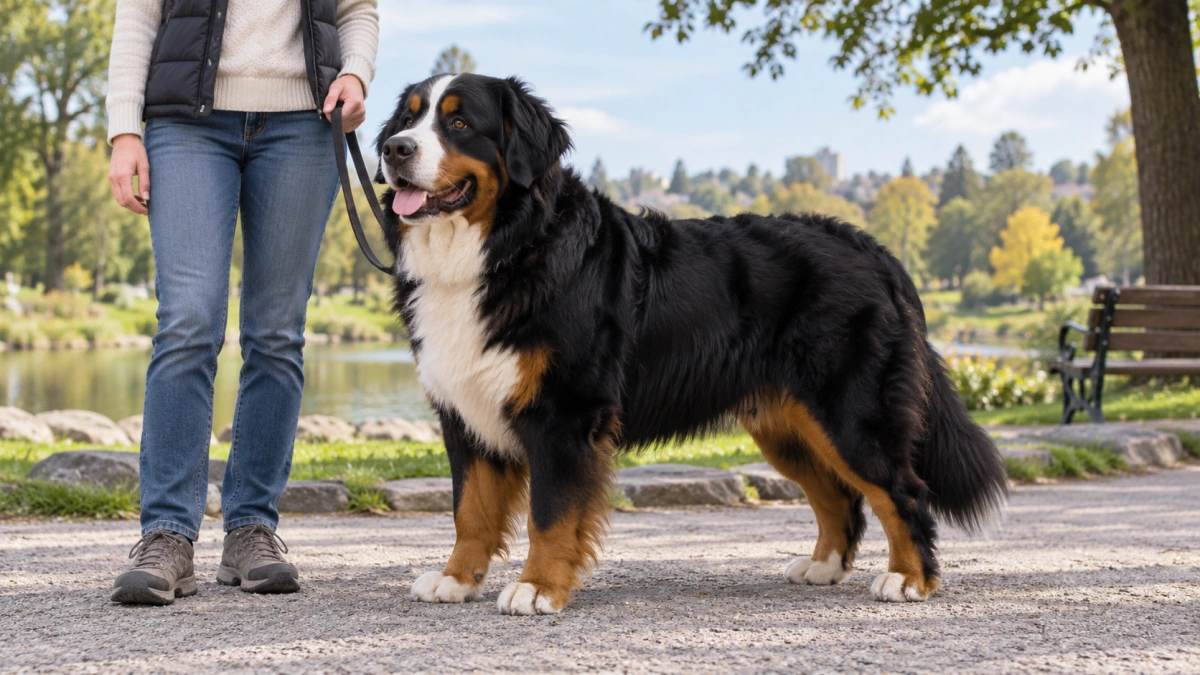
The Berner’s coat is one of its most recognizable features.
The breed standard describes the coat as:
- Thick
- Moderately long
- Straight or slightly wavy
- Naturally glossy
The classic coat is tricolored. The base is jet black, combined with rich rust markings and clear white.
Typical white markings include a blaze on the face, white around the muzzle, white on the chest and often a white tail tip.
Rust commonly appears:
- Above the eyes
- On the cheeks
- On both sides of the chest
- On the legs
- Under the tail
The coat is functional as well as attractive. Its density helped the breed work in Switzerland’s cool mountain environment.
Bernese Mountain Dog Temperament and Personality
The Bernese Mountain Dog breed standard describes the ideal temperament as self-confident, alert and good-natured without being sharp or shy.
In everyday homes, Berners are often described as:
- Affectionate
- Gentle
- People-oriented
- Calm indoors when their needs are met
- Intelligent
- Eager to cooperate
They may be somewhat reserved or aloof with unfamiliar people, which is different from being aggressive.
Individual temperament still varies. Genetics, early socialization, training and life experience all influence the adult dog.
Are Bernese Mountain Dogs Good Family Dogs?
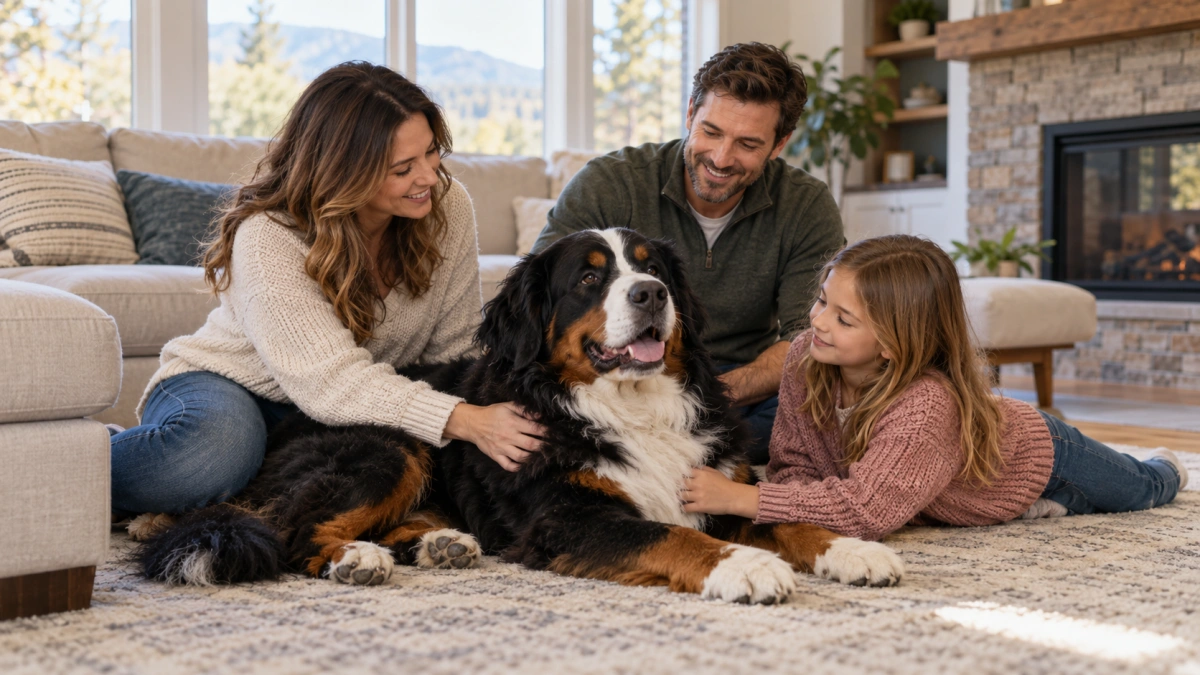
Bernese Mountain Dogs can be excellent family companions in households prepared for their size and care requirements.
They are widely known for being affectionate with family and often gentle with children. However, a friendly temperament does not remove the need for supervision.
A dog that weighs 80 to 100 pounds or more can accidentally knock over a small child even without any aggressive intent.
Children should learn to:
- Leave the dog alone while eating or sleeping
- Avoid climbing on the dog
- Avoid pulling ears or fur
- Interact calmly
- Respect the dog’s resting space
Adults should supervise interactions between dogs and young children regardless of breed.
Do Bernese Mountain Dogs Bond With One Person?
Berners are generally affectionate with their whole household, but some develop a particularly strong bond with one family member.
They were historically working dogs that spent significant time cooperating with people, and modern Berners tend to thrive when they are included in family life.
This is not a breed best suited to spending most of its life isolated in a yard.
Can Bernese Mountain Dogs Be Left Alone?
Short periods of normal household separation can be taught, but Bernese Mountain Dogs are strongly people-oriented.
They generally do best in homes where they receive regular interaction rather than being left alone for long periods every day.
Gradual independence training, predictable routines and age-appropriate enrichment are more useful than expecting a highly social young dog to suddenly tolerate many hours alone.
Are Bernese Mountain Dogs Good With Other Dogs?
Many Berners live successfully with other dogs when socialized appropriately.
Compatibility depends on:
- Individual temperament
- Early experiences
- The other dog’s behavior
- Introductions
- Resource management
Breed tendencies can help set expectations, but they do not guarantee how two individual dogs will interact.
Exercise and Activity Needs
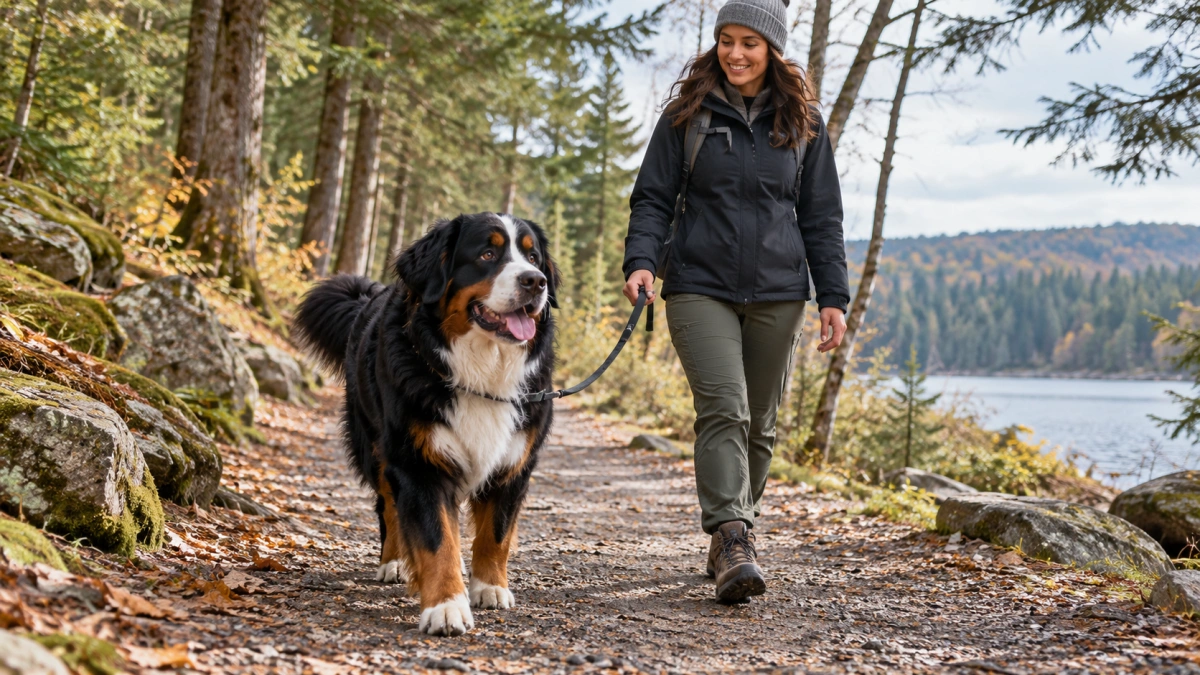
The Bernese Mountain Dog is a working breed, but that does not mean every adult requires hours of intense running.
AKC guidance recommends at least about 30 minutes of moderate daily exercise, while many healthy adult Berners will enjoy additional walking and outdoor activity.
Good activities can include:
- Daily walks
- Hiking in suitable temperatures
- Exploring new environments
- Obedience work
- Tracking
- Rally
- Drafting or carting
- Appropriate interactive games
The exact amount should be adjusted for age, health, fitness and weather.
Bernese Mountain Dogs and Hot Weather
The breed’s dense double coat is well adapted to cooler conditions.
That means owners need to be more conservative during hot weather.
In warm conditions:
- Walk during cooler parts of the day
- Provide shade and fresh water
- Avoid strenuous activity during peak heat
- Allow indoor access to a comfortable environment
- Watch the individual dog’s response to temperature
Their enjoyment of cold weather should not be interpreted as permission to leave them outdoors indefinitely. Berners are highly social dogs that generally belong with their family.
Training a Bernese Mountain Dog
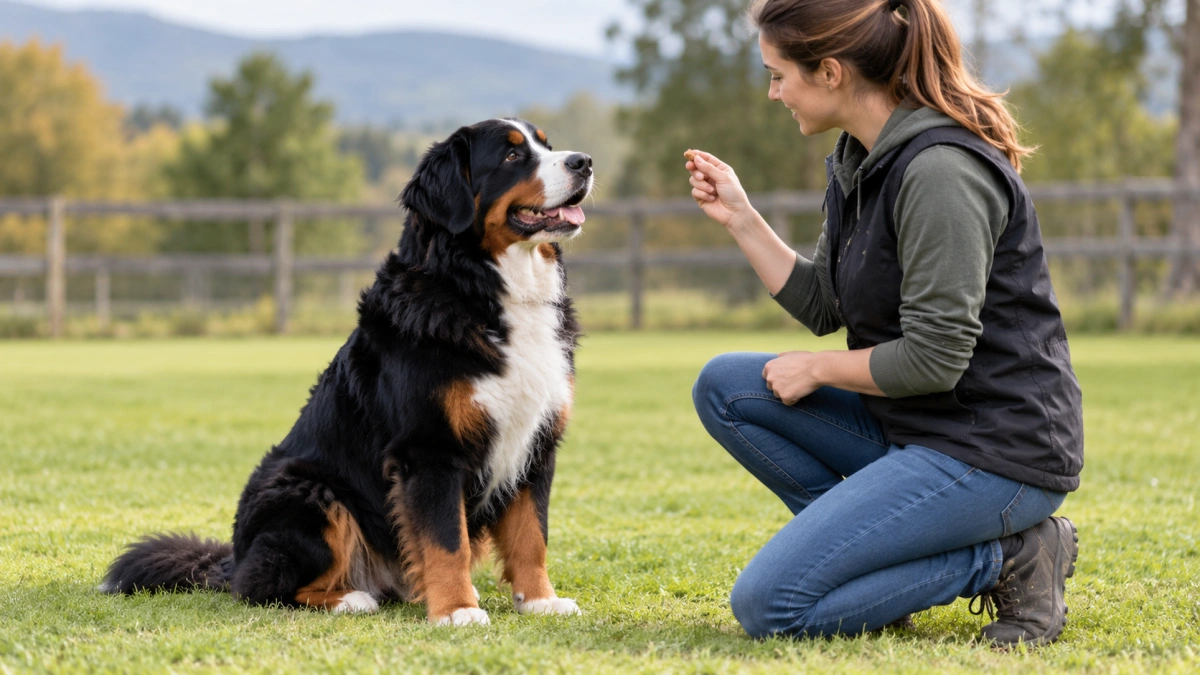
Early training matters because a poorly mannered 20-pound puppy quickly becomes a very large adult dog.
Prioritize:
- Loose-leash walking
- Recall foundations
- Calm greetings
- Handling and grooming
- Waiting at doors
- Settling around people
- Comfort around everyday environments
Berners are generally intelligent and eager to please, but they are also often described as emotionally sensitive.
Reward-based training, clear routines and patient repetition are better suited to this temperament than harsh corrections.
Why Early Socialization Is Important
A large adult dog needs confidence in everyday environments.
During appropriate developmental periods, introduce the puppy carefully to:
- Different people
- Safe dogs
- Household sounds
- Vehicles
- Veterinary handling
- Grooming
- Different surfaces
- Urban and outdoor environments
Socialization should build calm confidence rather than overwhelm the puppy with uncontrolled exposure.
Grooming and Shedding
If you want a low-shedding large breed, the Bernese Mountain Dog is unlikely to be a good match.
Berners have a double coat consisting of a longer outer coat and dense undercoat. They shed throughout the year, with heavier seasonal shedding periods.
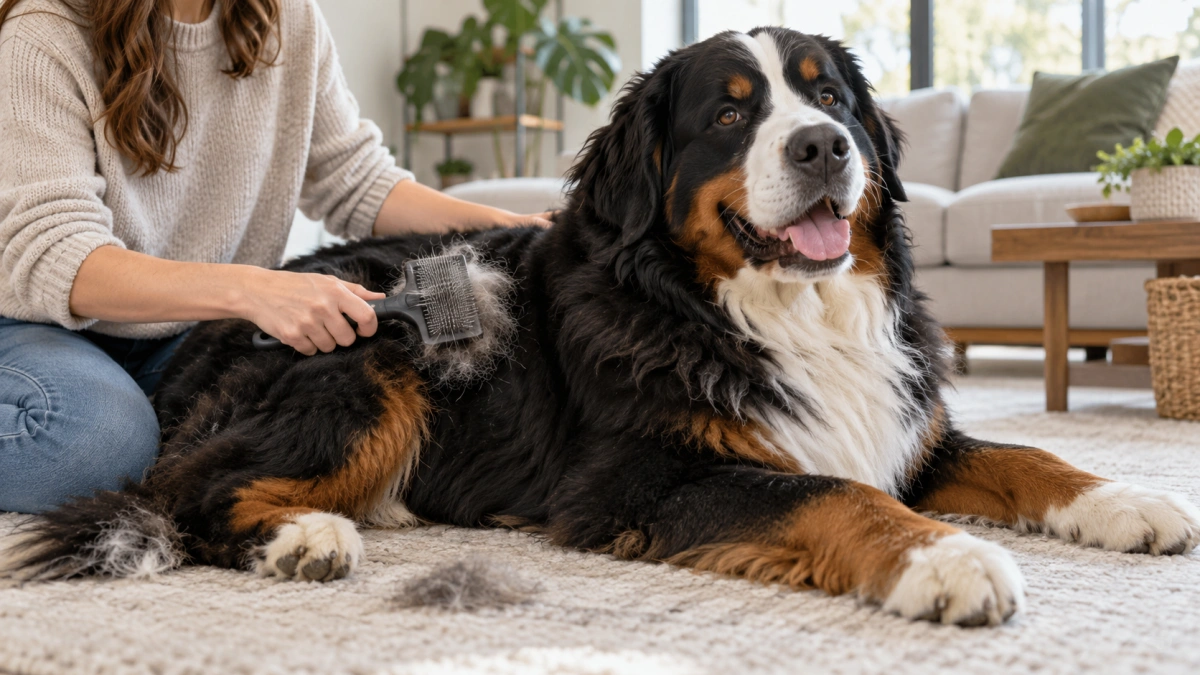
AKC recommends weekly brushing during normal periods and more frequent—often daily—brushing during heavier seasonal shedding.
What Grooming Does a Berner Need?
A practical grooming routine can include:
- Regular brushing
- Checking for tangles behind the ears and around feathering
- Nail trimming
- Ear checks
- Dental care
- Bathing when needed
The breed standard calls for a natural coat, so routine care focuses on keeping the coat healthy rather than dramatically sculpting or trimming it.
How Much Do Bernese Mountain Dogs Shed?
Expect visible hair in the home.
Owners who are highly sensitive to loose fur should think carefully before choosing this breed.
Helpful household management includes:
- Consistent brushing
- A practical vacuum routine
- Washable dog bedding
- Furniture covers where appropriate
Bernese Mountain Dog Health Considerations
Bernese Mountain Dogs have a relatively short average lifespan, generally listed by the AKC at about 7 to 10 years.
Prospective owners should approach breeder selection and preventive veterinary care seriously.
The national breed-club recommendations referenced by AKC include screening related to:
- Hips
- Elbows
- Heart
- Eyes
- Degenerative myelopathy variants
The breed can also be affected by other conditions seen in large dogs, and AKC specifically advises owners to understand the signs of gastric dilatation-volvulus, commonly called bloat.
A breed guide cannot predict the health of an individual dog. Discuss your dog’s specific preventive-care plan with your veterinarian.
Why Breeder Health Screening Matters
When purchasing a Bernese Mountain Dog puppy, do not rely only on statements such as “the parents are healthy.”
Ask for documentation of the health evaluations recommended for the breed.
The Bernese Mountain Dog Club of America specifically expects responsible breeding programs to obtain recommended health screening for breeding dogs and provide buyers with relevant health and pedigree information.
Health testing does not guarantee that a puppy will never develop a problem, but it provides far more useful information than appearance alone.
Bernese Mountain Dog Puppies
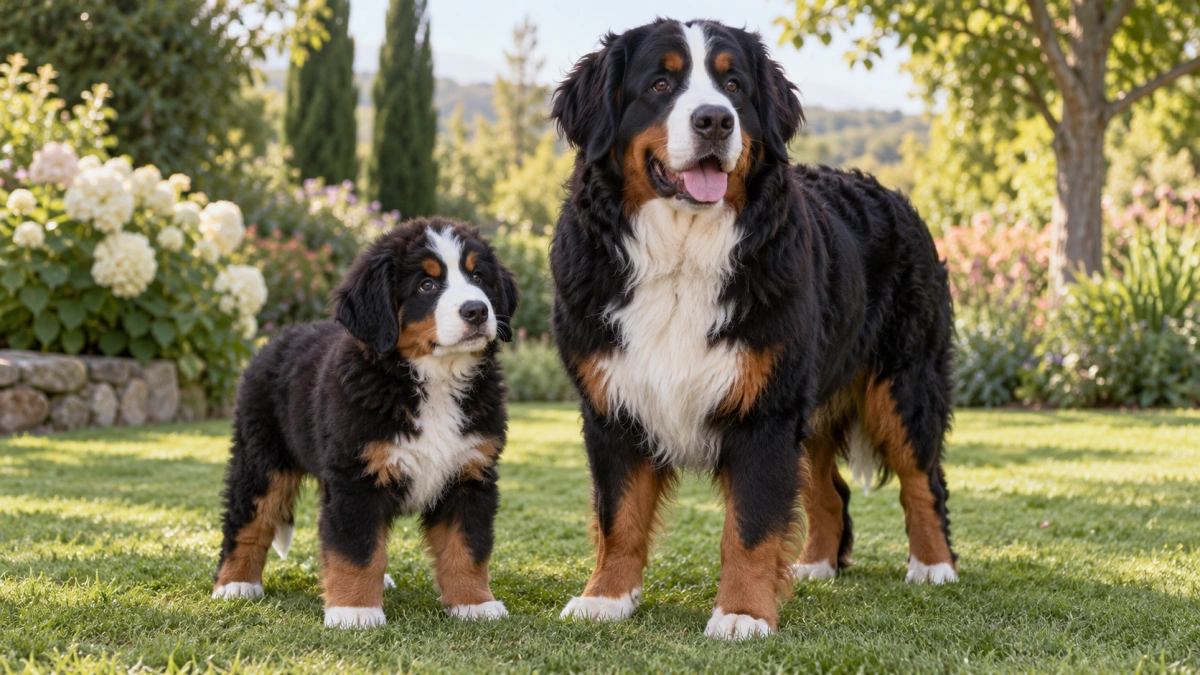
A Berner puppy may look like a fluffy medium-sized dog for only a short period. Owners need to plan for the large adult from the beginning.
Early priorities include:
- House training
- Safe socialization
- Handling practice
- Loose-leash skills
- Appropriate chewing outlets
- Calm greetings
- Veterinary care
- Age-appropriate exercise
Avoid encouraging behaviors in a puppy that will become difficult when the same dog weighs 90 pounds.
Feeding a Bernese Mountain Dog
Feed a complete diet appropriate for the dog’s life stage and maintain a healthy body condition.
Because Berners become large adults, puppy growth should be managed thoughtfully rather than trying to make the puppy grow as quickly as possible.
Work with your veterinarian when selecting food or adjusting portions, particularly during puppy growth, weight changes or health concerns.
Fresh water should always be available.
Living Space: Do Bernese Mountain Dogs Need a Huge House?
A large home is convenient, but square footage alone does not determine whether a Berner will thrive.
More important questions include:
- Can the dog move comfortably indoors?
- Can you provide daily outdoor exercise?
- Can you manage a large wet or shedding coat?
- Can you accommodate a large dog bed?
- Can you control indoor temperature during hot weather?
- Can you devote enough time to companionship and training?
A large yard is not a substitute for walks, training and family interaction.
Are Bernese Mountain Dogs Good Apartment Dogs?
Apartment living is possible for some well-exercised, well-trained adult Berners, but the practical challenges are considerable.
Consider:
- Large adult size
- Elevators or stairs
- Access to outdoor toilet areas
- Exercise opportunities
- Hot indoor temperatures
- Shedding
- Neighbors and shared hallways
The breed generally fits more easily into a home where managing a 70-to-115-pound dog is straightforward.
Is a Bernese Mountain Dog Good for First-Time Owners?
A dedicated first-time owner can successfully raise a Berner, but this is not necessarily an effortless beginner breed.
Advantages include:
- Generally cooperative temperament
- Strong attachment to people
- Good trainability
Challenges include:
- Large adult size
- Substantial shedding
- Early training requirements
- Heat sensitivity
- Health considerations
- Shorter average lifespan
- Cost of feeding and caring for a large dog
The right first-time owner is someone prepared to learn, train consistently and budget realistically.
Who Is the Bernese Mountain Dog Best For?
A Berner can be a strong match for someone who wants:
- A large companion dog
- A calm but capable working breed
- An affectionate family-oriented dog
- A walking or hiking companion in suitable weather
- A dog suitable for activities such as obedience, rally, tracking or drafting
Who May Prefer Another Breed?
Think carefully if you need:
- A low-shedding dog
- A very small dog
- A breed comfortable with long periods of isolation
- A dog requiring almost no grooming
- A breed especially suited to intense hot-weather exercise
- A particularly long average lifespan
If you like the appearance or temperament of the Berner but are unsure about the fit, our guide to dog breeds similar to Bernese Mountain Dogs can help you compare alternatives.
Is a Bernese Mountain Dog Right for You?
Before choosing a Bernese Mountain Dog, ask yourself:
- Can I comfortably manage a dog that may exceed 100 pounds?
- Am I comfortable with substantial shedding?
- Can I brush the coat regularly?
- Can I provide daily exercise and mental activity?
- Will the dog spend significant time with the family?
- Can I manage the breed safely during hot weather?
- Am I prepared for large-dog veterinary and food costs?
- Have I researched breed-specific health screening?
- Can I emotionally and financially prepare for a breed with a 7–10 year typical lifespan?
If the answer to those questions is yes, a well-bred and well-socialized Bernese Mountain Dog can be a deeply affectionate and rewarding companion.
Final Thoughts
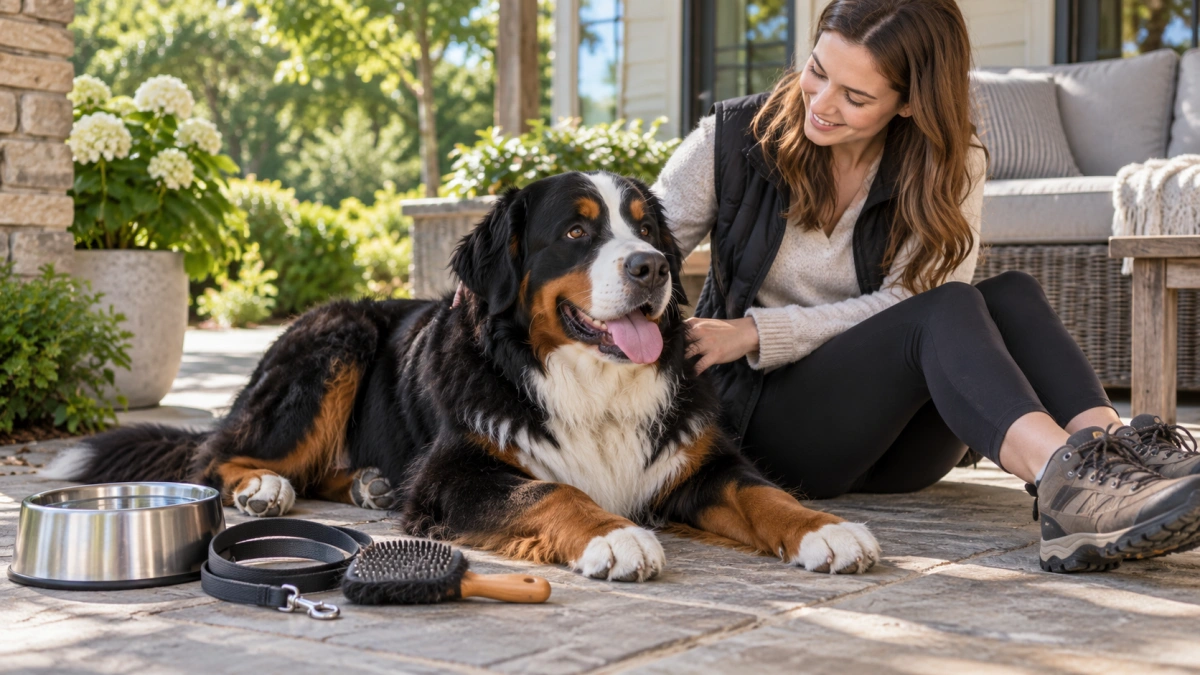
The Bernese Mountain Dog combines the physical presence of a substantial working breed with a temperament that is typically gentle, affectionate and strongly oriented toward people.
Its striking tricolor coat and calm expression are easy to admire, but successful ownership depends on accepting the entire package: a large adult body, regular training, considerable shedding, routine grooming, moderate daily exercise, sensitivity to hot conditions and important health considerations.
The best Berner home is not simply the home with the largest yard. It is one that provides companionship, thoughtful training, appropriate exercise, climate management, preventive veterinary care and enough time to keep a social working dog involved in everyday family life.