By A CUTE PET STORY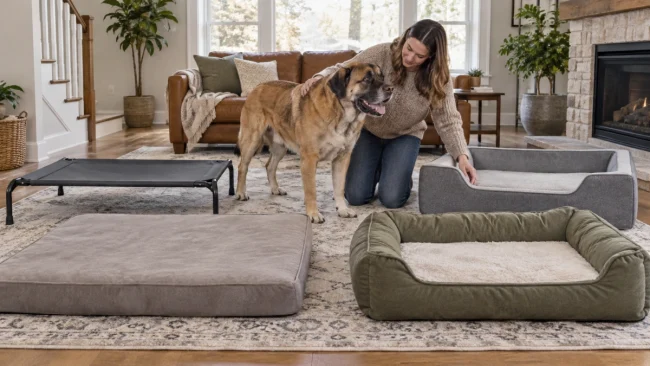
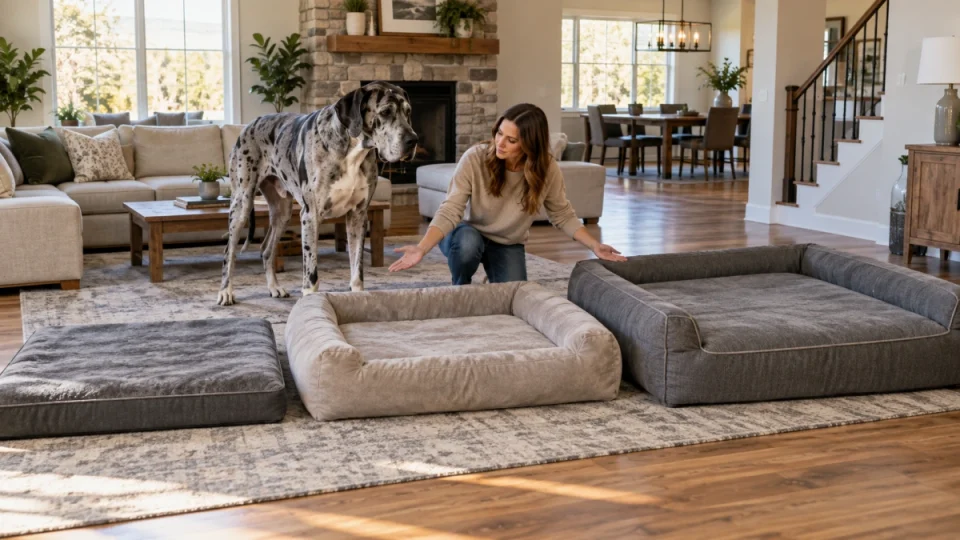
Large dog beds need to do more than simply look big. A good bed should give your dog enough usable sleeping space, support its body without collapsing too quickly, match its preferred sleeping position, and still be practical to clean.
The biggest mistake is relying only on labels such as Large or XL. These size names are not standardized, and two beds with the same label can have very different actual dimensions.
The most reliable approach is to measure your dog, compare the real sleeping area, and then choose a bed style that fits how your dog normally rests.
You can also browse our Dog Beds topic hub for more guides on sizes, materials, cleaning, and different bed styles.
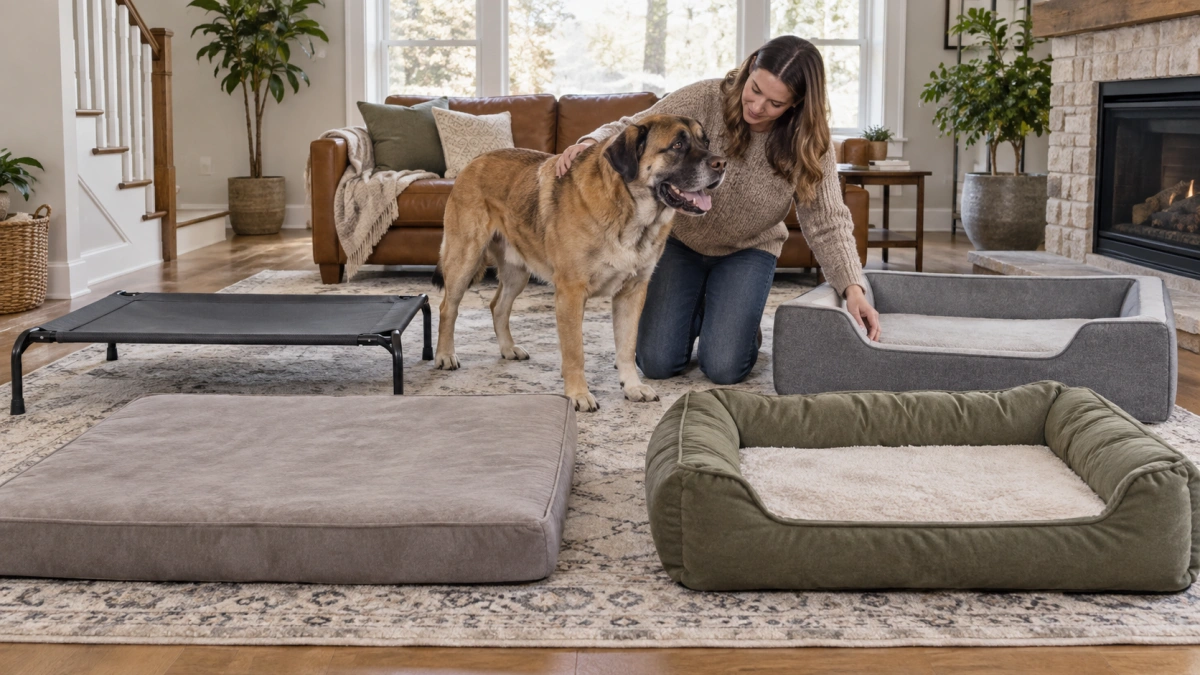
What Counts as a Large Dog Bed?
There is no universal measurement that makes a dog bed “Large.” One manufacturer’s Large bed may be similar to another manufacturer’s XL.
Instead of trusting the size name, compare:
- Overall length
- Overall width
- Usable inner sleeping length
- Usable inner sleeping width
- Bolster thickness
- Entry height
- Cushion or foam thickness
The dog should be able to use its normal sleeping position without being forced into a tighter shape simply because the bed is labeled for large breeds.
Large vs XL: Size Labels Are Only a Starting Point
Large, X-Large, XL, XXL, and Giant are marketing size names rather than fixed industry standards.
A better buying sequence is:
- Measure your dog.
- Decide how much extra movement room you want.
- Check the actual bed dimensions.
- Compare the usable sleeping surface.
- Only then look at the manufacturer’s size label.
This helps prevent situations where a product called Large looks generous online but gives your dog less room than expected once it arrives.
How to Measure a Large Dog for a Bed
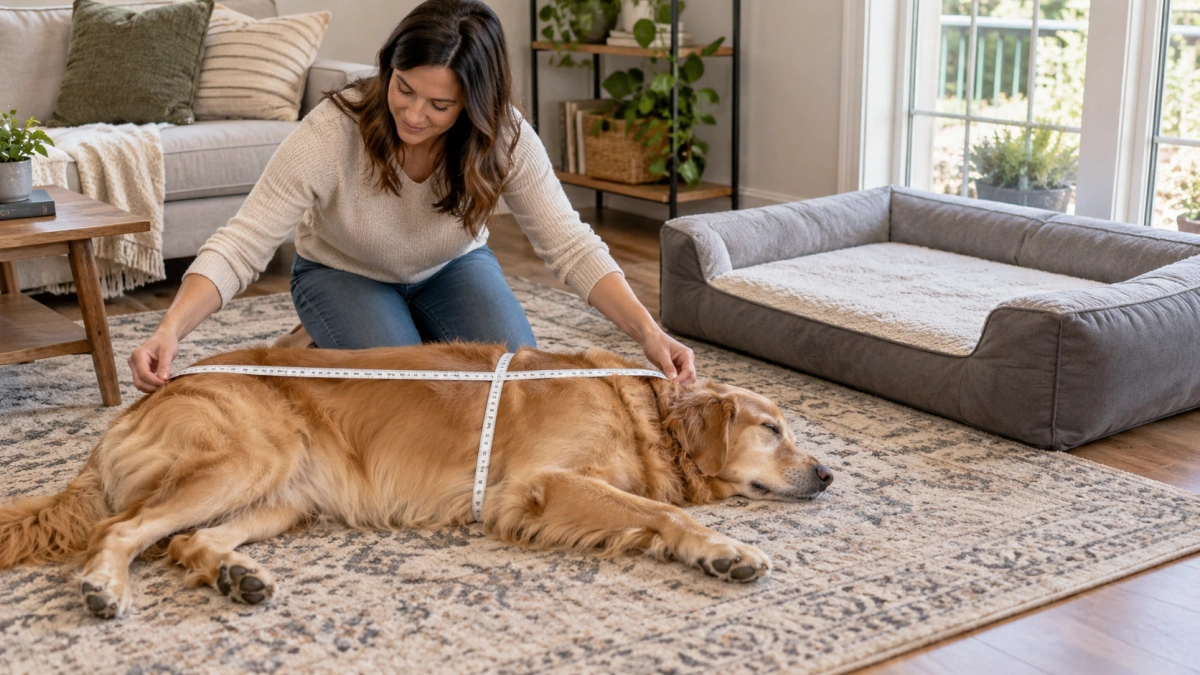
Measure the dog while it is resting naturally rather than standing upright.
If your dog sprawls, measure the approximate length from the front of the body to the rear while the legs are extended. Also note how much width the dog uses.
For dogs that curl, record the diameter of the space they usually occupy, but still allow some room for changing positions.
Simple Measuring Process
- Wait until your dog settles in a normal sleeping position.
- Measure the approximate sleeping length.
- Measure the widest part of the resting position.
- Add extra room for repositioning.
- Compare those figures with the usable bed area.
Weight can help you estimate how much support the bed may need, but it should not replace body measurements.
Usable Sleeping Area vs Outer Dimensions
The outside dimensions printed on a product page do not always represent the space your dog can actually lie on.
This matters most with:
- Thick bolster beds
- Sofa-style beds
- Framed beds
- High-sided designs
- Round beds with thick outer rings
For example, a bolster can take several inches from each side of the bed. That can turn a bed with a large external footprint into a much smaller sleeping surface.
For large dogs, compare the inner usable dimensions whenever they are available.
How Much Support Does a Large Dog Need?
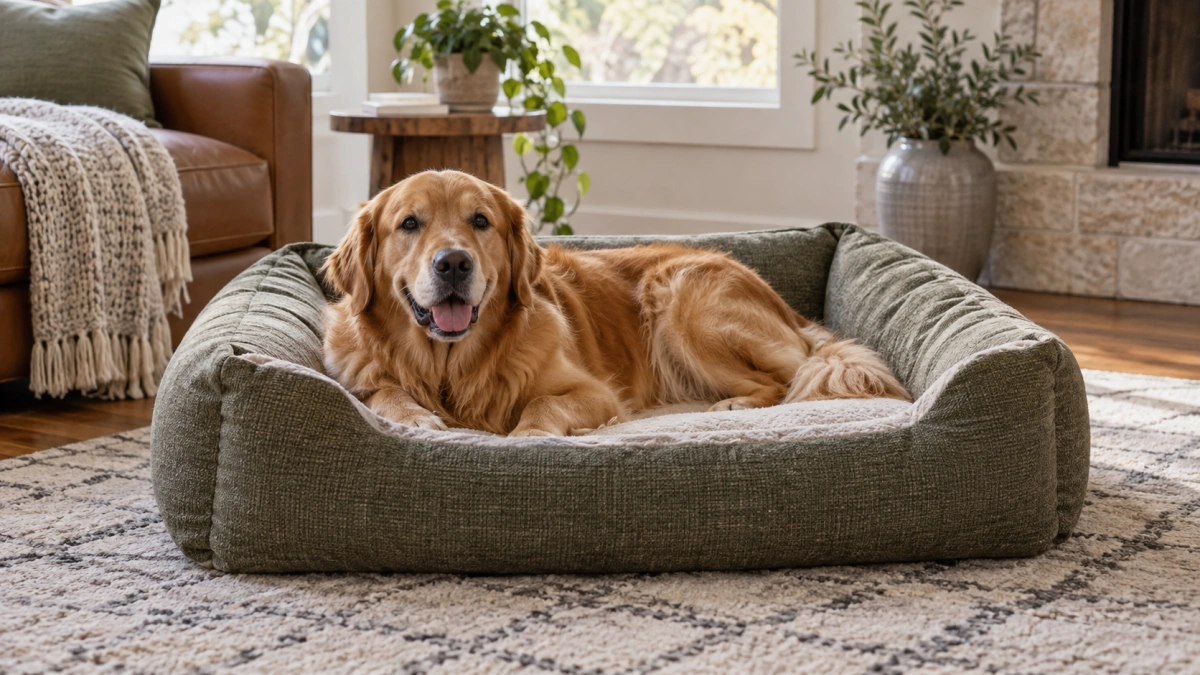
Large dogs place more body weight on the sleeping surface than small dogs, so very soft filling can compress more noticeably.
A bed may look thick when unused but provide little structure once a heavy dog lies on it.
Check whether:
- The center collapses heavily under body weight
- The dog’s body appears close to the floor
- The filling shifts away from frequently used areas
- The cushion returns to shape after use
- The dog can stand up comfortably from the surface
Softness and support are not the same thing. A bed can feel plush while still providing enough structure, or it can feel extremely soft and flatten quickly.
If your dog has diagnosed joint disease, persistent pain, or significant difficulty standing or lying down, bed choice should support comfort but should not replace veterinary care.
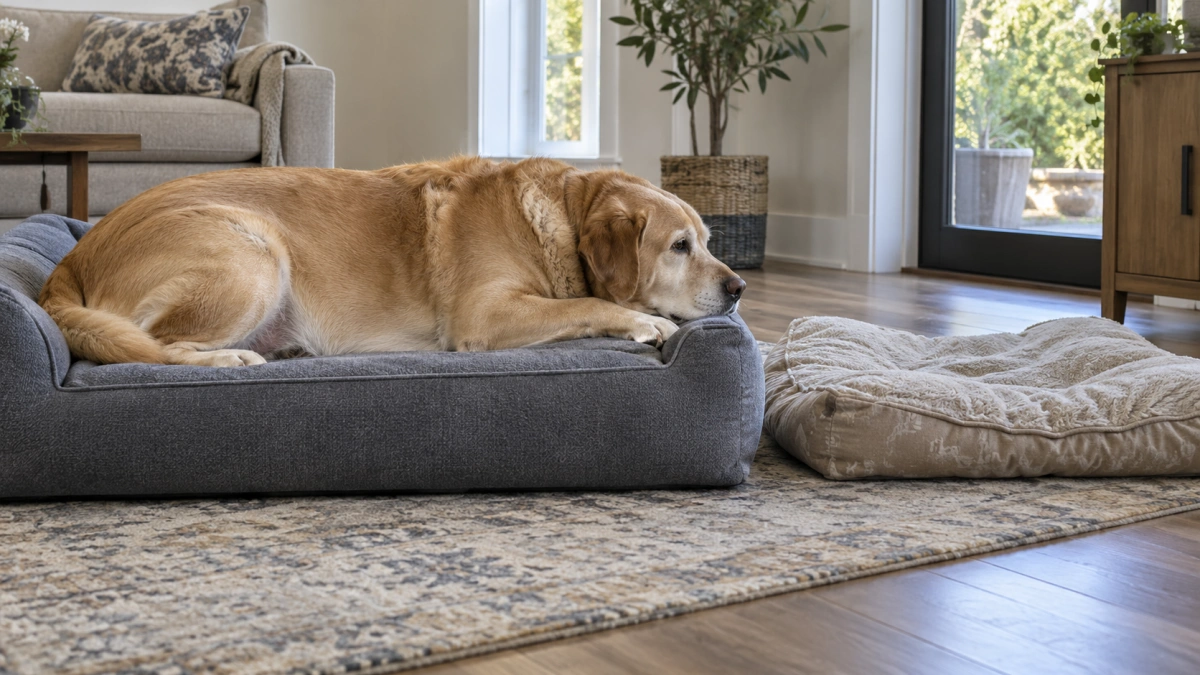
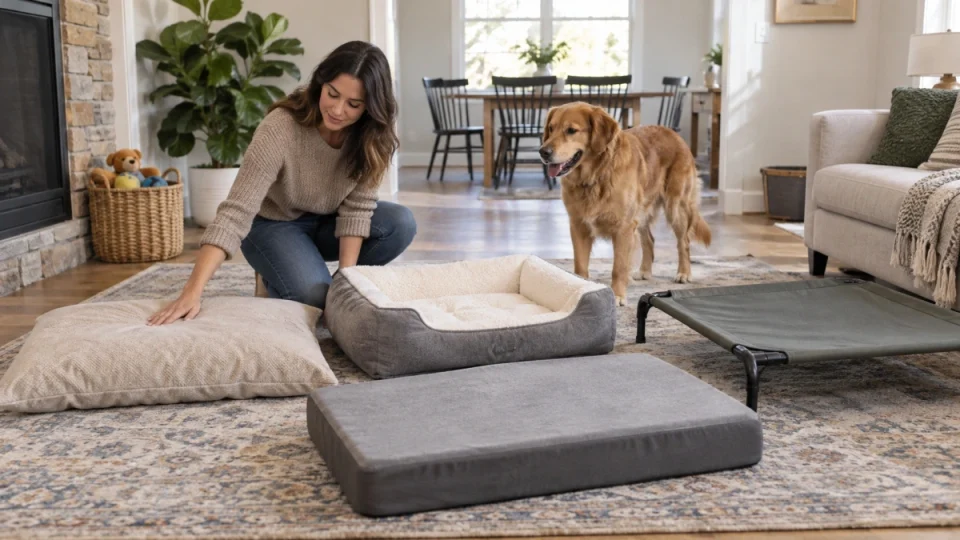
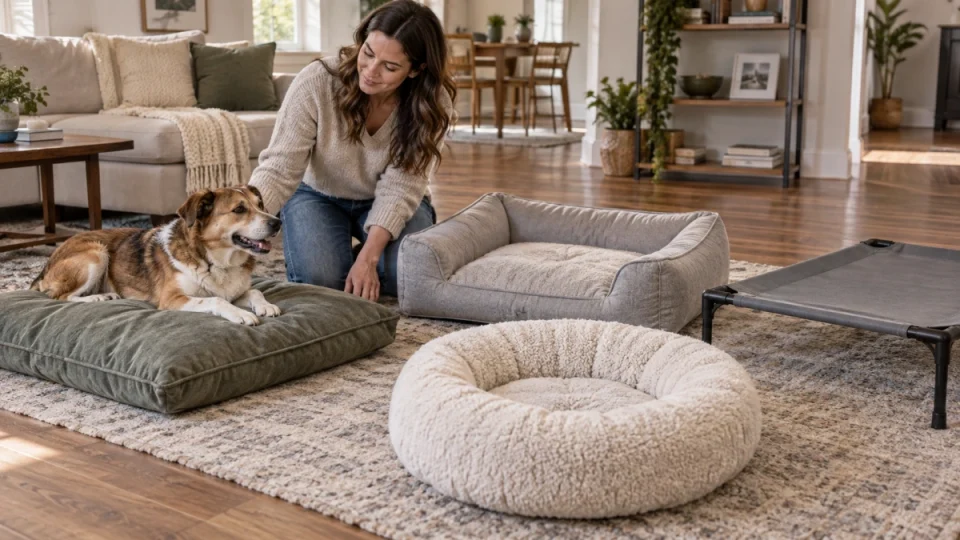
Best Bed Styles for Large Dogs
The best style depends more on sleeping behavior than on body size alone.
| Bed Style | Often Works Well For | Main Trade-Off |
|---|---|---|
| Flat mattress | Full-body sprawlers | No raised side for leaning |
| Pillow bed | Dogs that change positions often | Loose filling may shift |
| Bolster bed | Head-resters and leaners | Raised sides reduce usable space |
| Structured foam bed | Heavier dogs needing firmer support | Usually bulkier and more expensive |
| Elevated cot | Dogs that run warm or need airflow | Less plush cushioning |
| Large crate mat | Crate sleepers and travel | Often thinner than a full bed |
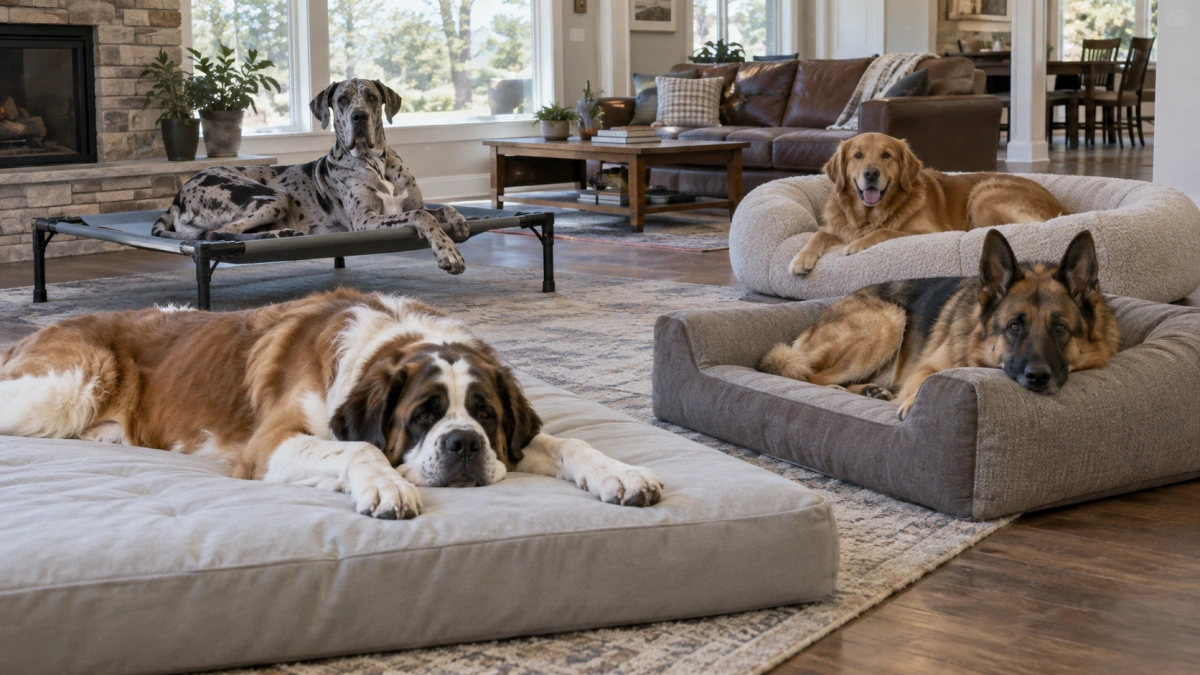
Match the Bed to Your Large Dog’s Sleeping Style
Watching your dog’s normal sleeping position is one of the easiest ways to choose between bed shapes.
| Sleeping Style | Good Starting Option |
|---|---|
| Stretches out fully | Flat mattress or wide pillow bed |
| Curls into a circle | Round or generously sized bolster bed |
| Rests head on furniture | Bolster or sofa-style bed |
| Changes positions frequently | Open rectangular mattress |
| Runs hot | Elevated or breathable bed |
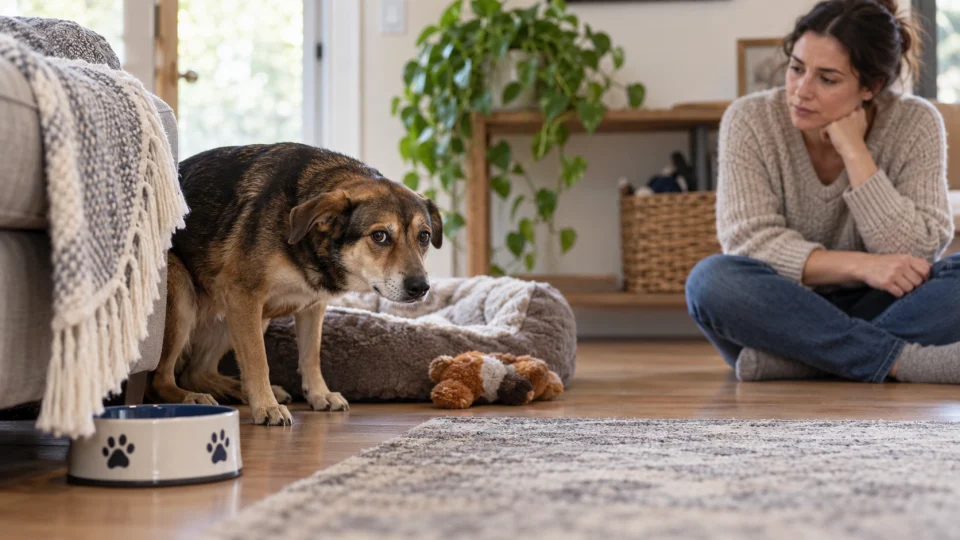
| Older and slower to move | Low-entry supportive bed |
Breed alone cannot tell you which style will work. Two large dogs of similar size may have completely different resting habits.
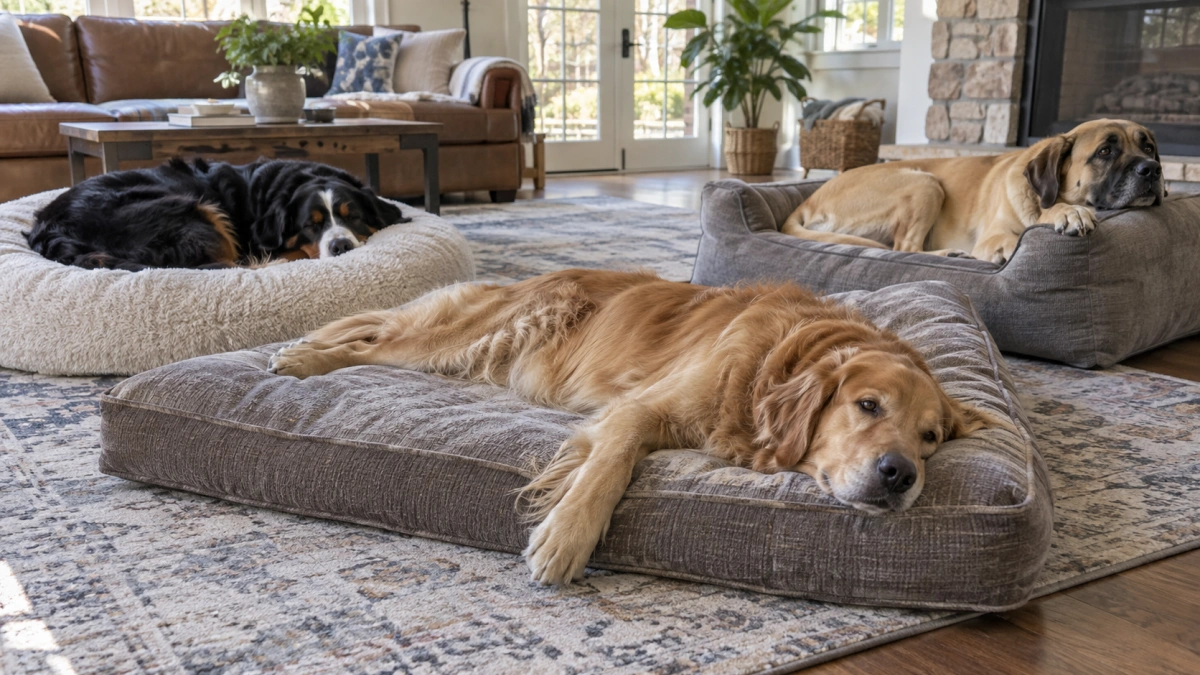
Pillow vs Bolster vs Elevated Beds for Large Dogs
Pillow Beds
Large pillow beds provide a simple open sleeping surface and can work well for dogs that sprawl or rotate frequently during sleep.
The main thing to watch is whether loose filling shifts or flattens under repeated use.
Bolster Beds
Bolsters can be useful for dogs that like leaning against something or resting their heads on an edge.
The trade-off is reduced inner sleeping space, so a large dog may need a bigger external size than expected.
Elevated Beds
Elevated beds create airflow beneath the dog and can be useful in warmer rooms, outdoor areas, or situations where a washable mesh surface is practical.
They are usually less plush, so whether a dog likes them depends on individual preference.
Washable Covers and Waterproof Liners
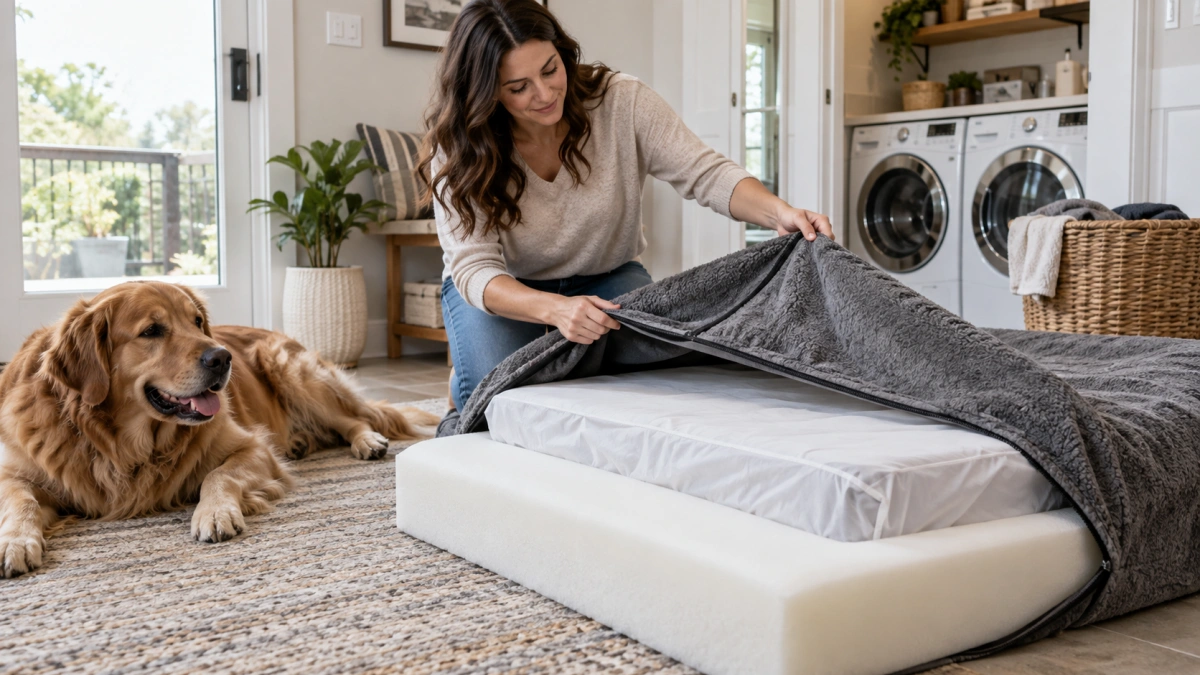
Large dog beds can be awkward to clean because the cushion or foam core may be too large for a household washing machine.
A removable cover can make maintenance much easier.
Look for:
- A fully removable outer cover
- A zipper opening large enough for the foam insert
- Machine-washable care instructions
- A separate protective inner liner
- Replacement covers
- Clear drying instructions
A water-resistant or waterproof inner liner can be especially useful when you want to protect a large foam core from moisture, but always follow the manufacturer’s care instructions.
Large vs Extra Large: When Should You Size Up?
Sizing up can make sense when your dog fits within the stated Large dimensions but has very little room left to stretch or reposition.
Consider moving to the next size when:
- Your dog’s normal sleeping length is close to the bed’s inner length
- Most of the dog’s legs extend beyond the sleeping surface
- Thick bolsters leave too little inner space
- Your dog regularly stretches fully while sleeping
- Two dogs occasionally share the same bed
- Your dog is still growing
If your dog’s measurements are moving beyond typical Large sizing, our guide to extra large dog beds explains XL, XXL, giant-breed sizing, oversized sleeping areas, and practical cleaning considerations.
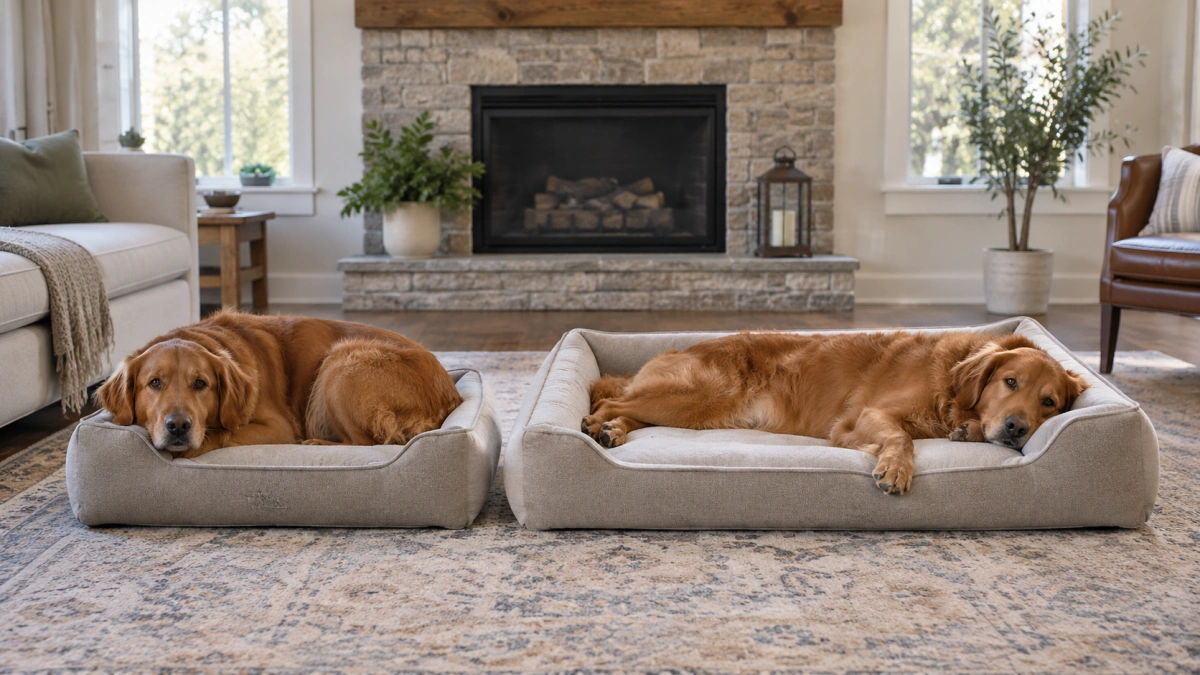
What If Your Dog Is Between Sizes?
When a large dog falls between two bed sizes, the larger option is often more practical if:
- The dog sprawls
- The smaller bed has thick bolsters
- You have enough floor space
- The price difference is reasonable
However, automatically buying the biggest possible bed is not always necessary. A very large bed takes more room, costs more to ship, uses larger covers, and can be harder to clean.
The goal is enough usable room, not maximum size.
Affordable Large Dog Beds: Where Can You Save?
Large beds use more material, so prices can rise quickly. If you are shopping on a budget, spend less on decorative features before compromising on fit.
You can often save by choosing:
- Simple rectangular shapes
- Neutral fabrics
- Minimal decorative trim
- Flat beds instead of furniture-style frames
- Replaceable covers instead of replacing the whole bed
Do not choose a bed that is too small simply because the next size costs more.
Common Large Dog Bed Buying Mistakes
- Buying only by body weight
- Trusting Large or XL labels without checking dimensions
- Ignoring the inner sleeping area
- Assuming thicker always means more supportive
- Buying a high bolster for a dog that struggles to step over it
- Ignoring washability until the bed gets dirty
- Choosing a bed shape that does not match sleeping style
- Buying a smaller size only because it is cheaper
- Forgetting to measure available floor space at home
Large Dog Bed Buying Checklist
Before ordering, check the following:
- Have I measured my dog while resting?
- Does the usable sleeping area fit that position?
- Is the cushion supportive under my dog’s weight?
- Does the bed shape match how my dog sleeps?
- Can my dog enter and exit comfortably?
- Are bolsters reducing too much sleeping space?
- Can the cover be removed and washed?
- Is the foam or inner cushion protected?
- Will the bed fit the intended room or crate?
- Would moving to XL provide meaningfully more usable room?
Final Thoughts
The best large dog beds are not defined by a Large label. They are defined by how well the real sleeping area, support, shape, and cleaning setup match the individual dog.
Measure your dog in a normal resting position, compare usable dimensions instead of only outer measurements, and pay attention to how the bed compresses under body weight.
A properly sized simple bed will usually be more useful than a highly rated or stylish bed that leaves a large dog cramped, unsupported, or difficult to clean.